18 Glossy Bouncy Blowout Hairstyles for Fall 2026

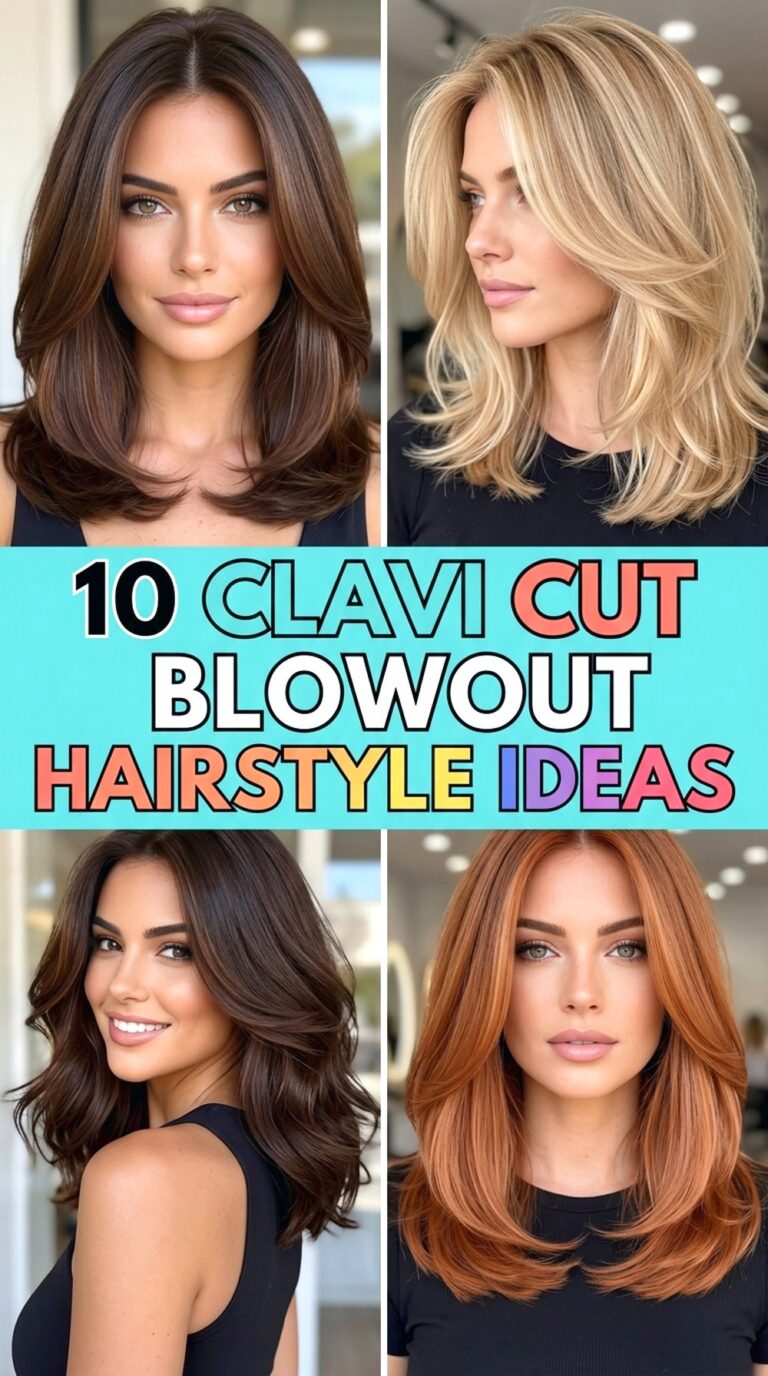
Glossy bouncy blowouts combine smooth shine with rounded movement, lifted roots, and ends that curve instead of hanging flat. The style can be worn on shoulder-length cuts, lobs, or very long hair, with layers controlling where the bounce appears. Some versions focus on a full face frame, while others use curtain bangs, feathered sections, or a deep side sweep. The key difference from a straight blow-dry is that the hair keeps body and movement while the surface stays polished.
These glossy bouncy blowout hairstyles for Fall 2026 can work across fine, medium, and thick density when the haircut supports the finish. Fine hair usually needs lighter products and fewer layers, while thick hair benefits from internal weight removal and larger sections. Straight hair is easier to smooth, while naturally wavy hair can contribute useful texture and volume.
Styling usually takes moderate effort because the hair needs both tension and lift. A round brush, heat protectant, rollers, or root spray can help. Before choosing a version, consider your natural texture, density, humidity, heat routine, trim schedule, and how much volume you want to maintain between washes.
Quick List
- Classic Glossy Bouncy Blowout with Long Layers hairstyle
- Glossy Bouncy Blowout with Curtain Bangs hairstyle
- Glossy Bouncy Blowout with Face-Framing Layers hairstyle
- Center-Parted Glossy Bouncy Blowout hairstyle
- Side-Parted Glossy Bouncy Blowout hairstyle
- Glossy Bouncy Blowout with Feathered Layers hairstyle
- Glossy Bouncy Blowout for Fine Hair hairstyle
- Glossy Bouncy Blowout for Thick Hair hairstyle
- Glossy Bouncy Blowout for Naturally Wavy Hair hairstyle
- Shoulder-Length Glossy Bouncy Blowout hairstyle
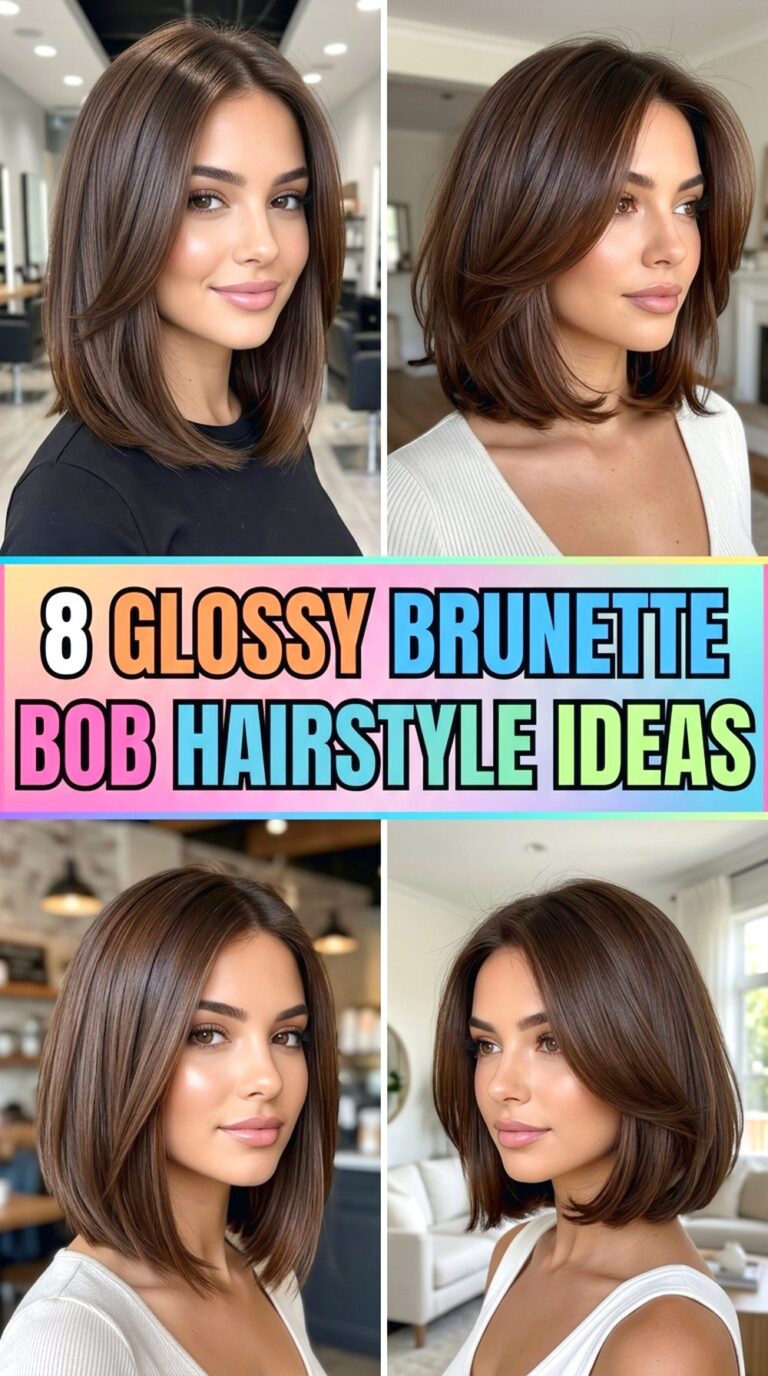
- Glossy Bouncy Blowout Lob with Rounded Ends hairstyle
- Glossy Bouncy Blowout with Wispy Bangs hairstyle
- Glossy Bouncy Blowout with Flipped Ends hairstyle
- Glossy Bouncy Blowout with C-Shaped Layers hairstyle
- Extra-Long Glossy Bouncy Blowout hairstyle
- Glossy Bouncy Blowout with Root Lift hairstyle
- Glossy Bouncy Blowout with Deep Side Sweep hairstyle
- Polished Glossy Bouncy Blowout with Blunt Ends hairstyle
Classic Glossy Bouncy Blowout with Long Layers hairstyle

Long layers are the foundation of this classic bouncy blowout, creating movement from the face frame through the ends without sacrificing overall length. The shortest layers can start around the chin or collarbone, then blend gradually into longer sections so the finish looks connected rather than stepped. Medium and thick hair carry the shape easily, while fine hair should keep the layering restrained to preserve density. Straight and wavy textures are both suitable. Use heat protectant, a large round brush, and a lightweight shine serum, keeping the serum mainly on the lower lengths. Styling takes moderate to longer time because each section needs tension and cooling to hold its curve. Regular trims help prevent dry ends from interrupting the glossy surface. At the salon, ask for long connected layers with a strong perimeter and explain that you want broad bounce rather than short, choppy volume.
Pro tip:
Clip each freshly dried section into a loose curl while it cools; releasing everything at the end gives the layers more lasting bounce.
Glossy Bouncy Blowout with Curtain Bangs hairstyle

Curtain bangs make a glossy blowout feel more layered around the face by adding a center split that curves toward the cheekbones. The outer bang sections should blend smoothly into longer face-framing layers so the front feels connected to the rest of the haircut. Straight and wavy hair are easiest to shape with a round brush, while curly textures need enough fringe length to account for shrinkage. Fine hair benefits from a lighter bang section; thick hair can support a fuller sweep. Use heat protectant, a medium round brush, and flexible hairspray to keep the fringe moving without stiffness. Styling is moderate because the bangs need separate attention even when the lengths already look polished. They may also require more frequent trims than the rest of the haircut. At the salon, specify the shortest bang point and where the outer curtain sections should meet the first long layer.
Pro tip:
Dry the fringe forward first, then roll it away from the face as it cools; this gives the curtain opening lift without creating a wide gap.
Glossy Bouncy Blowout with Face-Framing Layers hairstyle

Face-framing layers bring the bounce closer to the front, with shorter sections curving around the cheekbones, jaw, or collarbone before merging into longer lengths. This is useful when you want visible movement without heavily layering the back. Fine hair usually looks better with fewer framing pieces, while medium and thick hair can support a more graduated shape. Straight and wavy textures show the curves most clearly. Use heat protectant, a medium round brush, and a lightweight finishing spray to keep the front sections smooth and flexible. Styling takes moderate time because the face frame needs careful direction while the back can remain more relaxed. Salon maintenance becomes important as the shortest layer grows past its intended point and loses impact. Ask your stylist to define the exact starting position of the face frame and keep the transition into the longer layers smooth rather than creating a disconnected shelf.
Pro tip:
Blow-dry every face-framing section away from the face in the same direction; consistent movement makes the layers read as one flowing shape.
Center-Parted Glossy Bouncy Blowout hairstyle
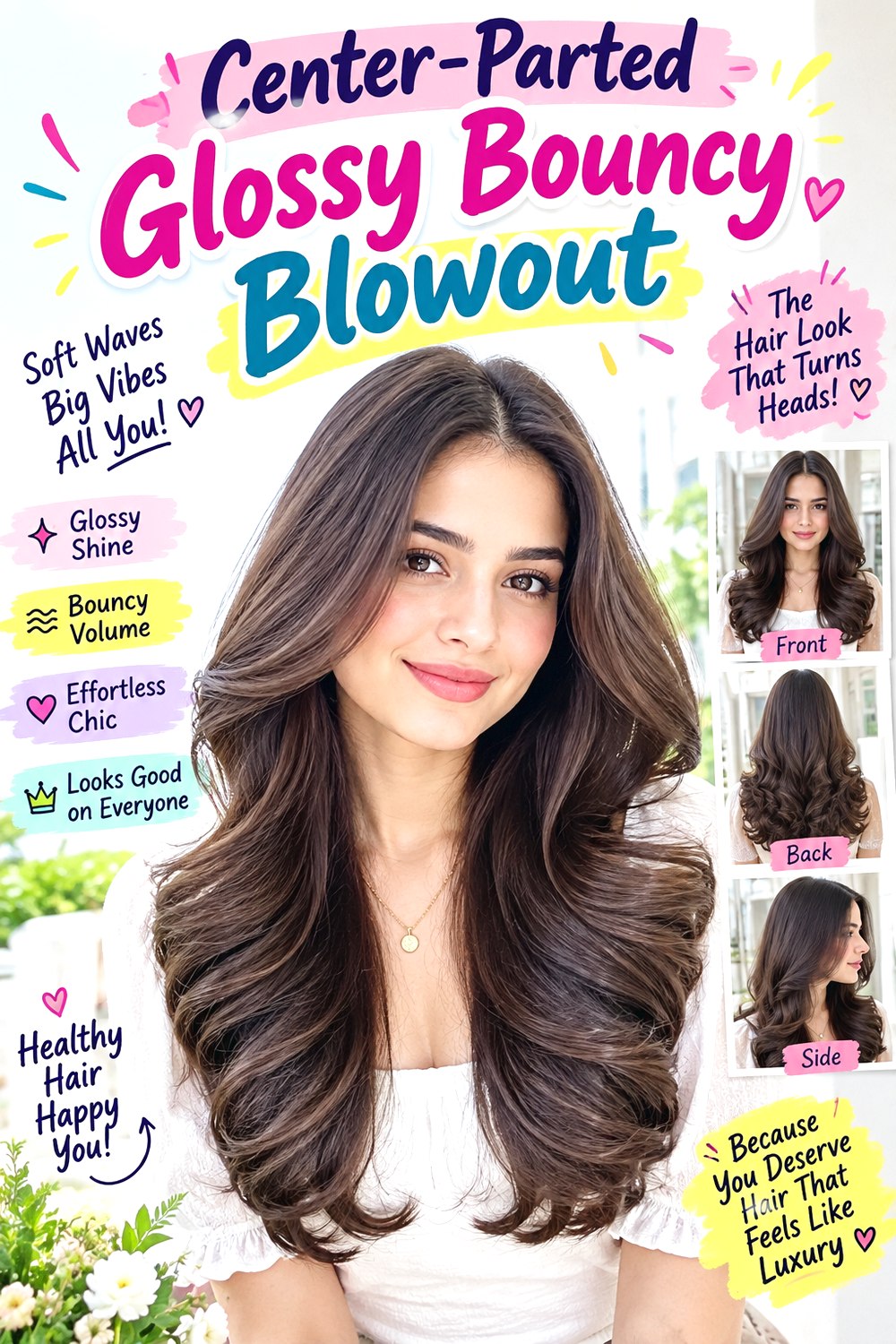
A center part gives a bouncy blowout an even, balanced shape, so the root lift and face-framing movement need to match on both sides. Keep the crown airy rather than excessively high, then direct the side sections away from the face for broad movement. Fine hair benefits from subtle root spray along the part, while thick hair may need internal weight removed so the sides do not become too wide. Straight and softly wavy textures work especially well. Use root-lifting spray, a large round brush, and a small amount of shine serum through the ends. Styling takes moderate time, with extra attention needed if one side naturally grows flatter than the other. At the salon, wear your normal center part and ask for balanced layers on both sides. The stylist should check the cut dry to ensure one face-framing section is not heavier or shorter.
Pro tip:
Dry each side away from the center rather than crossing sections over the part; this keeps the root direction clean and the symmetry easier to maintain.
Side-Parted Glossy Bouncy Blowout hairstyle

A side part adds more height to one side of a bouncy blowout and creates a stronger sweeping effect across the front. The heavier side should lift from the roots before curving through the temple and into the longer layers. Medium and thick hair support the fuller shape naturally, while fine hair can build height with lightweight mousse rather than backcombing. Straight and wavy textures are practical for this finish. Use volumizing mousse, a large round brush, and flexible hairspray to keep the sweep lifted but movable. Styling takes moderate time, especially if the front section is set in a large roller while it cools. Humidity may soften the root lift, so avoid overloading the section with serum. At the salon, show your everyday part and ask for front layers that follow that direction instead of being cut only for a center-parted style.
Pro tip:
Set the heavy side backward on a large roller rather than straight sideways; it creates root height while keeping the sweep soft.
Glossy Bouncy Blowout with Feathered Layers hairstyle
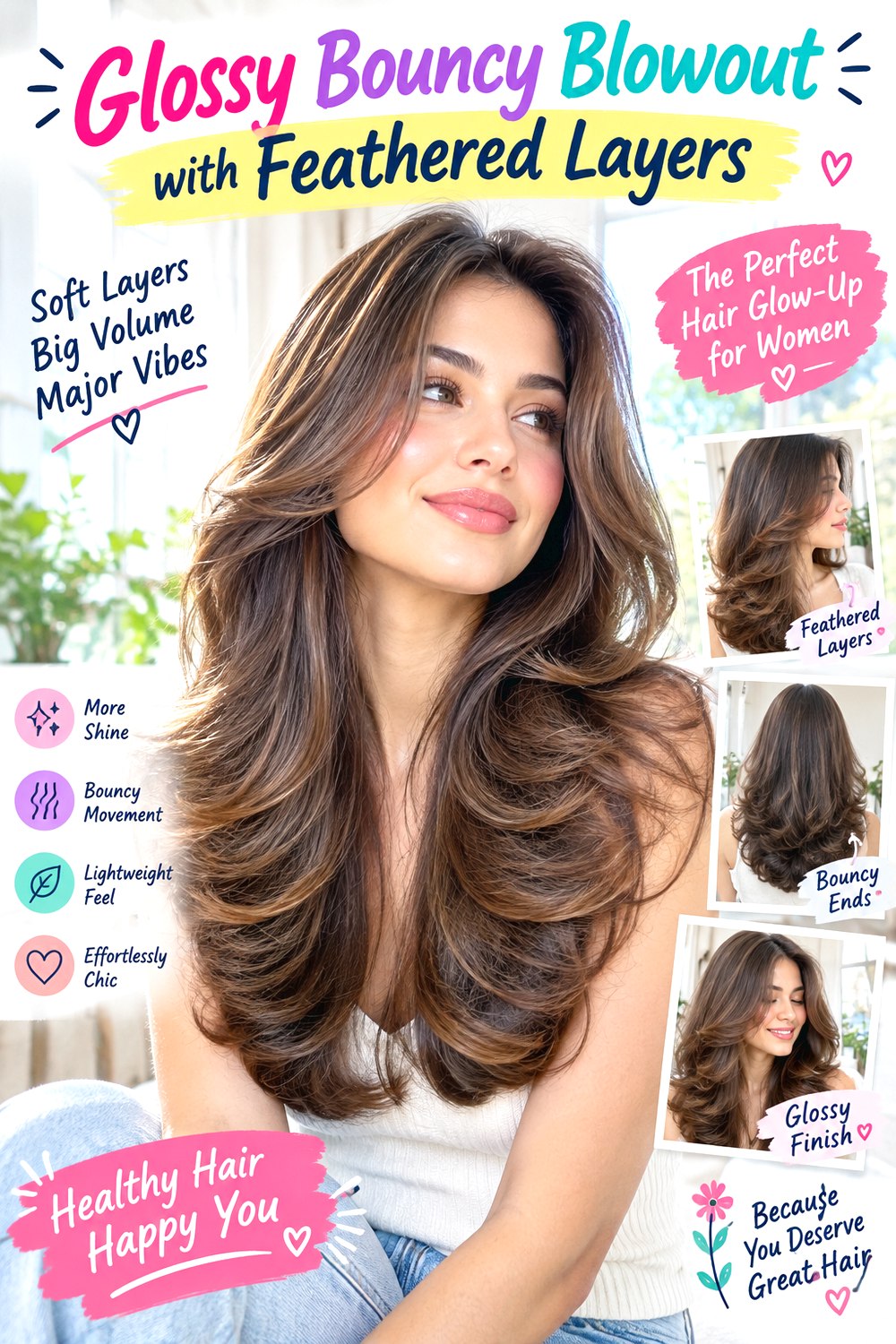
Feathered layers make a bouncy blowout feel lighter by creating soft separation through the sides and ends. The layering should begin around the face and gradually blend backward, with enough weight left at the perimeter to prevent the haircut from looking thin. Medium-density hair suits this balance especially well. Fine hair should keep the feathering subtle, while thick hair can support more internal separation. Straight and wavy textures show the feathered movement clearly. Use heat protectant, a medium-to-large round brush, and texturizing spray applied lightly after the hair cools. Styling takes moderate time because the layers need to be directed individually for the feathering to remain visible. Regular reshaping helps when the layers start merging into one heavier shape. At the salon, request soft point-cutting and connected feathered sections rather than short, heavily razored layers that can reduce gloss and create frizz.
Pro tip:
Keep the feathering strongest around the front and lighter toward the back so the haircut still looks full from behind.
Glossy Bouncy Blowout for Fine Hair hairstyle

Fine hair needs bounce without product buildup, so this version keeps the layers long and the perimeter full. Root lift should be concentrated around the crown and front, while the ends are gently rounded instead of heavily curled. Straight and lightly wavy fine hair usually styles quickly, and a smaller amount of hair per section means less drying time. Use volumizing spray at the roots, heat protectant through the lengths, and a medium round brush. Styling is quick to moderate, but heavy oils or thick creams can flatten the shape within hours. A light mist of hairspray is often enough to hold the movement. Regular trims help the ends stay dense and reflective. At the salon, ask for minimal thinning, restrained long layers, and a strong lower perimeter. Avoid removing too much density around the temples if you want the face-framing sections to stay substantial.
Pro tip:
Use shine serum only on the tips after styling; applying it near the roots can undo the volume you worked to create.
Glossy Bouncy Blowout for Thick Hair hairstyle

Thick hair already has plenty of body, so the goal is to create controlled bounce instead of excessive width. Long connected layers help distribute density, while carefully placed internal weight removal makes the blowout easier to dry and shape. Straight, wavy, and coarse hair can all work, but dense textures need smaller sections and stronger brush tension. Use smoothing cream with heat protection, a large round brush, and anti-frizz serum across the outer layer. Styling takes longer because the roots must be fully dry before the hair will hold a polished shape. Humidity can make short internal pieces expand, so aggressive thinning is rarely helpful. At the salon, ask for strategic bulk removal underneath the surface while keeping the top layer and perimeter strong. The finished haircut should still have enough weight for the ends to fall in broad, rounded curves.
Pro tip:
Rough-dry thick hair most of the way before using a round brush; styling very wet sections increases time and makes controlled bounce harder to achieve.
Glossy Bouncy Blowout for Naturally Wavy Hair hairstyle

Naturally wavy hair brings useful movement to a bouncy blowout, so the style does not need to be stretched completely straight. Smooth the crown and outer surface while allowing broad bends to remain through the mid-lengths and ends. Medium and thick waves create body easily, while fine waves need lightweight products that preserve lift. Use leave-in conditioner, heat protectant, and a large round brush; a diffuser can help during the initial drying stage if you want to retain more of the natural wave. Styling takes moderate time and is often faster than creating bounce from very straight hair. Frizz control matters in damp weather, but too much smoothing product can flatten the wave pattern. At the salon, ask for layers that work with the natural texture when air-dried as well as when blown out, especially around the face and shoulders.
Pro tip:
Use less tension through the mid-lengths than at the roots; this smooths frizz while leaving enough natural bend for the blowout to stay full.
Shoulder-Length Glossy Bouncy Blowout hairstyle
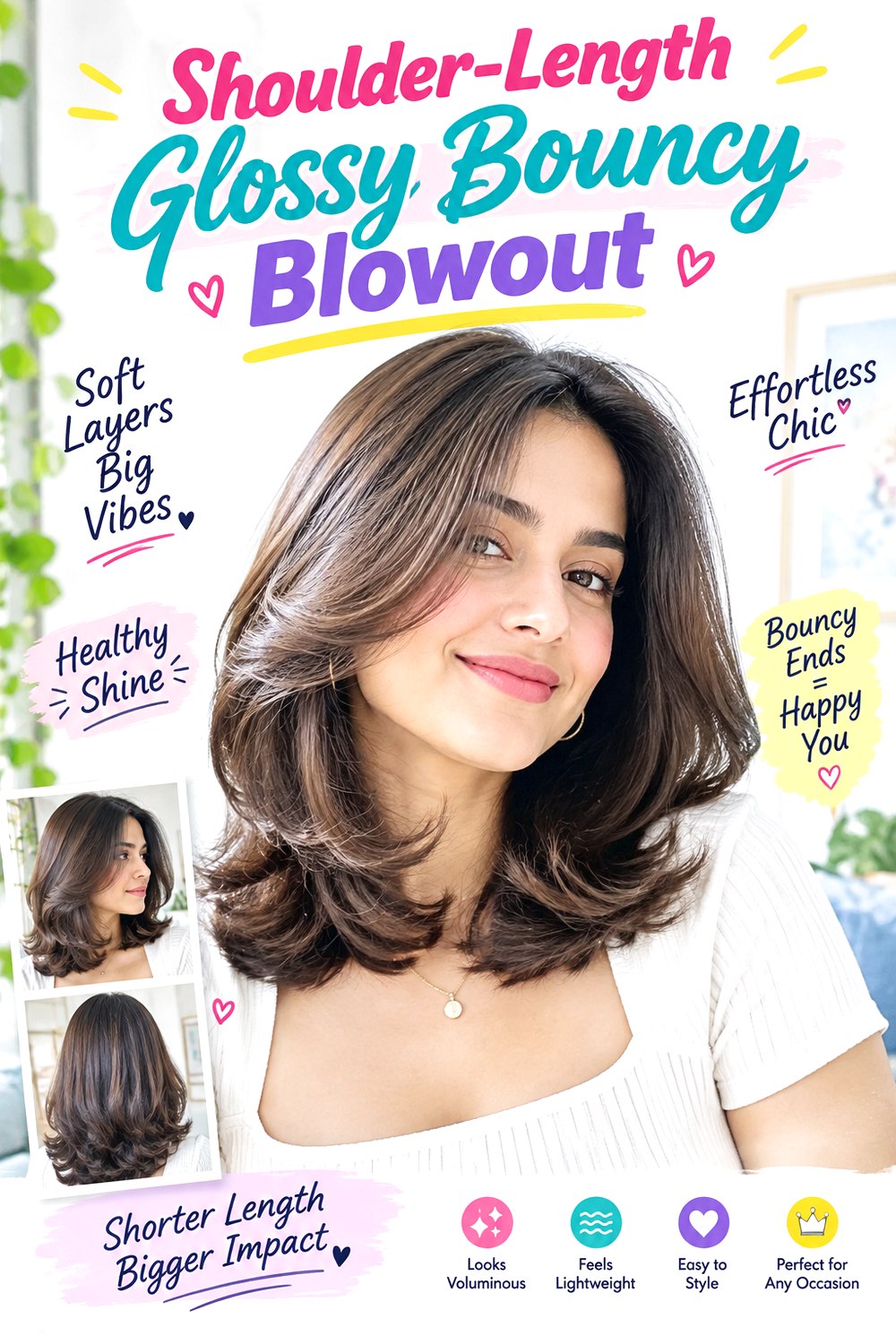
Shoulder-length hair creates a compact bouncy blowout with plenty of visible movement at the ends. Because the perimeter sits directly against the shoulders, the finish works best when the ends are deliberately rounded rather than allowed to flip in random directions. Fine hair can look fuller at this length, while thick hair may need internal weight reduction so the shape does not become triangular. Straight and wavy textures are both suitable. Use heat protectant, a medium round brush, and a small amount of smoothing serum on the lower lengths. Styling is moderate and generally faster than a long blowout because the sections are shorter. Scarves, coats, and collars can create static, so a light anti-frizz refresh may help. At the salon, ask for a strong shoulder-length perimeter with subtle movement and clarify whether you want the ends curved under, outward, or softly rounded.
Pro tip:
Use a medium brush rather than an oversized one at this length; it gives enough curvature to control the ends without making them look tightly curled.
Glossy Bouncy Blowout Lob with Rounded Ends hairstyle

A collarbone lob creates a bouncy blowout with a strong perimeter and just enough length for broad rounded movement. The ends can curve under softly while the roots retain a little lift, giving the haircut volume without turning it into a full layered blowout. Fine to medium hair benefits from the fuller baseline, while thick hair may need hidden internal shaping so the sides do not become bulky. Straight and wavy textures work well. Use heat protectant, a medium round brush, and lightweight smoothing cream. Styling takes moderate time and is easy to refresh because the movement stays concentrated around the lower third. Trim maintenance is important once the lob loses its clean edge. At the salon, ask for a strong collarbone-length perimeter with minimal exterior layering and enough internal softness for the ends to bend smoothly without looking heavy.
Pro tip:
Roll only the last few inches around the brush; curling higher into the lob can make the whole shape look too round.
Glossy Bouncy Blowout with Wispy Bangs hairstyle

Wispy bangs add a light fringe to a glossy bouncy blowout without removing as much density from the front as a heavier bang section. The fringe should separate softly across the forehead and blend into longer temple pieces, while the rest of the hair keeps rounded movement through the layers. Fine and medium hair usually suit this effect best, though thick hair can wear it with carefully controlled bang density. Straight and softly wavy textures are easiest to shape. Use a small round brush for the fringe, heat protectant through the lengths, and flexible hairspray for a soft finish. Styling takes moderate time because the bangs often need a quick refresh even when the blowout still looks good. Fringe trims may be needed between full haircuts. At the salon, specify how sheer you want the bangs and where the longest side pieces should merge into the face frame.
Pro tip:
Dry wispy bangs from side to side before shaping them downward; this helps prevent stubborn splits without adding too much height.
Glossy Bouncy Blowout with Flipped Ends hairstyle

Flipped ends add an outward curve to a bouncy blowout, creating more visible movement around the shoulders and lower layers. The upper sections stay smooth and polished, while the final few inches turn away from the neck. Shoulder-length to long hair works best because there is enough length for the flip to feel broad rather than sharp. Fine hair benefits from a solid perimeter, while thick hair may need internal weight control. Use heat protectant, a medium round brush, and flexible hairspray focused on the ends. Styling takes moderate time because each section needs a consistent direction. Humidity can soften the flip, but the finish is usually easy to refresh with a brush or rollers. At the salon, ask for long connected layers and enough perimeter weight to support an outward bend without creating thin, scattered ends.
Pro tip:
Start turning the brush outward only near the final two or three inches; flipping too high creates unnecessary width through the lower half.
Glossy Bouncy Blowout with C-Shaped Layers hairstyle
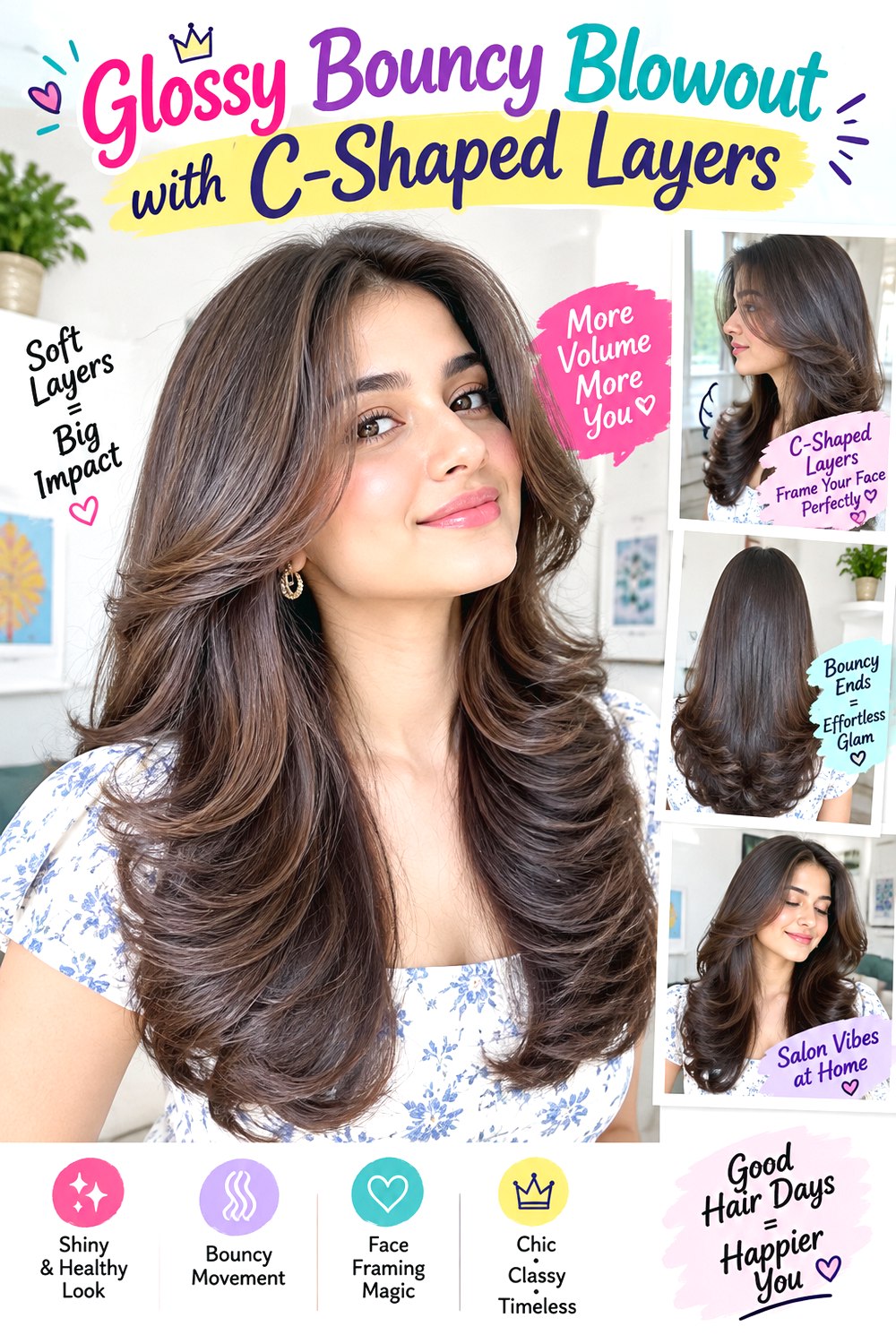
C-shaped layers create a sculpted blowout by curving around the face and shoulders in broad, connected arcs. The shortest pieces may begin around the cheekbones or jaw, with longer layers following the same curved direction through the length. Medium and thick hair show the shape most clearly, while fine hair should use fewer layers to keep the perimeter full. Straight and wavy textures are easiest to form with heat. Use heat protectant, a large round brush, and oversized rollers to set the strongest curves while they cool. Styling takes moderate to longer time because each layer needs deliberate direction. The haircut also needs reshaping once the C-curves grow too low to frame the face correctly. At the salon, ask for connected C-shaped layers instead of short feathering, and specify the exact point where you want the first curve to begin.
Pro tip:
Direct the upper layers away from the face and the lower layers slightly inward; that contrast helps the C-shape look dimensional instead of uniformly curled.
Extra-Long Glossy Bouncy Blowout hairstyle

Extra-long hair needs carefully placed movement so a blowout does not look heavy or flat through the bottom half. Keep the crown smooth with moderate lift, then build broad bounce through the lower layers and ends. Medium and thick density naturally supports the fullness, while fine extra-long hair should use minimal layering to prevent the perimeter from becoming thin. Straight and wavy textures are practical, though the total styling time increases with length. Use heat protectant, a large ceramic round brush, and oversized rollers through the lower sections. Styling takes longer because every section must dry fully before cooling. Regular trims are important since split ends are more visible on a glossy finish. At the salon, ask to preserve substantial perimeter weight and keep the longest layers connected. Avoid removing too much density simply to make the hair feel lighter.
Pro tip:
Set only the lower half in large rollers if you want bounce without adding unnecessary volume around an already-long crown section.
Glossy Bouncy Blowout with Root Lift hairstyle

Root lift puts the strongest volume at the crown and front while keeping the rest of the blowout smooth and bouncy. Fine and medium hair benefit most because added height prevents the style from falling flat at the scalp. Thick hair can use a smaller amount of lift and focus instead on smoothing the sides. Straight and wavy textures respond well to targeted blow-drying. Use root-lifting spray, a vent brush for rough drying, and a large round brush to set the crown. Styling takes moderate time but is easy to refresh the next day by reworking only a few top sections. Avoid heavy conditioner near the roots because it can reduce volume quickly. At the salon, ask for long crown layers that encourage movement without becoming so short that they stick up or separate from the glossy outer surface.
Pro tip:
Dry the crown briefly in the opposite direction from where it will fall, then flip it back after cooling for lift without heavy teasing.
Glossy Bouncy Blowout with Deep Side Sweep hairstyle
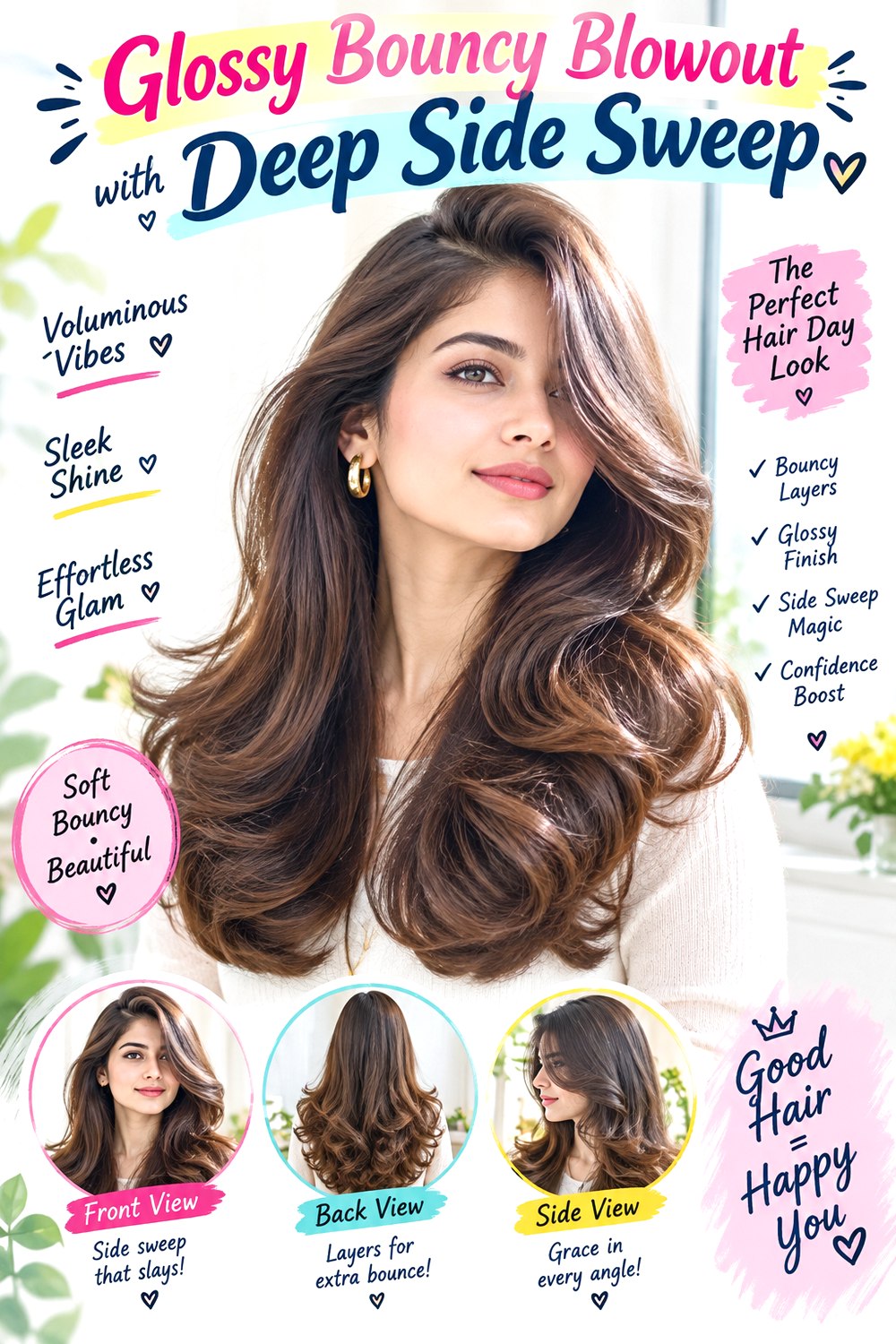
A deep side sweep creates more drama at the front by directing a larger section of hair across the forehead and away from the face. The heavier side carries extra root lift before flowing into rounded long layers, while the lighter side can tuck neatly behind the ear. Fine hair gains visible fullness from the shifted part, while thick hair may need less front density to keep the sweep manageable. Straight and wavy textures both work well. Use volumizing mousse, a large round brush, and flexible hairspray to support the front curve. Styling takes moderate time because the sweep needs to cool in position before it is released. At the salon, show where you normally place your side part and ask for front layers that follow that direction. The shortest section should blend smoothly into the side instead of ending abruptly near the temple.
Pro tip:
Set the sweep backward rather than directly across the forehead; the backward angle creates lift first, then lets the hair fall softly into place.
Polished Glossy Bouncy Blowout with Blunt Ends hairstyle

Blunt ends give a glossy bouncy blowout a denser, cleaner lower edge, while the root area and mid-lengths provide enough movement to keep the haircut from looking rigid. This approach works especially well for fine and medium hair because the perimeter stays full. Thick hair can also wear it when internal weight is removed without disturbing the visible baseline. Straight hair shows the blunt edge most clearly, while lightly wavy hair adds natural body. Use heat protectant, a paddle brush for the initial dry, and a large round brush for a subtle bend through the ends. Styling takes moderate time, but maintenance is straightforward when the perimeter remains freshly trimmed. At the salon, request a clearly defined blunt baseline with minimal exterior layering and discuss any internal debulking carefully so the ends do not become thin or uneven.
Pro tip:
Keep the round brush almost straight through the final inch and add only a gentle curve; too much rolling can hide the strong blunt perimeter.
Choosing Glossy Bouncy Blowout Hairstyles for Fall 2026
The best glossy bouncy blowout hairstyles for Fall 2026 can be adjusted through length, layer density, fringe, root volume, parting, texture, and the direction of the ends. Fine hair often benefits from a fuller perimeter, restrained layers, and lightweight lift, while thick hair usually needs controlled internal weight removal. Curtain bangs and face-framing pieces put more movement near the face, while blunt ends create a denser finish. Straight hair generally needs less smoothing, whereas naturally wavy hair can contribute useful body when frizz is controlled. A center part feels balanced, while a side part produces stronger lift. Choose the version that fits your face shape, natural texture, density, maintenance preference, heat routine, and realistic styling time.
Choose one or two favorite ideas and save clear photo references showing the front, sides, and back. Discuss your face shape, natural texture, density, preferred length, maintenance level, and normal styling routine with your stylist. Point out the exact layers, fringe, parting, root volume, end direction, and level of shine you like. Clear references make it easier to build a haircut that supports the blowout without requiring more heat, product, or daily effort than you actually want.
FAQs
Do glossy bouncy blowouts work on fine hair?
Yes. Fine hair usually benefits from lightweight root volume, minimal thinning, longer layers, and a fuller perimeter that keeps the ends from looking sparse.
How can I make a bouncy blowout last longer?
Let each section cool fully before brushing it out, use lightweight hold rather than heavy product, and refresh only the crown or front pieces when needed.
Are glossy bouncy blowouts suitable for thick hair?
Yes. Long layers and strategic internal weight removal can reduce bulk, while larger brushes and careful sectioning help create smooth, controlled movement.
Do I need heat every day to maintain this style?
Not necessarily. After the initial blowout, rollers, a quick root refresh, or reshaping a few face-framing sections can often restore bounce without restyling all the hair.