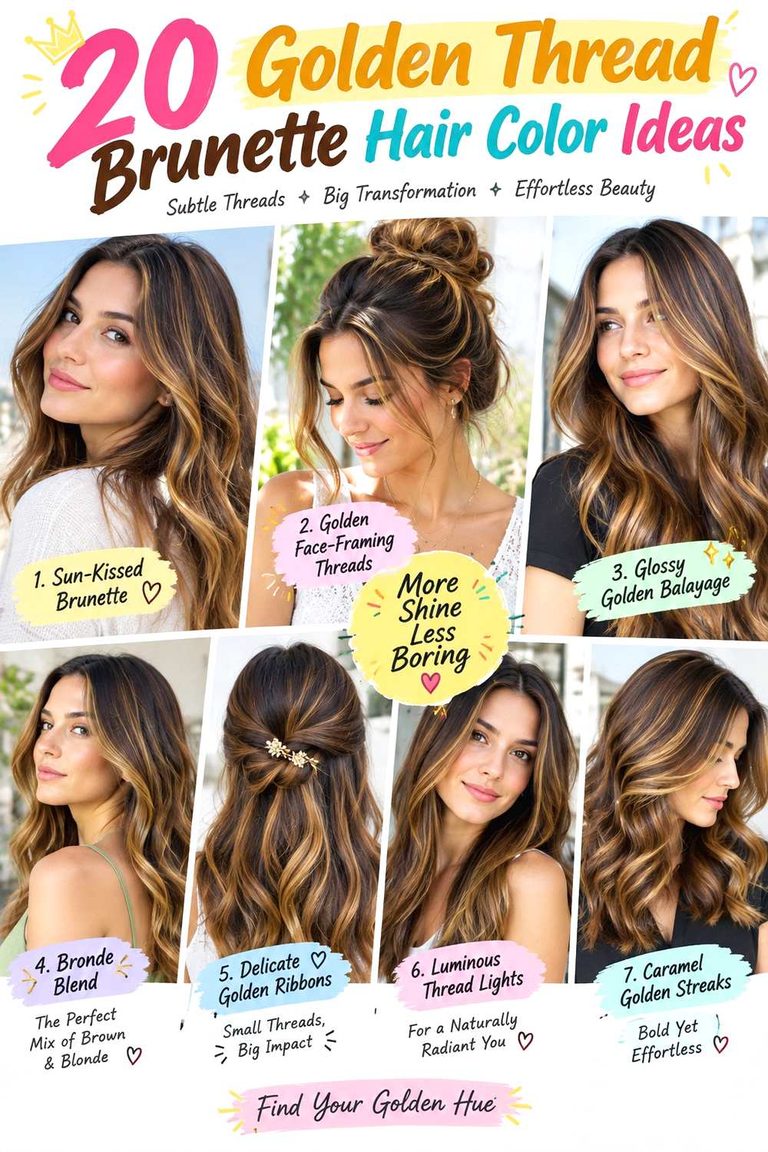
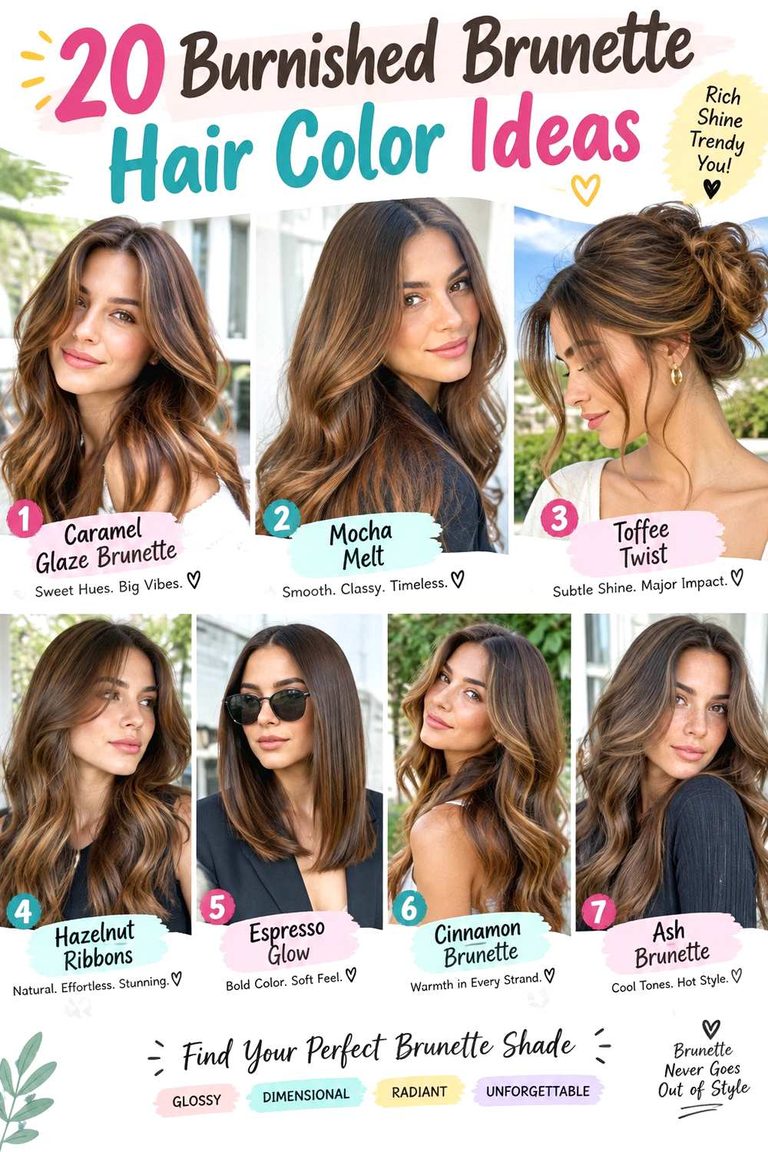
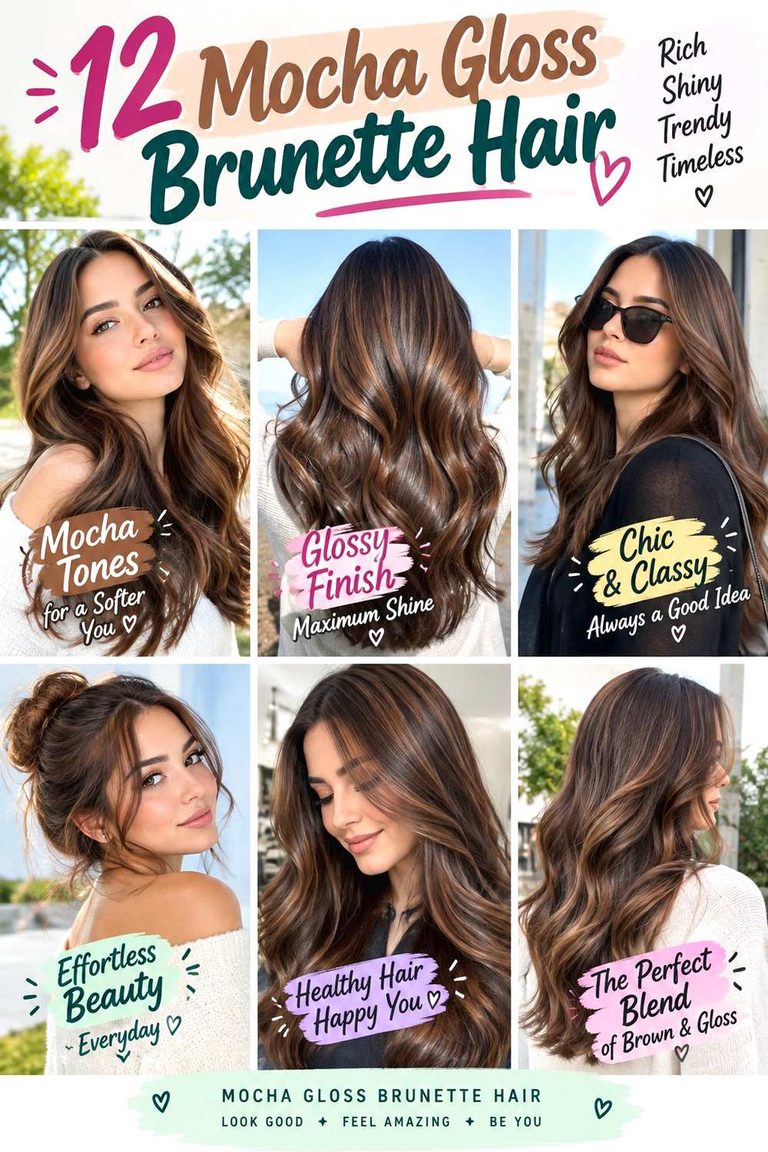
10 Coffee Mocha Brunette Hair Color Ideas
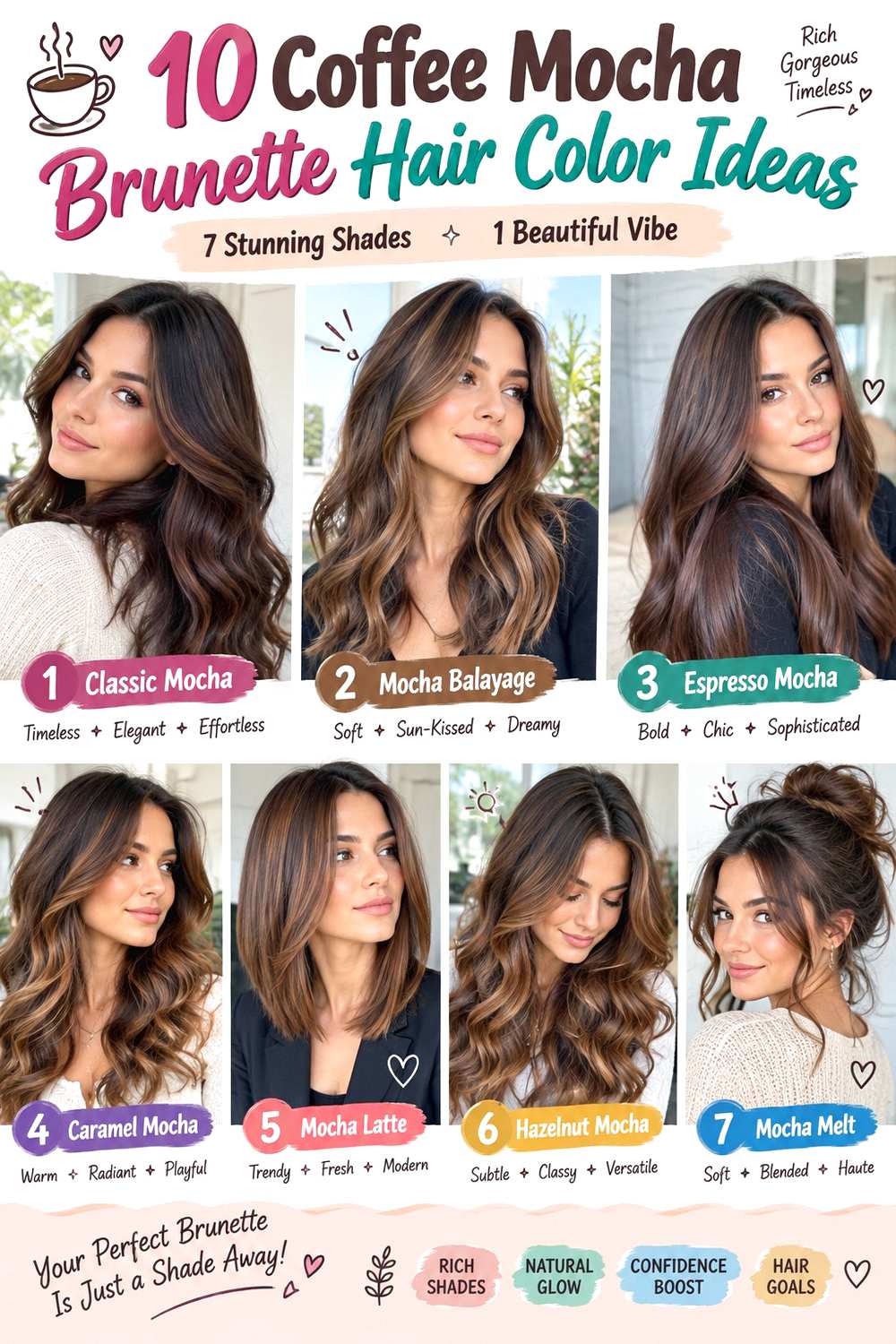
Coffee mocha brunette hair color sits between deep brown and softer café-inspired tones, using controlled dimension rather than one flat shade. The base can stay espresso-dark, medium brunette, or chocolate brown, while mocha ribbons, face-framing brightness, or a glazed finish add movement. On long hair, layers can reveal more contrast; on bobs and lobs, the same color often reads as a cleaner block with smaller flashes of depth. Fringe, parting, wave pattern, and root volume also change where lighter pieces appear.
Straight, wavy, curly, and coily textures can all carry this color family, but placement should respect the way the hair naturally falls and groups. Dense hair may show more interior dimension when selected sections are lightened, while lower-density hair often benefits from keeping contrast closer to the surface so the ends still look visually full. Around the face, brightness can start at the temples, cheekbones, jaw, or lower, depending on how much contrast you want.
Maintenance depends on the starting shade and the amount of lift required. A near-natural mocha gloss may grow out quietly, while brighter ribbons or a face frame usually need more visible touch-ups. Styling effort is separate: a quick between-wash refresh can take only a few minutes, while a full wash-day finish varies with length, density, texture, and the amount of definition you want.
Quick List
- Glossy Espresso Mocha Melt Hairstyle
- Soft Latte Mocha Balayage Hairstyle
- Cocoa Ribbon Brunette Hairstyle
- Iced Coffee Face Frame Hairstyle
- Dark Roast Mocha Ombre Hairstyle
- Milk Chocolate Mocha Blend Hairstyle
- Caramel Mocha Money Piece Hairstyle
- Smoky Mocha Lowlights Hairstyle
- Chestnut Mocha Dimension Hairstyle
- Mushroom Mocha Brunette Hairstyle
Glossy Espresso Mocha Melt Hairstyle

A deep espresso base melting into slightly softer mocha through the mid-lengths creates dimension without obvious stripes. The roots stay rich and compact, while the lighter brown appears more clearly from around the jaw downward, especially where the hair bends. A center or soft side part both work because the placement is broad rather than tied to one front section. Keeping the ends only a little lighter preserves a dense-looking finish instead of creating a pale, disconnected bottom.
This option suits readers who want a low-contrast brunette and do not want every new centimeter of growth to stand out. The amount of lift depends on the starting color, so ask the colorist to keep the root area close to your natural depth and explain how soft you want the transition below the jaw. A color-safe shampoo helps slow visible fading, while a lightweight shine serum can make the tonal shift easier to see without adding stiffness. Between washes, a quick refresh may only involve resetting the part and smoothing the ends; a full wash-day finish takes longer according to texture, length, and density. Refresh the gloss when the mocha loses clarity, and reassess the melt if the lower lengths begin to look noticeably lighter than the root area.
Pro tip:
Photograph your preferred mocha depth in daylight before the appointment; indoor lighting can make brown tones look warmer or darker, so a clear reference helps define the target.
Make It Work for You:
If your ends are sparse, keep the lightest mocha concentrated through the mid-lengths and let the bottom stay closer to the base. The melt remains visible without making the perimeter appear thinner.
Watch Out For:
Do not push the transition too high if you want a low-maintenance root. Keep the deepest zone generous enough that new growth blends into the design.
Soft Latte Mocha Balayage Hairstyle

Soft latte-mocha balayage places lighter brunette strokes on the surface and outer mid-lengths, leaving enough deeper brown between them to keep the result grounded. The brightest pieces can begin below the cheekbones and become a little more visible toward the ends. On layered hair, that placement follows movement naturally; on a blunt lob, fewer wider pieces can prevent the color from looking busy. A middle part gives a balanced effect, while a side part can make one face-framing section more noticeable.
This approach is useful for someone who wants visible dimension but prefers a softer grow-out than a full highlight pattern. Wavy and curly textures can show the contrast in broader groups, while straight hair often reveals every individual ribbon more clearly. Ask the colorist where the lightest sections will begin and how much untouched brunette will remain around the perimeter; that spacing controls the overall depth. A color-safe shampoo supports tone longevity, and a moisturizing mask helps keep lightened lengths feeling conditioned. A short between-wash refresh can focus on redefining the part or natural movement, whereas wash-day styling varies with texture and density. Revisit the balayage when the brighter sections have drifted too low or the tone no longer reads as mocha rather than simply faded brown.
Pro tip:
Ask to see the intended balayage placement with your usual part in place, because moving the part later can shift the brightest surface pieces away from where you expect them.
Make It Work for You:
For curls or coils, plan the lighter sections around the way your curls group when dry. Wider painted areas can remain visible without breaking the natural pattern into tiny, scattered stripes.
Watch Out For:
Too many pale pieces near the ends can erase the brunette base. Keep visible pockets of deeper color between sections so the result still reads as mocha.
Cocoa Ribbon Brunette Hairstyle

Cocoa ribbons create a defined pattern rather than a seamless balayage, with narrow medium-brown sections running through a deeper brunette base. The ribbons can start near the temples, continue through the mid-lengths and ends without turning the whole head lighter. Broad waves make the contrast easy to see, but straight hair can display the placement clearly. Keeping the root area darker and the bottom edge mixed with both dark and lighter strands maintains depth from top to bottom.
Choose this idea if you like recognizable dimension and are comfortable with a little more color maintenance than a nearly solid brunette. Medium to dense hair can hold several visible ribbons, while lower-density hair may benefit from fewer sections concentrated near the surface. Explain how narrow you want the ribbons and whether you prefer them evenly spaced or more irregular; that changes whether the effect feels graphic or blended. Use a color-safe shampoo to reduce premature fading and a lightweight leave-in conditioner to keep the lightened sections supple. Quick refresh between washes mostly restores movement, while full wash-day styling takes longer depending on length and texture. Plan a tonal refresh when the cocoa pieces become brassy or flat, and reposition them only when the growth changes the intended pattern.
Pro tip:
Keep a few ribbons closest to the face slightly finer than the interior pieces; this can soften the transition at the hairline while preserving clear dimension elsewhere.
Make It Work for You:
If you prefer straighter styling, use fewer, deliberately spaced ribbons because every section will show clearly. Wavy hair can support closer placement since bends naturally interrupt the pattern.
Watch Out For:
Avoid making every ribbon identical in width and spacing unless you want a graphic effect. Vary placement slightly to keep the brunette depth from looking mechanically striped.
Iced Coffee Face Frame Hairstyle
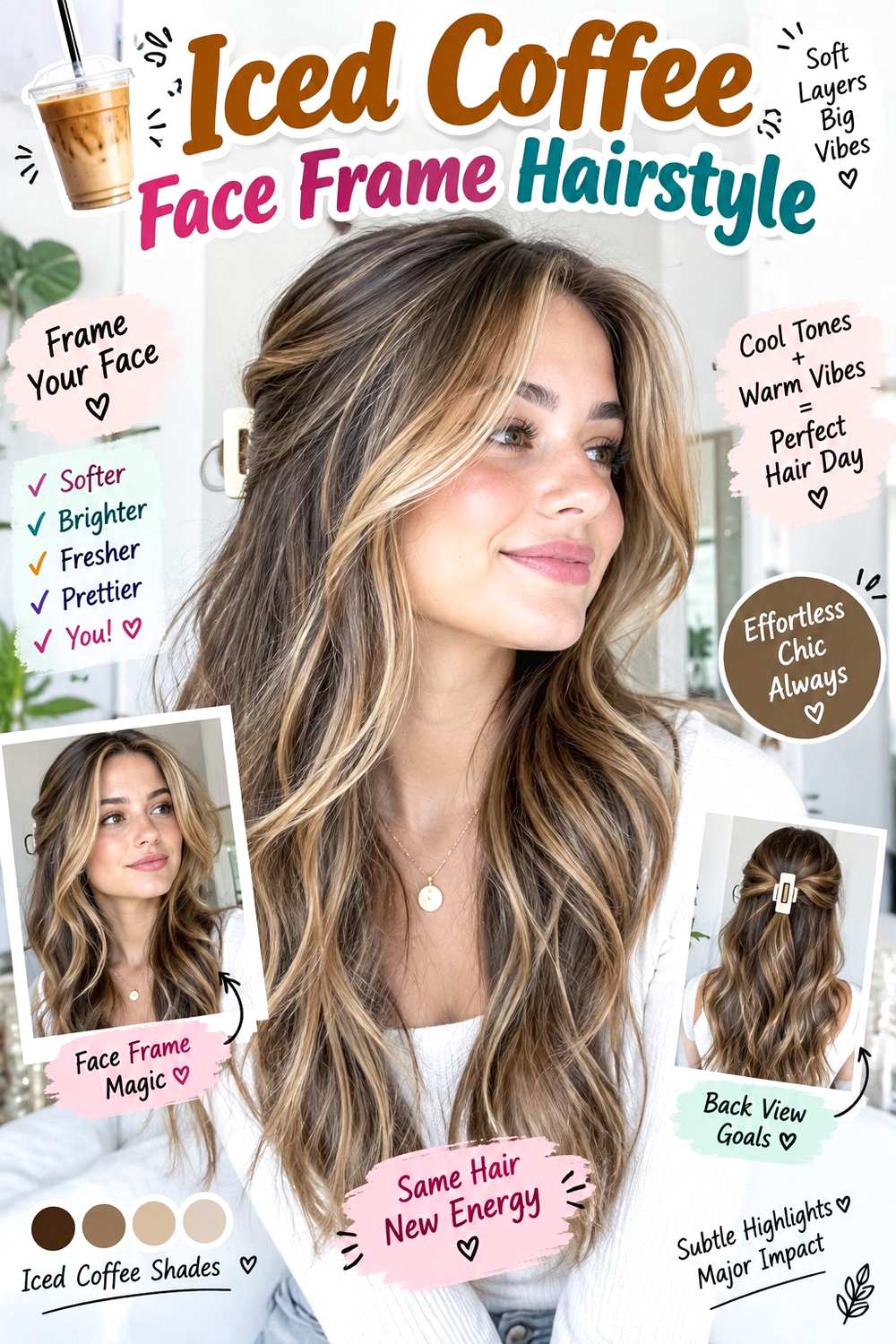
An iced-coffee face frame keeps most hair deep brunette while placing cooler, lighter mocha pieces around the front. The contrast can begin at the hairline and widen gradually toward the cheekbones or jaw, so the color reads as a deliberate frame rather than two isolated streaks. A center part creates symmetry, while an off-center part makes the brighter section more directional. The remaining lengths stay darker, which lets the front placement remain the main feature whether the hair is straight, wavy, or curly.
This works for readers who want a noticeable change without lightening large areas of the hair. Because the front pieces are visible, their finished tone and width matter more than having many highlights elsewhere. Ask the colorist to show where the lightest section will sit when your hair is parted the way you normally wear it, and discuss how cool or neutral the mocha should look against your base. A blue-toning conditioner can help control unwanted orange warmth when appropriate for finished shade, while a color-safe shampoo supports overall fade control. A quick refresh may simply involve resetting the front pieces; full wash-day styling varies with texture. Maintain the frame when regrowth creates more contrast at the hairline than you like, rather than following a fixed calendar.
Pro tip:
Wear your usual part when discussing the front placement, and show how you tuck or sweep those pieces. The color should follow the way the hair actually sits.
Make It Work for You:
For a softer change, keep the face frame only one or two tonal steps lighter than the base and begin the strongest brightness below the temples rather than at the roots.
Watch Out For:
Do not overuse blue toning products just because the target is cool. Too much deposit can dull the mocha; use them only when unwanted orange warmth is visible.
Dark Roast Mocha Ombre Hairstyle
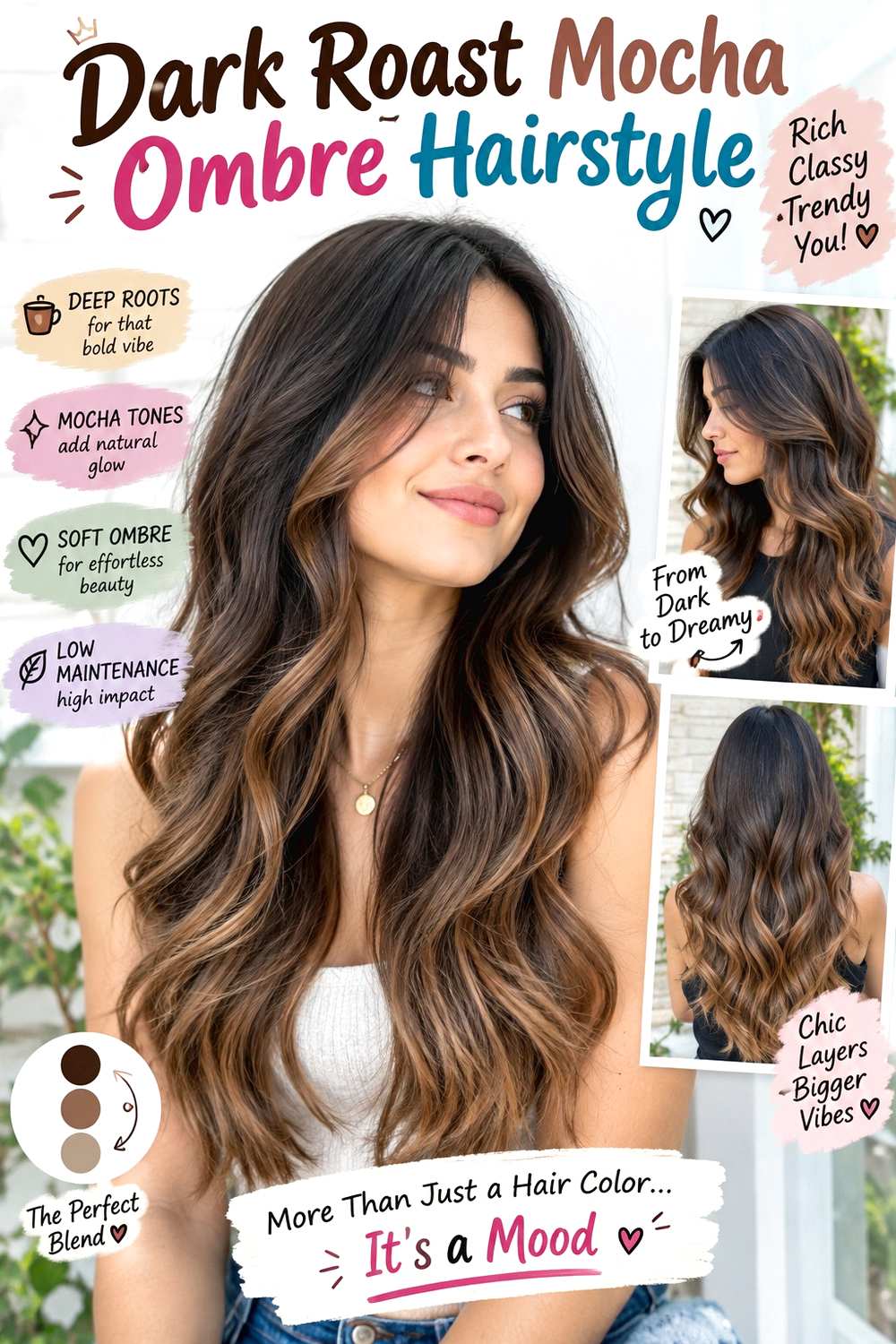
Dark roast mocha ombré keeps the upper hair deep brunette and shifts gradually into a softer coffee-brown through the lower lengths. The transition can start around the shoulders on long hair or lower on a lob, leaving a dark zone before the change. Waves make the gradient look fluid, while straight ends show exactly how smooth the blend is. Keeping some dark strands through the ends can stop the bottom from appearing detached from the root color.
The appeal here is lower root maintenance because new growth stays within the darkest zone. It can suit many textures, but the amount of lift and end condition should guide how light the lower section becomes. Tell the colorist the exact height where you want the transition to begin and ask to preserve enough dark depth; moving the blend too high changes the whole silhouette. A color-safe shampoo helps protect the brunette tone, and a conditioning mask supports the lighter ends. Between washes, a short refresh can focus on reshaping the lower movement; full wash-day styling depends on length, density, and texture. Reassess the color when the transition has grown too low or when repeated toning no longer keeps the ends within the intended mocha range.
Pro tip:
Choose the transition height while your hair is worn at its usual length and texture. A blend that starts too high can look more like full balayage than ombré.
Make It Work for You:
On shorter hair, keep the gradient compressed but still leave a clearly dark upper section. That preserves the dark-roast identity without forcing the lighter tone into the root area.
Watch Out For:
Watch for porous ends grabbing tone darker or fading faster than the mid-lengths. Ask for an even visual finish rather than repeatedly adding more lightener to correct it.
Milk Chocolate Mocha Blend Hairstyle
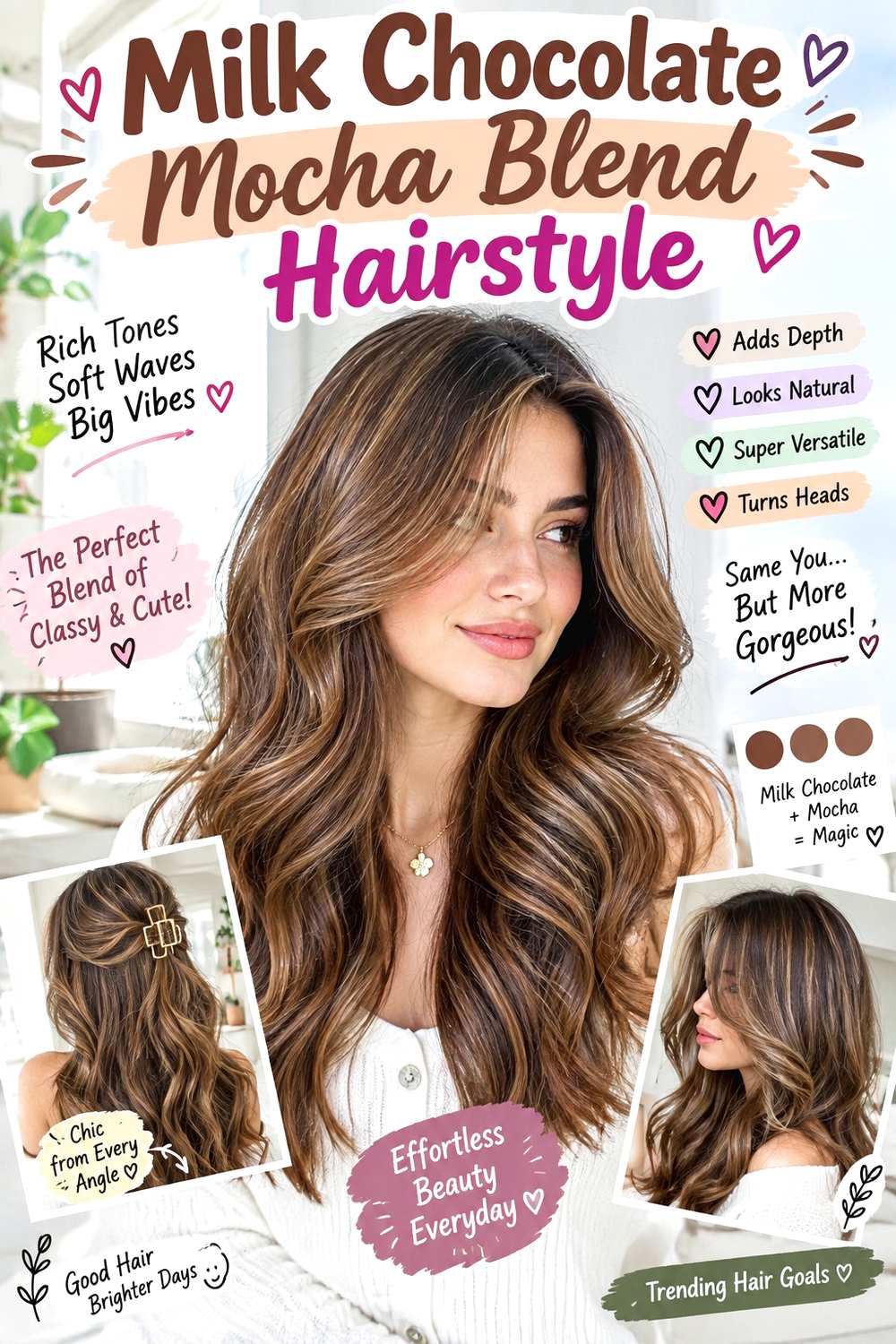
Milk-chocolate mocha uses a medium brunette base with subtle lighter and deeper brown tones woven close together, so the effect stays soft rather than high contrast. The color can begin near the roots with a slight shadow and continue evenly through the mid-lengths and ends. On straight hair, the blend reads smooth and polished; on waves or curls, small tonal shifts appear as the hair changes direction. A side or center part works because no single highlight carries the design.
This is a practical option for someone who wants an all-over brunette refresh with gentle dimension rather than obvious ribbons. It works especially well when the starting color is already in the medium-brown family, although darker or previously colored hair may require another route. At the salon, explain how much root depth you want to retain and whether the ends should match the mid-lengths or stay slightly brighter. A sulfate-free color-safe shampoo helps control fading, while a glossing conditioner helps maintain surface shine. A quick refresh between washes may just smooth flyaways and restore the part; a full wash-day finish varies with texture and density. Refresh the tone when the blend starts looking flat or overly warm, and avoid chasing brightness if it would compromise the soft, close-toned effect.
Pro tip:
Compare the target color in both daylight and indoor light before committing; close-toned brunettes can shift visually, and the finish should still feel balanced in your normal environment.
Make It Work for You:
If your natural base is darker, keep more depth at the roots and let the milk-chocolate tone appear gradually through the surface. You retain the soft blend without chasing uniform lightness.
Watch Out For:
Do not confuse softness with flatness. If every section lands at the same brown level, ask for restrained depth underneath rather than adding more brightness everywhere.
Caramel Mocha Money Piece Hairstyle
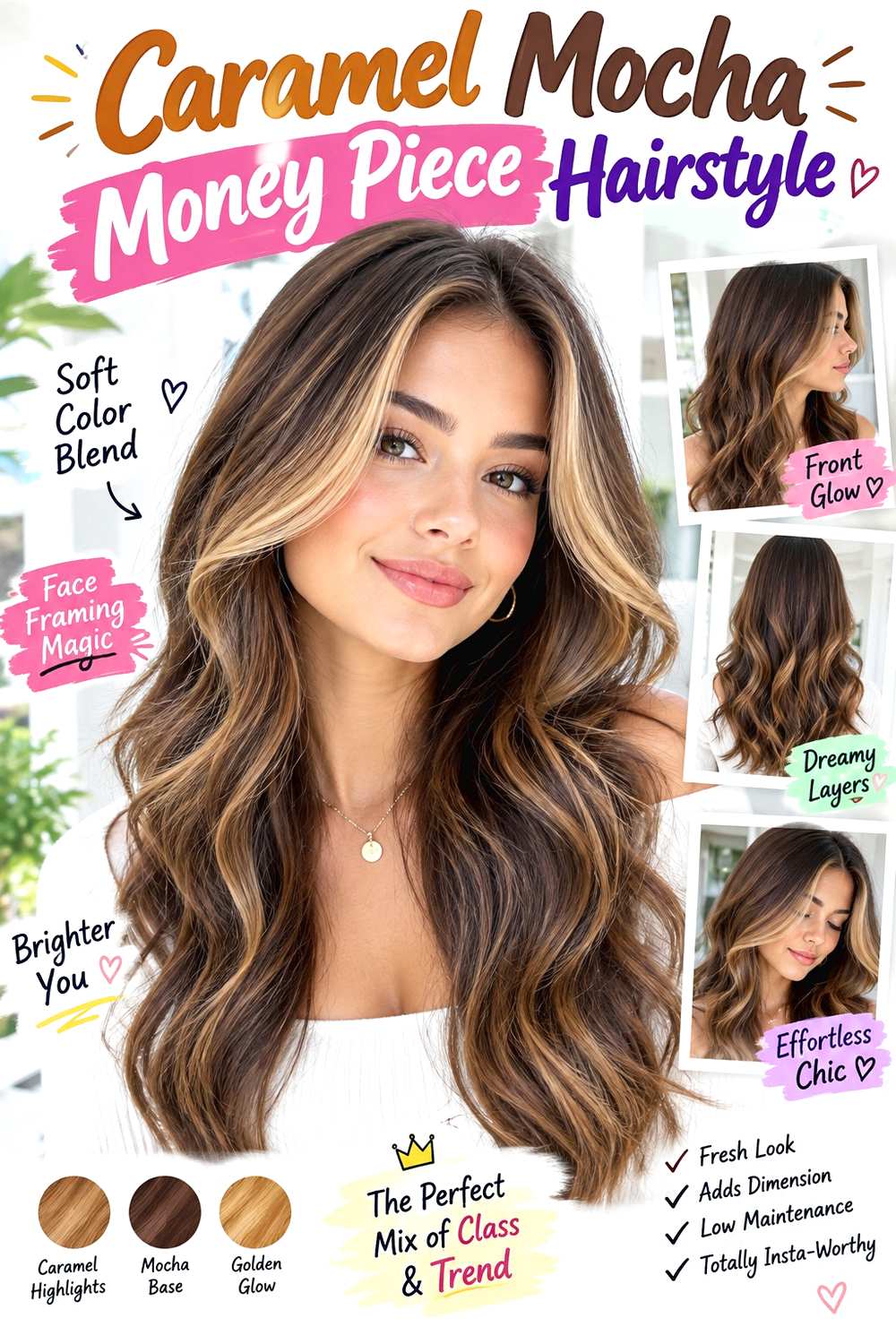
A caramel-mocha money piece concentrates lighter brunette at the front while keeping the interior and back deeper. The front section can be slim and blended for a quiet accent or wider for stronger contrast, then taper into mocha ribbons near the jaw. A center part makes the pair of pieces prominent, while a side part turns one section the main focus. Keeping the ends mixed with darker brown prevents the front brightness from making the rest feel disconnected.
This idea suits readers who enjoy a clear focal point and will maintain the hairline more often than an ombré. The brightness should be adjusted to the starting color and to how much contrast you actually want; caramel-mocha does not require a very light blonde result. Ask the colorist to agree on the width of the money piece and where its strongest brightness should end around the face. A color-safe shampoo helps slow fading, and a toning mask in the appropriate brunette range can refresh the visible front tone between appointments. A brief refresh may involve repositioning the front sections, while full wash-day styling depends on your texture and length. Touch up when regrowth interrupts the intended frame, not simply because the rest of the brunette has grown.
Pro tip:
Decide whether you wear the front tucked behind your ears, swept back, or forward. That habit changes how wide the money piece appears once it is finished.
Make It Work for You:
For lower-density hair, keep the money piece narrow and blend it into a few nearby mocha threads. The front still catches light without creating a stark gap against deeper sections.
Watch Out For:
A front piece that is much lighter than the rest can drift from brunette into blonde. Keep the contrast within the coffee palette if mocha is the goal.
Smoky Mocha Lowlights Hairstyle

Smoky mocha lowlights add depth rather than brightness, placing cooler dark-brown sections through medium brunette. The darker pieces can sit beneath the surface and around the lower sides, where they create shadow when the hair moves without making the crown striped. Broad waves reveal the alternating depth, while straight hair gives a subtle, blended result. Keeping the face frame close to the base color can make the darker interior feel intentional instead of heavy around the front.
This works when existing brunette feels too flat or uniformly light and you want more depth without adding overall brightness. Fine strands and lower-density hair may need fewer lowlights so the result does not look too dark, while dense hair can support more interior contrast. At the salon, explain where you want the depth concentrated—under the crown, through the mid-lengths, or toward the ends—because placement matters as much as tone. A color-safe shampoo supports fade control, and a lightweight shine spray helps the cool brown reflect light without hiding the lowlight pattern. A quick refresh between washes can focus on separating sections and restoring movement; full wash-day styling varies with density and texture. Reassess the tone if the lowlights fade warmer than intended or begin merging into one flat dark mass.
Pro tip:
Place the deepest lowlights where your hair naturally separates around the lower sides and back. Movement will reveal the depth without making the top surface look overly dark.
Make It Work for You:
If your brunette is already quite dark, choose lowlights only slightly deeper and use fewer of them. The goal is visible shadow and separation, not an almost-black overall result.
Watch Out For:
Too many cool lowlights can make the color look muddy in low light. Preserve some medium brunette between them so the smoky dimension remains readable.
Chestnut Mocha Dimension Hairstyle

Chestnut mocha dimension combines a neutral brunette base with restrained reddish-brown warmth, creating a richer coffee tone rather than overt copper. The warmer pieces can sit through the mid-lengths and around the face, with deeper brown at the roots and underneath. Loose bends show the contrast, but the color also works on straight or naturally textured hair because the difference comes from tone. Keeping the ends balanced between chestnut and mocha avoids an orange-heavy finish.
This option suits someone who wants warmth but still wants a brunette result. Starting color matters: natural dark hair, prelightened hair, and old color can respond differently, so the salon plan should focus on the visible target rather than a formula. Ask the colorist how much red-brown warmth will be visible in daylight and where it will be most concentrated around the face. A color-safe shampoo helps slow fading, while a brunette color-depositing mask can refresh warmth when it begins to look dull. A quick refresh between washes is mainly about restoring your usual part and movement; full wash-day styling depends on texture and length. Maintain the shade when the chestnut loses balance and starts reading either too red or too flat compared with the deeper mocha base.
Pro tip:
Bring a daylight reference that shows the amount of red-brown warmth you actually like. Chestnut can look much stronger under warm indoor lighting than it does outside.
Make It Work for You:
If you want less warmth around your face, keep the front closer to neutral mocha and place most chestnut through the mid-lengths. The overall color stays warm without dominating the hairline.
Watch Out For:
Do not chase fading warmth with repeated strong deposits. If the color turns too red, let your colorist rebalance the tone instead of layering more pigment at home.
Mushroom Mocha Brunette Hairstyle

Mushroom mocha brunette leans neutral to cool, mixing taupe-brown dimension into deep coffee without pushing the result toward ash-gray. Lighter pieces can begin around the temples and mid-lengths, then continue in narrow sections through the ends. A center part gives a balanced veil of cooler color, while a side part can concentrate it to one side. Straight hair shows the muted tone clearly; waves and curls break it into softer flashes that shift with movement.
Choose this direction if you prefer subdued brunette tones and accept the upkeep cooler color may need. Hair that naturally exposes strong warm undertones after lightening may need more tonal maintenance, and previously colored lengths may need more than one visit. At the salon, describe the finish as neutral-cool rather than simply “ashy,” and point to how much darker you want the root compared with the mid-lengths. A blue-toning conditioner may help manage unwanted orange warmth when appropriate, while a color-safe shampoo supports the overall brunette. A short refresh between washes can focus on smoothing and resetting the part; full wash-day styling varies with texture and density. Book a tonal refresh when warmth starts overpowering the mushroom effect, rather than repeatedly trying to make the shade cooler at home.
Pro tip:
Evaluate coolness in natural daylight before asking for more ash. Neutral-cool brunette can already look significantly cooler outside than it does under warm indoor bulbs.
Make It Work for You:
If your hair pulls warm easily, keep the mushroom pieces slightly deeper and closer to the brunette base. Less lift can make a restrained neutral result easier to maintain.
Watch Out For:
Avoid treating grayness as the goal. If the mocha starts looking dull or khaki, the tone may need rebalancing rather than another round of blue deposit.
Conclusion
Coffee mocha brunette hair color can be quiet and glossy or visibly dimensional, depending on placement. Longer lengths and layered cuts reveal more ribbons, while bobs and fuller perimeters can make a close-toned blend look denser. Fringe and face-framing pieces put color near the eyes, whereas a deeper root or lowlight pattern keeps the focus lower. Natural texture, density, parting, and preferred volume all affect how much contrast shows from day to day. A cool mushroom finish usually needs different tonal upkeep from chestnut warmth, and a money piece asks for more hairline maintenance than ombré. Choose the version that fits your starting color and routine, then adjust brightness and placement instead of copying every detail from a reference.
Before Your Salon Visit
Before your appointment, choose one or two favorites and save references that show the color clearly in useful lighting. Tell your colorist about your natural texture, density, face-framing preferences, current length, and usual part, plus how much upkeep and styling you realistically want. Point to the exact mocha depth, ribbon width, root shadow, face-frame brightness, or finish you like. If one reference has the right placement and another has the right tone, say that directly so the consultation stays specific.
FAQs
Is coffee mocha brunette hair color suitable for dark hair?
Yes, but the route depends on how dark the starting hair is and whether it has previous color. A deeper mocha gloss may need little visible lift, while lighter ribbons or a money piece may require controlled lightening. A professional should assess what is realistic without relying on a copied formula.
How often does mocha brunette color need refreshing?
There is no single schedule. A near-natural gloss can grow out softly, while a bright face frame shows regrowth sooner. Refresh when the tone loses its intended coffee-brown balance, the front contrast bothers you, or the placement has moved too far down for the design you chose.
Can curly or coily hair wear mocha brunette highlights?
Yes. The key is planning placement around the way curls or coils group when dry. Wider or strategically placed sections may stay more visible than many tiny highlights. Ask the colorist to judge the finished pattern on your usual texture, and account for shrinkage when evaluating where the brightness appears.
Do I need heat styling to show coffee mocha dimension?
No. Straight, wavy, curly, and coily hair can all show mocha dimension, just in different ways. Heat-styled waves may make ribbons more obvious, but natural movement can reveal the same placement. Choose a color pattern that still makes sense on your regular texture, not only on a polished salon finish.