14 Collarbone Lob Haircut Ideas
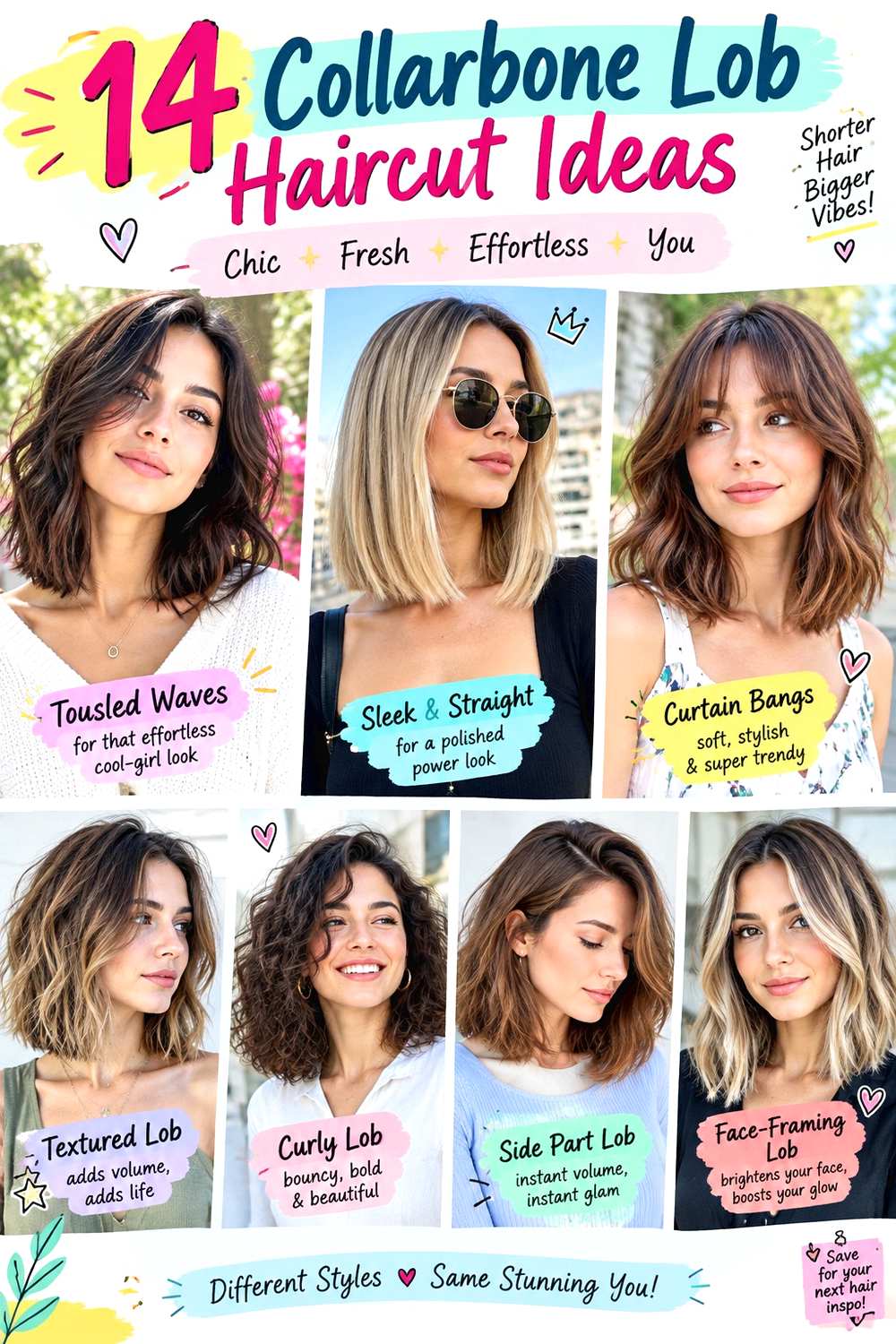
A collarbone lob haircut sits in the middle ground between a bob and longer hair, with the perimeter finishing around the collarbone rather than high at the jaw or well below the shoulders. Its shape can be blunt, softly layered, rounded, shaggy, sleek, or naturally textured. The most successful versions keep enough weight at the bottom to read as a lob while using face-framing pieces, fringe, or controlled layers to change movement, volume, and how the cut falls around the cheeks and neck.
Straight and wavy textures can show the outline clearly, while curly and coily hair can create a fuller silhouette with more visible spring and shrinkage. Density matters separately from texture: sparse ends often benefit from a stronger perimeter, while dense hair may need weight adjusted inside the shape so it does not widen where you do not want it. Face-framing can start at the cheekbone, jaw, chin, or lower depending on how open or structured you want the front to feel.
Styling effort ranges from a quick part-and-end refresh to a full wash-day blow-dry or curl-definition routine. A polished finish may ask for regular heat styling, while natural waves or curls can reduce daily reshaping when the cut supports their pattern. Maintenance is best judged by the fringe, bottom line, and layer placement: when those features stop sitting as intended, it is time to reshape the cut.
Quick List
- Blunt Center-Part Collarbone Lob Hairstyle
- Soft Face-Framing Collarbone Lob Hairstyle
- Curtain-Bang Collarbone Lob Hairstyle
- Side-Part Voluminous Collarbone Lob Hairstyle
- Textured Wavy Collarbone Lob Hairstyle
- Sleek Straight Collarbone Lob Hairstyle
- Rounded-End Collarbone Lob Hairstyle
- Airy Layered Collarbone Lob Hairstyle
- Shaggy Collarbone Lob Hairstyle
- Curly Collarbone Lob Hairstyle
- Coily Collarbone Lob Hairstyle
- Fine-Hair Full-Perimeter Collarbone Lob Hairstyle
- Dense-Hair Internal-Layer Collarbone Lob Hairstyle
- Flipped-End Collarbone Lob Hairstyle
Blunt Center-Part Collarbone Lob Hairstyle
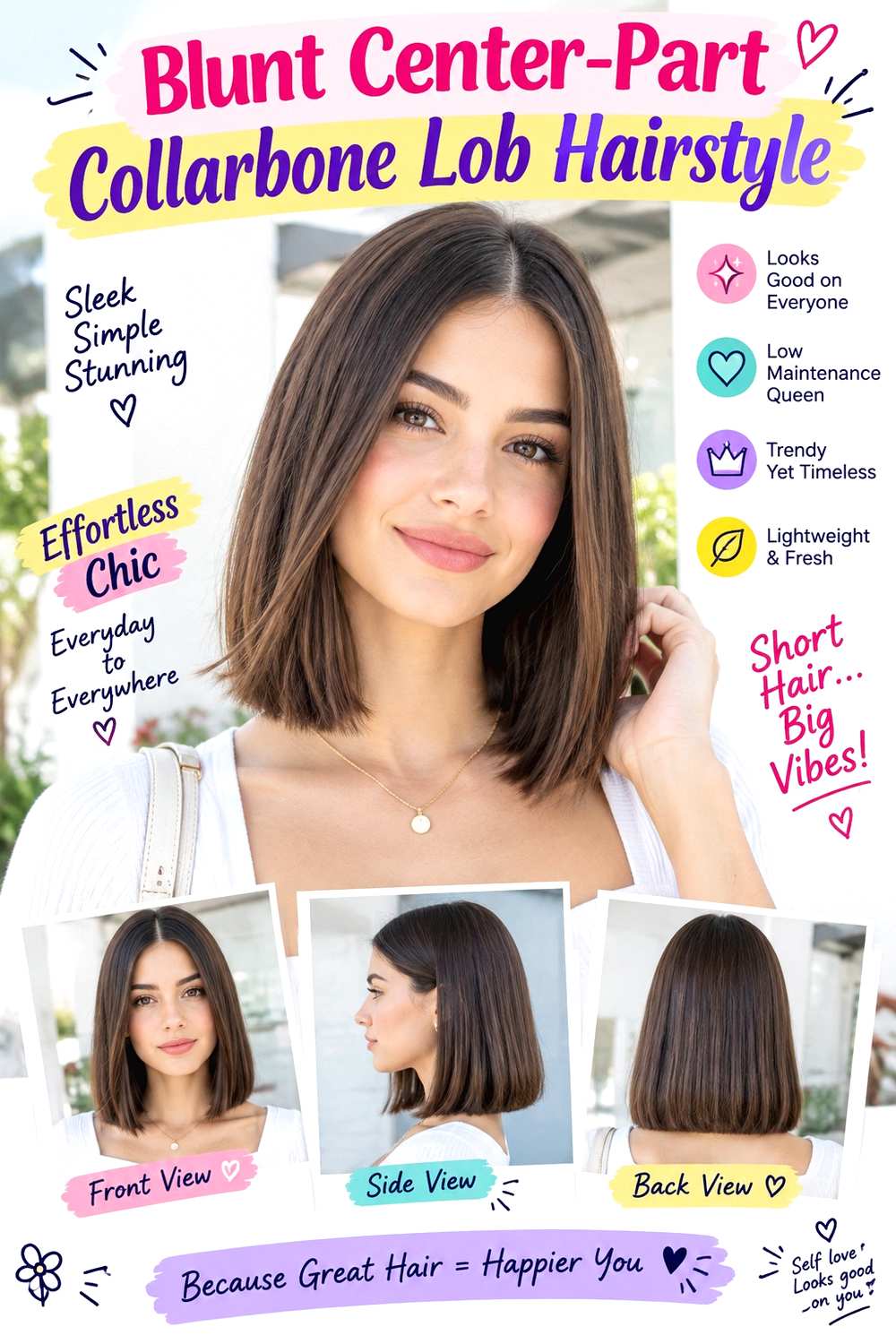
The defining feature here is a clean bottom edge that lands at the collarbone, with a center part and very little visible layering through the length. Keeping the ends compact gives the lob a strong outline and helps straight or gently wavy hair look intentional without needing a complicated set. The front can stay almost one length, or the stylist can soften only the pieces near the jaw so the cut does not feel severe. On denser hair, controlled weight removal inside the shape may prevent the sides from feeling bulky while preserving the blunt-looking perimeter.
A quick refresh can be as simple as resetting the part and smoothing bent ends. For a full styling day, apply heat protectant before using a flat iron to refine the surface, then work a small amount of lightweight serum over the tips to keep them neat without flattening the roots. If your natural texture has more wave, you can leave some movement rather than forcing every strand straight. Ask your stylist to show exactly where the bottom line will sit when dry, especially if your shoulders cause the ends to flip. Trim when the perimeter starts looking uneven or the front pieces stop joining the main line cleanly.
Pro tip:
After styling, tuck both sides behind your ears for a few minutes, then release them. This helps you check whether the perimeter still reads evenly from the front.
Make It Work for You:
If your ends are sparse, keep the collarbone line fuller and limit face-framing to a small front section. You still get movement without making the overall outline look wispy.
Watch Out For:
Do not overwork the ends with repeated flat-iron passes. That can make the bottom edge look stiff; use fewer passes and preserve a little natural movement.
Soft Face-Framing Collarbone Lob Hairstyle

Face-framing pieces make this collarbone lob softer without turning the whole cut into a heavily layered shape. Keep the main length grazing the collarbone, use a center or slightly off-center part, and let the shortest front pieces begin around the cheekbone or jaw before blending gradually into the sides. The back can stay comparatively full, so movement concentrates around the face instead of thinning the entire perimeter. This works well for straight, wavy, or softly curled textures and for readers who want visible shape without losing much length.
Between washes, a quick refresh may only require dampening the front and redirecting it away from the face. On a full styling day, use heat protectant before a round brush to shape the front pieces, then add a light styling cream through the lower lengths to reduce frizz and keep the ends flexible. If you prefer air-drying, the cut can still work; expect a less sculpted frame. At the salon, point to the exact finished point where you want the shortest face-frame to land rather than simply asking for “layers.” Reshape when those front pieces grow past their intended landmark or stop blending smoothly into the collarbone length.
Pro tip:
Dry the front pieces forward first, then sweep them back into place. Changing the drying direction can create a softer bend without forcing extra height at the roots.
Make It Work for You:
For curls or strong waves, ask for the face-frame to be judged at its dry, settled length. That preserves the collarbone lob while allowing for individual shrinkage.
Watch Out For:
Avoid starting the face-frame too high if you want a fuller front edge. Short pieces can remove more visual weight than expected, so adjust the starting point.
Curtain-Bang Collarbone Lob Hairstyle

Curtain bangs change the front of a collarbone lob more than the back. The center can skim the brows or upper cheek area, while longer outer corners open away from the face and blend into collarbone-length sides. A center part makes the split obvious, and light layers around the temples keep the transition connected. The rest of the cut should retain enough perimeter weight to read as a lob. Straight and wavy textures make the divided fringe easy to see, while curls can wear the same idea with a softer outline.
A short morning refresh focuses mainly on the fringe. Mist it lightly, use heat protectant, and guide each side with a small round brush so the roots lift and the ends turn away from the face. A flexible hairspray can hold the separation without making the bangs rigid. Full wash-day styling takes longer because the collarbone length still needs drying or definition. Tell your stylist where you want the fringe center to sit when dry and how long the outer corners should remain. Fringe upkeep is triggered when the center falls into your eyes or the split loses its shape; the rest of the lob may not need reshaping at the same time.
Pro tip:
Style the fringe immediately after wetting it, before it dries in its natural direction. Work from side to side at the roots, then create the outward bend.
Make It Work for You:
If your fringe tends to separate into narrow gaps, keep the section slightly fuller rather than adding more product. The curtain shape can stay open without looking stringy.
Watch Out For:
Do not cut the center based only on wet length, especially with waves or curls. Dry shrinkage can make it sit much shorter than planned.
Side-Part Voluminous Collarbone Lob Hairstyle

A deep side part gives a collarbone lob an immediate sense of lift and asymmetry without changing the overall length. Keep the perimeter near the collarbone, let the heavier side sweep across the forehead, and use long layers beginning around the jaw or below so the crown can move without becoming choppy. Broad bends through the mid-lengths and slightly straighter ends keep the shape modern rather than overly curled. This option suits straight or wavy hair especially well, and dense hair can support the side-swept volume if internal bulk is controlled.
For a quick refresh, reset the part on dry hair and lift the heavier side at the roots. On a full styling day, apply root-lift spray where the part begins, use heat protectant through the lengths, and shape sections with a round brush while directing the roots away from their usual fall. Ask your stylist to keep enough weight on the lighter side so it does not look noticeably thinner when the hair is parted deeply. If the crown starts collapsing, first change the drying direction rather than assuming you need more layers. Reshape the cut when long layers lose their connection or when the side part no longer produces balanced movement.
Pro tip:
Move the part slightly rather than dramatically if your roots resist a deep sweep. A smaller shift can still create lift while reducing the tendency for hair to spring back.
Make It Work for You:
If your hair is sparse around one temple, choose a softer side part and keep the front layers longer. You preserve the lifted effect without exposing too much scalp.
Watch Out For:
Do not pile heavy styling product onto the higher side. Excess weight can cancel the root lift; keep product light near the part and focus control lower down.
Textured Wavy Collarbone Lob Hairstyle
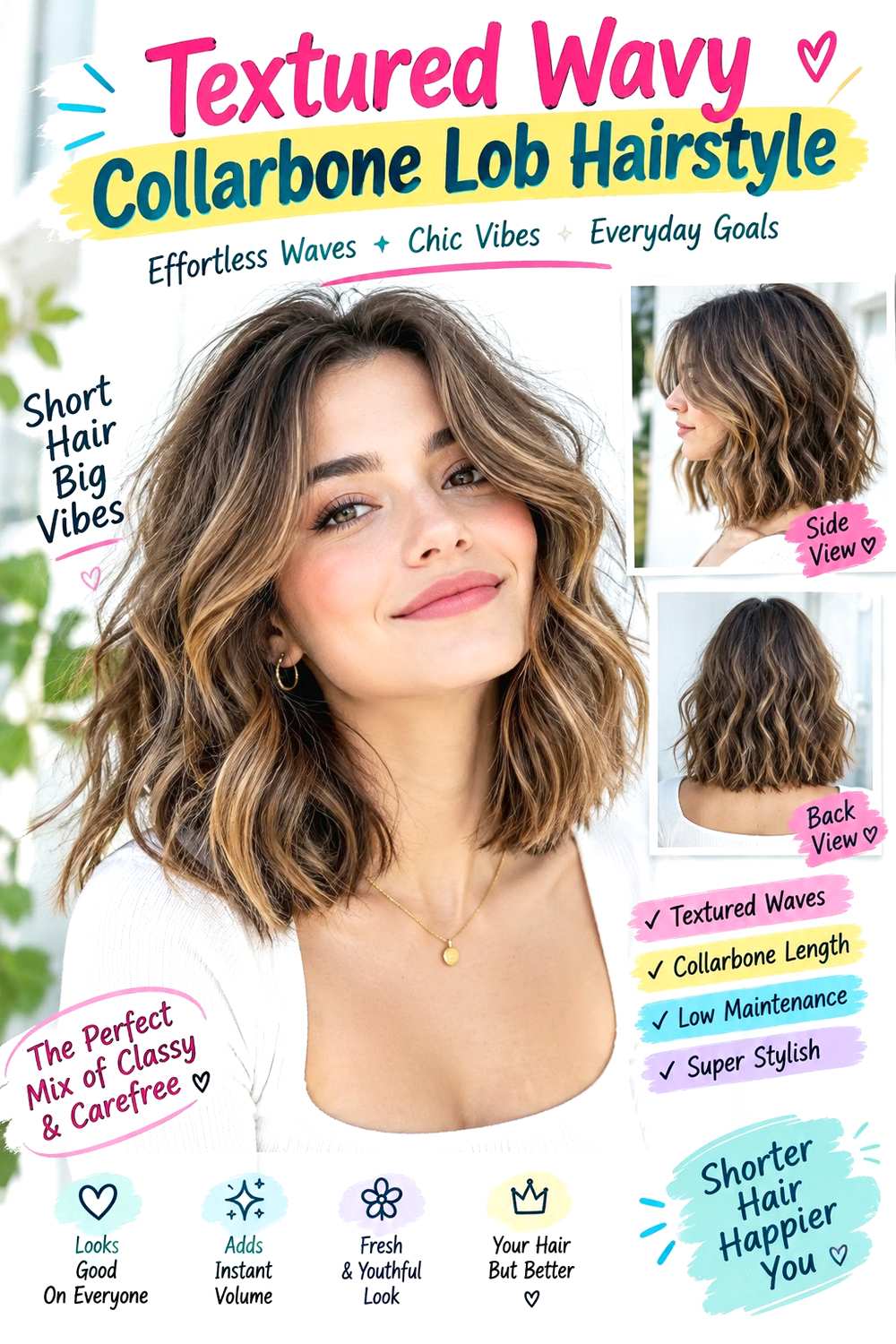
Loose, broken-up waves give this collarbone lob movement without hiding its shoulder-skimming outline. The part can sit near the center, while long, subtle layers begin below the jaw so bends form through the mid-lengths instead of stacking into a round shape. Keep the ends a little straighter and slightly piecey; that contrast helps the waves look relaxed rather than uniformly curled. Naturally wavy hair can lean into its own pattern, while straight hair will need more shaping to create the same irregular movement.
A quick refresh between washes may mean redefining only the flatter sections and scrunching the lengths back into place. For a full set, apply heat protectant, use a medium curling iron on alternating sections, then separate the cooled bends with light texturizing spray. Avoid curling every piece in the same direction or up to the roots. At the salon, ask for the shortest general layer to stay below the jaw if you want the lob to keep visible weight at the bottom. Frizz can be managed by handling the hair less once the shape is set. Reshape the cut when the lower layers stop supporting the wave pattern or the ends begin looking too uneven for the intended textured finish.
Pro tip:
Leave the final inch or two of each section out of the curling iron when possible. Straighter tips help the collarbone line remain visible beneath the wave pattern.
Make It Work for You:
If your natural waves are stronger underneath, use fewer cut layers there and let the top receive the shaping. That can prevent the lower half from becoming overly wide.
Watch Out For:
Do not brush the waves aggressively before they cool. They can collapse into fuzzy volume; let the bends set first, then separate only enough to soften obvious sections.
Sleek Straight Collarbone Lob Hairstyle
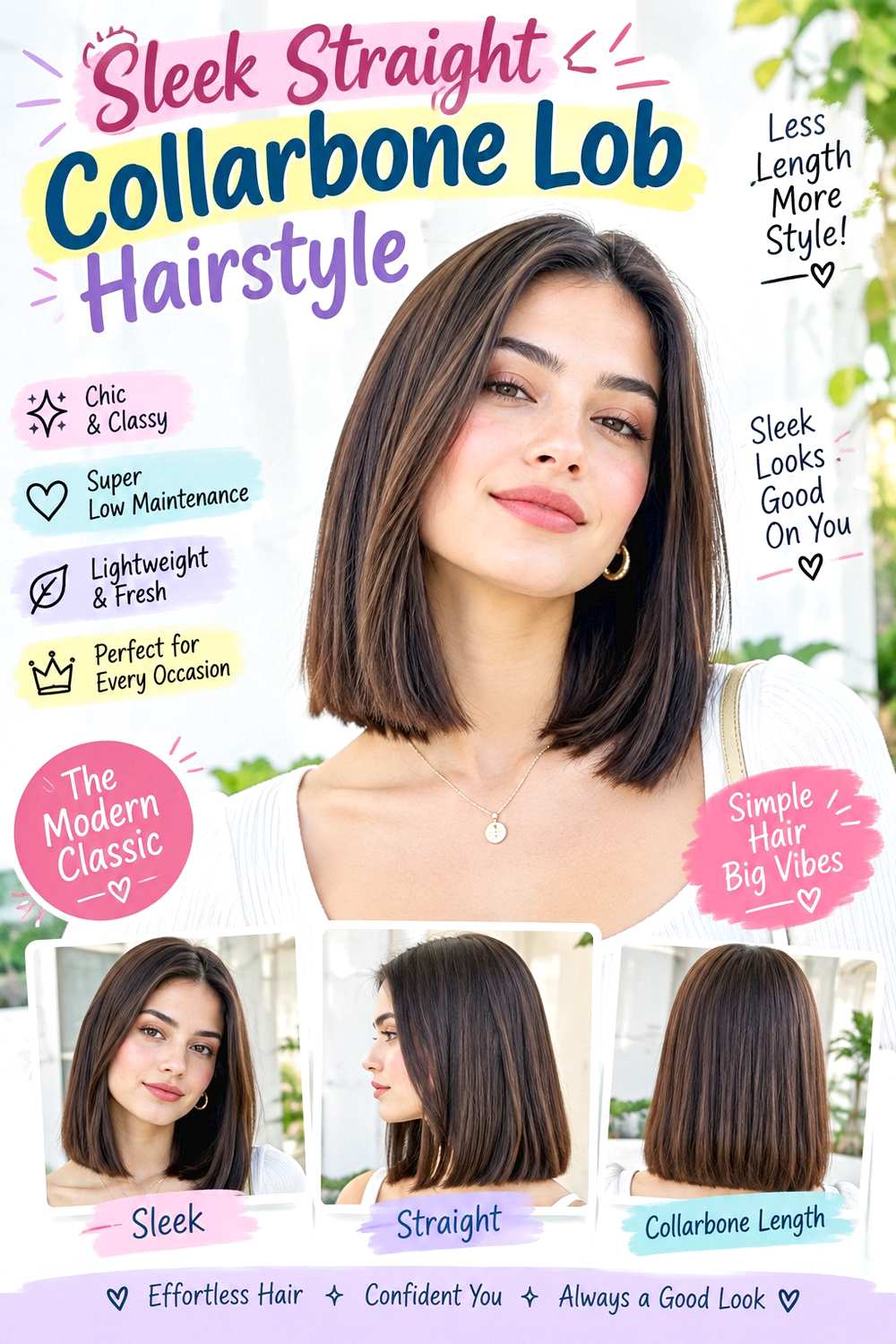
The sleek version uses a smooth surface and a subtly longer front to make the collarbone length look precise without copying a fully blunt, center-parted lob. An off-center part keeps the front relaxed, while the back can sit just above the collarbone and the front edge reach it. Layers stay minimal, with only enough internal shaping to prevent dense hair from forming a heavy shelf. Straight textures need the least daily reshaping; wavy or curly hair can wear the cut too, but achieving this polished finish regularly requires more heat and time.
Between full styling days, refresh only the sections that have bent at the shoulders or around the face. For a complete smooth finish, apply heat protectant before using a flat iron in controlled passes, then use a small amount of anti-frizz serum through the mid-lengths and ends. Keep the crown from becoming too flat by avoiding excess serum near the roots. At the salon, ask to see how much longer the front will be than the back when the hair is dry; the difference can be subtle. Reshape when the front-to-back line loses clarity or the ends begin sitting unevenly against clothing.
Pro tip:
Work in sections narrow enough for the flat iron to smooth evenly in one careful pass. Repeatedly reheating thick sections can create more work without improving the finish.
Make It Work for You:
If you prefer less heat, keep your natural texture through most of the length and smooth only the perimeter and face frame. The clean collarbone outline still reads clearly.
Watch Out For:
Avoid making the front dramatically longer unless that is your goal. Too much angle changes the silhouette from a balanced lob into a more pronounced graduated shape.
Rounded-End Collarbone Lob Hairstyle

Rounded ends give the collarbone lob a softer, tucked-under finish while keeping the overall silhouette compact. The cut can sit evenly around the collarbone with a center or gentle side part, and long layers may begin near the chin so the front curves inward rather than hanging as one solid sheet. The key visual detail is the bend at the lower few inches, not heavy volume through the entire length. Straight and softly wavy hair can hold this shape with moderate styling; denser hair may need controlled internal weight removal so the bottom does not puff outward.
For a quick refresh, reshape only the ends that have flipped against the shoulders. On a full styling day, use heat protectant, a round brush, and lightweight smoothing cream, directing the lower lengths inward as they dry. The cream should control flyaways without coating the roots. Ask your stylist to preserve enough perimeter weight for the rounded edge to look substantial, especially if your strands are fine. Because collarbone hair rubs against collars, the curve may not stay identical all day. Reshape the cut when the bottom edge loses its smooth arc or when the front layers stop feeding naturally into the inward bend.
Pro tip:
Let the rounded ends cool in their curved position before touching them. Supporting the bend briefly with your hand can help the shape settle without adding another product.
Make It Work for You:
If your ends naturally flip outward, keep the inward curve soft instead of forcing a tight tuck. A gentler bend preserves the rounded idea and is easier to refresh.
Watch Out For:
Do not over-thin the bottom to make it curve. A wispy perimeter can collapse rather than round; keep weight where the outline needs to look full.
Airy Layered Collarbone Lob Hairstyle
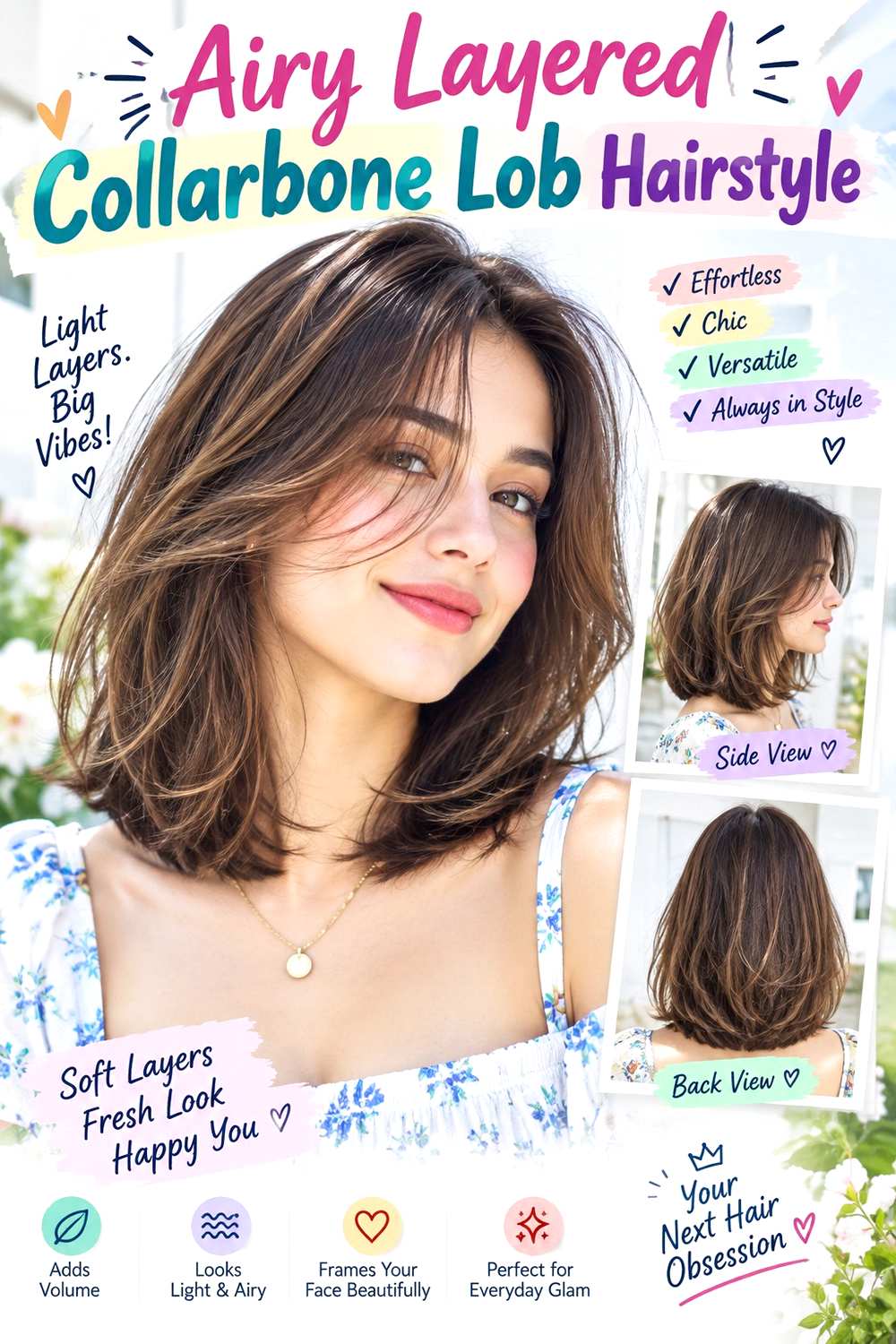
Airy layering keeps the collarbone length intact but breaks up the interior so the hair moves more freely around the shoulders. A center or relaxed off-center part works well, with the shortest general layers beginning around the chin and longer pieces stepping down into a fuller bottom edge. The ends should feel light, not shredded, and the crown can carry a little lift without becoming short or shaggy. This approach suits medium to dense straight or wavy hair particularly well, while finer hair may need fewer layers to avoid weakening the perimeter.
A quick refresh can focus on shaking out the roots and reshaping only the front pieces. For a full blow-dry, apply lightweight mousse for support, add heat protectant, and use a round brush to direct layers away from the face while leaving the ends mobile. Ask your stylist how much weight will remain along the collarbone line after the layers are added; that bottom density is what keeps the cut recognizably lob-length. If the style begins looking flat, product buildup may be the issue rather than the haircut. Reshape once the layers stop separating cleanly and start collapsing into one heavy section.
Pro tip:
Lift the top sections upward while drying, then let them fall naturally. This creates movement at the crown without requiring the shortest layers to be cut even shorter.
Make It Work for You:
For fine strands, keep the airy effect mainly around the face and upper surface while leaving the lower perimeter denser. You retain movement without sacrificing the visual weight of the lob.
Watch Out For:
Do not confuse airy layers with aggressive thinning. Removing too much interior weight can make the ends look scattered; ask for movement while keeping the outer shape connected.
Shaggy Collarbone Lob Hairstyle
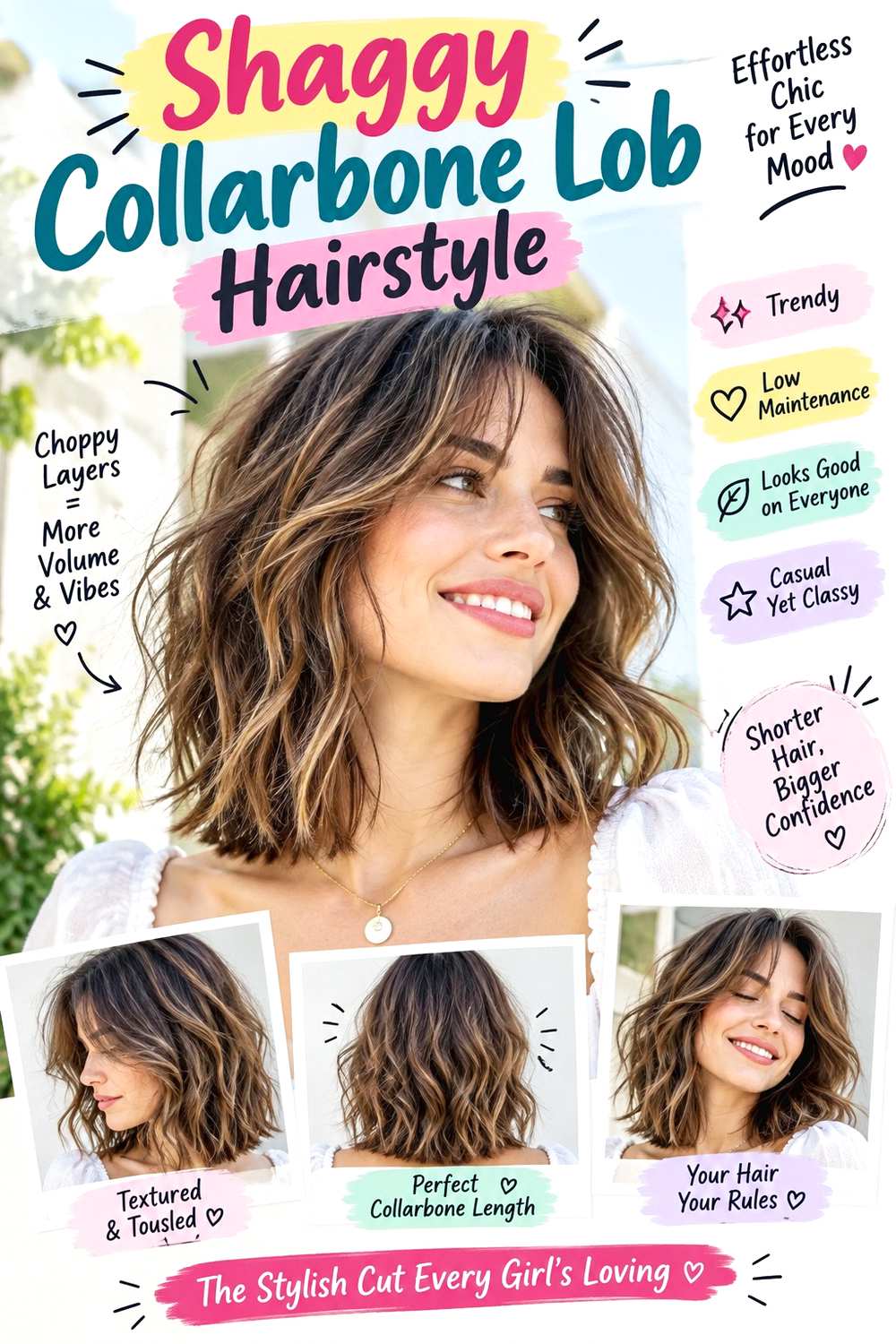
A shaggy collarbone lob uses shorter surface layers and a broken-up fringe area to create more visible separation than a classic layered lob. Keep the base length near the collarbone, let cheekbone-to-jaw pieces open around the face, and allow the crown layers to sit shorter than the lower lengths without turning the cut into a short shag. A slightly off-center part or loose center split suits the undone finish. Wavy hair can emphasize the separation naturally, while straight hair may need product or bending to make the layers read clearly.
For a fast refresh, reactivate the shorter pieces with damp hands and reshape only the sections that have flattened. On wash day, use lightweight mousse for lift, a diffuser to encourage natural bend, and a small amount of texture paste on dry ends to define separation. If your texture is straight, scrunching may create only slight movement, which is fine. At the salon, discuss exactly how short the crown layer should be and how much weight must remain through the collarbone perimeter. As the cut grows, the shaggy effect becomes softer rather than disappearing at once; reshape when the crown no longer separates from the lower length.
Pro tip:
Twist a few damp face-framing pieces away from the face, then leave them alone while they dry. Breaking them apart too early can turn definition into frizz.
Make It Work for You:
If your density is low, lengthen the crown layers and keep more weight through the sides. The shaggy separation remains visible without exposing too much space between sections.
Watch Out For:
Avoid loading texture paste near the roots. It can make shorter layers collapse and appear greasy; keep the product mainly on dry mid-lengths and ends.
Curly Collarbone Lob Hairstyle
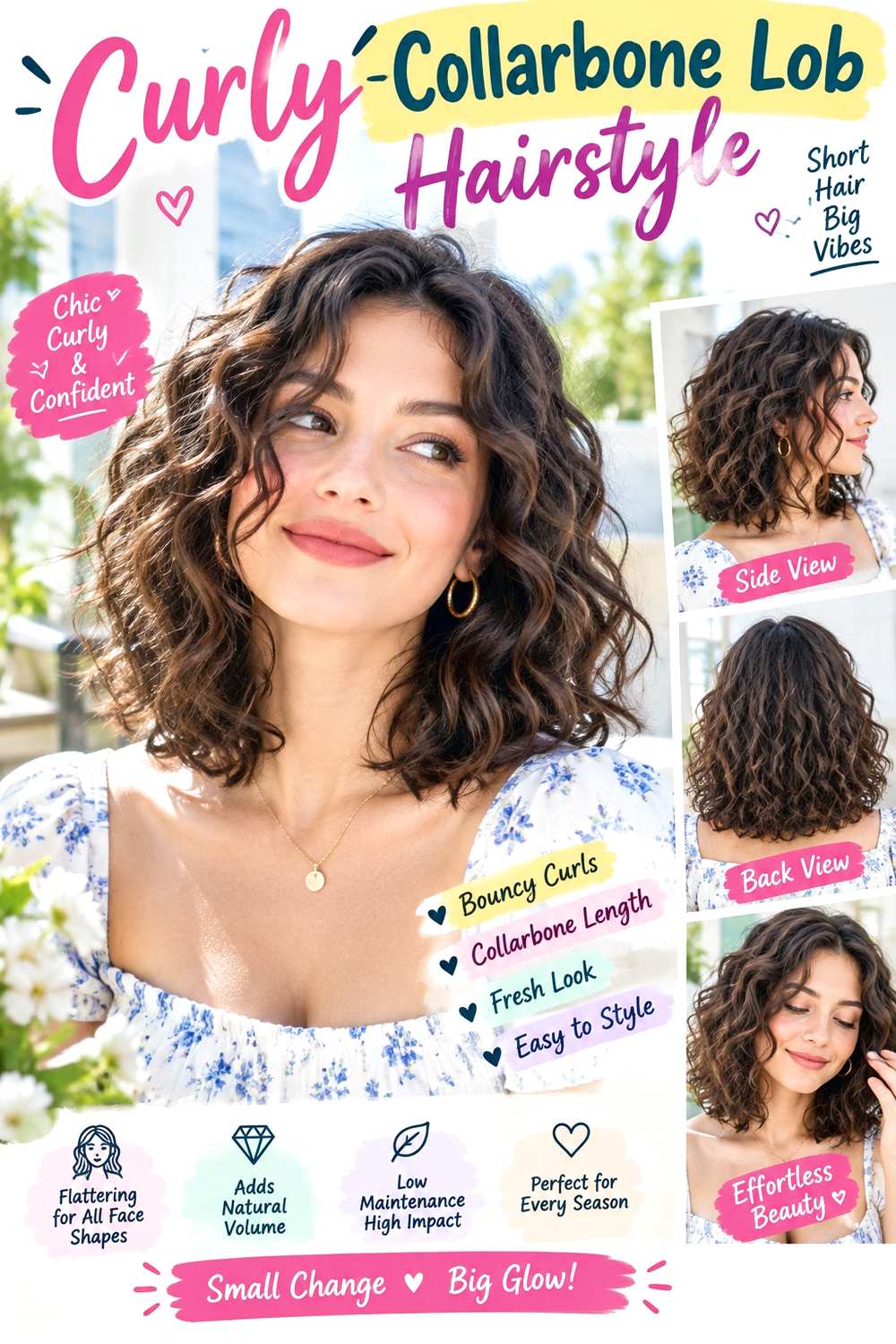
Defined curls make the collarbone lob read as a rounded, springy shape rather than a straight horizontal line. The finished length should hover around the collarbone after shrinkage, with face-framing curls allowed to sit shorter around the cheek or jaw and longer layers supporting the lower shape. A natural part or soft side part can prevent the crown from looking overly fixed. Curl pattern and shrinkage vary across the head, so the same nominal cutting length can settle differently from one section to another. Medium or dense curls can carry generous volume, while lower density may benefit from fewer layers and a stronger outer edge.
On a quick refresh, re-wet only stretched or frizzy curls and let intact sections remain undisturbed. Full wash-day definition can use a lightweight leave-in conditioner for slip, curl gel for grouping and hold, and a diffuser on a cool or gentle airflow setting to preserve the shape while drying. At the salon, discuss the desired dry collarbone position rather than relying only on wet measurements, and identify where you want bulk to sit. Reshaping becomes useful when the lower curls stop forming a balanced outline or the face frame grows past its intended landmarks.
Pro tip:
Apply gel in sections while the curls are still evenly wet, then stop handling them as they begin to set. Less touching during drying usually preserves cleaner curl groups.
Make It Work for You:
For tighter curls with greater shrinkage, keep the initial shape longer and assess each area dry. The goal is still a collarbone silhouette, not identical stretched lengths.
Watch Out For:
Do not remove bulk uniformly around the head. That can disturb the intended rounded shape; adjust only the areas that actually spread beyond your preferred silhouette.
Coily Collarbone Lob Hairstyle

Coily hair gives a collarbone lob a sculpted silhouette with compact spring and strong visual volume. The finished dry length can sit around the collarbone, while shorter face-framing coils step upward toward the jaw and the crown remains long enough to avoid an unintended top-heavy shape. A natural part, soft center opening, or side part can all work because the coil pattern provides movement without relying on a smooth blowout. Density and shrinkage matter greatly: a fuller head of coils may need thoughtful bulk placement, while lower density often benefits from preserving a substantial outer edge.
A quick refresh should target only crushed or elongated sections rather than reworking the whole head. On wash day, use a moisturizing leave-in conditioner for slip and a styling cream to support definition, then allow the coils to set with minimal disturbance. Finger shaping can emphasize the face frame without forcing every coil into the same size. At the salon, describe the collarbone position you want when the hair is dry and settled, and point out where you want the silhouette to feel widest. Avoid using stretched length as the only guide. Reshape when uneven shrinkage or grow-out changes the intended balance between crown, sides, and bottom edge.
Pro tip:
Check the shape from several angles after the coils are fully dry. A small adjustment to one expanded area can preserve the silhouette better than reshaping the entire cut.
Make It Work for You:
If your coils shrink substantially, choose the collarbone goal based on their normal dry state and routine. Keeping extra cutting length gives the finished shape room to settle naturally.
Watch Out For:
Do not assume every section needs equal shortening. Different shrinkage can create uneven dry results; prioritize the finished silhouette and preserve length where the coils spring higher.
Fine-Hair Full-Perimeter Collarbone Lob Hairstyle
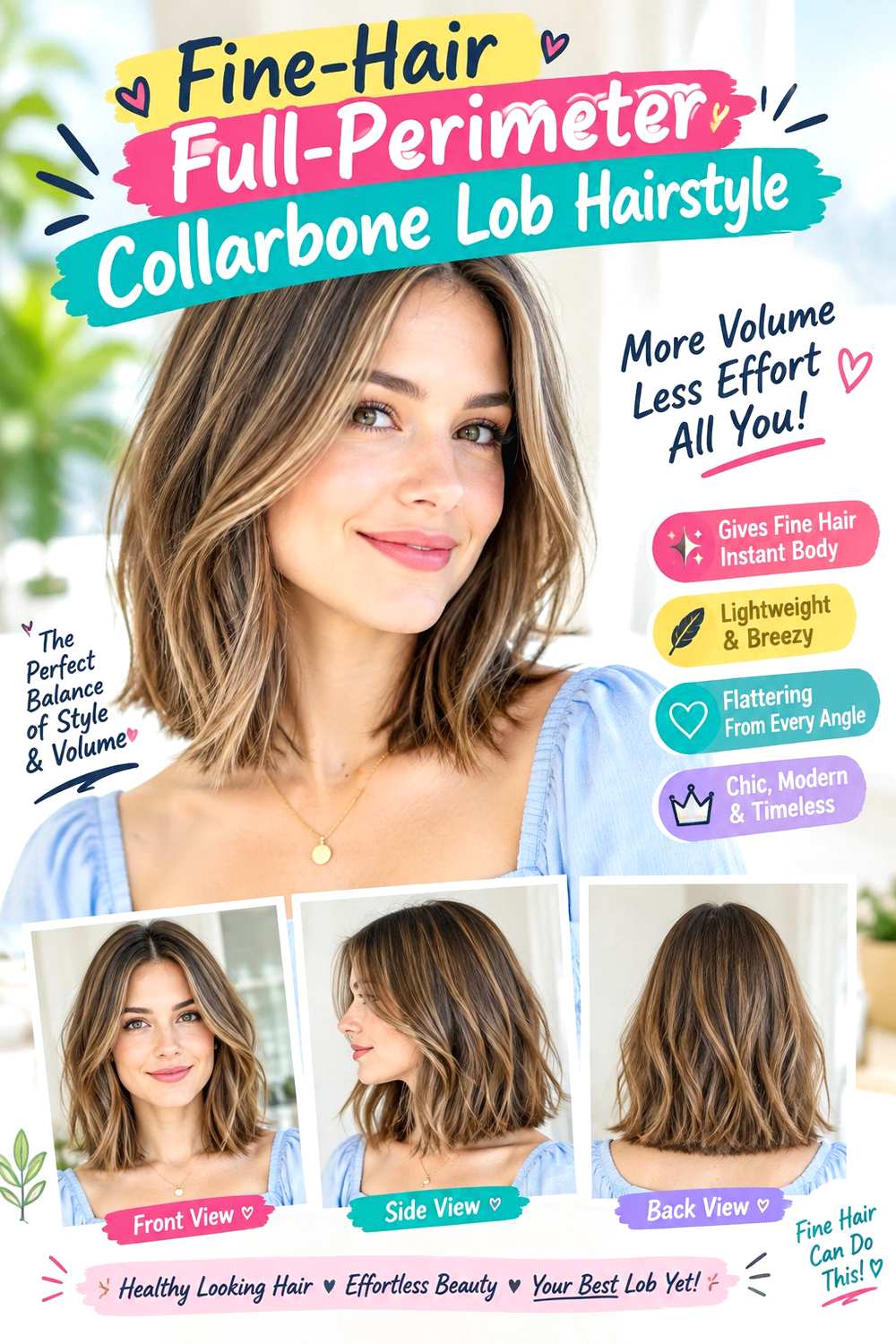
Fine strands do not automatically mean low density, but a fuller perimeter can be useful when the ends tend to look light. This collarbone lob keeps the bottom edge compact, uses only restrained face-framing around the chin or lower, and avoids short layers through the lower half. A soft side part can shift a little volume across the crown, while a gentle bend at the ends keeps the outline from appearing flat. Readers with fine, dense hair may still have plenty of fullness; the key is preserving enough visible weight where the cut meets the collarbone.
For a quick refresh, change the part slightly and revive only the roots that have flattened. A full blow-dry can start with root-lift spray near the crown and heat protectant through the lengths, then use a round brush to create body without curling the ends tightly. Keep heavy products away from the lower edge so the strands do not clump together. At the salon, ask for a clear explanation of how much perimeter weight will remain after any face-framing is added. If the ends begin separating into noticeably uneven wisps, the shape may need refining even if the overall length still feels right.
Pro tip:
Direct the crown roots opposite their final part while drying, then flip them back once cool. That temporary change in direction can create lift without adding shorter layers.
Make It Work for You:
If your fine strands are also very dense, allow subtle internal shaping where bulk actually collects. Preserve the visible bottom line instead of treating all fine hair as sparse.
Watch Out For:
Do not apply root-lift spray through the entire length. Too much product can make fine strands stick together; concentrate support near the roots and leave the ends flexible.
Dense-Hair Internal-Layer Collarbone Lob Hairstyle
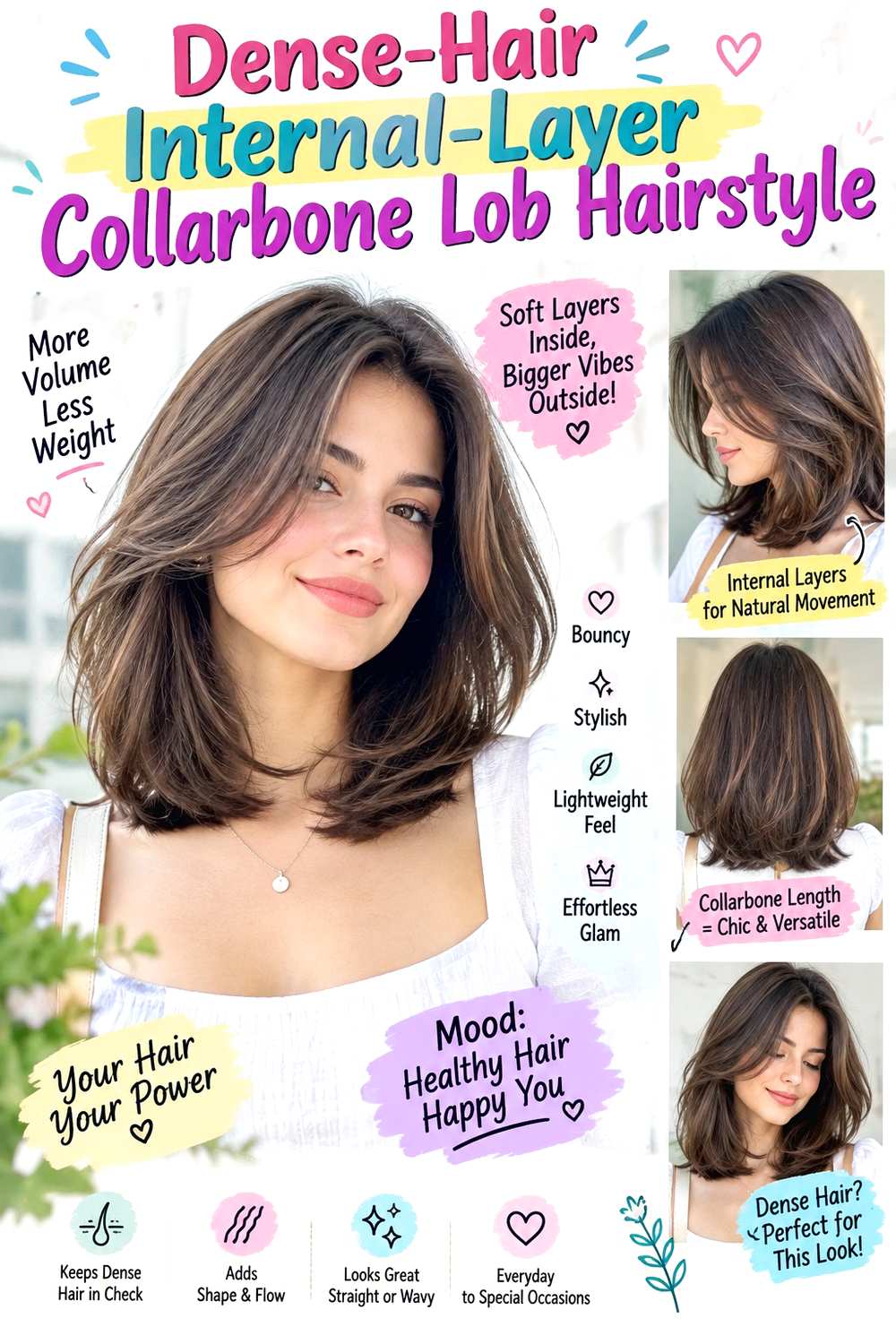
Dense hair can make a collarbone lob expand strongly at the sides, so this version controls weight inside the shape while keeping the outside line visibly full. The length rests at the collarbone, the part stays near center, and long layers begin below the chin so the surface remains smooth. Internal shaping should be concentrated only where bulk pushes the silhouette wider than intended; it should not leave the ends thin or create short, hidden pieces that spring out. Straight, wavy, or loosely curly dense hair can all use this approach, with the amount of removal adjusted to the natural pattern.
A quick refresh may involve smoothing the surface and resetting a few ends rather than restyling the whole head. For a full blow-dry, apply heat protectant, use a paddle brush to guide the lengths into a controlled fall, and finish with lightweight smoothing cream where frizz appears. At the salon, show where the shape feels too wide and ask how weight can be reduced there while preserving the collarbone perimeter. That location-specific discussion matters more than simply requesting “thinning.” Reshape when the sides begin ballooning again or the long layers stop moving independently from the lower edge.
Pro tip:
Ask to check the cut after it settles into its usual part. Internal weight can look balanced during sectioning but behave differently once the hair falls naturally.
Make It Work for You:
If your dense hair forms strong waves, preserve enough interior length for the pattern to group. Reduce only the bulky zones so movement remains connected rather than fluffy.
Watch Out For:
Avoid aggressive thinning close to the perimeter. It can create short pieces and a see-through edge; keep the outside line intact and address bulk farther inside the shape.
Flipped-End Collarbone Lob Hairstyle

Instead of fighting the way collarbone-length hair can kick outward at the shoulders, this lob makes the flip part of the finish. Keep the perimeter clean, use a center or soft side part, and add long face-framing pieces from the chin downward so the front joins the outward bend rather than breaking away from it. The last few inches turn gently out while the roots and mid-lengths stay comparatively smooth. Straight and wavy hair can create the flip easily; curls can adapt the idea with a looser turned-out finish rather than a uniform bend.
A quick refresh only needs attention at the ends that have fallen straight overnight. For full styling, apply heat protectant, roll the lower lengths outward with a round brush, and mist flexible hairspray beneath the finished bend for movable hold. Keep the flip broad rather than tightly curled. At the salon, discuss exactly where the perimeter meets your shoulders, because a small length change can alter how naturally the ends kick out. When the cut grows below the collarbone, the flip may weaken or shift lower. Reshape when the perimeter no longer meets the shoulder line that helps create the intended movement.
Pro tip:
Angle the round brush outward only through the final few inches, not from the roots. Keeping the upper length smooth makes the deliberate flip easier to read.
Make It Work for You:
If your hair already flips unevenly at the shoulders, make the bend intentionally imperfect rather than identical on every section. A softer pattern works with natural movement instead of fighting it.
Watch Out For:
Do not curl the ends into tight loops. That changes the silhouette and shortens the visible length; use a wider, gentler turn so the lob still reaches the collarbone.
Conclusion
A collarbone lob haircut can feel precise or relaxed depending on where you keep weight and movement. Blunt and fuller-perimeter versions emphasize density at the ends, while long layers, shaggy shaping, curls, and coils create more separation or volume. Fringe and parting change the front without requiring the whole cut to become heavily layered. Your natural texture should guide how much daily reshaping feels realistic, especially if a sleek finish differs sharply from your usual pattern. Consider how the cut sits when dry, how often you want to style it, and which feature matters most: a strong outline, airy movement, face framing, or controlled fullness. The best reference is the one whose upkeep matches your routine as well as your preferred shape.
Before Your Salon Visit
Choose one or two favorites and save references that clearly show the collarbone length and the feature you care about most. Tell your stylist about your natural texture, density, face shape preferences, usual part, and how much styling you normally do. Point to the exact fringe length, layer starting point, perimeter weight, volume placement, or finish you want. If you like the front of one idea and the outline of another, say that clearly so the final plan reflects your real routine and preferred upkeep.
FAQs
Can fine hair wear a collarbone lob without looking thin?
Yes. A fuller perimeter with restrained layering can help the ends look more substantial, but fine strands are not always low density. If your ends are sparse, keep the shortest layers higher or mainly around the face and avoid removing unnecessary weight from the collarbone line.
Will a collarbone lob flip out at the shoulders?
It can. Collarbone-length hair often touches shoulders, collars, and jackets, so straight or softly styled ends may turn outward during the day. You can embrace that movement with a flipped finish or choose a slightly different finished length if you prefer the ends to sit more consistently.
Do curly and coily collarbone lobs need heat styling?
No. Natural waves, curls, and coils can all support a collarbone lob when the cut is planned for their dry shape and shrinkage. Heat is mainly needed if you want a finish that differs from your natural texture, such as very sleek straightness or a sculpted blowout.
How often should a collarbone lob be reshaped?
Use the shape as your trigger rather than relying on one fixed schedule. When the perimeter loses its intended line, face-framing pieces sit too low, fringe enters the eyes, or internal layers stop balancing the silhouette, a salon reshaping can restore the design. Growth rate and preferred finish change the timing.