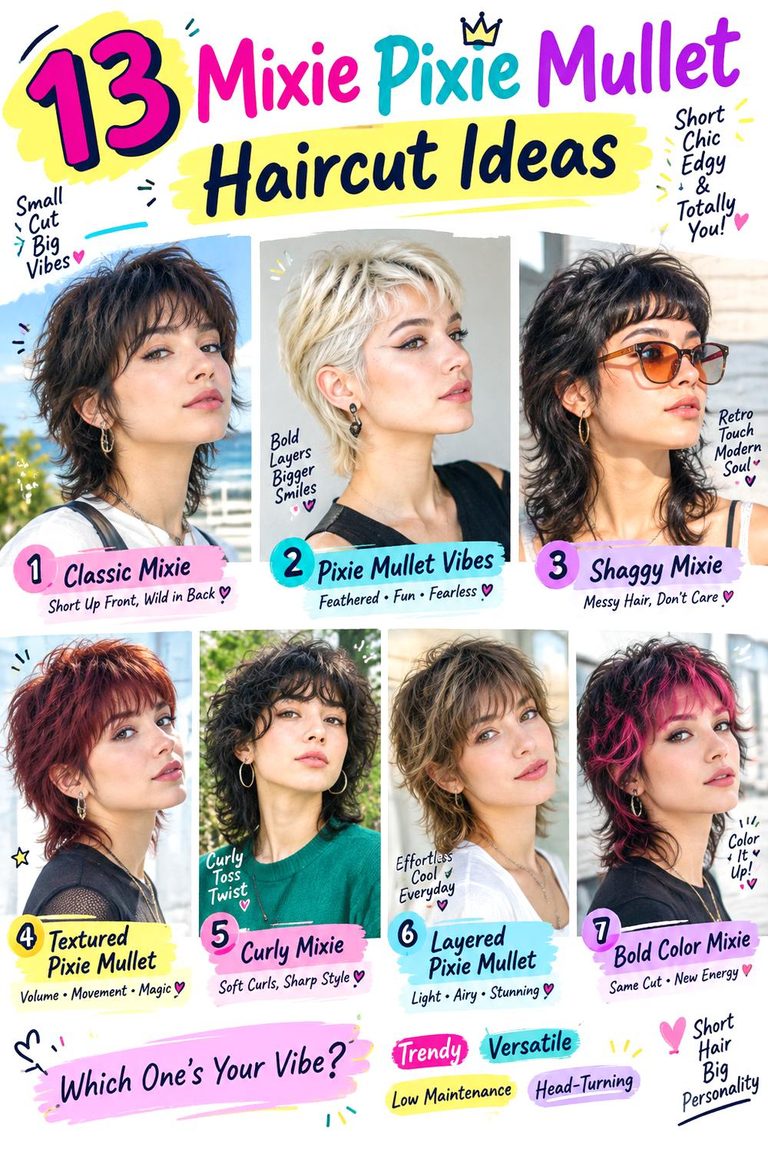
12 Collarbone Lob Haircut Ideas

A collarbone lob sits in the useful space between a classic bob and longer shoulder-length hair. Its defining feature is the perimeter landing close to the collarbone, but the shape can change significantly through blunt ends, long layers, face-framing pieces, fringe, or a slight forward angle. Straight finishes show the outline most clearly, while waves and curls add movement and can make the same length look softer or shorter once dry.
Texture and density should guide the details rather than force everyone into one version. Fine strands may benefit from a fuller bottom edge, while dense hair can need carefully placed internal weight removal so the shape does not widen too much. Wavy, curly, and coily hair also need finished dry length and shrinkage considered. Face-framing can begin at the cheekbone, jaw, or chin depending on how open or enclosed you want the front to feel.
Styling effort ranges from a brief fringe or end refresh to a complete wash-day blow-dry or curl set. A collarbone lob haircut can grow out smoothly, but blunt outlines, bangs, strong angles, and shorter layers show growth sooner than softer shapes. Maintenance should follow visible changes: the perimeter losing its line, layers dropping flat, curls stacking heavily, or fringe falling into the eyes. The ideas below compare those trade-offs so you can choose a shape that fits your natural texture and routine.
Quick List
- Blunt Center-Part Collarbone Lob Hairstyle
- Soft Face-Framing Collarbone Lob Hairstyle
- Side-Parted Voluminous Collarbone Lob Hairstyle
- Wispy Bangs Collarbone Lob Hairstyle
- Curtain Fringe Collarbone Lob Hairstyle
- Textured Wavy Collarbone Lob Hairstyle
- Rounded Curly Collarbone Lob Hairstyle
- Sleek Tucked Collarbone Lob Hairstyle
- Shaggy Layered Collarbone Lob Hairstyle
- Flipped-End Collarbone Lob Hairstyle
- Subtle Asymmetrical Collarbone Lob Hairstyle
- Soft A-Line Collarbone Lob Hairstyle
Blunt Center-Part Collarbone Lob Hairstyle
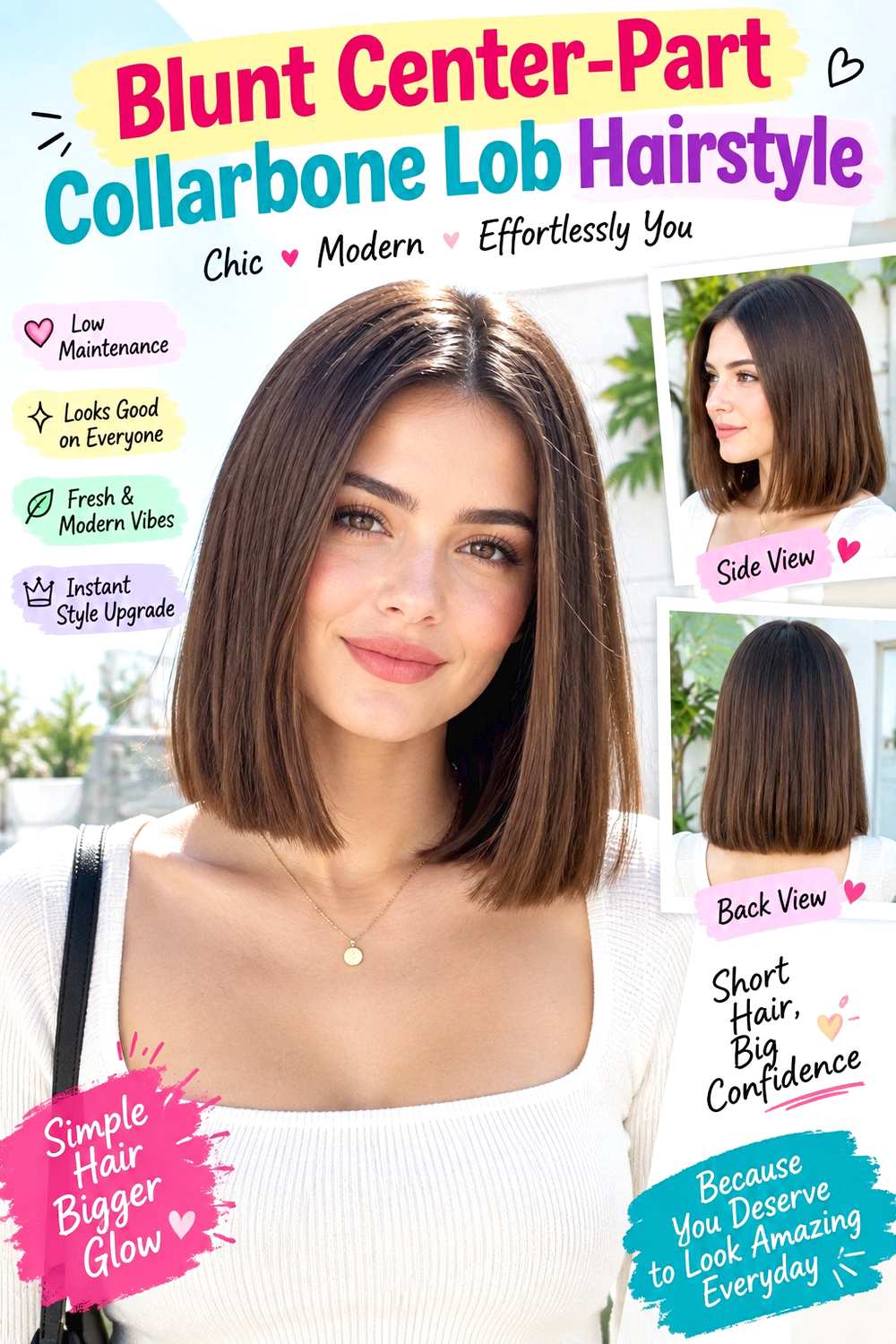
A clean bottom edge is the defining feature here. The lob lands at the collarbone with very little visible layering, a centered part, and straight-to-softly-bent lengths that keep the outline compact. The front can sit almost level with the rest or angle slightly toward the face. Because the ends stay substantial, this option can suit fine strands that need visual fullness, while dense hair may need discreet internal weight removal so the sides do not feel bulky.
For a polished finish, apply heat protectant before smoothing the mid-lengths with a flat iron, then use a lightweight serum only on the last few inches to reduce flyaways without flattening the roots. A quick between-wash refresh may mean redoing only the front and outer surface; a full wash-day finish takes longer, especially on dense or textured hair. Ask your stylist to place the bottom edge where you want it to meet the collarbone when dry and to preserve enough perimeter weight for that blunt effect. Maintenance is shape-led rather than rigidly scheduled: book a reshaping when the edge starts to look uneven or the ends no longer sit together.
Pro tip:
Direct the front sections slightly forward while smoothing them, then let them fall back naturally. That small change keeps a center-parted lob from looking pasted flat beside the cheeks.
Make It Work for You:
If your hair forms strong waves, keep the blunt perimeter but wear the surface with its natural bend. The cut still reads as a clean lob without requiring daily straightening.
Watch Out For:
Removing too much weight from the last few inches can make the bottom look feathery instead of blunt. Keep internal debulking higher and protect the visible edge.
Soft Face-Framing Collarbone Lob Hairstyle
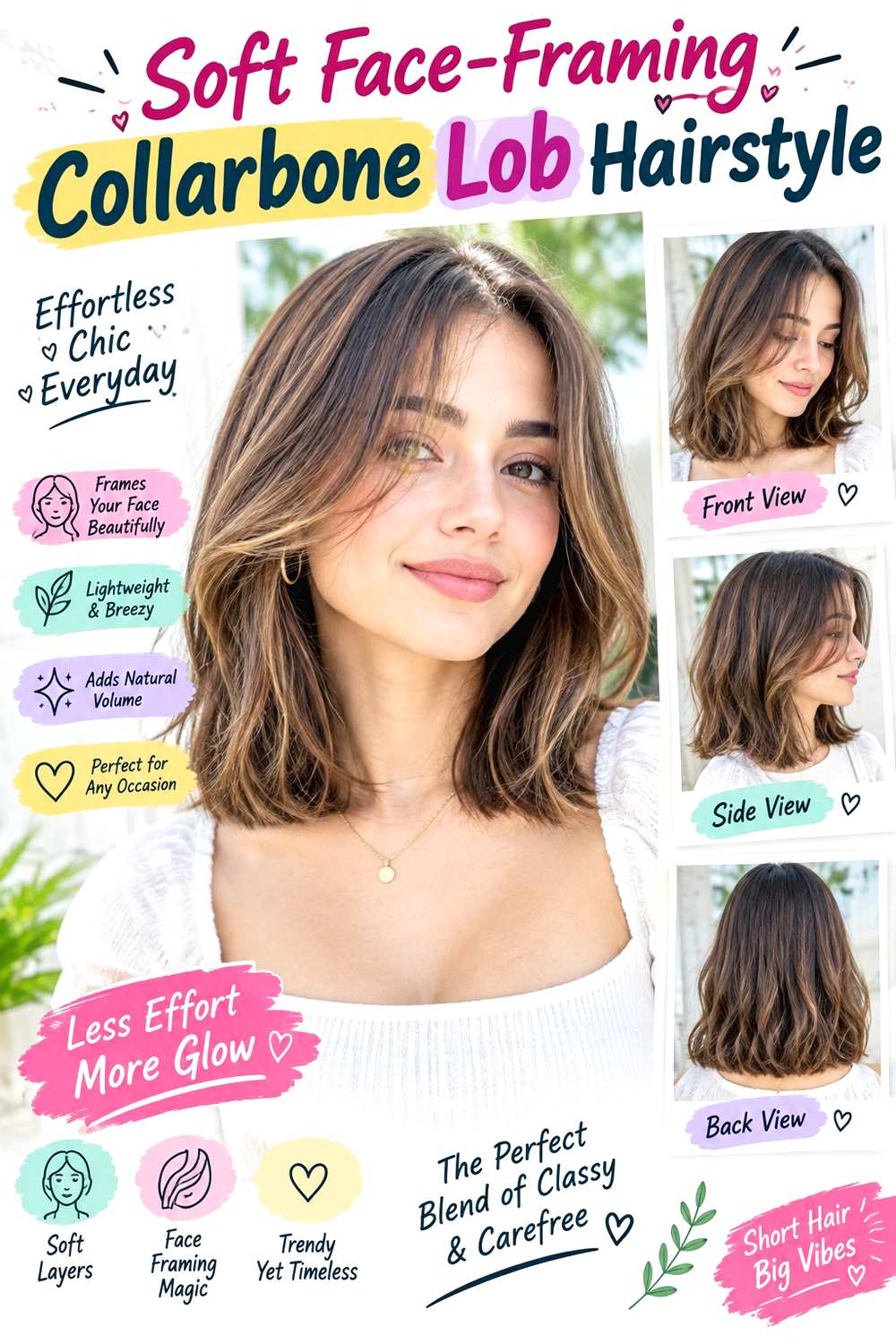
Movement is concentrated around the face rather than scattered through the entire haircut. The overall length reaches the collarbone, while the shortest face-framing pieces begin around the chin and blend into longer layers. A soft center or slightly off-center part keeps the front open, and broad bends through the mid-lengths create motion without making the ends look thin. This shape works especially well for readers who want softness but still value a reasonably full bottom edge.
For styling, use heat protectant before wrapping loose sections around a large-barrel curling iron, then mist flexible hairspray through the finished bends so they hold without becoming rigid. A quick refresh can focus on two or three pieces beside the face; a full set after washing takes more time and varies with density and natural texture. At the salon, point to exactly where you want the shortest front section to finish and ask that the back perimeter remain substantial. As the cut grows, the frame becomes longer and less obvious, so reshaping is useful when the front no longer connects smoothly to the collarbone length or the bends stop falling where you like them.
Pro tip:
Shape the two front pieces away from the face first, then style the rest more loosely. That keeps the face frame visible instead of burying it inside the overall wave pattern.
Make It Work for You:
For low-density ends, start the shortest face-framing piece lower, around the jaw or chin, and keep the back nearly one length so movement stays concentrated around the front.
Watch Out For:
Too many short layers around the temples can make the front look disconnected from the collarbone length. Keep the transition gradual and leave enough weight through the sides.
Side-Parted Voluminous Collarbone Lob Hairstyle
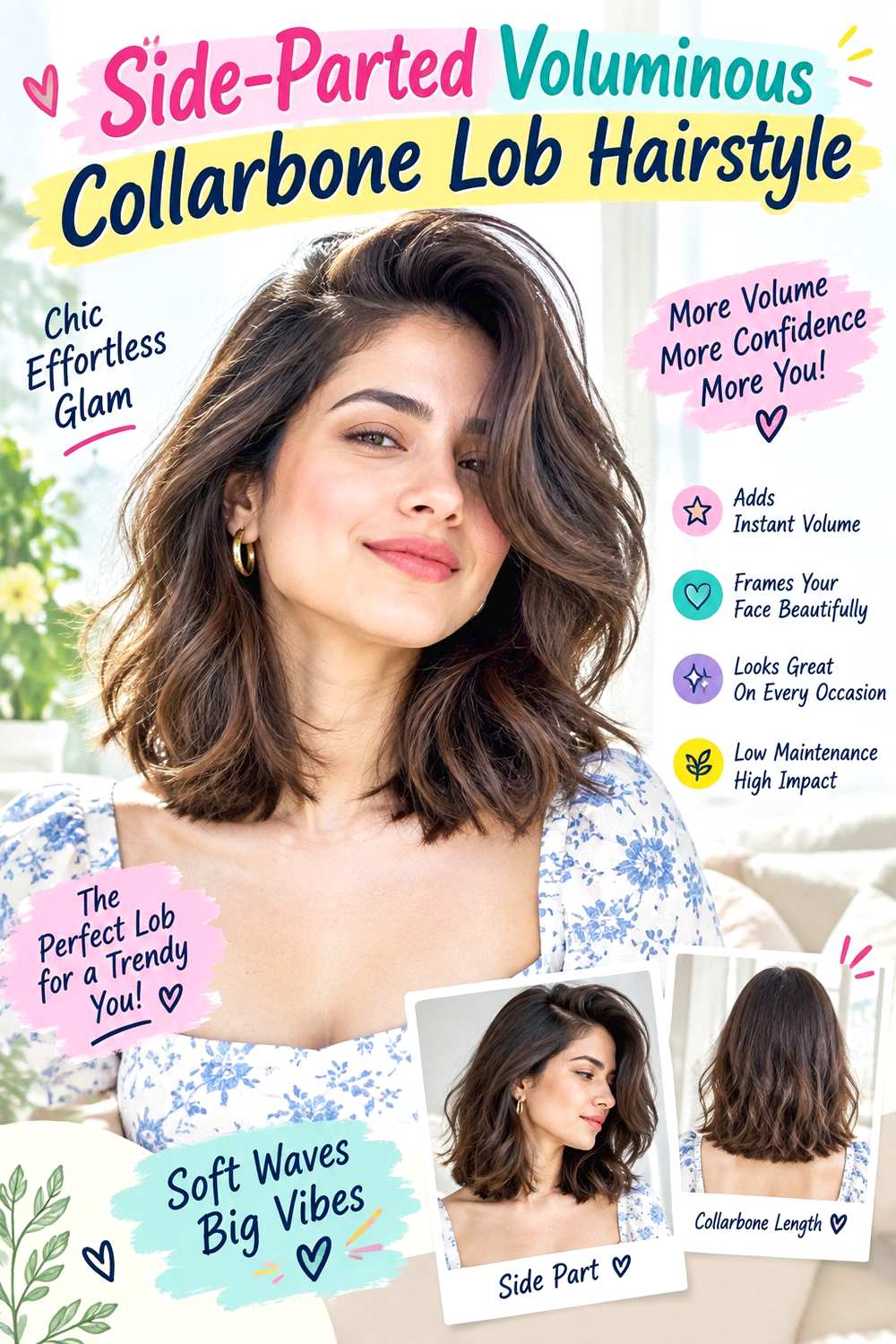
A deeper side part changes the balance of a collarbone lob by shifting lift toward one side instead of keeping the volume symmetrical. The ends still finish near the collarbone, but long layers through the upper lengths prevent the heavier side from collapsing. The front sweeps away from the forehead, while the mids carry a rounded bend and the ends stay softly controlled rather than strongly curled. This option suits straight or wavy hair especially well, and dense hair can benefit if bulk is reduced selectively rather than stripped from the perimeter.
For a full blow-dried finish, apply root-lift spray near the crown, use heat protectant through the lengths, and shape sections with a round brush. Between washes, a short refresh may involve changing the part and reworking only the top layer; starting from wet hair is the longer job. Explain to your stylist that you want volume above the cheek and crown, not extra width at the jaw, so layer placement supports the intended balance. Revisit the shape when the top layers become too long to hold lift or the side-swept front starts falling heavily across the face.
Pro tip:
Dry the roots in the opposite direction of your finished side part, then place them back. The change in direction can create lift without adding extra width through the ends.
Make It Work for You:
If your hair is very dense, keep the dramatic side part but ask for controlled weight reduction inside the heavy side rather than thinning the entire perimeter.
Watch Out For:
Overloading the roots with product can collapse the lift you are trying to create. Keep root product light and concentrate smoothing products farther down the lengths.
Wispy Bangs Collarbone Lob Hairstyle
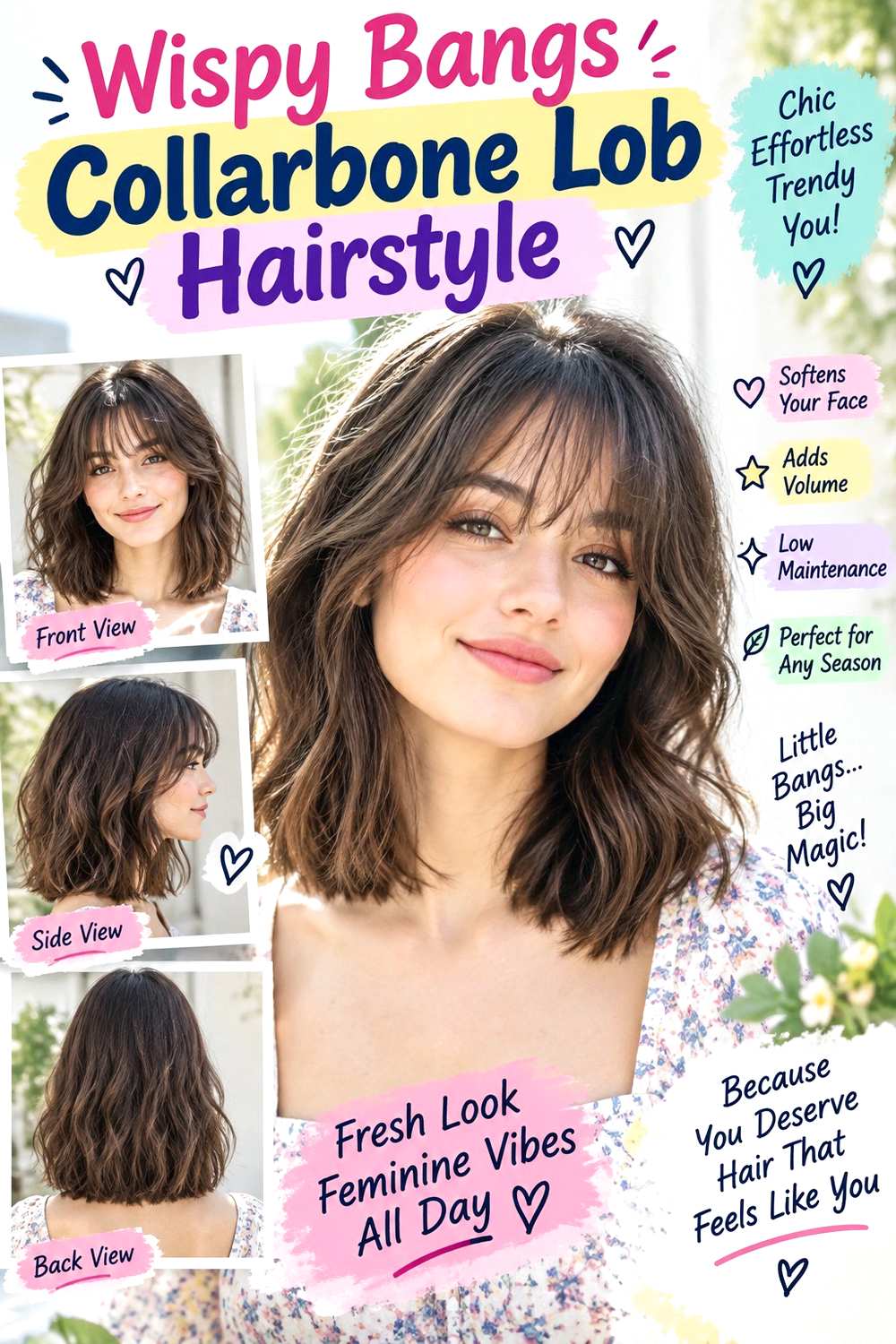
The airy fringe is the main difference in this lob. The base length sits at the collarbone with a fairly full bottom edge, while a narrow section of bangs skims the brows in separated, lightweight pieces. Longer outer corners blend toward the cheekbones so the fringe does not look cut off from the rest of the hair. A center or soft off-center part behind the bangs keeps the lob flexible. The idea can work with many densities, but very strong growth patterns at the hairline may change how much daily fringe styling is needed.
For styling, mist heat protectant over the fringe and front, guide the bangs with a small round brush, and use a small amount of dry shampoo at the roots when they become oily or separate. Refreshing the fringe alone can be brief, while washing and finishing the full collarbone length takes longer. Ask your stylist to keep the fringe section deliberately narrow and to decide its finished length with your natural fall in mind. Bangs need more frequent attention than the lob itself; trim or reshape them when they start entering the eyes or losing the light, broken-up finish.
Pro tip:
Style the fringe first while it is still slightly damp, directing the center down and the outer corners outward. That helps the pieces separate intentionally rather than at random.
Make It Work for You:
If your fringe naturally splits, keep the section slightly narrower and let the outer corners grow longer. The airy effect remains, but the growth pattern has less hair to fight.
Watch Out For:
Cutting wispy bangs too wide can make the temples look sparse and the fringe heavier than intended. Keep the section narrow and preserve longer side pieces for blending.
Curtain Fringe Collarbone Lob Hairstyle
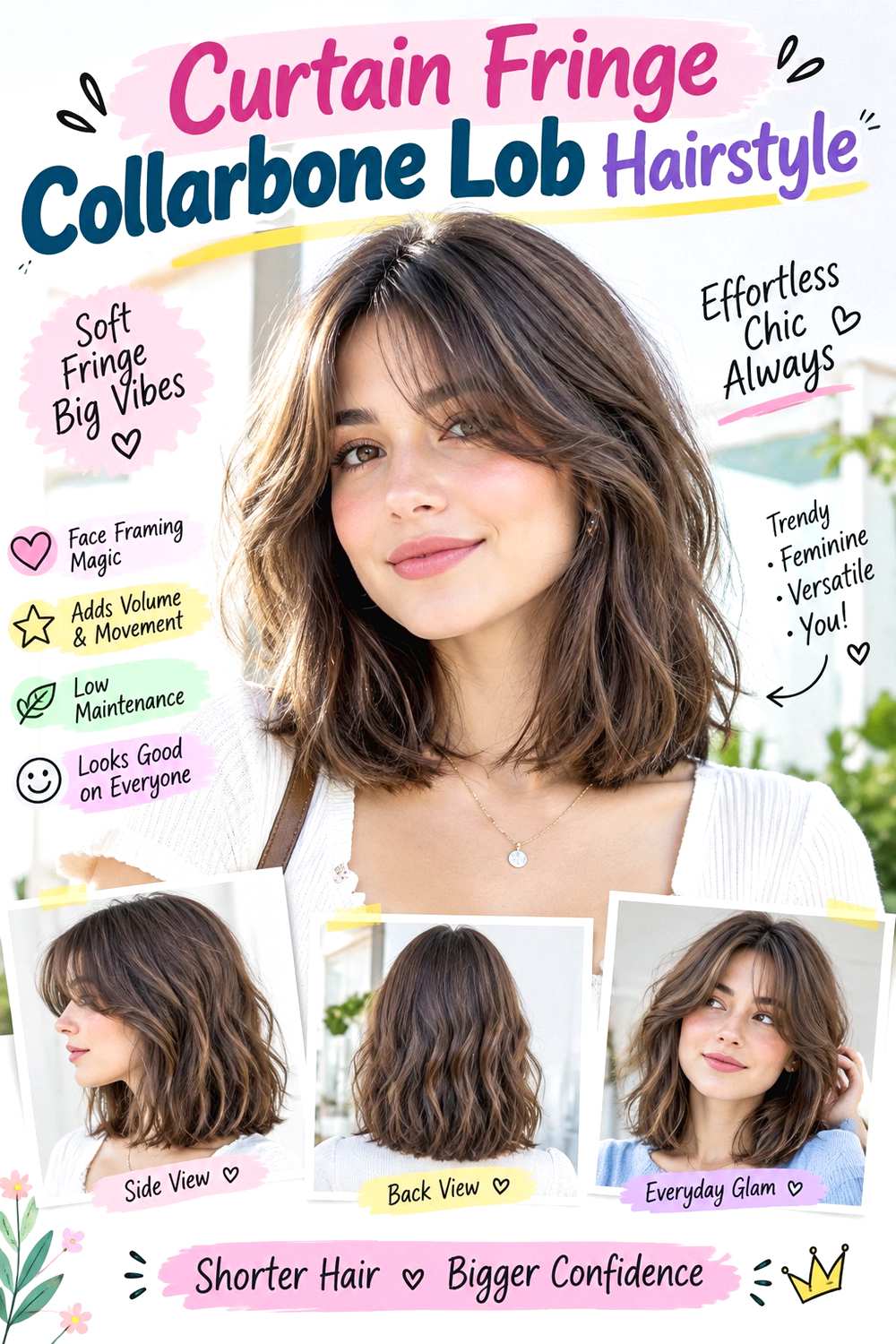
Curtain fringe gives the collarbone lob a more open center while still adding visible shape around the face. The shortest part of the fringe sits near the upper cheekbone or just below the eyes, then lengthens toward the temples and connects with subtle front layers. The main length rests at the collarbone, and the ends can stay full with only a gentle bend. A middle part reinforces the split fringe, though a slightly shifted part can soften the symmetry if that feels more natural.
Use heat protectant before directing the fringe away from the face with a round brush, then apply flexible hairspray lightly at the roots and outer corners to keep the sweep without stiffness. On non-wash days, refreshing only the fringe can be quick; a complete blow-dry depends on density and starting texture. In the salon, show where you want the shortest center pieces and how long the outer corners should remain, because that transition controls whether the fringe blends or looks disconnected. Upkeep is driven by the center pieces: once they stop opening cleanly or fall into the eyes, a fringe reshaping may be more useful than trimming the entire lob.
Pro tip:
Let the curtain fringe cool in its outward shape before separating it with your fingers. Disturbing it immediately can flatten the bend and make the center fall forward again.
Make It Work for You:
For curly or coily hair, keep the curtain shape but judge the shortest point when dry. Longer center pieces can preserve the split while allowing for shrinkage and spring.
Watch Out For:
Making both sides of the fringe too short can turn a curtain shape into a full bang. Preserve longer outer corners so the front opens instead of closing across the forehead.
Textured Wavy Collarbone Lob Hairstyle
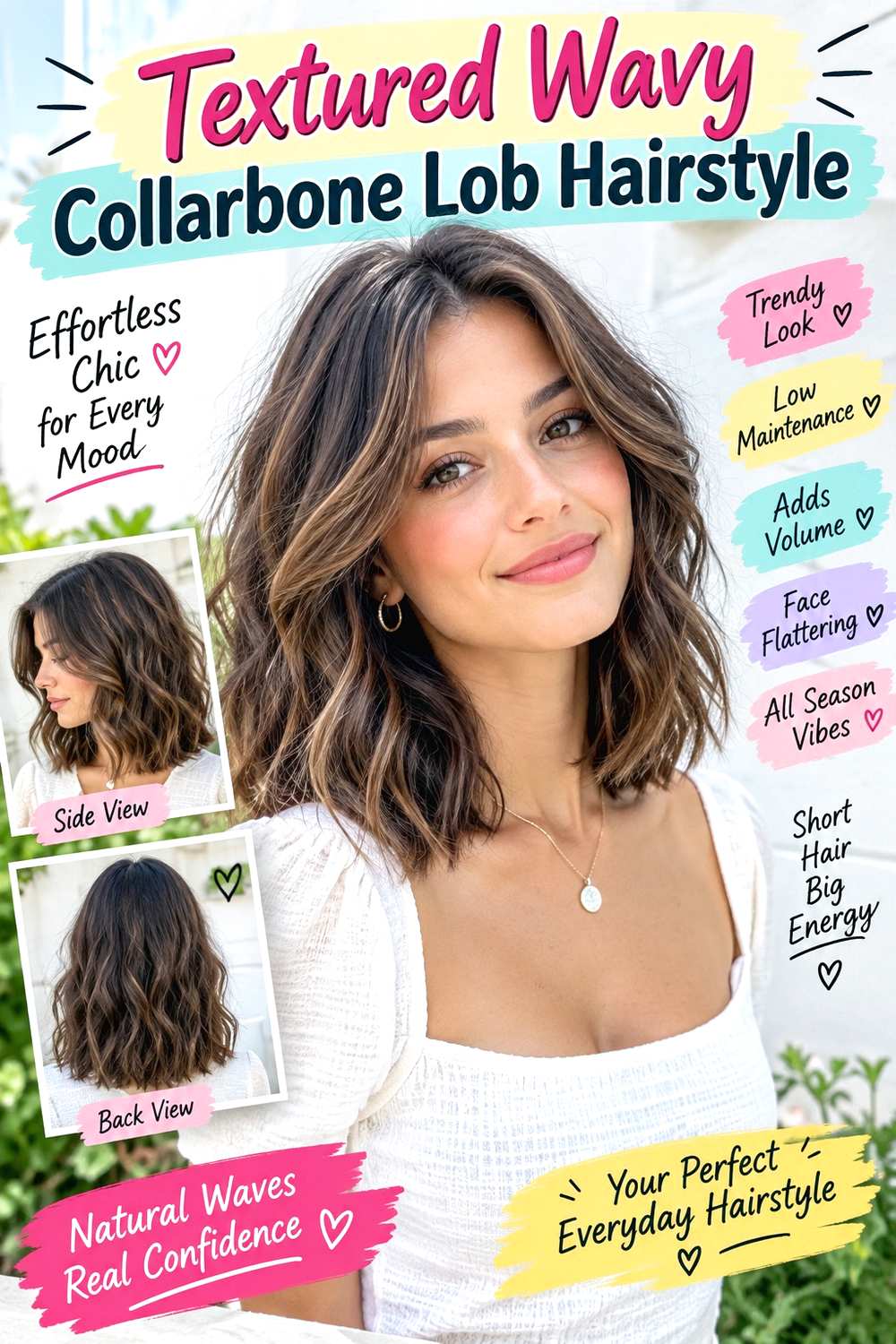
Natural-looking bends give this collarbone lob its shape, with movement beginning around the cheekbones or jaw rather than at the root. The cut falls to the collarbone, carries soft layers through the mid-lengths, and keeps enough weight at the ends to avoid a wispy finish. An off-center part can make the wave pattern feel relaxed, while slightly straighter tips stop the silhouette from becoming too round. Wavy hair may reach this texture with minimal manipulation; straighter hair will need more deliberate setting.
For a texture-first routine, use a heat-protecting leave-in conditioner to reduce friction and prepare the hair, work in lightweight mousse for flexible support, and use a diffuser on a cool or low setting if you want more definition. A morning refresh can focus on dampening flattened sections, while a full wash-day set takes longer and varies with density. Ask your stylist to place the shortest layers where your waves naturally begin to bend, while preserving the collarbone perimeter. As the layers grow, the wave pattern may look heavier and flatter, so reshape when movement starts collecting only at the ends rather than through the middle.
Pro tip:
Refresh only the sections that lost their bend overnight, rather than wetting the whole head. Targeted reactivation helps preserve volume and reduces unnecessary handling of the ends.
Make It Work for You:
If your hair is mostly straight, keep the layered outline but use larger, fewer bends through the mids. The style still reads textured without requiring a tightly waved finish.
Watch Out For:
Too many short layers can make waves expand at the sides and leave the ends sparse. Keep enough lower weight so the collarbone outline remains visible beneath the texture.
Rounded Curly Collarbone Lob Hairstyle
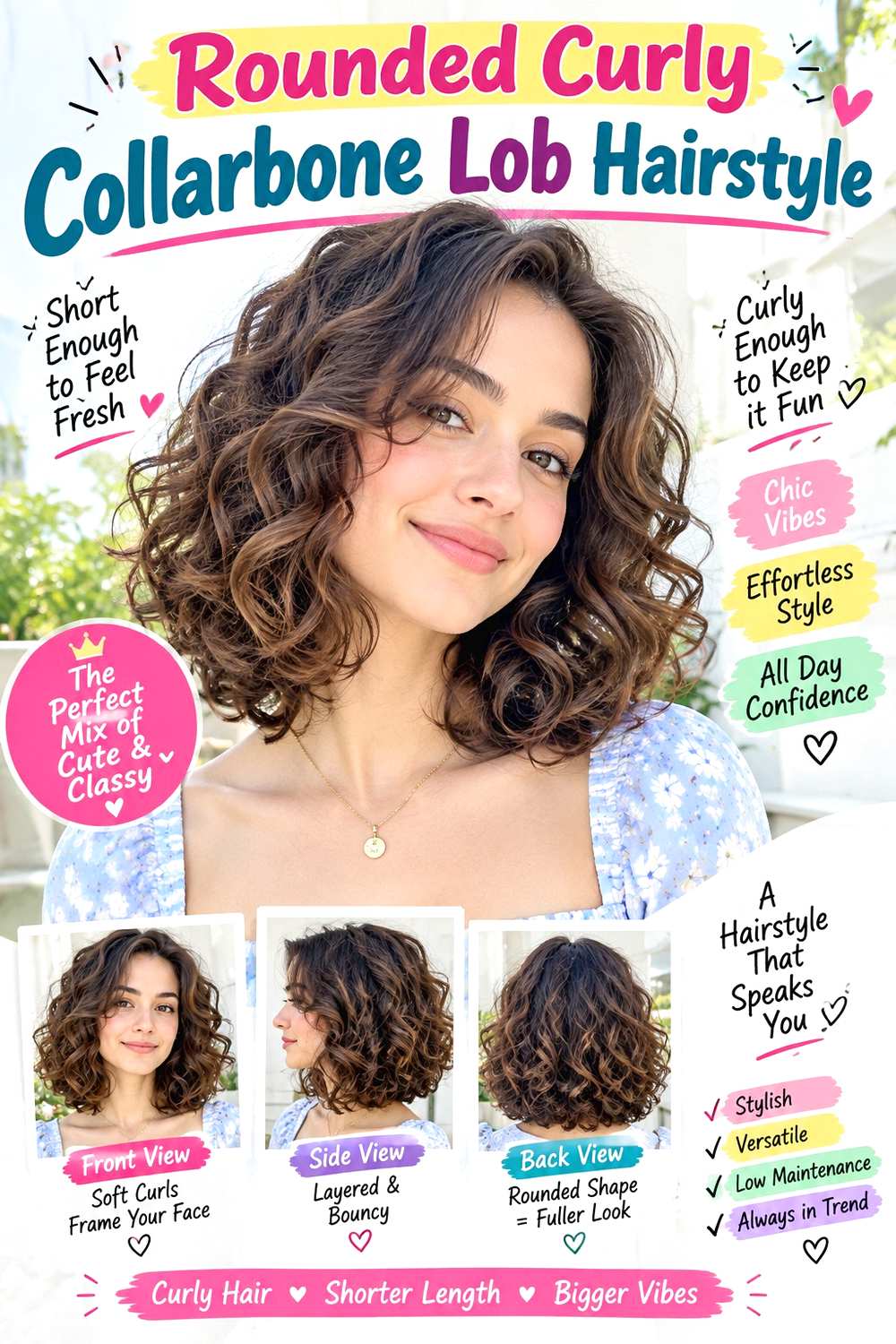
A rounded curly lob keeps the overall length near the collarbone while letting the sides and crown form a balanced curve. Instead of relying on a sharp horizontal line, the shape uses carefully placed layers so curls stack rather than bunch at one level. The front can be center-parted or slightly offset, with shorter curls beginning around the cheek or jaw to create a connected face frame. This works best when the finished dry length, curl grouping, and shrinkage are considered together rather than judging the cut only while wet.
Apply a lightweight leave-in conditioner for slip and moisture, follow with curl gel for definition and hold, and use a diffuser on a cool setting if you want to speed drying without reshaping the curl pattern by hand. A quick refresh may involve reactivating only flattened curls, while full wash-day styling is the longer process. Ask your stylist to assess where the curls sit when dry and to remove bulk only where the silhouette becomes too wide. The cut needs reshaping when the crown loses lift, the lower curls start stacking heavily, or the face-framing pieces no longer connect with the collarbone length.
Pro tip:
While drying, support curl groups near the ends instead of repeatedly touching the roots. Less disturbance can help the rounded outline stay defined without creating uneven surface frizz.
Make It Work for You:
For tighter coils, keep the rounded silhouette but allow extra dry length above the collarbone if needed. The goal is the finished shape, not matching a wet measurement.
Watch Out For:
Removing too much bulk from one side can distort the rounded balance once curls spring back. Reassess the dry silhouette gradually instead of chasing symmetry while the hair is stretched.
Sleek Tucked Collarbone Lob Hairstyle
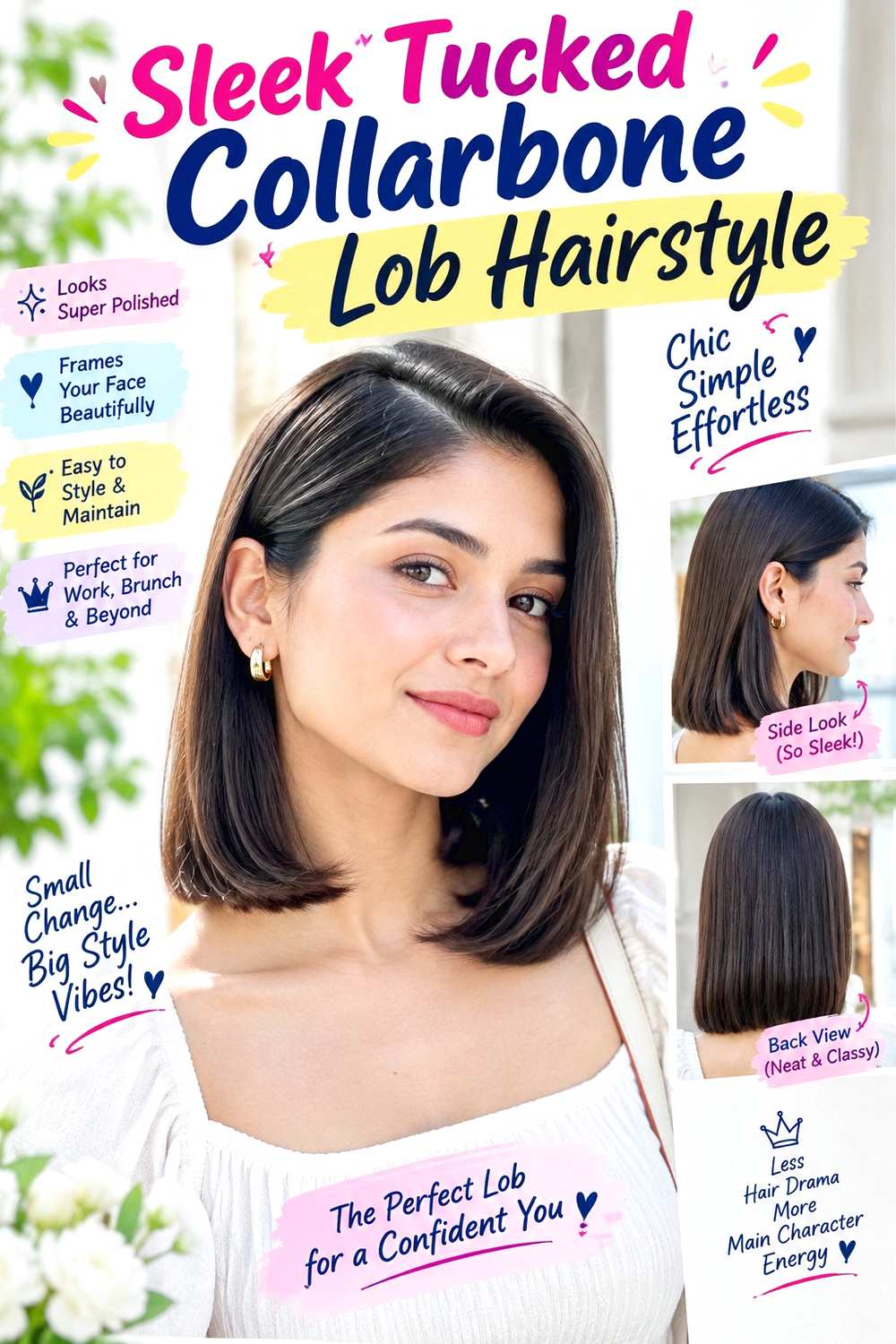
A sleek tucked lob uses a simple outline and controlled surface rather than visible volume. The length meets the collarbone, the part sits cleanly in the center or just off-center, and the front is long enough to tuck behind the ears without creating short pieces that spring forward. Minimal layering helps the ends look solid, while a very slight inward bend keeps the perimeter from appearing stiff. Straight and gently wavy hair can reach this finish with less effort; stronger texture may require more styling if you want the same smooth result.
Before heat styling, apply heat protectant through the lengths, use a flat iron only where smoothing is needed, and finish with a light styling cream over flyaways and the tucked sections. On a non-wash day, reworking the front can be brief; smoothing the full head after washing takes longer, especially on dense hair. Tell your stylist that ear-tucking matters to you and ask for enough length and weight around the temples to keep those pieces secure. Maintenance becomes noticeable when the perimeter loses its clean line or shorter regrowth around the front starts resisting the tucked placement.
Pro tip:
Tuck the front only after the surface has cooled and settled. Repeatedly moving warm, freshly smoothed sections behind the ear can leave a sharper crease than you intended.
Make It Work for You:
If you prefer less heat, keep the clean perimeter and ear-tucked placement but wear your natural wave pattern. A slightly softer surface still preserves the graphic outline.
Watch Out For:
Heavy cream at the roots can make a sleek lob look flat rather than polished. Keep smoothing product on flyaways and ends, leaving the crown comparatively light.
Shaggy Layered Collarbone Lob Hairstyle
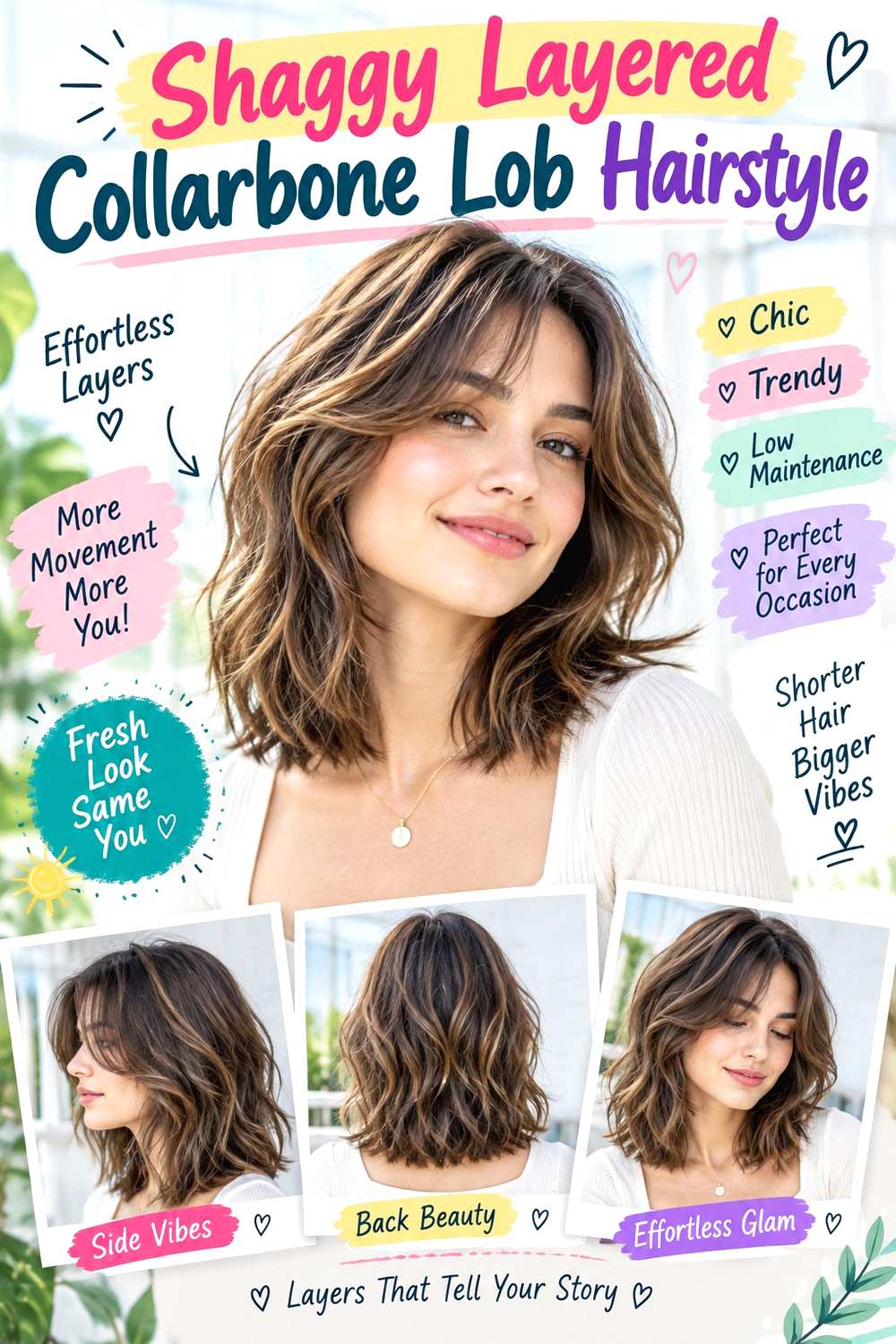
More visible layering gives this lob a looser, slightly shaggy outline while keeping the overall length at the collarbone. Shorter pieces can begin around the cheekbones and continue through the crown, with the bottom edge left light but not hollow. A relaxed center or off-center part works well, and natural bends or irregular waves suit the broken-up movement better than a perfectly uniform curl. This option is useful for readers who want lift and separation, though sparse ends usually benefit from a more conservative amount of layering.
Use lightweight mousse through the roots and mids for support, apply heat protectant before shaping the front, and work with a round brush to encourage lift and soft bends rather than a smooth, compact finish. A quick refresh can target the crown and face frame, while a full wash-day style takes longer and may be unnecessary if your natural texture already creates movement. At the salon, ask where the shortest crown layer will fall and how much weight will remain at the bottom. As those layers grow, the cut becomes flatter and less separated, so reshape when the top loses movement instead of trimming only the perimeter.
Pro tip:
Lift the crown sections upward while shaping them, then let them fall naturally before deciding whether more texture is needed. This keeps the top airy without overworking the ends.
Make It Work for You:
For fine strands, keep the shorter shaggy layers mostly around the crown and face while leaving the lower perimeter fuller. You retain movement without making the collarbone edge look thin.
Watch Out For:
Over-layering the lower half can turn deliberate separation into stringy ends. Keep the strongest texture higher in the shape and protect enough weight near the bottom.
Flipped-End Collarbone Lob Hairstyle
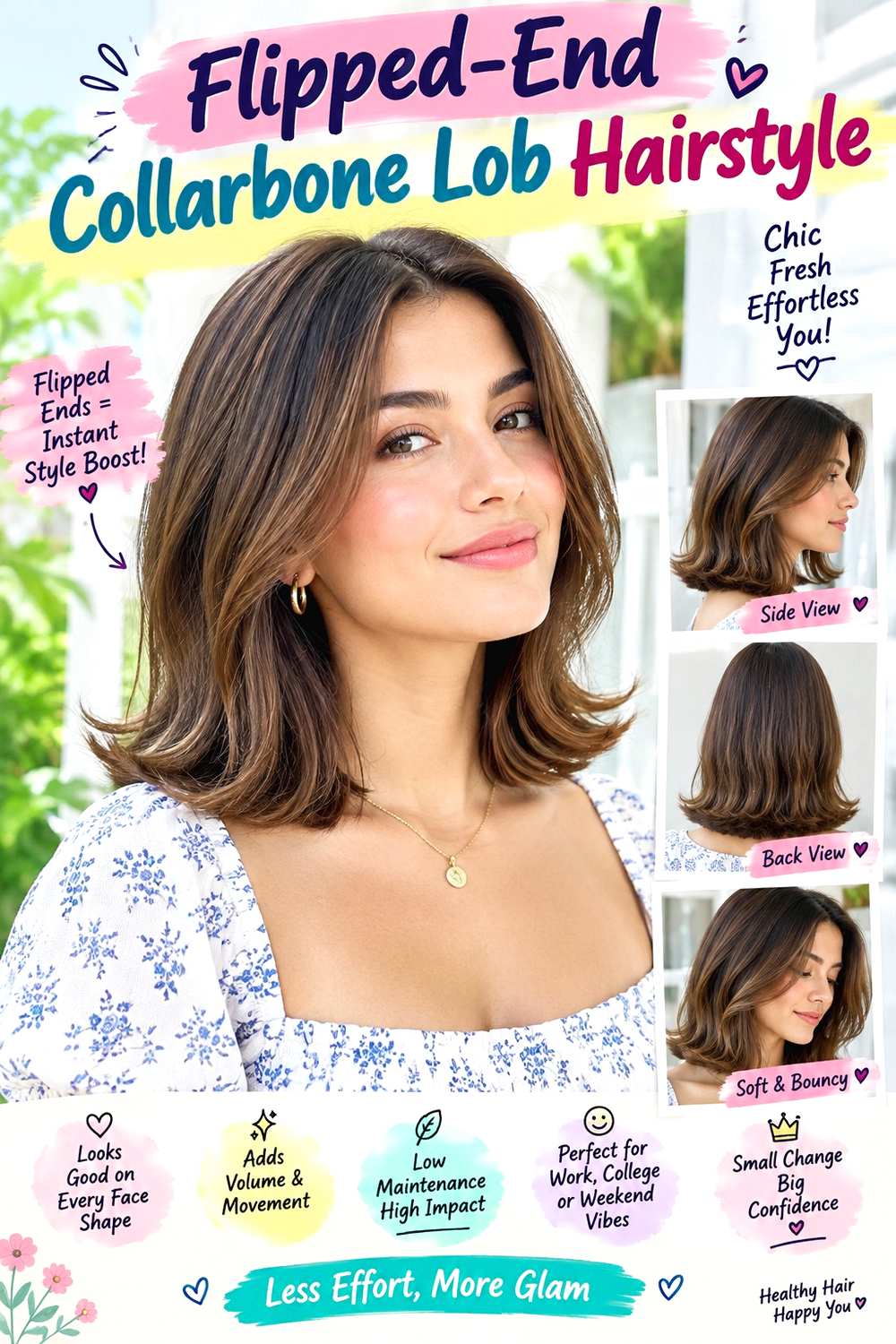
The outward flip makes the ends the focal point of this collarbone lob. Roots and mid-lengths stay relatively smooth, while the last inch or two turns away from the neck in a controlled curve. The part can be centered or slightly to one side, and long, subtle layers help the flip move as one shape rather than breaking into thin pieces. Hair with a naturally straight or softly wavy base may find this finish easier, while very layered ends can make the effect look scattered.
Apply heat protectant before styling, use a round brush to direct the ends outward as they dry, and finish with flexible hairspray to keep the curve mobile rather than crisp. Refreshing only the perimeter between washes can be quick; recreating the full smooth base after washing is the longer step. Ask your stylist to keep enough density through the bottom edge so the flip reads clearly and to avoid overly short layers near the perimeter. Maintenance is less about preserving a perfect angle and more about keeping the ends healthy and aligned; reshape when they stop turning together or the length drops well below your preferred collarbone point.
Pro tip:
Shape the flip in the same direction all around the perimeter before loosening it. Consistent end direction makes the finish look intentional even when the mids remain soft.
Make It Work for You:
If your hair naturally curves inward, keep the lob length but make the flip gentler and only at the front corners. The idea remains visible without fighting the entire perimeter.
Watch Out For:
Flipping large sections too aggressively can create a shelf-like bend. Use a softer curve through the last inches so the ends move outward instead of folding sharply.
Subtle Asymmetrical Collarbone Lob Hairstyle
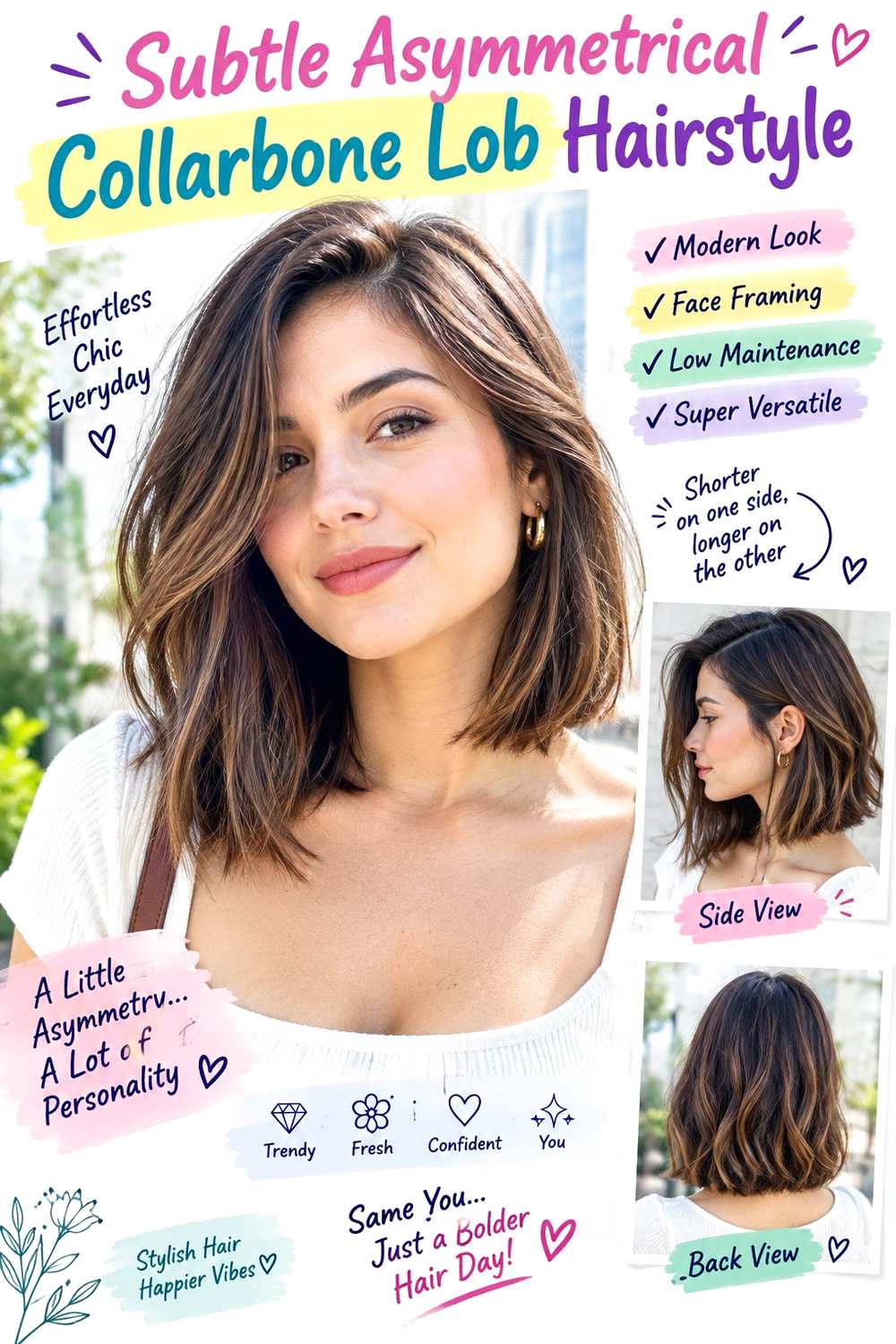
A subtle asymmetrical lob creates interest through length rather than heavy layering. One side finishes at the collarbone while the opposite side sits slightly shorter, with the difference kept modest enough to look intentional from the front. A side part can reinforce the diagonal line, and the surface may be worn smooth or with one broad bend through the mids. The ends remain fairly solid so the uneven perimeter is easy to read. This works especially well for readers comfortable with a directional shape and regular attention to the outline.
For a polished version, apply heat protectant, smooth the surface with a flat iron, and use a lightweight serum on the ends so the perimeter looks clean without appearing oily. A quick refresh can focus on the longer front section; a complete wash-day finish takes longer depending on texture and density. At the salon, agree on the exact visible length difference before cutting and check how it reads with your usual part. Grow-out gradually softens the asymmetry, so book a reshaping when the diagonal becomes too subtle or when one side starts looking accidental rather than deliberately longer.
Pro tip:
Photograph or mark your preferred part before the appointment because moving the part can change how the asymmetry reads. The same cut may appear more or less uneven from different positions.
Make It Work for You:
If you want easier grow-out, keep the length difference subtle and preserve a solid perimeter. The diagonal will soften gradually without leaving one side dramatically shorter.
Watch Out For:
An asymmetrical cut can look accidental if the length difference is too slight to read but too large to ignore. Agree on a visible, intentional relationship between both sides.
Soft A-Line Collarbone Lob Hairstyle
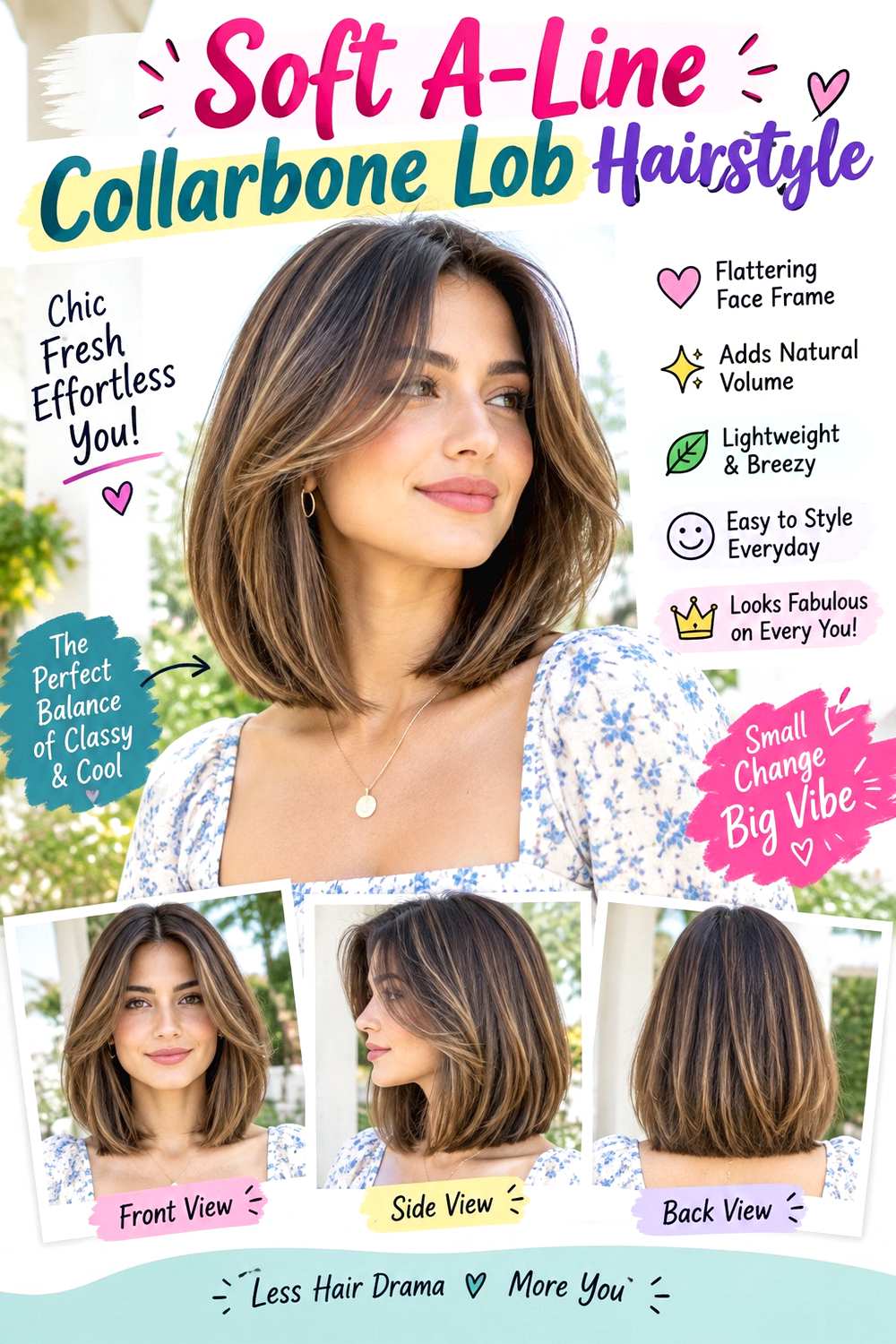
A soft A-line lob keeps the front at collarbone length while the back sits slightly higher, creating a gentle forward angle rather than a dramatic stacked shape. The perimeter stays smooth and substantial, with minimal layering through the lower half so the line remains visible. A center or soft side part works, and a slight inward bend at the ends can emphasize the graduation. This is a useful option for readers who want the neck area lighter without sacrificing front length, though dense hair may need controlled internal weight removal.
Use heat protectant before smoothing or bending the lengths with a flat iron, then add a small amount of lightweight styling cream to the ends for separation and control. A between-wash refresh may only require the front and nape, while a full wash-day finish takes longer if the natural texture differs from the intended sleek shape. Ask your stylist how high the back should sit relative to the collarbone-length front and request a soft transition rather than an abrupt angle. As the cut grows, the A-line becomes less obvious, so reshape when the back and front begin to read as nearly the same length.
Pro tip:
Check the back profile as well as the front before finishing. The forward angle should look smooth from the side, not like a sudden step between the nape and front.
Make It Work for You:
For wavy hair, keep the soft A-line but allow the perimeter to follow your natural bend. The angle can remain visible without forcing every section into a sleek finish.
Watch Out For:
Removing too much weight at the back can create a stacked effect that changes the idea. Keep the graduation gentle and reserve stronger volume removal for genuine bulk problems.
Conclusion
The best collarbone lob haircut depends less on one “ideal” finish than on which feature you want to maintain. A blunt or A-line perimeter emphasizes density and shape, while layered, shaggy, wavy, and curly versions create more movement. Wispy or curtain fringe changes the front without shortening the whole cut, and side parts can shift volume noticeably. Straight, polished finishes often ask for more deliberate heat styling; natural waves or curls may need less reshaping but more attention to moisture, shrinkage, and bulk placement. Consider how often you want to refresh bangs, preserve a strong outline, or restyle texture. The most practical choice is the one whose length, layers, parting, volume, and upkeep fit your normal routine.
Before Your Salon Visit
Choose one or two favorites and save clear reference images that show the shape from useful angles. At your appointment, discuss your natural texture, density, face shape preferences, collarbone length, styling routine, and how often you are comfortable maintaining the cut. Point to the exact fringe length, layer starting point, perimeter weight, volume placement, or finish you like. If you prefer details from different examples, say so clearly rather than expecting one image to cover every part of the result.
FAQs
Can a collarbone lob work for fine or low-density hair?
Yes, especially when the perimeter stays fairly full and the layering is controlled. Fine strands and low-density ends often look stronger with less removal near the bottom. Face-framing or subtle upper layers can still add movement without making the entire collarbone edge look thin.
How should curly hair account for shrinkage with a collarbone lob?
The exact dry length can change noticeably because curls and coils shrink by different amounts. Ask your stylist to judge the shape with your natural curl pattern in mind and to confirm where you want the finished perimeter to sit. Dry checking can be especially helpful around the front and shorter layers.
Does a collarbone lob need heat styling every day?
No. A collarbone lob can be worn air-dried, naturally wavy, curly, or coily if the cut is designed around that texture. Heat is mainly needed when you want a finish that differs from your natural pattern, such as very sleek lengths, a strong flip, or a polished blowout.
How often does a collarbone lob need reshaping?
There is no single schedule for every lob. A blunt edge, fringe, asymmetry, or A-line angle may show growth sooner, while longer layers can soften gradually. Book a trim or reshaping when the outline, bangs, or layer placement stops behaving the way you want rather than following a fixed calendar.