14 Crochet Bow Clip Hairstyles

Crochet bow clips work best when the bow size and placement make sense with the hairstyle underneath. A small bow can hold back one side of a bob or pixie, while a larger bow can mark the base of a ponytail, bun, or half-up twist. Parting, length, layers, face-framing pieces, root volume, and the movement through waves or curls all affect how prominent the bow appears.
Straight, wavy, curly, and coily textures can all support crochet bow clip hairstyles, but the anchor should suit the hair’s density. Fine or lower-density hair may feel more balanced with a lighter bow and a smaller clipped section. Dense hair can support a fuller crochet bow when the accessory attaches to a stable base rather than a few surface strands. Natural curls should keep their finished shrinkage and grouping instead of being flattened simply to make the clip sit straight.
Daily effort depends on the base style. A side-clipped bob may need only a short refresh, while a braided crown, polished twist, or heat-shaped wave set takes longer. The bow should decorate a hairstyle that is already secure. During wear, reset a slipping clip, refresh visible frizz or flattened texture, and move the accessory if its weight begins pulling one section downward.
Quick List
- Side-Swept Waves Crochet Bow Clip Hairstyle
- Half-Up Twist Crochet Bow Clip Hairstyle
- Low Bun Crochet Bow Clip Hairstyle
- High Ponytail Crochet Bow Clip Hairstyle
- Low Ponytail Crochet Bow Clip Hairstyle
- Side Braid Crochet Bow Clip Hairstyle
- Braided Crown Crochet Bow Clip Hairstyle
- Natural Curl Side Clip Crochet Bow Clip Hairstyle
- High Puff Crochet Bow Clip Hairstyle
- Short Bob Crochet Bow Clip Hairstyle
- Pixie Side Clip Crochet Bow Clip Hairstyle
- Bubble Ponytail Crochet Bow Clip Hairstyle
- French Twist Crochet Bow Clip Hairstyle
- Double Braid Crochet Bow Clip Hairstyle
Side-Swept Waves Crochet Bow Clip Hairstyle

A deep side part gives a crochet bow clip an obvious anchor while broad waves create movement on the fuller side. Keep the lighter side tucked behind the ear, begin the bends around cheekbone level, and leave the ends softly curved rather than tightly curled. Position the bow just above or behind the ear so its loops remain visible without covering the front wave. Medium to long hair works especially well, and straight or naturally wavy textures make the loose shape relatively easy to maintain.
For a complete heat-styled set, apply heat protectant before using a curling iron on large sections, then mist flexible hairspray lightly after the waves cool. A between-wash refresh should be shorter: reshape only the front bend and any sections that have fallen flat instead of repeating heat through the entire length. If the bow tilts, move it onto a slightly deeper section rather than clamping harder.
For salon or event styling, specify the depth of the side part and exactly how high the bow should sit above the ear. Maintenance centers on preserving the sweep, controlling local frizz, and resetting the clip whenever the waves relax enough to change its balance.
Pro tip:
Let the front wave cool completely before clipping the bow behind it, which helps preserve the bend instead of flattening the section while it is still warm.
Make It Work for You:
For fine or lower-density hair, choose a smaller crochet bow and keep the fuller side dense through the ends rather than separating every wave for extra texture.
Watch Out For:
Avoid clipping the bow into only a few surface strands. Take a shallow but wider section so the accessory stays level without tugging individual hairs.
Half-Up Twist Crochet Bow Clip Hairstyle
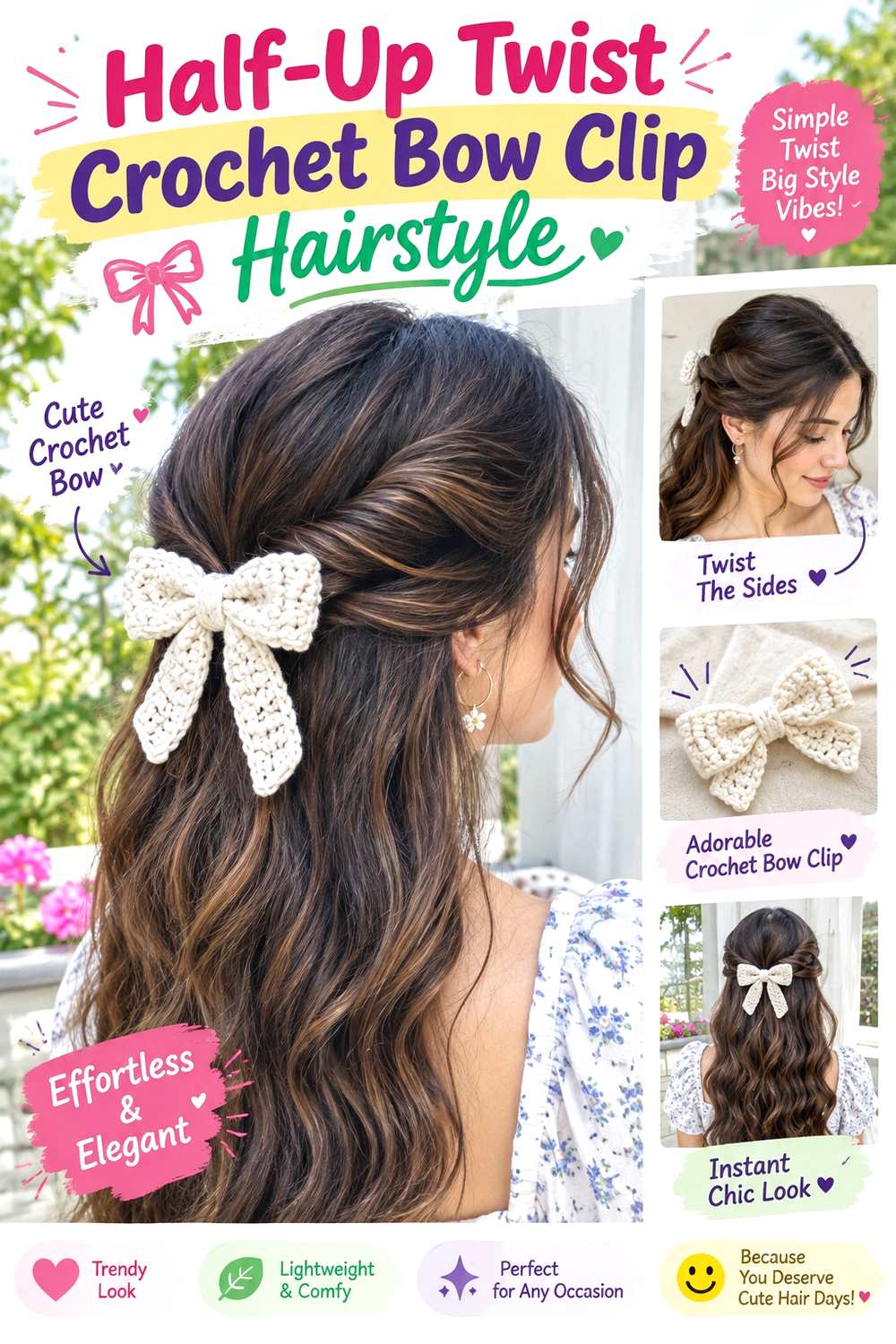
Two soft twists meeting behind the crown create a natural place for a crochet bow clip while leaving most of the length loose. Take moderate sections from both temples, turn them toward the back, and join them slightly below the highest point of the head. Keep some crown lift above the anchor and allow the lower lengths to stay straight, waved, curly, or coily. Medium and long hair provide enough length for comfortable twists without pulling tightly across the sides.
Use light texturizing spray if smooth hair needs grip, secure the joined section with a small elastic, and reinforce a loose twist with bobby pins. Place the bow over the hidden anchor only after the half-up section feels stable. A full wash-day version takes longer if the loose lengths also need curl definition or wave styling, while a quick refresh may involve retwisting only one side and replacing the bow.
For professional styling, specify where the twists should meet and whether you want the bow centered or shifted slightly to one side. If the crown flattens, gather less hair rather than pulling the clip upward for artificial lift. Maintenance is mostly about resetting the hidden anchor and keeping the bow level as the twists gradually soften.
Pro tip:
Cross the two twists once before securing them, then place the bow over that join so the structural elastic stays hidden beneath the crochet loops.
Make It Work for You:
For dense hair, take narrower temple sections and leave more length loose, which reduces bulk beneath the clip while preserving the half-up silhouette.
Watch Out For:
Do not make the bow clip the only fastener. Secure the twists first so opening or repositioning the accessory cannot release the entire hairstyle.
Low Bun Crochet Bow Clip Hairstyle

A low bun creates a compact base that lets a crochet bow sit clearly above or beside the nape. Keep a center or soft side part visible, gather the hair low, and form a rounded bun without pulling the crown completely flat. The bow can sit directly above the bun for symmetry or slightly off-center for a less formal finish. Medium to long hair offers useful wrapping length, while straight, wavy, curly, and coily textures can all work when the base is comfortable.
Use a fabric-covered elastic to establish the bun, bobby pins to secure the tucked ends, and smoothing cream only where visible flyaways need control. Add the crochet bow clip after the bun holds independently. A full wash-day style takes longer if the hair needs drying or defining first, while a next-day refresh can be limited to replacing loose pins and resetting the bow.
For professional styling, explain the exact bun height and whether the bow should show mainly from the back or also from one side. If the accessory begins leaning, move its clip onto a firmer section instead of tightening the bun. Maintenance means rebuilding the base once it sags and keeping the nape comfortable rather than adding more tension throughout the day.
Pro tip:
Place the bow slightly above the bun rather than directly underneath it, where neck movement can repeatedly press against the clip and disturb its position.
Make It Work for You:
For shorter medium-length hair, make a smaller tucked bun and use a compact bow beside it, allowing the accessory to frame rather than overwhelm the shape.
Watch Out For:
Avoid using the bow to secure loose bun ends. Pin those pieces first so adjusting the accessory later does not loosen the actual updo.
High Ponytail Crochet Bow Clip Hairstyle
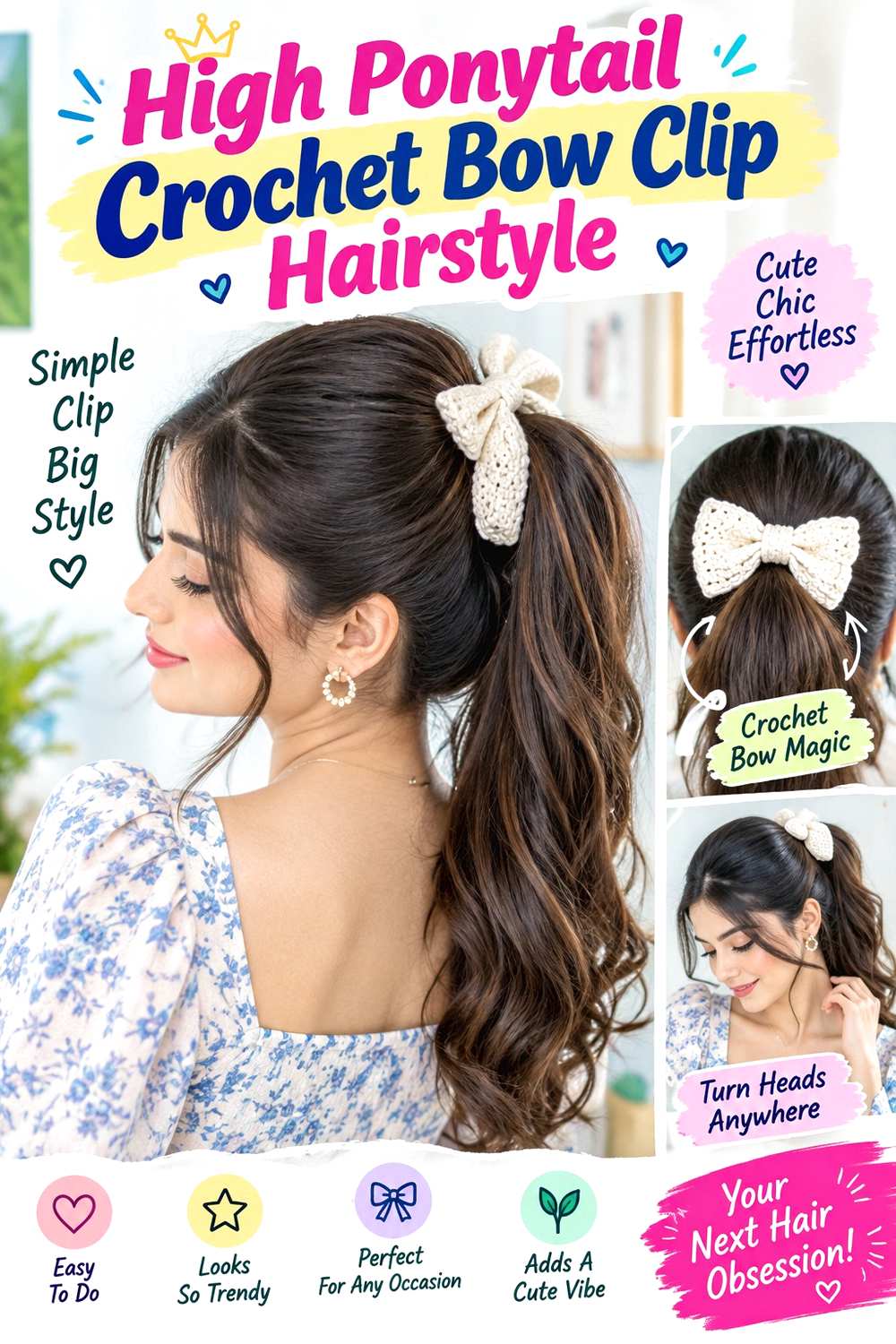
A high ponytail gives a crochet bow a strong focal point near the crown while the loose length provides movement underneath. Position the ponytail slightly behind the highest point of the head, keep the front softly controlled, and preserve a little lift instead of brushing everything completely flat. The bow can sit directly beside the base, with its tails falling toward the ponytail. Straight, wavy, curly, or coily lengths all work, especially on medium to long hair.
Build the ponytail with a fabric-covered elastic, guide the surface with a paddle brush, and apply lightweight serum only where flyaways need smoothing. Add the crochet bow clip after the base feels secure. A complete wash-day style can take longer when the length also needs drying, waves, or curl definition; a quick morning refresh usually means rebuilding a sagging ponytail and smoothing only the crown.
For salon or event styling, specify the ponytail height and which side you want the bow to face. If the clip rotates while the ponytail moves, attach it to a thicker nearby section rather than pulling the ponytail tighter. Maintenance means checking the elastic and bow separately so neither accessory has to compensate for a weak anchor.
Pro tip:
Position the bow slightly beside the ponytail base rather than directly underneath it, where the swinging length can repeatedly knock the clip out of alignment.
Make It Work for You:
For dense hair, choose one medium bow and let the ponytail remain naturally full; an oversized accessory can become lost against too much gathered volume.
Watch Out For:
Do not clamp the bow onto a bulky elastic if it cannot sit level. Move the clip to nearby hair where it can grip more securely.
Low Ponytail Crochet Bow Clip Hairstyle

A low ponytail keeps the crown simple and gives a crochet bow a visible position at the nape. Part the hair in the center or slightly to one side, gather the lengths just above the neckline, and leave the surface smooth with a little natural softness. The bow can sit directly above the ponytail anchor or slightly to one side, while straight hair falls cleanly and waves, curls, or coils add fullness below it. Medium and long lengths provide the clearest proportion.
Use a fabric-covered elastic to secure the ponytail, a wide-tooth comb to arrange the part, and lightweight smoothing cream where flyaways need control. A full wash-day style takes longer if the loose lengths also need defining or smoothing; a morning refresh is usually limited to rebuilding the ponytail and replacing the bow. The clip should decorate the finished anchor rather than hold the ponytail together.
For professional styling, specify exactly how low the ponytail should sit and whether the bow should remain visible from the front. If it begins tilting, change the clip angle instead of tightening the gathered base. Maintenance is straightforward: refresh the ends as needed, reset the elastic when it stretches, and check that the clip does not press against the neck during movement.
Pro tip:
Turn your head gently after attaching the bow to confirm the clip clears both the ear and neckline before you settle on the final anchor.
Make It Work for You:
For curly or coily hair, keep the ponytail naturally full and smooth only the front where desired, preserving texture beneath the more structured bow.
Watch Out For:
Avoid placing the bow too far down the loose ponytail. It can rotate as the hair moves, so keep it near the stable base.
Side Braid Crochet Bow Clip Hairstyle
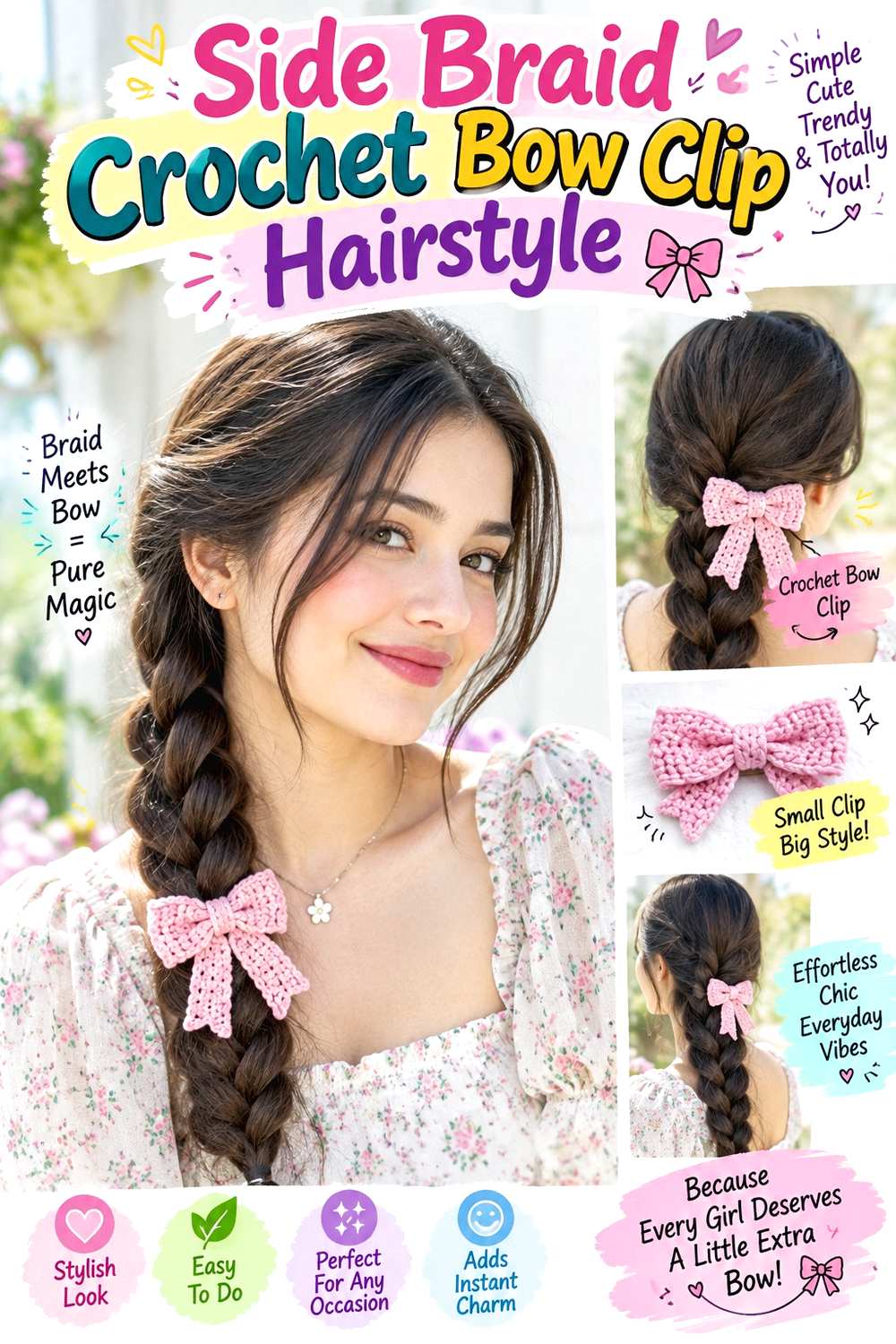
A side braid gives a crochet bow several useful positions, from the area near the braid start to a secure point above the tapered end. Sweep the hair toward one shoulder, begin a broad braid near the nape, and keep the crown softly shaped rather than tightly pulled. A side part can echo the braid direction, while a center part creates contrast. Medium to long hair works best, and straight, wavy, curly, or coily textures can all support the shape.
Apply light texturizing spray if extra grip is needed, secure the braid with a fabric-covered elastic, and use bobby pins only for short nape pieces that escape. Clip the bow near the braid start or onto a broad upper crossing. A full style takes longer when detangling or curl definition comes first; a refresh may involve tightening only the final crossings and resetting the accessory.
For professional styling, specify the braid width, shoulder direction, and exact bow placement. If the flower-like loops of the bow make the braid turn sideways, move the clip higher instead of pulling the woven section tighter. Maintenance involves controlling fuzzy sections and keeping the accessory away from the narrow tip where its weight can rotate the finished braid.
Pro tip:
Anchor the bow to the outside of a broad braid crossing, where the clip has enough structure to stay upright without narrowing the woven shape.
Make It Work for You:
For very long hair, keep the bow on the upper half of the braid so it remains visible and does not add weight near the tapered end.
Watch Out For:
Avoid clipping a large bow near the braid tip. The narrow section can twist, so move the accessory upward onto a stronger crossing.
Braided Crown Crochet Bow Clip Hairstyle

A braided crown creates a curved structure that can support one crochet bow at a deliberate focal point. Wrap one braid or two joined braids above the ears and around the back, then place the bow where the woven sections meet or slightly above one ear. Keep the braid broad enough to remain visible around the accessory, with a few loose face-framing pieces only if they suit the finish you want. Medium to long hair is easiest to wrap, while shorter lengths can use two side braids meeting at the back.
Use light texturizing spray for grip, small clear elastics to secure hidden braid ends, and bobby pins to anchor the crown. Add the bow only after the braid can hold itself. A full crown takes longer because placement needs checking from several angles, whereas a quick refresh may involve replacing one pin and straightening the clip.
For professional styling, specify the braid width and exactly where you want the bow to sit. If the crown loosens, reinforce its structural pins rather than making the decorative clip carry tension. Maintenance centers on comfortable anchoring and careful removal so the bow fastener does not catch neighboring braid sections.
Pro tip:
Place the bow over the cleanest braid joining point, allowing the crochet loops to conceal the hidden connection without covering the entire woven crown.
Make It Work for You:
For shorter hair, create two side braids that meet at the back and use the bow over their join instead of forcing a complete wraparound braid.
Watch Out For:
Do not use the bow clip to close a loose gap in the crown. Reinforce the braid with pins before adding the decorative accessory.
Natural Curl Side Clip Crochet Bow Clip Hairstyle

Natural curls can stay fully loose while a crochet bow holds back only one small side section. Let the curl pattern determine the part or separation naturally, then guide a few curls behind one ear and place the bow near the temple or just above the ear. Keep the rest of the shape rounded and free, with curl groups intact rather than brushed apart. Short, medium, and long curly or coily hair can all use this idea because the clipped section can remain small.
On wash day, use lightweight leave-in conditioner for softness, curl gel for definition, and a diffuser if controlled drying suits your routine. Add the bow only after the side section is mostly dry so the clip does not stretch freshly formed curls. A between-wash refresh can focus on the curls compressed around the accessory rather than rewetting the whole hairstyle.
For professional styling, specify how much hair you want held back and whether the bow should sit high at the temple or lower near the ear. If it slips, take a denser section rather than clamping through several curl groups. Maintenance means refreshing flattened curls, respecting natural shrinkage, and moving the accessory occasionally if one area feels compressed.
Pro tip:
Clip the bow beside an established curl group instead of directly through several curls, keeping the accessory secure while preserving the surrounding definition.
Make It Work for You:
For shorter curls, choose a smaller bow and place it slightly higher above the ear so enough natural texture remains visible around the accessory.
Watch Out For:
Do not drag the clip through tangled curls when removing it. Open it fully and release the anchored section slowly to avoid disturbing neighboring groups.
High Puff Crochet Bow Clip Hairstyle
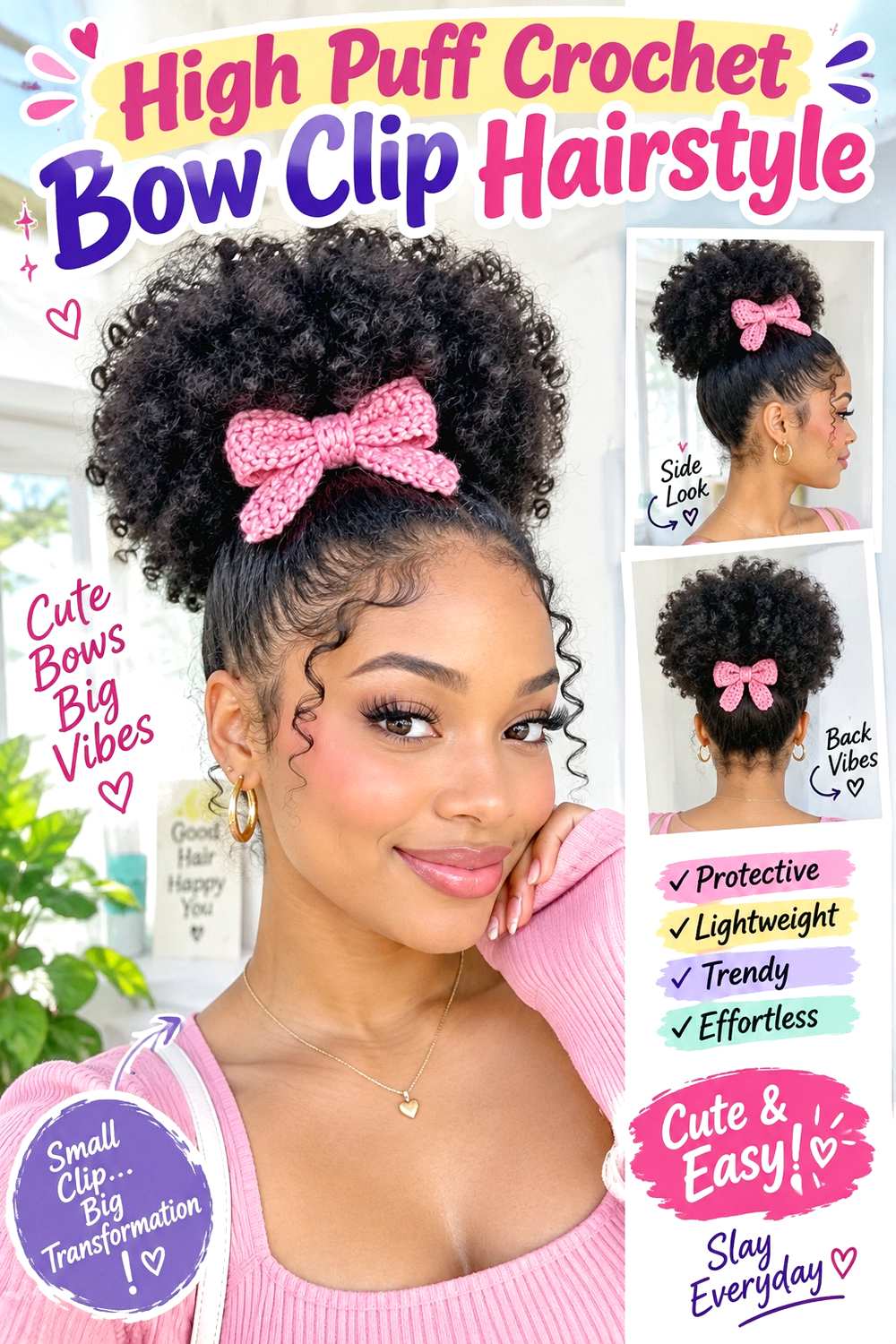
A high puff creates strong volume above the crown while a crochet bow adds detail along the gathered edge. Position the puff near the crown, keep its shape broad rather than narrow, and attach the bow near one temple or slightly behind it. The front can remain softly textured or more controlled according to your routine, while the ends stay full and naturally curled. This design suits curly and coily hair with enough length to gather comfortably without excessive tension.
Use a soft elastic to establish the puff, a wide-tooth comb to organize only the front where needed, and a small amount of edge gel for targeted control. Add the bow after the base holds on its own. A complete wash-day style takes longer when the curls need definition and drying first; a short refresh usually means fluffing the puff, resetting the elastic if needed, and repositioning the bow.
For salon or event styling, specify the puff height and exactly where the accessory should appear from the front. If the bow disappears as the curls expand, move it slightly outward instead of flattening the surrounding texture. Maintenance should prioritize comfortable tension and natural volume rather than repeatedly tightening either anchor.
Pro tip:
Fluff the puff completely before adding the bow so you can place the clip where expanding curls are less likely to cover its loops.
Make It Work for You:
For lower-density curls, keep the puff slightly smaller and use a lighter bow near the temple, preserving fullness instead of compressing the gathered base.
Watch Out For:
Do not tighten the puff simply because the bow moves. Reset the clip on a firmer section rather than increasing tension around the hairline.
Short Bob Crochet Bow Clip Hairstyle
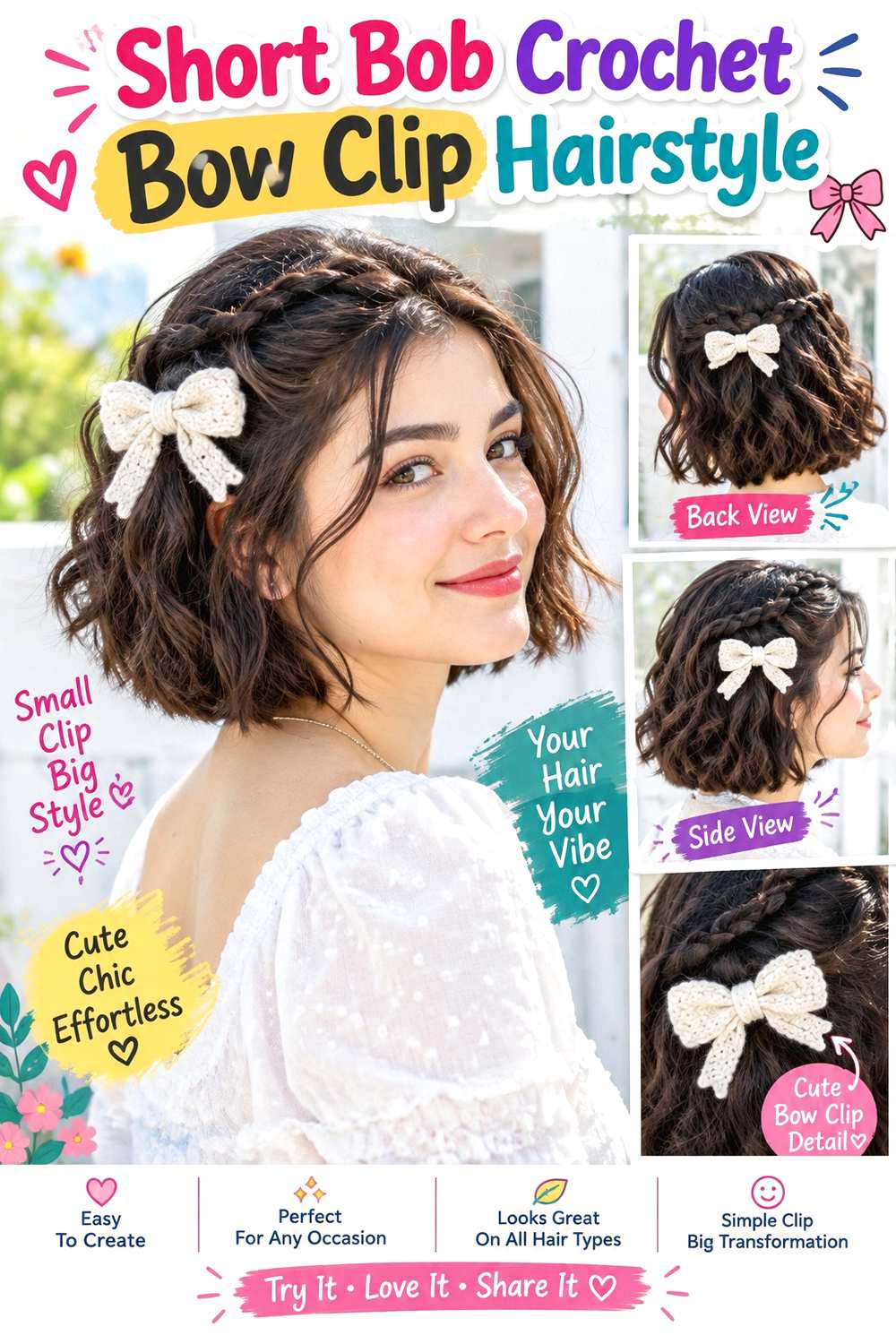
A short bob puts a crochet bow close to the face, so accessory size and placement strongly affect the overall balance. Keep a center or side part visible, tuck a moderate front section behind one ear, and position the bow just above the tuck. The bottom edge of the bob should remain visible around the jaw, neck, or shoulders, whether the ends are straight, softly waved, or naturally curled. A compact bow usually suits the shorter silhouette without hiding too much hair.
Use a wide-tooth comb to arrange the part, light texturizing spray if smooth roots need extra grip, and a small amount of smoothing cream on the ends when frizz disrupts the outline. A full wash-day style may involve reshaping the whole bob, while a morning refresh generally focuses on the front, the ends, and the clip position.
For professional styling, specify how much hair should stay tucked and whether the bow should sit high at the temple or closer to the ear. If it slips, reduce the clipped section or use a more stable anchor rather than squeezing harder. Maintenance is mainly about keeping the bob’s perimeter visible and resetting the bow when normal movement changes its angle.
Pro tip:
Tuck the side section first, then angle the bow along the head so the crochet loops sit close to the silhouette instead of projecting outward.
Make It Work for You:
For a curly bob, follow existing curl groups when selecting the tucked section, leaving neighboring curls free so their definition stays intact around the bow.
Watch Out For:
An oversized bow can hide much of a short bob. Choose a smaller clip unless an intentionally exaggerated accessory is the main styling goal.
Pixie Side Clip Crochet Bow Clip Hairstyle
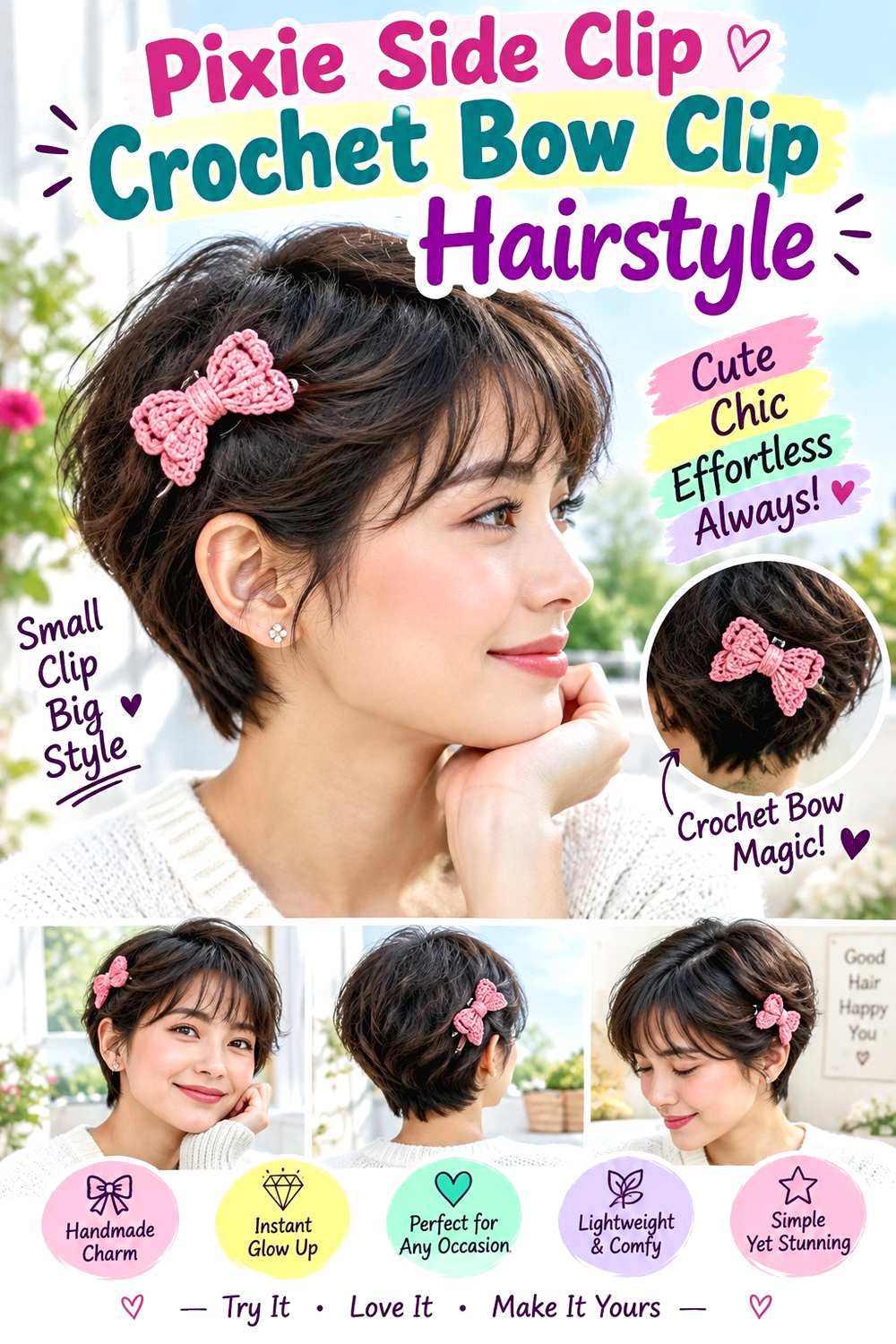
A pixie needs only a small crochet bow to create a clear focal point because the accessory sits close to the short outline. Sweep the top or fringe in its natural direction, then place the bow near one temple or just above the ear. It can hold back a narrow front section or sit primarily as decoration beside textured pieces. Straight, wavy, curly, and coily pixies can all work, although a lightweight bow is easier to balance when there is less hair available for grip.
Use a small amount of styling paste to direct the top, a fine-tooth comb if you want one side cleaner, and light hairspray only where extra control is needed. A complete wash-day reset is generally brief on cropped hair, while a daily refresh may require only finger shaping and repositioning the clip.
For professional styling, point to the exact temple position and explain whether the bow should hold the fringe back or leave it partially loose. If the accessory slips, take a slightly denser section rather than pressing the fastener harder against the scalp. Maintenance means resetting short pieces as they shift and avoiding repeated pressure on exactly the same area.
Pro tip:
Angle the bow in the same direction as the swept top or fringe so the accessory follows the haircut’s movement rather than interrupting it.
Make It Work for You:
For a curly or coily pixie, position the bow beside a defined curl group and keep the top textured instead of flattening the area for grip.
Watch Out For:
Do not take too wide a short section into the clip. A smaller, denser section usually provides better hold with less pulling at the roots.
Bubble Ponytail Crochet Bow Clip Hairstyle

A bubble ponytail gives a crochet bow a strong starting point while repeated rounded sections add structure through the length. Build a low or mid-height ponytail, then place small elastics at even intervals and gently expand each section. Keep the crown relatively simple so the bow and bubbles remain easy to read. Position the bow beside the main ponytail anchor rather than between lower bubbles, where movement could rotate it. Medium to long hair works best because the pattern needs enough length to repeat.
Use fabric-covered elastics for the ponytail and bubbles, light texturizing spray if slippery hair needs grip, and a wide-tooth comb to organize the length before dividing it. A full style takes longer than a standard ponytail because each bubble must be balanced, while a quick refresh can target only a flattened section and the bow position.
For professional styling, specify the ponytail height, bubble size, and which side should carry the bow. If one section collapses, reshape that bubble rather than tightening the top anchor. Maintenance means replacing stretched elastics, restoring even spacing, and keeping the bow clear of the lower rounded sections so it does not catch during movement.
Pro tip:
Shape every bubble before attaching the bow, then clip the accessory near the firm main anchor where it will not distort the rounded sections below.
Make It Work for You:
For fine hair, make smaller bubbles with closer spacing and use a compact bow, helping the ponytail retain fullness instead of looking over-expanded.
Watch Out For:
Avoid clipping the bow between two soft bubbles. Movement can twist the accessory and distort the spacing, so keep it near the stable top base.
French Twist Crochet Bow Clip Hairstyle
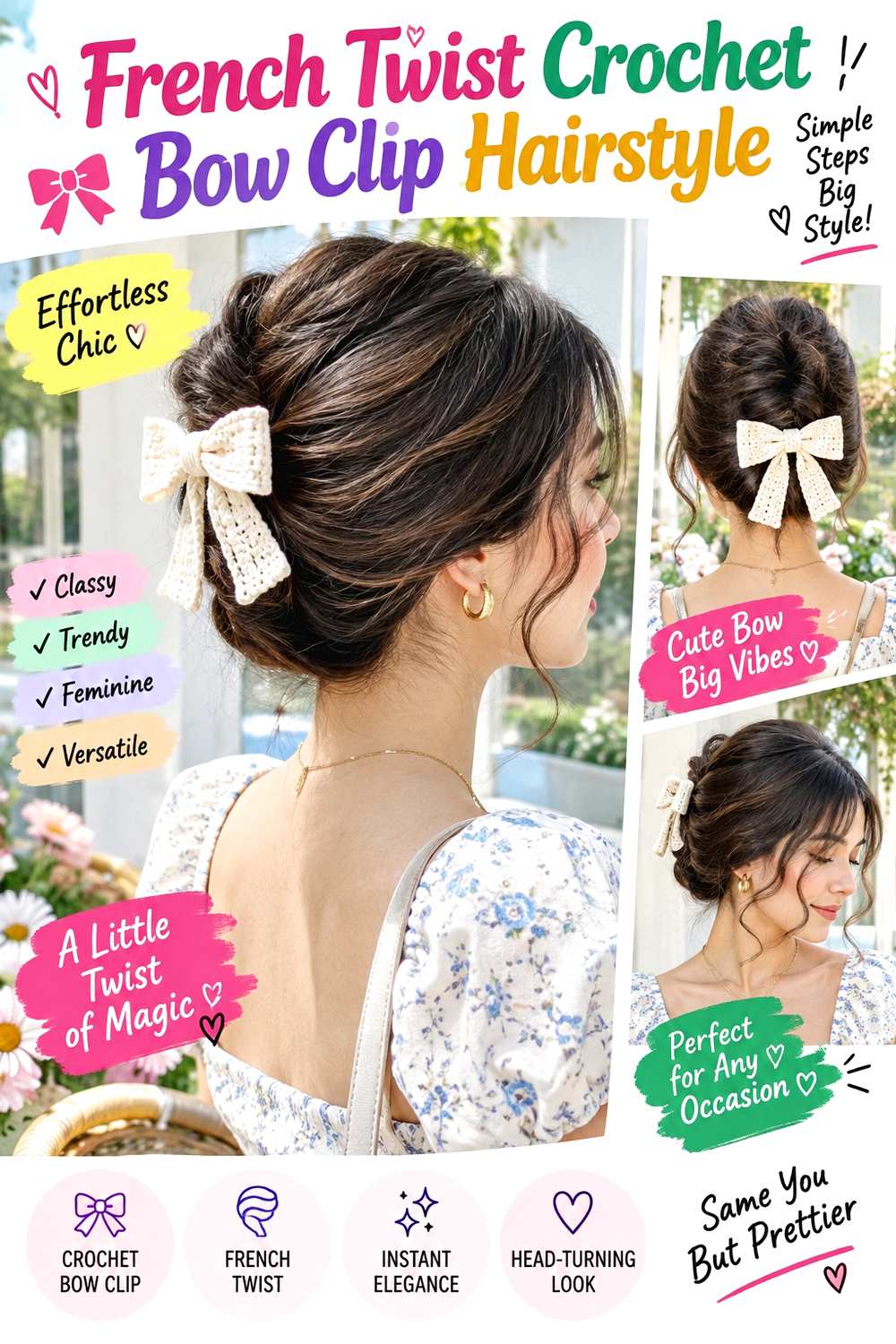
A French twist creates a clean vertical silhouette that pairs well with a crochet bow placed along the outer seam. Sweep the hair inward, roll the lengths upward, and tuck the ends so the twist stays close to the head. Keep a little softness at the crown rather than pressing every root flat. Position one medium bow near the upper third of the roll, where it can show from the side without covering the twist. Medium to long hair provides the most practical length for a secure shape.
Use texturizing spray to improve grip, bobby pins to build the hidden internal anchor, and flexible hairspray to control surface flyaways once the twist is complete. A full French twist takes longer than a simple ponytail because the roll needs checking from several angles. A quick event refresh may require only replacing one loose pin and straightening the bow.
For professional styling, specify the finished twist height, crown volume, and exact bow position. If the roll starts dropping, reinforce the internal pins instead of pushing the clip deeper. Maintenance focuses on comfortable anchoring and keeping the decorative accessory separate from the structural pin line.
Pro tip:
Place the bow along the outer seam of the finished twist, where it follows the vertical shape while staying clear of the hidden support pins.
Make It Work for You:
For fine hair, keep the roll compact and choose one moderate bow near the upper third, adding detail without requiring heavy teasing or padding.
Watch Out For:
Do not insert the bow where several structural pins cross. Choose a separate stable section so adjusting the accessory cannot loosen the twist.
Double Braid Crochet Bow Clip Hairstyle
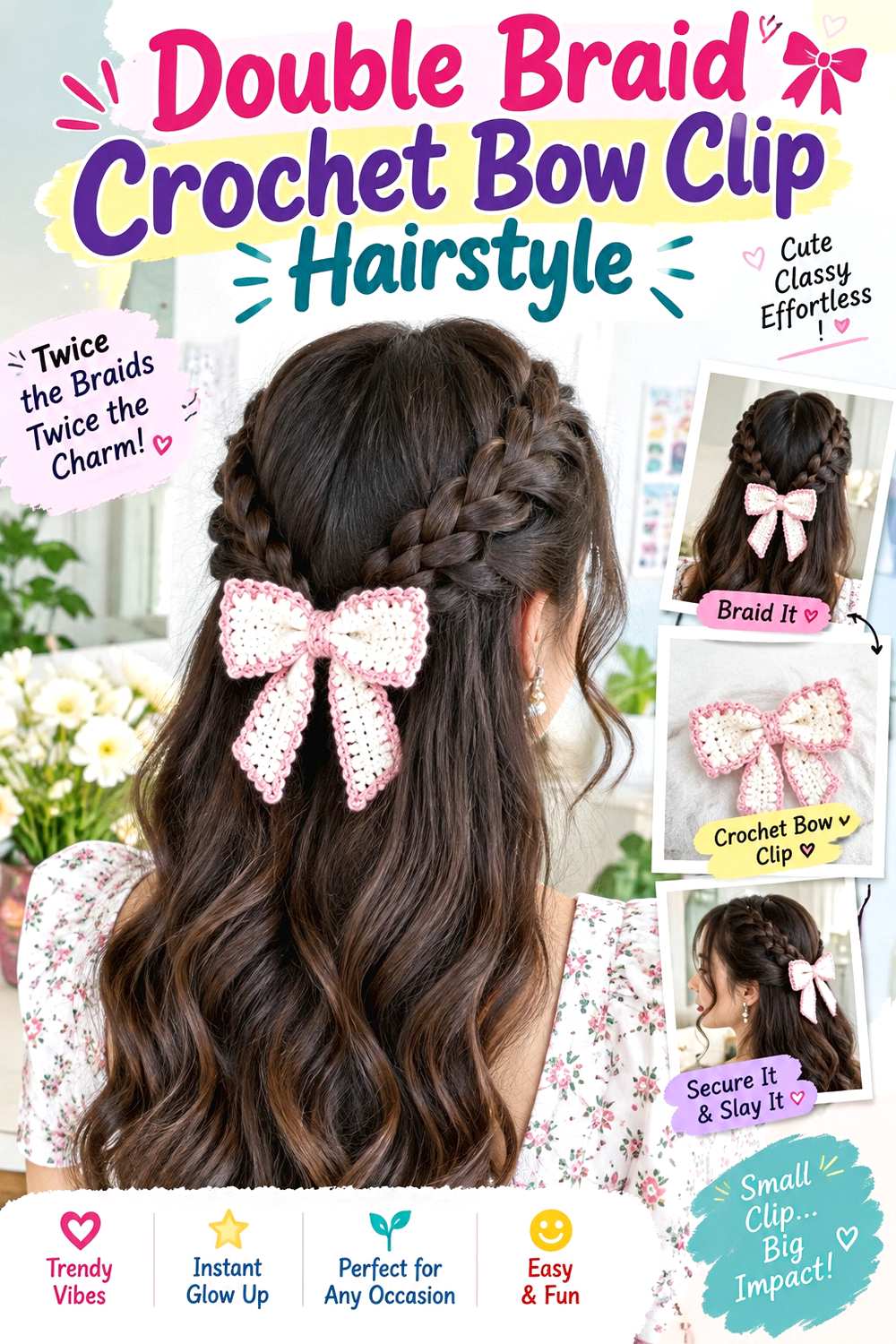
Two low braids create a balanced framework for crochet bows while keeping the hairstyle practical and easy to refresh. Divide the hair through the center, begin both braids near the lower sides or nape, and keep their widths reasonably similar without forcing exact symmetry. A small bow can sit beside each braid start, or one larger bow can decorate a single side for an intentionally uneven finish. Medium and long hair work best, with straight, wavy, curly, or coily textures all suitable when braid tension remains comfortable.
Use a wide-tooth comb to organize the sections, light texturizing spray if smooth hair needs grip, and fabric-covered elastics to secure the braid ends. A full style takes longer when detangling or curl preparation comes first, while a morning refresh usually means reworking fuzzy crossings and resetting the clips. Avoid pulling the braids tighter simply to support the accessories.
For professional styling, specify the braid starting height, width, and whether you want matching or asymmetrical bow placement. If one braid appears fuller, redistribute that section rather than tightening the smaller side. Maintenance is mainly about balanced tension and keeping each bow attached near a broad, stable section rather than a few loose strands.
Pro tip:
Finish both braid bases before positioning the bows, then compare their height from the front so the accessories support the balance rather than disguise it.
Make It Work for You:
For hair with strong shrinkage, let both braids settle before choosing bow placement so the accessories sit where the finished sections naturally fall.
Watch Out For:
Do not tighten one braid merely to level the bows. Correct the clip position or re-section the fuller braid instead of creating uneven tension.
Conclusion
Crochet bow clip hairstyles can range from small side accents on pixies and bobs to larger focal points beside ponytails, buns, braids, and updos. Shorter hair usually benefits from a lighter bow, while dense or long hair can balance a fuller accessory when the anchor is stable. Waves add movement around a side clip, curls and puffs preserve natural volume, and braids or twists provide firmer placement points. Parting, face-framing pieces, crown lift, and bow position can change the proportion without requiring a haircut. Consider your natural texture and daily routine as carefully as the accessory itself. A quick side clip needs little upkeep, while polished waves or structured updos require more full styling and occasional reshaping.
Before Your Salon Visit
Choose one or two favorite references and save views that clearly show both the crochet bow and the hairstyle supporting it. Discuss your natural texture, density, face shape, preferred length, upkeep, and usual styling routine. Point out the exact parting, braid width, bun or ponytail height, crown volume, face-framing pieces, bow size, and clip placement you like. Because these are temporary accessory styles, focus on secure, comfortable anchoring and the finished shape rather than assuming you need a new haircut.
FAQs
How Do I Keep a Crochet Bow Clip From Slipping?
Anchor the bow to a stable section rather than a few surface strands. Smooth hair may benefit from a little texturizing spray or a hidden secured base, while braids and twists already provide useful grip. If the clip still tilts, change its position or section size instead of squeezing it more tightly.
Can Crochet Bow Clips Work With Curly or Coily Hair?
Yes. Position the bow beside established curl groups, around a puff, or on a secure braid instead of flattening a wide area. Let natural shrinkage determine the finished placement. When removing the clip, open it completely and release the section carefully so neighboring curls are not pulled apart.
Do Crochet Bow Clip Hairstyles Require Heat Styling?
No. Natural curls, puffs, braids, ponytails, buns, pixies, bobs, and twists can all support crochet bows without heat. Hot tools are only relevant when you specifically want a heat-shaped finish such as broad waves. When you use them, apply heat protectant and avoid unnecessary repeat passes.
What Size Crochet Bow Clip Should I Choose?
Match the bow to your hair density, hairstyle, and available anchor. A small bow is often easier to balance on a pixie, bob, or narrow side section, while a larger bow can work beside a substantial ponytail or bun. The clip should stay level without pulling or hiding the hairstyle.