15 Floppy Middle Part Short Haircuts for Fall 2026
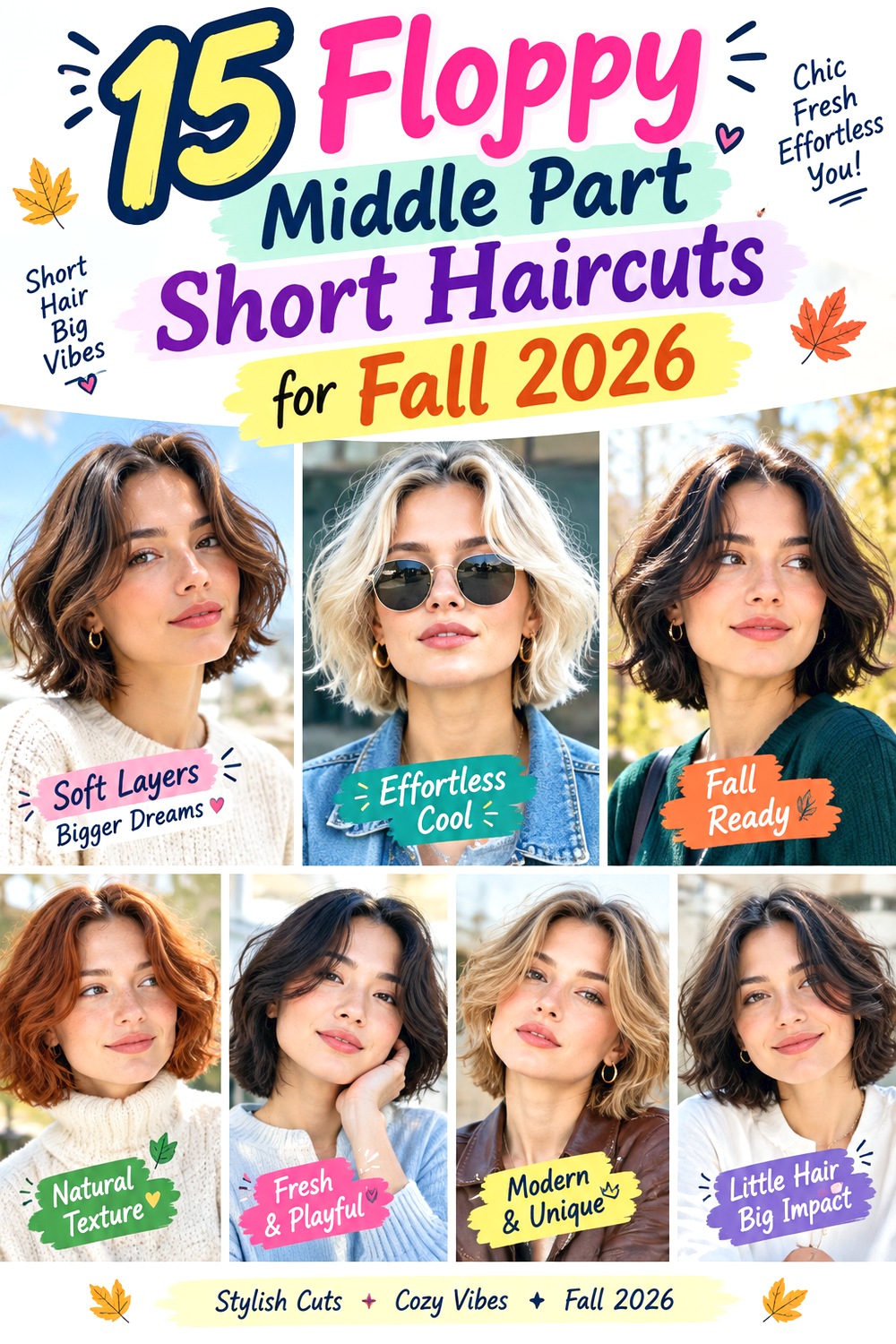
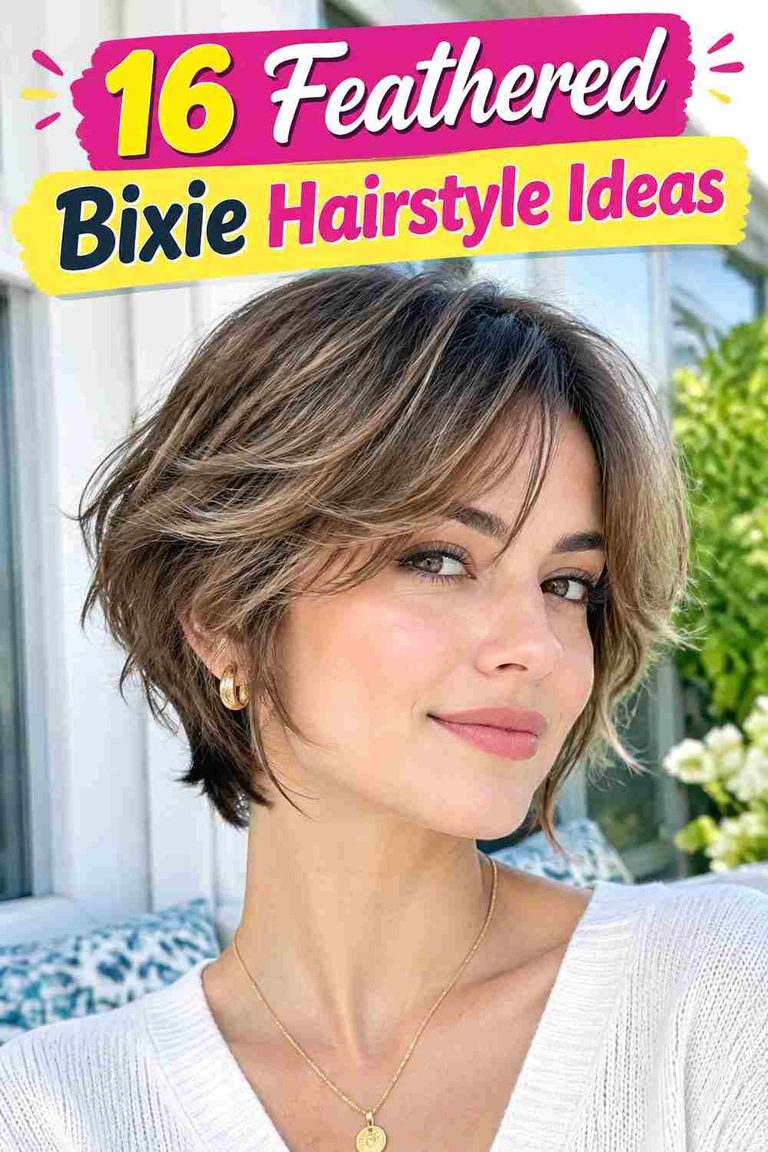
Floppy middle part short haircuts combine a relaxed center opening with enough length at the front for the hair to fall softly toward the temples. Instead of a rigid middle part or sharply cut bangs, the fringe usually bends, separates, or sweeps naturally around the forehead. The rest of the haircut can range from an ear-length crop and bixie to a jaw-length bob, with layers controlling how much movement, texture, and volume the shape has.
These floppy middle part short haircuts for Fall 2026 can be adjusted for straight, wavy, fine, medium, and thick hair. Fine hair often needs a stronger perimeter and restrained layering, while thick hair may benefit from internal bulk removal. Face shape can be considered through fringe length, cheekbone placement, side width, and how much forehead the center opening reveals.
Daily styling is usually quick to moderate because most of the attention goes to the front. A round brush, texture spray, or fingers may be enough. Short cuts need regular salon reshaping around the ears, nape, and fringe, so consider your natural part, cowlicks, density, grow-out preference, and usual heat routine before choosing a version.
Quick List
- Soft Floppy Middle Part Crop hairstyle
- Floppy Middle Part Bob with Tucked Ends hairstyle
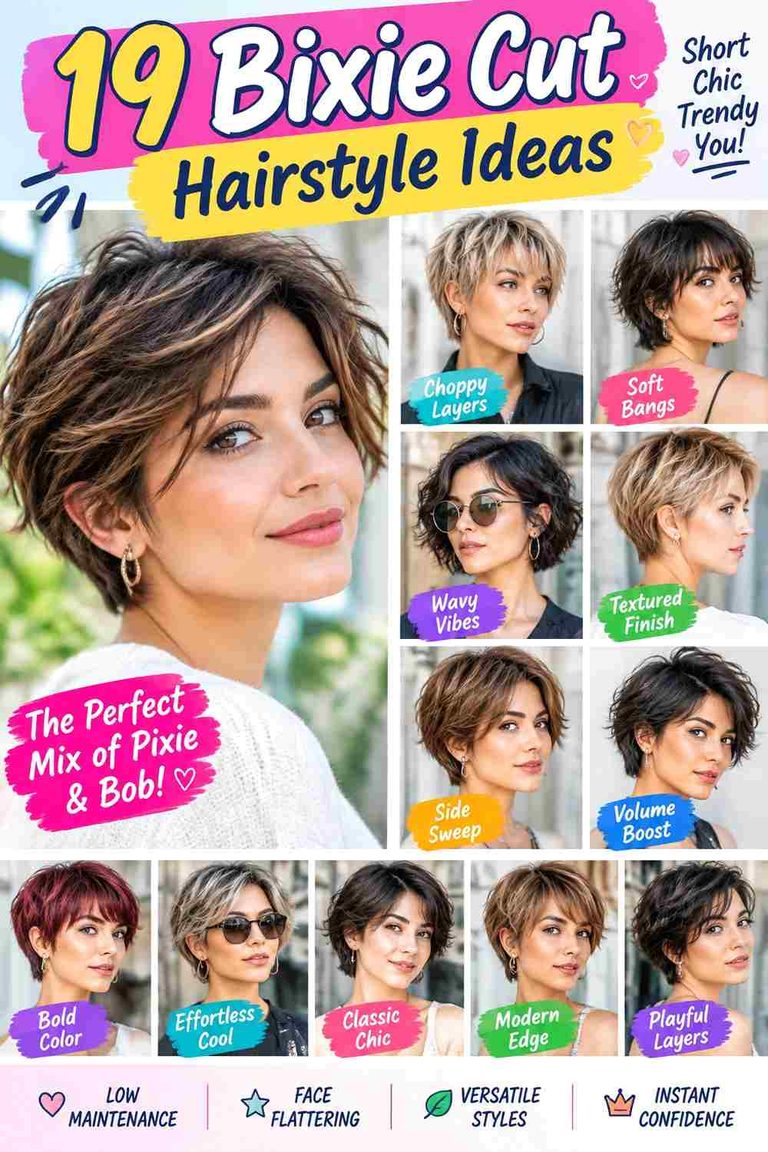
- Textured Floppy Middle Part Pixie-Bob hairstyle
- Floppy Middle Part Crop with Curtain Fringe hairstyle
- Wavy Floppy Middle Part Short Cut hairstyle
- Sleek Floppy Middle Part Jaw-Length Bob hairstyle
- Floppy Middle Part Short Cut for Fine Hair hairstyle
- Floppy Middle Part Short Cut for Thick Hair hairstyle
- Floppy Middle Part Short Cut for Natural Waves hairstyle
- Cheekbone-Layered Floppy Middle Part Crop hairstyle
- Floppy Middle Part Bixie with Feathered Ends hairstyle
- Floppy Middle Part Short Cut with Crown Volume hairstyle
- Floppy Middle Part Ear-Length Crop hairstyle
- Floppy Middle Part Short Cut with Piecey Ends hairstyle
- Grown-Out Floppy Middle Part Crop hairstyle
Soft Floppy Middle Part Crop hairstyle
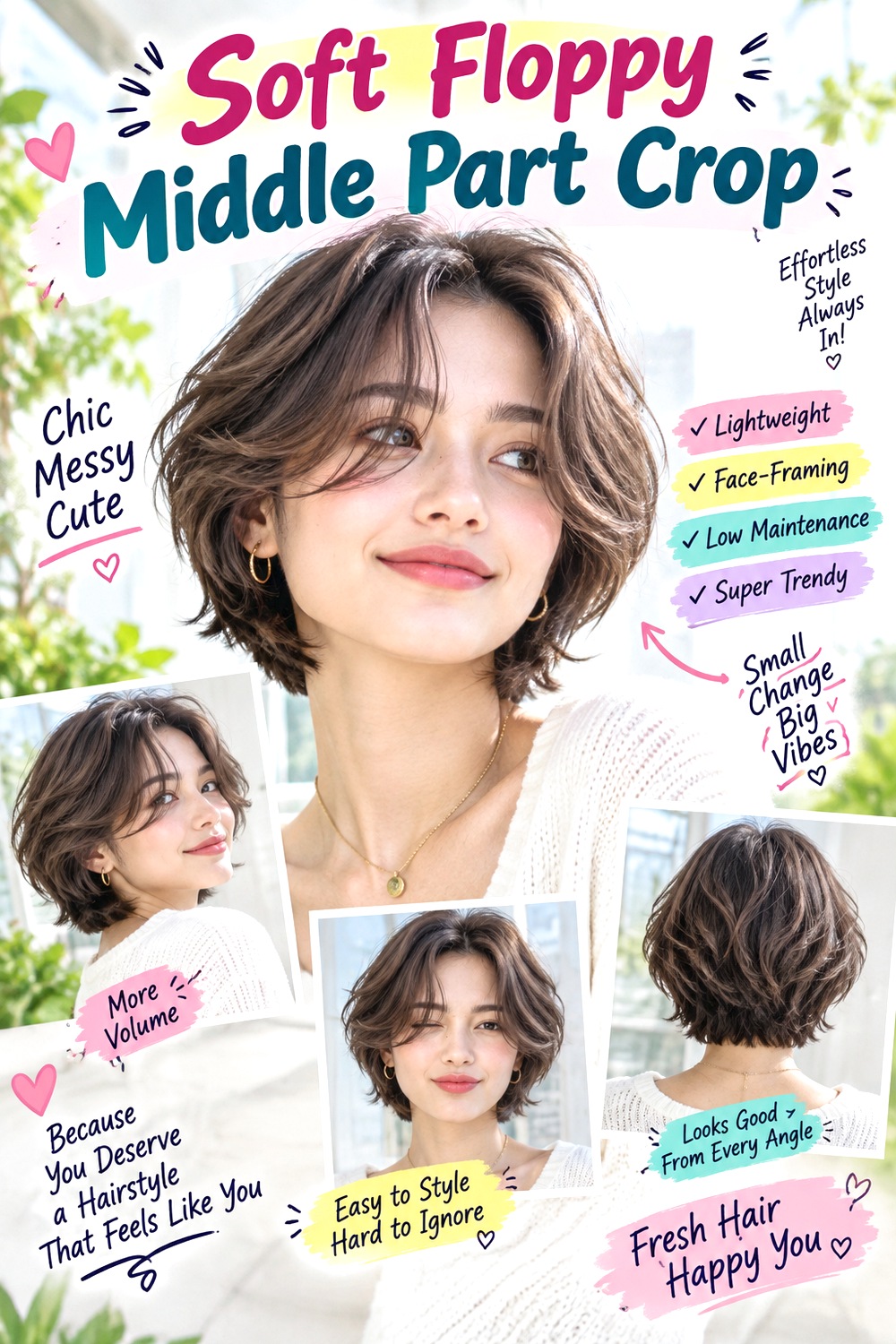
A soft floppy crop keeps enough length through the front for both sides of the middle part to fall naturally toward the temples. The sides can sit near the ears, while subtle layers through the top prevent the haircut from looking too round or heavy. Straight and softly wavy hair show the relaxed movement most clearly, and fine to medium density works well when the perimeter stays reasonably full. Use heat protectant, a small round brush, and lightweight texturizing spray to shape the front without making it stiff. Styling is quick because the haircut should fall into place with only a little direction at the fringe. Shorter sections around the ears and nape will need regular reshaping as they grow. At the salon, ask for a longer center-parted front with soft tapering at the temples and avoid cutting the top so short that it loses its floppy movement.
Pro tip:
Keep the shortest front pieces below the brow area if you want them to separate naturally rather than spring upward when the hair dries.
Floppy Middle Part Bob with Tucked Ends hairstyle

This short bob uses a relaxed middle part with ends that bend inward or tuck naturally around the jaw. The front stays long enough to split softly without becoming a traditional bang, while the perimeter creates a clean, compact shape. Fine and medium hair often suit the fuller baseline because it gives the ends more density. Thick hair can wear the look too, but hidden internal weight removal may be needed around the lower sides. Use heat protectant, a medium round brush, and a lightweight smoothing serum to create the tucked finish. Styling takes moderate time but becomes easier when the haircut already follows the jawline. A quick brush refresh can usually restore the ends the next morning. At the salon, ask for a strong jaw-length perimeter with minimal exterior layering and front pieces that stay long enough to fall on either side of a natural center part.
Pro tip:
Turn the brush inward only through the last inch or two; curling too high can make the bob look overly rounded instead of softly tucked.
Textured Floppy Middle Part Pixie-Bob hairstyle

A pixie-bob gives the floppy middle part more texture by combining a longer front with shorter, layered sides and back. The fringe separates near the center and falls toward the temples, while piecey layers through the crown stop the shape from feeling heavy. Medium-density straight or wavy hair works especially well because it can show both separation and movement. Fine hair should keep the crown layers longer, while thick hair may need controlled internal texture. Use styling cream, dry texture spray, and your fingers or a vent brush for shaping. Styling is quick and does not need to look overly precise. Short cuts lose their intended proportions fairly quickly, so the nape and sides may need salon reshaping before the front does. Ask for a pixie-bob with a noticeably longer front, connected temple pieces, and soft point-cut ends rather than aggressive thinning.
Pro tip:
Apply texture product mainly through the ends; too much product at the roots can make the center part look greasy and flatten the floppy front.
Floppy Middle Part Crop with Curtain Fringe hairstyle

Curtain fringe makes the center opening more deliberate while still keeping the overall haircut short and relaxed. The shortest bang pieces can sit around the brows or upper cheekbones, then lengthen toward the temples and merge into the cropped sides. Straight and lightly wavy hair are easiest to direct, while fine hair benefits from a narrower bang section so the sides keep enough density. Medium and thick hair can support a fuller curtain fringe. Use heat protectant, a small round brush, and flexible hairspray to keep the front moving without creating a stiff split. Styling is quick to moderate because only the fringe needs careful shaping. Bang maintenance will usually be more frequent than the rest of the haircut. At the salon, specify the shortest point of the curtain fringe and ask that the outer pieces blend smoothly into the ear-length sides rather than creating a disconnected shelf.
Pro tip:
Dry the fringe forward first and split it only when it is almost dry; this creates a softer center opening and reduces stubborn gaps.
Wavy Floppy Middle Part Short Cut hairstyle
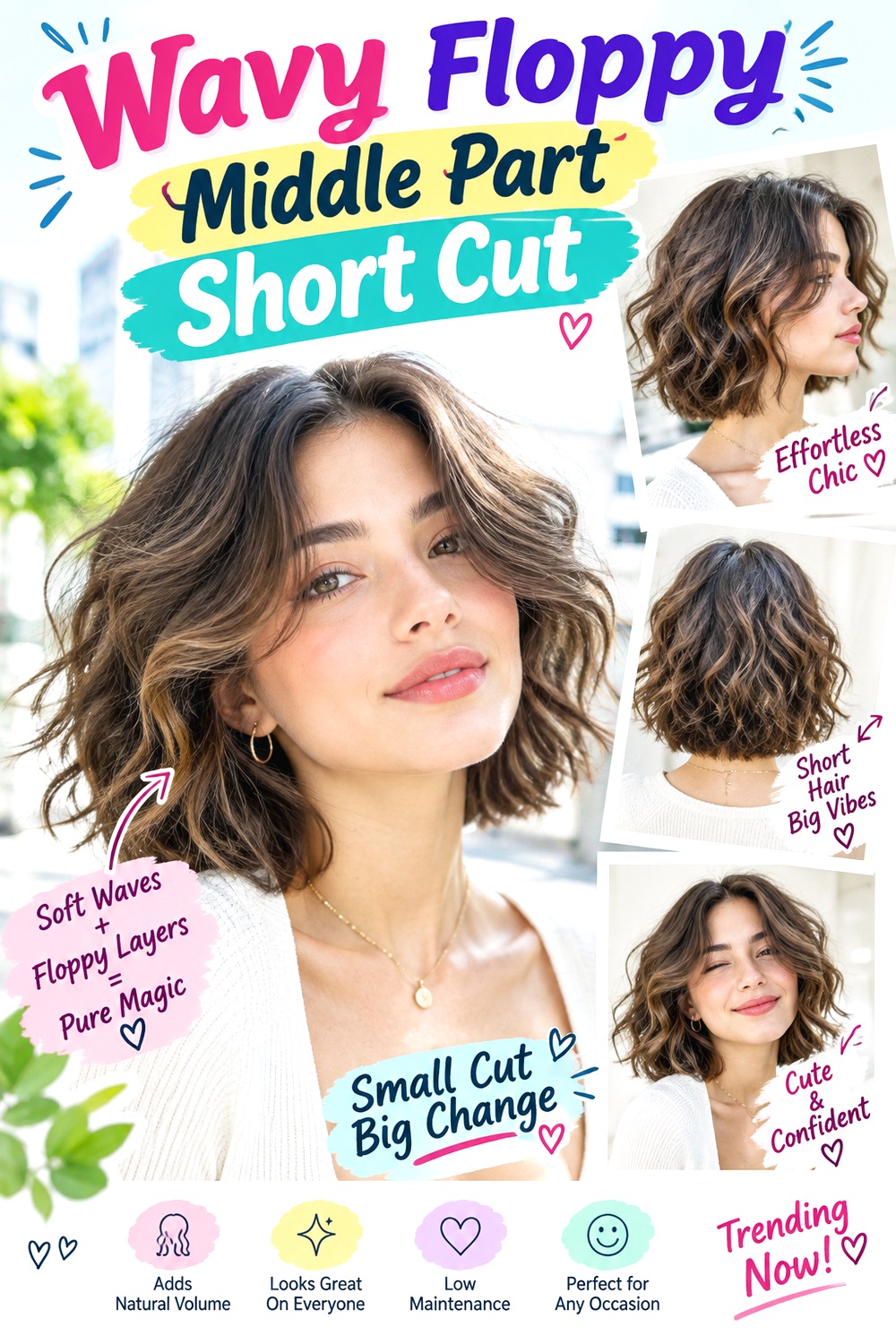
Natural waves make a floppy middle part feel relaxed because the front bends away from the forehead without needing a polished blowout. The cut can sit between the ears and jaw, with light layers encouraging movement through the sides and crown. Fine wavy hair should keep more weight around the perimeter, while medium and thick waves can handle additional internal shaping. Use leave-in conditioner, lightweight mousse, and a diffuser to support the natural texture without creating excess puffiness. Styling is easy to moderate and usually requires less heat than a straight version. On non-wash days, the front can often be refreshed with water and a small amount of mousse. At the salon, ask the stylist to assess the front when dry so the natural wave and shrinkage are visible before the final length is decided. Keep the middle part flexible rather than cutting for a perfectly rigid line.
Pro tip:
Let the front pieces settle into their natural bend before deciding where to part them; forcing a wave into an exact center line can create uneven volume.
Sleek Floppy Middle Part Jaw-Length Bob hairstyle

A sleek jaw-length bob keeps the floppy middle part controlled without making it flat. The front sections fall softly beside the face, while the lower perimeter stays clean and substantial around the jaw. Straight hair reaches the smooth finish most easily, though softly wavy hair can be polished with moderate heat. Fine to medium density suits the compact outline, while thick hair may need hidden debulking underneath. Use heat protectant, a paddle brush, and lightweight serum through the ends. Styling takes moderate time if natural texture needs smoothing, but the front should still retain a slight curve rather than being pressed completely straight. Regular trims keep the jaw-length baseline crisp. At the salon, request a strong perimeter, minimal exterior layering, and enough front length for the sections to fall naturally on either side of the part without turning into short bangs.
Pro tip:
When flat-ironing the front, curve the tool slightly away from the face instead of pulling straight down; that keeps the floppy movement visible.
Floppy Middle Part Short Cut for Fine Hair hairstyle
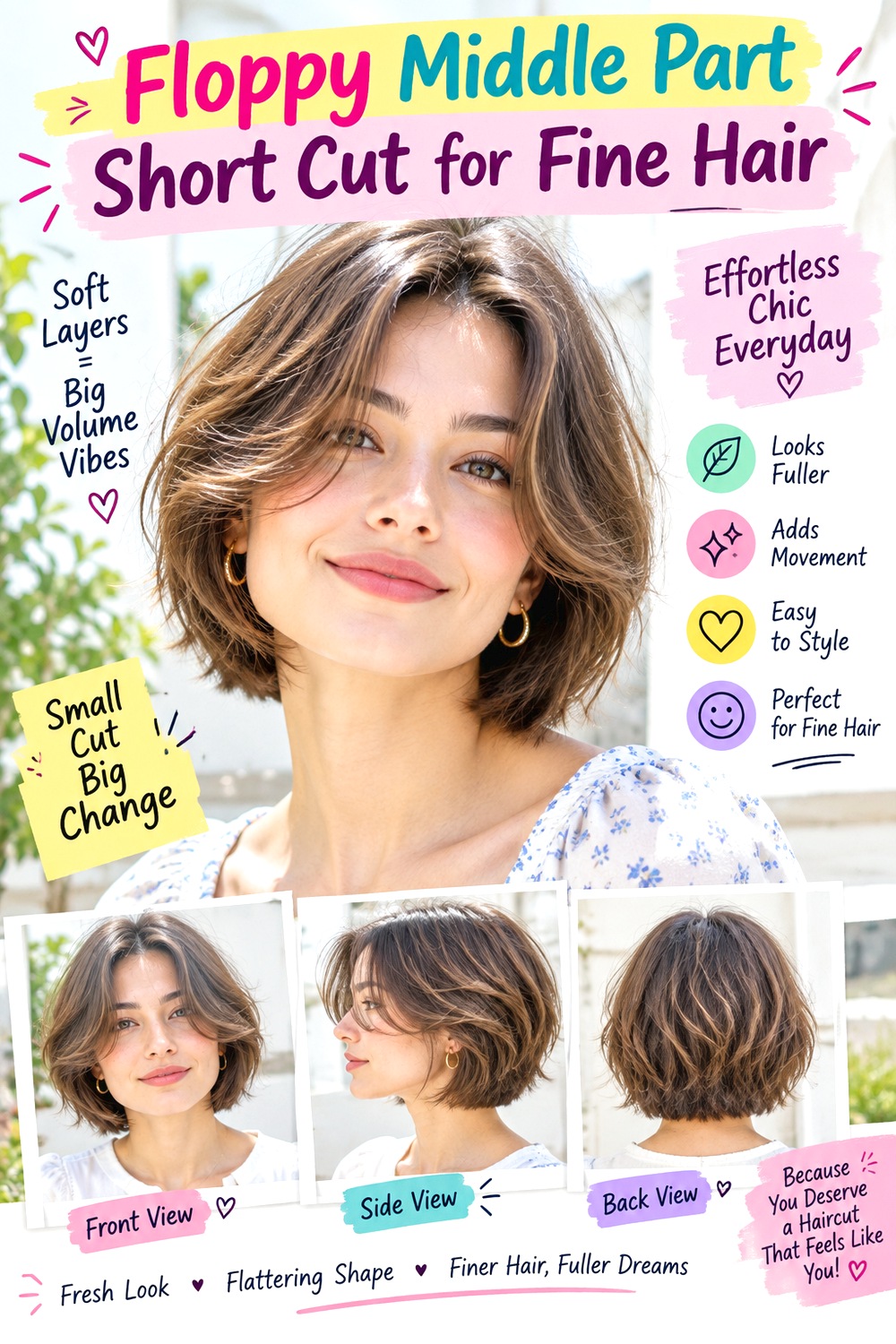
Fine hair benefits from a short floppy cut that creates movement without removing too much density. Keep the perimeter relatively solid around the ears and nape, then use only light layers through the top so the haircut has lift without exposing too much scalp. The middle-parted front should stay long and narrow rather than taking a large fringe section. Straight and slightly wavy fine hair usually styles quickly. Use volumizing spray at the roots, a small round brush, and a light texturizing mist through the ends. Styling is quick, but heavy creams and oils can collapse the shape. Salon trims should preserve the lower edge instead of constantly thinning it. At the salon, ask for minimal thinning, a narrow center-parted front section, and crown layers that remain long enough to blend cleanly. The sides should retain enough density to look full when tucked behind the ears.
Pro tip:
Avoid very short crown layers; they may separate and reveal more scalp instead of creating the controlled volume fine hair needs.
Floppy Middle Part Short Cut for Thick Hair hairstyle
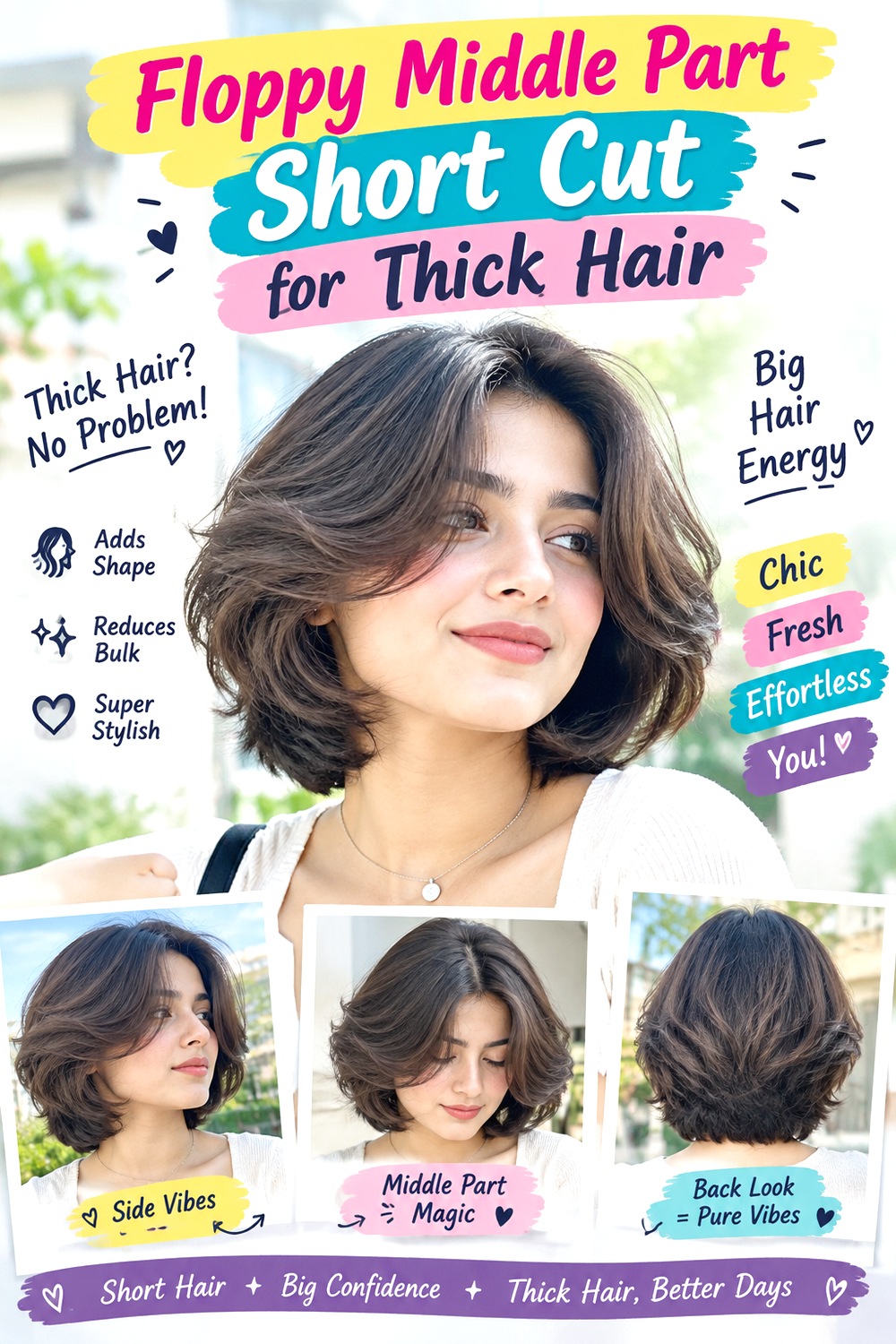
Thick hair can make a short middle-parted cut feel bulky around the ears unless the weight is managed carefully. Keep the outer surface smooth and remove excess density internally, especially behind the temples and above the ears. The front should remain substantial enough to fall into a floppy center split instead of becoming too feathered. Straight, wavy, and coarse textures can all work with the right balance. Use smoothing cream, heat protectant, and a vent brush or paddle brush for control. Styling takes moderate time because dense short hair needs to be directed before it dries into extra width. Regular reshaping helps prevent the sides from expanding as the cut grows. At the salon, ask for internal bulk removal underneath the surface rather than heavy thinning through the visible ends, and specify that you want to preserve weight through the longer front pieces.
Pro tip:
Show your stylist the exact spots where your hair tends to puff, usually above or behind the ears, so bulk removal stays targeted.
Floppy Middle Part Short Cut for Natural Waves hairstyle
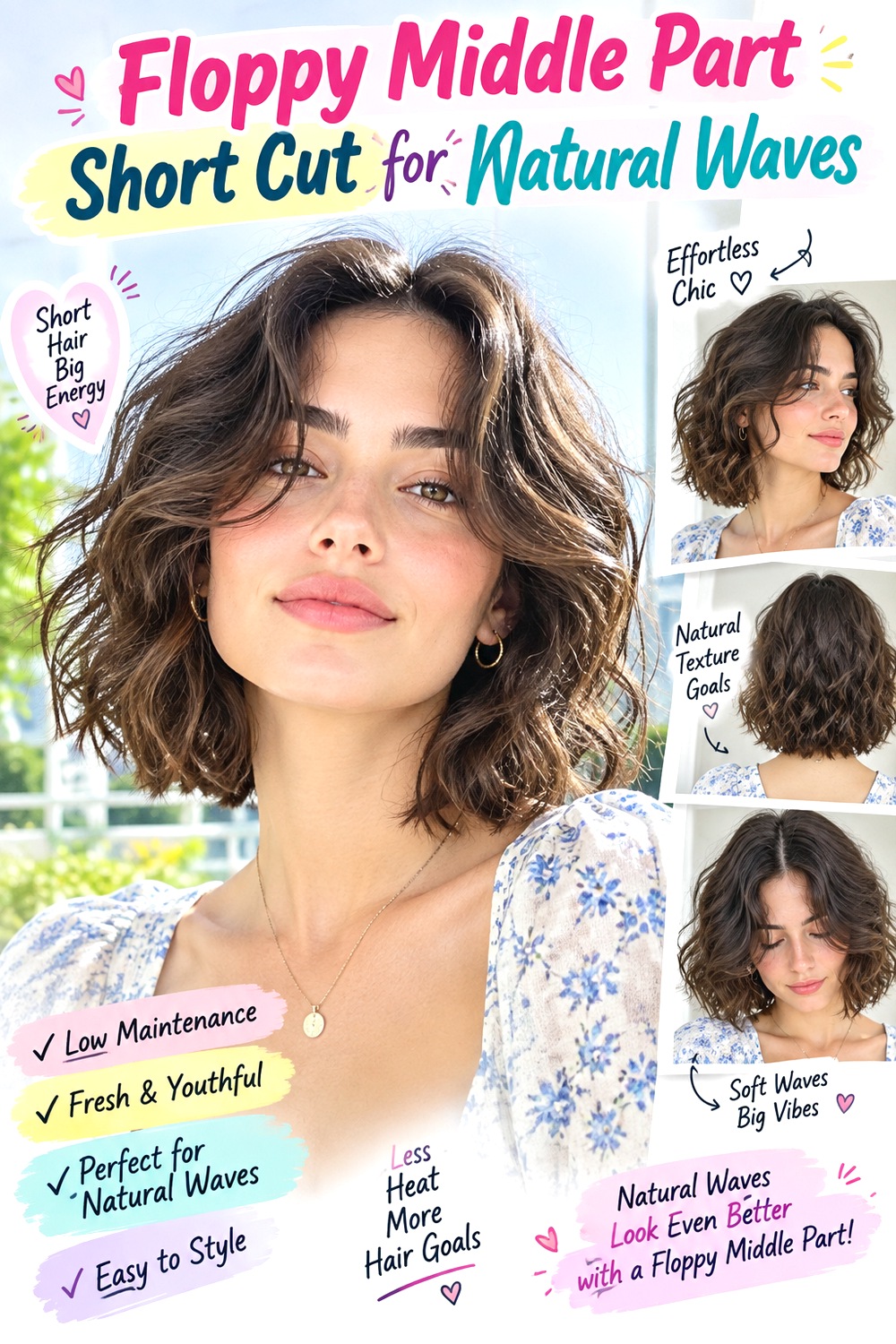
This version lets natural waves determine how the middle part opens rather than forcing the hair into a perfectly symmetrical line. The front can fall in loose bends toward the temples while softly layered sides create movement around the ears. Fine waves need a fuller perimeter to prevent the ends from looking wispy, while medium and thick waves can support more interior shaping. Use curl-enhancing leave-in conditioner, mousse, and a diffuser or air-dry method to keep the texture soft. Styling is easy to moderate, and the front usually needs only a small water refresh between washes. Humidity may increase width, so avoid cutting too many short layers around the sides. At the salon, ask for the haircut to be checked after the waves have settled naturally and keep the front long enough to account for spring. The center opening should follow the natural growth pattern.
Pro tip:
Do not brush the finished waves into a strict center part; use your fingers to separate the front where the texture naturally wants to divide.
Cheekbone-Layered Floppy Middle Part Crop hairstyle

Cheekbone layers give the floppy middle part a clear face-framing point without turning the front into short bangs. The shortest sections sit near the upper cheek, then blend into longer pieces around the ears and nape. This creates visible movement at the front while keeping the rest of the crop compact. Straight and wavy hair show the placement clearly, and medium density is especially easy to balance. Fine hair should use fewer face-framing pieces, while thick hair can support a wider graduated section. Use heat protectant, a small round brush, and flexible hairspray to direct the cheekbone layers outward. Styling is quick because the strongest movement is concentrated near the face. At the salon, ask the stylist to mark the shortest cheekbone point before cutting and keep the next layer long enough to connect smoothly into the sides rather than forming a shelf.
Pro tip:
Bring a front-facing reference photo that clearly shows the cheekbone endpoint; side photos often hide where the shortest layer actually begins.
Floppy Middle Part Bixie with Feathered Ends hairstyle

A feathered bixie sits between a pixie and bob, giving the floppy center part more length through the front while keeping the nape and sides light. Feathered ends create movement around the ears without making the haircut look heavily layered. Straight and wavy textures respond well, while fine hair should keep the feathering subtle to protect density. Medium and thick hair can support more separation through the ends. Use lightweight styling cream, texturizing spray, and a vent brush or fingers to shape the cut. Styling is quick and forgiving because the finish should stay airy rather than overly polished. The nape and ear area may need trims sooner than the longer front. At the salon, ask for a bixie with connected feathering, a longer center-parted fringe, and enough weight left through the sides so the shape does not become thin or spiky.
Pro tip:
Keep the feathering strongest around the ears and nape rather than throughout the crown; this preserves softness without sacrificing top density.
Floppy Middle Part Short Cut with Crown Volume hairstyle

Crown volume adds height behind the floppy middle part and helps a short haircut avoid sitting flat against the head. The front stays loose and center-parted, while longer crown layers lift gently before blending into the sides. Fine and medium hair benefit most from this balance, though thick hair can use a subtler version to prevent excess width. Straight and wavy textures are both suitable. Use root-lifting spray, a vent brush, and dry texture spray after the hair cools. Styling is quick to moderate because only the crown and front require extra attention. Overly short top layers can stand upright, so the haircut should create lift through length and direction rather than extreme cutting. At the salon, ask for soft crown layers that support volume but remain connected to the longer front pieces and sides. Keep the nape neat for contrast.
Pro tip:
Concentrate root lift just behind the center-parted fringe; lifting the hairline itself can make the floppy front stick up instead of falling naturally.
Floppy Middle Part Ear-Length Crop hairstyle
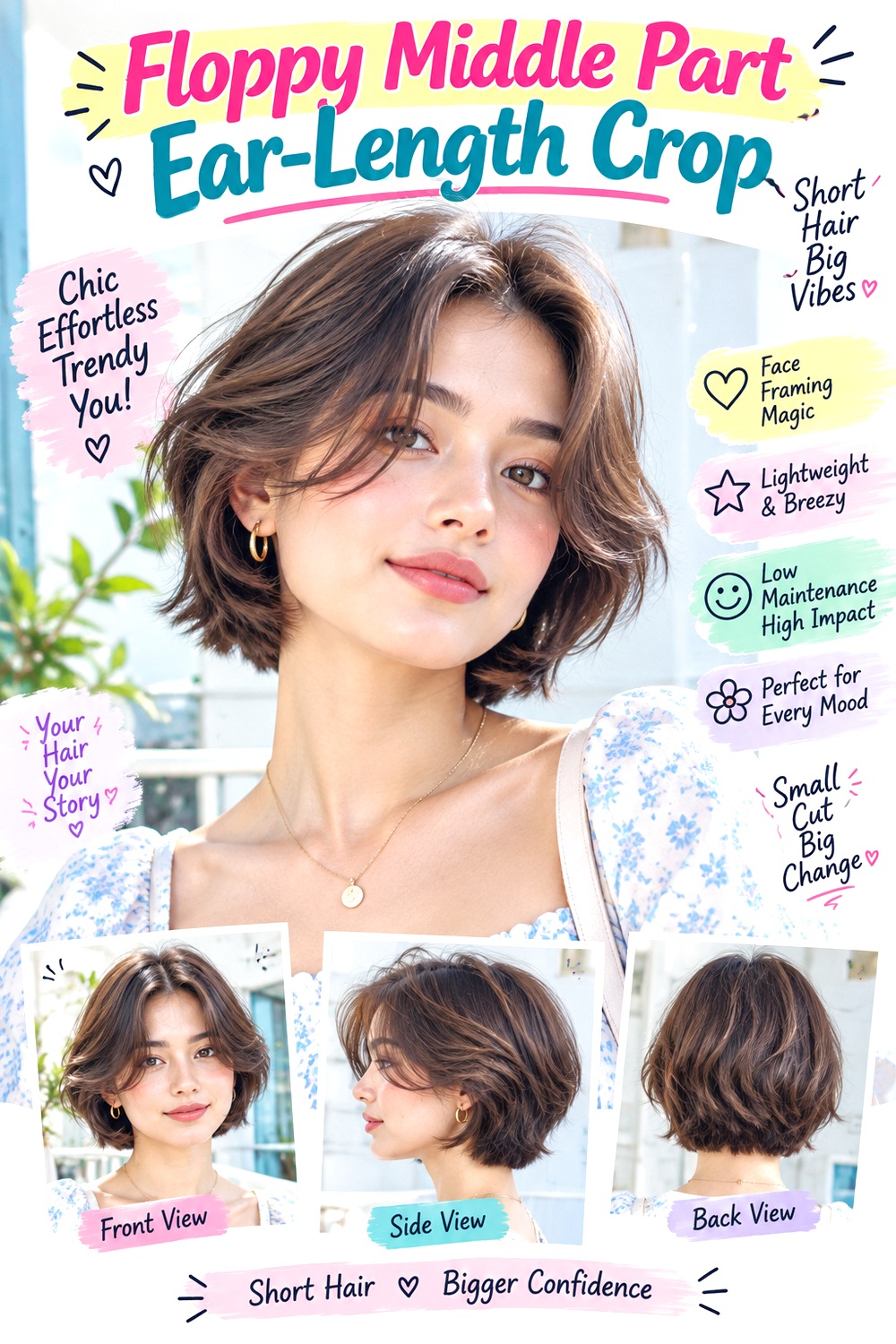
An ear-length crop gives the floppy middle part a sharper short silhouette while keeping enough front length for relaxed movement. The sides can skim or partly cover the ears, with the back tapered softly at the nape. Straight and softly wavy hair show the compact shape best, while fine to medium density keeps it from becoming bulky. Thick hair may need internal debulking around the sides. Use heat protectant, a small round brush, and lightweight styling cream to encourage the front to fall toward the temples. Styling is quick because the length dries fast, though short cuts generally require frequent salon reshaping to maintain proportion. At the salon, specify exactly how much of the ear you want exposed and keep the center-parted front noticeably longer than the side perimeter. The difference in length creates the floppy effect rather than a uniform crop.
Pro tip:
Ask the stylist to check the front after the sides are finished; shortening the fringe too early can remove the contrast that makes this crop work.
Floppy Middle Part Short Cut with Piecey Ends hairstyle

Piecey ends give a floppy middle part short cut more separation and make the shape easy to style with fingers. The front falls in two soft sections around the forehead, while the sides and nape show small, controlled pieces instead of a solid edge. Straight and wavy hair display the texture clearly. Fine hair should keep the separation subtle so the ends remain substantial, whereas thick hair can handle stronger point cutting and internal texture. Use texturizing spray, a small amount of styling paste, and your fingers or a vent brush. Styling is quick and easy to refresh, especially on second-day hair. Too much product can make short pieces look greasy, so start lightly. At the salon, ask for controlled point cutting through the ends while preserving density through the longer center-parted front. Avoid aggressive razor work if your hair is prone to frizz.
Pro tip:
Warm a tiny amount of styling paste between your fingers and touch only selected ends; coating every piece removes the airy separation you want.
Grown-Out Floppy Middle Part Crop hairstyle
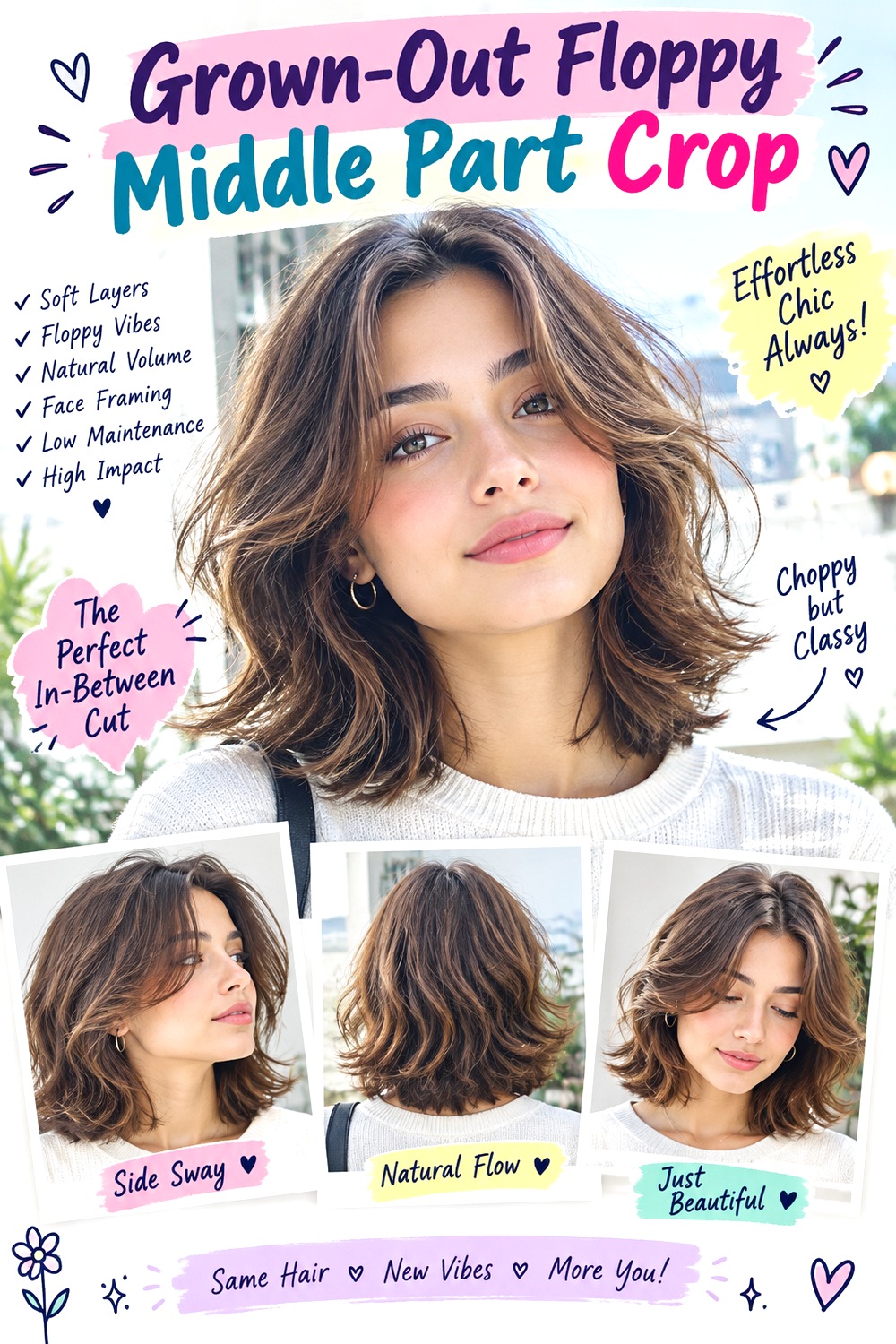
A grown-out crop keeps the relaxed middle part while allowing the sides and nape to move toward bob length. The front can reach the cheekbones or jaw, giving the center split more weight and making it easier to tuck behind the ears. Straight, wavy, and softly curly hair can all wear this stage well. Fine hair should preserve end density, while thick hair may need internal shaping as the sides become fuller. Use leave-in conditioner, a medium round brush, and light texturizing spray to keep the longer pieces flexible. Styling is moderate but forgiving, and the extra length reduces the need for very frequent trims. Salon visits can focus on balancing the back and sides rather than shortening everything equally. Ask for a grow-out plan that keeps the front long, cleans the nape selectively, and allows the side length to catch up smoothly.
Pro tip:
When growing the crop out, trim the back more strategically than the sides; cutting every area equally can delay the transition into a balanced short bob.
Choosing Floppy Middle Part Short Haircuts for Fall 2026
The best floppy middle part short haircuts for Fall 2026 can be adjusted through overall length, fringe weight, layer placement, side density, crown volume, texture, and finish. Fine hair often benefits from a stronger perimeter and fewer layers, while thick hair usually needs carefully placed internal bulk removal. Straight hair can create a cleaner split, waves add relaxed movement, and longer front pieces make the style easier to grow out. Ear-length crops need more frequent reshaping than jaw-length bobs, while textured versions can tolerate a softer grow-out. The best choice depends on your face shape, natural texture, density, preferred styling effort, maintenance schedule, and how much of the forehead or cheekbone area you want the center part to reveal.
Choose one or two favorite ideas and save clear photo references showing the front, sides, and back. Discuss your face shape, natural texture, density, preferred length, maintenance level, and usual styling routine with your stylist. Point out the exact middle-part opening, fringe length, cheekbone placement, side volume, crown lift, perimeter, and end finish you like. Clear details make it easier to adapt the haircut to your hair rather than relying on a short style that only works with constant heat or a different density.
FAQs
Do floppy middle part short haircuts work on fine hair?
Yes. Fine hair usually benefits from a fuller perimeter, restrained layering, and longer front pieces that create movement without removing too much density.
What hair texture suits a floppy middle part best?
Straight and wavy hair naturally show the falling center shape, but softly curly hair can also work when the front length accounts for shrinkage and natural movement.
How often should a short middle-part haircut be trimmed?
Short cuts generally need regular reshaping around the ears, nape, and fringe. A precise crop usually needs attention sooner than a grown-out bob or bixie.
Do I need to heat-style the middle part every day?
Not always. If your natural growth pattern supports the part, water, a light styling product, and finger shaping may be enough. A small round brush can quickly redirect stubborn front pieces.