14 90s Crimped Hairstyles for Fall 2026
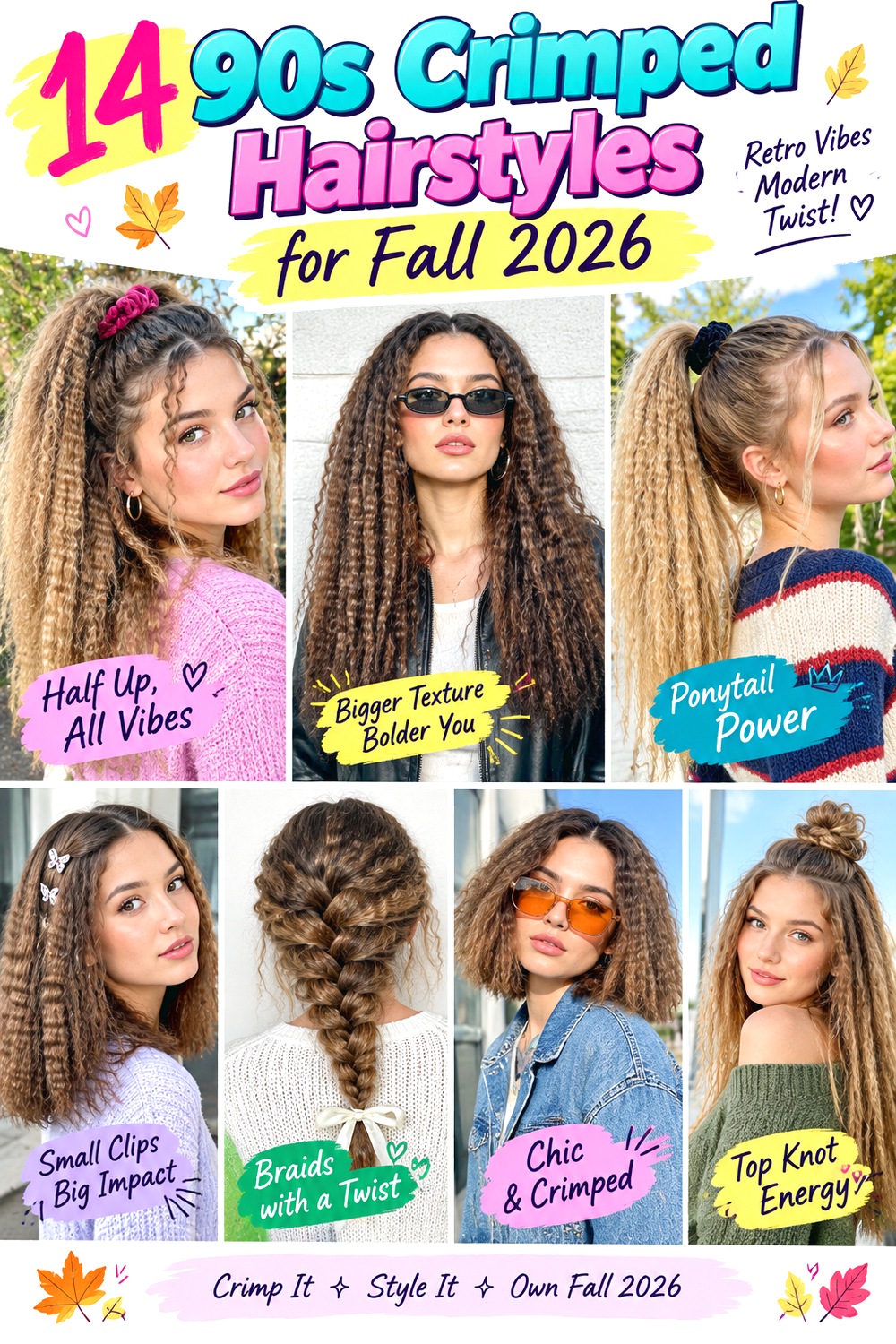
Crimped hair creates a repeated zigzag texture that adds width, separation, and visible volume from the roots through the ends. For Fall 2026, the 90s-inspired version can range from full-length crimping to smaller textured sections paired with straight ends, sleek parts, ponytails, bangs, or braids. The haircut underneath still matters: blunt ends make the texture look denser, while long layers create more movement and reduce bulk through the sides.
These 90s crimped hairstyles for Fall 2026 can work on fine, medium, and thick hair, but the amount of texture should match the density. Fine hair often needs larger, softer crimps and lightweight products, while thick hair can handle stronger texture with controlled sectioning. Straight hair is easiest to crimp evenly, though wavy hair can also be smoothed and textured in sections.
Styling usually takes moderate to longer time because the tool must move down the hair in repeated presses. Before choosing a look, consider heat exposure, length, density, humidity, fringe maintenance, and whether you want full texture or only selected areas. Heat protection and careful sectioning make the finish more consistent.
Quick List
- Full-Length 90s Crimped Hair with Center Part hairstyle
- 90s Crimped Hair with Face-Framing Pieces hairstyle
- Half-Up 90s Crimped Hair hairstyle
- 90s Crimped High Ponytail hairstyle
- 90s Crimped Low Ponytail hairstyle
- 90s Crimped Hair with Wispy Bangs hairstyle
- 90s Crimped Hair with Curtain Bangs hairstyle
- 90s Crimped Bob with Blunt Ends hairstyle
- 90s Crimped Lob with Side Part hairstyle
- 90s Crimped Hair for Fine Hair hairstyle
- 90s Crimped Hair for Thick Hair hairstyle
- 90s Crimped Crown with Straight Ends hairstyle
- 90s Crimped Braided Ponytail hairstyle
- Soft 90s Crimped Waves with Root Volume hairstyle
Full-Length 90s Crimped Hair with Center Part hairstyle

Full-length crimping makes the 90s texture the main feature, with small bends running from near the roots through the lower lengths. A clean center part keeps the shape balanced and prevents the overall volume from looking uneven. Medium and long hair show the repeated pattern most clearly, while fine hair should use a slightly wider crimp plate to avoid making the ends look too thin. Thick hair can handle a smaller pattern, but sectioning becomes more important. Use heat protectant, a crimping iron, and lightweight hairspray to hold the texture without making it stiff. Styling takes longer because each section needs to be pressed consistently from top to bottom. Avoid overlapping the plates repeatedly, which can increase heat exposure. At the salon, ask for long connected layers only if you want movement; keep the perimeter strong if you prefer a fuller 90s shape.
Pro tip:
Leave about half an inch at the roots uncrimped along the center part so the parting stays clean instead of puffing outward.
90s Crimped Hair with Face-Framing Pieces hairstyle
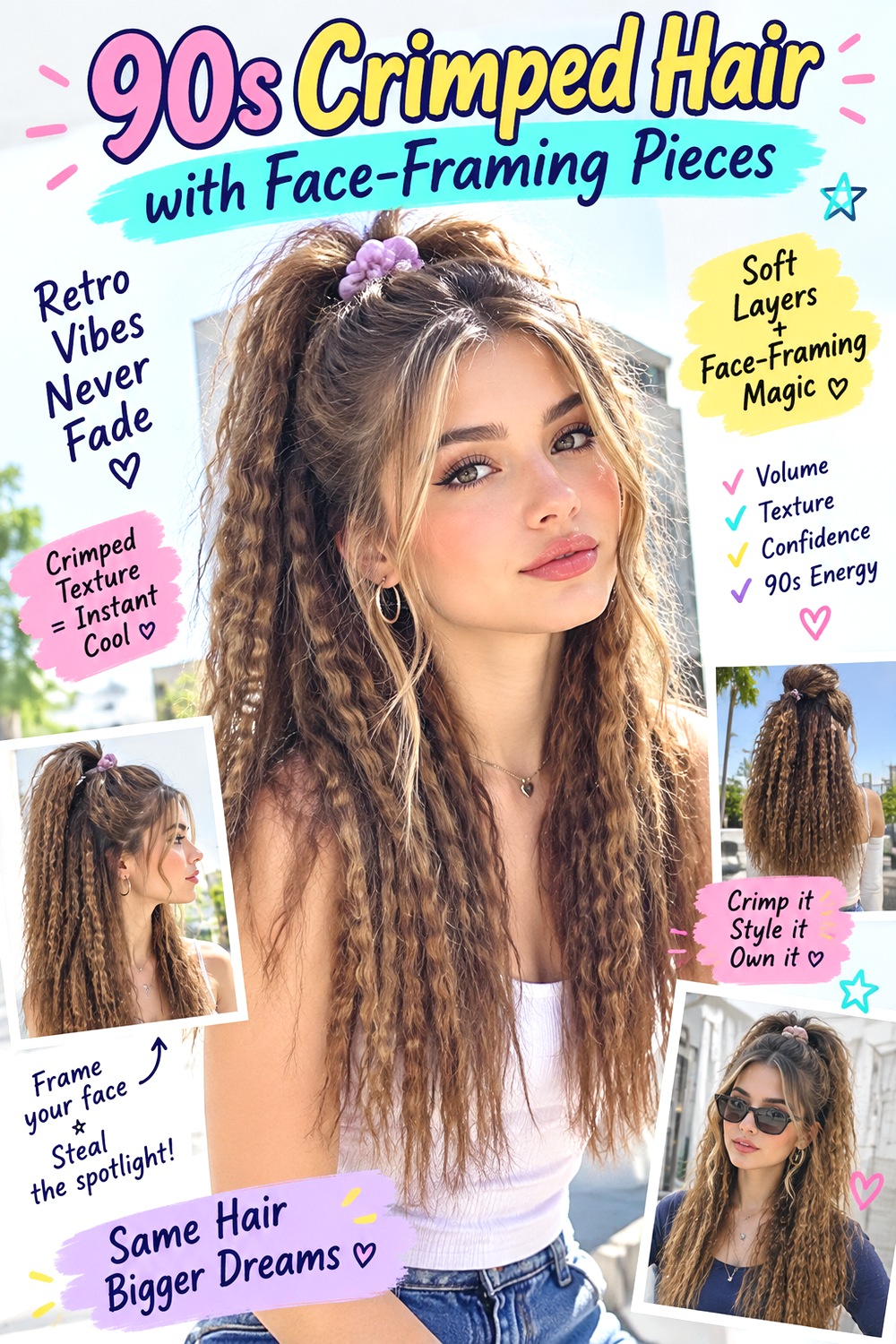
Face-framing pieces make crimped hair feel more shaped around the front instead of creating one uniform block of texture. The shortest sections can begin around the cheekbones or jaw, then blend into longer crimped layers through the sides. Fine hair usually looks best with only a few face-framing pieces so the perimeter stays substantial, while medium and thick hair can support more graduation. Use heat protectant, a medium crimping iron, and a light anti-frizz serum on the ends. Styling takes moderate to longer time depending on length, but the front sections can be refreshed separately between full styling sessions. Keep the face frame controlled in humid weather because short textured sections can expand first. At the salon, ask for the first layer to begin at a specific facial point rather than using vague “short layers.” That placement determines where the crimped texture will create the most visible width.
Pro tip:
Crimp the face-framing sections slightly farther from the roots than the back sections so they curve around the face instead of standing straight out.
Half-Up 90s Crimped Hair hairstyle
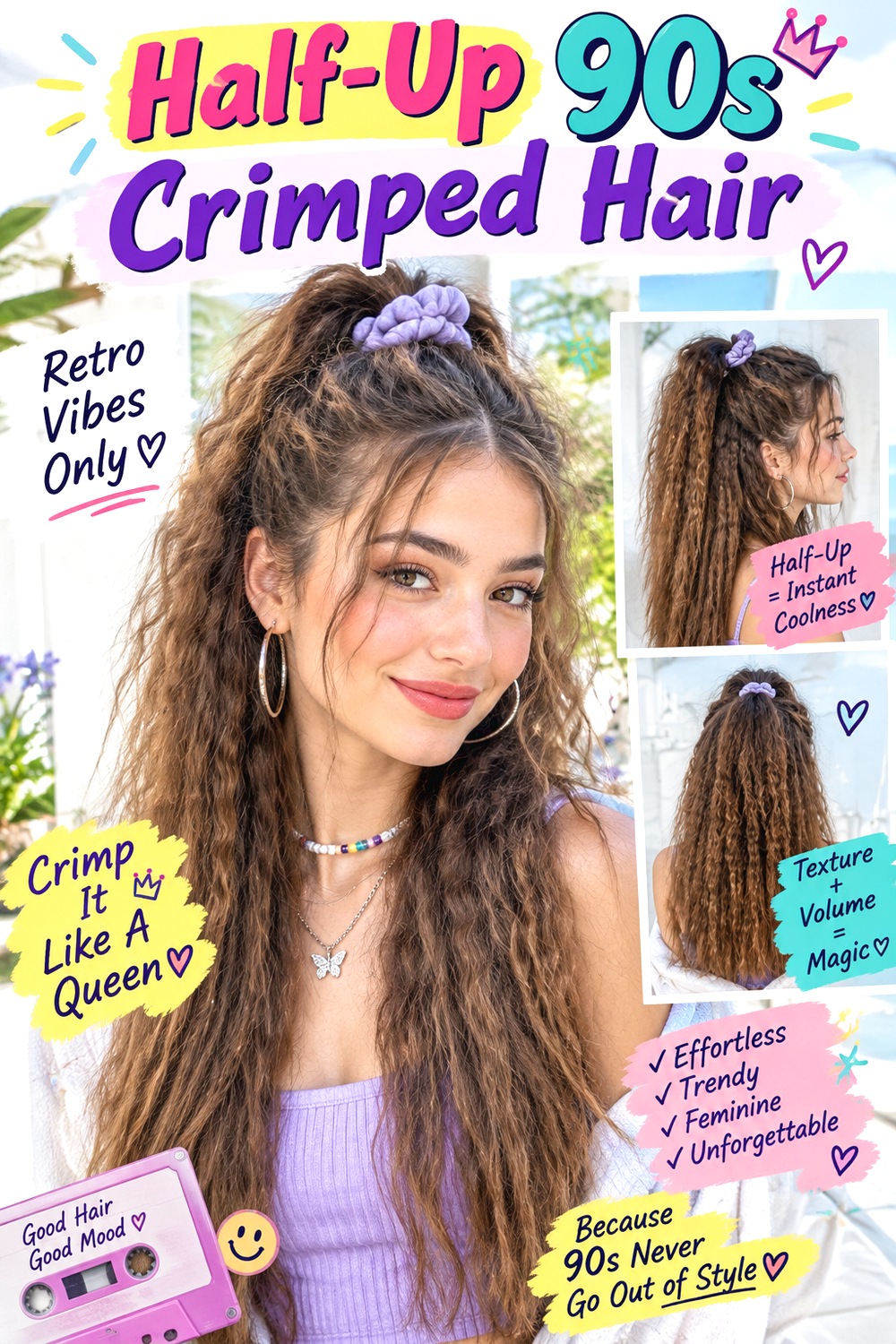
A half-up style keeps the 90s crimped texture visible while controlling some of the volume around the temples. Gather a small top section from above the ears and secure it at the back, leaving the lower lengths fully textured. Medium and long hair work best because enough length remains loose to show the repeated crimp pattern. Fine hair benefits from the extra crown lift created by the half-up section, while thick hair should gather less hair so the top does not become bulky. Use heat protectant, a crimping iron, and a small clear elastic or barrette. Styling takes moderate time if the full length is crimped and quicker if you texture only the loose sections. At the salon, ask for long temple layers that can reach the half-up section cleanly. Short pieces around the ears may require extra pins.
Pro tip:
Crimp the hair before gathering it half-up; applying the tool afterward can create dents around the elastic and flatten the crown.
90s Crimped High Ponytail hairstyle

A high ponytail concentrates the crimped texture into a full, lifted tail while keeping the hairline more controlled. Crimp the length first, then gather it high on the crown and secure it with a strong elastic. Long hair shows the texture best, but shoulder-length hair can create a shorter, wider pony. Fine hair gains visible fullness from the crimps, while thick hair should use a firm elastic and avoid excessive teasing at the base. Use heat protectant, a crimping iron, and flexible hairspray to keep the ponytail textured without making it crunchy. Styling takes moderate time because the crimping happens before the hair is gathered. If the roots become too bulky, smooth only the top layer rather than flattening the entire texture. At the salon, keep nape layers long enough to reach a high ponytail if you want a cleaner finish.
Pro tip:
Leave the top two inches near the roots less crimped; the ponytail will sit more securely and the crown will be easier to smooth.
90s Crimped Low Ponytail hairstyle

A low ponytail balances a smoother crown with textured lengths, making the crimping look more controlled than a full-volume style. Part the hair in the center or slightly to one side, smooth the roots, and secure the ponytail at the nape before letting the crimped tail expand naturally. Fine and medium hair gain density from the texture, while thick hair benefits from dividing the tail into smaller sections during styling. Use smoothing cream at the crown, heat protectant through the length, and a crimping iron. Styling is moderate because the tail needs full texture but the top can remain simple. A light serum can control static around collars and scarves. At the salon, ask for long lower layers that stay inside the ponytail and preserve end weight. Heavy layering can make the textured tail look thin toward the bottom.
Pro tip:
Crimp the ponytail before securing it if possible; working around an elastic can create uneven texture near the base.
90s Crimped Hair with Wispy Bangs hairstyle

Wispy bangs create a softer contrast against fully crimped lengths because the fringe stays light and relatively smooth. The bangs can skim the brows while the longer hair carries stronger zigzag texture from the sides through the ends. Fine and medium hair suit this combination particularly well since the fringe does not remove too much density from the rest of the haircut. Thick hair can also work if the bang section is kept narrow. Use a small round brush for the bangs, heat protectant through the lengths, and a crimping iron for the rest. Styling takes moderate to longer time because the fringe and lengths need different treatment. Bangs may need more frequent trims than the overall cut. At the salon, ask for a light, narrow fringe with soft side pieces that blend into the textured lengths rather than a heavy blunt bang.
Pro tip:
Do not crimp the wispy bangs from the roots; a tiny bend through the ends is enough if you want them to connect visually with the rest of the texture.
90s Crimped Hair with Curtain Bangs hairstyle
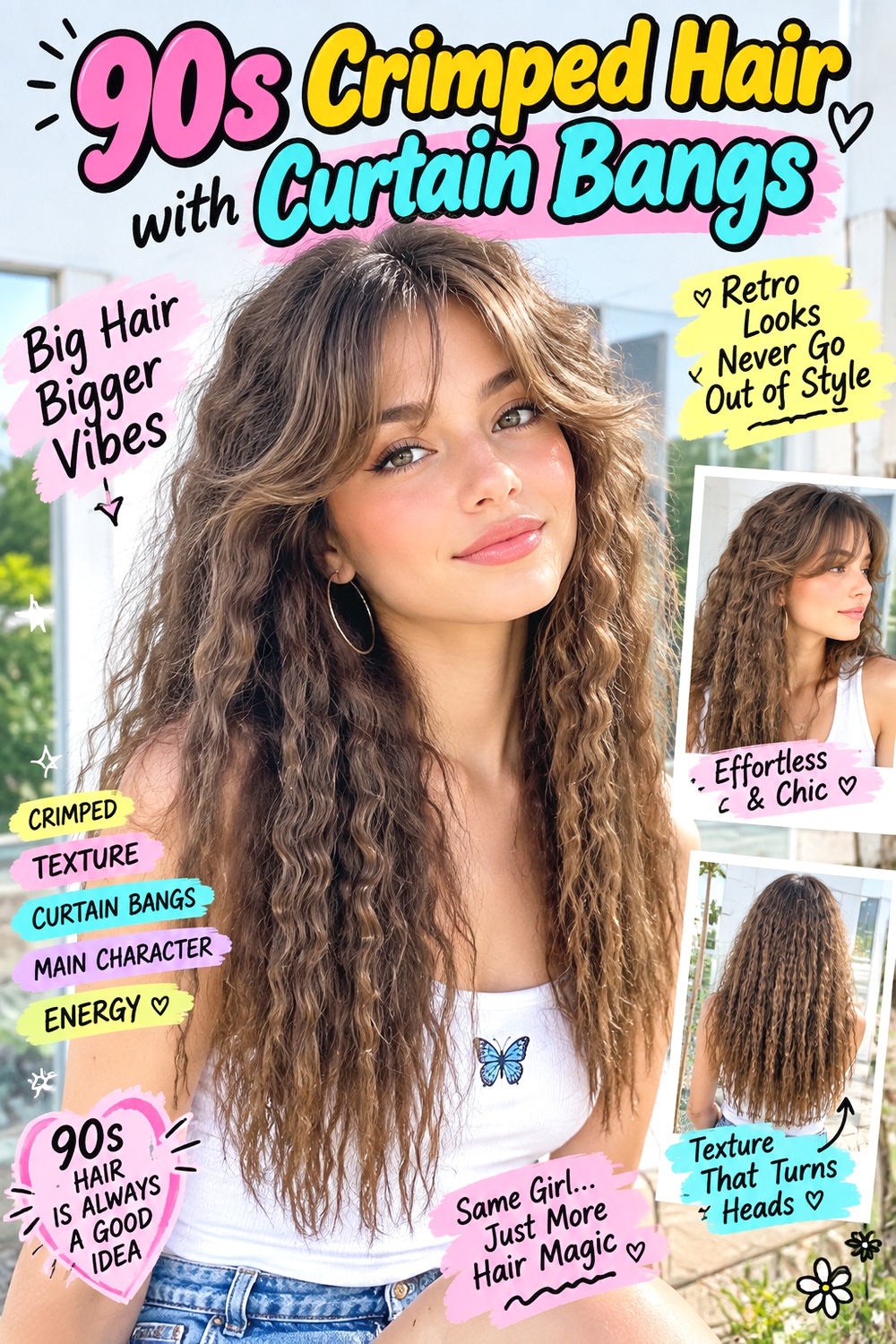
Curtain bangs soften the strong geometry of crimped hair by opening around the forehead and sweeping toward the cheekbones. The fringe can stay mostly smooth while the long outer pieces pick up some of the zigzag texture as they blend into the sides. Straight and wavy hair are easiest to shape, while fine hair benefits from a lighter bang section. Thick hair can support fuller curtain pieces but may need less crimping directly around the temples. Use heat protectant, a medium round brush, and a crimping iron with adjustable heat. Styling takes moderate to longer time because the bangs should be shaped separately before the lengths are textured. At the salon, specify the shortest bang point and where the outer sections should join the long layers. A poorly connected fringe can look disconnected once the sides expand from crimping.
Pro tip:
Keep the first inch of the outer curtain pieces smooth, then begin crimping lower down so the fringe still sweeps naturally away from the face.
90s Crimped Bob with Blunt Ends hairstyle
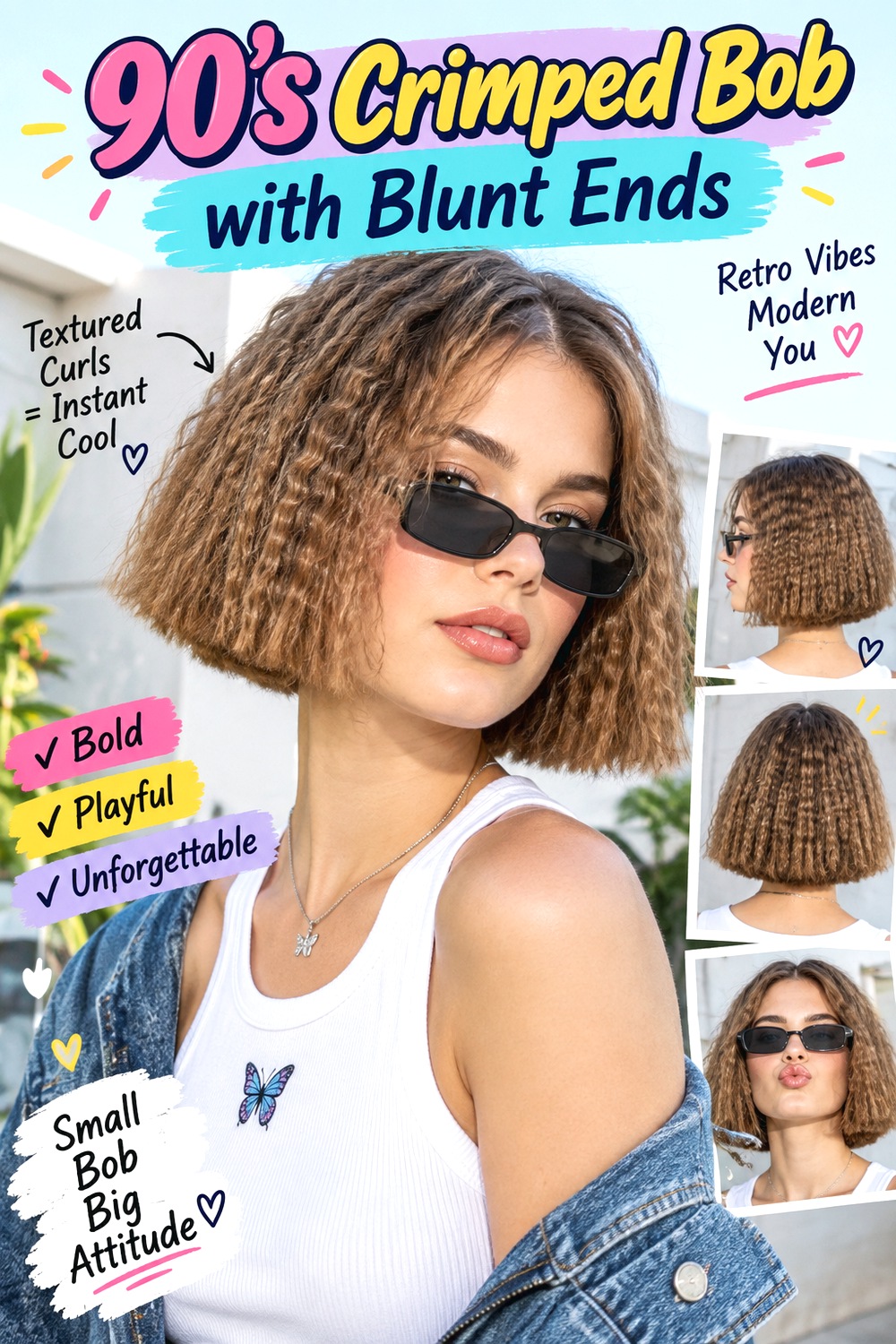
A blunt bob gives crimped texture a strong perimeter, which helps the short shape look dense rather than fluffy at the ends. Chin- to jaw-length hair creates the clearest 90s silhouette, especially when the crimping is even from side to side. Fine hair often benefits from the blunt baseline because it keeps the bottom substantial, while thick hair may need subtle internal weight removal so the sides do not become excessively wide. Use heat protectant, a small or medium crimping iron, and lightweight texturizing spray. Styling takes moderate time because short sections are quick to press but require consistency around the back. Regular trims help preserve the clean baseline. At the salon, ask for minimal visible layering and a strong perimeter, with any debulking kept inside the haircut. Too much external layering can make a short crimped shape look uneven.
Pro tip:
Leave the final half inch of the bob less crimped so the blunt perimeter stays visible instead of turning into a fuzzy edge.
90s Crimped Lob with Side Part hairstyle

A side-parted lob gives crimped texture an asymmetric shape, with more lift and width on the heavier side. The collarbone length keeps the style manageable while still showing enough surface area for the 90s pattern. Fine to medium hair works especially well because the crimping adds body without requiring heavy layering. Thick hair may need internal shaping so the side volume does not become too broad. Use root-lifting spray, heat protectant, and a medium crimping iron. Styling takes moderate time and can be refreshed by reworking only the top and front sections. The side part should be set before crimping so the root direction stays intentional. At the salon, ask for a full lob perimeter with subtle internal movement and show exactly where you wear the part. That helps the haircut balance correctly once the crimping adds extra width.
Pro tip:
Crimp the heavier side in slightly larger sections than the lighter side; this keeps the volume from becoming too exaggerated around the part.
90s Crimped Hair for Fine Hair hairstyle
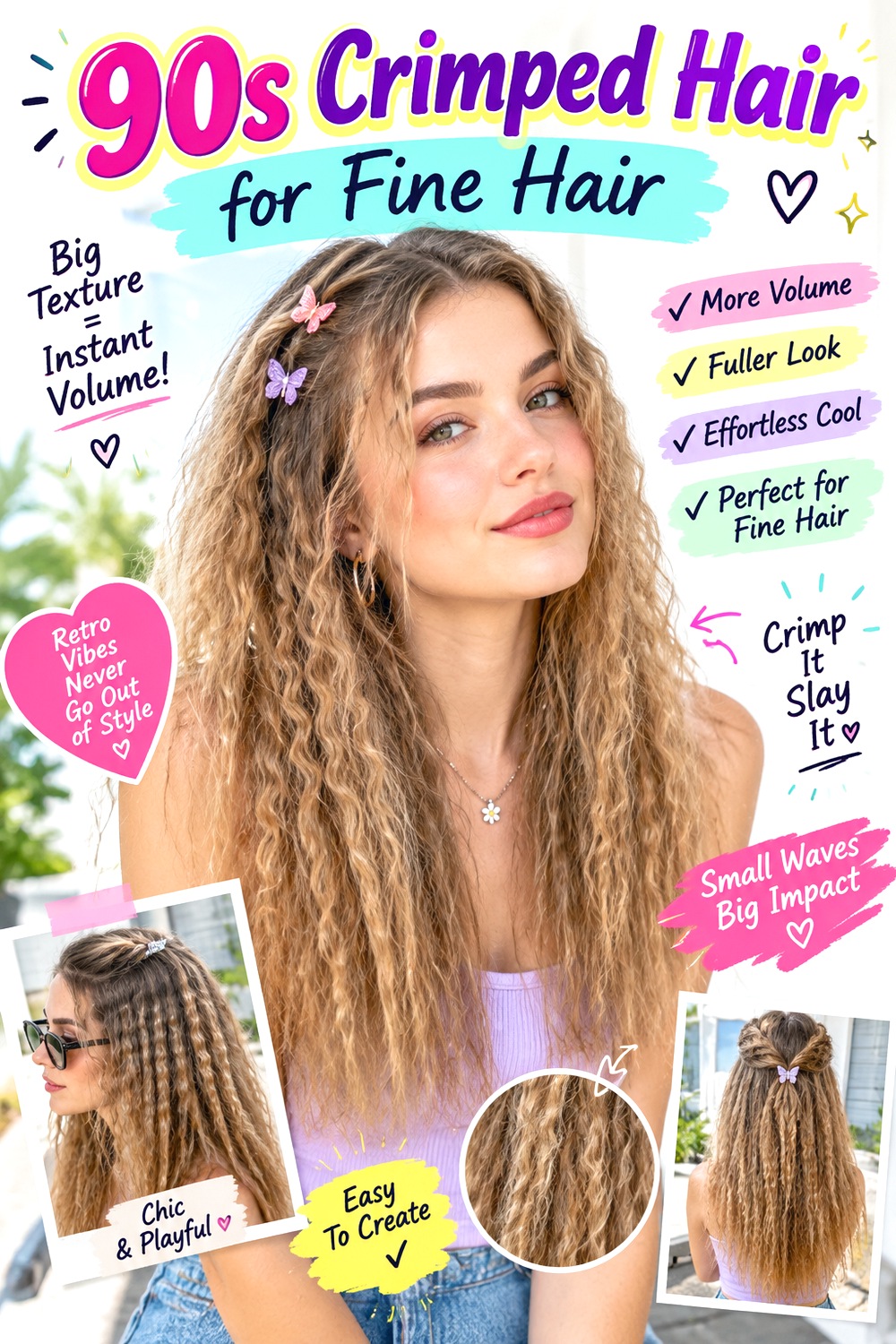
Crimping can make fine hair look fuller because the repeated bends create space between strands, but the texture needs to stay light enough that the ends do not look fragile. Use a wider crimp pattern and keep the haircut relatively full through the perimeter. Long, subtle layers can add movement, but heavy thinning is usually unnecessary. Straight and lightly wavy fine hair styles quickly because smaller sections dry and heat through fast. Use volumizing spray, heat protectant, and a crimping iron on a lower appropriate setting. Styling is moderate, and heavy oils should be avoided because they can collapse the texture. A light flexible spray is usually enough for hold. At the salon, ask for minimal thinning and a strong lower edge, especially if the hair is shoulder-length or longer. Keep face-framing pieces soft rather than highly layered.
Pro tip:
Crimp in slightly wider sections and stop before the last inch of hair; the texture will still add volume while the ends remain fuller-looking.
90s Crimped Hair for Thick Hair hairstyle
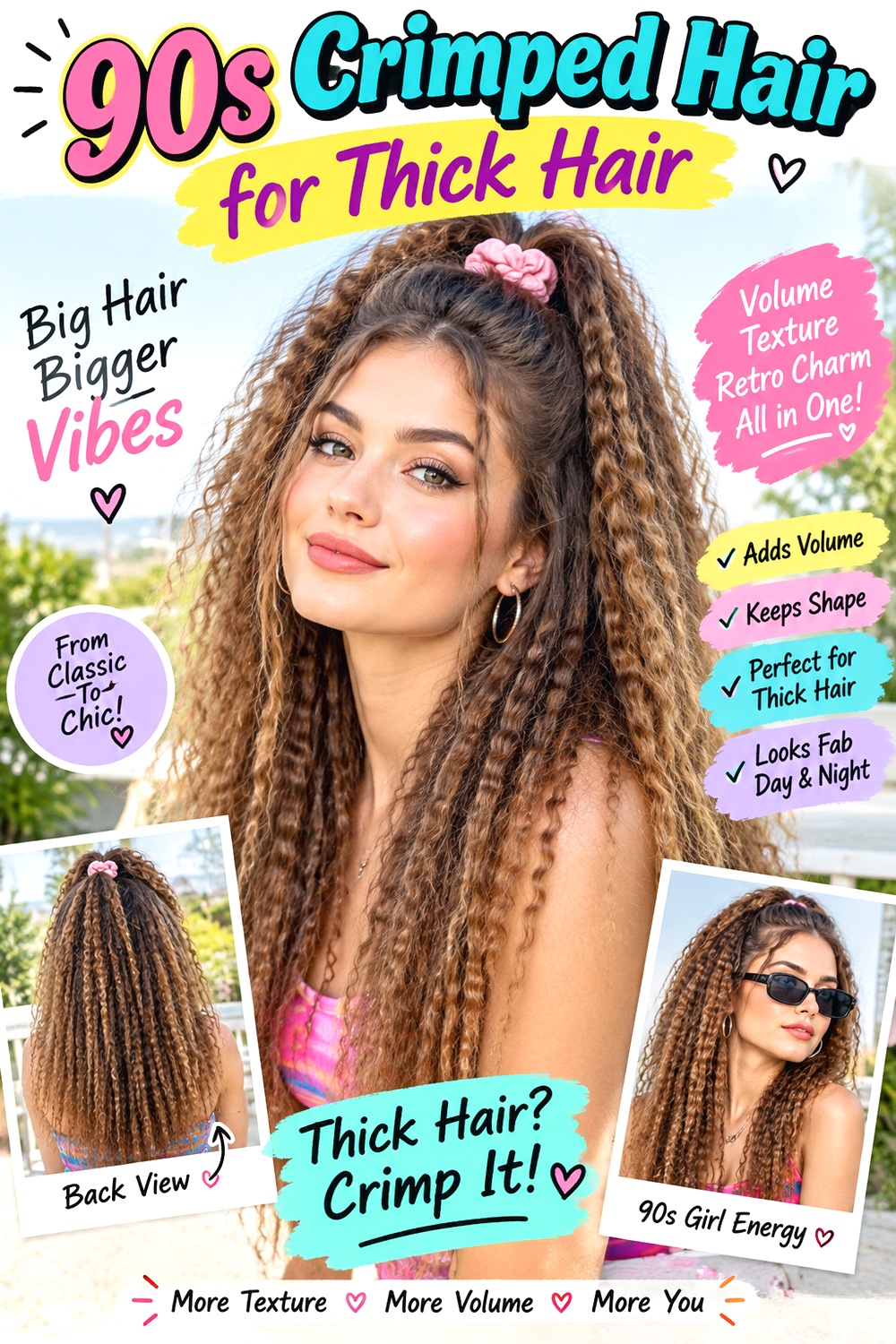
Thick hair can create dramatic crimped volume, so control matters more than adding extra fullness. Use larger sections and a medium-width crimp plate to keep the texture defined without making the silhouette excessively wide. Long layers can help distribute density, while internal weight removal may reduce bulk around the sides and lower lengths. Straight, wavy, and coarse hair can all wear the look, although dense hair needs more sectioning time. Use heat-protective smoothing cream, a crimping iron, and anti-frizz serum on the outer surface after styling. Styling takes longer because thick sections must be fully controlled before moving on. Humidity can increase expansion, especially around shorter layers. At the salon, ask for strategic internal debulking rather than aggressive thinning at the ends. Keeping the perimeter strong helps the crimped shape look intentional instead of frayed.
Pro tip:
Crimp only the top and outer layers if your hair is extremely dense; the hidden lower sections can stay smoother and reduce overall width.
90s Crimped Crown with Straight Ends hairstyle

Crimping only the crown and upper mid-lengths creates a mixed-texture style with visible lift at the top and straighter ends below. The contrast feels distinctly 90s without requiring every inch of hair to be textured. Fine and medium hair benefit most because the crimped area creates volume where flatness usually appears. Thick hair can use a softer pattern concentrated only around the top. Use root-lifting spray, heat protectant, and a small crimping iron for targeted sections, then smooth the ends with a paddle brush or flat iron if needed. Styling is moderate and faster than full-length crimping. Keep the transition between crimped and straight areas gradual rather than creating a hard horizontal line. At the salon, ask for long layers that maintain enough weight through the bottom so the straight ends contrast clearly with the textured crown.
Pro tip:
Stagger where you stop crimping each section; a slightly uneven transition looks more natural than ending every crimp at the same level.
90s Crimped Braided Ponytail hairstyle

Crimping before braiding makes a ponytail look wider and more textured because each section carries extra grip and separation. Start by crimping the length, secure a mid or low ponytail, then braid it loosely so the zigzag pattern remains visible. Medium and long hair work best, while fine hair benefits from gently widening the braid after securing it. Thick hair can use a simple three-strand braid to avoid excess bulk. Use heat protectant, a crimping iron, and small snag-free elastics. Styling takes moderate to longer time because the texture is created before the braid, but the finished style holds well without much additional product. Avoid pulling the braid too tight or the crimp pattern will disappear. At the salon, preserve perimeter density and keep long layers connected if you frequently wear braids. Very short layers can escape and make the surface uneven.
Pro tip:
Crimp each ponytail section before braiding, then widen only the outer braid loops so the zigzag texture remains visible through the center.
Soft 90s Crimped Waves with Root Volume hairstyle

Soft crimped waves use a wider plate or looser pressure to create texture that reads more like rippled movement than tiny zigzags. Root lift keeps the style airy, while the mid-lengths and ends stay flexible instead of rigid. Fine and medium hair suit this softer version especially well, though thick hair can use it with larger sections. Straight and naturally wavy textures both work. Use volumizing mousse at the roots, heat protectant through the lengths, and a wide crimping iron for gentle bends. Styling takes moderate time, but the finish is easier to brush through and refresh than tightly crimped hair. A little lightweight hairspray helps maintain volume without freezing the movement. At the salon, ask for long, connected layers that support root lift while keeping the ends full. Avoid very short crown layers if you want the waves to fall smoothly.
Pro tip:
Use lighter pressure on the crimping iron as you move toward the ends; the softer texture keeps the lower length from looking stiff or overly expanded.
Choosing 90s Crimped Hairstyles for Fall 2026
The best 90s crimped hairstyles for Fall 2026 can be adjusted through crimp size, length, layer placement, fringe, parting, root volume, and how much of the hair is actually textured. Fine hair usually benefits from wider crimps, lighter products, and a strong perimeter, while thick hair often needs larger sections and controlled internal weight removal. Straight hair produces the most uniform pattern, whereas wavy hair can create a softer, less rigid result. Bangs, ponytails, braids, and half-up styles can also reduce the amount of full-volume texture around the face. The right version depends on your face shape, natural texture, density, heat routine, maintenance preference, and how much styling time you realistically want to spend.
Choose one or two favorite ideas and save clear photo references showing the texture size, root finish, parting, fringe, and overall shape. Discuss your face shape, natural texture, density, preferred length, maintenance level, and usual styling routine with your stylist. Point out the exact layers, fringe, amount of root volume, end finish, and areas you want crimped or left smooth. Those details help create a haircut that supports the 90s texture without requiring unnecessary heat or removing too much density.
FAQs
Do 90s crimped hairstyles work on fine hair?
Yes. Use a wider crimp pattern, lightweight styling products, and a fuller haircut perimeter so the texture adds volume without making the ends look sparse.
Can I crimp only part of my hair?
Yes. Crimping the crown, ponytail, face-framing sections, or selected layers can create a 90s effect without adding full-volume texture everywhere.
How can I reduce heat damage when crimping?
Apply heat protectant, use an appropriate temperature for your hair type, avoid repeatedly pressing the same section, and let the hair cool before restyling it.
How long does crimped texture usually last?
It depends on hair type, humidity, products, and crimp size. Hair that holds heat styling well may keep the texture until the next wash, while softer or humid conditions can relax it sooner.