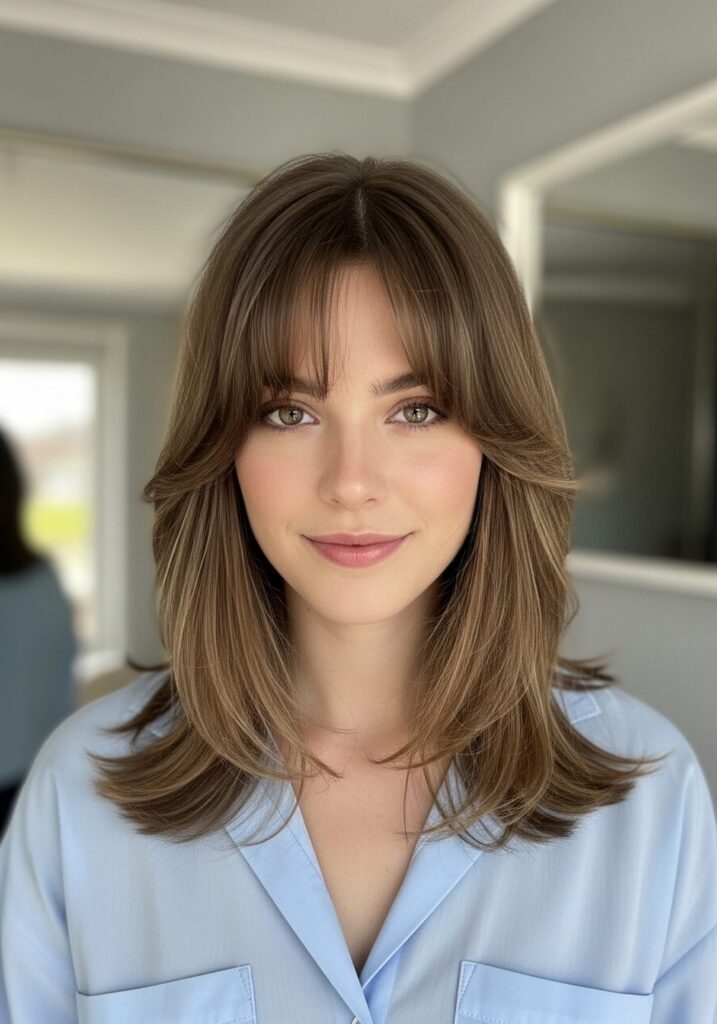
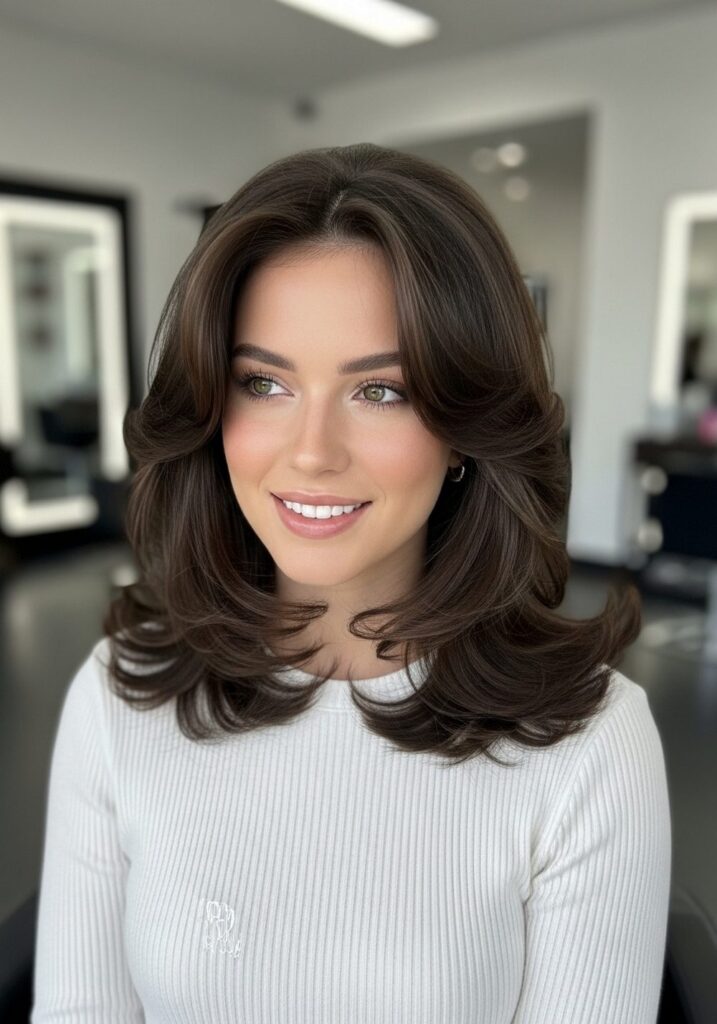
20 Layered Lob Hairstyles for Fall

A layered lob usually falls between the jaw and collarbone, with enough length to move while still keeping the clean outline of a longer bob. Layers can begin around the cheekbones, jaw, or lower, depending on whether you want obvious face framing or a quieter shape. Fringe, parting, crown lift, wave pattern, and the amount of weight left through the perimeter all change how the haircut settles.
Straight, wavy, curly, and coily textures can all work with layered lob hairstyles for fall when the layer placement respects density and shrinkage. Fine or lower-density hair often benefits from longer layers and a fuller bottom edge. Dense hair may need selective internal weight reduction where the shape becomes bulky. Curly and coily cuts should be judged at their dry finished length, particularly around the front and shortest layers.
Fall styling can also involve practical details such as coat collars, scarves, and higher necklines rubbing against collarbone-length ends. A quick refresh may involve only the front layers, while a full wash-day blowout, wave set, or curl routine takes longer. Separate haircut maintenance from daily styling effort, and choose layer placement that still works when you do less styling.
Quick List
- Soft Center-Part Layered Lob Hairstyle
- Side-Swept Layered Lob Hairstyle
- Curtain Fringe Layered Lob Hairstyle
- Wispy Fringe Layered Lob Hairstyle
- Face-Framing Layered Lob Hairstyle
- Collarbone Wave Layered Lob Hairstyle
- Air-Dried Wavy Layered Lob Hairstyle
- Curly Layered Lob Hairstyle
- Coily Layered Lob Hairstyle
- Blunt-Perimeter Layered Lob Hairstyle
- Feathered Layered Lob Hairstyle
- Low-Volume Layered Lob Hairstyle
- Crown-Lift Layered Lob Hairstyle
- Flipped-Ends Layered Lob Hairstyle
- Rounded-Ends Layered Lob Hairstyle
- Textured-Ends Layered Lob Hairstyle
- Deep Side-Part Layered Lob Hairstyle
- Long-Fringe Layered Lob Hairstyle
- Tucked-Behind-Ear Layered Lob Hairstyle
- Outerwear-Friendly Layered Lob Hairstyle
Soft Center-Part Layered Lob Hairstyle
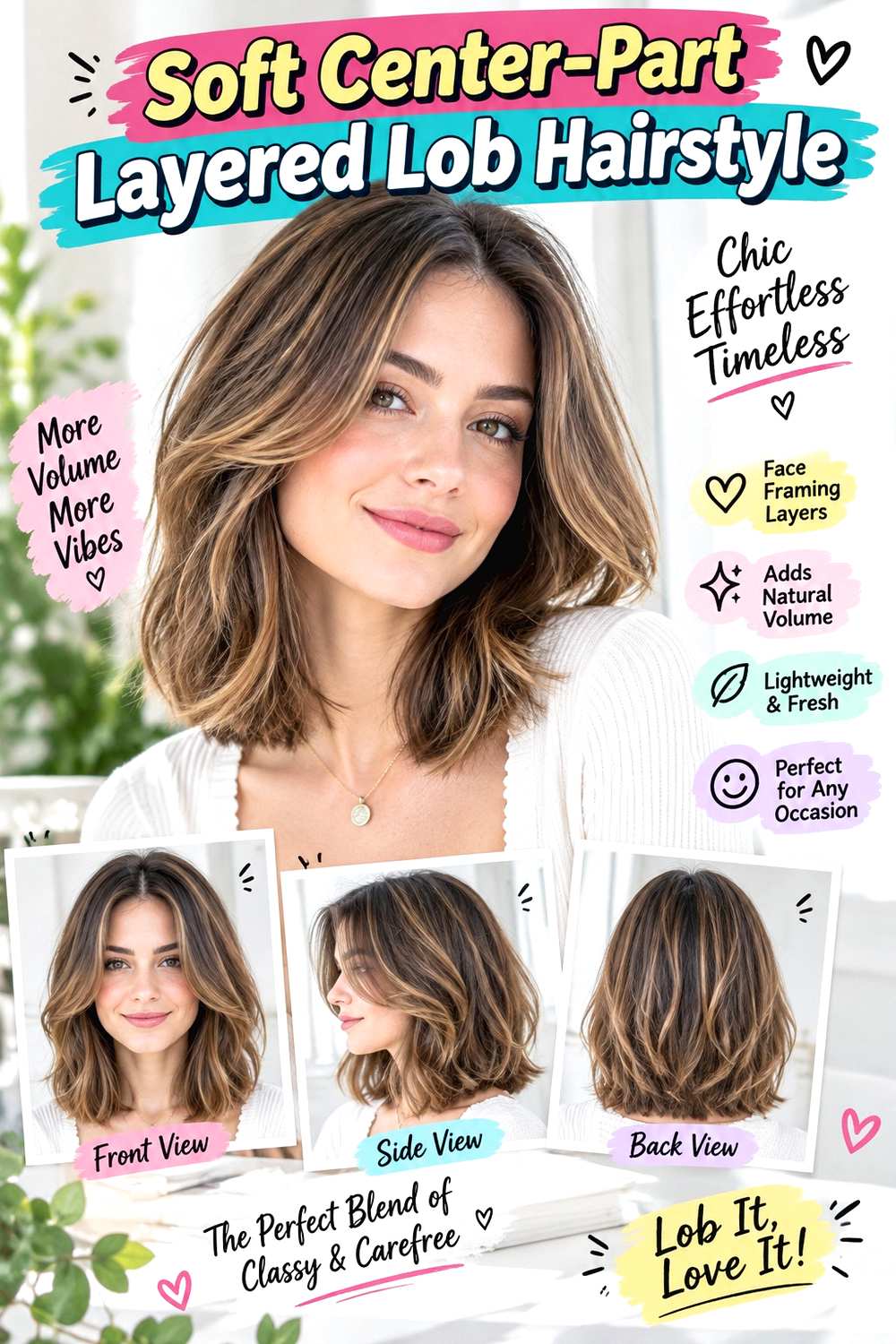
A center part gives a layered lob an even, balanced front while long layers add movement without weakening the perimeter. Keep the overall length close to the collarbone, then let the shortest face-framing pieces begin around the jaw. The crown can remain relatively relaxed, with most of the movement through the front and final few inches. Straight and softly wavy hair show the balanced shape clearly, while fine hair often benefits from keeping the lower edge reasonably full.
Use a wide-tooth comb to establish the center part, lightweight mousse for soft body, and smoothing cream through the ends when frizz interrupts the outline. A quick morning refresh usually means resetting the part and reshaping one or two front pieces. A full wash-day routine takes longer when you want a polished finish through the whole length.
For salon detail, point to the exact finished collarbone length and where you want the shortest front layer to start. Ask to keep enough perimeter weight that the lob does not become thin through the bottom. Maintenance becomes useful when the face frame no longer connects smoothly or the collarbone edge starts feeling heavy. In fall, check how the ends sit over your usual collars before deciding whether to trim shorter.
Pro tip:
Set the middle part while the roots are damp, then leave it undisturbed as the hair dries so both front sections settle more evenly.
Make It Work for You:
For fine hair, keep the shortest layers close to the front and preserve more weight through the back, helping the lob move without losing density.
Watch Out For:
Avoid adding short crown layers simply for extra lift. Too much removal can make a soft center-part lob look much more shaggy than intended.
Side-Swept Layered Lob Hairstyle

A loose side sweep changes the balance of a lob without requiring a dramatic asymmetric cut. Keep the overall length between the shoulders and collarbone, then let longer layers begin around the jaw so the heavier front side can move across the cheek. The opposite side can tuck easily behind the ear. Straight, wavy, and loosely curly textures can all support the design, especially when you prefer movement without a dense fringe.
Apply heat protectant before using a round brush to direct the heavier front section during drying, then finish with flexible hairspray for light hold. A full wash-day blowout takes longer because the roots and front need directional styling. A quick refresh can focus only on the sweep and ends rather than rebuilding the entire lob.
For professional styling, specify how far off-center you want the part and where the shortest side layer should finish. Dense hair may need selective bulk reduction underneath the fuller side, while fine hair usually benefits from maintaining a stronger perimeter. If the sweep begins lying flat, change the drying direction before adding more product. Grow-out is relatively forgiving because the longer layers can blend into the main length, but reshaping helps once the front loses its directional movement.
Pro tip:
Dry the heavier front section briefly opposite its final direction, then sweep it back over the part for soft lift without aggressive teasing.
Make It Work for You:
For naturally wavy hair, keep the side layers slightly longer so natural bends create the sweep without making the front spring much shorter.
Watch Out For:
Do not over-layer the lighter tucked side. Removing too much weight can make that profile look noticeably thinner whenever both sides are worn loose.
Curtain Fringe Layered Lob Hairstyle

Curtain fringe gives a layered lob more movement around the eyes while the longer perimeter stays near the collarbone. Let the center open naturally, with the shortest pieces around the brows or upper cheek and the outer corners extending toward the cheekbones. Long face-framing layers should connect those corners into the lob rather than creating a sudden jump in length. Straight, wavy, and loosely curly textures can all work if the fringe length accounts for natural movement.
Apply heat protectant before using a round brush to direct each fringe side away from the face, then finish with flexible hairspray for gentle hold. A full wash-day style takes longer when the fringe and front layers need deliberate shaping. A quick refresh may involve only re-dampening and redirecting the curtain pieces.
At the salon, show exactly where the shortest center point and longest outer corner should finish. Explain whether you normally air-dry or blow-dry, because that changes how much styling the fringe can realistically need. The curtain fringe often requires attention before the lob perimeter does. As it grows, the outer pieces can blend into the layers, making the transition softer than with a short blunt fringe.
Pro tip:
Let both fringe sections cool while directed away from the face before loosening them, helping the center opening hold without heavy product.
Make It Work for You:
For wavy hair, keep the curtain pieces slightly longer and allow natural bends to create separation, reducing how much heat styling the fringe needs.
Watch Out For:
Avoid cutting the middle too short if you prefer easy grow-out. A longer center blends into the surrounding layers with less noticeable maintenance.
Wispy Fringe Layered Lob Hairstyle
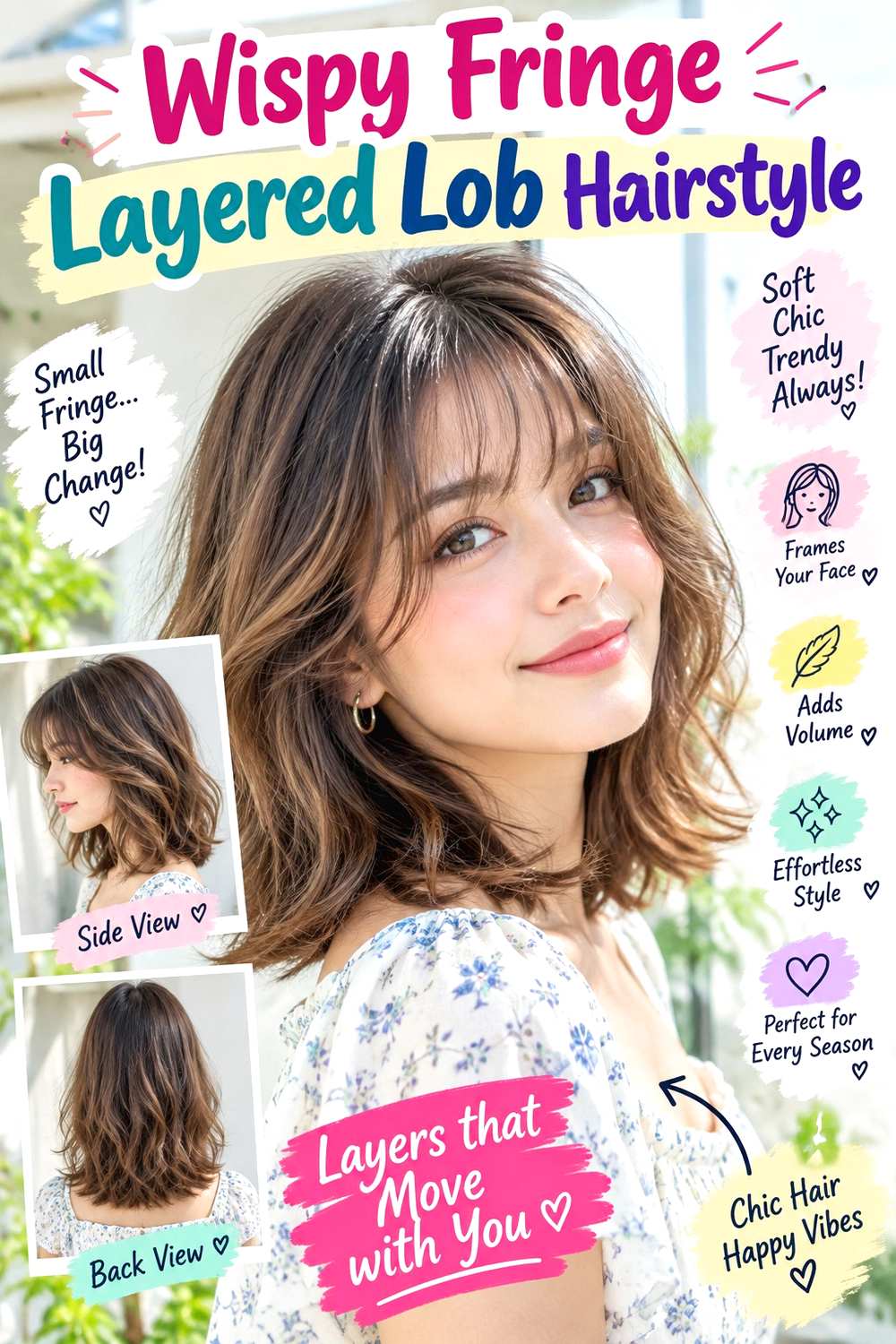
A light fringe adds detail across the forehead while the layered lob keeps most of its length and density below. Keep the center near brow level, allow small spaces between pieces, and extend the outer corners slightly longer toward the temples. Layers through the lob should begin around the jaw or lower so the fringe remains the main short feature. Straight and softly wavy hair show the wispy separation clearly, while fine hair often needs a narrower fringe section to preserve crown density.
Use a small round brush to redirect the bangs after washing, lightweight styling cream to separate the tips, and flexible hairspray when a little extra hold is useful. A quick refresh generally involves the fringe alone, whereas full wash-day styling takes longer if the entire lob also needs smoothing or wave definition.
For salon detail, specify the dry fringe length, its width, and where the outer corners should merge into the side layers. Discuss any cowlicks before shortening the front because growth direction can change the finished position. Fringe upkeep is separate from maintaining the longer haircut; the bangs may need reshaping while the collarbone perimeter still sits well. Avoid thinning the rest of the lob simply to match the lightness of the front.
Pro tip:
Dry the fringe before the longer layers so its root direction settles first, making the light separation easier to control throughout the day.
Make It Work for You:
For lower-density hair, use a smaller fringe section with slightly longer corners, preserving crown fullness while still creating a soft forehead detail.
Watch Out For:
Do not over-thin the fringe to make it wispy. Controlled section size creates softness more predictably than removing excessive density from the ends.
Face-Framing Layered Lob Hairstyle

Long face-framing pieces can give a lob visible movement while leaving the back comparatively simple. Keep the perimeter at the collarbone or slightly above it, then start the shortest front section around the cheekbone, jaw, or chin according to how much framing you want. Blend those pieces gradually into the length instead of creating several abrupt tiers. Straight, wavy, curly, and coily textures can all use the framework when dry shrinkage is considered.
Use a wide-tooth comb to organize the part, lightweight mousse for soft movement, and smoothing cream on the ends. A quick refresh can focus only on the front layers, especially if the rest of the lob still sits well. A full wash-day routine takes longer when the framing pieces need a polished bend or defined curl pattern.
At the salon, point to one exact finished landmark for the shortest face-framing layer and ask how it will connect into the perimeter. Fine hair usually benefits from keeping the framing section narrow, while dense hair can support broader layering. The cut needs reshaping when the front stops connecting or begins feeling heavy. For fall, make sure the lower perimeter does not sit at an awkward point where coat collars constantly flip it upward.
Pro tip:
Choose one clear starting landmark for the face frame rather than several short steps, keeping the layers connected and easier to grow out.
Make It Work for You:
For curls or coils, set the shortest framing piece according to its natural dry position so shrinkage does not pull it unexpectedly high.
Watch Out For:
Avoid taking an overly wide face-framing section on fine hair. Removing too much front density can leave the lob thin around its corners.
Collarbone Wave Layered Lob Hairstyle

Broad waves work naturally with collarbone length because there is enough room for movement without losing the lob outline. Keep longer layers through the front and lower half, with the first visible bend beginning around the cheekbones or jaw. The ends can remain slightly straighter so the haircut still reads as a lob rather than a full curl set. Medium-density straight or wavy hair is especially useful for this design.
Apply heat protectant before shaping larger sections with a curling iron, then use flexible hairspray for soft hold. A full wave set takes longer after washing because the length needs drying and shaping. Between washes, refresh only sections that have flattened instead of reheating the entire head. Let each wave cool before loosening it to preserve movement without stiffness.
For salon detail, ask for the finished perimeter to meet the collarbone and for layers long enough to support broad bends rather than short, choppy movement. Fine hair should keep more weight at the ends, while dense hair may need carefully placed internal reduction. As the cut grows, the waves can become heavier and less defined, signaling that the front or lower layers may need reshaping.
Pro tip:
Curl larger sections and alternate the direction sparingly so the wave pattern stays broad and relaxed rather than breaking into many small curls.
Make It Work for You:
For fine hair, keep the waves wide and limit separation at the tips, preserving a fuller perimeter while still showing movement through the lob.
Watch Out For:
Do not repeat heat over every softened wave. Refresh only the sections that visibly changed so full styling does not become unnecessarily demanding.
Air-Dried Wavy Layered Lob Hairstyle

An air-dried layered lob works best when the cut supports the natural wave pattern instead of requiring constant reshaping. Keep the perimeter around the collarbone, with long layers beginning below the cheekbones or jaw so broad bends have space to form. Avoid taking too much weight from the ends, especially on fine waves. A center, side, or natural part can work, and the finished surface can remain soft rather than perfectly polished.
Use lightweight mousse to support the wave pattern, a wide-tooth comb to distribute product without breaking up sections, and a diffuser only when you need quicker or more controlled drying. A full wash-day routine takes longer because the pattern needs time to set and dry. A quick refresh can focus on flattened front waves with a small amount of water and finger reshaping rather than restarting everything.
For salon detail, show how your hair naturally bends when dry and ask for layer placement that works with those wave groups. The stylist should preserve perimeter density and avoid correcting every irregular wave as though it were a cutting error. Grow-out becomes noticeable when the lower length pulls the wave flatter or the sides start feeling heavy.
Pro tip:
Let the waves dry with minimal touching, then separate only the sections that genuinely need it so the finish stays broad and controlled.
Make It Work for You:
For fine waves, use fewer long layers and retain a stronger bottom edge, allowing the natural pattern to create movement without sacrificing density.
Watch Out For:
Avoid trimming individual flipped pieces after one wash. Wave patterns can settle differently each time, so judge the overall dry shape first.
Curly Layered Lob Hairstyle
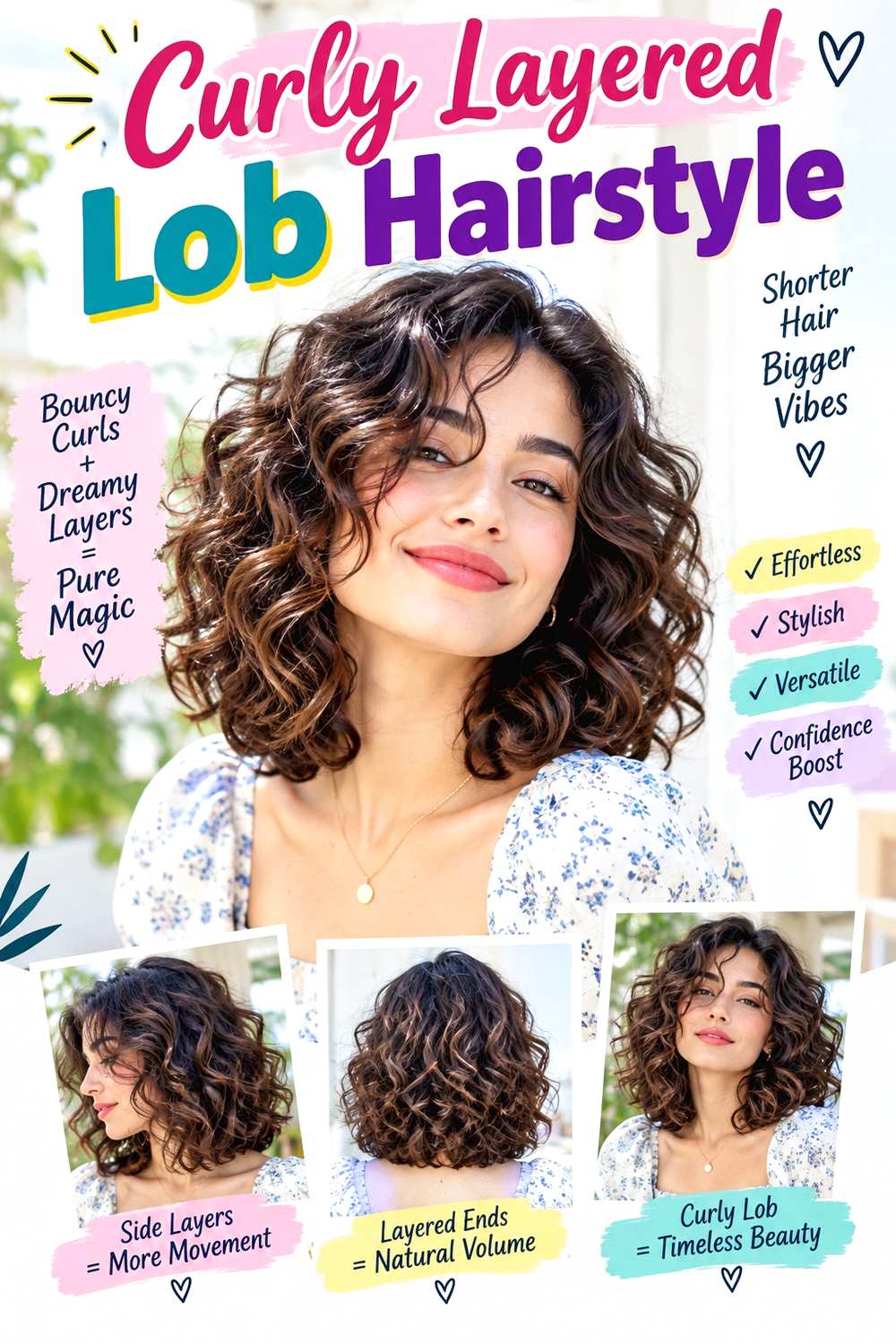
A curly lob needs enough length for the pattern to form while layers prevent the lower edge from becoming excessively heavy. Keep the dry perimeter between the shoulders and collarbone, then place shorter curls through the upper sides and front to create movement. A natural, center, or side part can work depending on growth direction. This shape suits curly hair best when individual curl groups remain intact rather than being thinned randomly.
Use lightweight leave-in conditioner for softness, curl gel for definition, and a diffuser for controlled drying. A full wash-day style takes longer because the curls must form and dry before the true shape appears. A quick refresh should focus only on flattened or frizzy groups rather than soaking the whole lob. Growth becomes noticeable when upper curls lose lift and the lower perimeter begins feeling heavy.
At the salon, discuss the shortest layer and perimeter in their fully dry position. Explain how much side volume you want and whether you wear any front curls loose. Avoid generic requests for heavy thinning, since bulk placement matters more than simply removing hair. Fall collars can compress the lower curls, so consider whether you prefer the perimeter slightly above or directly at the collarbone.
Pro tip:
Refresh flattened curl groups individually, then let them dry before fluffing so you restore movement without disturbing the surrounding pattern.
Make It Work for You:
For looser curls, keep the upper layers longer so they connect smoothly into the sides and preserve the elongated lob proportion.
Watch Out For:
Do not judge the shortest layer while stretched. Let the curl return to its dry shape before deciding whether additional cutting is necessary.
Coily Layered Lob Hairstyle

A coily lob combines a longer rounded outline with selective layering that keeps the shape from becoming too heavy through the lower sides. Choose a dry perimeter around the shoulders or collarbone, retain natural crown height, and let shorter pieces support movement without creating visible gaps. The front can remain long or include gentle framing based on shrinkage. Dense coily hair can support significant volume, but the cut should preserve connected coil groups.
Use lightweight leave-in conditioner for slip, curl cream for definition, and a wide-tooth comb during detangling and product distribution. Full wash-day styling takes longer because the coils need to be defined and completely dried before the finished length is clear. A quick refresh may involve reshaping only compressed outer sections. Avoid stretching the lob simply to judge its perimeter.
For professional cutting, specify the dry shoulder or collarbone landmark and how much crown and side volume you want to retain. Ask for weight adjustment only where the shape actually widens excessively rather than across the entire cut. Maintenance becomes useful when lower sections grow heavy enough to pull down the outline. Outerwear can compress the ends, so choose a perimeter that remains comfortable with the necklines you wear often.
Pro tip:
Assess the layered outline after the coils are fully dry, then lift only compressed outer sections so the true shrinkage and volume remain visible.
Make It Work for You:
For very dense coils, preserve the outer perimeter and remove bulk selectively inside wider areas, keeping the lob connected rather than hollowed out.
Watch Out For:
Avoid measuring the final length on stretched hair. The useful salon landmark is where the coils actually sit in their normal dry state.
Blunt-Perimeter Layered Lob Hairstyle
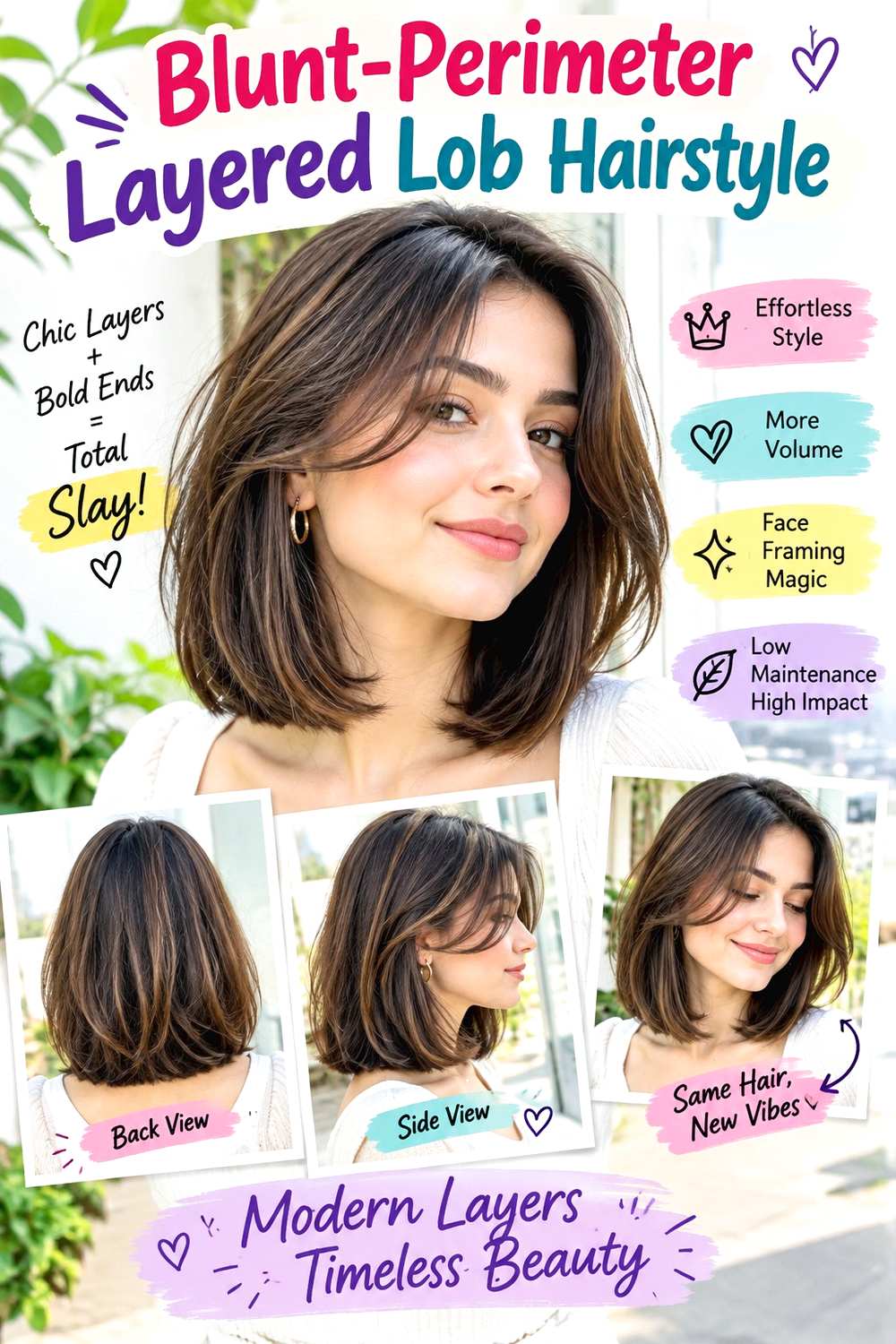
A strong bottom edge can coexist with layering when the shorter movement stays above a visibly full perimeter. Keep the lob near the collarbone, use long internal or face-framing layers, and leave the final edge substantial enough to read as a clean line. The crown should stay relatively simple. Straight, softly wavy, and fine hair often suit this design because the blunt lower edge helps preserve visual density while the layers prevent the length from feeling static.
Use a vent brush to guide the lower line, lightweight mousse for modest body, and smoothing cream on the last few inches. A quick refresh may involve correcting one flipped end, while a full wash-day style can remain uncomplicated when the haircut follows natural texture. The cut needs reshaping when the perimeter loses its clear position or the layers stop connecting.
At the salon, ask specifically for long layers above a strong outer edge rather than a heavily textured perimeter. Identify where the shortest layer should begin and how solid you want the bottom line. Dense hair can use selective internal weight removal, but the exterior should remain intact. This option can be practical in fall because a strong edge is easy to recognize even when collars create small bends at the ends.
Pro tip:
Ask the stylist to show you the dry perimeter before final texturing so you can confirm that the bottom line still looks intentionally full.
Make It Work for You:
For dense hair, keep the exterior blunt while reducing bulk selectively inside the mid-lengths, allowing movement without sacrificing the clean lower edge.
Watch Out For:
Do not let end texturing erase the perimeter. A blunt-layered lob depends on the contrast between internal movement and a substantial bottom line.
Feathered Layered Lob Hairstyle

Feathered front layers create directional movement away from the face while the lob remains longer and fuller through the back. Keep the perimeter around the shoulders or collarbone and start the shortest front section near the cheekbones or jaw. Let each following layer lengthen gradually so the feathering looks connected rather than stepped. Straight and wavy textures show the swept-back direction most clearly, especially when the front has enough density.
Apply heat protectant before using a round brush to direct the front layers backward, then finish with flexible hairspray for light hold. A full blowout takes longer because the front sections need individual direction. A quick refresh can focus on the first two layers while leaving the back alone. If the feathered pieces stop separating, reshaping the face frame may be enough without recutting the entire lob.
For salon detail, point to the shortest front landmark and explain how far back you want the feathering to extend. Fine hair usually needs fewer feathered sections so the perimeter stays full. Dense hair can support more visible movement if the ends remain connected. Fall scarves can push the lower layers forward, so check whether the front still falls well when the neckline changes.
Pro tip:
Let each front layer cool while directed away from the face before loosening it, helping the feathered bend hold without excessive spray.
Make It Work for You:
For fine hair, concentrate feathering around the face and preserve more weight through the back, maintaining a substantial lob perimeter alongside the softer front.
Watch Out For:
Avoid flipping every layer strongly outward. Too many pronounced bends can make the cut look disconnected instead of softly feathered and wearable.
Low-Volume Layered Lob Hairstyle
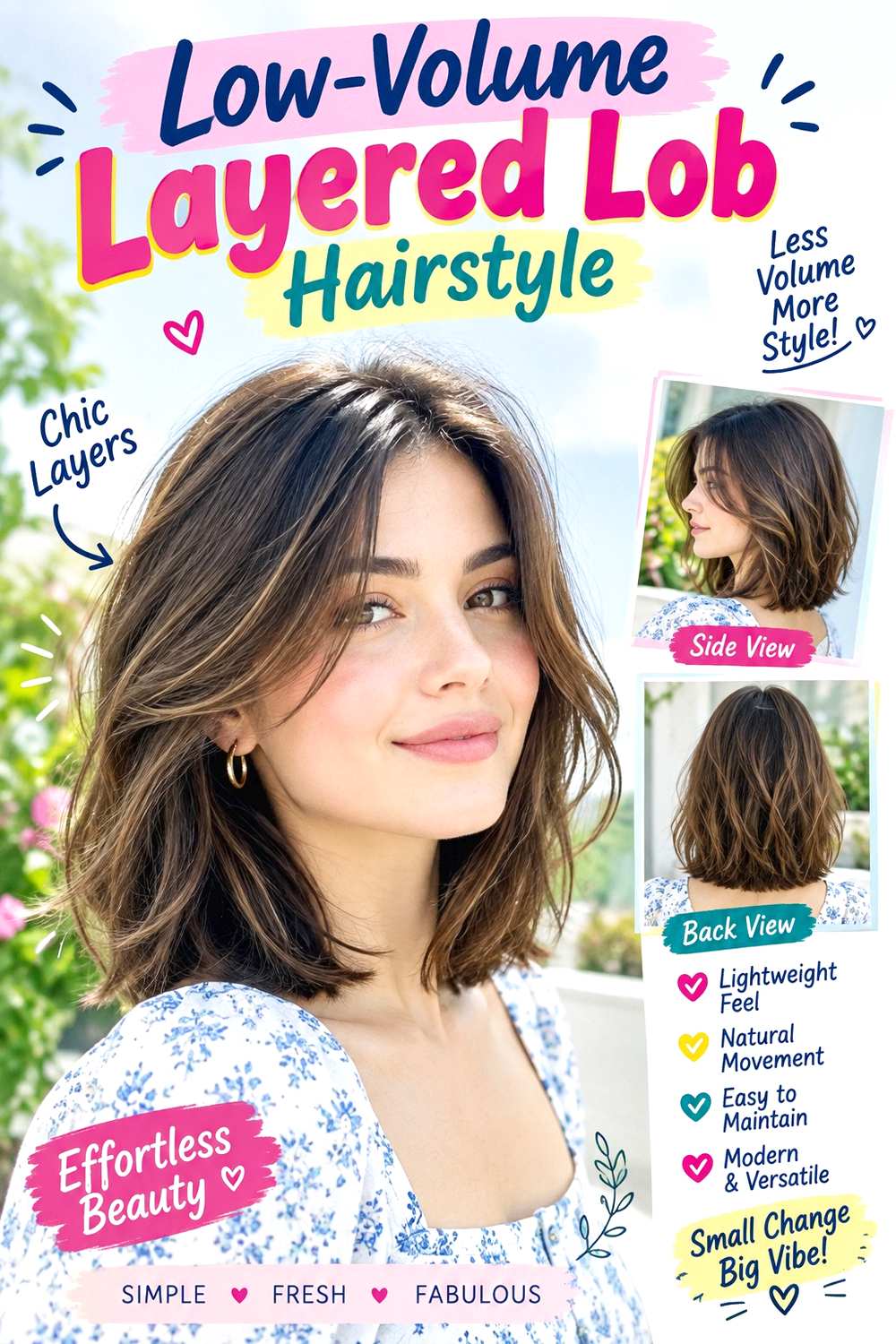
A low-volume lob keeps the crown close to its natural fall while long layers prevent the length from feeling heavy. Maintain a collarbone perimeter, use subtle layering below the jaw, and avoid exaggerated root lift. A center or gentle side part works well, with the ends staying smooth or softly bent. Straight, fine, and naturally smooth hair are especially suited to this controlled silhouette, though wavy hair can wear a relaxed version without being flattened completely.
Use a wide-tooth comb to establish the part, lightweight styling cream to control flyaways, and a vent brush to guide the sides without creating excess height. A quick refresh is usually short and focused on the front and ends. Full wash-day styling remains modest when the cut follows natural fall rather than fighting it.
At the salon, explain that you want restrained crown volume and layers long enough to maintain a calm outline. Fine hair usually benefits from preserving most of the perimeter weight, while dense hair may need internal adjustment to prevent width through the sides. Maintenance is mainly about the bottom edge and front layers rather than restoring crown height. The simple shape also works well when fall outerwear makes elaborate styling less practical.
Pro tip:
Dry the crown in its normal direction rather than lifting it aggressively, keeping the top controlled while allowing the lower layers to provide movement.
Make It Work for You:
For softly wavy hair, retain the natural bends through the sides and keep the crown close, preserving texture without adding unnecessary width.
Watch Out For:
Do not use heavy product simply to flatten the crown. The goal is low volume with movement, not a coated surface that collapses.
Crown-Lift Layered Lob Hairstyle

Concentrated lift at the crown changes a layered lob’s proportions without shortening the perimeter. Keep the length near the collarbone, use medium-to-long layers through the upper back, and allow the front to stay softly parted. The highest point should sit around the crown rather than extending equally through the sides. Straight, wavy, and fine hair can benefit from this placement when they tend to lie flat on top.
Apply heat protectant before using a round brush to direct the crown upward, then use root-lift spray for targeted support. A full wash-day style takes longer because the lift is built during drying, while a quick refresh should focus only on flattened upper roots. Avoid restyling the whole lob when the ends still look good.
For salon detail, specify where you want the shortest crown layer and how much perimeter weight should remain. Fine hair often needs only modest layering so the bottom does not thin out. Dense hair may need less added lift because existing volume can already support the shape. As the crown layers grow, the lob may begin looking flatter even when the length remains suitable. Fall hats can compress the upper section, so this version benefits from a refresh routine that targets just the roots.
Pro tip:
Let the crown cool in its lifted direction before smoothing it into place so the volume has support without requiring aggressive backcombing.
Make It Work for You:
For dense hair, keep the crown layers longer and concentrate movement around the upper back, preventing the style from becoming overly wide at the sides.
Watch Out For:
Avoid cutting very short crown layers solely for height. They can create a disconnected top and make the grow-out noticeably harder to manage.
Flipped-Ends Layered Lob Hairstyle

A subtle outward bend at the perimeter gives long layers a clear finish without changing the lob’s overall length. Keep the cut around the collarbone, use soft layers from the jaw downward, and direct only the final inches outward. A center or side part can work, while the crown stays relatively smooth. Straight and wavy textures show the flip clearly, and shoulder contact may naturally encourage some ends to turn outward.
Apply heat protectant before using a round brush to shape the final inches, then use flexible hairspray for gentle hold. A full wash-day style takes longer when you shape each layer deliberately. A quick refresh can focus only on ends that have fallen flat. If your hair naturally flips against a coat or collar, use that movement rather than repeatedly forcing every section into identical curves.
At the salon, specify the collarbone length and request layers that remain long enough to turn outward together. Too many short pieces can create several competing flips. Fine hair should retain a full lower edge, while dense hair may use modest internal shaping. Maintenance becomes useful when the lower layers grow too long to hold the intended bend or start resting heavily on the shoulders.
Pro tip:
Turn only the final inch or two outward so the lob keeps a clean line through the mid-lengths and the flip remains controlled.
Make It Work for You:
For naturally wavy hair, follow the direction your ends already prefer and keep the layers long, reducing the amount of daily reshaping required.
Watch Out For:
Do not shorten the perimeter purely to force stronger flips. Shoulder contact and natural growth direction can change how the ends behave each day.
Rounded-Ends Layered Lob Hairstyle
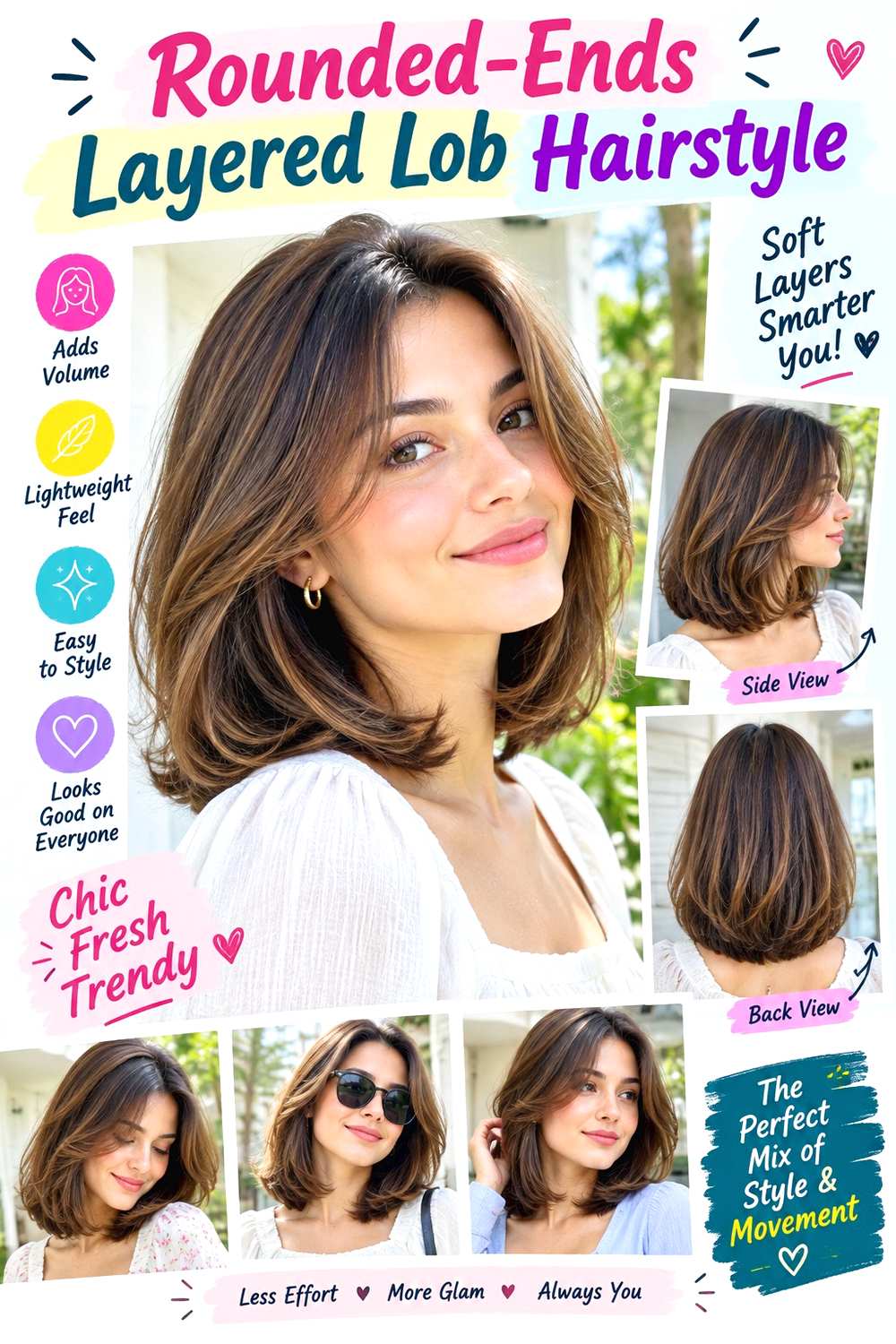
Softly rounded ends give a layered lob a controlled finish while the upper layers remain smooth and connected. Keep the perimeter between the shoulders and collarbone, with long layers beginning near the jaw or lower. Direct the final few inches inward instead of curling the entire length. Straight and softly wavy hair are natural starting points, while fine hair can benefit from the appearance of a fuller, unified bottom edge.
Apply heat protectant before using a round brush for the inward bend, then use smoothing cream through the ends to keep the surface controlled. A complete wash-day style takes longer because the curve is created during drying. A quick refresh can focus on sections that flipped outward overnight or after contact with a collar.
For professional styling, request layers long enough to preserve a connected lower line and explain how subtle you want the rounded finish. Dense hair may need internal weight reduced so the ends can curve without creating a bulky triangular shape. The haircut should still sit well when not styled under, so avoid relying on an exaggerated blowout to make the basic structure work. Maintenance is needed when the perimeter becomes too long to hold its soft curve.
Pro tip:
Keep the inward bend within the last few inches so the lob stays elongated rather than shrinking visually into a shorter, heavily rounded bob.
Make It Work for You:
For thick hair, preserve the outer perimeter while reducing excess weight inside the lower sections, allowing the ends to curve without excessive bulk.
Watch Out For:
Avoid a strong curl-under finish every day. Too much bend can make the layers disappear and shorten the visual length of the lob.
Textured-Ends Layered Lob Hairstyle

Concentrating texture near the ends gives a lob movement without requiring many short upper layers. Keep the perimeter around the collarbone, add long layers through the lower half, and create subtle separation within the final inch or two. The crown can stay simple, and the part can shift according to preference. Straight and wavy hair show the broken-up tips clearly, while fine hair needs restraint so the edge remains substantial.
Use lightweight mousse for body, a wide-tooth comb to arrange the part, and a small amount of styling paste on selected dry tips. A quick refresh may involve separating just a few ends, while full wash-day styling can remain moderate because the haircut supplies most of the movement. As the lob grows, the textured edge may begin feeling heavier and less defined.
At the salon, explain that you want end movement without a transparent perimeter. Ask where texturing will be concentrated and how much density will remain. Fine hair often needs very minimal end removal, while dense hair can tolerate more internal adjustment. Fall collars may disturb the tips, but the slightly separated edge can make those small bends feel intentional rather than requiring constant correction.
Pro tip:
Define only a few dry tips at a time so the texture stays subtle and the perimeter still reads as one connected collarbone-length shape.
Make It Work for You:
For fine ends, keep most of the perimeter blunt and concentrate separation near the front, where movement can show without reducing density everywhere.
Watch Out For:
Do not confuse texturing with aggressive thinning. Once the lower edge becomes transparent, the lob can lose both shape and visual fullness.
Deep Side-Part Layered Lob Hairstyle
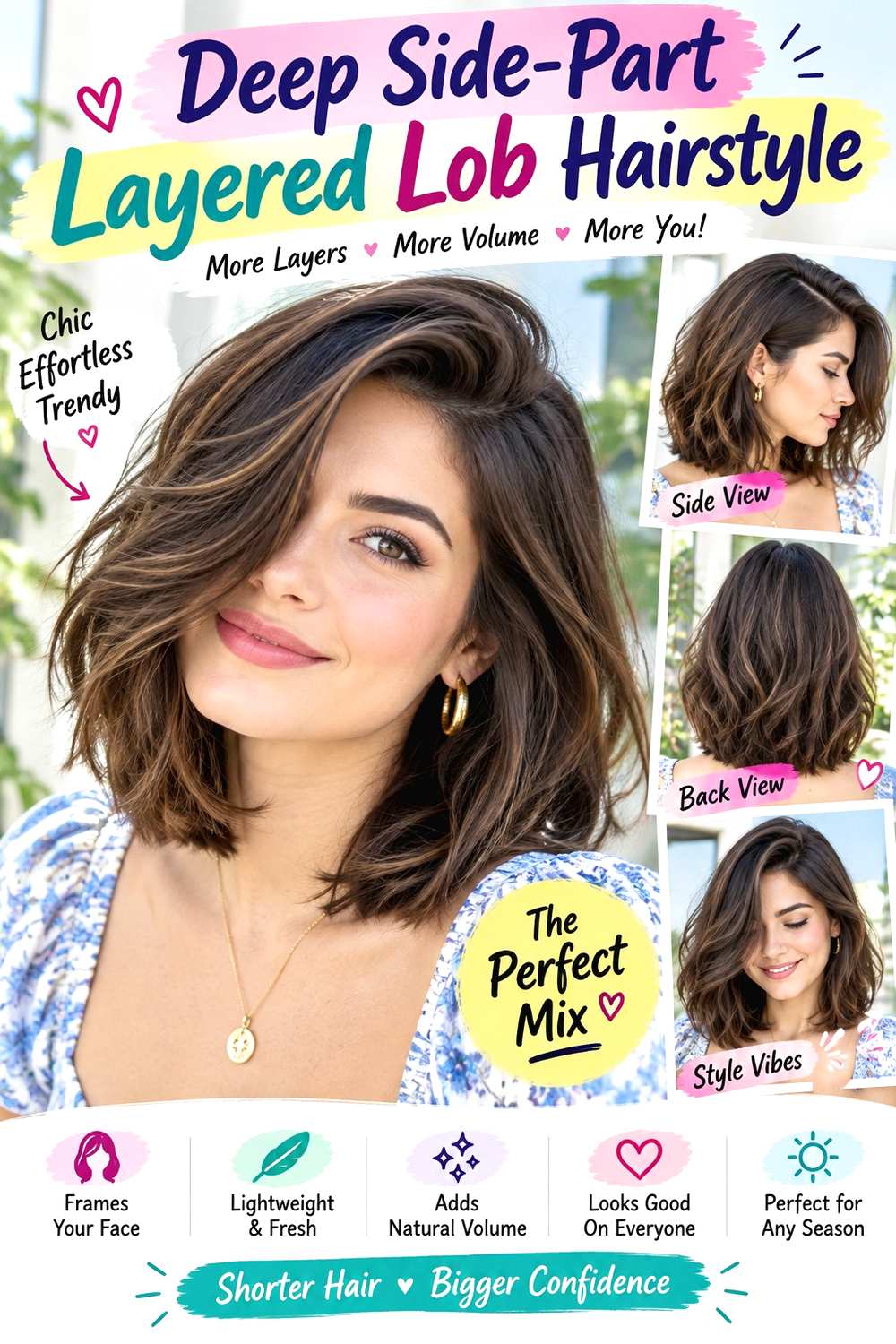
A deep side part creates a stronger sweep across the forehead while long layers keep the rest of the lob soft. Let the heavier side carry more face-framing movement, with the shortest section around the cheekbone or jaw, and keep the opposite side longer enough to tuck comfortably. The perimeter should remain near the collarbone. Straight, wavy, and loosely curly textures can all work, though strong growth patterns may require extra directional styling.
Use a wide-tooth comb to establish the part, lightweight mousse for root support, and smoothing cream through the ends. A quick refresh can focus on the heavier front section and parting. A full wash-day routine takes longer when the roots naturally fall in the opposite direction, because they need to dry into the sweep.
For salon detail, show the exact part placement and where the shortest layer on the heavier side should finish. Dense hair may need bulk reduced underneath that side, while fine hair should preserve more perimeter weight. If the sweep begins losing lift, try redirecting the roots before adding more product. Grow-out is usually forgiving because the longer layers blend easily, but the front can lose definition as it becomes heavier.
Pro tip:
Dry the heavier front section briefly away from its finished side, then return it over the part to create controlled movement at the roots.
Make It Work for You:
For wavy hair, keep the shortest side layer slightly longer so natural bends contribute to the sweep without lifting the front too high.
Watch Out For:
Avoid taking excessive weight from the lighter side. It still needs enough density to look balanced whenever the lob is worn completely loose.
Long-Fringe Layered Lob Hairstyle

A long fringe reaching toward the cheekbones or jaw blends naturally into a layered lob and gives the front more movement without short bangs. Keep the perimeter at the collarbone, let the fringe split in the center or sweep to one side, and connect it gradually into longer face-framing layers. Straight, wavy, and loose curly hair can all support the shape, especially if you like the option of tucking the front back on low-styling days.
Apply heat protectant before using a round brush to direct the fringe, then use flexible hairspray for light hold. A full wash-day blow-dry takes longer if the front needs a deliberate bend, while a quick refresh can focus only on the fringe. The longer length makes grow-out forgiving because it can blend into the rest of the layers.
At the salon, specify the finished fringe landmark in its normal dry state and whether you want a center opening or side sweep. Fine hair should keep the fringe section narrow enough to preserve crown density. Curly hair needs extra dry-length consideration because shrinkage can turn a cheekbone reference into a much shorter front piece. Maintenance becomes useful when the fringe grows too heavy to hold its intended direction.
Pro tip:
Dry the long fringe from the roots first and refine the ends afterward, giving the front movement without relying on a strong curl.
Make It Work for You:
For curly or wavy hair, retain extra front length so the fringe still reaches the intended cheekbone or jaw area once fully dry.
Watch Out For:
Do not heavily thin the long fringe for softness. Too little weight can make it separate into sparse pieces instead of blending into the lob.
Tucked-Behind-Ear Layered Lob Hairstyle

A layered lob can look cleaner around the face when one side is designed to tuck comfortably behind the ear. Keep the overall length at or just above the collarbone, use subtle front layers, and preserve enough weight on the tucked side so it does not look thin when worn loose. A soft side part works naturally, although a center part can create a more balanced version. Straight, wavy, and softly curly textures all suit the idea.
Use a wide-tooth comb to organize the part, lightweight styling cream to keep the tucked side neat, and a vent brush to guide the opposite front section. A quick refresh can take only a few minutes and focus on the tuck and ends. Full wash-day styling remains modest if the layers follow the natural texture.
For salon detail, explain which side you usually tuck and where you want the shortest front layer to finish. Dense hair may need hidden bulk reduced where it bunches behind the ear, while fine hair should retain more side density. Grow-out is manageable until the front becomes too long to sit neatly behind the ear. This can also be practical with fall scarves because it keeps one side clear of extra fabric.
Pro tip:
Choose the tuck after the hair settles into its normal part, which helps the side stay secure without fighting its natural growth direction.
Make It Work for You:
For thick hair, preserve the visible perimeter but reduce hidden bulk only where it gathers behind the ear, improving comfort without thinning the profile.
Watch Out For:
Do not cut the tucked side dramatically shorter just for convenience. That can limit styling options and make the lob look uneven when worn loose.
Outerwear-Friendly Layered Lob Hairstyle

This version keeps the perimeter slightly above the collarbone so the ends are less likely to sit directly inside higher coat or jacket collars. Use long layers beginning around the jaw, keep the crown simple, and let the ends stay softly blunt or lightly textured. A center or side part can work, and the shape suits straight, wavy, and loosely curly hair. The key is choosing a finished length that cooperates with the necklines you actually wear rather than forcing one universal measurement.
Use lightweight mousse for movement, a wide-tooth comb to arrange the part, and smoothing cream through the ends. A quick refresh may involve only resetting sections that bent against clothing. Full wash-day styling depends on whether you air-dry, smooth, or define the texture, but the cut itself should remain manageable without constant reshaping.
At the salon, wear or describe your usual higher-neck outerwear and point to where you want the perimeter to fall relative to it. Ask for layers long enough to preserve weight while avoiding a heavy block around the neck. Fine hair should keep more perimeter density, while dense hair may need selective internal bulk reduction. Maintenance becomes useful when the ends grow into a spot where collars repeatedly push them outward.
Pro tip:
Choose the finished perimeter with your usual collar height in mind, leaving a little clearance if repeated friction tends to flip your ends.
Make It Work for You:
For curly hair, base that clearance on the dry finished length so shrinkage and natural volume are included in the placement decision.
Watch Out For:
Do not shorten the lob dramatically just because one coat catches the ends. Consider your usual wardrobe and natural hair behavior before changing the perimeter.
Conclusion
Layered lob hairstyles for fall can range from smooth center-part cuts to waves, curls, fringe, feathered fronts, and textured ends. Collarbone length offers movement, while a slightly shorter perimeter can reduce interference from scarves and high collars. Fine hair often benefits from long layers and a fuller edge, whereas dense hair may need selective internal bulk removal. Curly and coily lobs require dry-length planning so shrinkage does not shift the layers unexpectedly. Fringe adds more front maintenance, while long face framing grows out more softly. Choose your parting, crown volume, perimeter weight, and finish according to your natural texture and routine. The most useful fall lob is one that still sits well when you skip a full styling session.
Before Your Salon Visit
Choose one or two favorites and save references that clearly show the front, sides, back, and layer placement. Discuss your natural texture, density, face shape, preferred length, upkeep, and usual styling routine. Point out the exact fringe length, face-frame starting point, crown volume, perimeter weight, and end finish you like. If coats or scarves often affect your hair, mention where your usual necklines sit so the finished lob length works with your routine.
FAQs
Are Layered Lobs Good for Fine Hair?
Yes, but the layer placement matters. Fine or lower-density hair often benefits from longer layers concentrated around the front while the perimeter stays relatively full. Short layers everywhere can reduce visible density. Ask your stylist to preserve bottom weight and use only enough layering to create the movement you actually want.
How Should Curly Hair Be Layered in a Lob?
Curly lobs should be planned around dry shrinkage, curl grouping, density, and desired volume. The shortest layers may spring significantly higher than they appear when stretched. Discuss the finished dry landmarks with your stylist and avoid assuming that aggressive thinning is necessary simply because the hair has substantial volume.
Do Layered Lob Hairstyles for Fall Need Heat Styling?
No. Wavy, curly, coily, and naturally straight lobs can all work with minimal or no heat when the layers support the natural texture. Heat is useful only for a specific finish, such as feathered fronts, broad waves, or rounded ends. When using it, apply heat protectant and avoid unnecessary repeat passes.
How Often Should a Layered Lob Be Reshaped?
There is no single schedule because fringe, texture, growth rate, and layer length vary. Consider reshaping when the face frame stops connecting, the perimeter becomes heavy, fringe interferes with vision, or upper layers no longer create the intended movement. Use changes in the haircut’s shape rather than a fixed calendar alone.