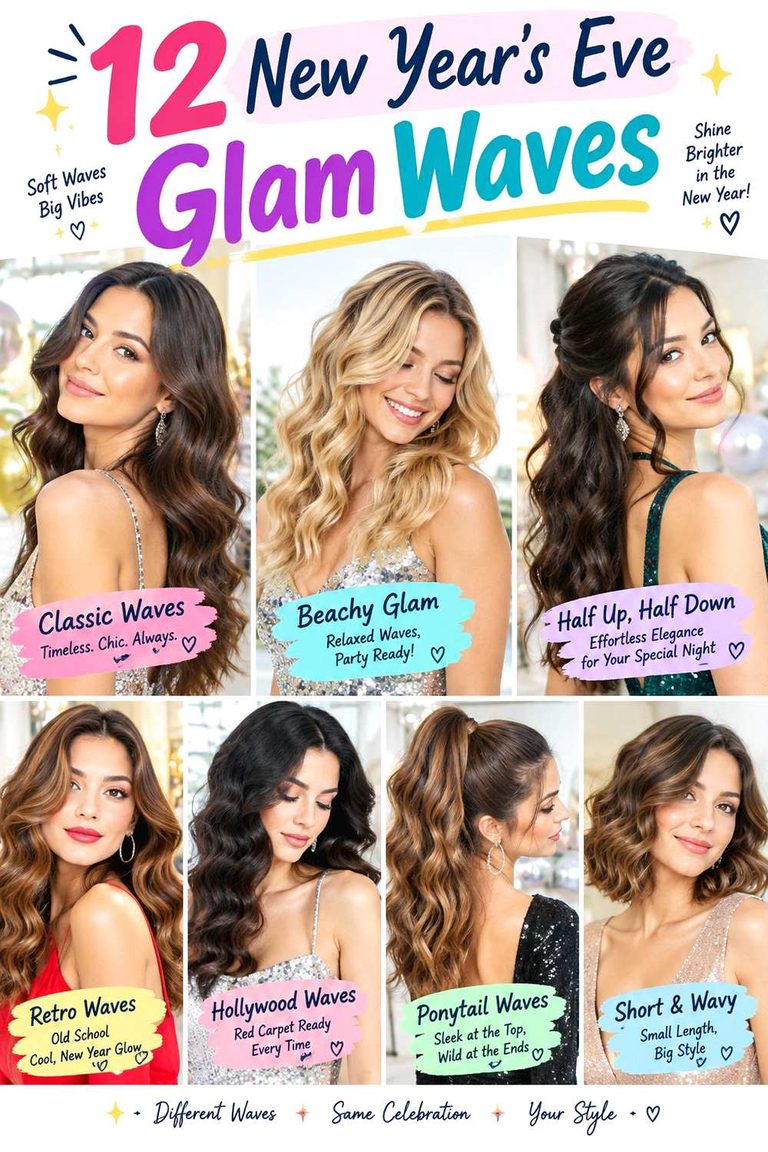
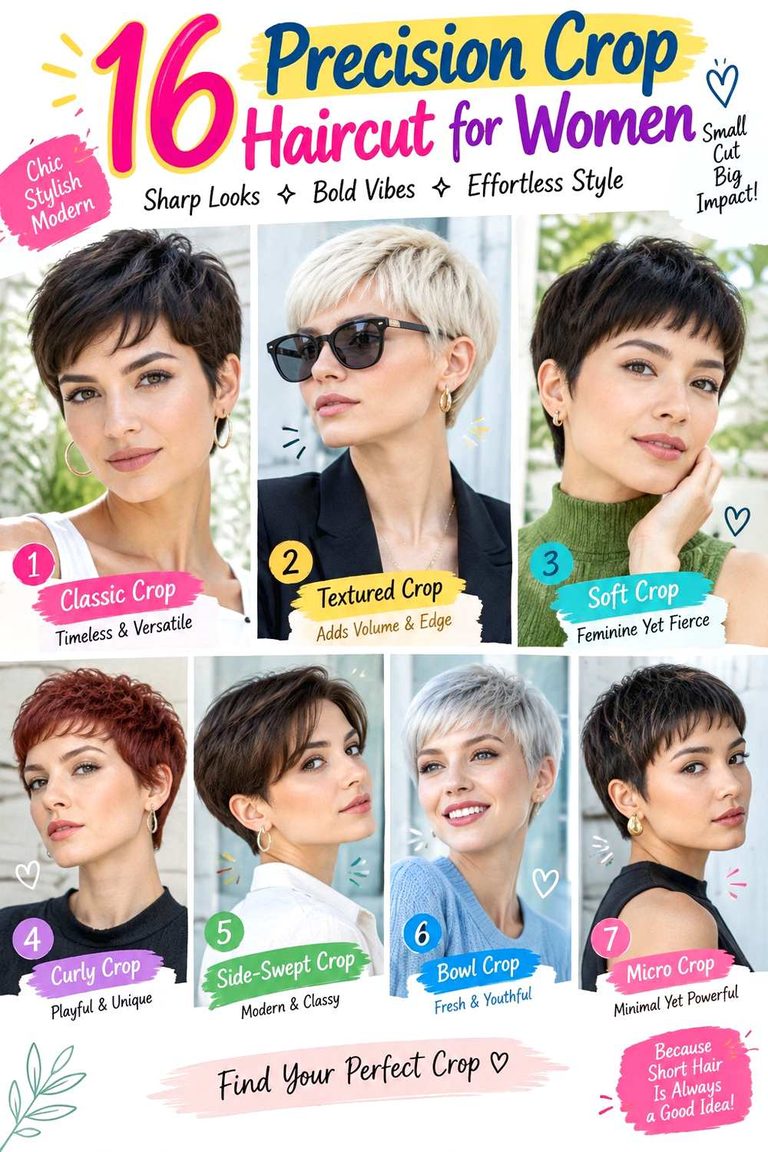
11 Soft Piecey Pixie Hairstyle Ideas

Soft piecey pixie hairstyle ideas use short, separated sections to create visible texture without making the haircut look sharply spiked or heavily thinned. The nape and sides are usually compact, while the top and fringe retain enough length for movement. Pieces may sweep across the forehead, lift through the crown, curve around the temples, or follow natural waves and curls. The key distinction is soft separation: individual sections remain visible, but the overall silhouette stays connected.
Straight and wavy textures show small changes in length clearly. Curly hair can create broader piecey groups and needs careful allowance for shrinkage. Fine or lower-density hair often benefits from retaining more weight through the top and fringe, while dense hair may need targeted internal bulk adjustment. Fringe length can also be adapted to growth direction and preferred forehead coverage.
A quick refresh may require only damp fingers and a small amount of product, while a polished or heat-shaped finish takes longer. Short cuts also show growth quickly. Regular reshaping becomes useful when the nape expands, fringe loses its intended position, or top layers stop separating cleanly.
Quick List
- Wispy Fringe Soft Piecey Pixie Hairstyle
- Side-Swept Soft Piecey Pixie Hairstyle
- Tapered Nape Soft Piecey Pixie Hairstyle
- Long Top Soft Piecey Pixie Hairstyle
- Wavy Soft Piecey Pixie Hairstyle
- Curly Soft Piecey Pixie Hairstyle
- Fine-Hair Soft Piecey Pixie Hairstyle
- Dense-Hair Soft Piecey Pixie Hairstyle
- Ear-Tucked Soft Piecey Pixie Hairstyle
- Crown-Lift Soft Piecey Pixie Hairstyle
- Air-Dried Soft Piecey Pixie Hairstyle
Wispy Fringe Soft Piecey Pixie Hairstyle
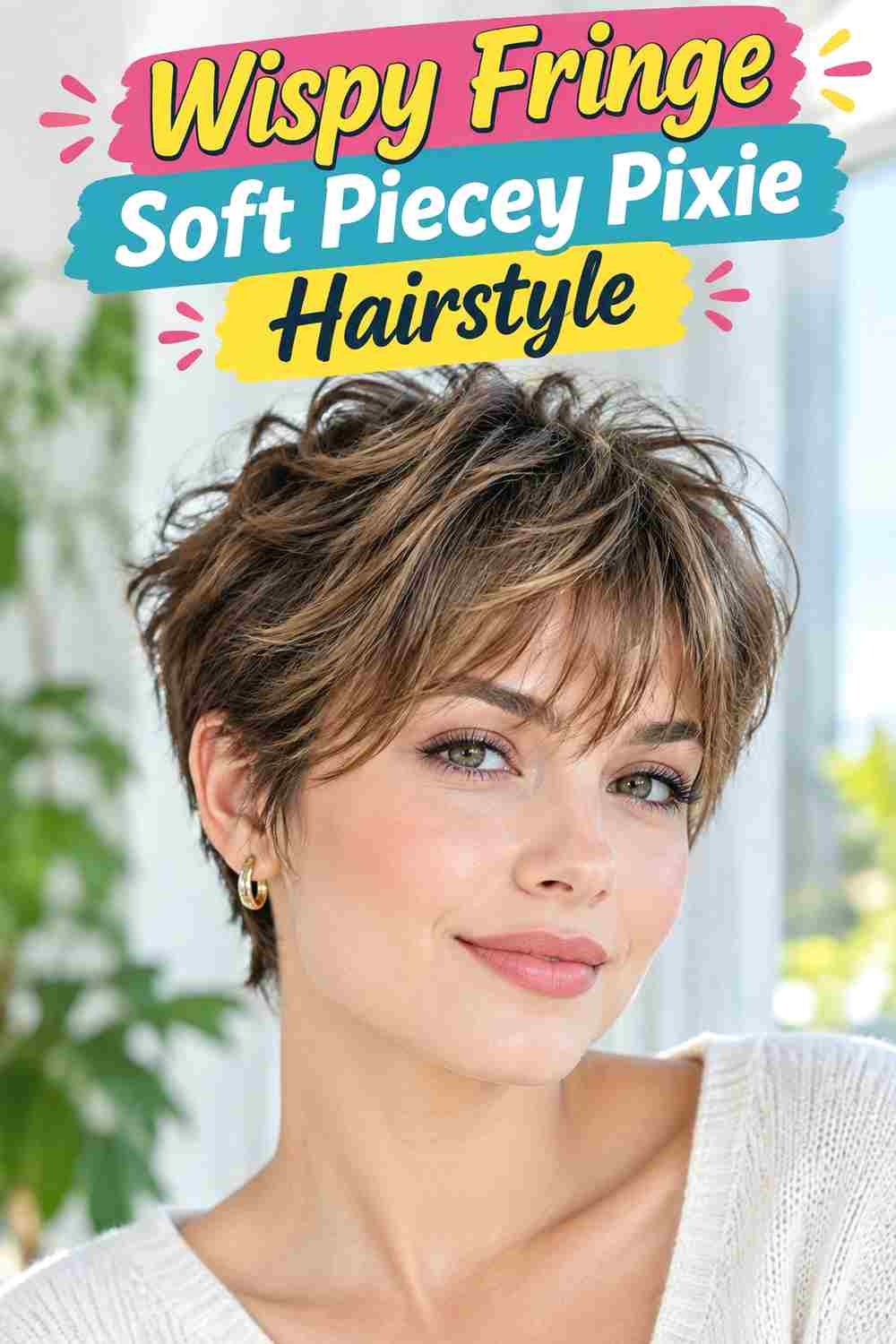
A light fringe gives a short pixie soft forehead coverage while keeping plenty of skin visible between strands. The center pieces can skim the brows or sit slightly above them, with longer sections moving toward the temples. Shorter crown layers provide gentle lift, while the sides and nape stay compact. Instead of a blunt fringe edge, small groups finish at subtly different points, creating the piecey effect.
Straight and softly wavy textures show the separated fringe clearly. Fine hair may need very little product, while dense hair benefits from a deliberately narrow fringe section rather than aggressive thinning. Use lightweight mousse for flexible support and a small vent brush for gentle drying direction. A morning fringe refresh can take only a few minutes; washing, drying, and defining the entire pixie takes longer.
At the salon, specify the dry fringe length, section depth, and how much forehead you want visible. Also explain how closely you want the nape and sides tapered. Fringe upkeep may become necessary before the whole cut feels overgrown because even modest growth can shift pieces into the eyes. Reshape the full pixie when the crown loses separation or the outline starts feeling bulky.
Pro tip:
Dry the fringe in more than one direction before placing it forward. This loosens a stubborn part and helps the small sections settle with softer separation instead of forming one flat band.
Make It Work for You:
If your forehead hair grows strongly upward, retain slightly more fringe length. Natural root lift can shorten the visible result, so extra length helps preserve the intended soft brow-area placement.
Watch Out For:
Avoid repeatedly thinning an already wispy fringe during maintenance. Restore its length and shape first; unnecessary weight removal can leave the front too sparse and make individual strands difficult to control.
Side-Swept Soft Piecey Pixie Hairstyle
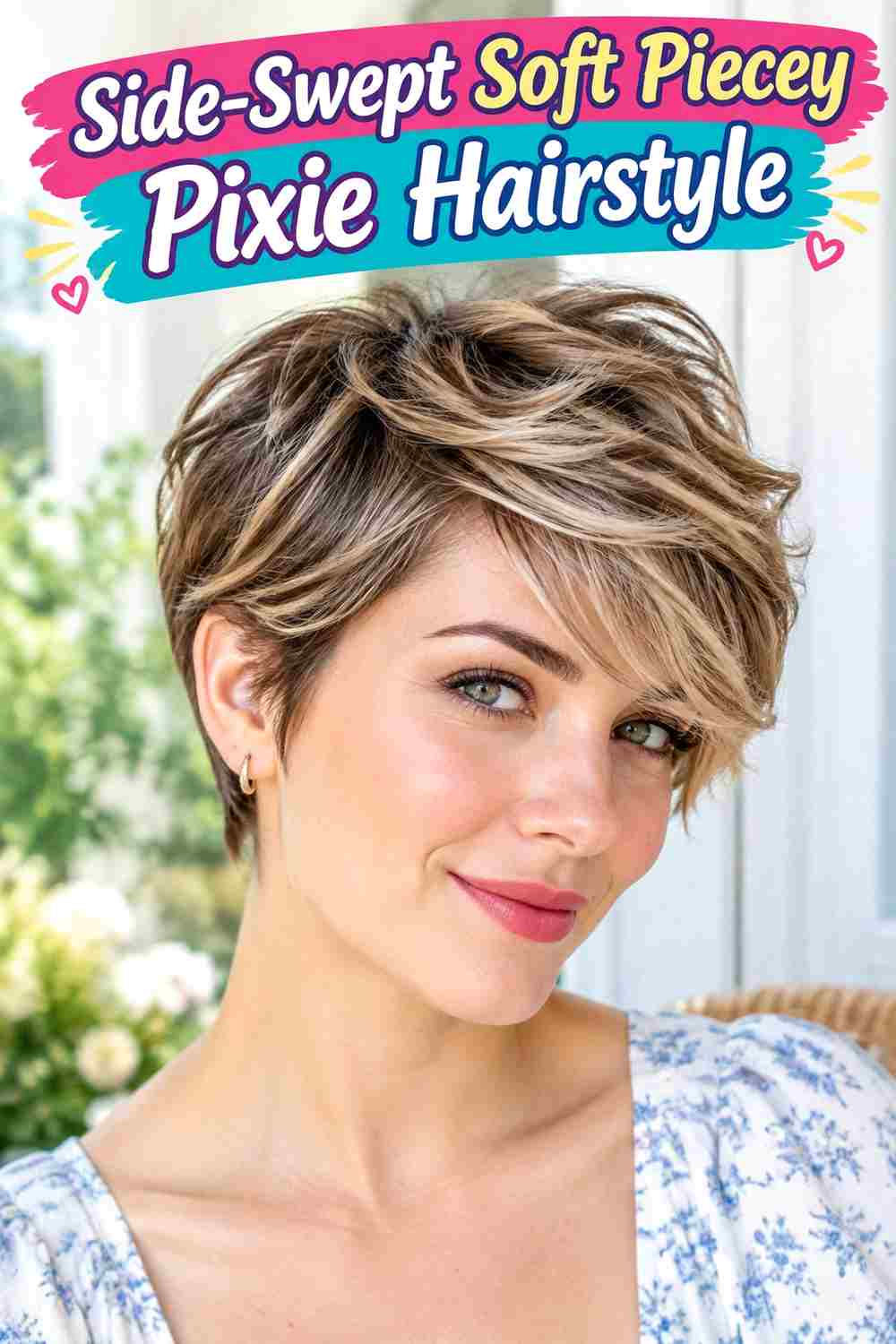
A longer diagonal fringe gives this pixie directional movement while short sides keep the silhouette compact. The top gradually lengthens toward the front, allowing small sections to sweep across the forehead toward one temple. Crown volume stays modest, and the nape is softly tapered rather than sharply disconnected. Slightly irregular tips stop the sweep from becoming one solid section.
Straight and wavy textures can carry the diagonal direction easily, particularly when the natural growth pattern already favors one side. Fine hair may gain useful fullness from the sweep, while dense hair can need internal weight adjustment. Use lightweight styling cream to control flyaways and a vent brush to establish direction during drying. A quick refresh may involve dampening and repositioning only the front; a full wash-day reset takes longer.
At the salon, show your usual part and specify where the longest fringe piece should finish when dry. Ask how the top should connect into the shorter temple and nape areas. Grow-out becomes noticeable when the fringe begins covering more of the eye or the sides expand enough to compete with the longer top.
Pro tip:
Dry the front briefly against its final direction before sweeping it across. That small change at the roots creates flexible movement and prevents the longer fringe from lying completely flat.
Make It Work for You:
If you dislike hair near your eyes, shorten the central fringe while preserving longer temple pieces. The pixie keeps its diagonal movement without requiring the longest sections to cross your sightline.
Watch Out For:
Do not remove too much weight from the sweeping fringe. Over-thinning can create flyaways that refuse to travel together, weakening the smooth directional movement that anchors this pixie.
Tapered Nape Soft Piecey Pixie Hairstyle

A neat tapered nape creates contrast with longer, separated layers through the top. The back gradually shortens toward the neckline rather than ending in a heavy shelf, while temple pieces remain soft around the ears. On top, short-to-medium sections move in slightly different directions. The fringe can stay open or fall lightly forward, depending on the natural growth pattern.
Straight and wavy hair can show the transition between compact nape and mobile top clearly. Dense hair may appreciate controlled weight removal around the occipital area, while fine hair generally needs more substance retained above the taper. Use lightweight styling paste to separate selected top pieces and a vent brush to direct the hair during drying. A quick morning reset can be brief; washing and redefining the complete short shape requires more time.
At the salon, describe how close you want the neckline and how gradually it should connect into the back. The taper should suit your preferred softness rather than automatically becoming clipper-short. Maintenance becomes noticeable when the neckline expands or the back develops a heavier ledge beneath the top layers.
Pro tip:
Use styling paste on the top rather than directly at the tapered neckline. Keeping the nape clean and product-light preserves its compact outline while the longer sections provide visible texture.
Make It Work for You:
If you prefer a softer grow-out, request a slightly longer scissor taper at the nape. It can preserve the compact shape while reducing the contrast as the neckline begins growing.
Watch Out For:
Avoid taking the nape much shorter than you actually want simply because the top is piecey. A severe length jump can make the haircut look disconnected rather than softly tapered.
Long Top Soft Piecey Pixie Hairstyle

Extra length through the top creates more styling flexibility while the sides and nape remain recognizably pixie-short. Front sections can reach the brows or sweep toward the temples, while crown pieces stay long enough to bend, separate, or lie flatter. The perimeter around the ears is tidy, creating a clear contrast with the mobile upper section without requiring a dramatic undercut.
Straight and wavy hair can switch easily between a forward, side-swept, or lifted finish. Fine hair may benefit from the retained top weight, while dense hair often needs targeted internal adjustment so the longer section does not collapse. Use lightweight styling paste for piece definition and a vent brush for directional drying. A quick refresh can involve repositioning only the top; fully washing, drying, and shaping the cut takes longer.
At the salon, specify the longest dry fringe length and the point where the top should begin transitioning into shorter sides. That connection determines whether the result feels soft or disconnected. Reshaping becomes useful when the sides expand or the top grows heavy enough to lose its piecey separation.
Pro tip:
Change the direction of a few top sections rather than pushing everything the same way. Small variations expose the layer structure and make the longer area look mobile without creating spikes.
Make It Work for You:
If you want more styling flexibility, preserve extra length near the front while keeping the crown slightly shorter. You can sweep, tuck, or lift the fringe without adding excessive weight everywhere.
Watch Out For:
Do not thin the long top uniformly to make it separate. Strategic layer placement and small amounts of product create texture more reliably than removing so much weight that the ends become flyaway.
Wavy Soft Piecey Pixie Hairstyle

Natural waves give a pixie broad separation without requiring sharply defined spikes. The top can stay several inches long so bends have room to form, while shorter sides keep the silhouette compact. A few wavy pieces fall toward the forehead, others turn away near the temples, and crown sections create gentle lift. The nape remains tidy enough to anchor the movement above.
Naturally wavy hair is particularly practical because existing bends create much of the piecey finish. Straighter hair can imitate it, although that adds styling effort. Use lightweight mousse to support the wave pattern and flexible styling cream to define selected dry pieces. A morning refresh may involve dampening flattened sections for several minutes; resetting the entire wave pattern after washing takes longer.
At the salon, show where your natural wave bends most strongly and identify the desired dry fringe and side lengths. Ask for layers that encourage the pattern without making the perimeter excessively thin. Reshape when the top becomes heavy enough to stretch the waves or the sides grow outward and change the compact pixie outline.
Pro tip:
Refine only waves that flatten or point awkwardly. Leaving successful natural bends untouched creates more convincing variation and reduces the amount of manipulation needed to make the short layers look separated.
Make It Work for You:
If your waves expand strongly near the temples, retain slightly more length there so they settle closer to the head. Keep stronger separation through the top where extra movement is easier to balance.
Watch Out For:
Avoid forcing every wave into the same direction. Uniform movement can make the pixie look overly arranged; varied bends are useful for maintaining the softer, piecey character of the cut.
Curly Soft Piecey Pixie Hairstyle
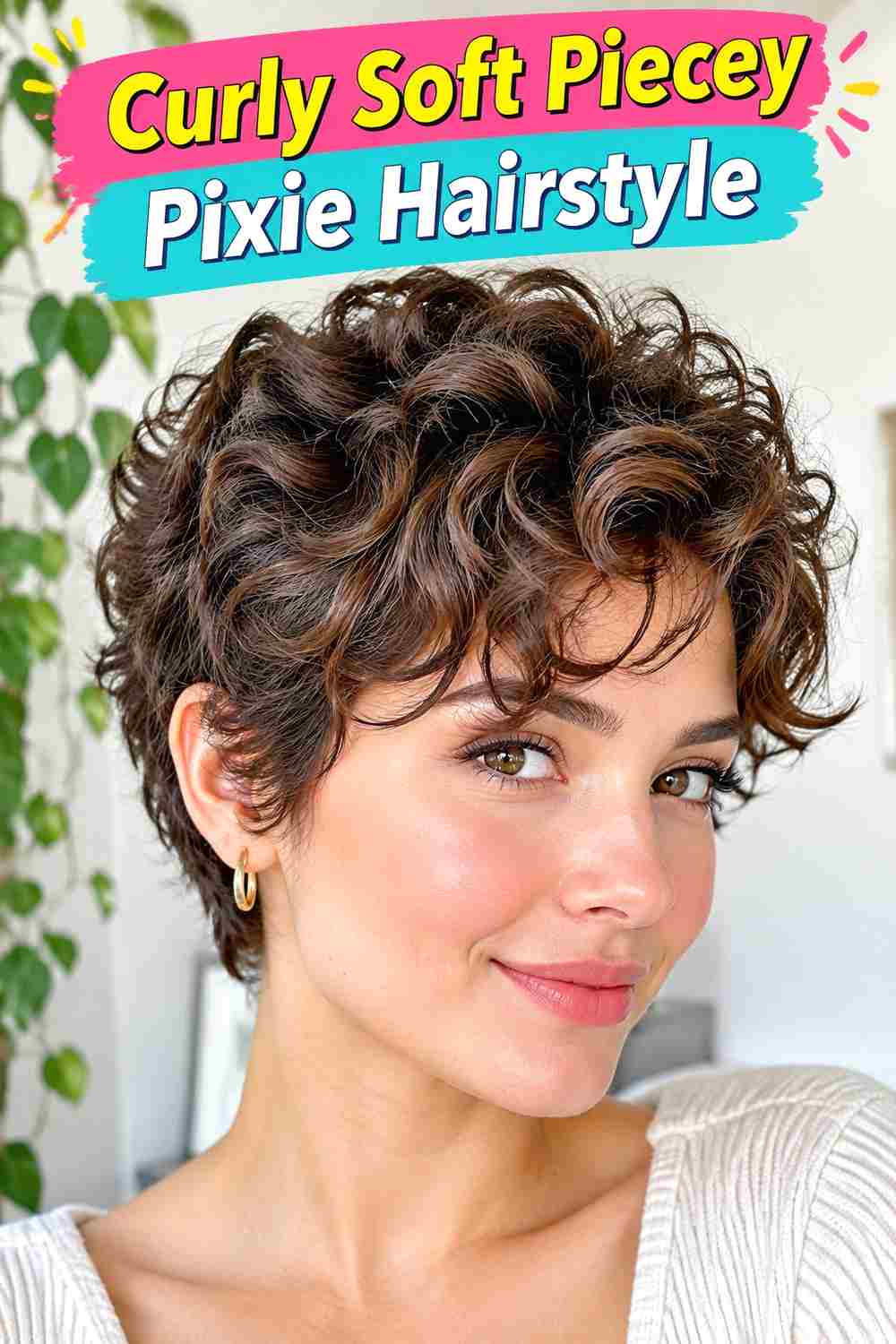
Small curl groups create the piecey effect naturally, with visible spaces and changes of direction through the top. Longer curls can frame the forehead and temples, while the sides and nape stay progressively shorter. Crown curls provide controlled height rather than a flat surface. The outline remains soft, with individual curl groups defining the perimeter instead of a sharply cut line.
Curly and coily textures need dry-length planning because shrinkage can make short sections finish substantially higher than their stretched position. Dense curls may require targeted bulk adjustment, while lower-density curls benefit from retaining coverage through the top. Use lightweight leave-in conditioner for pliability, curl gel for grouping, and a diffuser on cool or low airflow for drying. Refreshing a few front curls can be quick; a full wash, definition, and dry takes longer.
At the salon, show where the fringe, temples, crown, and nape should sit when completely dry. Avoid choosing these lengths from stretched hair alone. Reshaping becomes useful when the sides expand, crown balance changes, or front curls consistently obstruct your preferred sightline.
Pro tip:
Arrange the front curl groups while damp and leave them intact until dry. Separate only selected curls afterward so you can add piecey definition without turning the compact pixie into uncontrolled frizz.
Make It Work for You:
If your curls shrink substantially, retain additional cutting length through the top and fringe. You can always assess the dry result before shortening sections that naturally recoil much higher.
Watch Out For:
Do not thin curls indiscriminately to create separation. Curl groups already provide texture; random weight removal can disrupt their pattern and create uneven expansion instead of purposeful piecey movement.
Fine-Hair Soft Piecey Pixie Hairstyle

Fine strands can show piecey detail clearly when the haircut preserves enough weight through the top and fringe. Shorter sides create contrast, while slightly longer crown sections overlap instead of becoming heavily feathered. A narrow fringe can sweep forward or sideways, and the ends remain soft rather than sharply razored. Moderate root lift helps reveal the separation without requiring extreme height.
Fine hair describes strand diameter, not overall density. Fine, dense hair can support more internal layering than fine hair with low density. Use lightweight mousse for root support and a small vent brush for loose directional drying. A quick refresh can involve lifting only the crown and fringe; full wash-day styling remains relatively short but varies with density and natural growth patterns.
At the salon, explain whether your concern is flatness, low overall density, or both. Ask to preserve useful weight through the top rather than automatically thinning fine strands. Specify the fringe and crown lengths you want when dry. Reshape when the sides lose their compact outline or the top grows heavy enough to collapse.
Pro tip:
Apply mousse primarily near the crown roots and use only the remaining product on the ends. Overloading fine strands can join them into heavy pieces and reduce the visible fullness between sections.
Make It Work for You:
If your fine hair is also low density, keep the top relatively connected and create separation with styling. Fewer deliberate layers can preserve coverage while still giving the pixie soft movement.
Watch Out For:
Fine strands do not automatically need heavy texturizing. Removing too much internal weight can expose gaps and make the tips fragile-looking, especially when overall density is already limited.
Dense-Hair Soft Piecey Pixie Hairstyle

Dense hair can create strong piecey definition when bulk is adjusted in targeted areas rather than removed everywhere. The top stays long enough for sections to overlap, while the temples and nape sit closer to the head. Internal shaping can release weight around the crown or sides without leaving a visibly thin surface. The fringe may sweep sideways or separate softly across the forehead.
Straight and wavy dense hair can show the structured separation clearly. Curly density needs additional consideration for shrinkage and expansion. Use lightweight styling cream to control the surface and flexible styling paste to define selected top sections. A quick refresh may involve repositioning only the fringe and crown; fully washing and drying dense short hair can take considerably longer.
At the salon, point out where your hair becomes bulky as it grows and ask for targeted weight adjustment in those zones. Specify how closely you want the temples and nape to sit. Reshaping becomes useful when new growth makes the sides expand or the top loses its ability to separate into distinct pieces.
Pro tip:
Warm a very small amount of styling paste between your fingertips before touching selected ends. Targeted application creates definition without coating dense hair so heavily that the top becomes stiff or compact.
Make It Work for You:
If your dense hair has natural wave, retain enough top length for that movement to form. The wave can provide separation, reducing the amount of internal weight removal needed for texture.
Watch Out For:
Avoid indiscriminate thinning from roots to ends. Random short pieces can expand or stick out as the pixie grows; remove bulk specifically where density interferes with the intended silhouette.
Ear-Tucked Soft Piecey Pixie Hairstyle

Longer temple and front pieces make an ear tuck possible while the back stays compact. One or both sides can slip behind the ears, exposing a clean outline and leaving the top pieces free to fall forward or sideways. The fringe remains softly separated, while crown layers create gentle movement. The contrast between tucked sides and a loose top gives the short cut an adaptable finish.
Straight and softly wavy textures can hold the tuck easily. Fine hair needs enough temple length and density to avoid looking sparse, while dense hair may need controlled bulk directly above the ears. Use lightweight styling cream for flyaway control and a vent brush for drying the front in its preferred direction. Retucking and refreshing the fringe takes little time; a full wash and reset takes longer.
At the salon, mention that you regularly tuck the sides and show where the temple pieces need to reach to stay behind your ears comfortably. Keep the perimeter balanced when released. Reshape when the side pieces become bulky or the top grows too heavy to maintain contrast.
Pro tip:
Tuck the side only after it is fully dry. Damp hair can set into a strong crease behind the ear, while dry placement allows the section to release more naturally later.
Make It Work for You:
If your temple hair slips forward easily, preserve slightly more length around the ear. Extra reach improves anchoring while keeping the visible edge soft when you choose to wear it untucked.
Watch Out For:
Do not shorten one side permanently just because you usually tuck it. The pixie should retain a balanced shape when both sides are released, with asymmetry coming mainly from styling.
Crown-Lift Soft Piecey Pixie Hairstyle

Visible lift through the crown gives this pixie height without turning the top into stiff spikes. Short-to-medium crown layers rise gently from the roots and separate into soft groups, while the sides remain closer to the head. The fringe can stay short and open or sweep toward one side. Ends are lightly irregular, creating texture while preserving enough weight for a connected silhouette.
Straight and wavy textures can show the height clearly. Fine hair benefits from restrained layer placement so crown coverage remains substantial, while dense hair may need targeted internal adjustment. Use lightweight mousse for root support and a vent brush to direct the crown upward and slightly forward. A quick refresh can take only a few minutes; a full wash and shaped dry takes longer.
At the salon, specify how short you are comfortable taking the crown and where you want the highest visual point. Ask for a gradual transition into the sides. Reshape when growth pulls the crown downward or causes the sides to expand enough that the height no longer looks balanced.
Pro tip:
Lift the crown roots while drying, then let the ends fall in different directions. Supporting the base rather than stiffening the tips creates softer height and more natural piece separation.
Make It Work for You:
For low-density hair, keep the crown layers longer and fewer. Moderate root lift can provide the desired height without exposing gaps that extremely short or heavily textured layers might reveal.
Watch Out For:
Avoid cutting the crown extremely short simply to create volume. Short sections can stand rigidly away from the head, replacing soft piecey lift with a spiky finish that requires more control.
Air-Dried Soft Piecey Pixie Hairstyle

Natural growth patterns become part of the design in an air-dried pixie. The top retains enough length to bend or separate naturally, while the sides and nape stay compact. Fringe pieces can fall forward, split slightly, or move sideways depending on the hairline. The ends remain softly irregular, allowing natural straight, wavy, or gently curly texture to create the piecey finish.
This approach works best when the cut is planned around how the hair actually dries. Wavy and softly curly textures may create separation easily, while straighter hair can rely on subtle layer changes. Use lightweight leave-in conditioner for softness and flexible styling gel for gentle grouping. Active styling time can be very short, although actual drying takes longer. Between washes, dampen only flattened or misplaced areas instead of resetting the entire cut.
At the salon, explain that air-drying is part of your routine and show your natural part, cowlicks, and preferred fringe position. Ask for the dry shape to work without a blowout. Reshape when the sides expand or the top loses enough structure that natural separation becomes difficult.
Pro tip:
Arrange the fringe and crown while evenly damp, then reduce touching as they dry. Constant handling can break natural groups apart and create fuzz instead of the soft separation you want.
Make It Work for You:
If one side naturally dries flatter, gently reposition its roots while damp. A small directional adjustment can improve balance without adding a full blow-dry to an otherwise simple routine.
Watch Out For:
Avoid using heavy product to force every section into place. Too much gel or cream can flatten a short cut quickly, making the piecey texture look coated rather than naturally separated.
Conclusion
Soft piecey pixie hairstyle ideas can range from wispy-fringed and side-swept cuts to curls, crown lift, tapered napes, and air-dried finishes. Longer top sections offer more movement and styling flexibility, while compact sides create a clearer pixie outline. Fine or lower-density hair often benefits from retaining top weight; dense hair may need targeted internal adjustment rather than heavy thinning. Waves and curls provide natural separation, while straighter textures can use subtle layering and light styling products. Fringe length, natural growth direction, face shape, crown volume, and maintenance all affect how practical a version will be. The key is preserving enough connected weight that individual pieces remain soft and mobile instead of becoming thin, rigid, or overly spiked.
Before Your Salon Visit
Choose one or two favorites and save clear references showing the front, sides, crown, and nape. Discuss your texture, density, face shape, preferred fringe length, upkeep, and usual styling routine. Point out the exact crown volume, temple length, taper, piece separation, and finish you like. Pixies change visibly as they grow, so also discuss which areas bother you first during grow-out and whether you prefer a closer, sharper reshape or a softer transition between salon visits.
FAQs
How often does a soft piecey pixie need reshaping?
There is no single schedule because growth rate, taper length, fringe placement, and tolerance for a softer outline vary. A reshape becomes useful when the nape or temples feel bulky, the fringe interferes with your preferred placement, or the top no longer separates as intended.
Can fine or low-density hair wear a piecey pixie?
Yes, but fine strands and low density should be considered separately. When overall density is limited, retaining more connected weight through the top and creating separation with lightweight styling can be more useful than adding many short layers or heavily thinning the ends.
How should a piecey pixie be adjusted for curly hair?
Plan lengths according to the curls’ natural dry position because shrinkage can make the top, fringe, and sides finish much shorter than their stretched measurements suggest. Purposeful curl grouping can provide plenty of piecey texture without extensive thinning or aggressive weight removal.
Do piecey pixies require heat styling every morning?
No. Natural waves, curls, growth patterns, and well-placed layers can create separation without heat. Many versions need only a targeted damp refresh and light product. If you choose heated styling for a smoother or more directed finish, use heat protectant and avoid unnecessary repeated passes.