14 Soft Sculpted Bob Hairstyle Ideas

A soft sculpted bob has a controlled outline without looking stiff or sharply set. The perimeter usually falls between the jaw and collarbone, while gentle shaping through the sides creates a rounded, curved, or softly beveled finish. Layers can be minimal or concentrated around the face, and fringe may be curtain-shaped or left out entirely. The defining feature is deliberate placement: volume and movement support the bob’s shape while the ends remain touchable rather than heavily curled.
Straight and wavy textures can show smooth sculpting clearly, while curls create the same idea through balanced volume and dry shape. Fine strands may benefit from preserving more perimeter weight. Dense hair can need thoughtful bulk placement so the sides curve instead of expanding excessively. Curl shrinkage should always be considered when choosing the final length.
Styling effort depends on the finish. A quick refresh may involve only the front and perimeter, whereas a full wash-day blow-dry or curl routine takes longer. Cut upkeep is separate from daily styling; reshaping becomes useful when the perimeter drops, the face frame grows out, or volume shifts away from its intended position.
Quick List
- Chin-Length Soft Sculpted Bob Hairstyle
- Side-Parted Soft Sculpted Bob Hairstyle
- Center-Parted Soft Sculpted Bob Hairstyle
- Wavy Soft Sculpted Bob Hairstyle
- Curly Soft Sculpted Bob Hairstyle
- Curtain Fringe Soft Sculpted Bob Hairstyle
- Jawline Soft Sculpted Bob Hairstyle
- Rounded Soft Sculpted Bob Hairstyle
- Face-Framing Soft Sculpted Bob Hairstyle
- Tucked Soft Sculpted Bob Hairstyle
- Fine Hair Soft Sculpted Bob Hairstyle
- Dense Hair Soft Sculpted Bob Hairstyle
- Long Soft Sculpted Bob Hairstyle
- Tousled Soft Sculpted Bob Hairstyle
Chin-Length Soft Sculpted Bob Hairstyle

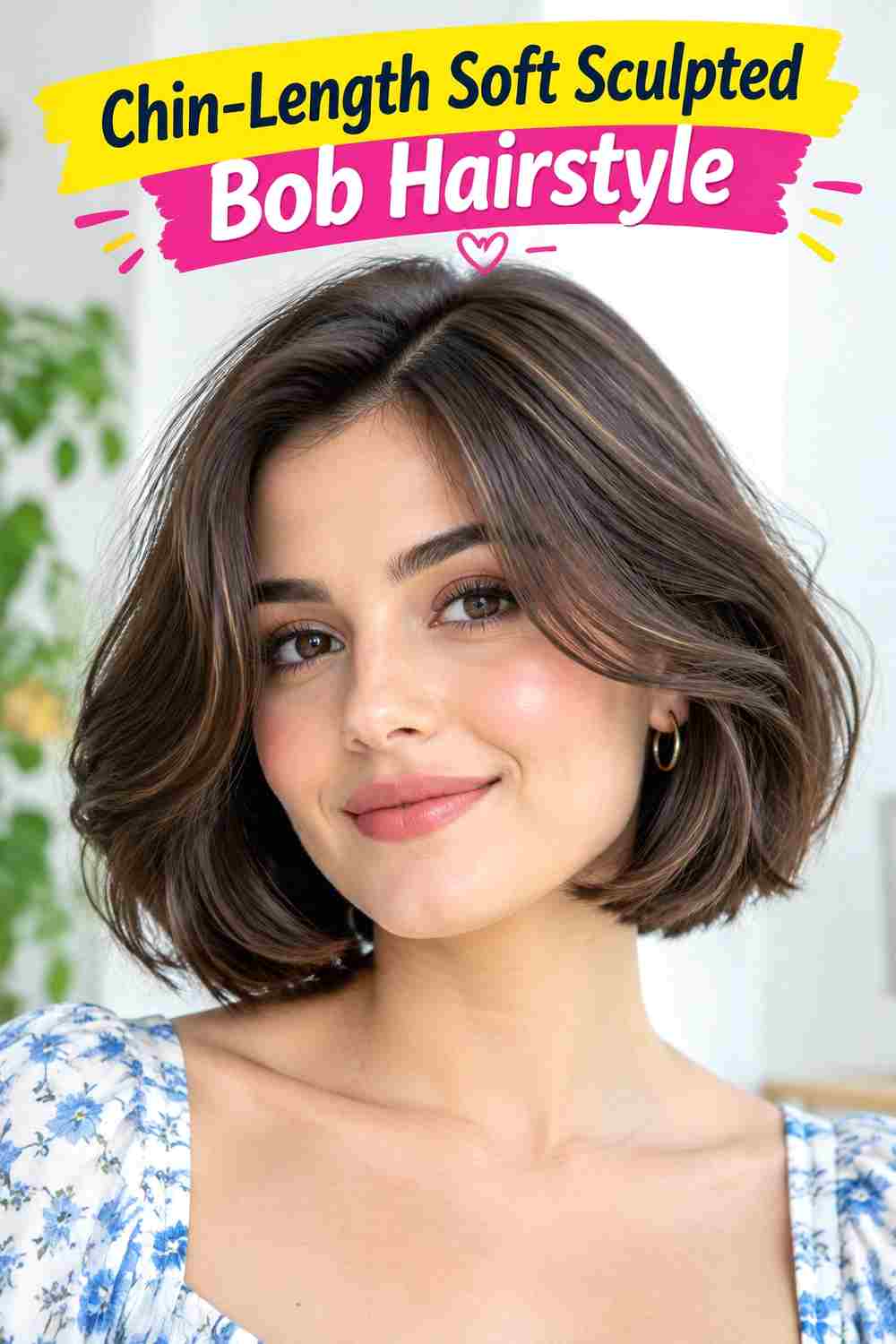
A chin-level perimeter gives this bob a compact base, while a shallow inward curve creates its sculpted finish. The front can remain slightly longer around the cheeks, and minimal layering keeps the lower edge substantial. A center or relaxed off-center part works well because both allow the curved sides to frame the face without relying on a fringe. The ends should bend gently rather than forming a tight under-curl.
Straight and softly wavy textures can show this controlled shape clearly. Apply heat protectant before heated styling, use a medium round brush to create the broad curve, and smooth a small amount of lightweight serum through the ends. A morning refresh may take only a few minutes if the perimeter needs redirecting. A complete wash-day blow-dry takes longer because the root direction and lower curve both need setting.
At the salon, identify the exact dry chin landmark and explain how much perimeter weight you want retained. The sculpted appearance depends on having enough substance for a smooth outline. As the bob grows below the chin, its curve becomes longer and less compact. Reshaping the perimeter restores the proportion without requiring extensive internal layering.
Pro tip:
Direct the round brush slightly forward as you shape the side sections, then release them naturally. This produces a broad cheek-to-chin curve without rolling the ends tightly underneath the jaw.
Make It Work for You:
For lower-density hair, keep the internal layers minimal and preserve a fuller chin-level edge. The sculpted effect can come from styling direction rather than removing extra weight to create movement.
Watch Out For:
Avoid turning the ends too strongly under. A tight bend can make the bob look rigid and visually shorter; use a shallow curve that still allows the perimeter to move naturally.
Side-Parted Soft Sculpted Bob Hairstyle
A side part shifts the sculpted volume toward one side, creating a fuller sweep over one cheek and a closer shape on the opposite side. The perimeter can sit at the chin or lower jaw, while subtle internal shaping prevents the heavier section from falling as a solid block. The front remains long enough to curve naturally into the side rather than behaving like short bangs.
Straight, wavy, and softly curly textures can adapt to this asymmetrical balance. Heat protectant prepares the hair for heat styling, a round brush controls the heavier front, and lightweight styling cream smooths flyaways while preserving movement. Refreshing the part and front may take only several minutes. Full wash-day styling takes longer if the hair’s natural growth pattern prefers another direction.
At the salon, wear your usual side part so the stylist can assess the real distribution of density. Explain where you want the fuller side to curve and where the dry perimeter should finish. As the bob grows, the heavier side can begin lying flatter while the outline drops below its original landmark. Targeted reshaping restores movement without requiring both sides to be treated identically.
Pro tip:
Dry the heavier side from the roots first, then shape the mid-lengths. Establishing the part before curving the ends helps the sculpted sweep hold without needing excessive finishing product.
Make It Work for You:
If your natural part is shallow, use a modest side division instead of forcing a deep sweep. You can retain the asymmetry while keeping everyday root styling much easier.
Watch Out For:
Do not remove extra weight automatically from the fuller side. Parting naturally redistributes hair, so first determine whether the section is genuinely bulky or simply carrying more of the haircut.
Center-Parted Soft Sculpted Bob Hairstyle

A center part creates balanced curves on both sides of a softly sculpted bob. The front sections can begin around the lower cheek and flow into a chin-to-lower-jaw perimeter, leaving the forehead open. Minimal layering keeps the sides smooth, while a broad bend through the mid-lengths gives enough movement to stop the symmetrical shape from looking flat or severe.
Straight and softly wavy hair can display the balanced outline particularly clearly. Apply heat protectant before heat styling, use a round brush to direct each side slightly away and downward, and finish with lightweight serum on the ends. A quick refresh can focus on the part and front curve. Full wash-day styling takes longer when the roots need to be reset into a central division.
At the salon, establish the center part before choosing the front length. Ask for balance in the dry silhouette rather than perfectly identical measurements, since growth direction can change how each side sits. As the haircut grows, the front drops lower and the perimeter loses some compactness. Reshaping those landmarks restores the design while keeping the overall structure simple.
Pro tip:
Set the center part while the roots are damp, then create only moderate lift on each side. Too much root height can overpower the smooth, controlled curves that define the sculpted finish.
Make It Work for You:
If your part naturally falls a little off center, follow it and balance the visible front sections around that line. The bob can still read as evenly framed without forced symmetry.
Watch Out For:
Avoid repeatedly trimming one side because it appears lower. Natural bends and root direction can change visual length, so compare the dry, normally styled shape before removing more hair.
Wavy Soft Sculpted Bob Hairstyle
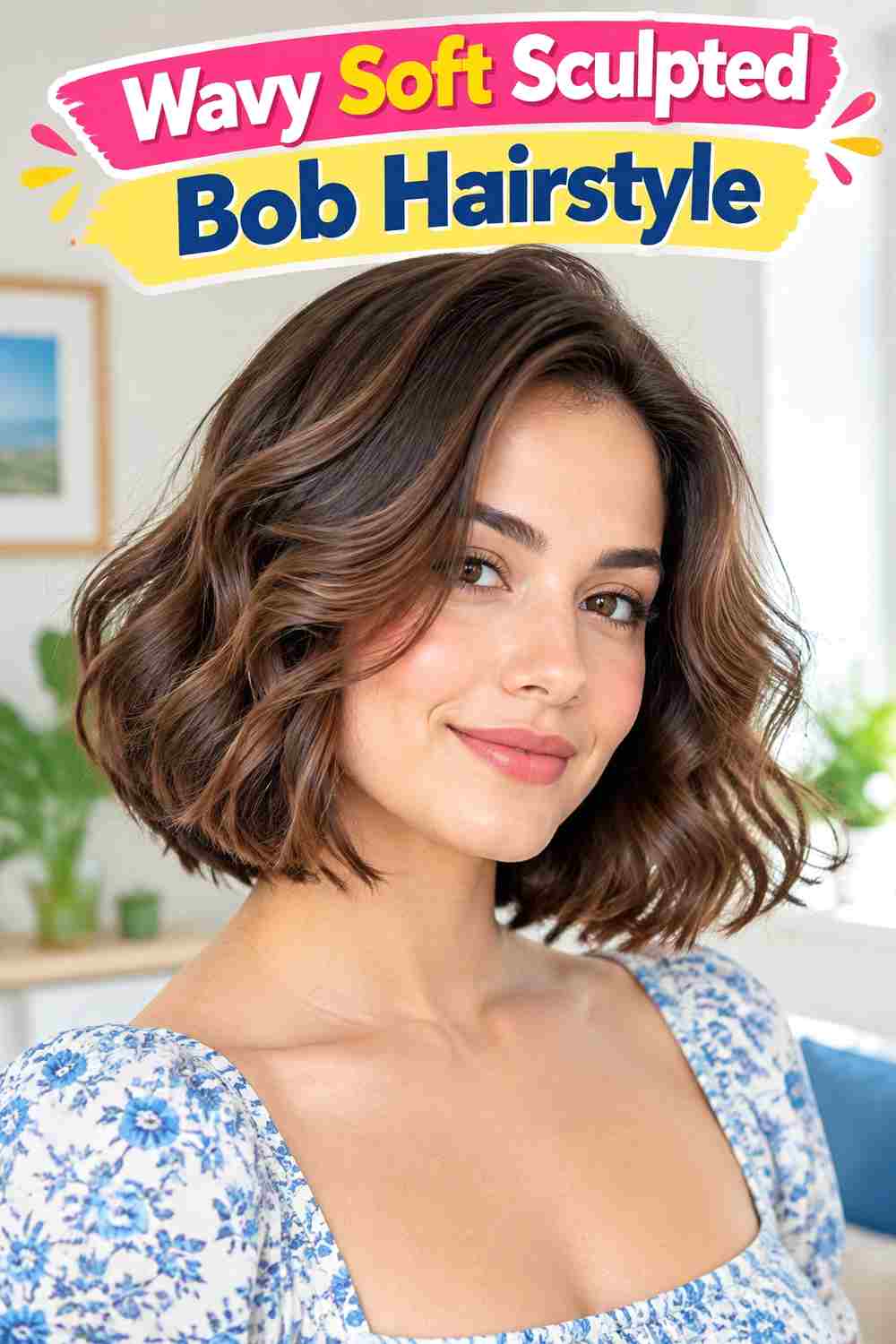
Natural waves create a softer interpretation of sculpting because the shape comes from controlled bends rather than a smooth blow-dried curve. The perimeter can sit between the chin and lower jaw, with longer layers that prevent the waves from stacking heavily at the bottom. An off-center part allows one side to carry slightly more movement while the overall bob remains balanced.
Naturally wavy hair can often use its existing pattern instead of being reshaped completely. Lightweight mousse provides flexible support, curl cream controls frizz, and a diffuser dries the bends without brushing them smooth. A quick refresh may involve dampening only flattened front waves. Full wash-day styling takes longer because the pattern should dry before the final perimeter and volume placement can be judged.
At the salon, identify where the bob should finish with your normal dry wave pattern. Ask for enough perimeter weight to maintain a clear bob outline while allowing movement through the sides. As the cut grows, waves remain visible but volume can shift downward. Reshaping the upper movement and perimeter restores the sculpted balance without requiring the texture to become more polished.
Pro tip:
Encourage the most visible front wave away from the cheek, then let the lower bends settle naturally. One controlled direction near the face can organize the shape without making every wave uniform.
Make It Work for You:
For loose waves, keep the layers longer and rely on diffuser styling for additional shape. Preserving weight helps the bob maintain its perimeter while natural bends provide enough softness.
Watch Out For:
Heavy creams can stretch shallow waves and collapse the sculpted outline. Start with a small amount, especially near the roots, and add more only where frizz needs additional control.
Curly Soft Sculpted Bob Hairstyle
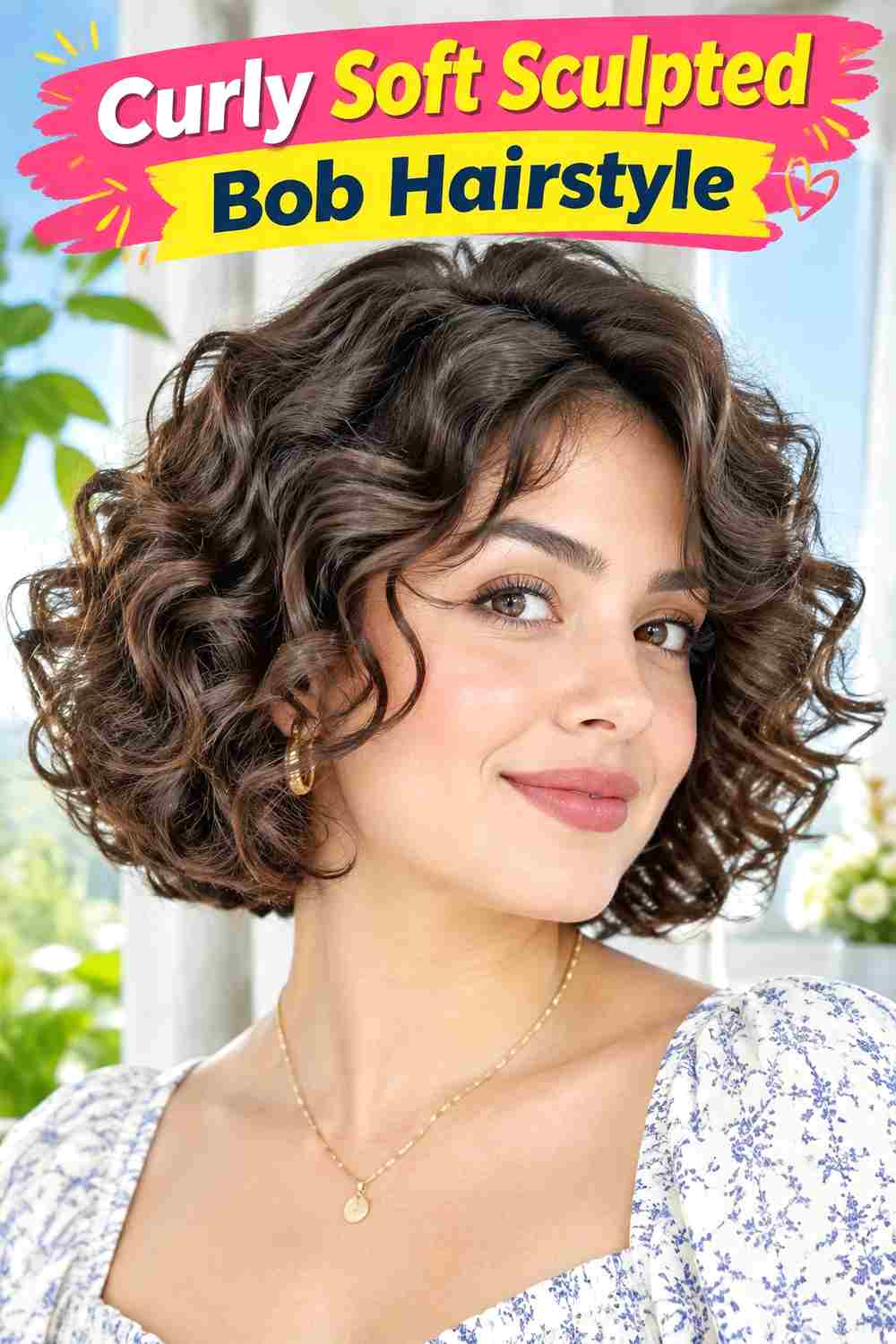
A curly sculpted bob uses layer placement and dry curl volume to create a deliberate silhouette rather than a smooth beveled edge. The perimeter can settle around the jaw or chin, while shorter curl groups around the cheekbones and upper sides prevent all the fullness from collecting at the bottom. A center or side part can adjust where the volume sits.
Curly hair needs the finished dry position considered because shrinkage changes both length and width. Lightweight leave-in conditioner provides slip, curl gel supports grouping, and a diffuser helps set the overall shape. Refreshing a few compressed curls may take only several minutes, while a complete wash, product application, and diffuse requires substantially more time depending on density and drying speed.
At the salon, identify the dry perimeter and where you want the widest part of the silhouette. Dense curls may need thoughtful bulk placement, but indiscriminate thinning can disturb curl groups. As the bob grows, upper curls drop and volume may move toward the lower sides. Reshaping should restore the intended distribution while keeping enough length for the curls to form naturally.
Pro tip:
Diffuse the upper sides with slightly more lift than the lowest curls. Concentrating expansion higher helps maintain the sculpted silhouette without making the entire bob equally wide from roots to ends.
Make It Work for You:
For strong shrinkage, choose the dry jaw or chin landmark first and allow sufficient extra cutting length. The finished bob can remain compact without becoming unexpectedly short around the face.
Watch Out For:
Do not compare stretched curl lengths when checking balance. Individual sections can contract differently, so evaluate the bob’s dry silhouette and volume placement rather than expecting identical measurements.
Curtain Fringe Soft Sculpted Bob Hairstyle
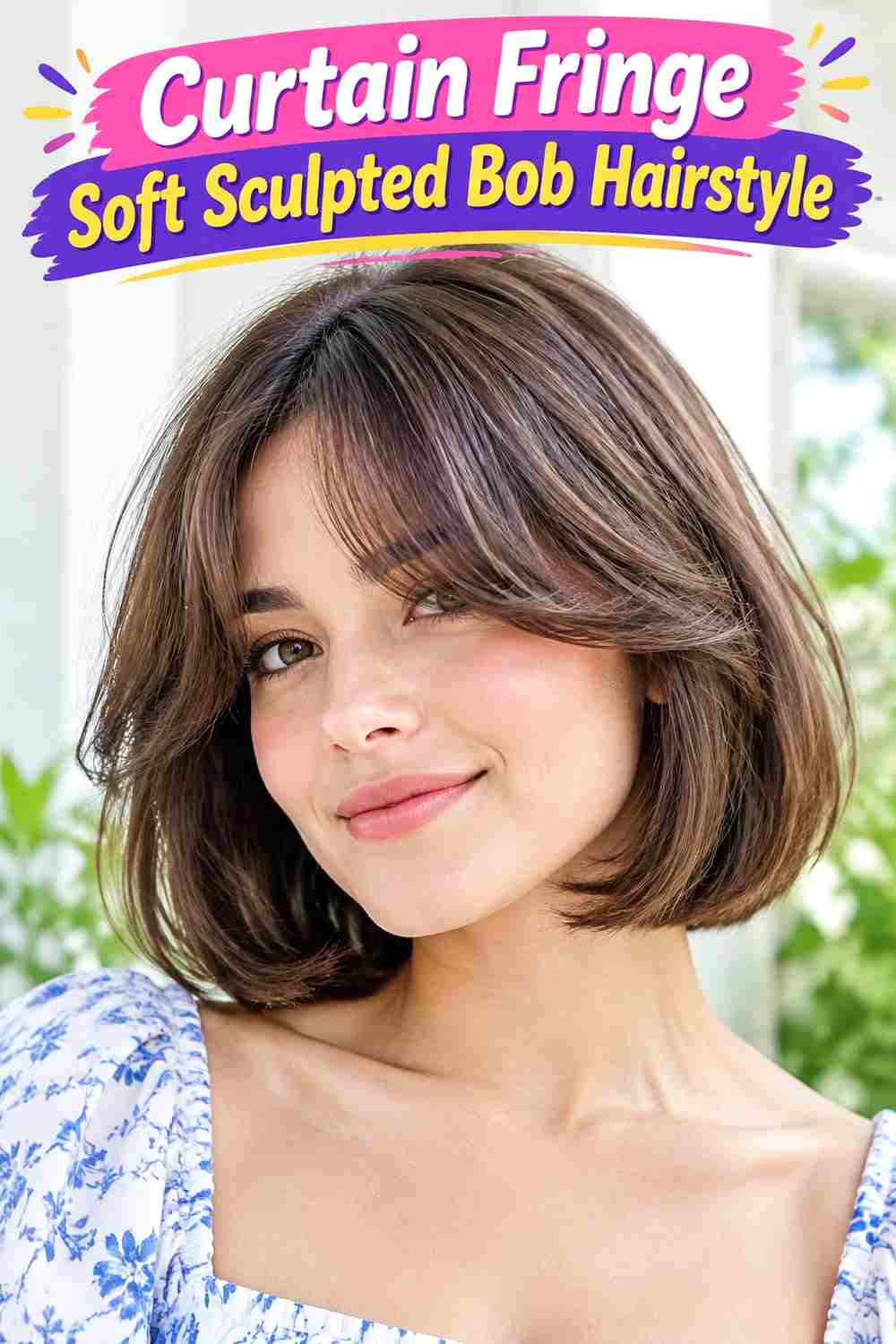
Curtain fringe adds a shorter curved element above the bob’s main perimeter. The center can skim the brows or upper cheeks, while longer corners sweep toward the cheekbones and connect into a chin-level shape. A gentle outward fringe bend contrasts with the softer inward or neutral curve of the lower bob, giving the haircut definition without making it heavily styled.
Straight and wavy textures can show this transition clearly. Apply heat protectant before styling, use a small round brush for the fringe, and finish with flexible hairspray when extra hold is needed. Refreshing only the fringe can be quick. A full wash-day blow-dry takes longer because the center opening and lower bob need separate styling directions.
At the salon, specify the dry center fringe length and where its outer corners should connect with the sides. The fringe usually needs upkeep before the bob because its shortest pieces can enter the eyes sooner. As it grows, those pieces become longer face framing. Preserve the outer corners during maintenance so the transition into the sculpted perimeter remains smooth.
Pro tip:
Shape the curtain fringe first, then style the lower bob. Establishing the outward front movement before creating the perimeter curve prevents the two sections from being accidentally directed into one continuous under-curl.
Make It Work for You:
For lower-density hair, choose a narrower fringe section and keep the bob perimeter substantial. You still gain the sculpted front detail without taking excessive hair away from the sides.
Watch Out For:
Avoid curling the fringe and perimeter with equal strength in opposite directions. Keep both bends broad and shallow so the haircut looks softly coordinated rather than overly set.
Jawline Soft Sculpted Bob Hairstyle
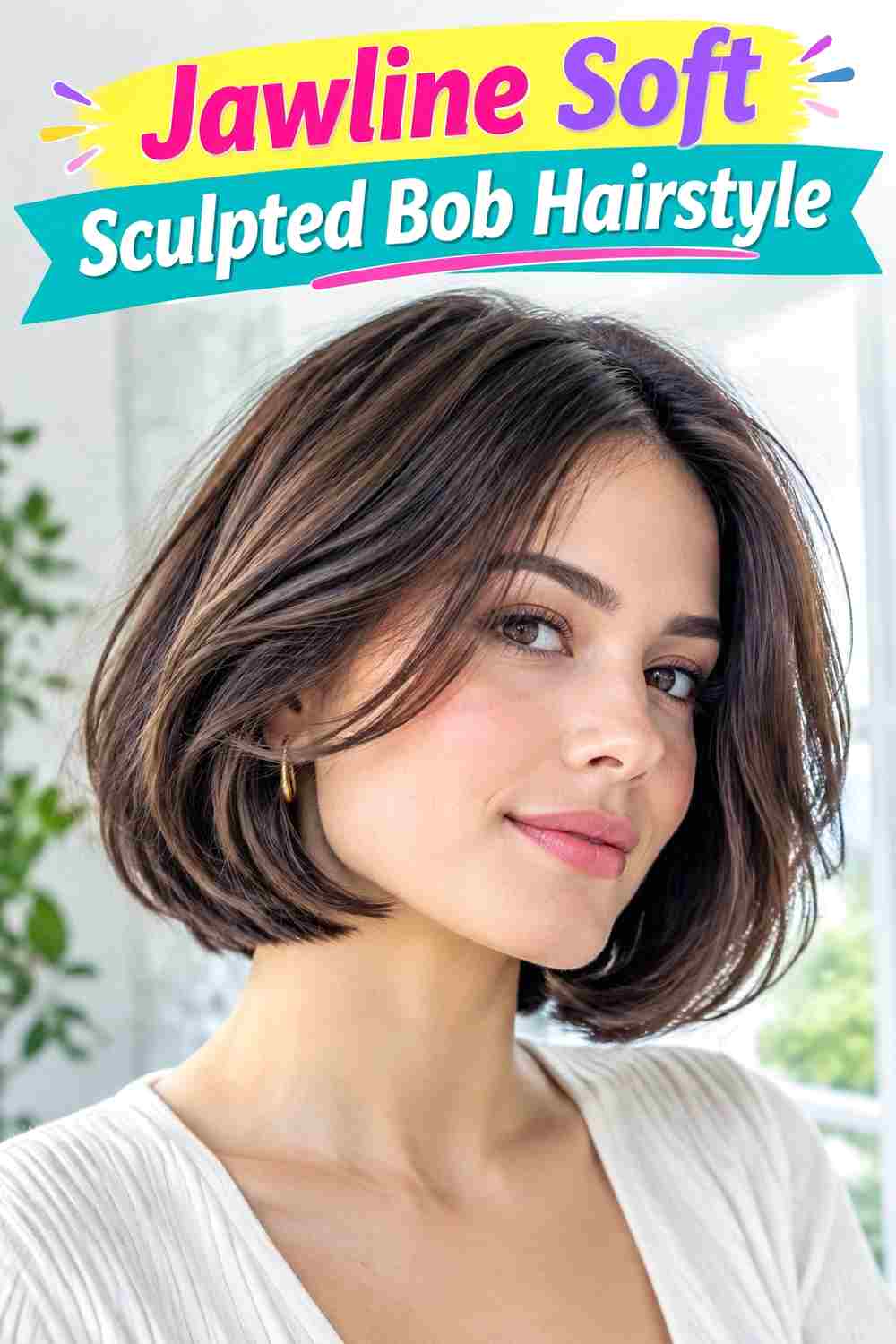
A jawline bob uses the lower face as its defining landmark, with a controlled perimeter that follows or lightly curves toward the jaw. The front can remain fractionally longer, while subtle shaping through the sides creates movement without weakening the edge. A side or center part changes the distribution, but the strongest visual feature remains the relationship between the bob and jaw.
Straight and gently wavy textures can show this compact outline particularly well. Heat protectant is essential before heat styling, a medium round brush creates the broad curve, and lightweight styling cream controls surface flyaways. A quick refresh may involve only redirecting the front. Full wash-day styling takes longer because the perimeter must dry into a consistent position.
At the salon, point to the exact dry jaw landmark rather than relying on a general request for a short bob. Discuss whether you want the front level with the back or slightly elongated. As the cut grows, the perimeter moves toward the chin and neck, changing the sculpted proportion. Reshaping restores the stronger jaw relationship without requiring major changes to the internal structure.
Pro tip:
Use less brush tension near the very ends than through the mid-lengths. This creates a controlled side curve while keeping the lower edge flexible instead of folding it tightly beneath the jaw.
Make It Work for You:
If you prefer less facial emphasis, let the front fall slightly below the jaw. The shape remains compact, but the extra length creates a softer transition around the lower face.
Watch Out For:
Do not choose the finished jawline from wet hair if your texture rises as it dries. Account for natural bend or shrinkage so the perimeter does not settle higher than intended.
Rounded Soft Sculpted Bob Hairstyle
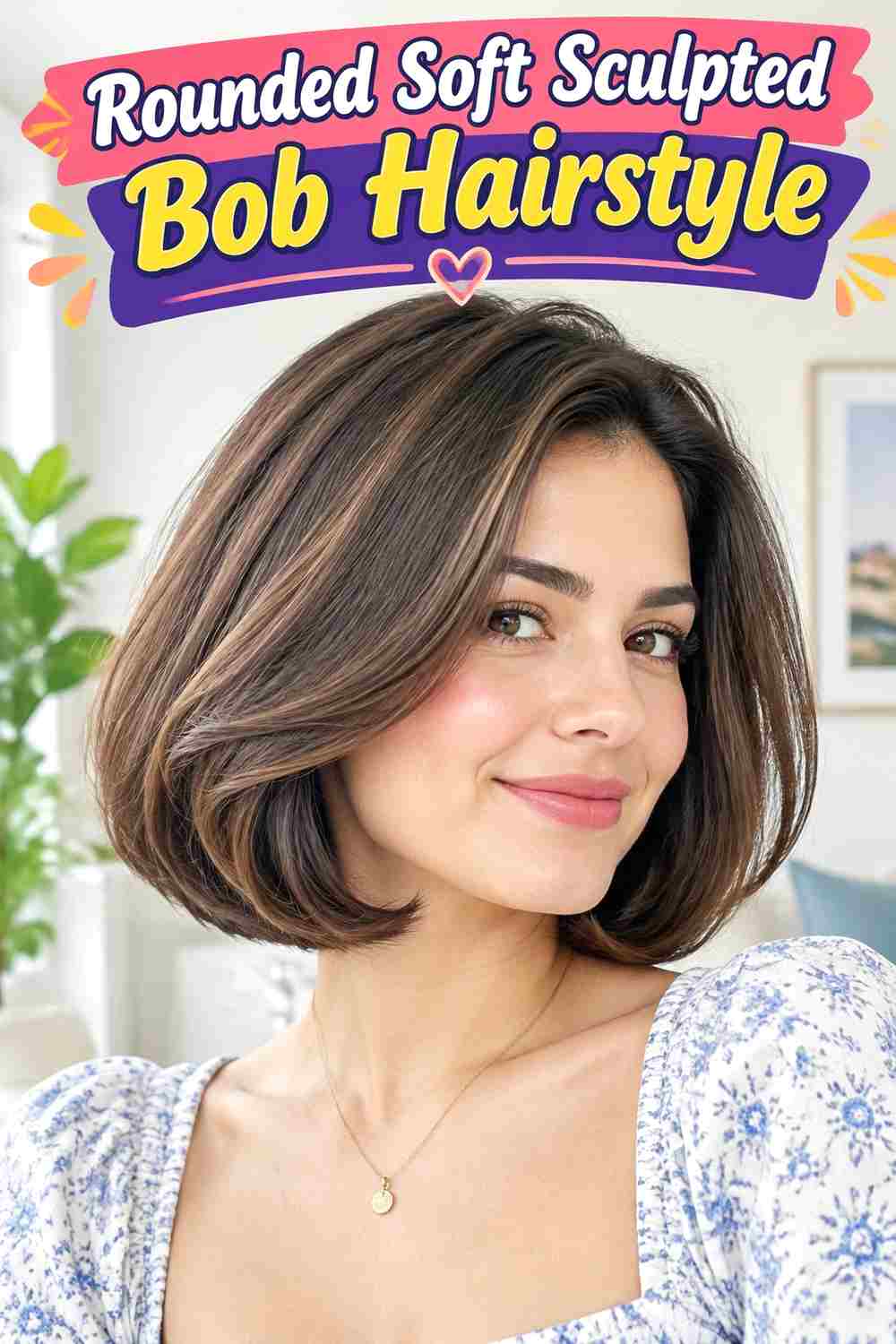
A rounded bob distributes gentle volume through the sides and back while keeping the lower perimeter close enough to maintain a compact outline. The widest point can sit around the mid-cheek or lower sides, then narrow slightly toward the chin. Internal shaping supports the curve, but the finish should remain broad and touchable rather than resembling a tightly rolled-under bob.
Straight, wavy, and softly curly textures can create different versions of the rounded silhouette. Apply heat protectant before heat styling, use a large round brush to build the curve, and finish with flexible hairspray for movable support. A quick refresh can target flattened side sections. Full wash-day styling takes longer because the volume needs to be distributed around the entire head.
At the salon, explain where you want the silhouette to appear widest and how much lower-edge weight you want retained. Dense hair may require targeted bulk management rather than uniform thinning. As the haircut grows, the rounded shape becomes longer and fullness can migrate downward. Reshaping restores the intended curve by adjusting placement rather than simply shortening every section equally.
Pro tip:
Build the strongest curve through the mid-lengths, then reduce tension toward the ends. This creates rounded volume through the sides without producing a rigid perimeter that turns sharply underneath.
Make It Work for You:
For lower-density hair, use longer internal shaping and rely more on styling for roundness. Preserving the perimeter can maintain fullness while still allowing a softly curved overall silhouette.
Watch Out For:
Avoid creating maximum volume at the crown, sides, and ends simultaneously. A sculpted rounded bob needs controlled width placement, not equal expansion through every area of the haircut.
Face-Framing Soft Sculpted Bob Hairstyle

Face-framing sections give a sculpted bob movement near the cheeks while the back and lower perimeter stay comparatively simple. The shortest pieces can begin around the cheekbones, flow toward the jaw, and then meet a chin-to-lower-neck bob. A center or off-center part reveals the progression, while shallow bends keep the frame connected to the main shape.
Straight and softly wavy textures can show these graduated front lengths clearly. Apply heat protectant before heat styling, use a round brush to direct the frame away from the face, and smooth lightweight serum through the ends. A front-only refresh can be relatively quick. Full wash-day styling takes longer when both the face frame and perimeter need coordinated shaping.
At the salon, identify the exact shortest face-framing landmark and how far around the head those shorter sections should extend. Keeping them concentrated near the front preserves more side and back weight. As the frame grows, cheekbone pieces drop toward the jaw and become less distinct. Targeted reshaping can restore the front without unnecessarily changing the bob’s perimeter.
Pro tip:
Give the shortest face-framing piece the clearest outward bend, then make each following section progressively softer. This creates a gradual transition instead of a row of equally flipped layers.
Make It Work for You:
For fine or lower-density hair, keep the shortest frame narrow and close to the face. Most of the perimeter can remain full while a few front sections provide sculpted movement.
Watch Out For:
Carrying short framing layers too far around the head can weaken the bob’s sides. Keep the strongest movement near the face unless you specifically want more extensive internal layering.
Tucked Soft Sculpted Bob Hairstyle

An ear tuck creates asymmetry within a softly controlled bob. One side follows the cheek and jaw with a broad curve, while the opposite side sits behind the ear and exposes the face more fully. The perimeter can finish around the chin or lower jaw, and the front needs enough length to tuck comfortably without being pulled tight.
Straight and wavy textures can make the contrast particularly clear. Heat protectant prepares the hair for heated styling, a paddle brush creates a smooth surface, and lightweight styling cream gives the tucked section flexible control. Re-tucking the side takes seconds during a quick refresh. A full wash-day blow-dry requires more time because the visible side still needs its sculpted curve.
At the salon, explain that the front section must remain long enough to sit behind the ear when dry. The opposite side can be shaped around your preferred cheek or jaw landmark. As the cut grows, the tuck becomes easier while the perimeter loses some compactness. Reshaping the lower outline can restore the bob without sacrificing useful front length.
Pro tip:
Tuck only the section in front of the ear and leave the hair directly behind it loose. This preserves the bob’s volume while still creating the clean asymmetry that defines the finish.
Make It Work for You:
If your hair naturally bends near the temples, follow that direction rather than forcing the tucked section perfectly flat. A little movement can make the style easier to maintain.
Watch Out For:
Avoid cutting the tucked side shorter simply to expose the ear. Extra front length improves anchoring and gives you the option to wear the bob untucked on other days.
Fine Hair Soft Sculpted Bob Hairstyle

Fine strands can create a softly sculpted bob when the haircut preserves enough perimeter weight to make the shape visible. A chin or lower-jaw length works well, with minimal internal layering and a broad bend through the sides. A center or soft side part can adjust volume, while the ends remain relatively full instead of being heavily thinned.
Fine strand diameter is different from low density, so both characteristics should guide the plan. Lightweight mousse provides root support, heat protectant prepares the hair for hot airflow, and a round brush creates the controlled curve. A quick refresh may focus on the roots and front. Full wash-day styling takes longer, although the cut itself should not depend on elaborate shaping to appear substantial.
At the salon, discuss strand thickness and overall density separately. Ask to preserve perimeter weight and identify where you want the curve to begin. As the bob grows, the lower edge may lose its compact appearance before internal movement becomes a problem. A perimeter reshape can restore structure without adding extra layers simply for the sake of creating volume.
Pro tip:
Concentrate root lift near the top and use a broad, shallow curve through the sides. This creates dimension without bending the ends so strongly that the perimeter appears shorter or thinner.
Make It Work for You:
If your fine hair is also dense, you may have room for slightly more internal shaping. Keep checking the perimeter so movement is added without unnecessarily weakening the lower edge.
Watch Out For:
Do not assume more layers will automatically produce more fullness. Excessive removal can reduce visible weight; preserve the bob’s foundation and create additional volume through styling where needed.
Dense Hair Soft Sculpted Bob Hairstyle

Dense hair can create a substantial sculpted bob, but weight needs to be placed carefully so the shape curves instead of expanding into a broad triangle. The perimeter can finish around the chin or lower jaw, with controlled internal movement through bulky areas. The surface stays smooth enough to show the silhouette, while a center or side part changes where the greatest fullness sits.
Straight, wavy, and curly dense hair can all use this concept with texture-specific adjustments. Lightweight styling cream controls surface frizz, a wide-tooth comb distributes product, and a blow-dryer with concentrator can direct the shape when a smoother finish is desired. A small surface refresh may be quick. Full wash-day drying often takes longer because dense interior sections retain moisture.
At the salon, explain where your hair tends to collect bulk and where you want the widest part of the finished bob. Targeted internal weight adjustment can be useful, but indiscriminate thinning may weaken the perimeter. As the cut grows, weight can move toward the lower sides and reduce the sculpted curve. Reshaping should restore distribution while preserving the density that gives the bob substance.
Pro tip:
Dry dense hair in manageable sections so the interior follows the same direction as the surface. Shaping only the outer layer can leave hidden bulk pushing against the intended silhouette.
Make It Work for You:
If you enjoy a fuller bob, keep internal weight removal conservative and focus it only where the shape expands excessively. The haircut can remain substantial while gaining controlled movement.
Watch Out For:
Avoid thinning the entire bob simply because the hair is dense. Removing weight from areas that already sit well can create uneven ends without correcting the specific bulk that affects the shape.
Long Soft Sculpted Bob Hairstyle
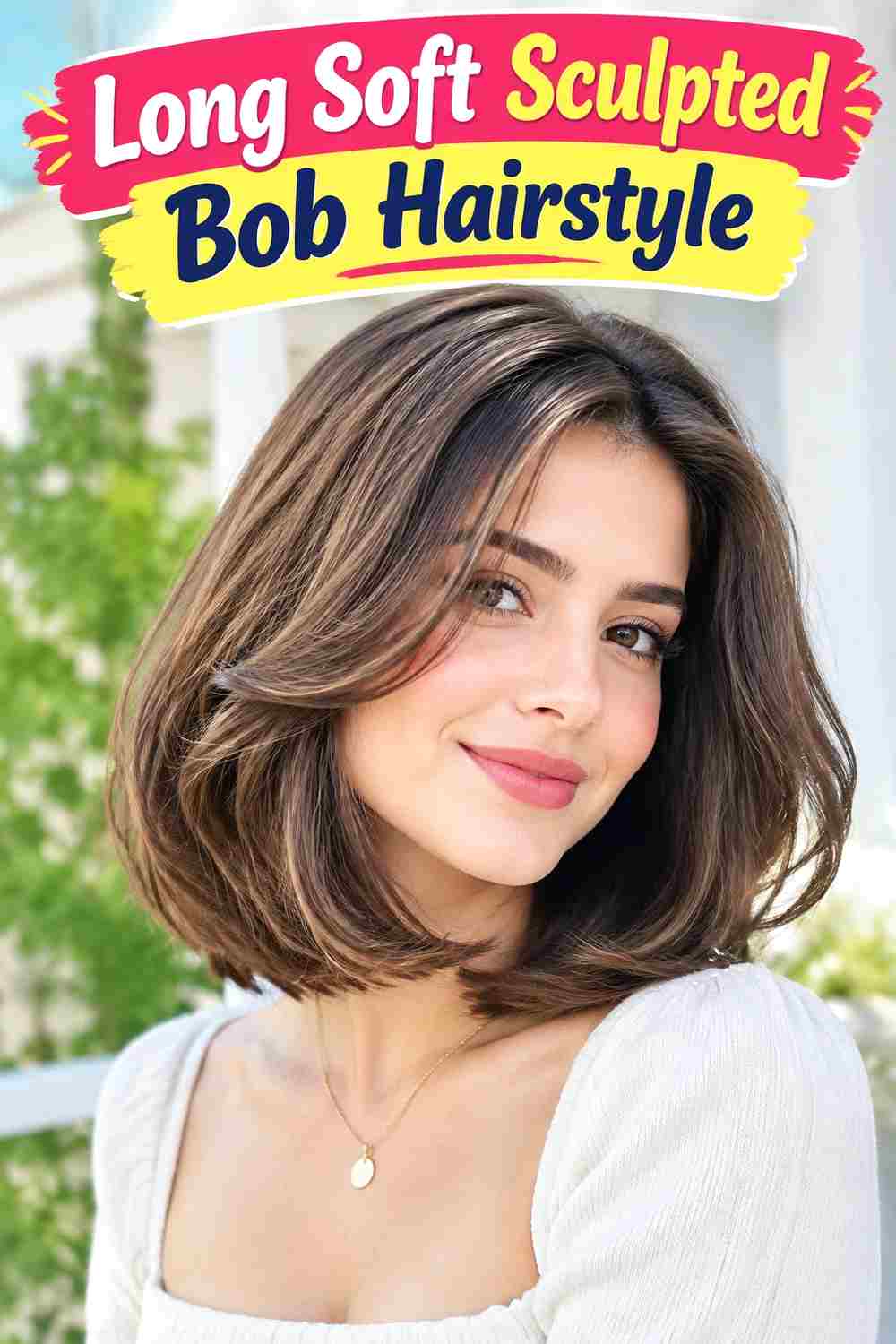
A long bob allows the sculpted curve to unfold over more length. The perimeter can sit near the lower neck or collarbone, with front sections beginning around the jaw and flowing gradually into the sides. A center or off-center part works well, and the ends can bend gently inward or remain neutral while the strongest shaping sits through the mid-lengths.
Straight and wavy hair can display the broad movement clearly. Apply heat protectant before heat styling, use a large round brush for a relaxed curve, and finish with lightweight serum through the longest ends. Refreshing the face frame may be relatively quick. A full blowout takes longer because added length and density increase drying and sectioning time.
At the salon, identify the dry perimeter and shortest front landmark separately. Ask to retain enough lower weight that the haircut still reads as a long bob. As it grows past the collarbone, the sculpted movement can remain attractive, but the proportions begin shifting toward a medium-length layered cut. Reshaping the perimeter restores the bob while most of the overall length can remain.
Pro tip:
Place the strongest curve around the jaw and upper shoulders, then let the lowest ends relax. This keeps the longer shape sculpted without making the entire perimeter roll strongly underneath.
Make It Work for You:
For naturally wavy hair, preserve your broad bends and polish only the front sections when needed. The longer bob can look controlled without requiring a complete blowout after every wash.
Watch Out For:
Too many short layers can undermine the long-bob silhouette. Keep most internal movement elongated so the perimeter retains enough weight to remain the haircut’s visual foundation.
Tousled Soft Sculpted Bob Hairstyle

A tousled version balances deliberate shape with irregular surface movement. The perimeter can sit around the chin or lower jaw, while a few longer layers create bends through the sides. An off-center part suits the relaxed finish, and several sections can move away from the face while neighboring pieces fall closer, preventing the bob from looking uniformly curled.
Straight or naturally wavy hair can create this finish with different levels of effort. Apply heat protectant before using a flat iron for loose bends, then use texturizing spray for dry separation. A quick refresh may involve restyling only two or three visible sections. A full wash-day finish takes longer on naturally straight hair because the irregular movement needs to be built rather than simply encouraged.
At the salon, ask for enough internal movement to support a tousled finish while preserving the bob perimeter. Specify the dry length and where you want the strongest face movement. As the cut grows, tousled styling can disguise some loss of shape, but eventually the perimeter becomes too long to retain its intended proportion. A targeted reshape restores the foundation.
Pro tip:
Alternate the direction of a few loose bends and leave the final ends calmer. Variation through the mid-lengths creates movement while the quieter perimeter keeps the overall bob looking intentionally sculpted.
Make It Work for You:
If your hair already has irregular waves, skip unnecessary heat and define only the sections that collapse. Natural variation can supply the tousled surface while the haircut provides structure.
Watch Out For:
Do not add texture until every section feels equally separated. Too much manipulation or product can obscure the underlying shape; leave some areas smoother so the sculpted bob remains visible.
Conclusion
Soft sculpted bob hairstyle ideas can range from compact jaw and chin shapes to longer collarbone versions. Center parts create balanced curves, while side parts shift volume and produce asymmetry. Curtain fringe and face framing add shorter movement around the front; tucked versions expose one side. Waves, curls, and tousled finishes rely more on natural texture, while smoother bobs show the perimeter clearly.
Density also changes the plan. Fine or lower-density hair often benefits from preserving lower weight, while dense hair may need targeted bulk placement. Consider natural texture, face shape, preferred parting, styling effort, and grow-out before choosing the exact length. The key is controlled movement with enough softness that the haircut remains flexible in ordinary daily styling.
Before Your Salon Visit
Choose one or two favorites and save references that show the silhouette clearly. Discuss your natural texture, density, face shape, preferred bob length, usual part, upkeep, and realistic styling routine. Point out the exact perimeter, fringe or face-framing length, layer placement, volume area, and finished curve you like. If your hair waves or curls, discuss dry shrinkage as well. Explain whether you normally air-dry, diffuse, or blow-dry so the shape suits your everyday routine.
FAQs
What makes a bob look softly sculpted instead of blunt?
A softly sculpted bob uses controlled curves, thoughtful volume placement, or restrained layering while maintaining a recognizable perimeter. A blunt bob emphasizes a stronger continuous lower edge. The two ideas can overlap, but sculpting usually introduces more directional movement around the sides, front, or mid-lengths.
Can a soft sculpted bob work with curly hair?
Yes. Curly hair can create the sculpted effect through dry layer placement and controlled volume rather than a smooth blow-dried curve. Plan the perimeter according to shrinkage and decide where the widest part should sit. Curl groups should be assessed in their normal dry state when judging the final balance.
Does a sculpted bob need heat styling every day?
Not necessarily. Natural waves or curls may already provide enough shape, and some straight textures hold a broad curve after wash-day styling. Quick refreshes can focus on the front or perimeter. If you use heated tools or hot airflow, apply heat protectant rather than repeatedly heating sections that already sit correctly.
When should a soft sculpted bob be reshaped?
Watch the haircut’s landmarks instead of following one universal timetable. Reshaping may help when a jaw or chin perimeter drops noticeably, face-framing pieces merge into the sides, or volume shifts toward an unwanted area. Daily styling difficulty alone does not always mean the haircut needs more layers or more length removed.