14 Plum Noir Hair Color Ideas

Plum noir hair combines the depth of near-black or deep brunette tones with visible purple, wine, or plum reflections. The result can read almost dark indoors and reveal more violet dimension in brighter light. Placement changes the effect considerably: a blunt bob shows a broad, uninterrupted surface, while layers, waves, curls, bangs, and face-framing panels break the darker color into moving sections. Plum can sit throughout the hair, appear only toward the ends, or emerge as ribbons against an even deeper base.
Straight hair tends to show smooth transitions clearly, while waves and curls separate plum tones into smaller highlights and shadows. Dense hair can carry hidden panels or multiple ribbons, whereas lower-density hair may look fuller with broader color placement rather than many narrow sections. Face-framing color can also be adjusted in width and brightness without changing the entire head.
Plum noir hair color can require very different maintenance depending on your starting shade and desired visibility. A subtle dark blend may grow out quietly, while brighter violet sections can need more frequent tonal refreshing. Styling effort is separate from color upkeep, so compare each idea by placement, texture, finish, and daily routine.
Quick List
- Plum Noir Glass Bob Hairstyle
- Rooted Plum Noir Melt Hairstyle
- Plum Noir Money Piece Hairstyle
- Black Plum Ribbon Waves Hairstyle
- Plum Noir Balayage Layers Hairstyle
- Velvet Plum Noir Lob Hairstyle
- Plum Noir Peekaboo Hairstyle
- Plum Noir Curly Halo Hairstyle
- Plum Noir Ombré Lengths Hairstyle
- Plum Noir Curtain Bangs Hairstyle
- Plum Noir Underlayer Shag Hairstyle
- Smoky Plum Noir Pixie Hairstyle
- Plum Noir Dip-Dye Ends Hairstyle
- Soft Plum Noir Brown Blend Hairstyle
Plum Noir Glass Bob Hairstyle
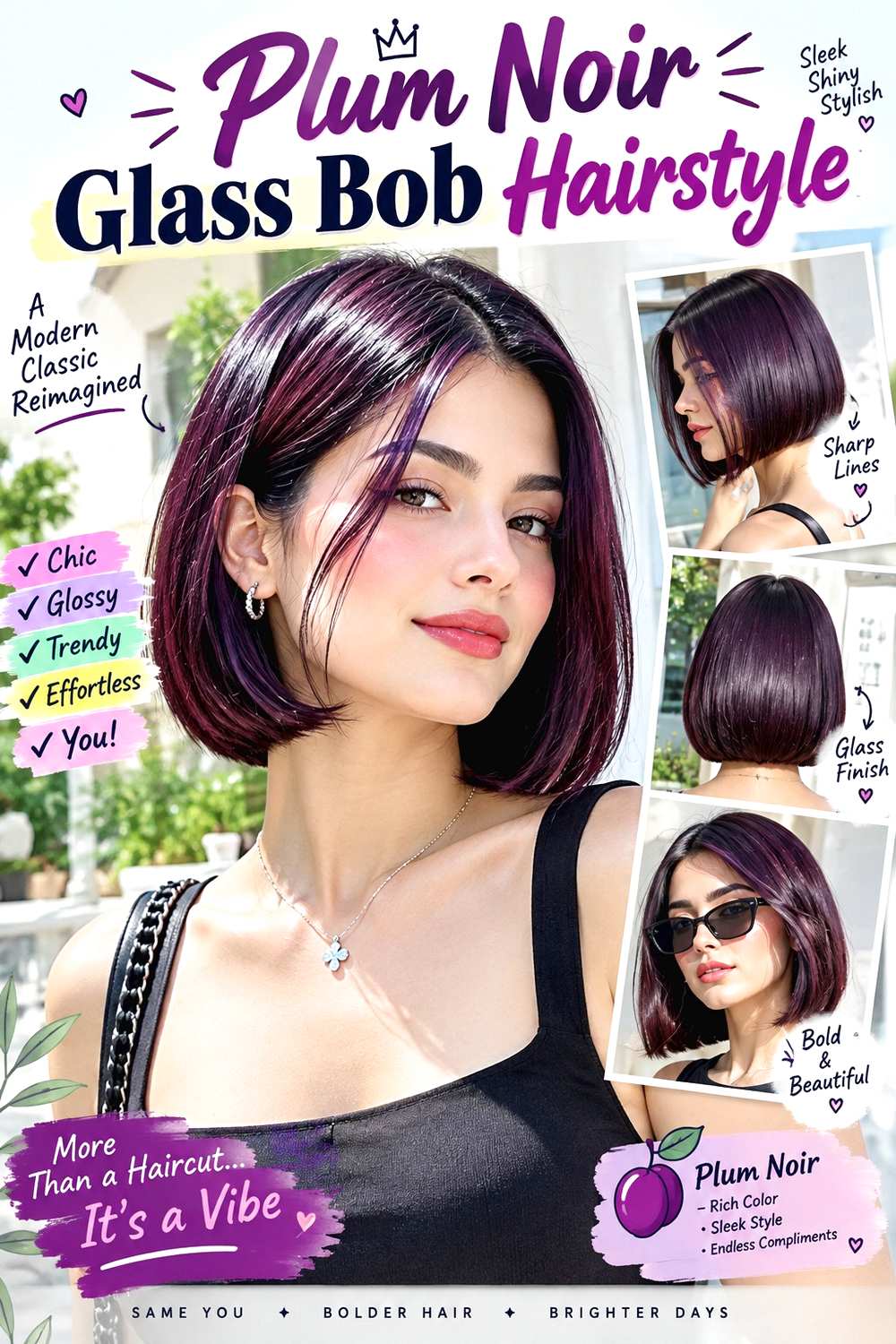
A jaw-length bob gives plum noir a smooth, uninterrupted surface where subtle purple reflection can become the main detail. Keeping the perimeter firm and the visible layering minimal helps the color look dense rather than broken into small pieces. A center part creates a balanced shape, while a slightly off-center part shifts more weight to one side. The finish can be straight and reflective or softly bent through the mid-lengths, with the ends remaining compact.
This option can work especially well for straight or gently wavy hair, although denser hair may need carefully placed internal weight reduction so the bob does not spread too widely. A color-safe shampoo helps limit unnecessary fading, a smoothing conditioner keeps the surface manageable, and heat protectant is useful when heat is used for the polished finish. A short refresh between washes may only involve resetting the part and smoothing the ends; a complete wash and finish takes longer according to density and natural texture.
At the salon, explain how dark you want the base to appear in ordinary light and how much visible plum reflection you want in brighter conditions. Refresh the tone when it becomes browner or flatter than you prefer.
Pro tip:
Check your chosen plum noir reference in indirect daylight before your appointment. Dark violet tones can look nearly black in shadow, so neutral light reveals the intended reflection more clearly.
Make It Work for You:
If your hair is naturally wavy, keep the strong bob perimeter but allow gentle bends through the middle. The color will gain dimension without losing the solid shape that defines the idea.
Watch Out For:
Too much thinning near the bottom can make a dark bob look sparse. Ask to preserve enough perimeter weight so the plum surface remains visually full.
Rooted Plum Noir Melt Hairstyle

A rooted melt keeps the deepest color near the scalp and gradually reveals more plum through the upper and middle lengths. On shoulder-length or longer hair, the transition can remain soft enough that there is no obvious horizontal line. Loose waves make the changing tones easier to see, while straight styling produces a smoother gradient. Long face-framing pieces beginning near the jaw can carry slightly brighter plum forward without making the root area equally vivid.
This placement can be useful when you prefer a darker grow-out area or want less contrast as new roots appear. Your natural and previously colored base influences how visible the plum can become, so the result should be planned around the actual starting color. A gentle color-safe cleanser supports wash-day care, a moisturizing mask helps treated lengths remain flexible, and a wide-tooth comb reduces rough detangling. A quick refresh may involve reshaping only the front; a full wash and wave set requires more time.
Ask your colorist exactly how far the deep root should extend and where you want the plum to become clearly visible. If the transition travels too far down, the result may read mostly black or brunette rather than as a balanced plum melt.
Pro tip:
Wear your normal part when discussing the root transition. Changing the part can expose different sections and make the darker root area appear wider or narrower than expected.
Make It Work for You:
For lower-density hair, choose a broad, gradual transition rather than many tiny contrasting pieces. The softer placement keeps the plum dimension while maintaining a more continuous surface.
Watch Out For:
Do not rely on the phrase “shadow root” alone. Show where you want the darker area to finish so the balance between noir and plum stays intentional.
Plum Noir Money Piece Hairstyle

A plum money piece places brighter violet-red color directly around the face while the rest of the hair remains deeper noir, black-plum, or brunette. On medium and long hair, two front panels can extend from the part through the ends, creating a strong vertical accent. A center part makes both sides equally visible, while a side part allows one section to dominate. Soft waves beginning around the cheekbones help the brighter strands separate from the darker background.
This design suits someone who wants visible plum without coloring every section to the same intensity. Panel width matters as much as shade, particularly on lower-density hair where an extremely broad section may remove too much darkness from the front. A color-safe shampoo supports both tones, a lightweight conditioner keeps the face-framing pieces pliable, and heat protectant should be included when heat is used for waves. Resetting only the front pieces can be a quick refresh; styling the whole head takes longer.
At the salon, show exactly how wide you want each money piece when the hair falls naturally. Starting color affects the achievable brightness, so discuss realistic contrast rather than expecting an identical result on every base. Refresh when the front loses the amount of plum visibility you want.
Pro tip:
Separate the money pieces before styling the rest of your hair. Shaping them independently helps the plum remain visible instead of disappearing into larger sections around the face.
Make It Work for You:
If strong panels feel too bold, narrow each plum section while keeping it continuous from root area to ends. You preserve the face-framing idea with less contrast.
Watch Out For:
Panels that are too wide can dominate the entire front view. Agree on their width using your usual part before any color placement begins.
Black Plum Ribbon Waves Hairstyle
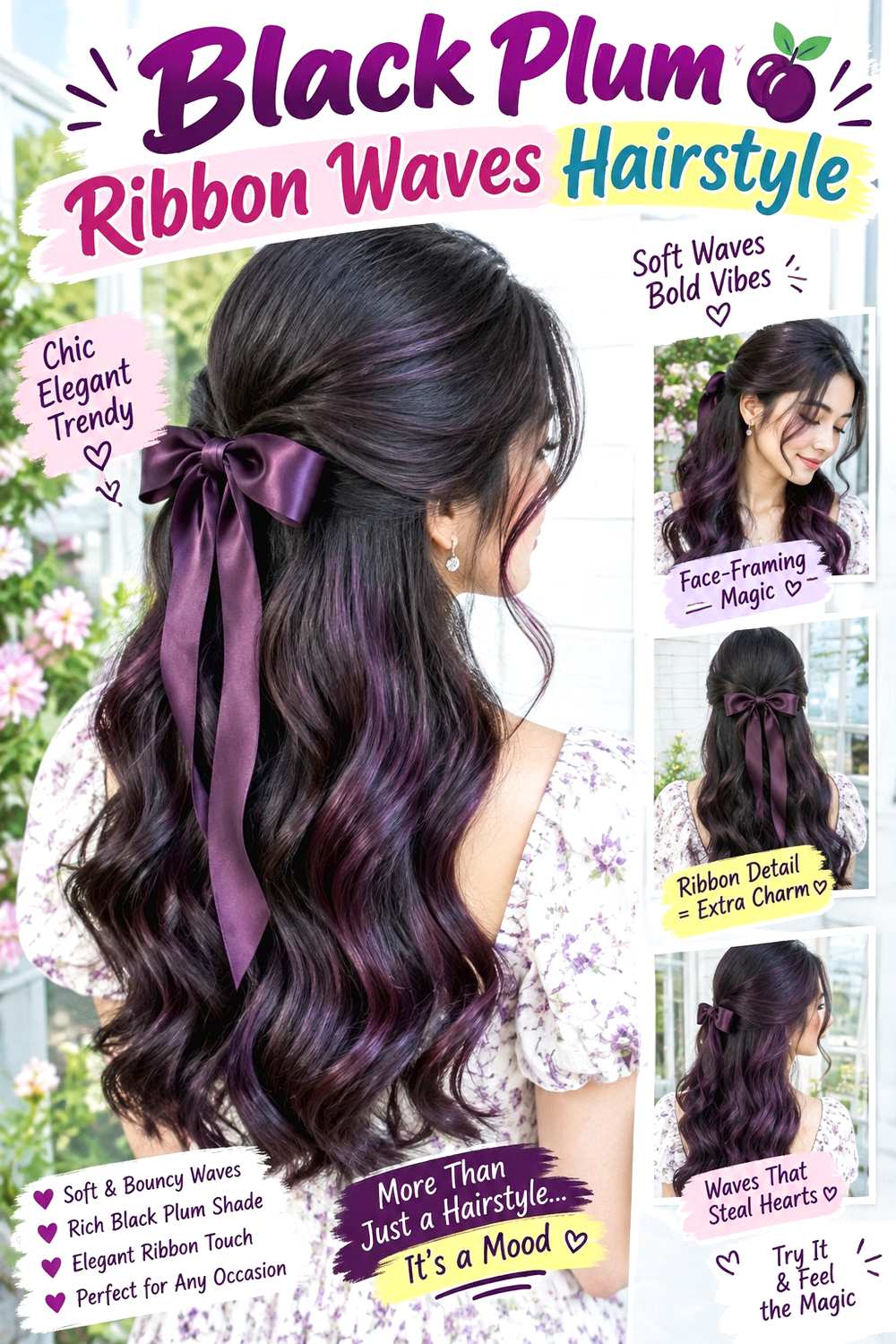
Black-plum ribbons create narrow but visible streaks of violet depth across a near-black or very dark base. On long hair, the contrast becomes most obvious when broad waves turn the surface and reveal different sections. The ribbons can begin slightly below the root for a softer transition, then repeat through the mid-lengths and ends. Long layers around the collarbone can expose more of the colored pieces without making the haircut itself heavily layered.
This approach works well when you want dimension rather than one flat plum shade. Straight hair can also carry the design, although wider ribbons usually remain more visible on a smooth surface than very fine sections. A color-safe shampoo helps protect the dark and plum tones, a lightweight leave-in conditioner improves slip through longer lengths, and heat protectant is important when heated tools create the waves. A short refresh can focus on the front bends; a complete wave set takes longer depending on length and density.
Ask your colorist where you want the strongest plum ribbons to appear from the front and how much dark base should remain between them. That spacing is what keeps the color dimensional. As the plum softens, decide whether you prefer the quieter contrast or want selected ribbons refreshed.
Pro tip:
Ask to see the planned ribbon spacing with your hair resting over both shoulders. That front view shows whether enough plum will remain visible during everyday movement.
Make It Work for You:
For very straight hair, choose slightly broader plum ribbons with clear dark spaces between them. The color remains readable without depending on waves to separate each section.
Watch Out For:
Too many highlighted ribbons can erase the noir background. Preserve intentional dark areas so the plum pieces still have enough contrast to stand apart.
Plum Noir Balayage Layers Hairstyle

A balayage-style placement can move plum gradually through the outer lengths while preserving a deeper base underneath. On hair past the shoulders, brighter plum can appear around the face and through selected mid-lengths, with richer noir sections providing depth between them. Long layers beginning near the collarbone allow the painted areas to shift as the hair moves. Soft, irregular waves emphasize the variation, while straighter styling makes the blend appear more continuous.
This idea can suit medium to dense hair particularly well because there is room for both dark depth and visible plum sections, although placement can be adapted for lower density. Starting color and previous processing determine how vivid the plum can reasonably become. A color-safe shampoo reduces unnecessary stripping, a nourishing hair mask supports the treated lengths, and heat protectant belongs in the routine when heat is used to define movement. A small refresh may involve reshaping a few outer pieces, while full wash-day styling takes longer.
At the salon, avoid asking only for “plum balayage.” Point to where you want the brightest color—around the face, mid-lengths, or ends—and how much dark base should remain visible. The placement should still look intentional as the color gradually softens.
Pro tip:
Save one reference that shows the hair from the back as well as the front. Balayage placement can look balanced from one angle yet much darker from another.
Make It Work for You:
If your ends are sparse, keep the strongest plum dimension higher through the mid-lengths and preserve a fuller lower outline rather than fragmenting every end into narrow pieces.
Watch Out For:
Over-lightening every surface section can remove the depth that makes the design dimensional. Keep enough noir between brighter areas to preserve contrast and movement.
Velvet Plum Noir Lob Hairstyle

A collarbone-length lob gives plum noir more movement than a short bob while retaining a strong, polished outline. The color can stay nearly uniform from roots to ends, with only subtle variation where the surface catches light. A center part produces a clean, balanced shape, and a soft side part creates more volume through one front section. Broad bends beginning below the jaw keep the roots relatively smooth and prevent the silhouette from becoming too wide.
This design works across several textures because the defining feature is the dense plum surface rather than one exact finish. Fine strands can benefit from a fuller bottom edge, while dense hair may need controlled bulk reduction inside the shape. A color-safe shampoo helps maintain the plum reflection, a smoothing conditioner keeps the lengths manageable, and heat protectant is useful for a heat-styled bend. A quick refresh may involve shaping only the front and ends; a full wash and polished finish takes longer.
Tell your stylist where you want the lob to finish when dry and whether you prefer a blunt edge or slight softness at the perimeter. With the colorist, explain whether “noir” should dominate indoors or whether visible plum should remain obvious in ordinary room light.
Pro tip:
When styling waves, keep the roots smoother and place the bend lower through the lob. This preserves the clean silhouette while letting the plum surface catch more light.
Make It Work for You:
For thicker hair, ask whether discreet internal weight adjustment would help the lob sit closer to the head while preserving the strong outer edge and dark plum finish.
Watch Out For:
Heavy oils applied close to the scalp can flatten the shape quickly. Concentrate richer smoothing products mainly through the lengths and ends where they are needed.
Plum Noir Peekaboo Hairstyle

Hidden plum panels beneath a noir top layer create color that appears when the hair moves, lifts, or is tucked behind the ears. Medium to long hair gives the upper sections enough length to conceal much of the purple tone when worn down. The hidden color can sit near the nape, behind the ears, or across a broader lower section. A half-up style reveals much more plum, while a loose down style keeps the effect subtle.
Peekaboo placement works best when visibility is planned around your density and usual styling habits. Very dense upper layers can hide nearly everything, while lower-density hair may expose the plum more consistently. A color-safe shampoo supports the hidden sections, a leave-in conditioner keeps longer treated lengths easy to separate, and a wide-tooth comb helps detangle without unnecessary pulling. Changing from down to half-up can be a quick styling refresh; wash-day care depends on length and texture.
Ask your colorist exactly how much plum should show when your hair is resting naturally and where the panel should begin. The starting color will affect brightness. As the hidden color fades, you can often choose whether to restore high contrast or allow it to become more understated.
Pro tip:
Bring reference images showing the hair both down and lifted. That comparison makes it easier to communicate exactly how hidden or visible you want the plum section.
Make It Work for You:
On shorter hair, keep the plum panel close to the nape or behind the ears, where enough upper hair can cover it while still allowing deliberate flashes.
Watch Out For:
Placing the bright section too close to the surface can remove the peekaboo effect. Check how your regular part exposes the upper layers before choosing placement.
Plum Noir Curly Halo Hairstyle

Curly and coily textures break plum noir into natural highlights and shadows because each curl reflects light at a different angle. A rounded shoulder-length shape can distribute the tone evenly around the head, while slightly brighter plum on selected outer sections creates extra definition. Face-framing curls may finish around the cheekbones or jaw, but their length should be judged in the dry, settled shape because shrinkage varies from person to person.
This design can work across densities, provided the color placement follows how the curls group rather than treating the hair as one flat surface. Starting color affects how bright the plum sections can become, especially if substantial lightening would otherwise be needed. A moisturizing color-safe cleanser supports gentle washing, a curl gel encourages defined grouping, and a diffuser can dry the curls with less disturbance when used appropriately. Refreshing a few outer curls between washes is relatively quick; full detangling, styling, and drying can take much longer.
At the salon, explain which curls you want to appear brighter around the face and crown. If a haircut adjustment is involved, discuss the desired dry length and bulk placement separately from the color so both decisions suit your natural pattern.
Pro tip:
Judge the final color after the curls are completely dry. Shrinkage and curl grouping can change which plum sections sit on the surface and which remain underneath.
Make It Work for You:
For a softer effect, keep the root and inner curls darker while placing brighter plum selectively across the outer halo, preserving depth without coloring every curl equally.
Watch Out For:
Do not choose face-framing length from stretched hair alone. Ask how those curls settle dry so the finished placement stays close to your preferred point.
Plum Noir Ombré Lengths Hairstyle

A plum noir ombré begins with very dark roots and upper lengths, then gradually reveals more purple toward the lower half. On long hair, the transition has enough space to move from near-black through deep plum before reaching brighter violet-red ends. Long layers can help expose different levels of the gradient, while broad waves make the change more obvious. Straighter styling creates a cleaner, more graphic progression from dark to plum.
This option is useful when you want vivid color concentrated away from the scalp. Starting shade, previous color, and end condition all affect how bright the lower section can safely and realistically become. A color-safe shampoo helps reduce unnecessary fading, a rich conditioner supports older ends, and heat protectant should accompany heated styling. Rearranging the front and smoothing the lower lengths can be a quick refresh; washing and setting long hair is a larger task.
At the salon, point to the exact height where you want visible plum to begin. A transition starting near the chin gives a very different balance from one beginning below the shoulders. As the ends soften, decide whether you like the muted result or want the brighter lower section restored without automatically changing the dark root area.
Pro tip:
Use a saved photo to mark the transition point before your appointment. “Plum toward the ends” can describe very different proportions depending on total hair length.
Make It Work for You:
On medium-length hair, begin the gradient slightly higher so there is enough room to show both the noir base and plum ends without compressing the transition.
Watch Out For:
A narrow transition zone can resemble a hard horizontal band. Allow enough blending space for the dark base to move gradually into the brighter plum.
Plum Noir Curtain Bangs Hairstyle
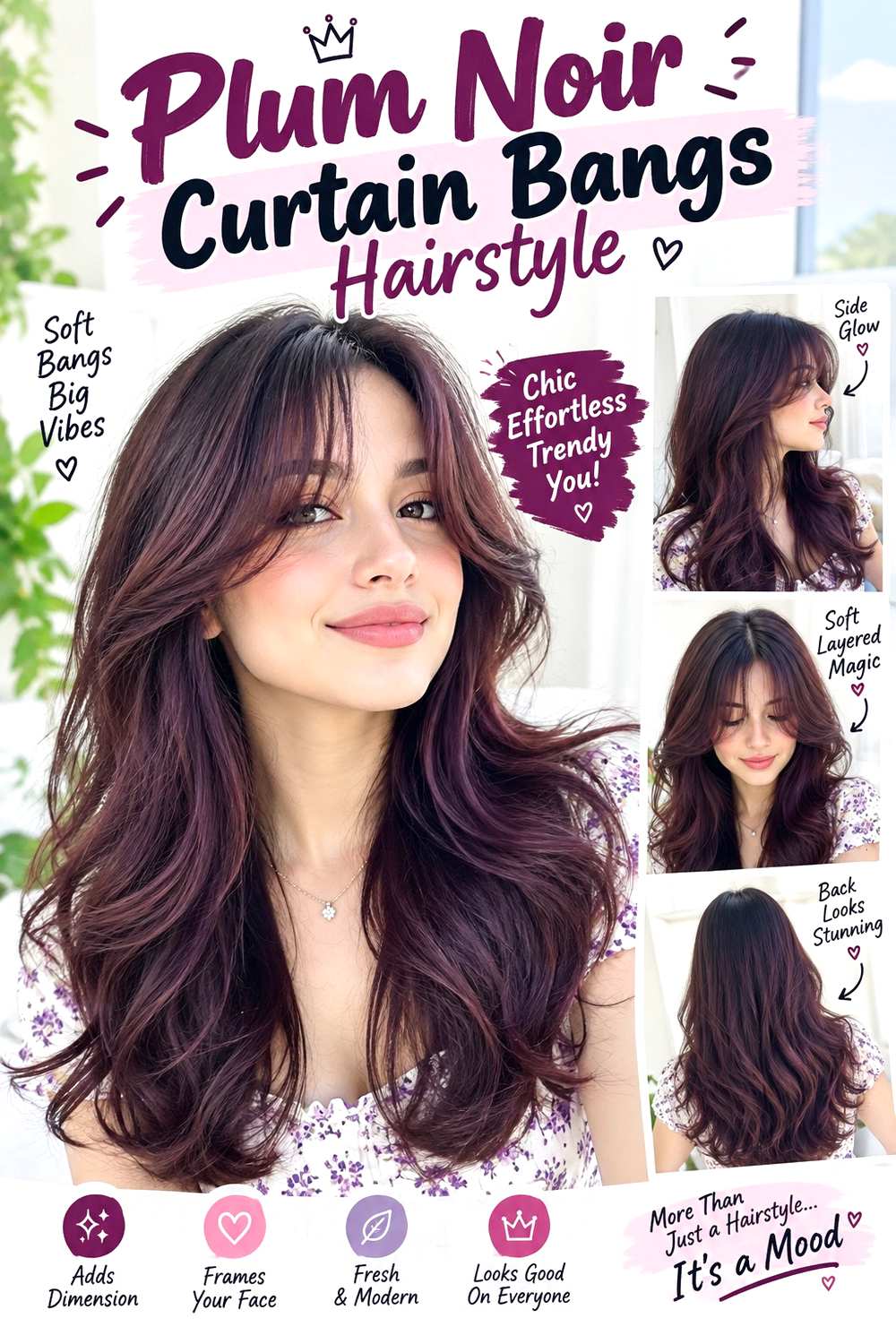
Curtain bangs bring plum noir directly around the eyes and cheekbones, making the color visible even when the rest of the hair stays relatively dark. The shorter center can skim the brows or sit slightly lower, while the outer corners lengthen toward the cheekbones and blend into face-framing sections. A middle part creates the clearest split, though an off-center opening can work better when that follows natural growth direction.
Fringe maintenance is separate from color maintenance, so this option suits someone willing to manage both. Straight and wavy textures can show the color smoothly, while curly hair needs the finished fringe length judged after shrinkage. A color-safe shampoo helps maintain the plum tone, a small round brush can redirect the fringe during drying, and heat protectant is necessary when heat is used for shaping. Refreshing only the bangs is usually much quicker than styling the full head.
At the salon, specify whether the fringe should carry the brightest plum or blend into a darker overall shade. Also point to the exact dry length you want through the center and outer corners. Trim when the fringe stops opening or framing the way you prefer rather than following a fixed calendar.
Pro tip:
Reset the fringe soon after it becomes damp. Directing the roots before they dry in the wrong position makes the center opening easier to control.
Make It Work for You:
For curly hair, keep the outer corners longer and assess the center when dry. This preserves the curtain shape while respecting shrinkage and natural curl grouping.
Watch Out For:
Cutting the center dramatically shorter can disconnect it from the sides. Keep enough gradual length through the outer corners for a continuous face-framing shape.
Plum Noir Underlayer Shag Hairstyle
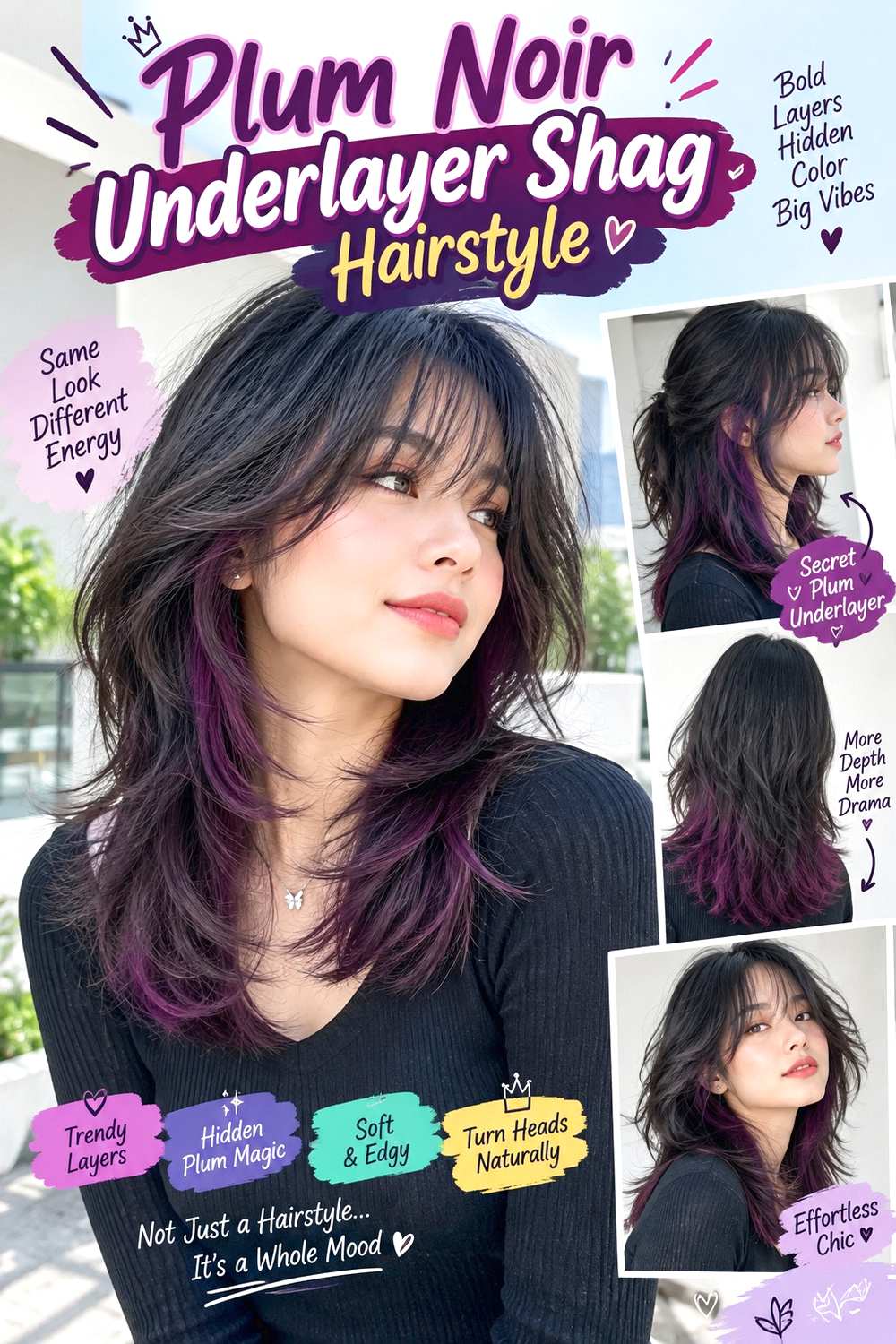
A shag exposes hidden plum color through its shorter layers, making an underlayer more active than it would be beneath a one-length cut. The upper surface can stay near-black while purple appears through the nape, sides, and lower sections as the layers separate. A parted fringe and shorter crown create movement around the top, while shoulder-length or longer ends preserve enough space for the dark-to-plum contrast.
This pairing suits people who enjoy visible texture and color that changes with motion. Dense hair can support multiple layers, but lower-density hair generally benefits from keeping more weight through the perimeter. A gentle color-safe cleanser protects the plum sections, a lightweight leave-in conditioner supports separation, and a texturizing spray can define the shag without requiring a rigid finish. Refreshing the crown and front may be quick; a complete wash and restyle is more involved.
At the salon, specify how much plum you want visible when the hair hangs naturally instead of only when it is lifted. Also discuss the crown-layer starting point independently from the color. The haircut may need reshaping before the plum itself needs refreshing, so treat those maintenance schedules separately.
Pro tip:
Ask to see the color after the upper layers fall naturally into place. This shows whether enough plum remains visible during normal movement rather than only when lifted.
Make It Work for You:
If your ends are naturally sparse, keep the shag layers longer and concentrate plum underneath near the sides and nape, preserving more weight through the lower outline.
Watch Out For:
Too much texturizing product can make layers clump together and hide the undercolor. Use only enough to separate pieces while allowing the plum to flash through.
Smoky Plum Noir Pixie Hairstyle

A short pixie turns smoky plum noir into a concentrated color statement because roots, fringe, and crown remain visible at the same time. The sides and back can stay close and dark, while a slightly longer top shows more purple reflection as it moves. A side-swept fringe creates a softer front, while shorter separated pieces give the color a sharper, more textured appearance. Because the hair is cropped, even subtle root contrast becomes noticeable relatively quickly.
This option can suit straight, wavy, or curly textures when the cut follows the way the hair naturally sits. A color-safe shampoo helps preserve the plum tone, a lightweight styling paste separates selected sections, and a small vent brush can redirect a longer top without adding excessive product. A morning refresh is often short, although texture and growth pattern affect the effort required.
Tell the stylist exactly how long you want the crown and fringe left, and ask the colorist whether the root should match the plum or remain intentionally deeper. Cut upkeep and color upkeep may not align. Judge each separately: reshape when the pixie loses its intended outline, and refresh color when the smoky plum no longer shows as clearly as you want.
Pro tip:
Work a small amount of styling paste between your fingertips before touching the hair. Pinching selected pieces apart keeps the smoky plum surface from looking heavily coated.
Make It Work for You:
If you prefer minimal daily styling, leave the top slightly longer in the direction your hair naturally falls so the crop needs less redirection each morning.
Watch Out For:
Very short sides make regrowth easy to see. If strong root contrast bothers you, discuss a deliberately deeper root rather than assuming perfectly uniform color is necessary.
Plum Noir Dip-Dye Ends Hairstyle
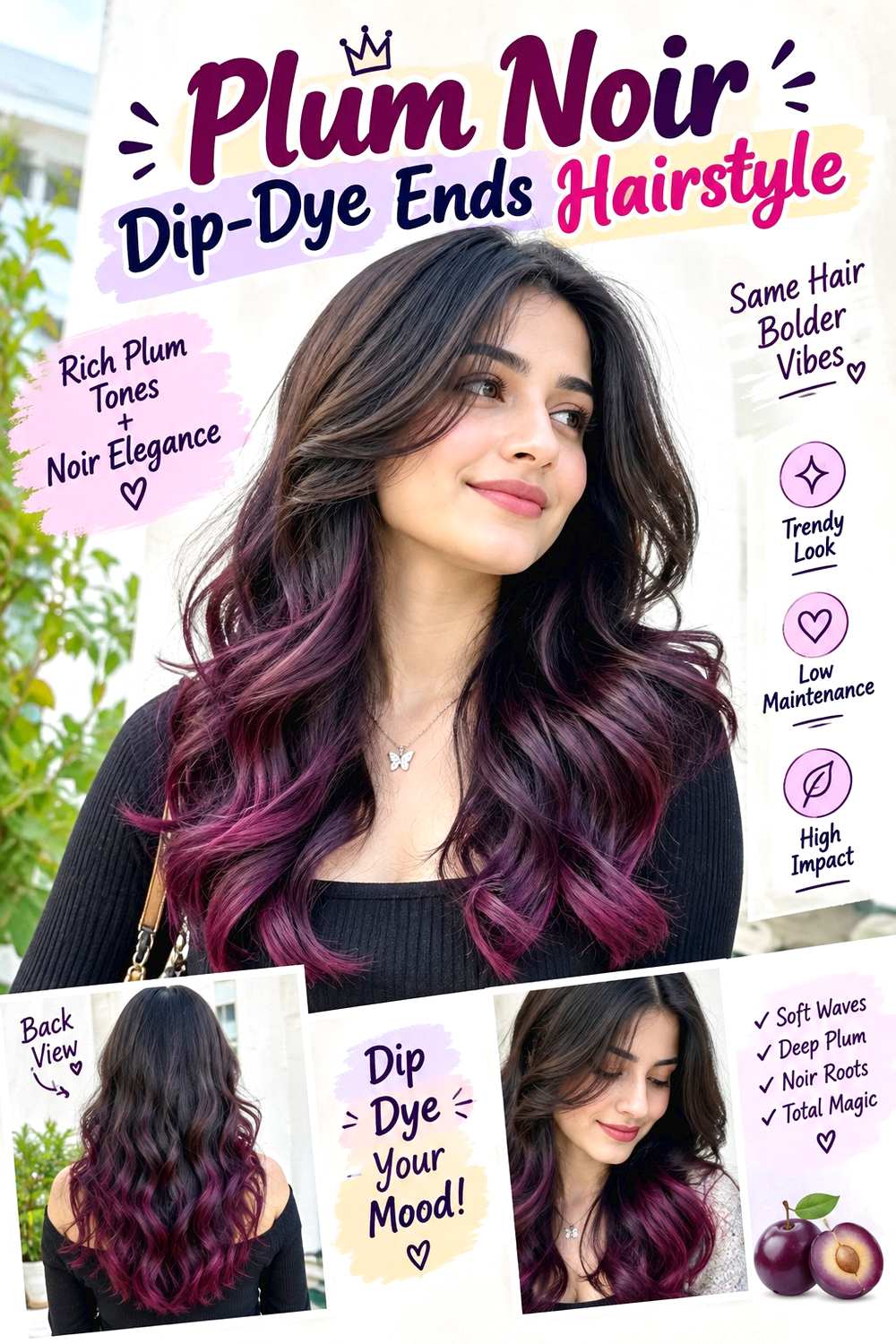
Dip-dyed plum noir concentrates visible purple at the lower ends while the upper hair stays dark, brunette, or near-black. On long hair, the plum section can occupy several inches and form a bold band that moves through ponytails and waves. A blunt perimeter makes the division look graphic, while layered ends create an irregular, softer boundary. The transition may remain level across the back or rise slightly around the front for added framing.
This design can appeal to someone who wants color away from the scalp, but the ends are often the oldest part of the hair, so their condition matters. Starting color and previous processing influence how bright the plum can become. A color-safe shampoo limits unnecessary stripping, a nourishing mask supports the lower lengths, and a wide-tooth comb reduces rough pulling while detangling. A quick refresh might involve smoothing only the ends; complete wash-day styling depends on total length and texture.
At the salon, show precisely where you want the plum to begin when the hair falls naturally. Also discuss future trims, because removing length can significantly reduce the colored section. Refresh the ends when their purple depth becomes softer or browner than you prefer.
Pro tip:
Mark the intended starting point on a reference photo. “Only the ends” can mean a narrow band or half the length, so a visual marker prevents confusion.
Make It Work for You:
If a sharp boundary feels too graphic, allow a few plum sections to travel slightly higher near the front while keeping most of the color concentrated below.
Watch Out For:
Do not plan maximum brightness without discussing the condition of older ends. Previous lightening or color can limit how aggressively those sections should be processed.
Soft Plum Noir Brown Blend Hairstyle

A plum-brown blend gives the noir family a quieter finish by mixing visible purple-red reflection with substantial brunette depth. Instead of separate stripes, the tones can flow broadly from roots through ends so the hair reads brown in some lighting and plum in others. Shoulder-length or longer hair gives the subtle variation room to appear, while soft waves expose more reflected color than a completely flat surface. Long face-framing sections can carry slightly more plum around the front.
This idea can suit someone who prefers understated color or wants a softer contrast against natural dark hair. Because “plum brown” can describe many depths, use references that show how much purple you actually want visible. A color-safe shampoo supports the blended tone, a hydrating conditioner keeps the lengths manageable, and a lightweight shine serum can enhance surface reflection when used sparingly. A short refresh may simply involve resetting the front pieces; full styling depends on texture and desired finish.
Ask the colorist whether the finished result should look primarily brunette with plum reflection or clearly plum with brown depth. That balance is the key salon detail. As the color fades, decide whether you enjoy the browner result or want the purple component strengthened again.
Pro tip:
Compare references by looking at the mid-lengths rather than only the brightest highlights. That area usually gives a better sense of the overall brown-to-plum balance.
Make It Work for You:
If you want more visible color near your face, keep the back softly blended and place slightly stronger plum through a few broad front sections.
Watch Out For:
Do not assume every cool reddish brown will read as plum. Point to the exact violet or wine reflection you want under neutral daylight.
Conclusion
Plum noir hair color can look almost black, distinctly purple, softly brunette, or somewhere between those points depending on placement and light. A blunt bob or lob emphasizes a dense surface, while waves, curls, layers, and shags separate the color into moving sections. Money pieces and curtain bangs bring plum closer to the face; peekaboo panels, dip-dyed ends, and ombré keep brighter color farther from the roots. Density also matters because narrow ribbons behave differently from broad blended sections. Choose the depth, parting, texture, finish, and maintenance level that fit your routine, then discuss how your natural color and previous processing may affect the achievable result.
Before Your Salon Visit
Choose one or two favorites and save references with clear, neutral lighting. Tell your stylist or colorist about your natural texture, density, current length, usual part, color history, and realistic upkeep routine. Point to the exact plum depth, root treatment, face-framing placement, transition point, layer position, or finish you like. If you prefer the roots from one reference and the ends from another, explain that difference clearly so the final plan reflects the features you actually want.
FAQs
Does plum noir show clearly on naturally dark hair?
It can, but the amount of visible purple depends on the starting shade and the intensity you want. A subtle plum reflection may work with a dark base more easily than a bright violet result. Previous artificial color also affects what is achievable, so a professional assessment is useful before planning major lightening.
How often does plum noir hair need refreshing?
There is no single schedule because fading depends on the coloring method, washing routine, heat exposure, starting base, and desired intensity. Dark blended versions may remain wearable as they soften, while brighter plum sections can lose contrast sooner. Refresh when the tone no longer matches the depth or visibility you prefer.
Can curly or coily hair wear plum noir color?
Yes. Curls and coils can display plum noir particularly dynamically because individual curl groups catch light differently. The color placement should follow the way the hair naturally falls and shrinks. If a haircut is also planned, discuss the finished dry shape separately so color and length decisions support each other.
Will plum noir require bleaching first?
Not always. A subtle dark plum may be possible without dramatic lightening on some starting colors, while a bright, clearly visible violet can require more preparation. Natural shade, previous dye, hair condition, and target brightness all matter. A colorist can assess those factors and explain realistic options without relying on a universal formula.