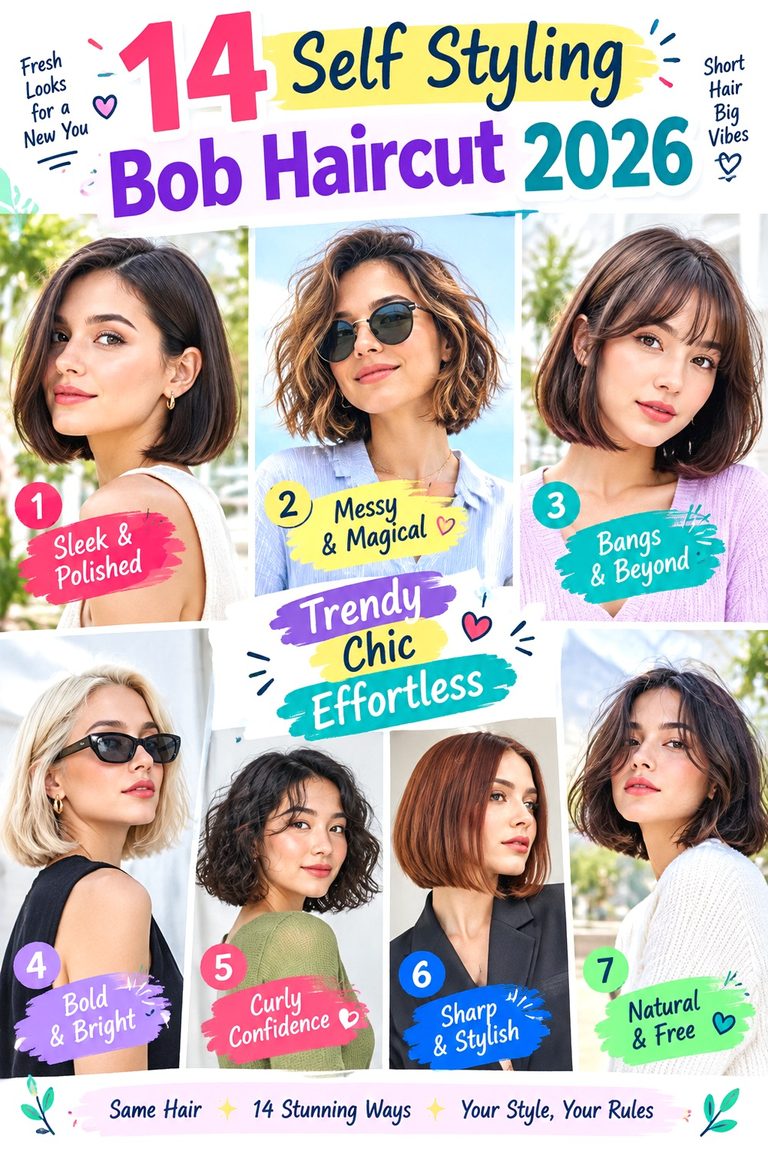
13 Soft Pixie Hairstyle Ideas

A soft pixie keeps the compact proportions of a pixie while replacing hard edges and extreme length contrasts with gentler layering. The nape and sides stay short, but they can retain enough length to lie softly instead of appearing closely clipped. The top is usually longer for movement, with fringe ranging from brow-skimming and side-swept to lightly separated. Waves, curls, feathered tips, and rounded volume can all change the finish without losing the short silhouette.
Straight and wavy textures show connected pixie layers clearly, while curly and coily hair can create softness through curl placement and balanced volume. Fine strands may need strategic fullness instead of extensive texturizing. Dense hair can benefit from carefully located weight adjustment, especially around the sides. Fringe and temple length can also be changed according to preferred coverage and natural growth direction.
Daily styling can be brief because the overall length is short, although individual pieces are more visible when they sit differently. A quick refresh often focuses on fringe and crown. Cut maintenance is separate and depends on how precisely you want the ears, nape, and top-to-side proportions to remain defined.
Quick List
- Wispy Fringe Soft Pixie Hairstyle
- Long Side-Swept Soft Pixie Hairstyle
- Feathered Soft Pixie Hairstyle
- Wavy Soft Pixie Hairstyle
- Curly Soft Pixie Hairstyle
- Tapered Nape Soft Pixie Hairstyle
- Fine Hair Soft Pixie Hairstyle
- Dense Hair Soft Pixie Hairstyle
- Piecey Texture Soft Pixie Hairstyle
- Rounded Volume Soft Pixie Hairstyle
- Ear-Framing Soft Pixie Hairstyle
- Air-Dried Soft Pixie Hairstyle
- Grown-Out Soft Pixie Hairstyle
Wispy Fringe Soft Pixie Hairstyle
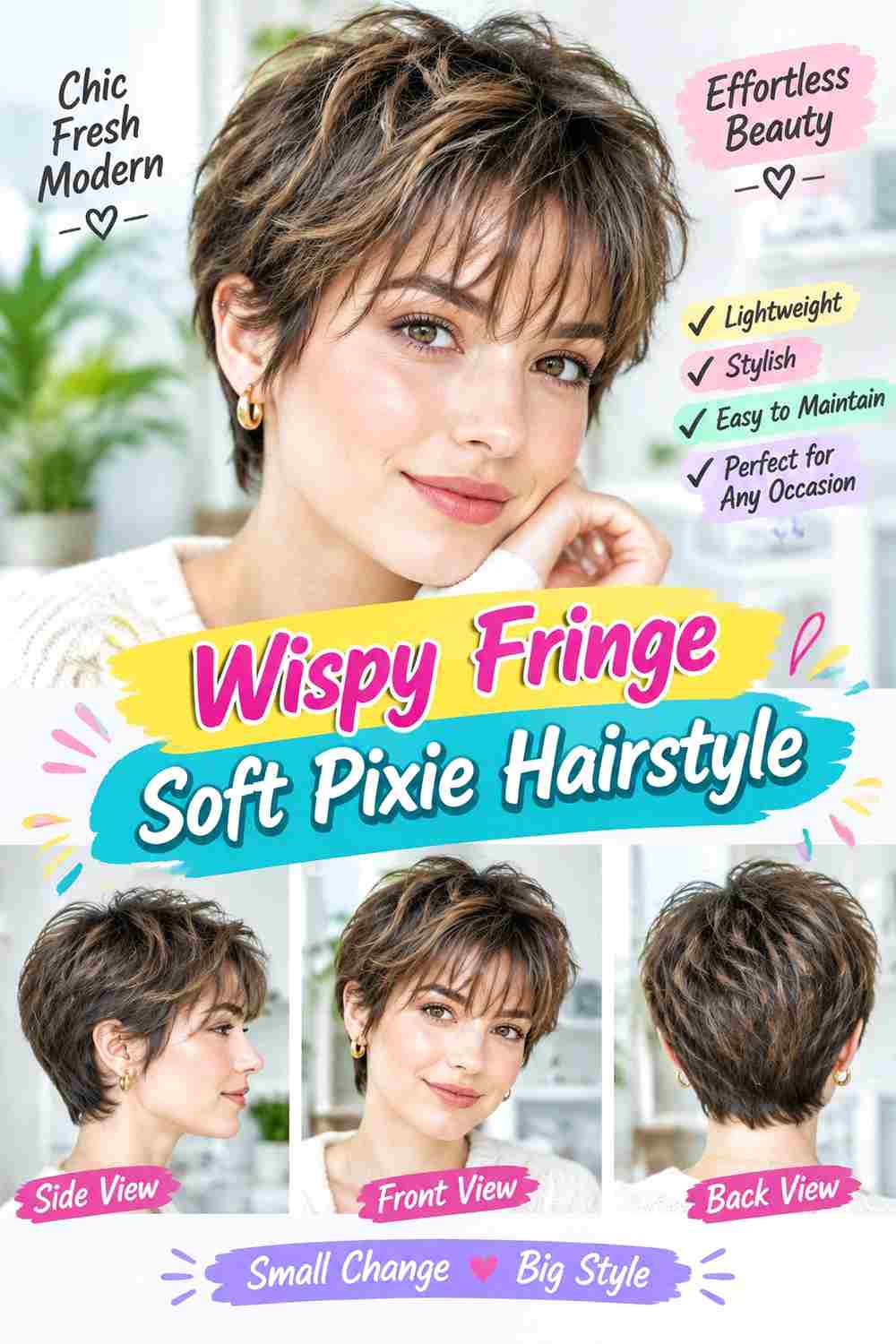
A light fringe creates softness at the front while keeping the short shape open around the face. Brow-skimming center pieces can separate naturally with slightly longer corners toward the temples. The crown stays moderately layered for movement, while the sides lie close without being severely cropped. A softly tapered nape completes the shape, and the fringe can sit forward or shift slightly to one side.
Straight and gently wavy textures make the wispy separation particularly visible. Fine hair can also suit the design when the fringe section remains narrow enough to preserve fullness through the sides. Lightweight mousse supports the roots, heat protectant prepares the fringe for heated drying, and a small round brush controls direction. Refreshing the front may take only a few minutes; restyling the entire pixie after washing takes longer.
At the salon, discuss fringe width, density, and dry finished length rather than requesting wispy bangs alone. Fringe maintenance may be needed before the rest of the haircut because even modest growth can put short pieces into the eyes. Keeping the outer corners slightly longer creates a smoother connection with the temples and makes eventual grow-out easier.
Pro tip:
Move damp bangs gently from side to side at the roots before placing them forward. This can soften a stubborn split while keeping the fringe flatter and lighter instead of overly rounded.
Make It Work for You:
If your hair has lower density, keep the fringe section narrow and preserve more weight through the temples. You still get softness across the forehead without borrowing excessive hair from the sides.
Watch Out For:
Too much styling product can join wispy pieces into heavy sections. Start with minimal product near the roots, then separate the fringe gently only after it is completely dry.
Long Side-Swept Soft Pixie Hairstyle

A longer front gives a short pixie movement without requiring heavy crown volume. The fringe can reach the brows or upper cheek area and sweep diagonally toward one temple. Shorter layers through the crown connect gradually with the sides, while enough length remains near the ears to prevent a harsh transition. The nape stays compact but softly tapered rather than sharply clipped.
This variation works especially well when the natural growth pattern already favors one side. Straight and wavy textures show the diagonal sweep clearly, while looser curls can create a fuller interpretation. Root-lift spray supports the front, heat protectant belongs underneath heated drying, and a small round brush directs the sweep. Resetting the fringe can be quick; complete styling after washing takes longer.
At the salon, show which direction you normally wear the front and specify its dry finished landmark. If you want the fringe to tuck toward the ear, say so before length is removed. Maintenance becomes useful when the front enters the eyes or the sides lose their relationship to the longer top. If growing toward a bixie or bob is your eventual goal, preserving front length can make the transition easier.
Pro tip:
Dry the long fringe briefly opposite its final direction, then sweep it across. This creates lift at the base and prevents the longer front from lying completely flat against the forehead.
Make It Work for You:
If one temple has less density, direct the fringe toward that side for additional coverage. Keep the sweep moderate so the front still looks movable rather than heavily fixed in place.
Watch Out For:
Cutting the front too short removes the flexibility that defines this variation. Preserve enough length for a true diagonal sweep instead of gradually turning it into a short side fringe.
Feathered Soft Pixie Hairstyle

Feathered ends create light movement around a pixie without making the layers look sharply separated. The top stays moderately long, with selected pieces flowing toward the temples and ears. Tips can turn gently away from the face, while the nape remains soft and close. A slightly off-center part gives the feathering direction without requiring a rigid line through the crown.
Straight and wavy textures can display the separated tips clearly. Fine strands need restrained texturizing so the perimeter stays substantial, while dense hair can support more visible movement. Heat protectant prepares the hair for heated styling, a small round brush guides selected ends, and light texturizing spray adds separation. Refreshing the fringe and temple pieces can be quick; a complete feathered blow-dry takes longer.
At the salon, explain that you want a feathered finish while retaining useful density around the ears and nape. Feathering should describe the visual movement rather than automatically mean aggressive thinning. Maintenance becomes useful when the ends lose their directional shape or the sides become heavy. If the tips already look light, rely more on styling rather than removing additional weight simply to recreate separation.
Pro tip:
Turn only a few temple and crown tips outward and leave neighboring sections softer. Small differences in direction create feathered movement without making every layer look deliberately flipped.
Make It Work for You:
For fine or lower-density ends, concentrate the feathering around the fringe and temples. Keep the nape and lower sides fuller so the short silhouette maintains a clear outline.
Watch Out For:
Over-texturizing short pieces can make them look sparse instead of airy. Preserve enough weight for each section to hold its direction, then use styling to increase visible separation.
Wavy Soft Pixie Hairstyle

Loose bends can soften a pixie by breaking up the top and fringe without creating a spiky finish. Keep enough length through the crown for broad waves to form, with shorter connected sections moving toward the ears and nape. The fringe can separate naturally or sweep slightly aside. Leaving some tips comparatively straight keeps the texture relaxed rather than turning the entire top into tight curls.
Naturally wavy hair can use its existing pattern, while straighter hair needs more active shaping. Heat protectant belongs underneath heat styling, a small curling iron creates selected bends, and flexible hairspray maintains movement. A quick refresh can target only flattened crown or front sections. Building the full wave pattern on freshly washed straight hair takes longer.
At the salon, discuss how long the upper layers need to remain for your preferred wave size. Very short crown layers may not have enough length to form a broad bend. Maintenance becomes useful when the sides begin expanding or the top loses its connection with the nape. The finish does not need perfect uniformity; keeping several sections straighter can make the pixie easier to refresh and reduce unnecessary heat styling.
Pro tip:
Shape only the pieces that fall noticeably flatter than their neighbors. Mixing natural texture with a few deliberate bends creates movement while reducing the amount of repeated heat needed.
Make It Work for You:
If your waves expand strongly around the sides, keep more length on top and direct volume upward. This preserves softness without creating excessive width around the ears and temples.
Watch Out For:
Tight curls can visually shorten the top and make a compact pixie appear much rounder. Use broad bends and relaxed tips when your goal is soft, flowing movement.
Curly Soft Pixie Hairstyle

A curly pixie can stay soft by preserving enough length for recognizable curl groups instead of cutting every section extremely close. The crown carries gentle height, with shorter curls connecting gradually toward the temples and nape. A slightly longer front can frame the forehead, while the sides remain compact enough to maintain the pixie outline. A natural part lets the curls follow their usual direction.
Curl pattern, shrinkage, and density should guide the finished proportions. Lightweight leave-in conditioner provides slip, curl gel supports grouped definition, and a diffuser dries the shape with less disturbance. Refreshing several flattened curls can be brief, but complete wash-day styling takes longer because the full pattern needs to be reset and dried.
At the salon, describe where the shortest and longest curls should sit when fully dry. Wet or stretched length alone cannot show the finished silhouette. If dense areas create unwanted width, identify their placement rather than requesting thinning throughout. Maintenance becomes useful when growth shifts volume toward the sides or the nape loses definition. Preserving strategic weight helps curls remain grouped and keeps the short shape connected as it grows.
Pro tip:
Allow the curl groups to dry before separating selected sections for volume. This lets you control where the pixie expands instead of creating frizz evenly across the entire surface.
Make It Work for You:
For strong shrinkage, begin with slightly longer crown and fringe sections. Assess their dry spring before shortening further so the finished pixie keeps the softness and coverage you want.
Watch Out For:
Aggressive thinning can create short internal curls that expand unpredictably during grow-out. Adjust weight only where bulk is actually causing a problem and preserve useful density elsewhere.
Tapered Nape Soft Pixie Hairstyle
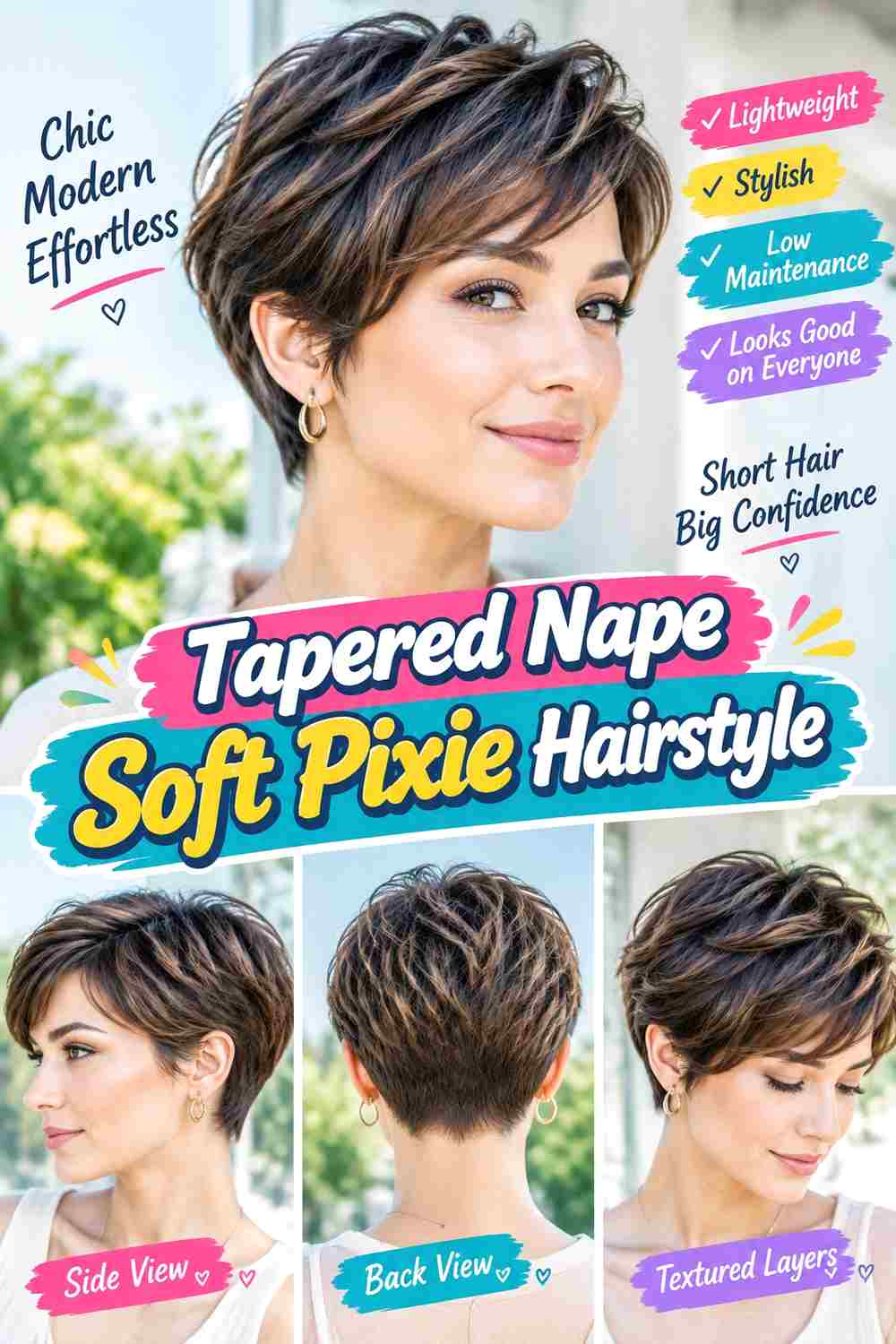
A gently tapered nape keeps the back neat while allowing the top and sides to remain soft. The neckline becomes progressively shorter toward the base without creating a severe shaved contrast. Longer crown pieces flow into the back, and the temple area can retain enough length to frame or partially cover the ears. A soft side part or natural fall works well with the connected shape.
Straight and wavy textures can show the taper clearly, while curls may need a slightly longer version to account for shrinkage. Root-lift spray supports the upper sections, heat protectant prepares the hair for heated styling, and a small round brush guides the crown. Refreshing the top can be quick; a complete styled finish takes longer.
At the salon, specify how close you want the neckline and whether you prefer a natural, soft edge or a more defined outline. The nape often shows growth sooner than the longer top. If frequent salon upkeep does not suit your routine, choose a gentler, longer taper that can expand gradually. Maintenance can then focus on balance instead of constantly restoring a very close neckline.
Pro tip:
Keep most styling support through the crown rather than loading product onto the tapered nape. A cleaner lower section makes the gradual transition into the longer top easier to see.
Make It Work for You:
If you prefer fewer reshaping appointments, leave the nape slightly longer and softer. It can grow with less obvious contrast while the upper pixie retains its intended movement.
Watch Out For:
A very close neckline changes the maintenance commitment because regrowth becomes visible quickly. Choose the shortest taper only when that sharper contrast fits the upkeep you actually want.
Fine Hair Soft Pixie Hairstyle

Fine strands can work well in a soft pixie when the cut protects useful fullness instead of relying on extensive thinning. Keep the crown moderately layered for movement, with enough density through the sides and nape to maintain a clear outline. A light side-swept or wispy fringe adds direction without using an oversized section. Gentle root lift can create dimension while the ends remain substantial.
Fine describes strand thickness rather than overall density, so the amount of layering should reflect how much hair is actually present. Lightweight mousse supports the roots, heat protectant prepares the hair for heated drying, and a small round brush creates controlled lift. A crown-and-fringe refresh can be quick; full wash-day styling takes longer depending on density and natural texture.
At the salon, identify where you want movement and where you want visible weight preserved. Flat roots do not automatically require more short layers. Drying direction and product placement can often create lift without removing hair. Maintenance should keep the perimeter connected as the layers grow. If the sides begin looking sparse, avoid additional texturizing and allow shorter pieces to gain some length before reshaping them heavily.
Pro tip:
Apply mousse mainly through the roots and upper crown rather than coating the tips. Supporting the base creates lift while allowing fine ends to retain a cleaner, fuller appearance.
Make It Work for You:
If your fine hair also has low density, keep the sides and nape slightly longer with restrained crown layering. The result stays recognizably short without sacrificing unnecessary perimeter fullness.
Watch Out For:
Do not assume fine strands need heavy texturizing. Removing too much weight can expose the scalp or weaken the outline even when the original hair had moderate or high density.
Dense Hair Soft Pixie Hairstyle
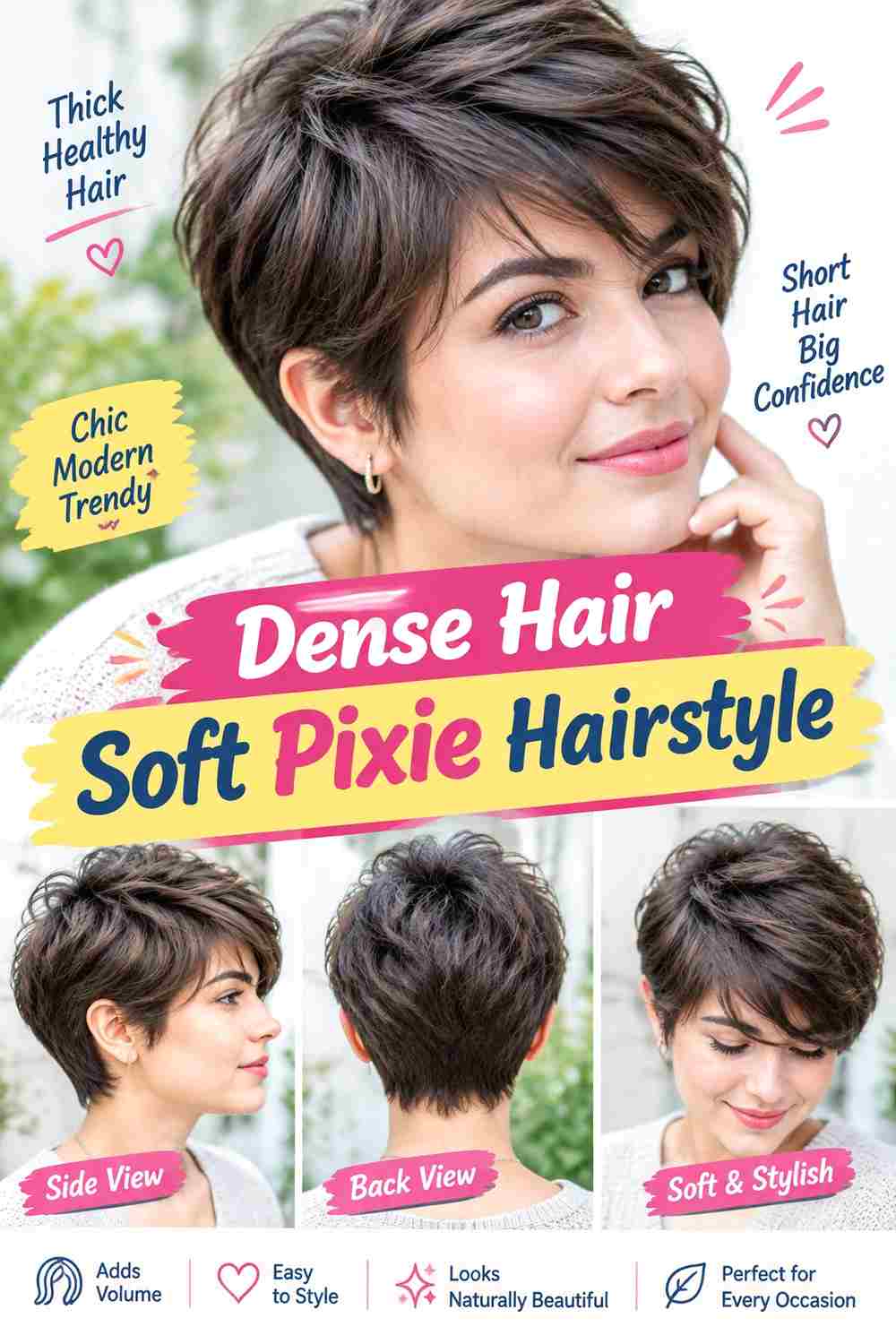
Dense hair can give a pixie a full, cushioned shape, but bulk placement needs attention so the sides do not become excessively wide. Keep moderate length through the crown and temples, then adjust internal weight only where the shape feels heavy. The nape can taper softly, while the fringe remains long enough to sweep or separate. Preserving the outer silhouette keeps the cut smooth rather than overly choppy.
Straight, wavy, curly, and coily dense hair all distribute volume differently. Lightweight styling cream controls separation, a wide-tooth comb arranges the layers, and heat protectant belongs in the routine when heated styling is used. Refreshing the fringe may be quick; washing and completely drying dense hair can take substantially longer even at pixie length.
At the salon, point to specific bulky areas instead of requesting thinning throughout. Weight near the temples, crown, and back can affect the silhouette differently. Maintenance becomes useful when growth pushes volume outward or the nape starts feeling heavy. Shortening the crown is not automatically the solution. If the problem sits around the ears or lower back, those areas may need a more targeted adjustment while the upper length remains intact.
Pro tip:
Judge the shape only after dense hair is fully dry. Damp hair can appear much flatter, so waiting prevents unnecessary weight removal based on a silhouette that will change during drying.
Make It Work for You:
For dense waves or curls, preserve enough weight around the lower sides to anchor the texture. Adjust selected bulky areas while allowing the natural pattern to create softness through the top.
Watch Out For:
Aggressive thinning can leave short internal pieces that push outward as they grow. Ask for bulk to be adjusted by location rather than reducing density indiscriminately across the entire cut.
Piecey Texture Soft Pixie Hairstyle

Piecey separation can make short layers visible without turning the pixie into a sharply spiked cut. The fringe, crown, and temple sections remain long enough to overlap, while selected tips separate from neighboring pieces. The sides lie softly around the ears, and the nape stays connected rather than heavily clipped. A natural or slightly irregular part complements the unfixed finish.
Straight and wavy textures show individual pieces particularly clearly. Fine hair can use the effect selectively, while dense hair may support more separation. Lightweight styling paste defines dry tips, root-lift spray supports the crown, and a wide-tooth comb keeps the underlying shape loose. A morning refresh can take only a few minutes because selected sections can be repositioned individually. Complete wash-day styling takes longer.
At the salon, explain how much visible perimeter density you want beneath the piecey texture. Separation does not require every edge to be aggressively thinned. Maintenance becomes useful when growth causes the short layers to merge and lose definition. If the ends already appear light, use product to recreate separation rather than removing more hair. Keeping the crown connected to the sides also prevents the textured finish from becoming too spiky.
Pro tip:
Warm a tiny amount of styling paste between your fingertips and touch only selected dry ends. Leaving nearby pieces untreated creates clearer definition than coating every layer with the same product.
Make It Work for You:
If your hair is lower in density, concentrate piecey detail through the fringe and upper crown. Keep the sides fuller so the overall pixie silhouette retains useful visual weight.
Watch Out For:
Too much paste can collapse short hair and make separation look greasy. Begin with a very small amount, then add only where individual pieces genuinely need more definition.
Rounded Volume Soft Pixie Hairstyle

Broad, smooth crown volume gives a pixie fullness without creating a stiff or sharply sculpted shape. The top remains longer than the sides, allowing it to curve gently before blending into the temples and nape. The fringe can sweep to one side or sit lightly forward. Keeping selected ends relaxed prevents the rounded silhouette from becoming overly uniform.
Straight and wavy textures often respond readily to this blow-dried finish. Fine hair can gain visual lift, while dense hair may need side volume controlled so the shape does not become too wide. Root-lift spray supports the base, heat protectant prepares the hair for heated drying, and a small round brush creates the broad curve. A crown refresh may be quick; recreating the full rounded shape after washing takes longer.
At the salon, describe where you want the strongest volume. Crown lift does not require extremely short upper layers, and retaining some length keeps the cut more versatile when worn flatter. Maintenance becomes useful when growth shifts fullness toward the sides or the top stops connecting smoothly with the perimeter. If daily blow-drying is unrealistic, choose a layer structure that also settles comfortably in your natural texture.
Pro tip:
Lift crown sections while drying and let them cool before arranging them into place. Cooling supports the broad curve without requiring tight curls or excessive finishing product for hold.
Make It Work for You:
If your hair naturally expands at the sides, concentrate most lift above the crown and keep the temples calmer. This maintains rounded volume without creating unnecessary width around the face.
Watch Out For:
Over-rounding every section can make a soft pixie look rigid. Leave some fringe and side tips straighter so the volume moves naturally into the shorter perimeter.
Ear-Framing Soft Pixie Hairstyle
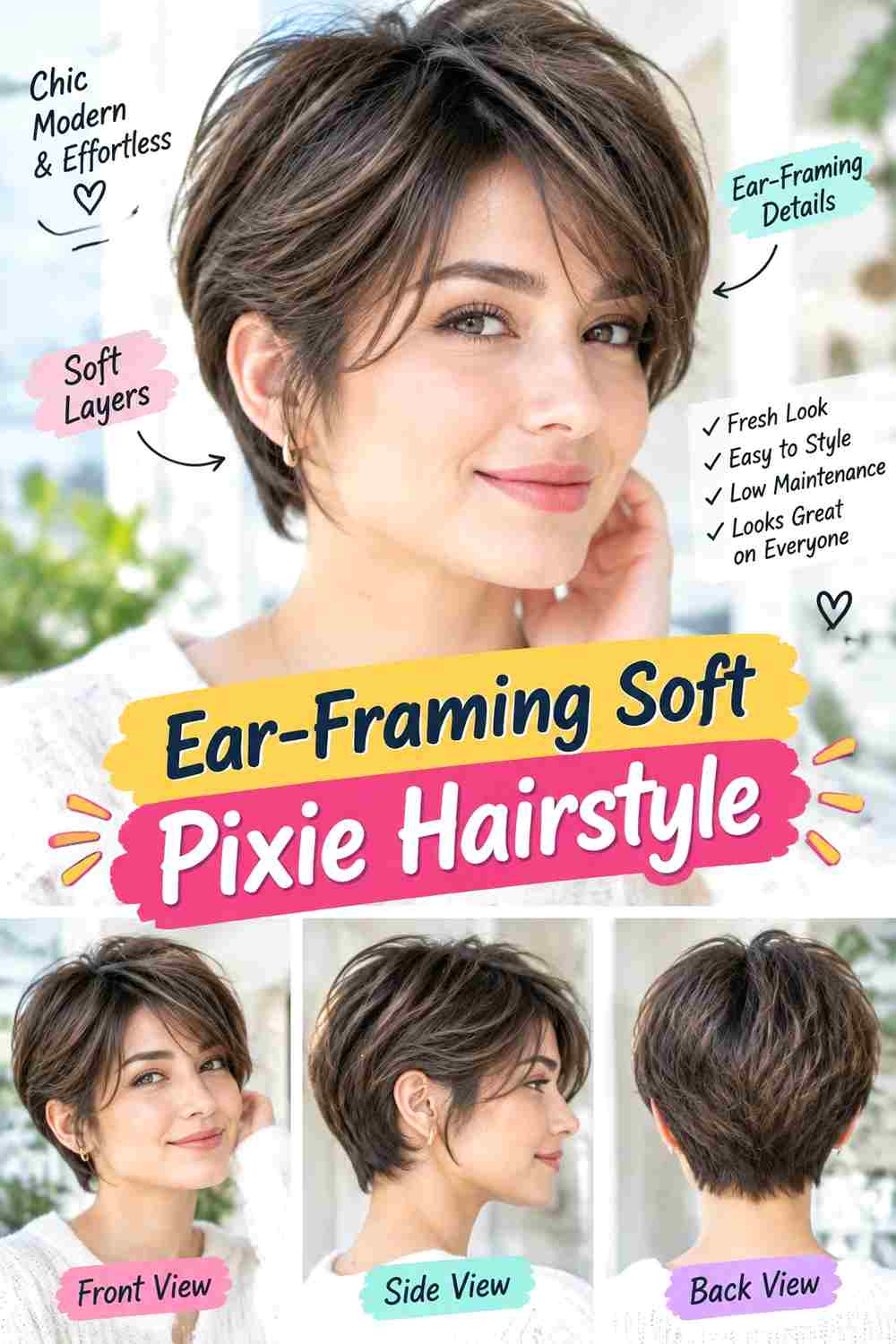
Leaving delicate length around the ears softens the boundary between the face and a short pixie. Temple pieces can skim the top or front of the ears, while the crown remains lightly layered and the nape stays compact. The fringe may sweep aside or blend directly into those side sections. A natural part keeps the placement flexible and avoids making the framing look too symmetrical.
Straight, wavy, and softly curly textures can all use this detail. It is especially useful for anyone who prefers some side coverage rather than a fully exposed ear. Lightweight styling cream controls flyaways, root-lift spray supports the crown, and a wide-tooth comb preserves soft separation. Repositioning the temple pieces is a quick refresh; complete wash-day styling depends on texture and density.
At the salon, show exactly how much of the ear you want exposed and where the temple pieces should finish. Small differences are very visible at pixie length. Maintenance becomes useful when those pieces grow too long to frame cleanly or when the nape becomes heavy. If you sometimes tuck the sides, preserve enough length for them to reach comfortably behind the ears instead of cutting them just short of that useful point.
Pro tip:
Guide the temple pieces into their preferred direction while they are damp. Establishing placement early helps them frame or tuck more naturally without relying on heavy product close to the face.
Make It Work for You:
If one side has stronger growth or more volume, let the ear framing differ slightly. Small asymmetry can work with the natural pattern while preserving the defining softness around both temples.
Watch Out For:
Cutting side pieces shorter because they resist tucking can make the problem worse. Keep enough usable length and address growth direction or product placement before removing more hair.
Air-Dried Soft Pixie Hairstyle

An air-dried pixie works with natural bends, small flips, and irregular separation instead of requiring every section to sit perfectly smooth. Keep the crown and fringe long enough to show natural movement, with connected sides and a soft nape. A natural part reduces the need to redirect short roots. The perimeter remains neat enough to define the pixie even when the surface has varied texture.
Straight, wavy, curly, and mixed textures can create different versions of this finish. Lightweight leave-in conditioner supports softness, styling cream controls selected ends, and a wide-tooth comb distributes product without flattening movement. Wash day involves passive drying time but little active tool work. A quick refresh can simply dampen a flattened fringe or crown section and let it reset.
At the salon, explain that air-drying is your normal routine so the haircut can be judged in its natural state. A piece that flips near the ear may reflect growth direction rather than uneven cutting. Maintenance becomes useful when the sides grow bulky, the nape loses its shape, or upper layers stop connecting. A flexible layer structure makes natural variation easier to wear without requiring constant heat styling.
Pro tip:
Arrange the fringe and temple sections while damp, then reduce handling as they dry. This gives natural bends room to form while limiting fuzzy separation through the short surface layers.
Make It Work for You:
If your texture varies across the head, keep the transitions between crown, sides, and nape gradual. Connected lengths help different movement patterns sit together more naturally.
Watch Out For:
Do not add more cream whenever one piece dries differently. Too much product can flatten a short cut; dampen and redirect the section first, then reassess what it needs.
Grown-Out Soft Pixie Hairstyle

A grown-out pixie preserves increasing length around the ears, nape, and fringe instead of repeatedly returning every section to its original short position. The front can move toward cheekbone length, while temple pieces begin tucking behind the ears. Crown layers settle downward as they grow, and the nape becomes softer. A side or natural part can help redistribute longer pieces during the transition.
This version works across straight, wavy, curly, and coily textures, though each develops different volume as length increases. Lightweight styling cream controls growing ends, light mousse supports the crown, and a wide-tooth comb arranges natural movement. A quick refresh can focus on the front. Complete wash-day effort depends more on texture and density as the hair gains length.
At the salon, state clearly that your goal is continued growth. Ask for balancing and perimeter cleanup rather than automatically restoring a short pixie. Maintenance can address bulky areas while allowing crown and side pieces to catch up. If the fringe enters an awkward stage, sweeping or tucking it can preserve progress. Choosing a future landmark, such as ear-tuckable sides or a short bob perimeter, also gives each reshaping appointment a clearer purpose.
Pro tip:
Choose your next length goal before trimming, such as fully tuckable sides. That landmark helps separate genuine shape problems from sections that simply feel unfamiliar because they are still growing.
Make It Work for You:
If dense hair becomes bulky during the transition, discuss selective internal weight adjustment while retaining outer length. This improves manageability without cutting the entire shape back into a pixie.
Watch Out For:
Repeatedly shortening every awkward section can stall the grow-out. Preserve healthy length and correct only areas that genuinely disrupt balance, comfort, or your ability to manage the changing shape.
Conclusion
Soft pixie hairstyle ideas range from wispy and feathered cuts to curly, wavy, rounded, or piecey finishes. Longer fringe adds movement and coverage, while a tapered nape creates a cleaner short outline. Fine hair often benefits from strategic fullness and restrained layers; dense hair may need carefully placed internal weight adjustment. Natural waves and curls can provide volume with less heat, while rounded finishes require more deliberate styling. Fringe length, ear coverage, crown volume, parting, texture, and nape placement all affect both appearance and grow-out. Consider how your natural hair behaves, how much daily styling you want, and how precisely you are willing to maintain a short perimeter before choosing your preferred version.
Before Your Salon Visit
Choose one or two favorites and save references that show the front, sides, crown, and nape clearly. Discuss your natural texture, density, face shape, preferred short length, upkeep, and everyday styling routine. Point to the exact fringe length, ear coverage, crown volume, layer placement, and nape finish you want. Also mention whether you prefer a soft grow-out, need the sides to tuck, or plan to grow toward a bixie or bob, since those goals can affect how much length should be preserved.
FAQs
Can fine hair wear a soft pixie without looking sparse?
Yes, depending on overall density and how the layers are placed. Fine describes individual strand thickness rather than the amount of hair present. Keeping useful fullness through the sides and nape while using restrained crown layering can create movement without unnecessarily weakening the short perimeter.
Does a soft pixie require daily heat styling?
No. Wavy, curly, and air-dried versions can use natural movement, while straight hair may need only a quick fringe or crown reset. Rounded, feathered, or especially sleek finishes usually require more deliberate heat styling. When using heat, include heat protectant and avoid unnecessary repeated passes.
How should curly hair be planned for a soft pixie?
Focus on dry finished length, shrinkage, curl grouping, and where volume naturally develops. The crown and fringe may need more length than expected once shrinkage is considered. If one area feels bulky, discuss that location specifically instead of removing weight throughout the entire haircut.
How do I know when my soft pixie needs reshaping?
Look at function and balance rather than following one universal schedule. Reshaping may help when fringe interferes with the eyes, the nape loses its preferred outline, side volume expands noticeably, ear-framing pieces become awkward, or the crown no longer connects smoothly with the shorter perimeter.