16 French Wispy Bangs With Long Layers

French wispy bangs with long layers combine an airy front fringe with length that keeps plenty of movement through the sides and back. The bangs usually show small spaces between pieces rather than forming one solid line, while longer outer corners help the fringe melt into face-framing sections. Layers can begin around the cheekbones, jaw, collarbone, or farther down, depending on how much movement you want. The defining contrast is a light, expressive front with enough length below it to keep the overall shape flowing rather than heavily cropped.
Straight and wavy textures can make the separated fringe easy to see, while curly hair can carry the idea with a softer, springier interpretation. Density also changes the result. Sparse ends may benefit from fewer layers and a stronger bottom edge, while dense hair can sometimes handle more controlled movement through the interior. Face framing can be moved higher or lower to change where attention falls without treating any face shape as requiring one fixed solution.
Daily effort depends on your natural texture and preferred finish. A fringe-only refresh may take a few minutes, while a polished wash-day blowout can take much longer on dense or very long hair. Bangs generally need attention sooner than the long layers because their finished length changes quickly as they grow.
Quick List
- Brow-Skimming Center Wisps With Cheekbone Layers Hairstyle
- Airy Split Bangs With Collarbone Face Frame Hairstyle
- Piecey French Fringe With Low-Slung Long Layers Hairstyle
- Rounded Wispy Bangs With Soft U-Shaped Layers Hairstyle
- Side-Swept Wispy Bangs With Cascading Layers Hairstyle
- Center-Parted Wispy Fringe With Butterfly Layers Hairstyle
- Short Airy Bangs With Waist-Length Layers Hairstyle
- Long Lash-Skimming Wisps With Minimal Layers Hairstyle
- Curly French Wisps With Long Shaped Layers Hairstyle
- Wavy French Bangs With Beachy Long Layers Hairstyle
- Smooth French Fringe With Sleek Long Layers Hairstyle
- Tousled Wispy Bangs With Shaggy Long Layers Hairstyle
- Fine-Hair Wispy Bangs With Fuller Long Ends Hairstyle
- Dense-Hair French Wisps With Internal Layering Hairstyle
- Off-Center Wispy Bangs With Flowing Face Layers Hairstyle
- Soft Grown-Out French Bangs With Blended Long Layers Hairstyle
Brow-Skimming Center Wisps With Cheekbone Layers Hairstyle

A narrow, brow-skimming center section makes the fringe feel light while longer pieces at the outer corners connect directly to cheekbone-level layers. Keep the remaining hair long, with broad bends beginning below the face frame and a relatively full bottom edge. A soft center part can be visible through the wisps, giving the bangs separation instead of a dense curtain. The shape works especially well for readers who want noticeable bangs without covering the whole forehead.
Straight and softly wavy textures can require only a short dry-hair refresh, while stronger growth patterns may need more deliberate shaping after washing. Apply heat protectant before heat styling, use a round brush to guide the fringe forward and slightly outward, then mist flexible hairspray through the finished pieces so they stay movable. A quick morning correction may take several minutes; setting all the long layers on wash day will take considerably longer, particularly with dense hair.
Ask your stylist to keep the center wisps near the brows at their finished length while leaving the outer corners longer enough to reach the cheekbone frame. Trim or reshape the fringe when it starts falling into your eyes rather than assuming the long layers need cutting at the same time.
Pro tip: Direct the center fringe forward first, then shift the outer pieces slightly away from the face while they cool so the transition stays open and soft.
Make It Work for You: If your ends are naturally sparse, keep the back layers longer and concentrate the shortest movement around the cheekbones so the fringe still blends without sacrificing the bottom outline.
Watch Out For: Avoid pushing every bang piece outward. That can erase the wispy center section; keep a few fine pieces falling forward before shaping the longer corners.
Airy Split Bangs With Collarbone Face Frame Hairstyle

A visible split through the middle gives this fringe a relaxed French feel without turning it into full curtain bangs. The shortest strands skim around the brows, then gradually lengthen toward the temples. Face-framing layers begin near the collarbone, creating a larger gap between the fringe and the main body of the haircut. That spacing makes the bangs stand out while preserving long, fluid lengths through the back with gentle movement at the ends.
This version suits readers who prefer less daily contact between hair and forehead because the center can separate naturally. Straight, wavy, and loose curly textures can all be adapted, although curl shrinkage should be considered when choosing the finished fringe length. For a polished finish, heat protectant protects during heat styling, a large round brush encourages a smooth bend, and lightweight mousse gives the roots support without making the wisps clump together. A fringe refresh can be brief; fully styling long layers from wet hair takes more time.
At the salon, point to the exact collarbone position where you want the face frame to begin. Keeping that first long layer lower prevents the front from becoming overly feathered. Fringe upkeep will usually be needed before the lower layers lose their shape, particularly once the center pieces stop clearing the brows comfortably.
Pro tip: Use only a small amount of mousse near the fringe roots, not through the tips, so the pieces keep lift without losing the separated, airy finish.
Make It Work for You: For loose curls, ask the stylist to assess the bangs in their dry, settled state and keep the collarbone frame long enough to blend with your natural spring.
Watch Out For: A split that becomes too wide can resemble disconnected side pieces. Redirect a few center strands forward during drying to restore the intended narrow opening.
Piecey French Fringe With Low-Slung Long Layers Hairstyle

Piecey bangs create definition through small, separated sections rather than an evenly diffused fringe. Here, the center falls around brow level, the outer pieces reach toward the temples, and the long layers begin below the shoulders. That low layer placement keeps most of the haircut visually dense while allowing the lower lengths to swing. The ends can stay slightly straighter than the mid-lengths, which makes the short fringe look more intentional against the long silhouette.
Readers with fine strands or moderate density may appreciate the restrained layering because less hair is removed from the perimeter. Naturally straight hair can show the piecey finish with minimal work, while wavy hair can keep a softer variation. Use a lightweight styling cream to separate the fringe, a wide-tooth comb to organize the long lengths without overworking them, and flexible hairspray for light hold. Between washes, resetting only the bangs is usually quick; a complete wash-day finish depends more on overall length and density.
Tell your stylist that the main layers should begin below the shoulders rather than climbing toward the jaw. For upkeep, reshape the fringe once its individual pieces become too long to sit around the brows, while letting the lower layers grow until their movement noticeably disappears.
Pro tip: Separate the fringe with your fingertips after it is fully dry, using only the residue of styling cream so individual wisps stay defined rather than coated.
Make It Work for You: If your hair is very dense, ask whether subtle internal weight reduction below the shoulders would improve movement while preserving the strong exterior line and low layer placement.
Watch Out For: Too much product can make wispy bangs collapse into oily-looking sections. Start with a tiny amount and add more only where individual pieces need control.
Rounded Wispy Bangs With Soft U-Shaped Layers Hairstyle

The fringe follows a gentle rounded line, sitting slightly shorter near the center and lengthening toward both outer corners. Instead of a blunt arc, fine gaps keep the edge soft and wispy. Below it, long layers follow a U-shaped perimeter, so the back appears longest at the center while the sides curve gradually upward. Broad movement through the lower half supports the rounded front without creating excessive volume beside the cheeks.
A U-shaped outline can work on straight, wavy, and softly curled hair, provided the layer depth matches the density. If your ends are less dense, keeping the U subtle can preserve visual fullness. For styling, use heat protectant before shaping, a medium round brush to curve the fringe gently under, and a light serum through the long ends for slip and polish. A small fringe reset can be quick, but smoothing and shaping the complete U-shaped length after washing is a fuller styling session.
At the salon, discuss how deep you want the U at the back rather than asking simply for “long layers.” Also show where the rounded fringe should finish when dry. As it grows, the center may reach the eyes first, so fringe reshaping can happen independently from trimming the long perimeter.
Pro tip: Curve the bangs only slightly at the roots and midsection; keeping the tips relaxed prevents the rounded fringe from developing a pronounced rolled-under edge.
Make It Work for You: If you wear natural waves most days, keep the U-shaped layers longer and let their existing bends supply movement instead of relying on a highly polished finish.
Watch Out For: Over-rounding both bangs and long ends can make the shape feel stiff. Keep the fringe softly curved while allowing the lower layers to move more freely.
Side-Swept Wispy Bangs With Cascading Layers Hairstyle
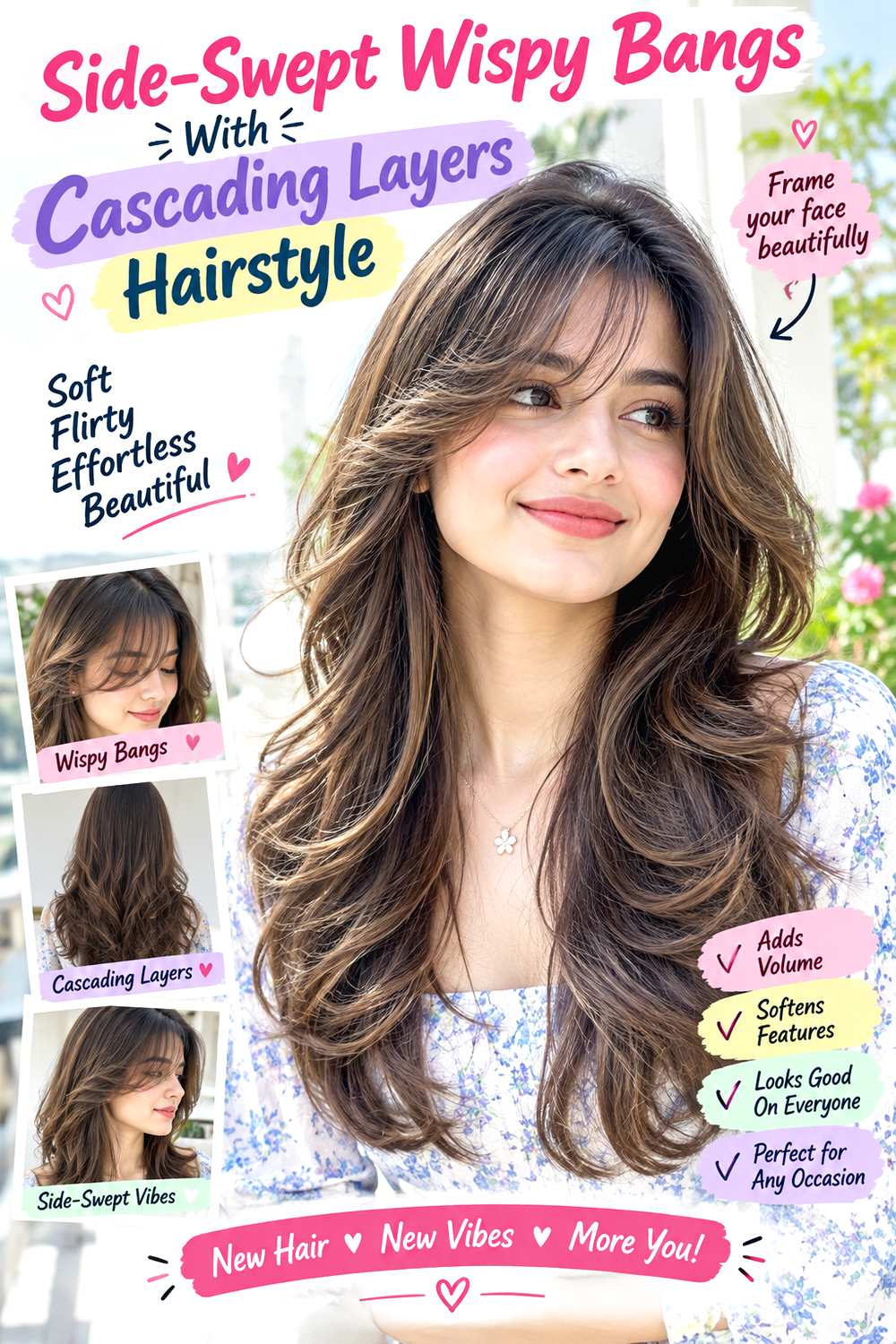
A soft side direction changes the balance without making the fringe heavy. The shorter bang pieces begin near brow level and travel diagonally toward one temple, where they merge into face-framing layers around the jaw. Longer layers then continue down the length in wider steps, producing a cascading effect rather than one concentrated shelf. The opposite side remains lighter across the forehead, and the ends retain enough weight to keep the haircut grounded.
This option can suit readers whose natural growth pattern already encourages the front hair to move to one side. Straight and wavy textures make the diagonal line especially visible, though soft curls can be shaped in the same direction. Apply heat protectant before heat use, guide the fringe with a round brush toward its preferred side, and use flexible hairspray to keep the sweep in place without creating a hard panel. Morning fringe styling can be short; shaping every long layer after washing takes considerably more effort.
Ask your stylist which side works naturally with your growth direction and specify that the shortest face layer should begin near the jaw. Fringe upkeep becomes noticeable when the diagonal center section starts entering the eyes or no longer stays separated from the longer side pieces.
Pro tip: Dry the fringe briefly in the opposite direction before sweeping it back to its final side; this can keep the roots from lying completely flat.
Make It Work for You: If you prefer less face framing, begin the cascading layers below the chin while keeping the side-swept wisps unchanged, preserving the diagonal fringe as the main feature.
Watch Out For: Forcing a strong side sweep against a stubborn growth pattern can create repeated separation. Work with the natural direction or keep the part less extreme.
Center-Parted Wispy Fringe With Butterfly Layers Hairstyle

Here, the fringe opens clearly through the center, but a few fine pieces remain near the forehead so it does not become a solid curtain shape. The outer bang sections reach toward the upper cheekbones, where they meet shorter butterfly-inspired face layers. A second tier falls around the jaw or collarbone before blending into much longer lengths, creating lift around the face while preserving the back.
This layered arrangement is useful for medium to dense hair that can support visible tiers without leaving the ends too sparse. Fine hair can still wear it with fewer sections and a fuller perimeter. Use root-lift spray around the crown and front, heat protectant before blow-drying, and a large round brush to send the facial layers away from the face. A morning fringe adjustment can be quick, while rebuilding the full layered sweep after washing takes longer and depends greatly on density and length.
At the salon, identify the exact point where the shortest butterfly layer should finish; cheekbone versus jaw placement changes the whole silhouette. The fringe may need maintenance when the center pieces stop sitting clear of the eyes, while the longer layers can often grow more softly before losing their stepped movement.
Pro tip: Let the front sections cool while directed away from the face before separating them, which helps the butterfly layers hold their opening without heavy hairspray.
Make It Work for You: For lower-density hair, reduce the number of short butterfly sections and keep the back perimeter stronger, while retaining the center-parted wisps and one clear face-framing tier.
Watch Out For: Too much root product through the fringe can stiffen the wisps. Keep lift spray concentrated near the roots and leave the fine ends flexible.
Short Airy Bangs With Waist-Length Layers Hairstyle
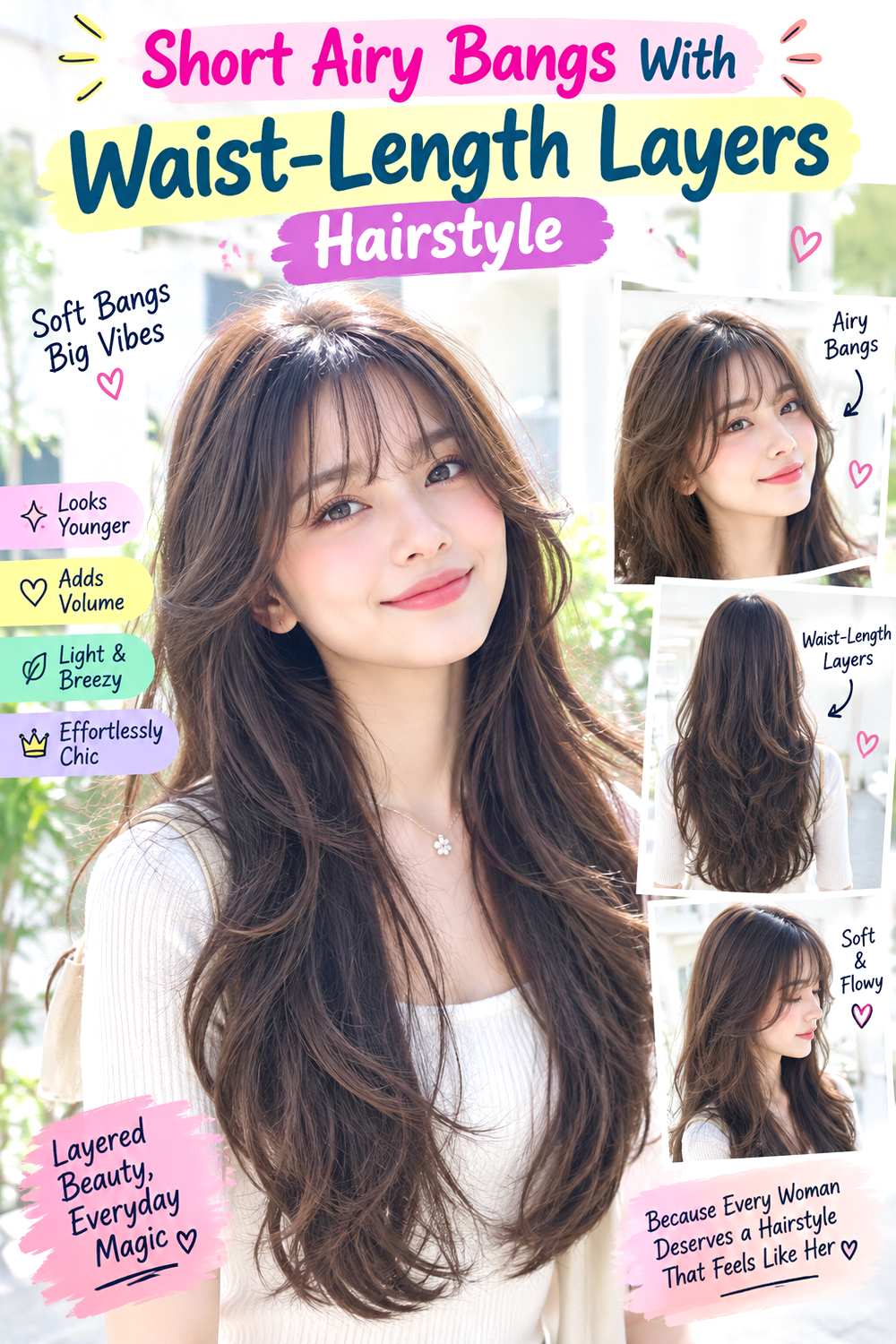
The contrast is the point here: short, airy bangs sit around the upper brow while the overall hair remains exceptionally long. Small spaces between the fringe pieces expose the forehead, and slightly longer corners prevent the bangs from appearing abruptly disconnected. Layers stay mostly below the chest, with enough variation near the ends to create movement without removing the strong visual weight of waist-length hair.
Because the lengths are so different, this design suits someone comfortable making the fringe the main short feature. Straight or gently wavy hair can emphasize the contrast, while curly textures need extra attention to shrinkage before choosing the bang length. Apply heat protectant before using heat, shape the fringe with a small round brush, and smooth the lower lengths with lightweight serum. Refreshing only the bangs can take a few minutes, but washing, drying, and arranging waist-length hair is a much larger commitment.
Ask your stylist to keep the main layer starting point low and to leave enough density along the longest edge. For the bangs, discuss the finished dry position rather than relying on a generic short measurement. Because the fringe is intentionally compact, small amounts of growth can change its appearance sooner than they change the rest of the cut.
Pro tip: Keep the short fringe slightly flatter at the roots and bend only the middle lightly; excessive lift can make an already short bang appear much shorter.
Make It Work for You: If your waist-length ends are delicate or sparse, use even fewer lower layers and let the airy bangs provide most of the contrast without sacrificing perimeter density.
Watch Out For: Cutting the outer fringe corners as short as the center can create a disconnected block. Preserve longer temple pieces so the bangs transition naturally into the length.
Long Lash-Skimming Wisps With Minimal Layers Hairstyle
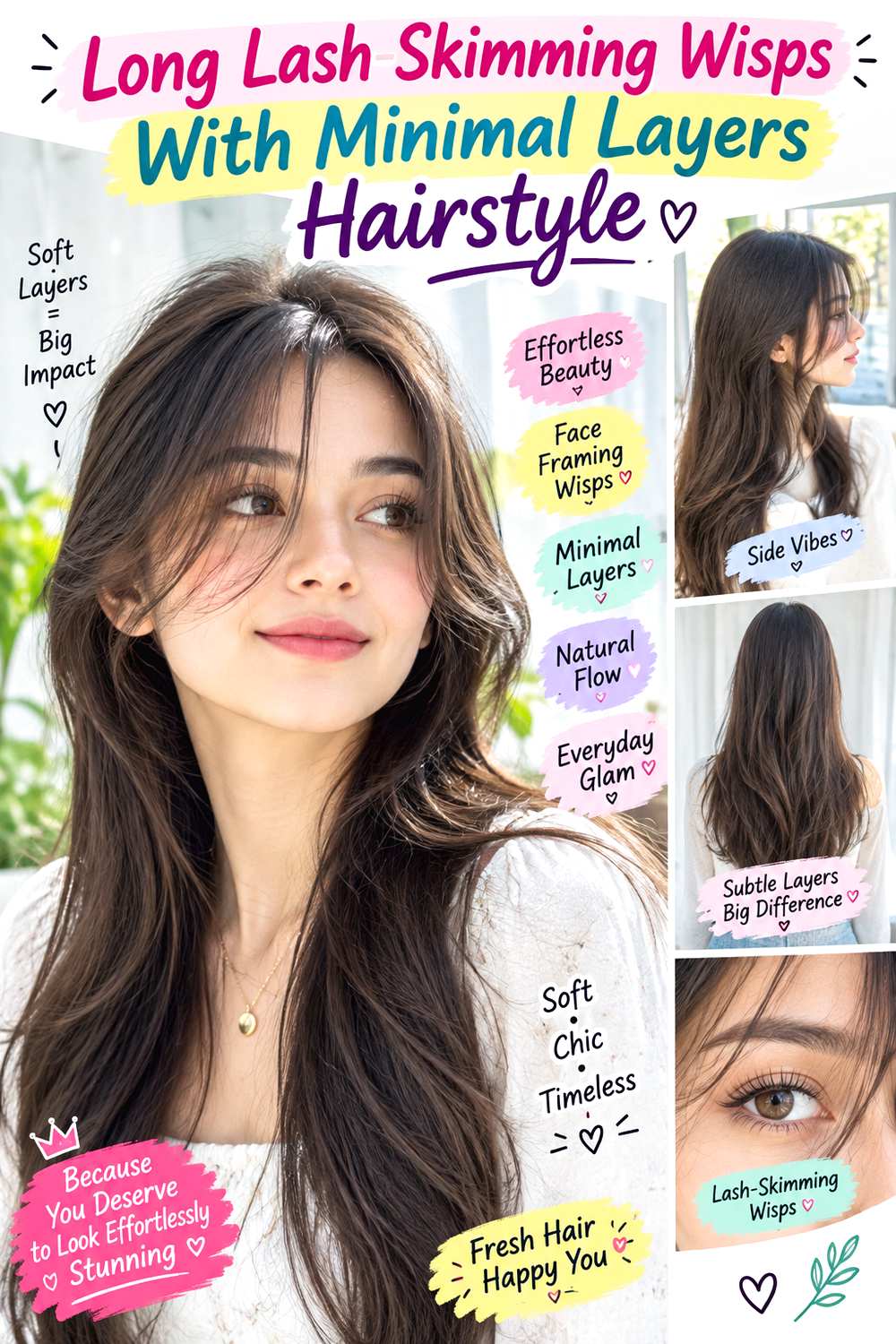
Longer wisps bring the fringe close to the lashes, creating a softer, more grown-in appearance. The center is narrow and lightly separated, with outer corners extending toward the cheekbones. Most of the remaining hair stays close to one length, apart from minimal face framing and subtle movement near the ends. A center or slightly off-center part can show through the fringe, keeping the front from reading as a heavy straight-across bang.
The longer finished length can suit readers who prefer a fringe that is easy to sweep aside as it grows, but it also enters the eye area sooner. Straight and wavy textures can wear the design with very little reshaping if the growth direction cooperates. Use a lightweight leave-in conditioner through the long lengths, a round brush to control the fringe, and dry shampoo at the bang roots between washes when needed. A small dry refresh can be short; a full wash-day routine mainly reflects the effort required by the overall length.
Ask your stylist to preserve a strong perimeter and limit the face frame to the front rather than layering the entire head heavily. Schedule fringe attention based on comfort and visibility: once the center continually drops into the eyes, the long layers do not necessarily need trimming at the same visit.
Pro tip: When the center wisps start approaching the lashes, divide them into smaller sections before shaping; this keeps them airy and easier to redirect around the eyes.
Make It Work for You: If you often tuck your hair behind your ears, keep the outer fringe corners long enough to join that movement while preserving a few shorter central wisps.
Watch Out For: Heavy oils near the forehead can cause long wisps to group together. Keep rich products on the lower lengths and use lighter amounts around the fringe.
Curly French Wisps With Long Shaped Layers Hairstyle

Curly texture gives French wispy bangs a springier outline, with individual curl groups forming the open fringe instead of straight separated strands. The center can settle around brow level when dry, while longer curls at the outer corners reach toward the temples or cheekbones. Long layers should follow the curl pattern through the sides and back, creating movement without automatically removing large amounts of density from the ends.
This interpretation works best when the fringe is planned around its dry, settled length because shrinkage varies from person to person and even between curl sections. A lightweight leave-in conditioner can support softness, curl gel can give the fringe and face layers definition, and a diffuser can dry the shape with less disruption. Refreshing several front curls between washes can be brief; a complete wash, product application, and diffuse session takes longer depending on density and length.
At the salon, show where you want the shortest fringe curls to sit when dry and ask how that relates to your individual spring. The long layers should also be placed where bulk naturally collects rather than following a fixed recipe. Maintain the bangs when their curl groups begin obscuring the intended brow-level opening, while judging the longer cut by balance and shape.
Pro tip: Refresh only the fringe curls that have lost definition, adding a little water and gel to those sections instead of soaking and resetting the entire front.
Make It Work for You: For tighter curls or greater shrinkage, keep the initial fringe longer and let the stylist assess each curl group dry so the airy French shape remains controlled.
Watch Out For: Avoid stretching the bangs straight to judge their finished length. Check where the curls naturally settle, or the fringe may spring substantially shorter afterward.
Wavy French Bangs With Beachy Long Layers Hairstyle

Loose S-shaped movement gives the long layers an undone finish while the fringe stays lighter and more controlled. Brow-level wisps fall mostly forward, with longer corners melting into cheekbone or jaw-length pieces. Through the main hair, waves begin around the mid-lengths rather than directly at the roots, and the tips can remain slightly straighter for a relaxed contrast.
Naturally wavy hair may need only light definition, while straighter hair requires more styling if you want consistent bends. Use heat protectant before any heat shaping, a curling iron to create loose alternating bends, and texturizing spray to give the finished mid-lengths separation. A next-day refresh can focus on a few flattened sections and the fringe; creating waves throughout long hair from scratch is a longer process that varies with density and skill.
Ask your stylist to place the first face-framing layer around the cheekbone or jaw and keep the back layers long enough that the waves do not make the ends appear overly thin. Fringe maintenance is separate: reshape it when the center no longer sits comfortably near the brows. Frizz control should stay light around the bangs because heavy smoothing products can collapse the wispy gaps that define the front.
Pro tip: Alternate the direction of only the mid-length bends while leaving the very ends looser; this creates movement without making the long hair look uniformly curled.
Make It Work for You: If your natural waves already form strongly, skip manufactured uniformity and define selected sections while keeping the wispy fringe slightly smoother so the front remains distinct.
Watch Out For: Starting every wave directly at the root can create unwanted width around the face. Begin most bends lower and reserve root lift for areas that need it.
Smooth French Fringe With Sleek Long Layers Hairstyle
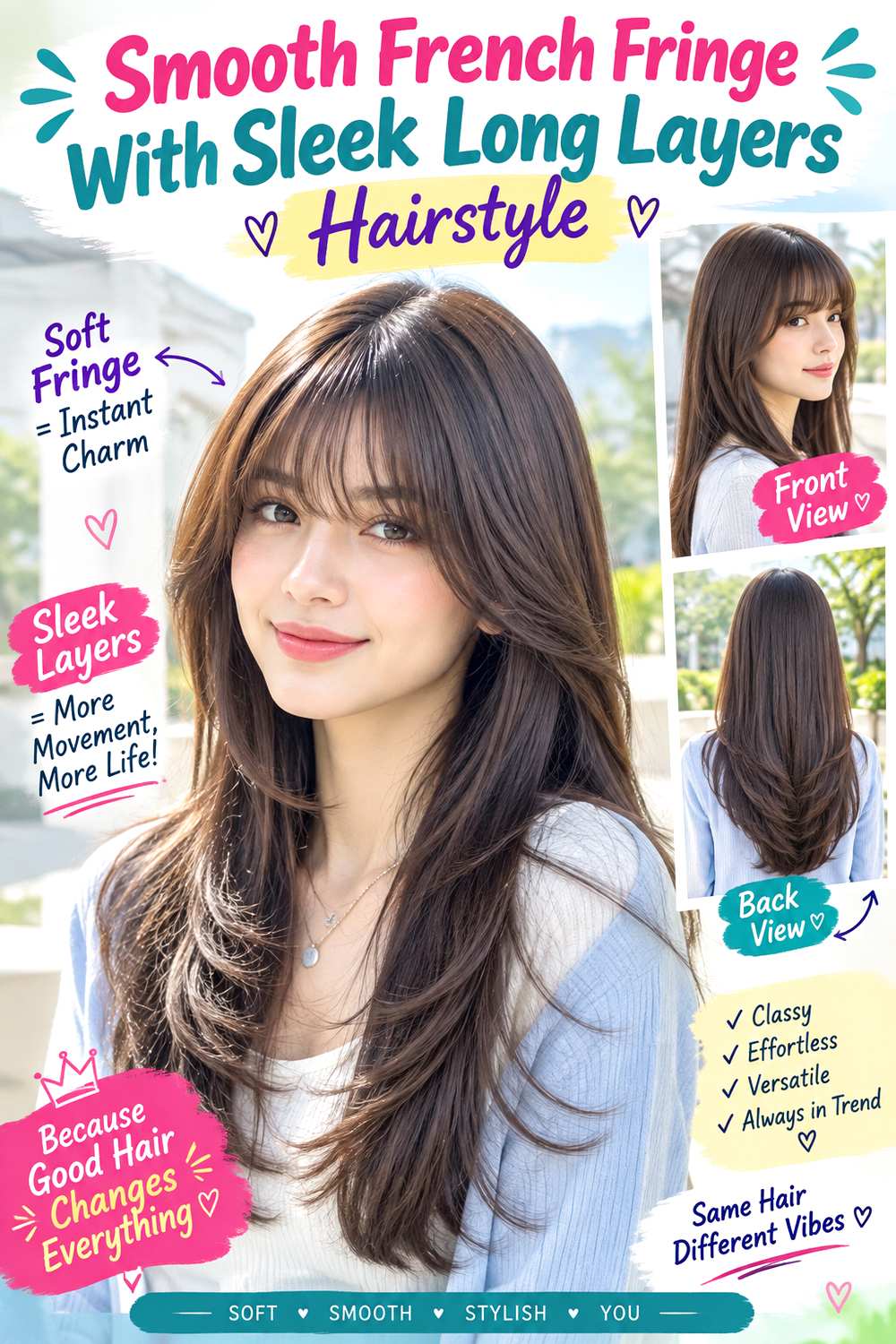
A smoother finish makes the airy construction of the fringe easier to notice. The center sits around brow level in fine, controlled sections, while longer outer pieces connect to long face layers beginning below the cheekbones. The rest of the hair falls in a sleek line with restrained layering and straighter ends, so movement comes from the front rather than from large waves throughout the length.
Naturally straight hair can reach this finish with a relatively simple routine, while wavy or curly hair may need more heat work if worn sleek, which changes the maintenance commitment. Apply heat protectant before styling, use a paddle brush to direct the lengths smoothly, and finish with a lightweight anti-frizz serum from mid-lengths downward. A dry fringe correction can be quick. Fully recreating the smooth finish from wet hair can take much longer, especially for dense or textured hair.
At the salon, request a clear face-frame starting point while keeping the lower perimeter substantial. Too many short internal layers can work against the controlled outline. Maintain the fringe when it begins dropping into the eyes or separating in unintended spots, and assess the long cut when the ends stop lying together cleanly rather than tying both services to the same timetable.
Pro tip: Apply serum to your palms first and touch the fringe only with the smallest remaining residue; this smooths flyaways without collapsing the wispy separation.
Make It Work for You: If regular heat straightening does not suit your routine, keep your natural texture through the long layers and smooth only the fringe when desired to preserve the defining front.
Watch Out For: Repeatedly passing heat over small bang sections can create unnecessary stress. Shape each section efficiently and stop once the fringe sits where you want it.
Tousled Wispy Bangs With Shaggy Long Layers Hairstyle

The shaggy version uses more visible separation and shorter movement around the face while keeping the overall length below the shoulders. Wispy bangs fall unevenly around the brows, with intentionally longer corner pieces. Layers can begin near the cheekbones and continue in irregular-looking but blended steps through the mid-lengths, giving the ends a lighter, more broken-up finish than a classic long-layer cut.
Wavy textures often support the tousled effect with modest effort, while very straight hair may need extra styling to maintain visible movement. Dense hair can handle stronger layer separation if enough perimeter is retained. Use lightweight mousse to encourage body, texturizing spray through the mid-lengths for separation, and a wide-tooth comb when arranging damp hair so the shape does not become overly polished. A morning refresh can involve only the bangs and several flattened sections; a full wash-day reset is longer and depends on texture.
Tell your stylist how high you want the shaggy movement to begin rather than requesting random short layers. Keeping the shortest face section around the cheekbones can preserve long-hair proportions. As the fringe grows, reshape it when the wisps lose their open brow-level placement; the shaggy lengths can often tolerate softer grow-out.
Pro tip: Concentrate texturizing spray around selected mid-length sections instead of coating every strand, then loosen them with your fingers for uneven, controlled movement.
Make It Work for You: If your ends are naturally light in density, keep the shag effect mostly around the face and upper lengths while leaving the bottom edge less layered.
Watch Out For: Excessive thinning can turn deliberate separation into sparse ends. Ask for movement with enough visible weight left through the lower outline to support the length.
Fine-Hair Wispy Bangs With Fuller Long Ends Hairstyle

Preserving the bottom line is central to this version. The bangs remain genuinely airy, with a small fringe section rather than borrowing too much hair from the front. Center wisps skim the brows, outer pieces extend toward the temples, and the face frame begins near the jaw. Through the back, layering stays restrained so the long ends maintain a fuller appearance rather than breaking into many thin tiers.
Fine strands do not automatically mean low density, so the amount of layering should reflect how much hair is actually present. A lightweight root-lift spray can support volume without coating the ends, a round brush can shape the front, and dry shampoo can refresh the fringe roots between washes. A fringe-only reset may take just a few minutes; creating overall lift from wet hair takes longer and varies with length, density, and drying routine.
At the salon, emphasize that you want a strong bottom perimeter and a relatively narrow bang section. The goal is movement around the face without unnecessary removal throughout the lower lengths. Maintain the fringe once the wisps start sitting in the eyes, and assess the long layers when the ends stop falling as a cohesive line rather than trimming simply because the bangs need attention.
Pro tip: Apply root-lift spray only around the crown and fringe roots, leaving the lower lengths mostly product-light so the ends retain movement and do not separate excessively.
Make It Work for You: If your fine hair is also very dense, you can allow slightly more long layering while still protecting the bottom line and keeping the wispy fringe section narrow.
Watch Out For: Asking for “lots of layers for volume” can remove more end weight than you want. Specify where lift matters and keep the lower perimeter visibly substantial.
Dense-Hair French Wisps With Internal Layering Hairstyle
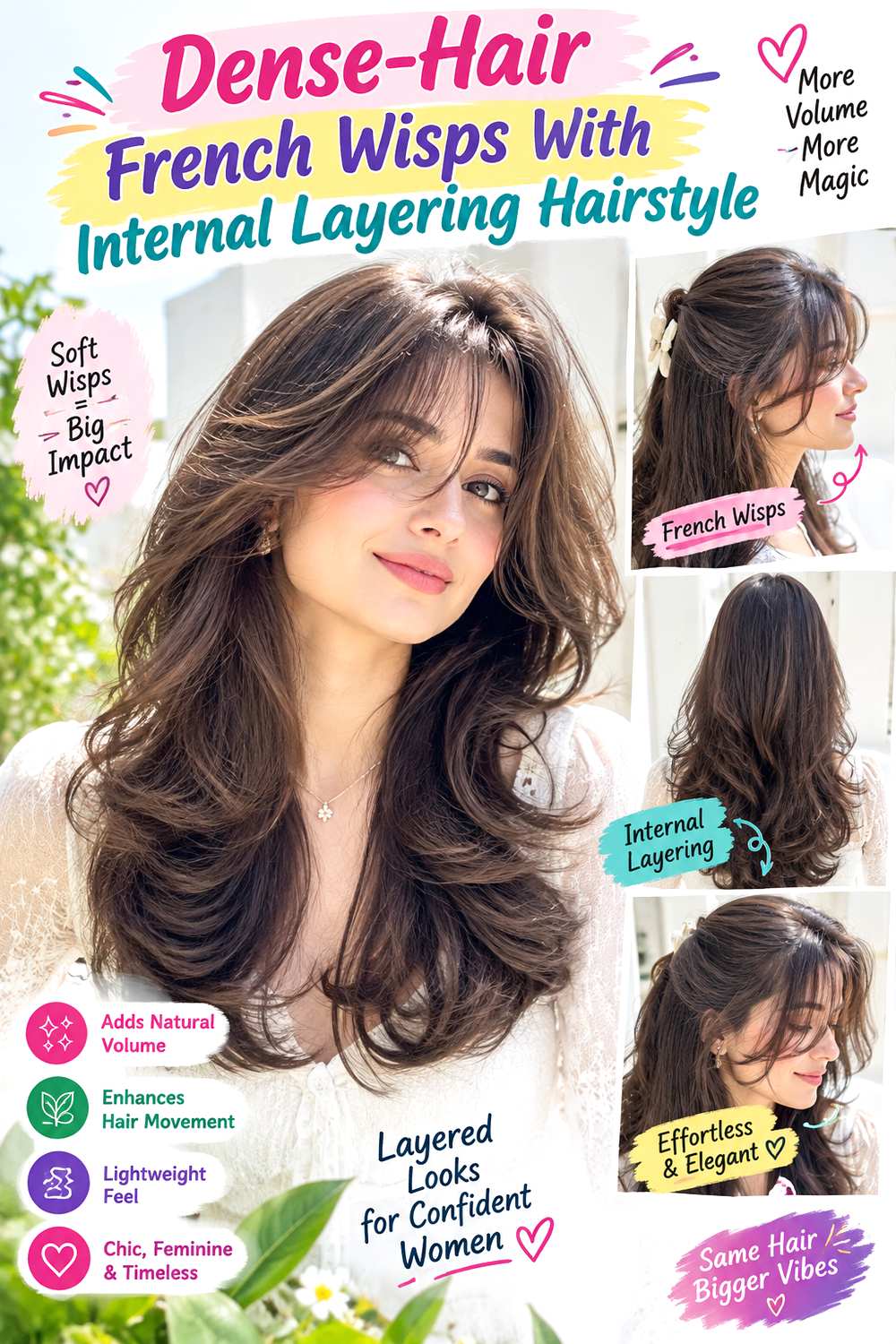
Dense hair can support abundant movement, but the placement of that movement matters. The fringe stays intentionally light, with brow-skimming center strands and longer temple pieces rather than a thick section pulled forward. Long exterior layers begin below the chin or near the collarbone, while carefully assessed internal weight reduction can help the main shape move without making the outer edge look heavily thinned.
Straight, wavy, and curly textures can all use this approach, although the amount and location of bulk differ greatly between them. A lightweight leave-in conditioner helps the lengths stay manageable, a large round brush can direct the face layers, and flexible hairspray gives the fringe gentle hold. Resetting only the bangs between washes is comparatively short. Fully drying and arranging very dense, long hair can be a substantial wash-day task even when the haircut itself grows out softly.
Ask your stylist where your hair actually expands before discussing internal weight removal. Reducing bulk indiscriminately can create short pieces that push outward instead of solving the problem. The fringe should also remain narrow enough to preserve its wispy character. Maintain the front when it starts covering the eyes, and revisit the longer shape when volume begins collecting in an unwanted area or the layers stop moving together.
Pro tip: Keep most leave-in conditioner away from the fringe roots and distribute it through dense mid-lengths first, where slip is useful without reducing front lift.
Make It Work for You: If your dense hair is curly, have the stylist judge bulk and fringe length in relation to the dry curl pattern rather than applying straight-hair layer placement.
Watch Out For: Aggressive thinning can leave dense hair with fuzzy short pieces or weak ends. Ask for controlled weight management only where the silhouette genuinely needs it.
Off-Center Wispy Bangs With Flowing Face Layers Hairstyle

A slightly off-center part makes the fringe asymmetric without turning it into a full side bang. Fine pieces still fall across the forehead, but one side carries a little more weight while the opposite side opens sooner. Outer fringe strands blend into long face layers that begin around the cheekbone on one side and travel toward the jaw or collarbone, creating a flowing transition into the long lengths.
This arrangement can be useful when the front naturally separates away from a perfect center part. Straight and wavy hair can show the asymmetry clearly, while soft curls create a looser interpretation. Use heat protectant before heat styling, a round brush to guide the fringe in its chosen direction, and flexible hairspray to prevent the light pieces from falling back into an unwanted split. A quick refresh can focus only on the front; building a polished bend through all long layers takes more time.
At the salon, show exactly where you normally part your hair so the fringe is balanced around that real position. Also identify whether the shortest face layer should hit the cheekbone or sit lower. Trim the bangs when their direction becomes difficult to control around the eyes, while allowing the flowing layers to grow until their blend begins to feel heavy.
Pro tip: Establish the off-center part while the roots are still damp, then dry the fringe from that point so you are not fighting a set-in center split later.
Make It Work for You: If you switch your part frequently, keep the asymmetry subtle and the outer fringe corners slightly longer so the bangs remain wearable in more than one direction.
Watch Out For: Making one side dramatically heavier can turn wispy bangs into a side fringe. Keep visible fine pieces across the forehead to preserve the French-inspired openness.
Soft Grown-Out French Bangs With Blended Long Layers Hairstyle

Longer, grown-out bangs sit between the brows and cheekbones, with the center pieces capable of falling forward or being separated into a loose middle opening. The outer corners merge gradually into face-framing layers around the jaw, then continue into long, blended layers below the shoulders. Because there is no sharp jump between fringe and length, the overall silhouette feels continuous and works well for readers moving away from shorter bangs.
The flexible length can suit straight, wavy, or curly hair, although curly shrinkage affects where the front actually settles. Use a lightweight styling cream to keep the longer fringe controlled, a wide-tooth comb to organize the blended lengths, and flexible hairspray when you need the front to stay away from the eyes. A daily front refresh is usually brief, while arranging every long layer from wet hair is a separate, longer job.
At the salon, explain whether you want to continue growing the fringe or maintain it at this in-between position. Ask for the outer corners to connect cleanly with jaw-level framing rather than creating a sudden step. Maintenance can focus on small reshaping around the front while the long layers continue growing, especially if your goal is eventually to blend the bangs completely into the haircut.
Pro tip: On days you want more forehead open, divide the grown-out center into two narrow sections and direct only those pieces outward rather than sweeping the entire fringe aside.
Make It Work for You: If you want to return to shorter bangs later, preserve enough central density during the grow-out so a future fringe can be reshaped without borrowing excessive hair.
Watch Out For: Letting every growing piece tuck behind the ears can hide the intended fringe-to-layer transition. Keep selected front strands loose to maintain the soft blended frame.
Conclusion
French wispy bangs with long layers can range from brow-skimming and polished to curly, tousled, side-directed, or nearly grown out. The best choice depends less on one fixed face shape and more on how fringe length, density, parting, layer placement, and end weight work with your natural texture. Fine or lower-density ends may benefit from restrained layering, while dense hair may need carefully placed movement rather than indiscriminate thinning. Consider the finish too: sleek layers can demand more styling when they differ from your natural texture, while waves or curls may work with a simpler refresh. Choose the version whose fringe upkeep and wash-day effort fit your routine as well as the shape you like.
Before Your Salon Visit
Choose one or two favorite references and save images that clearly show the fringe as well as the full length. Tell your stylist about your natural texture, density, usual part, preferred length, face-framing goals, maintenance tolerance, and normal styling routine. Point out the exact bang length, outer-corner blend, layer starting point, volume placement, and end finish you want. If you like the fringe from one reference and the layers from another, say so clearly rather than expecting one picture to communicate every detail.
FAQs
How Often Do French Wispy Bangs Need Trimming?
The fringe usually needs attention before the long layers because even modest growth changes where the center pieces sit around the eyes. Instead of following one fixed schedule, consider a trim or reshaping when the wisps repeatedly enter your eyes, lose their intended separation, or stop blending comfortably into the longer corners.
Can French Wispy Bangs Work With Curly Hair?
Yes, but the bangs should be planned around the curl pattern and their finished dry position. Curl shrinkage varies, so a single wet measurement is unreliable. Keeping the fringe slightly longer initially and assessing individual curl groups when dry can help preserve an airy shape without accidentally creating a much shorter fringe.
Do I Need Heat to Style French Wispy Bangs?
Not necessarily. Hair that naturally falls close to the desired shape may need only damp reshaping or product-assisted control. Heat can help redirect stronger growth patterns or create a polished bend, but it is optional. If you use heat, apply heat protectant and avoid repeatedly restyling the same small fringe sections.
What Should I Ask for When Getting French Wispy Bangs With Long Layers?
Describe the finished fringe length, how much forehead you want visible, where the outer corners should end, and where the face-framing layers should begin. Also discuss the bottom-edge fullness you want to keep. Bringing clear references helps your stylist assess those proportions against your texture, density, growth direction, and regular styling routine.