14 Modern Chignon Hairstyles for Fall 2026
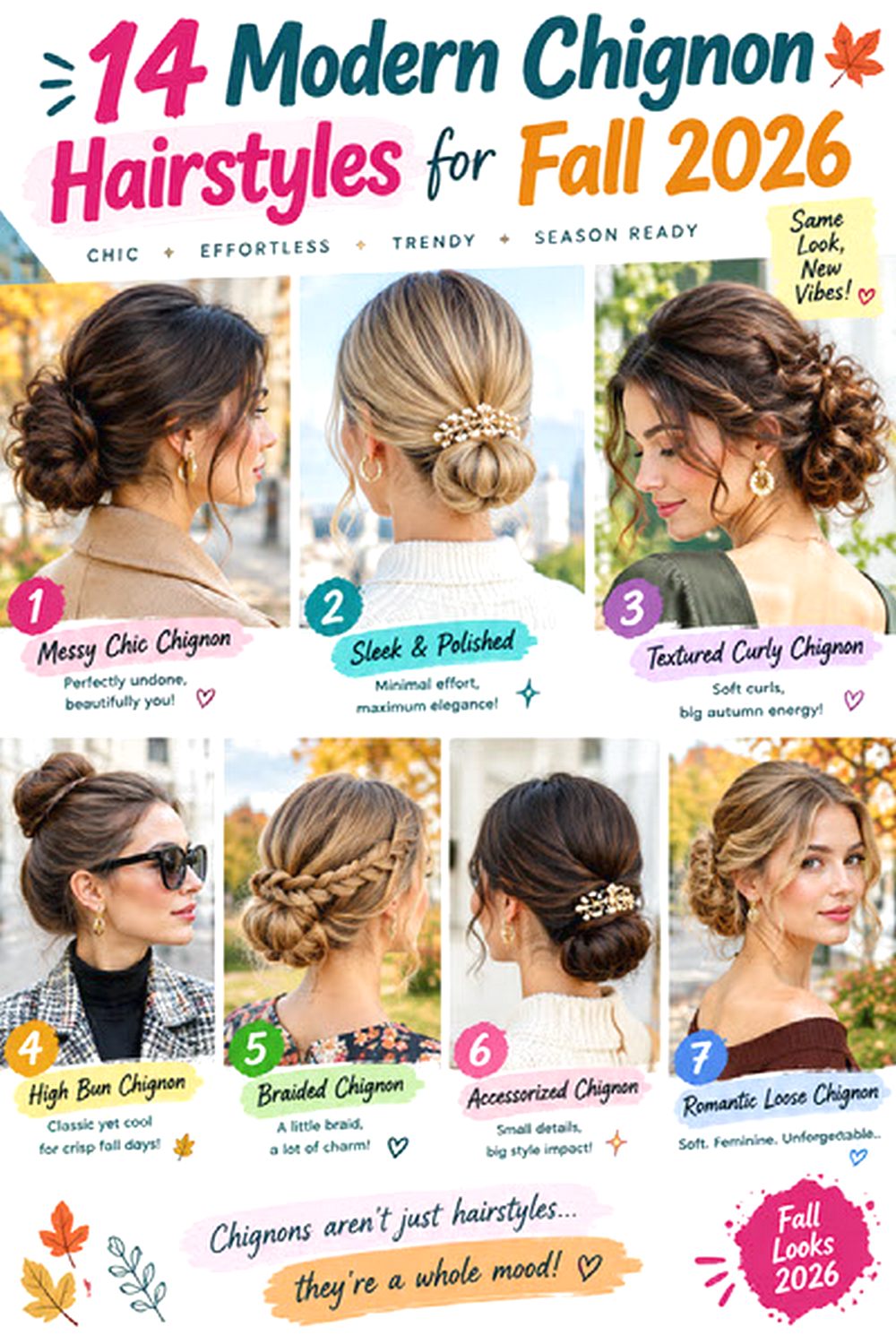
A chignon gathers the hair into a bun, knot, or folded shape, usually around the nape or lower back of the head. What makes current versions feel fresh is the variety in finish. Some are smooth with a sharp center part, while others use loose texture, visible twists, curtain bangs, or soft face-framing pieces. The shape can stay compact and close to the head or become wider and more dimensional through careful pinning and crown volume.
These modern chignon hairstyles for Fall 2026 can be adjusted for different hair types and densities. Fine hair often benefits from an airy construction that creates width without excessive teasing. Thick hair needs secure pins and may be easier to manage when divided into sections. Wavy and curly textures bring natural movement, while straight hair provides a clean base for polished versions. Fringe length and face-framing placement can be changed for different face shapes.
Daily effort depends on the finish. A simple low knot can be quick, while braided or structured chignons need more time. Consider your length, layers, density, natural texture, humidity, and preferred maintenance before choosing your version.
Quick List
- Sleek Low Chignon with Center Part hairstyle
- Soft Chignon with Face-Framing Pieces hairstyle
- Textured Low Chignon with Loose Waves hairstyle
- Side-Parted Polished Chignon hairstyle
- Twisted Chignon with Soft Crown Volume hairstyle
- Braided Chignon Updo hairstyle
- Messy Chignon with Wispy Bangs hairstyle
- Chignon with Curtain Bangs hairstyle
- French Twist Chignon hairstyle
- Knotted Low Chignon hairstyle
- Chignon for Natural Curls hairstyle
- Voluminous Chignon for Thick Hair hairstyle
- Soft Chignon for Fine Hair hairstyle
- Ribbon-Wrapped Chignon hairstyle
Sleek Low Chignon with Center Part hairstyle
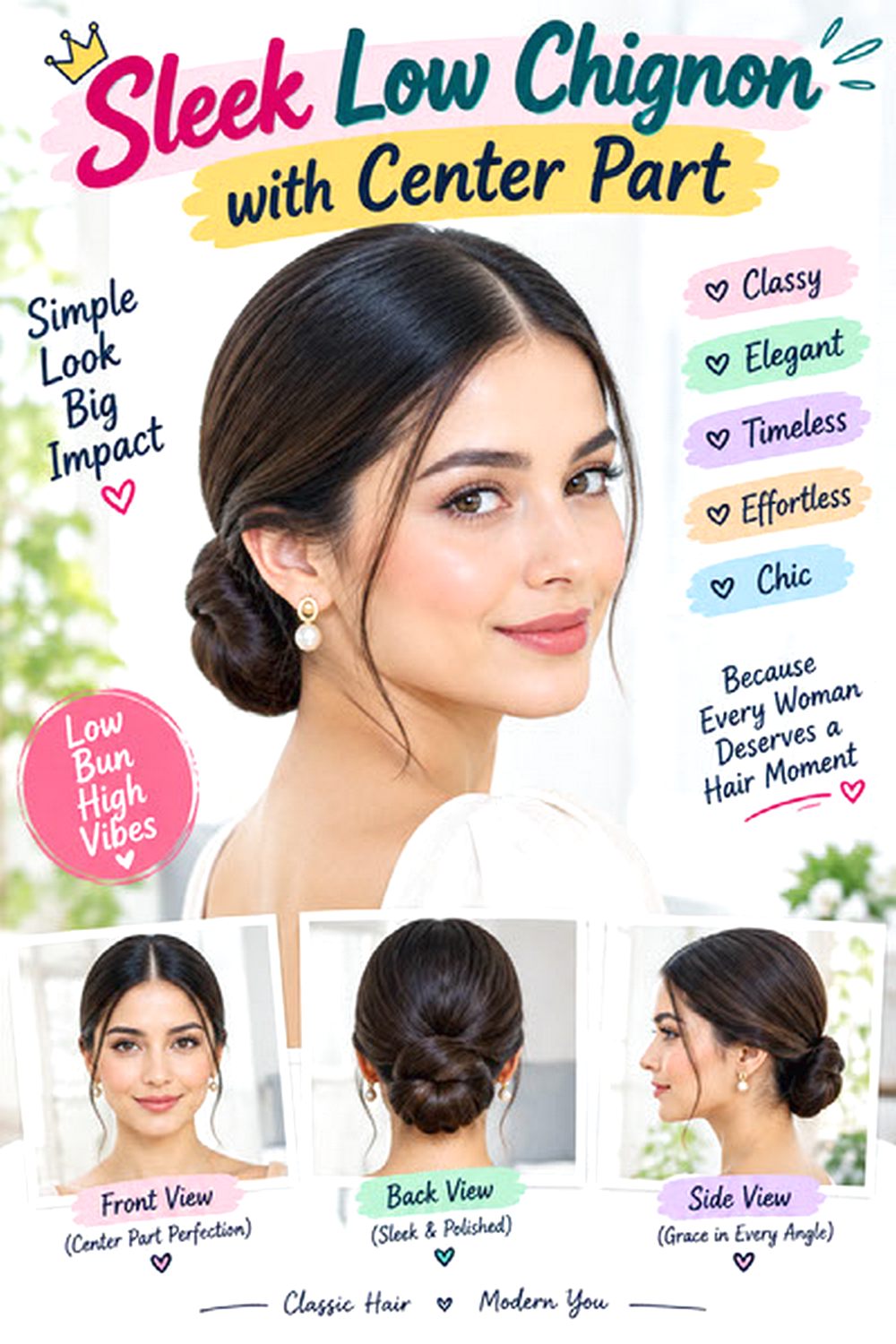
A precise center part and compact low chignon create a clean silhouette with very little loose texture around the face. The hair is smoothed toward the nape before being twisted or folded into a neat bun, so straight and lightly wavy textures require the least preparation. Curly or coarse hair can also wear the finish, but achieving a very sleek surface generally means more blow-drying or smoothing. Fine hair works well when the bun is kept proportionate rather than oversized, while thick hair may need to be divided before coiling. Use smoothing cream, a boar-style or firm smoothing brush, and strong hairpins. Styling takes moderate time because flyaways and parting need attention. Humidity may require a small anti-frizz refresh around the hairline. At the salon, ask to keep the nape and side layers long enough to reach a low ponytail cleanly if this is an updo you wear often.
Pro tip:
Create and perfect the center part before applying smoothing product; changing it afterward can leave product-heavy roots and an uneven line.
Soft Chignon with Face-Framing Pieces hairstyle

Loose front pieces make a chignon feel softer without requiring the entire updo to be messy. Separate one or two sections around each temple before gathering the remaining hair low at the back. Depending on your haircut, those pieces can end near the cheekbones, jaw, or collarbone and may be worn straight or with a subtle bend. Medium and thick hair naturally creates a fuller chignon, while fine hair benefits from a loose coil that is gently expanded after pinning. Use lightweight mousse for grip, a medium curling iron for the front, and flexible hairspray to control flyaways. The bun itself is fairly quick; shaping the face frame adds a few extra minutes. In humid conditions, a tiny amount of anti-frizz product can prevent the loose pieces from becoming fuzzy. At the salon, show exactly where you want the shortest front layer to fall so it remains intentional whenever the rest of your hair is pinned up.
Pro tip:
Separate the face-framing pieces before securing the chignon; pulling them out later can loosen the sides and shift the bun.
Textured Low Chignon with Loose Waves hairstyle
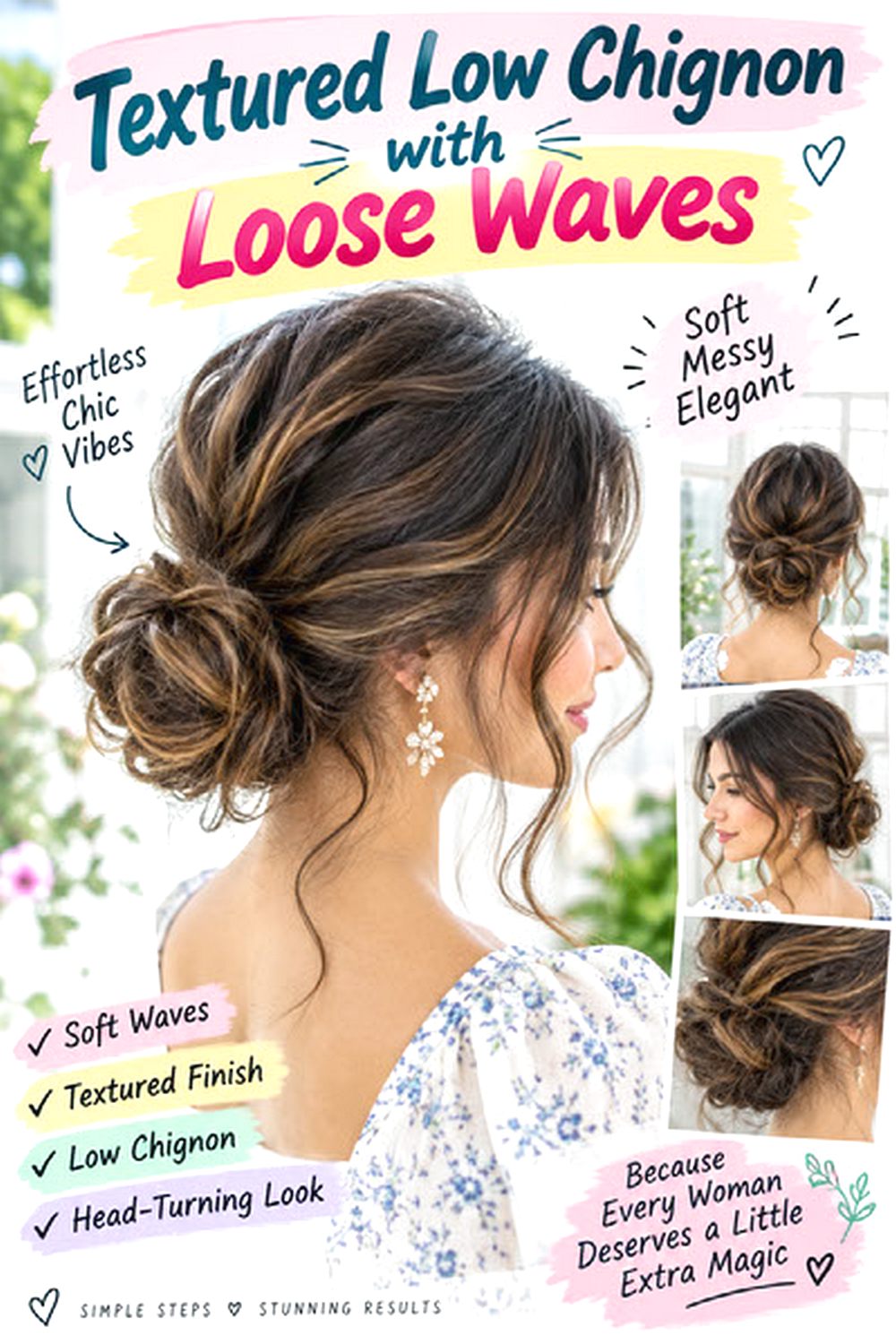
Starting with loose waves gives a low chignon visible texture through the crown and bun instead of a completely smooth surface. This works especially well for naturally wavy hair because much of the movement is already present. Straight hair can create the base with a curling iron, while very curly hair can adapt the shape without removing all its natural definition. Medium-density hair is easy to pin; fine hair should use light texture rather than heavy teasing, and thick hair may need several anchor pins. Prep with heat protectant, a large-barrel curling iron, and dry texturizing spray. Styling takes moderate time when waves are created first but is faster on naturally textured hair. The finish is forgiving if a few pieces loosen during the day. At the salon, ask for long blended layers rather than many short layers so the bun retains fullness and does not release too many ends.
Pro tip:
Curl only broad sections before building the chignon; tiny curls can create unnecessary bulk and make the bun harder to shape.
Side-Parted Polished Chignon hairstyle
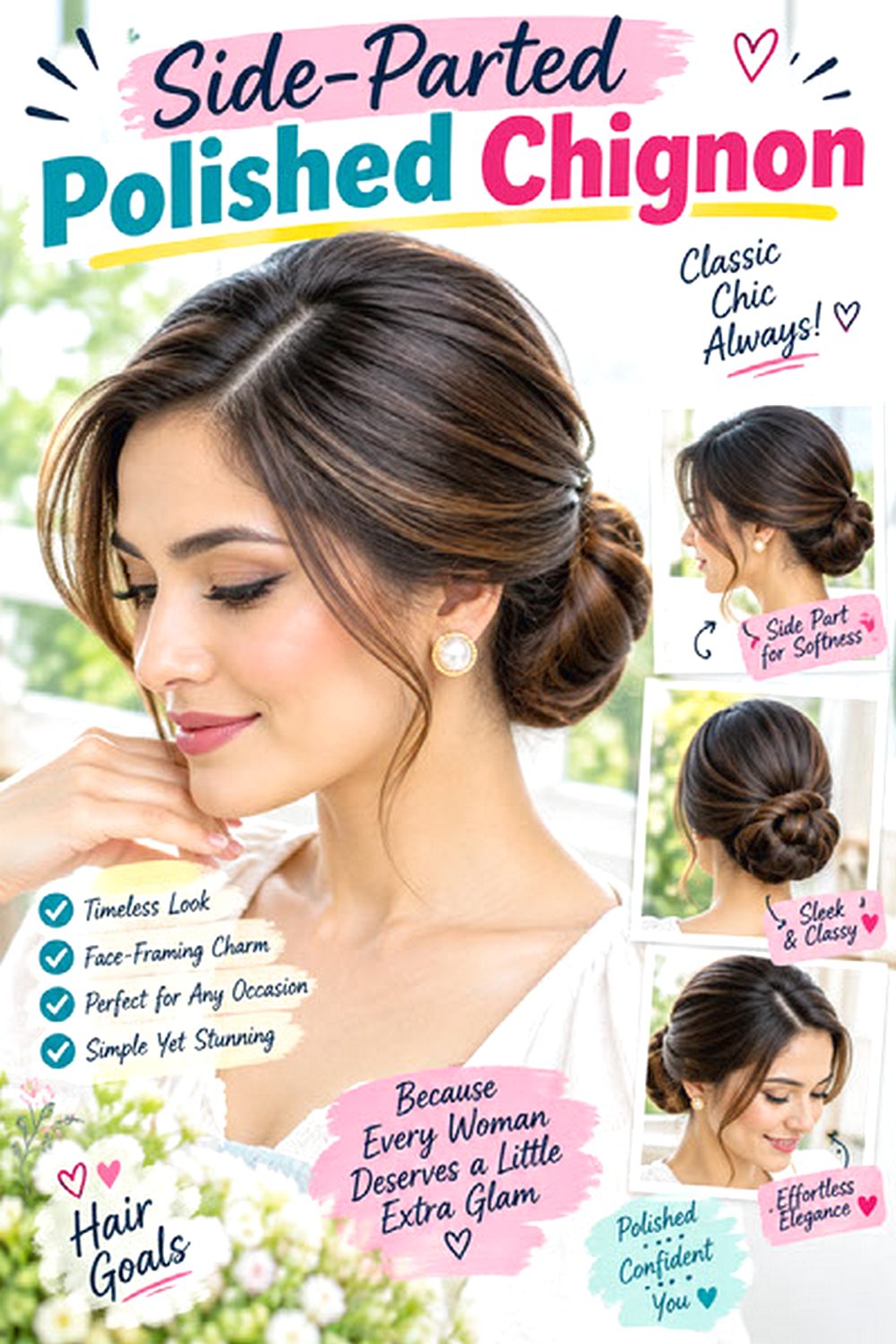
A deep side part changes the balance of a polished chignon by creating a broad sweep across one side of the forehead. Keep the surface smooth and position the bun low enough that the side direction remains the main feature from the front. Straight hair is easiest to polish, while wavy and curly textures may need a blow-dry when a very smooth finish is desired. Medium to thick density works well because the chignon retains substance, although fine hair can create more shape by folding rather than tightly twisting the length. Use heat protectant, a paddle brush, and lightweight shine serum. Styling takes moderate effort and may need a brief hairline refresh later in humid weather. Different face shapes can adjust the depth of the part rather than avoiding the style altogether. At the salon, show your normal side part and ask for front layers long enough to sweep smoothly behind the ear and into the bun.
Pro tip:
Follow the natural direction of the heavier side while blow-drying; forcing the roots against their growth pattern makes the sweep harder to keep smooth.
Twisted Chignon with Soft Crown Volume hairstyle
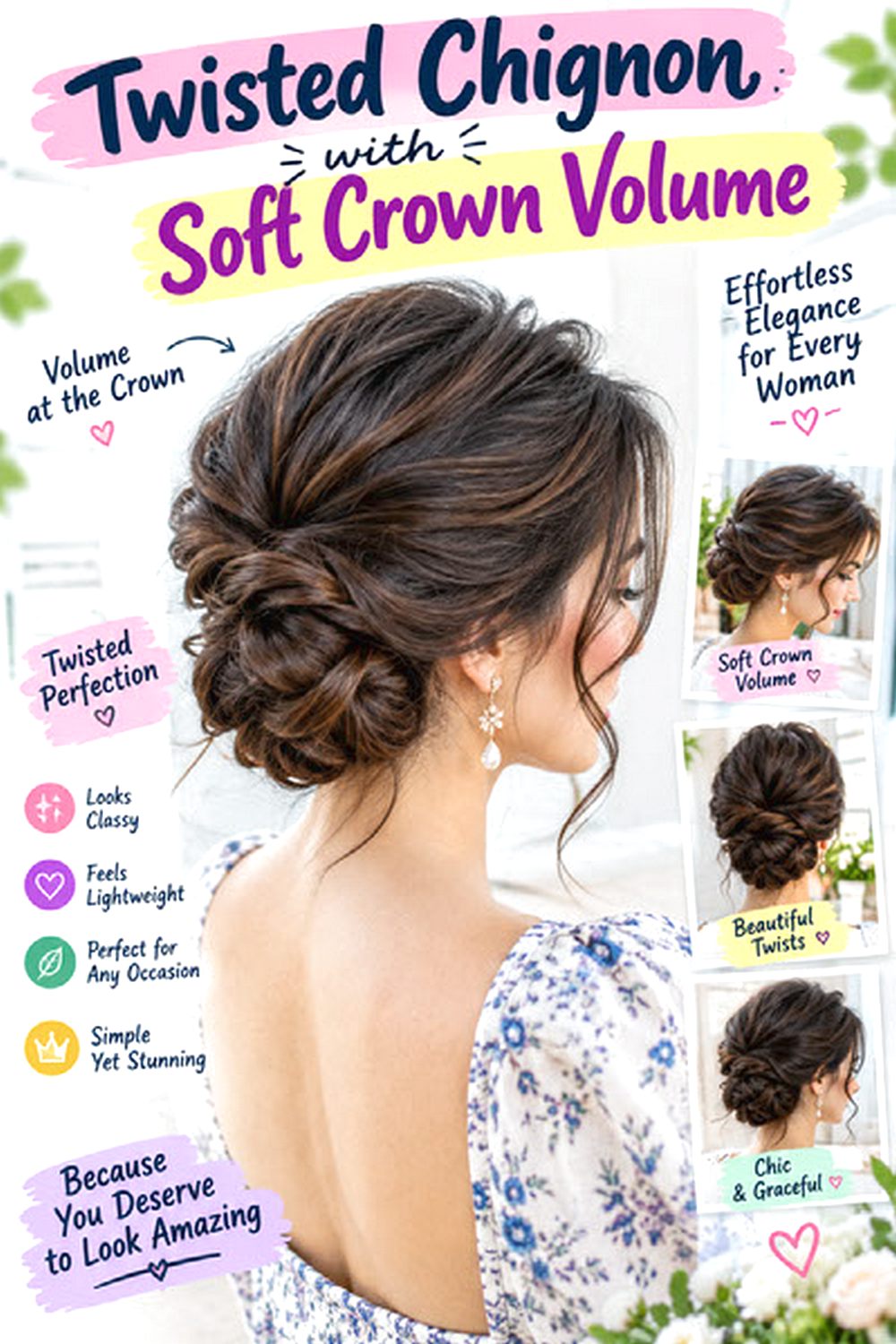
Crown volume keeps a twisted chignon from sitting completely flat against the head. Instead of gathering everything directly backward, leave a little looseness at the roots and twist the side sections toward a rounded bun near the nape. Medium and long hair gives enough length for the twists to remain visible. Fine hair benefits from light root lift, while thick hair can use larger sections so the finished shape does not become overly complicated. Start with volumizing spray, use a teasing comb only where necessary, and secure the twists with strong bobby pins. Styling is moderate and easier on hair with some natural texture or second-day grip. Avoid excessive backcombing because it makes later detangling difficult and can distort the crown. At the salon, ask for long layers through the crown that still reach the chignon while creating movement when the hair is worn down.
Pro tip:
Create crown lift before twisting the sides; trying to pull volume upward afterward can loosen the anchors holding the chignon.
Braided Chignon Updo hairstyle
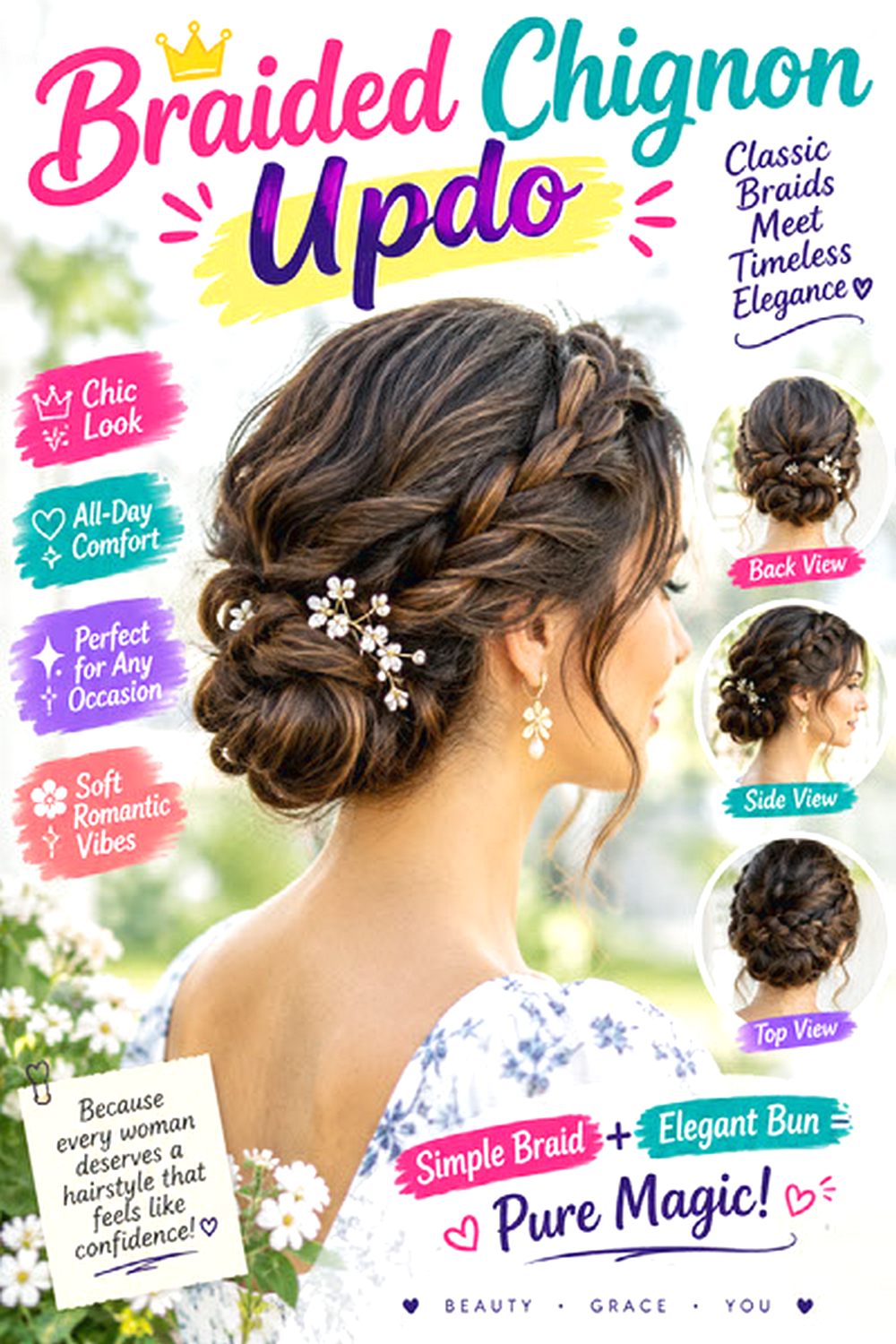
Braiding the hair before coiling it creates a chignon with visible woven detail instead of a smooth bun surface. A low ponytail can be divided into one or two braids, which are then widened slightly and pinned around the base. Long hair displays the braid pattern most clearly. Thick hair creates a substantial chignon naturally, while fine hair can loosen the braid before coiling to build more width. Straight and wavy textures are easy to organize, though curly hair can create an attractive softer weave. Use lightweight styling cream, small clear elastics, and strong hairpins. This updo needs moderate time because each braid should be shaped before it is pinned. Maintaining healthy, reasonably dense ends also helps the woven pattern stay consistent. At the salon, ask to preserve perimeter weight and avoid excessive thinning through the final inches if braided updos are part of your regular styling routine.
Pro tip:
Widen the braid before wrapping it into the chignon; trying to pull individual loops afterward can disturb the pins and make the bun uneven.
Messy Chignon with Wispy Bangs hairstyle
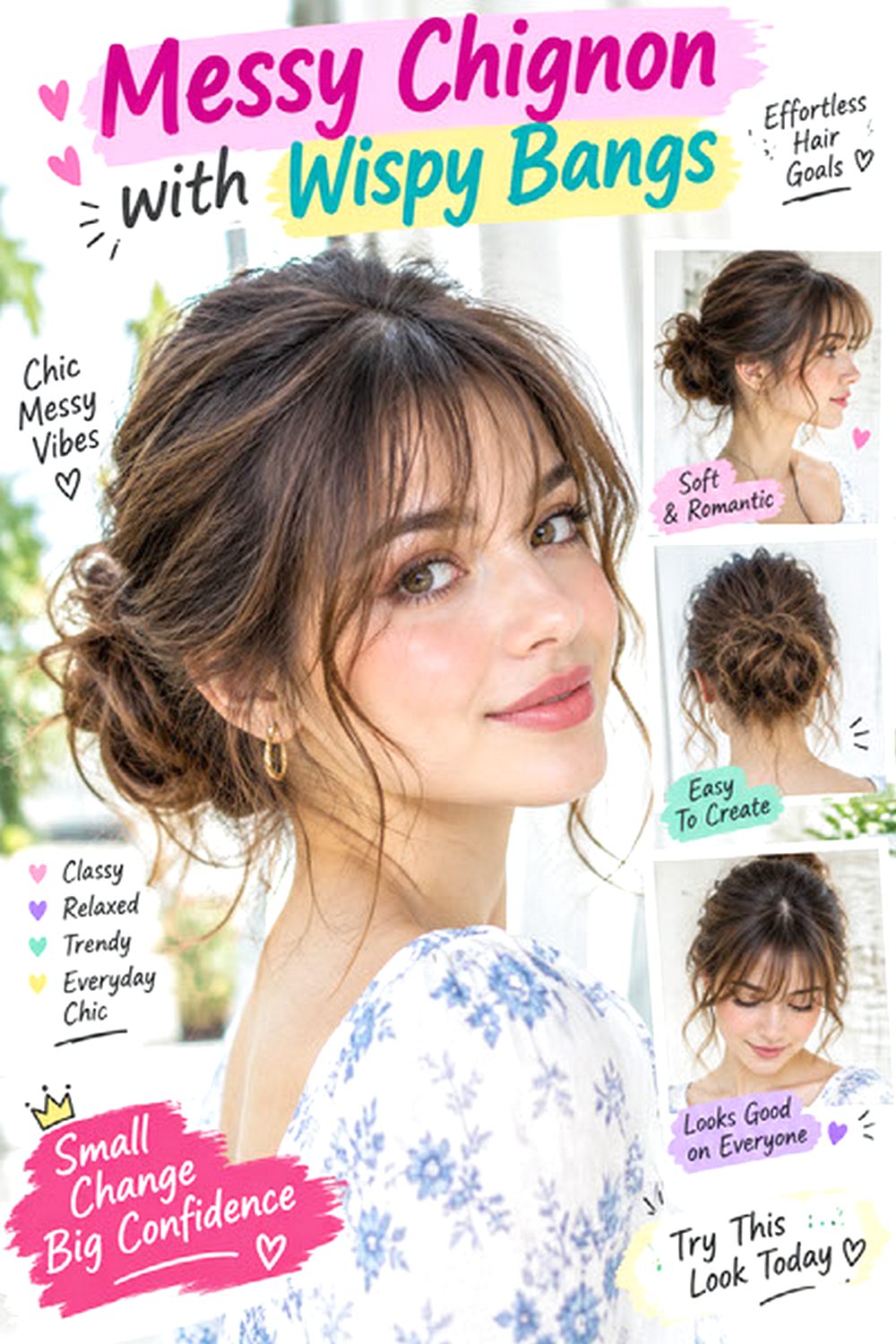
Wispy bangs give a messy chignon softness at the front while the loosely pinned bun adds movement at the back. The fringe should stay light enough to separate naturally rather than forming a dense block across the forehead. Fine to medium hair often carries airy bangs well, while thick hair may need the fringe section carefully reduced without thinning the rest of the hair too aggressively. Wavy texture works naturally with the relaxed bun. Use lightweight mousse, a small round brush for the bangs, and dry texture spray through the chignon. Styling is quick to moderate because precision is less important than secure placement. The bangs usually need more frequent refreshing and trimming than the bun itself. Avoid pulling out too many random pieces, which can make the shape look unfinished. At the salon, specify the desired fringe density and keep the shortest pieces around brow level if that is the reference you prefer.
Pro tip:
Refresh only the fringe on the second day; keeping the bun’s existing texture often makes the updo easier to rebuild than starting from freshly washed hair.
Chignon with Curtain Bangs hairstyle
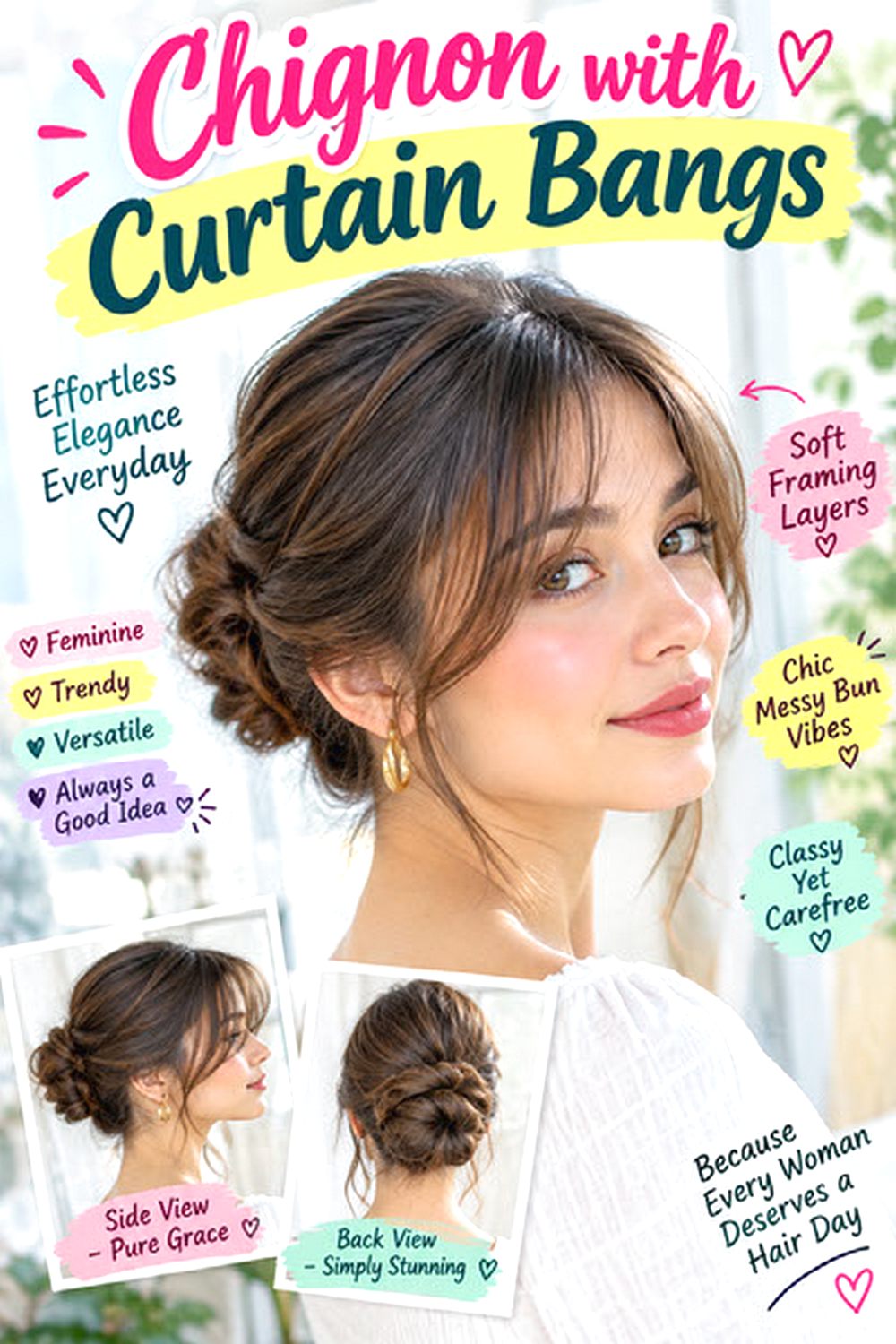
Curtain bangs create a clear front frame while a low chignon keeps the remaining hair controlled. The fringe splits near the center and sweeps toward the cheekbones or jaw, with longer pieces gradually disappearing into the sides. Straight and wavy textures usually need only a round-brush blow-dry, while curly bangs should be cut with shrinkage in mind. Fine hair often benefits from a lighter curtain section so enough density remains for the chignon. Use heat protectant, a medium round brush, and flexible hairspray to shape the fringe before gathering the back. Daily styling takes about five to ten minutes for the bangs plus a few minutes for the bun. Curtain bangs may need reshaping before the rest of the haircut. At the salon, explain where you want the shortest fringe point and where the longer side pieces should blend into your face-framing layers.
Pro tip:
Blow-dry the bangs forward first and sweep them away from the face as they cool; this creates a softer center split without excessive separation.
French Twist Chignon hairstyle
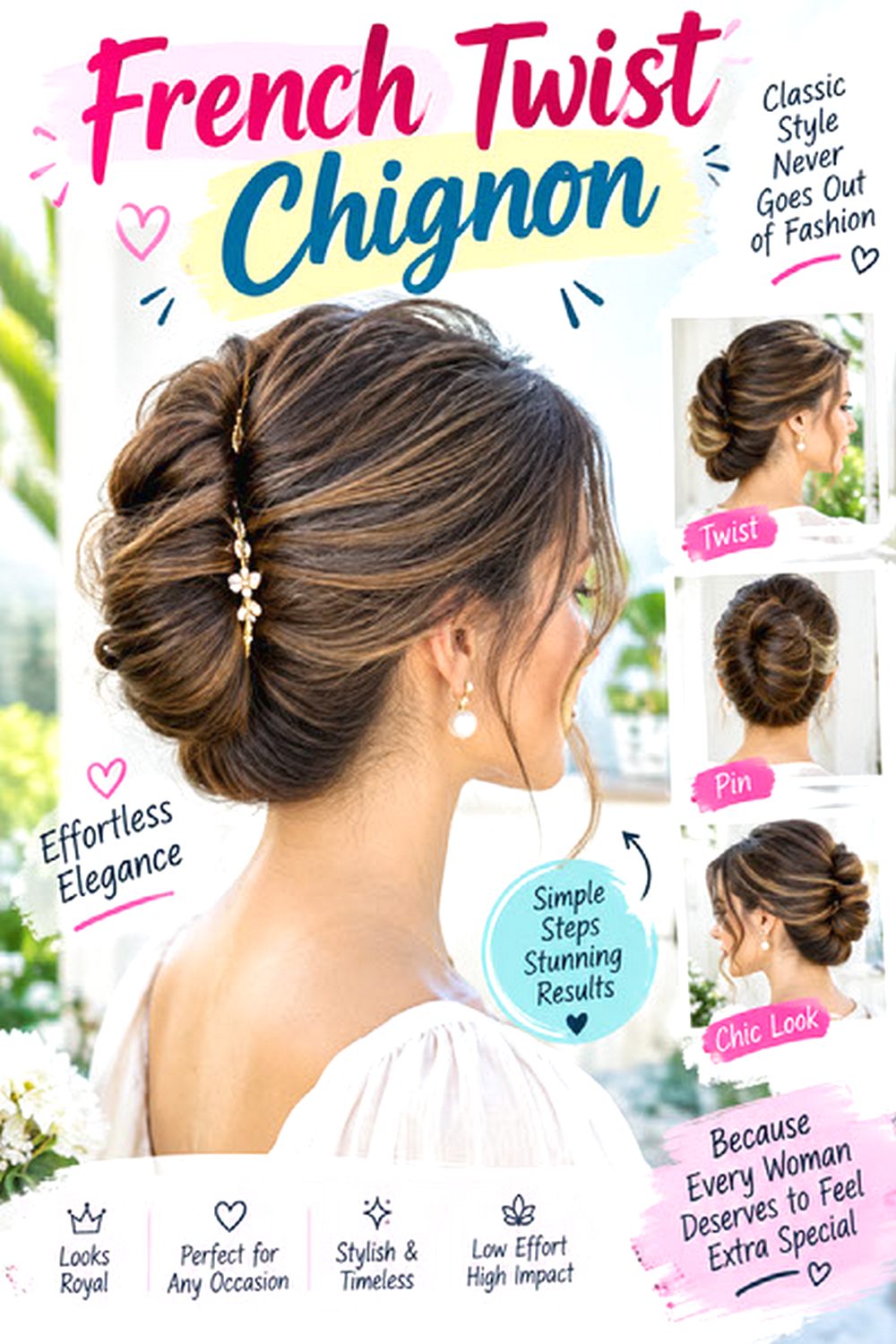
A French twist chignon combines vertical movement through the back with a compact folded finish near the nape. Instead of rolling all the hair into a tall twist, the lower length is tucked into a rounded chignon, creating more shape at the bottom. Medium to long hair is easiest to manipulate, and straight or lightly wavy texture gives the cleanest outer surface. Fine hair can use subtle internal backcombing for support; thick hair may need several anchor pins before the fold is formed. Prep with dry texturizing spray, use strong French pins, and finish with light-hold hairspray. Styling needs more time and practice than a simple bun but can remain secure for long events. At the salon, keep side and lower layers long enough to tuck smoothly into structured updos instead of cutting too many short disconnected pieces.
Pro tip:
Build a hidden vertical line of crossed pins before forming the fold; it gives the twist a firm anchor and prevents the chignon from dropping.
Knotted Low Chignon hairstyle
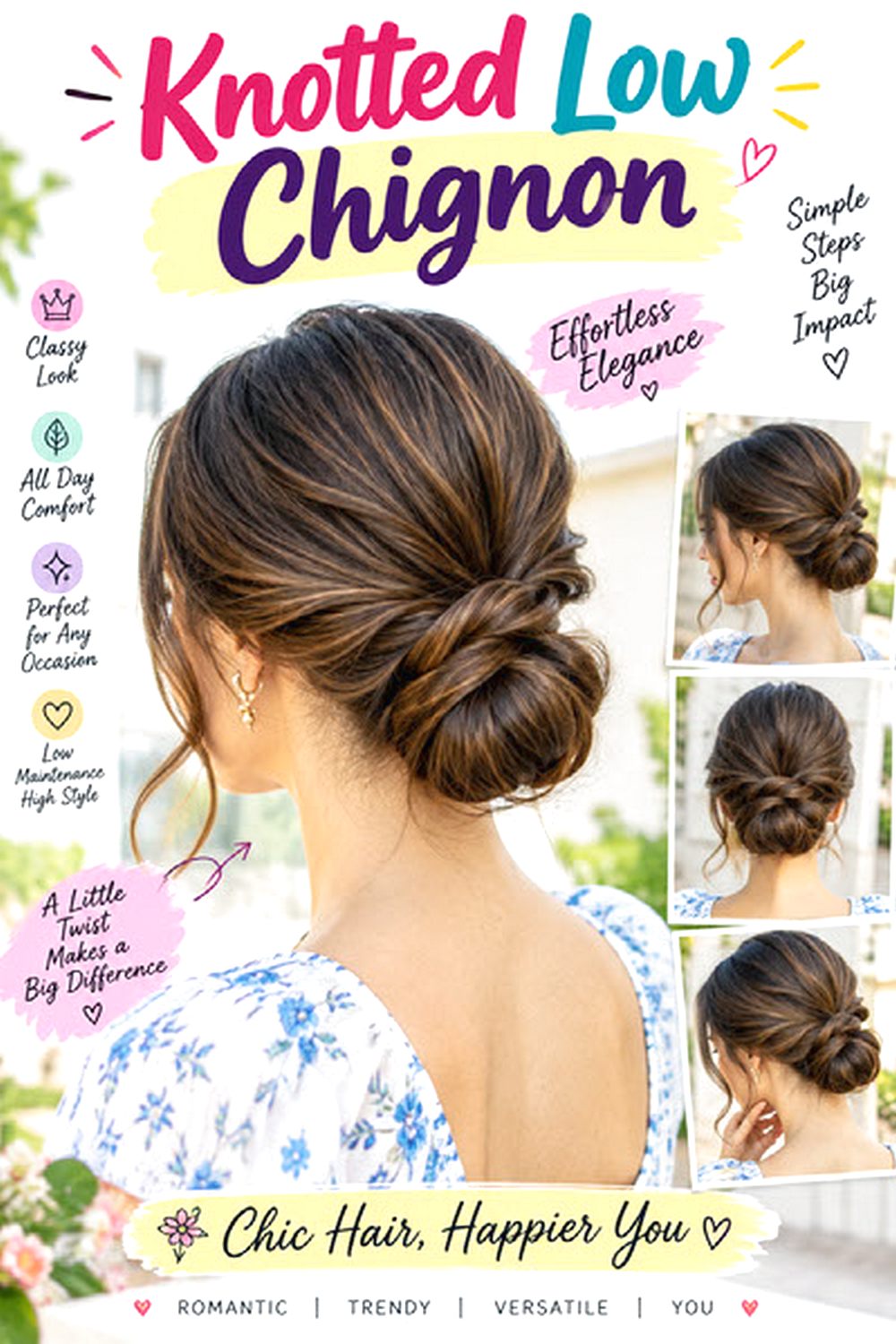
A knotted chignon uses the hair itself to create an interlocked shape at the nape, giving the bun more visible structure than a simple coil. Medium and long hair works best because the sections need enough length to cross, knot, and tuck underneath. Straight hair shows the knot clearly, while wavy texture gives it a softer surface. Fine hair should keep the knot loose enough to retain width; very thick hair may be easier to manage when divided into two smaller sections rather than one bulky knot. Use smoothing cream, snag-free elastics if extra anchoring is needed, and sturdy bobby pins. Styling takes moderate time but requires little heat. Dry or heavily layered ends may poke out of the knot, making regular trims helpful. At the salon, request long connected layers and preserve enough density at the perimeter for the tucked sections to remain substantial.
Pro tip:
Form the knot before tightening it against the head; keeping a little space makes it easier to hide the ends underneath without distorting the shape.
Chignon for Natural Curls hairstyle
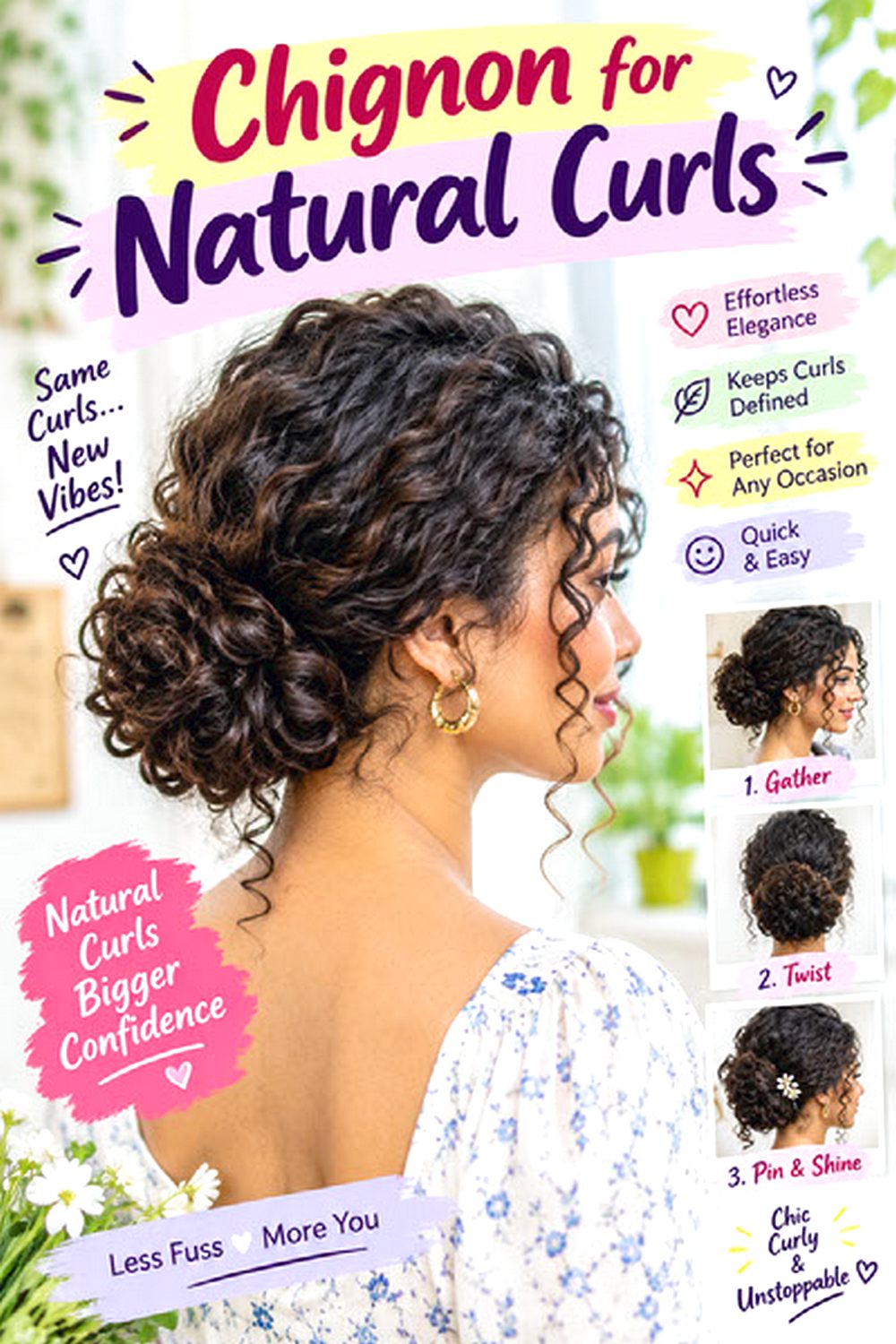
Natural curls create a chignon with dimension even when the construction itself is simple. Gather moisturized curls toward the nape with gentle tension, then pin sections into a rounded bun rather than brushing the surface completely smooth. A few defined curls can remain around the face if they fit the desired shape. Medium and thick curly hair creates natural fullness, while fine curls often benefit from keeping more perimeter density in the haircut. Use leave-in conditioner, curl cream, and strong hairpins that can hold sections without crushing them. Wash-day definition takes more time, but building the chignon from already styled curls can be fairly quick. Humidity may increase frizz, so refresh individual exposed curls rather than coating the whole updo. At the salon, discuss shrinkage and ask for layers that distribute curl volume while leaving enough length around the sides and nape for comfortable updos.
Pro tip:
Pin curl groups rather than separating every curl into smaller strands; larger sections preserve definition and give the chignon a fuller textured surface.
Voluminous Chignon for Thick Hair hairstyle
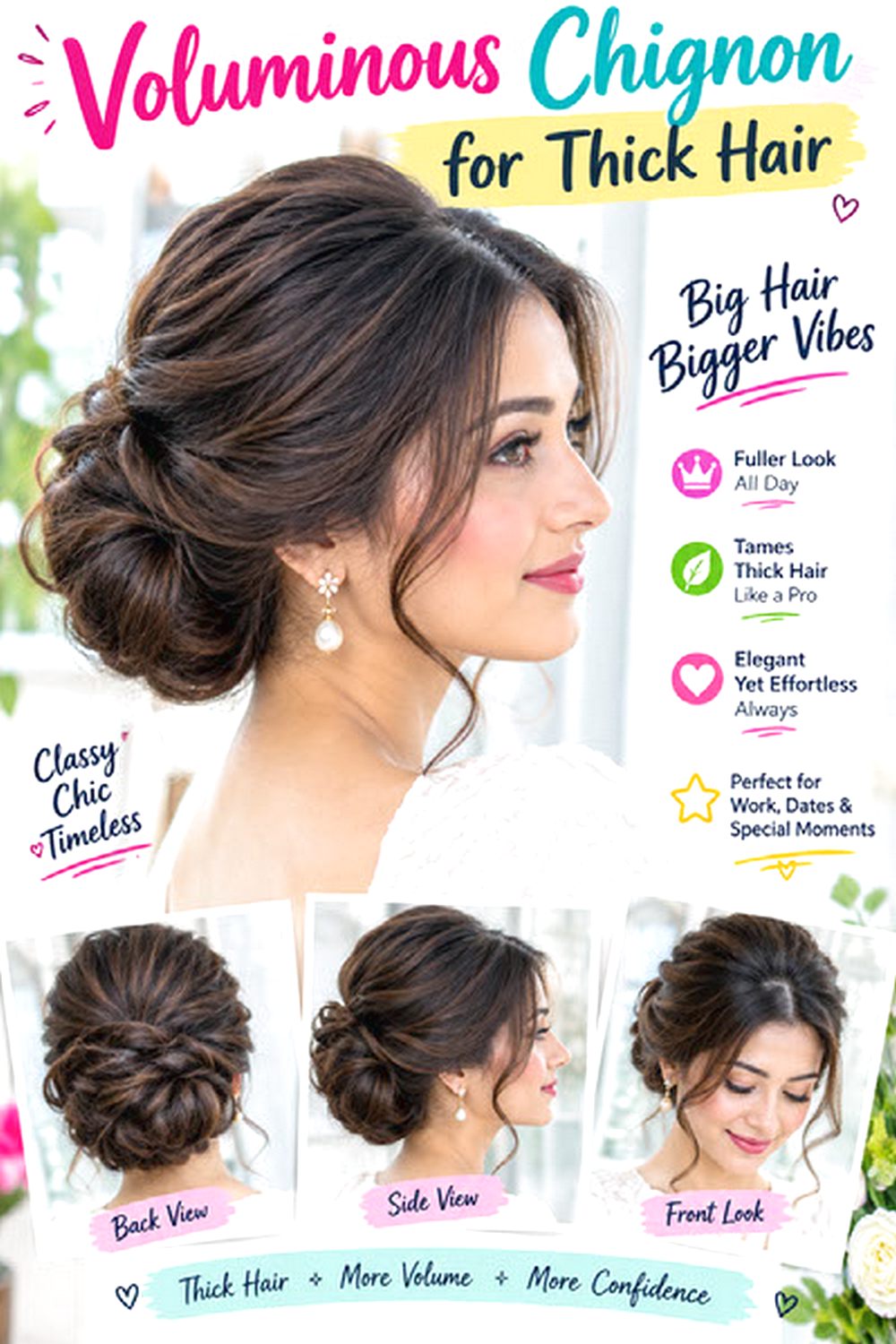
Thick hair can build a generous chignon without padding, but distributing the density is essential for comfort. Instead of twisting the entire length into one tight coil, divide the hair into two or three sections and pin them into a broad, connected shape. This reduces tension and prevents a heavy bun from pulling from one point. Straight, wavy, and coarse textures can all work, with natural wave providing useful grip. Prep with smoothing lotion, use heavy-duty hairpins, and finish with flexible hairspray rather than layers of stiff product. Styling takes moderate to longer time because the sections need secure anchoring. If thick hair repeatedly feels bulky in updos, internal weight removal can help, but the perimeter should remain strong. At the salon, ask for strategic internal debulking instead of aggressive thinning through the ends, which can create short pieces that escape from the chignon.
Pro tip:
Spread the bun horizontally across the nape rather than stacking all the density outward; a broader chignon distributes weight more comfortably.
Soft Chignon for Fine Hair hairstyle
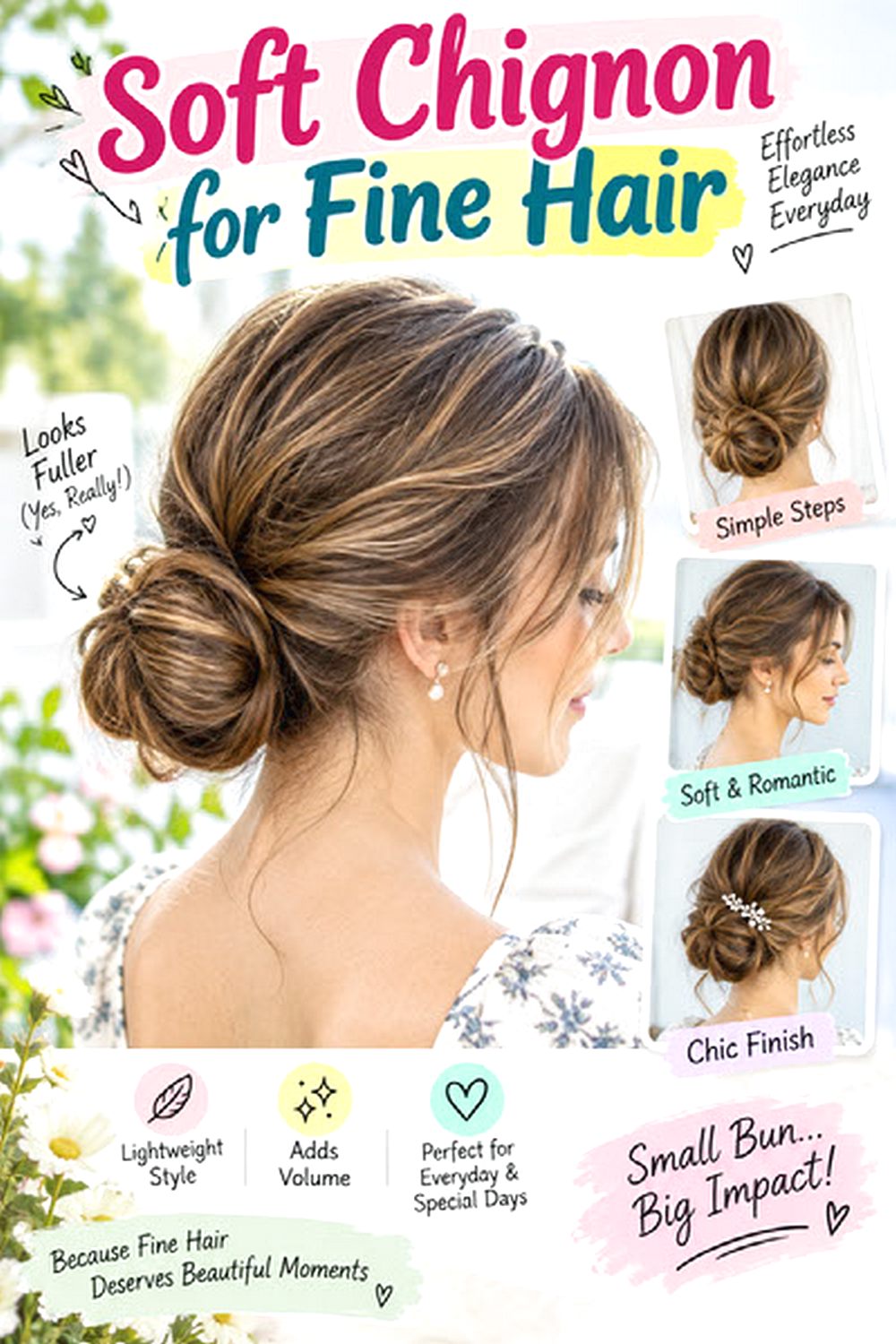
Fine hair can create a fuller-looking chignon when the length is folded loosely instead of being wound into a tiny, tight bun. Begin with subtle root lift, gather the hair near the nape, and form a soft loop or several overlapping folds. Keeping the surface airy preserves dimension without requiring heavy backcombing. Straight and lightly wavy fine hair work particularly well, though very silky strands may need extra grip. Use volumizing spray, dry texture powder, and small lightweight pins that will not drag the bun downward. Styling is quick to moderate and often easier on second-day hair. Heavy serum and thick creams can collapse the shape, so use them sparingly. The haircut underneath should retain enough density at the ends to make the fold look substantial. At the salon, ask for restrained long layers and a reasonably full perimeter rather than extensive thinning.
Pro tip:
Push the completed chignon gently upward before placing the final pins; that small adjustment adds lift without teasing the roots.
Ribbon-Wrapped Chignon hairstyle
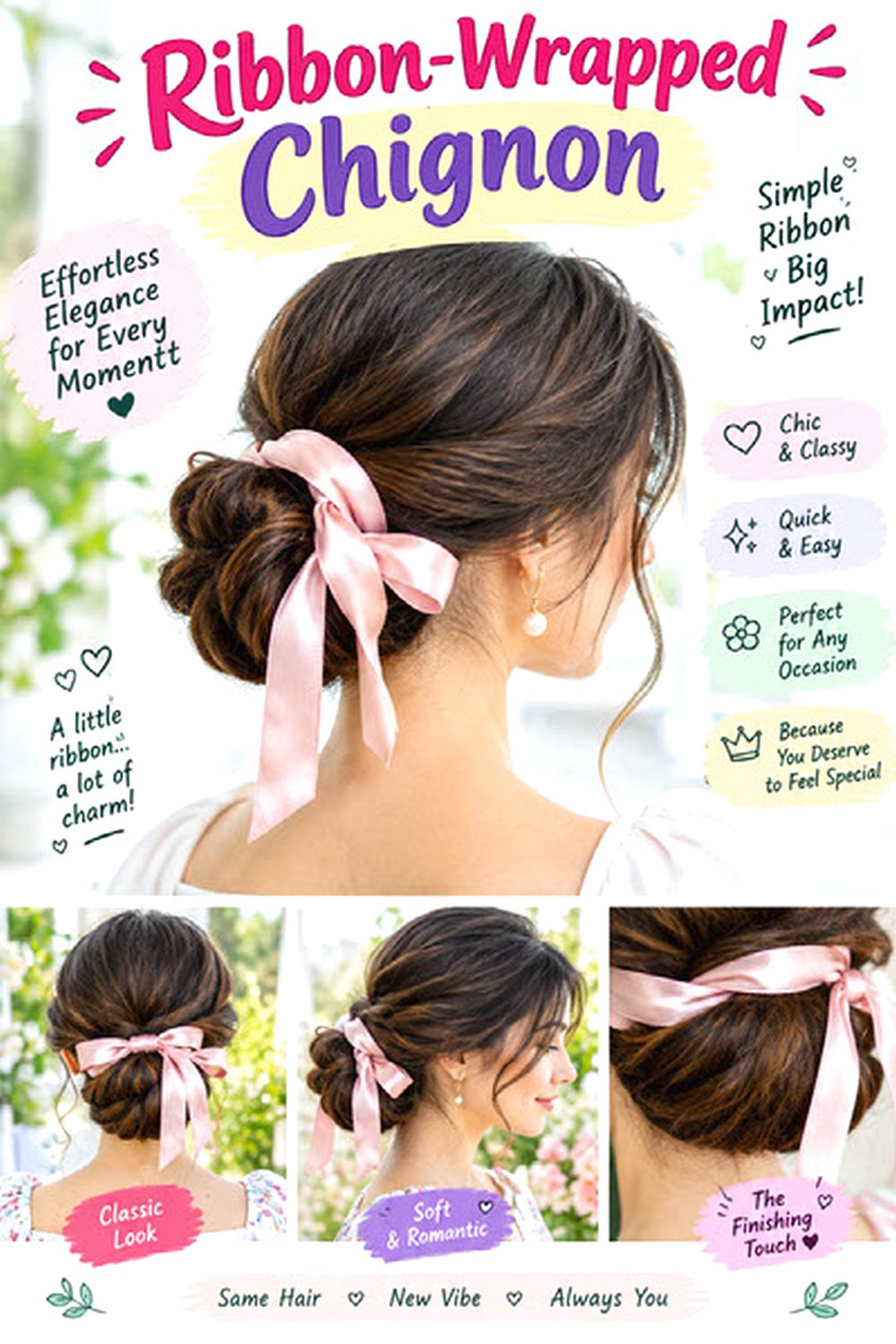
A ribbon adds color and texture to a simple chignon without changing the underlying shape. Build a low bun first, then wrap satin, velvet, or grosgrain ribbon around its base or thread it across selected sections before tying a small bow. Medium to long hair gives enough material for a balanced chignon, while the ribbon width should be chosen according to the bun size. Fine hair usually looks balanced with narrow ribbon; thick hair can carry a wider fabric accent. Use lightweight styling cream, secure hairpins, and ribbon with smooth finished edges to reduce snagging. Styling is moderate because the chignon should be completely stable before the decorative wrap is added. Velvet provides more grip, while slippery satin may need a hidden pin. At the salon, ask to preserve enough length and perimeter weight for a clean low bun, especially if you regularly wear accessory-based updos.
Pro tip:
Anchor the ribbon underneath the chignon with a hidden pin before wrapping it; this keeps the fabric from rotating around the bun as you move.
Choosing Modern Chignon Hairstyles for Fall 2026
The best modern chignon hairstyles for Fall 2026 can be adjusted through bun placement, density, layers, fringe, crown volume, texture, parting, and finish. A sleek center-parted chignon gives a cleaner outline, while loose waves, curls, twists, or wispy pieces create more movement. Fine hair often benefits from folded construction and restrained layering, whereas thick hair usually needs stronger anchoring and thoughtful bulk removal. Natural curls can remain textured rather than being smoothed completely, and curtain bangs or face-framing layers can change how the updo sits around different face shapes. Consider styling effort as well: a basic low knot can be quick, while braided and French-inspired shapes need more time. The right choice should fit your natural texture, density, preferred length, maintenance habits, and normal routine.
Choose one or two favorite chignons and save clear photo references showing the front, side, and back. Discuss your face shape, natural texture, density, preferred length, maintenance level, and styling routine with your stylist. Point out the exact bun placement, fringe length, face-framing pieces, crown volume, layer placement, or polished versus textured finish you want. Those details make it much easier to shape the haircut so your preferred chignon works with your hair rather than requiring unnecessary daily styling.
FAQs
How long does hair need to be for a chignon?
Hair that reaches around the shoulders or longer is generally easier to gather and pin into a chignon. Shorter hair can still work with smaller folded sections and additional pins.
Can fine hair create a full-looking chignon?
Yes. Keep the bun loosely folded, use light texture at the roots, and preserve density through the haircut. A tightly twisted bun can make fine hair appear smaller than necessary.
Which chignon works well for thick hair?
Sectioned, braided, or broad low chignons help distribute thick hair more evenly. Strong pins and strategic internal bulk removal can also make the style easier to secure.
Can I wear a chignon without heat styling?
Yes. Knotted, braided, naturally curly, and softly textured chignons can often be created without heat. Heat is mainly useful when you want polished roots, shaped bangs, or deliberately curled face-framing pieces.