15 Bouncy Blowout Hairstyles for Fall 2026

Bouncy blowout hairstyles are built around smooth roots, lifted layers, curved ends, and enough movement for the hair to swing rather than sit flat. Some versions have large rounded bends, while others use feathered face-framing, curtain bangs, flipped ends, or concentrated crown volume. For Fall 2026, the most wearable variations range from long butterfly layers to shoulder-length cuts and softer roller-set finishes that do not need tight curls.
Haircut shape matters almost as much as the blow-dry. Fine hair generally needs controlled layering so the ends keep enough density, while thick hair can benefit from internal bulk removal that lets the layers lift and separate. Straight hair usually needs more styling to hold a bend, whereas naturally wavy hair may only need smoothing and strategic round-brush work. Face shapes can be balanced by adjusting parting, fringe width, crown lift, and where the shortest layers begin.
Expect anything from a quick front refresh to a longer wash-day blowout. Before choosing a cut, think about your hair density, natural texture, heat tolerance, humidity, trim schedule, and how much time you realistically want to spend shaping the layers.
Bouncy Blowout Hairstyles for Fall 2026: Quick List
- Long Layered Bouncy Blowout Hairstyle
- Curtain Bang Bouncy Blowout Hairstyle
- Voluminous Side-Part Blowout Hairstyle
- Shoulder-Length Rounded Blowout Hairstyle
- Butterfly Layer Blowout Hairstyle
- Face-Framing Flip Blowout Hairstyle
- Soft C-Curl Blowout Hairstyle
- 90s Supermodel Blowout Hairstyle
- Fine-Hair Root-Lift Blowout Hairstyle
- Thick-Hair Sculpted Blowout Hairstyle
- Wavy Texture Bouncy Blowout Hairstyle
- Sleek Crown With Bouncy Ends Hairstyle
- Collarbone Blowout With Wispy Bangs Hairstyle
- Center-Part Feathered Blowout Hairstyle
- Low-Heat Roller Blowout Hairstyle
Long Layered Bouncy Blowout
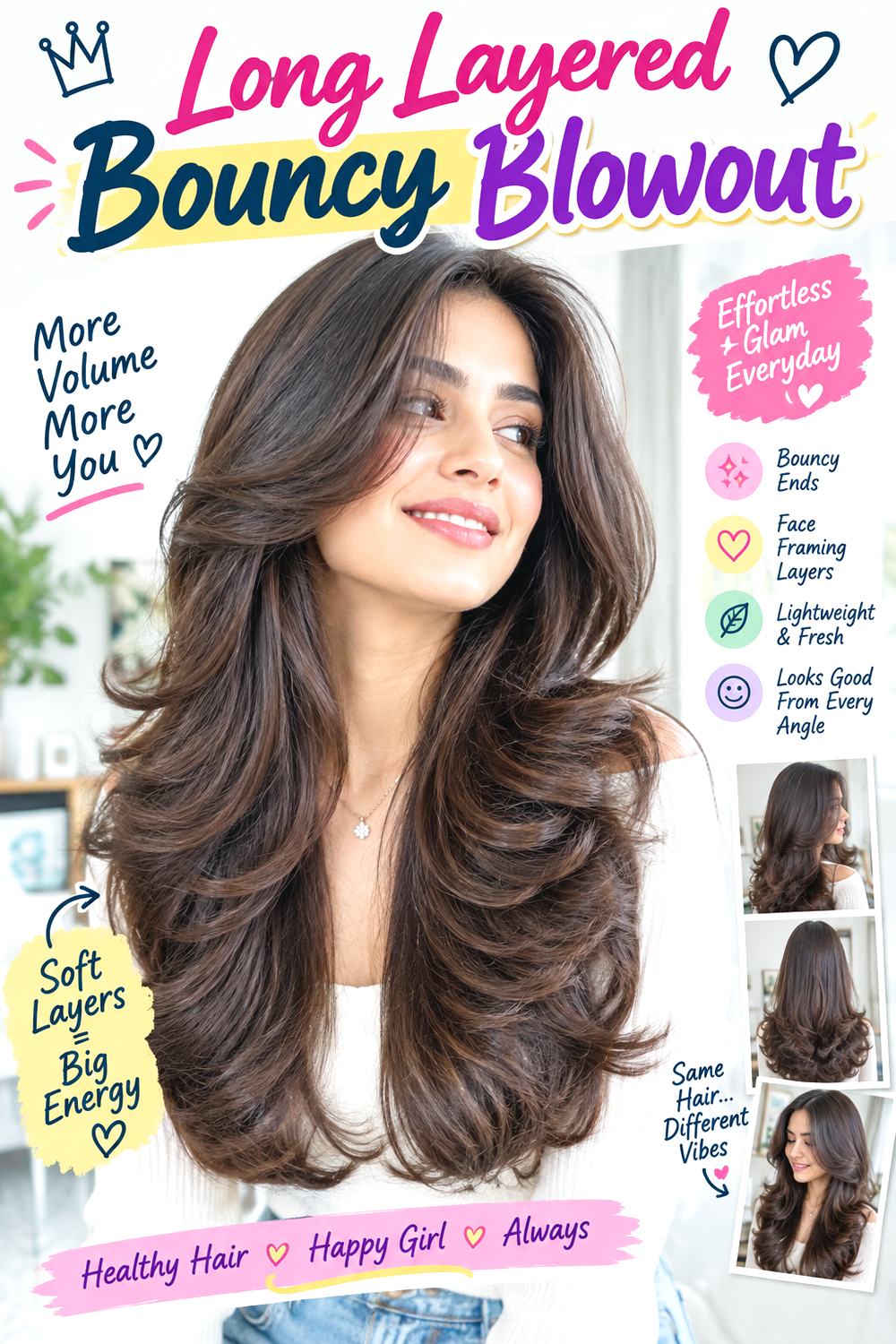
Long layers give a bouncy blowout plenty of room to move without sacrificing overall length. The most useful shape keeps the lowest perimeter fairly full while shorter sections begin around the cheekbones or below the chin, allowing the front to curve away from the face. Medium to thick straight or wavy hair carries the layered movement especially well, while fine hair usually needs fewer layers so the ends do not become wispy. Use heat protectant, a large round brush, and lightweight volumizing spray to build lift without making the lengths stiff. Styling takes moderate time on wash day because each large section needs tension and cooling before it is released. The front pieces can usually be refreshed quickly the next morning. Trim or reshape the layers when they stop separating and the blowout begins falling as one heavy sheet. At the salon, ask for long layers that begin below the chin and keep visible density through the bottom perimeter.
Pro tip:
Let each brushed section cool in its curved shape before touching it. Cooling helps set the bend and gives the ends longer-lasting bounce.
Curtain Bang Bouncy Blowout

Curtain bangs give a blowout a defined focal point by opening through the center and sweeping into the cheekbone area. The fringe should be short enough to create a visible curve but long enough at the corners to connect smoothly with the front layers. Straight, wavy, and medium-density hair usually hold the shape well, while very thick bangs may need less density removed from the center to stop them from feeling heavy. A root-lifting mousse, medium round brush, and flexible hairspray are useful for creating the rounded fringe without freezing it in place. Styling takes moderate effort after washing, but daily maintenance can be quick because only the bangs and front layers may need re-dampening. Fringe trims happen sooner than full haircut reshaping. At the salon, specify where the shortest center pieces should fall and ask for the outer corners to reach the cheekbones rather than ending abruptly at the temples.
Pro tip:
Dry the bangs forward first, then split them and direct each side away from the face. Creating the part too early can leave the center flat.
Voluminous Side-Part Blowout
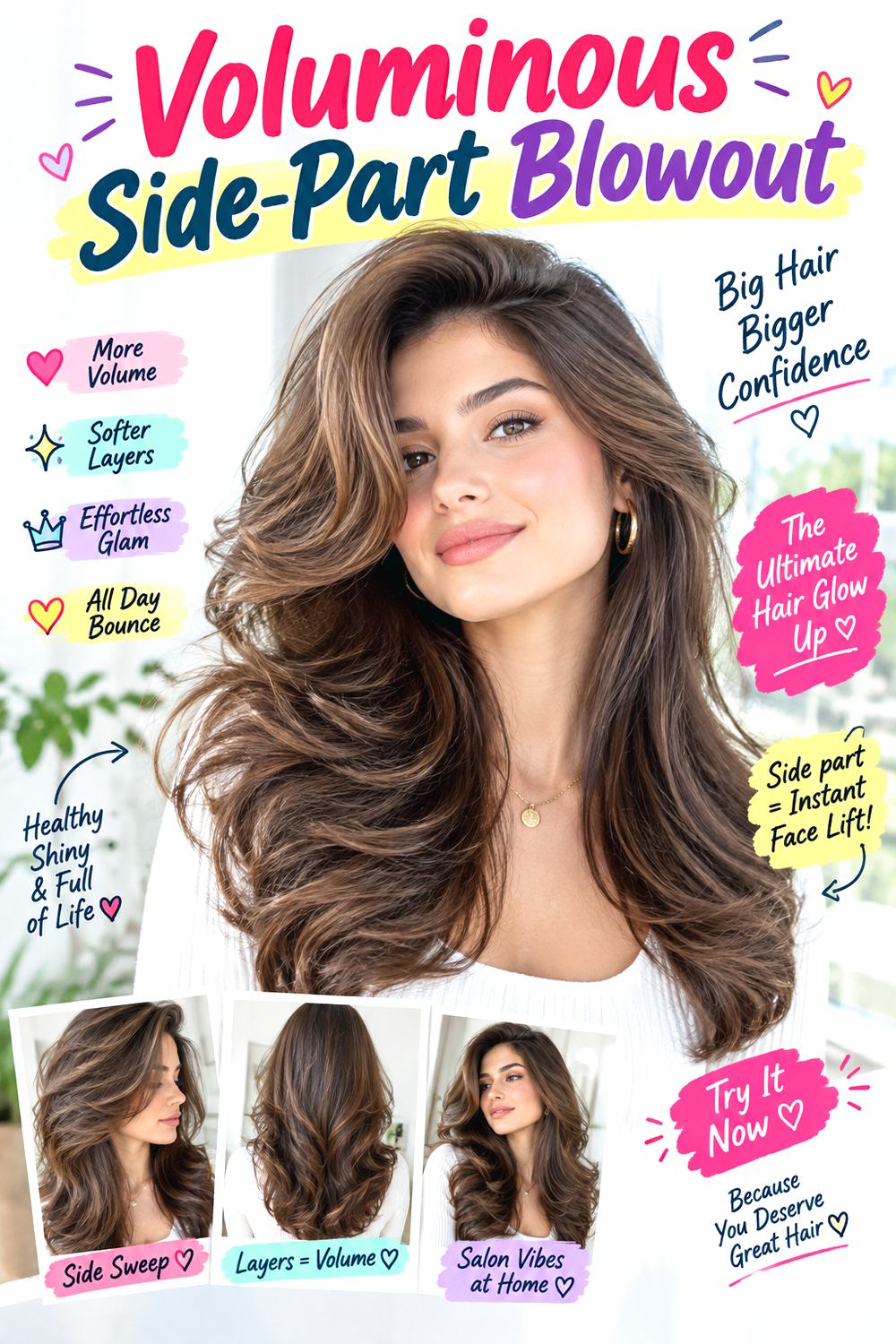
A deep side part creates instant asymmetry and lets most of the volume sweep across one side of the crown. The front section lifts away from the scalp before falling into a broad curve, while the opposite side stays closer to the head for contrast. Medium to thick straight or wavy hair supports the dramatic root shape best, although fine hair can recreate it with lighter sections and strategic lift. Use volumizing spray, a large round brush, and light-hold hairspray, concentrating product at the roots rather than coating the entire length. The blowout needs moderate time because the fuller side should cool with height before being brushed into place. Refreshing is easier: flip the part briefly, warm the roots, then return the hair to its usual side. At the salon, ask for face-framing layers that remain long enough to sweep across the forehead and avoid excessive short layers on the heavier side.
Pro tip:
Dry the roots briefly in the opposite direction of the final part. Flipping them back afterward creates height without heavy teasing.
Shoulder-Length Rounded Blowout
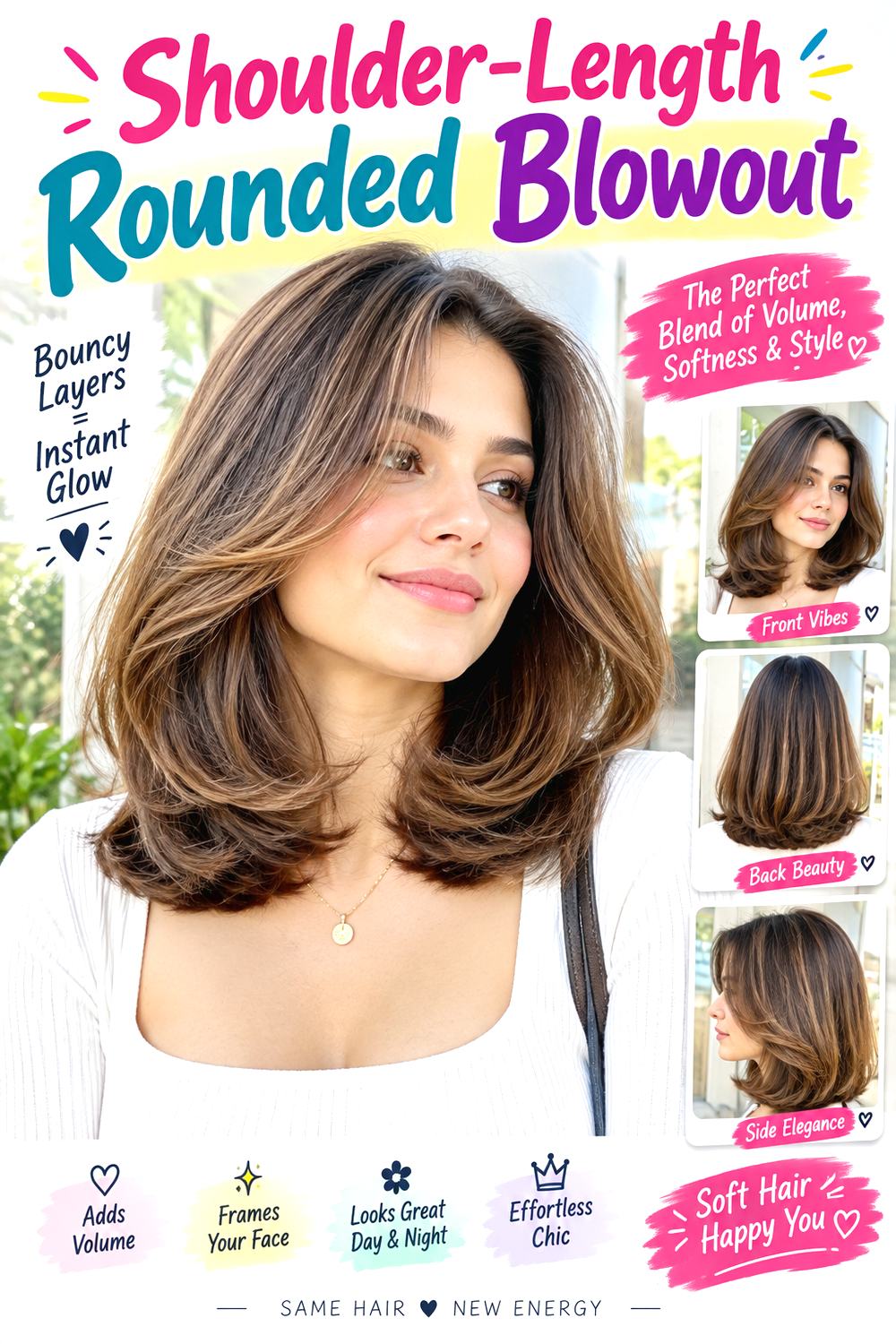
Shoulder-length hair creates a compact blowout where the bounce sits mainly through the lower half instead of spreading over long layers. The perimeter stays relatively strong, while subtle internal or face-framing layers prevent the shape from looking blocky. Ends curve under or slightly outward depending on the section, creating a rounded finish with visible movement. Fine and medium-density hair often suit this length because it preserves fullness, while thick hair may need discreet internal weight removal. Use smoothing cream, a medium round brush, and heat protectant for controlled shine and bend. Styling takes moderate time, but the shorter length dries faster than long layered hair and can be refreshed with a quick pass around the ends. A trim is useful once the shoulder line starts looking uneven or the ends stop holding their curve. At the salon, request a full perimeter with minimal thinning and keep the shortest face-framing layers no higher than the cheekbone or jaw.
Pro tip:
Roll the bottom sections around the brush only after the roots and mid-lengths are nearly dry. This keeps the ends curved without overexposing them to heat.
Butterfly Layer Blowout

Butterfly layers create two noticeable zones: shorter, airy layers around the face and crown, then longer lengths underneath that preserve the overall silhouette. A blowout exaggerates that separation by sweeping the upper layers outward while keeping the longest pieces soft and full. Medium to thick hair is particularly suited to the shape because there is enough density to support several layer lengths. Fine hair can wear a lighter version, but too many short pieces may reduce fullness at the ends. Use volumizing mousse, a large round brush, and velcro rollers for the upper sections while they cool. Wash-day styling needs more time because the top layers are shaped individually, though later refreshes can focus only on the crown and face frame. When the short layers grow past their intended points, the butterfly effect becomes less visible. At the salon, ask for cheekbone-to-chin face-framing and longer internal layers while keeping substantial weight through the bottom.
Pro tip:
Set only the upper and front sections in large rollers. Keeping the longest layer looser preserves the contrast that gives the butterfly cut its shape.
Face-Framing Flip Blowout
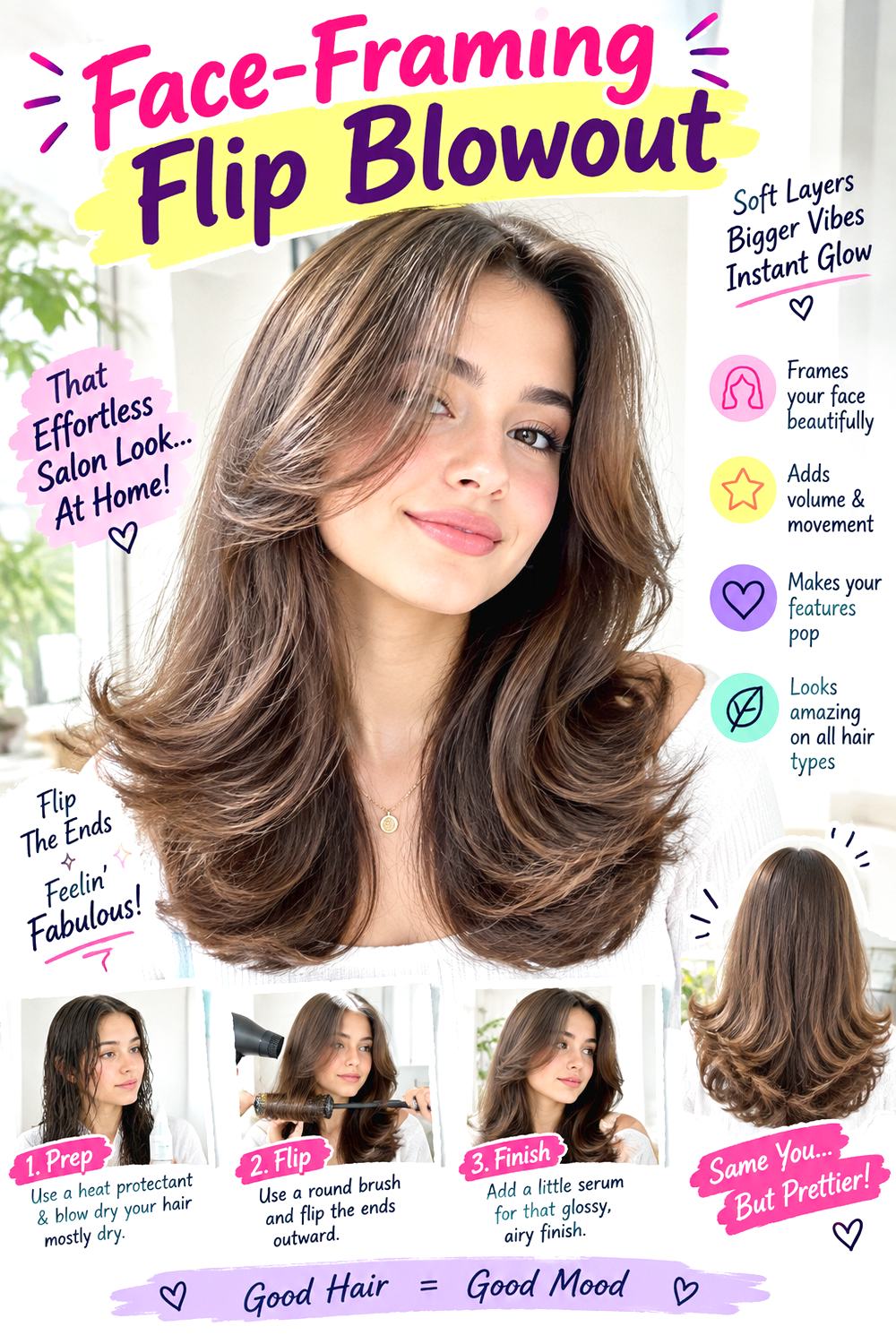
Outward-flipped front layers give this blowout its personality while the back remains smoother and less sculpted. Shorter pieces beginning near the cheekbones or jaw are directed away from the face, creating visible separation without requiring the whole head to be curled. Medium-length and long straight or wavy hair work particularly well, and the technique is useful for someone who wants a noticeable blowout with a shorter styling routine. Fine hair should keep the front layers soft rather than heavily feathered, while thick hair may need a little internal bulk removed behind the face frame. Reach for heat protectant, a medium round brush, and lightweight texture spray. Styling is moderate after washing but quick to refresh because usually only the first few inches around the face need attention. At the salon, show exactly where you want the first outward flip to begin and ask for the face frame to connect gradually into the longer perimeter.
Pro tip:
Direct the front layers diagonally backward rather than straight out to the sides. The angle creates movement without making the hairstyle unnecessarily wide.
Soft C-Curl Blowout
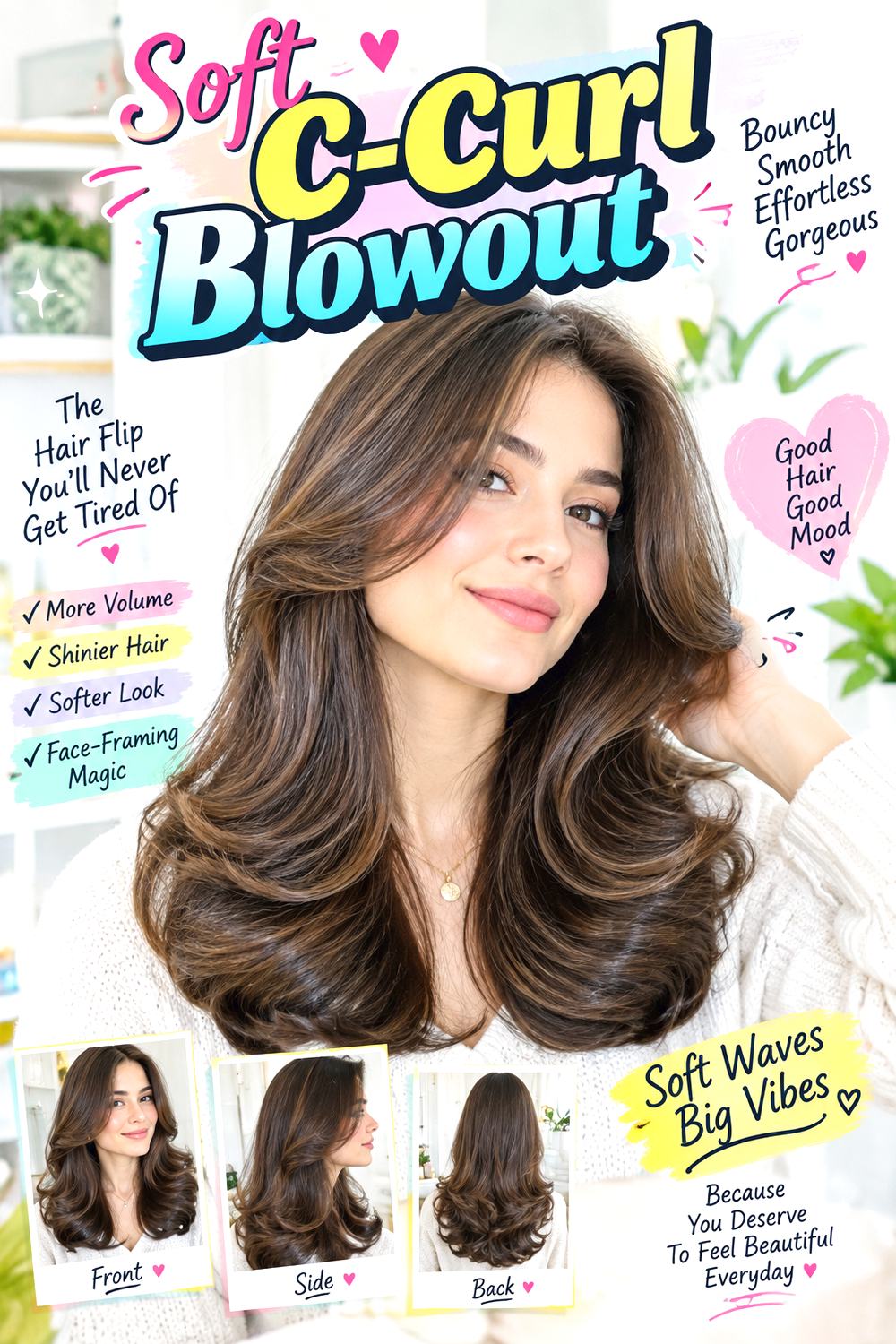
A C-curl blowout uses broad, controlled curves instead of large waves, making it smoother and more understated than a highly voluminous blow-dry. The roots stay polished, the mid-lengths remain mostly straight, and the ends wrap into soft C-shaped bends that follow the haircut. It works especially well on straight to lightly wavy, fine-to-medium hair and on cuts with clean layers rather than heavily shattered ends. A smoothing leave-in, round brush, and blow-dryer with a concentrator nozzle give the most control. Styling takes moderate time but is easier to maintain because the shape does not depend on high crown volume. A light pass around the ends is usually enough for a next-day refresh. Humidity can soften the curved finish, so a small amount of anti-frizz product is useful. At the salon, request softly beveled layers and a substantial perimeter so the ends have enough weight to form a smooth bend instead of looking wispy.
Pro tip:
Keep the brush moving through the mid-lengths and concentrate the final turn only at the ends. Curling too high changes the clean C-shape into a full wave.
90s Supermodel Blowout

The 90s-inspired supermodel blowout puts volume almost everywhere: lifted roots, sweeping face-framing, broad bends through the mid-lengths, and rounded ends. Long layers help the hair move as separate sections instead of forming one solid mass. Medium and thick hair naturally provide the fullness this shape needs, while fine hair can recreate a lighter version with fewer layers and careful root support. Use volumizing mousse, jumbo velcro rollers, and a large round brush; the rollers help the top and front sections cool with height. Styling requires more time than a simple everyday blowout, especially if you want the crown to hold for an evening. Flexible hairspray can preserve movement without making the hair rigid. At the salon, ask for long, connected layers with cheekbone or chin-level framing and enough internal movement to let the brush lift each section. Avoid excessive thinning at the perimeter because large blowouts look fuller when the ends retain visible density.
Pro tip:
Roll the crown sections backward and the side sections away from the face. Different roller directions create the sweeping shape rather than one uniform curl pattern.
Fine-Hair Root-Lift Blowout
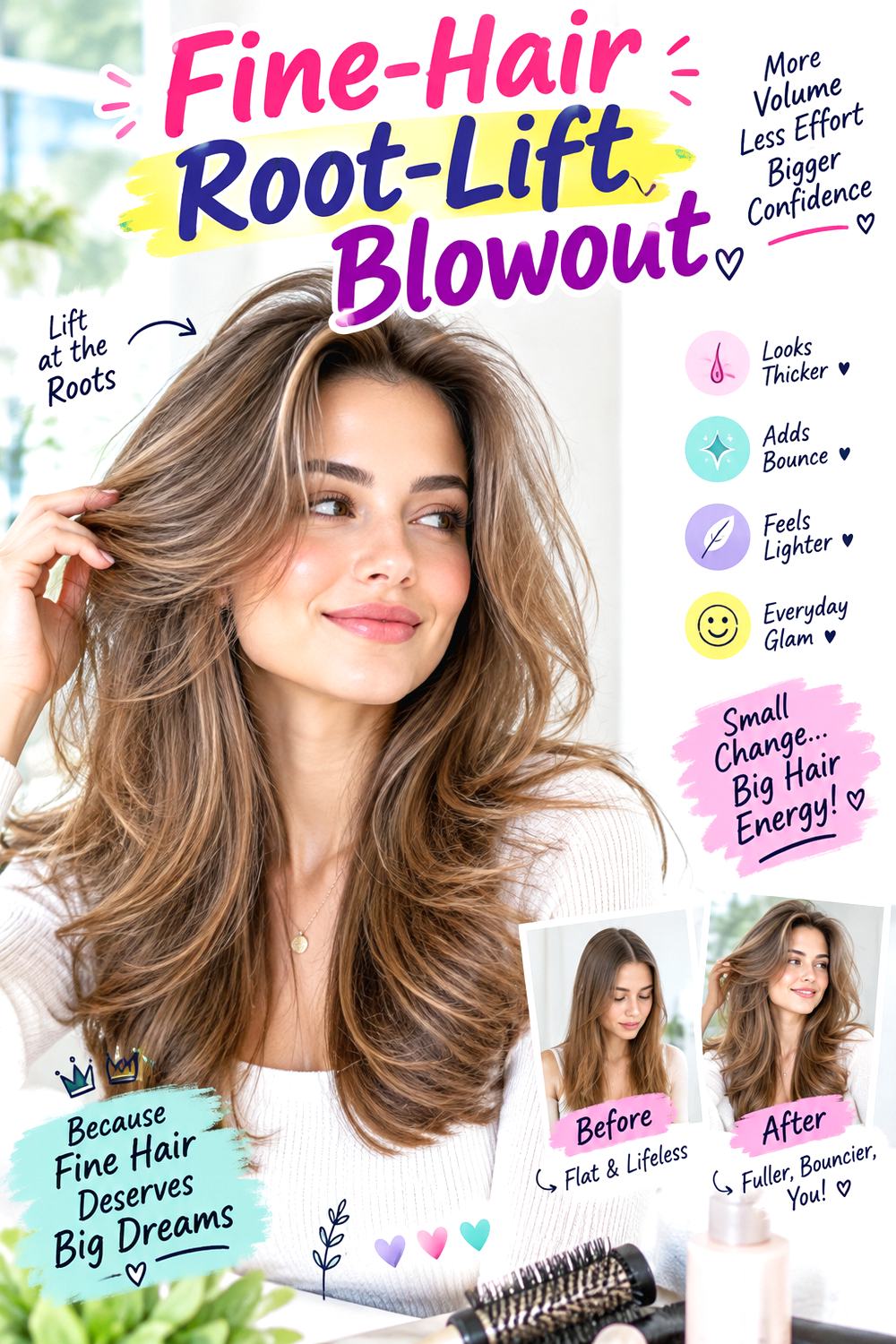
Fine hair usually benefits more from strategic lift than from excessive layering. This blowout keeps the perimeter fairly dense, uses only light face-framing, and concentrates volume at the roots and crown so the lengths still appear substantial. Straight or softly wavy fine hair is the natural match, especially when heavy conditioners and oils tend to flatten the shape. Use lightweight mousse, root-lifting spray, and a vented round brush; avoid layering several finishing products over the ends. Styling is relatively quick because smaller sections dry fast, though the roots should be fully dry before the brush is removed. A dry shampoo or root powder can refresh volume on the second day without reheating the whole head. Regular trims help prevent thin ends from reducing the effect of the blowout. At the salon, ask for minimal internal thinning, a strong bottom line, and face-framing that begins no higher than needed for movement.
Pro tip:
Apply volumizer underneath the root sections rather than coating the hair surface. Hidden lift keeps fine hair airy and reduces sticky product buildup.
Thick-Hair Sculpted Blowout
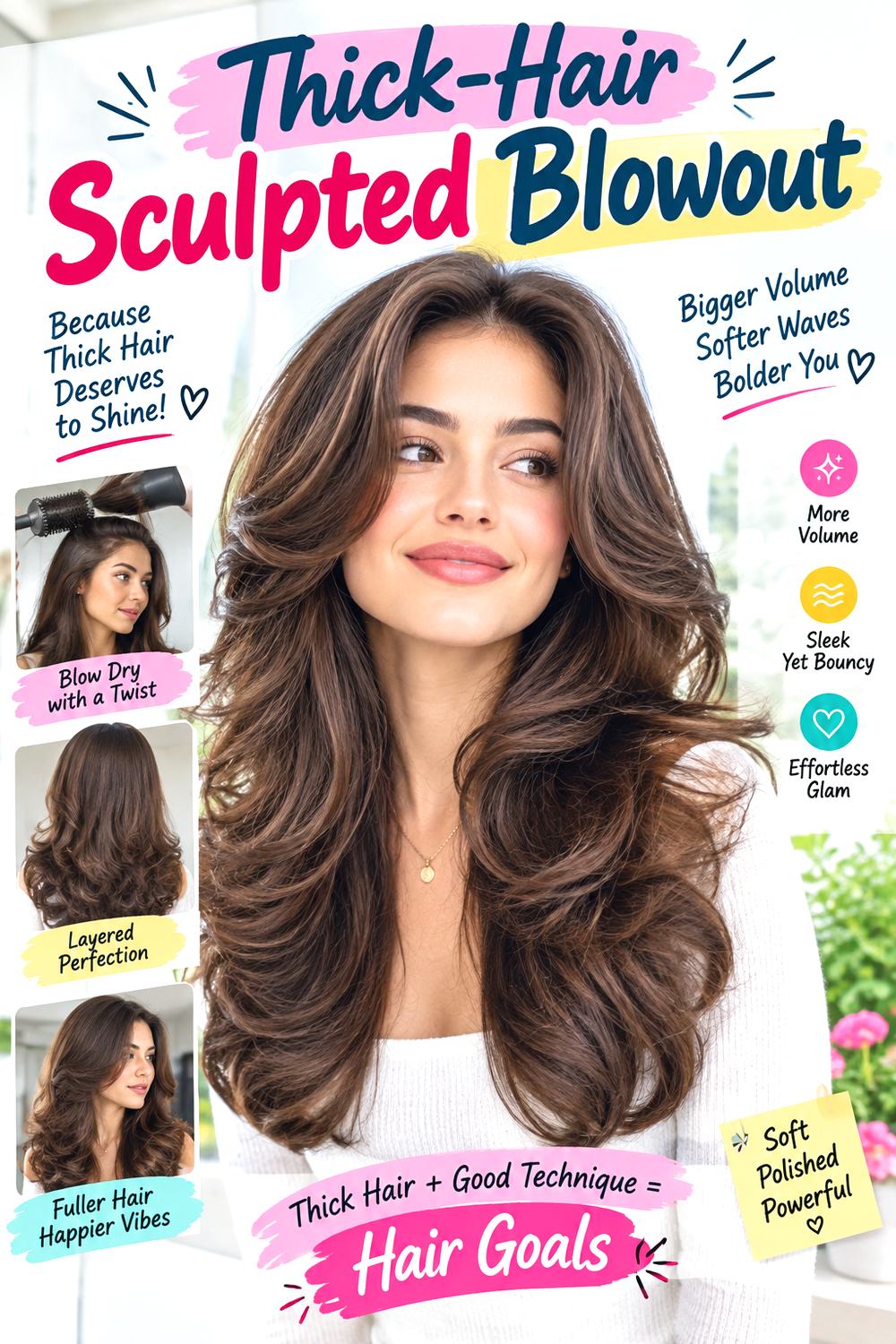
Thick hair can create an impressive blowout, but controlling bulk is more important than adding volume everywhere. Long internal layers allow dense sections to bend and move while a strong perimeter keeps the ends from looking over-thinned. Crown volume stays moderate, with most of the shape appearing through broad face-framing curves and rounded mid-lengths. Straight, wavy, and coarse textures can all wear it, though naturally frizz-prone hair benefits from smoothing before the final shaping step. Use anti-frizz cream, a strong large round brush, and heat protectant. Styling takes more time because thick sections must be divided carefully and dried completely; leaving moisture inside can cause the shape to expand later. A light serum can refresh the surface without collapsing the bounce. At the salon, ask for internal weight removal beneath the visible layers instead of aggressive thinning through the ends, and preserve enough density around the temples for a balanced face frame.
Pro tip:
Work with smaller sections than you think you need. Thick hair holds a smoother, longer-lasting bend when heat and airflow can reach the entire section evenly.
Wavy Texture Bouncy Blowout

Naturally wavy hair does not need to be blown completely straight before creating bounce. A softer approach smooths the roots and frizz while allowing some of the original wave pattern to remain through the mid-lengths and ends. The result has less uniform curl and more relaxed movement. Medium-density wavy hair is especially easy to work with, while thick waves may need extra moisture and sectioning to keep expansion under control. Use leave-in conditioner, anti-frizz cream, and a diffuser or round brush depending on how polished you want the finish. Styling takes moderate time on wash day but is usually easy to refresh by misting the front and reshaping only a few sections. Over-brushing can remove the natural texture and create unnecessary heat exposure. At the salon, ask for layers that work with your wave pattern when air-dried as well as blown out, with face-framing positioned where your natural bends actually fall.
Pro tip:
Smooth the roots first and leave some natural bend through the lower lengths. Preserving existing movement reduces heat time and gives the blowout a less uniform finish.
Sleek Crown With Bouncy Ends
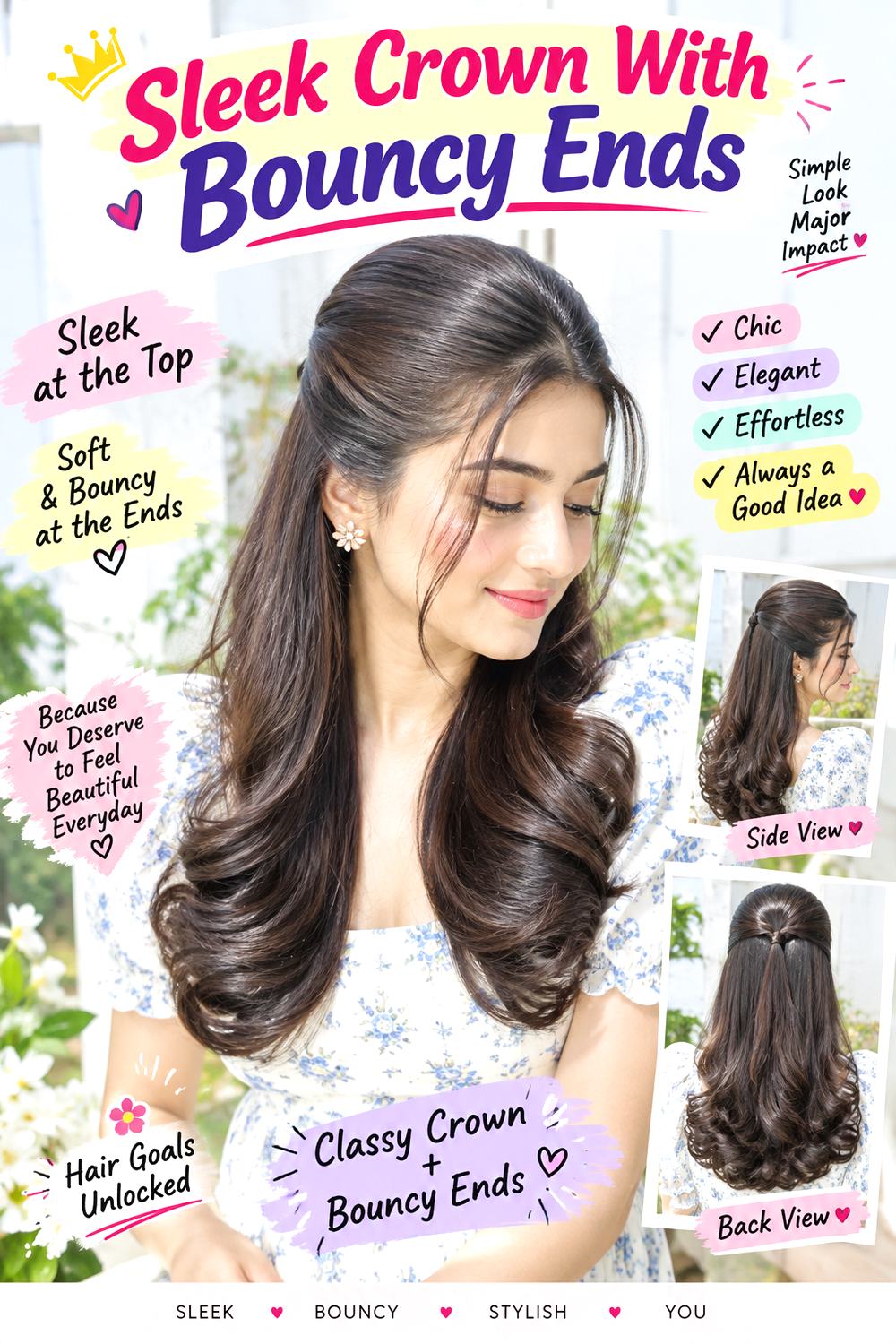
Keeping the crown sleek while building bounce only through the lower half creates a more controlled silhouette than a high-volume blowout. The roots sit close to the head, the mid-lengths remain smooth, and the ends curve into broad rounded bends. This balance works well for medium and thick hair or for anyone who prefers less height around the top. Straight and softly wavy textures are easiest to shape, though coarse hair may need additional smoothing. Use a smoothing serum, paddle brush, and large round brush, switching tools once the hair is dry through the mid-lengths. Styling takes moderate time but tends to hold well because the roots are not expected to stay lifted. The ends can be refreshed with rollers or a quick round-brush pass. At the salon, ask for longer layers concentrated below the chin and avoid very short crown pieces, which would naturally create lift where the finish is meant to stay sleek.
Pro tip:
Do not apply root-lifting products all over by habit. Keep volumizer off the crown and use it only through the lower sections if extra hold is needed.
Collarbone Blowout With Wispy Bangs
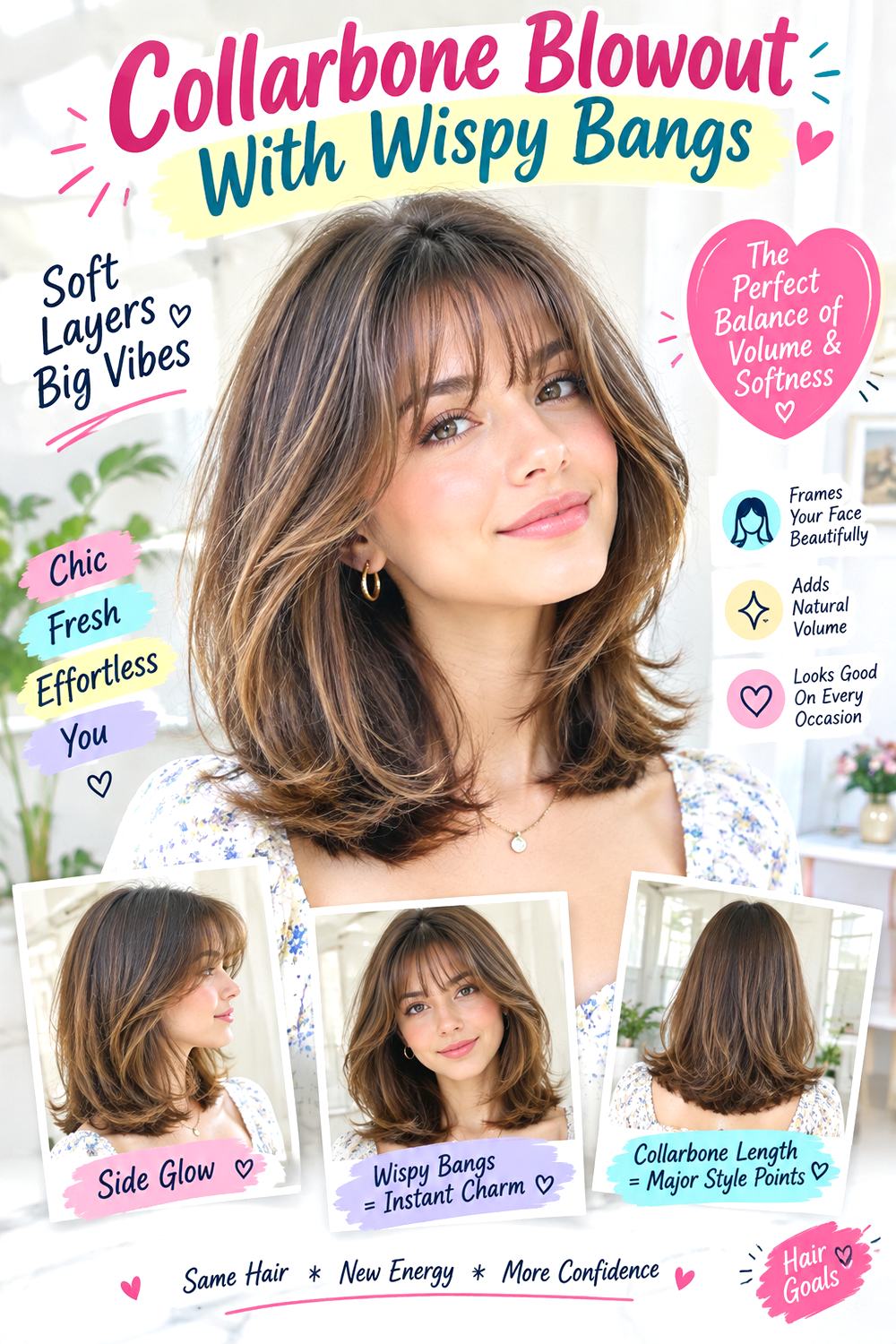
A collarbone cut with wispy bangs balances a fuller lower shape with a light, airy fringe. The main length sits near the shoulders and curves outward or under at the ends, while the bangs fall in separated pieces around brow level. Fine and medium-density hair work especially well because the fringe can stay delicate without requiring deep thinning. Thick hair can wear it too if the bang section is kept relatively narrow. Use lightweight mousse, a small round brush for the fringe, and a medium round brush for the lengths. Styling is moderate after washing, though the bangs usually need only a quick damp refresh on later days. Fringe trims will be needed more often than reshaping the collarbone perimeter. At the salon, ask for a wispy but not sparse bang with slightly longer temple pieces, and keep the main haircut full through the ends so the rounded blowout has enough weight to hold its shape.
Pro tip:
Blow-dry the bangs first before the rest of the hair starts drying. Wispy fringe is easiest to control while it is still evenly damp.
Center-Part Feathered Blowout

A center part gives feathered layers a balanced shape, with each side sweeping away from the face in matching but not perfectly identical curves. The shortest layers usually begin around the cheekbones, then lengthen toward the jaw and shoulders, creating visible tiers of movement. Medium to long straight or wavy hair works best, and medium-to-thick density gives the feathered sections enough substance to stay separate. Fine hair can use fewer front layers to protect fullness. Use heat protectant, a medium round brush, and dry texturizing spray to create light separation after the hair cools. Styling takes moderate time because both sides need direction, but the front sections are simple to refresh the next day. Over-layering can make the feathering look thin instead of soft. At the salon, ask for connected face-framing that starts near the cheekbones and gets progressively longer, while keeping the back layers longer and the lower perimeter substantial.
Pro tip:
Angle each front section slightly backward while drying rather than curling straight under. Backward direction creates the feathered sweep and keeps the center part open.
Low-Heat Roller Blowout

A roller-based blowout is useful when you want rounded movement while limiting repeated direct heat. Hair is dried until nearly finished, then large velcro or foam rollers hold selected sections in curved shapes as they cool or finish drying. The result has broad volume rather than tight curls, with soft lift through the crown and smooth bends around the face. Fine and medium-density straight or wavy hair respond particularly well, while thick hair may need more rollers and smaller sections to dry completely. Use volumizing mousse, jumbo rollers, and flexible hairspray. Styling requires more setting time, but hands-on effort is fairly easy once the rollers are secured. Make sure the hair is dry before removing them, especially in cooler or humid weather. At the salon, ask for long, connected layers with enough end weight to wrap smoothly around a large roller and avoid excessive short layering that creates flyaways.
Pro tip:
Roll hair when it is nearly dry rather than soaking wet. Large rollers set shape well, but damp thick sections can stay wet inside and lose their bounce after removal.
Conclusion
Bouncy blowout hairstyles for Fall 2026 can be adjusted through length, layers, fringe, parting, root height, end direction, and the amount of polish you prefer. Long butterfly layers create large sweeping movement, while shoulder and collarbone cuts keep the bounce more compact. Fine hair generally needs fewer layers and lighter products; thick hair benefits from controlled internal weight removal. Straight hair may need more round-brush work, while natural waves can reduce styling time. The best choice depends on your face shape, natural texture, density, preferred length, heat tolerance, maintenance habits, and daily routine. Focus on a haircut that still works when you are not wearing a full blowout, then use styling to add the volume you want.
Choose one or two favorite ideas and save clear photo references showing the front, side, and back. Discuss your face shape, natural texture, density, preferred length, maintenance level, and normal styling routine with your stylist. Point out the exact layer starting point, fringe length, crown volume, face-framing direction, rounded ends, or flipped finish you like so the haircut supports the blowout rather than relying entirely on heat styling.
FAQs
Can fine hair hold a bouncy blowout?
Yes. Fine hair usually holds better when the cut keeps a strong perimeter, styling products stay lightweight, and volume is concentrated at the roots instead of relying on many short layers.
How can I make a blowout last into the next day?
Let sections cool fully before brushing them out, avoid heavy oils at the roots, and refresh only the crown and front pieces when needed. Large rollers can also restore shape without restyling every section.
Do bouncy blowouts require daily heat?
No. A well-set blowout can often be refreshed with rollers, a little water at the fringe, or selective round-brush work. Naturally wavy hair may need even less heat.
What should I ask my stylist for if I want more blowout volume?
Show where you want volume to sit and discuss layer placement rather than simply asking for “more layers.” Fine hair may need restrained layering, while thick hair may benefit from internal weight removal and stronger face-framing.