13 Dark Cherry Brunette Hair
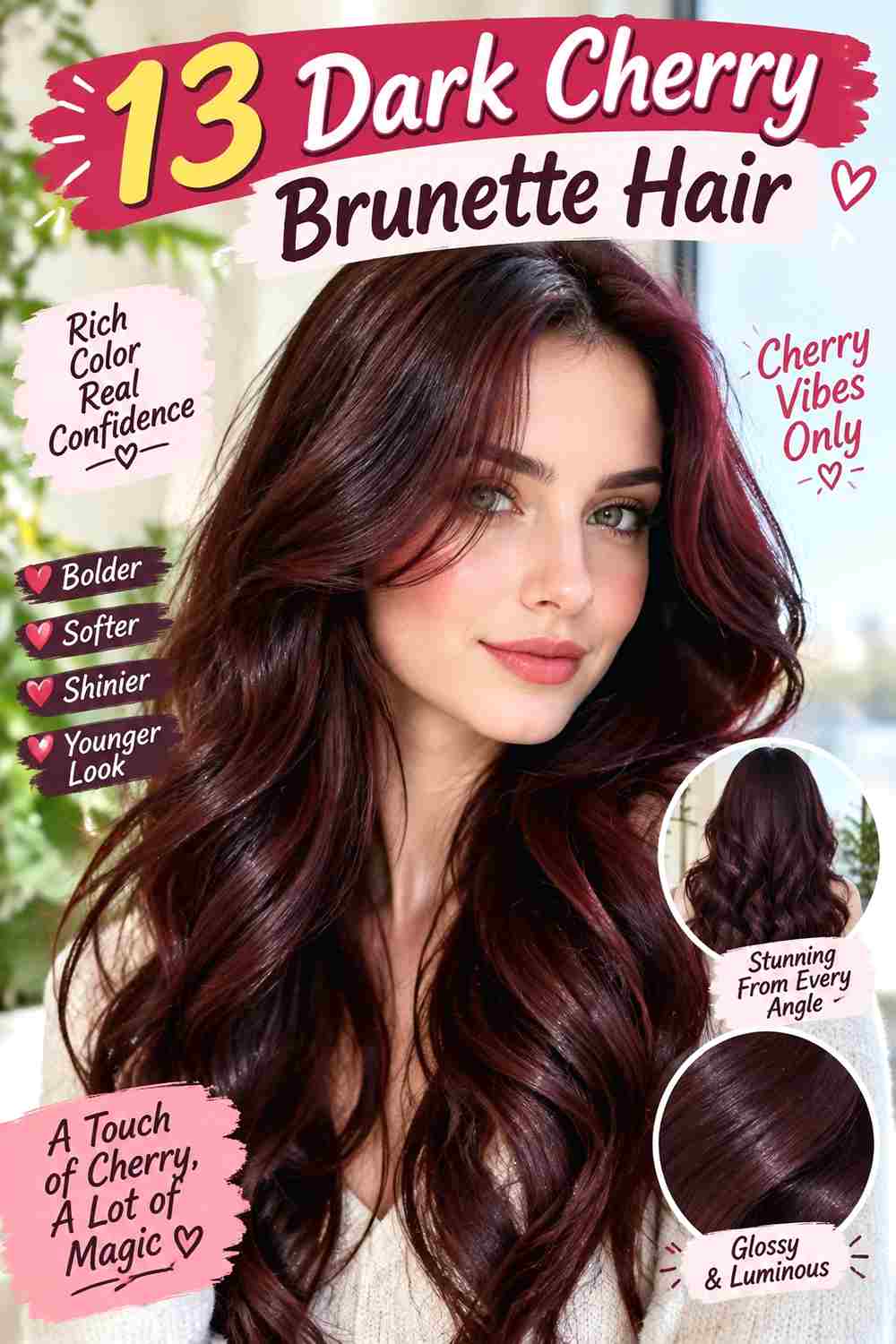
Dark cherry brunette hair keeps a deep brown foundation while introducing visible cherry, burgundy, or red-brown dimension. The result can remain understated indoors and reveal more red character in brighter light, depending on the chosen placement and starting color. It can be applied as an all-over brunette-red direction, concentrated through selected sections, or blended into a dimensional balayage. Hair length and shape also change how the color reads: waves reveal multiple surfaces, while a blunt bob produces a more solid block of tone.
The color can work across straight, wavy, curly, and coily textures, but the exact result depends heavily on the starting shade and previous color history. Fine or lower-density hair may benefit visually from strategic dimension rather than excessive contrast, while curls can display cherry tones across individual bends. Face-framing placement can bring more visible color toward the front without requiring every section to be equally bright.
Maintenance depends on how far the desired cherry brunette differs from the starting color and where it is placed. Red-family tones can visibly change as color fades, so home care and refresh expectations deserve discussion before coloring. Styling effort, meanwhile, depends more on the chosen haircut and finish than on the color itself.
Quick List
- Deep Cherry Brunette Waves Hairstyle
- Dark Cherry Brunette Bob Hairstyle
- Cherry Cola Brunette Layers Hairstyle
- Black Cherry Brunette Lob Hairstyle
- Dark Cherry Brunette Balayage Hairstyle
- Cherry Brunette Face Frame Hairstyle
- Dark Cherry Brunette Curls Hairstyle
- Dark Cherry Brunette Shag Hairstyle
- Dark Cherry Brunette Curtain Fringe Hairstyle
- Dark Cherry Brunette Blunt Cut Hairstyle
- Dark Cherry Brunette Pixie Hairstyle
- Dark Cherry Brunette Long Layers Hairstyle
- Glossy Dark Cherry Brunette Hairstyle
Deep Cherry Brunette Waves Hairstyle
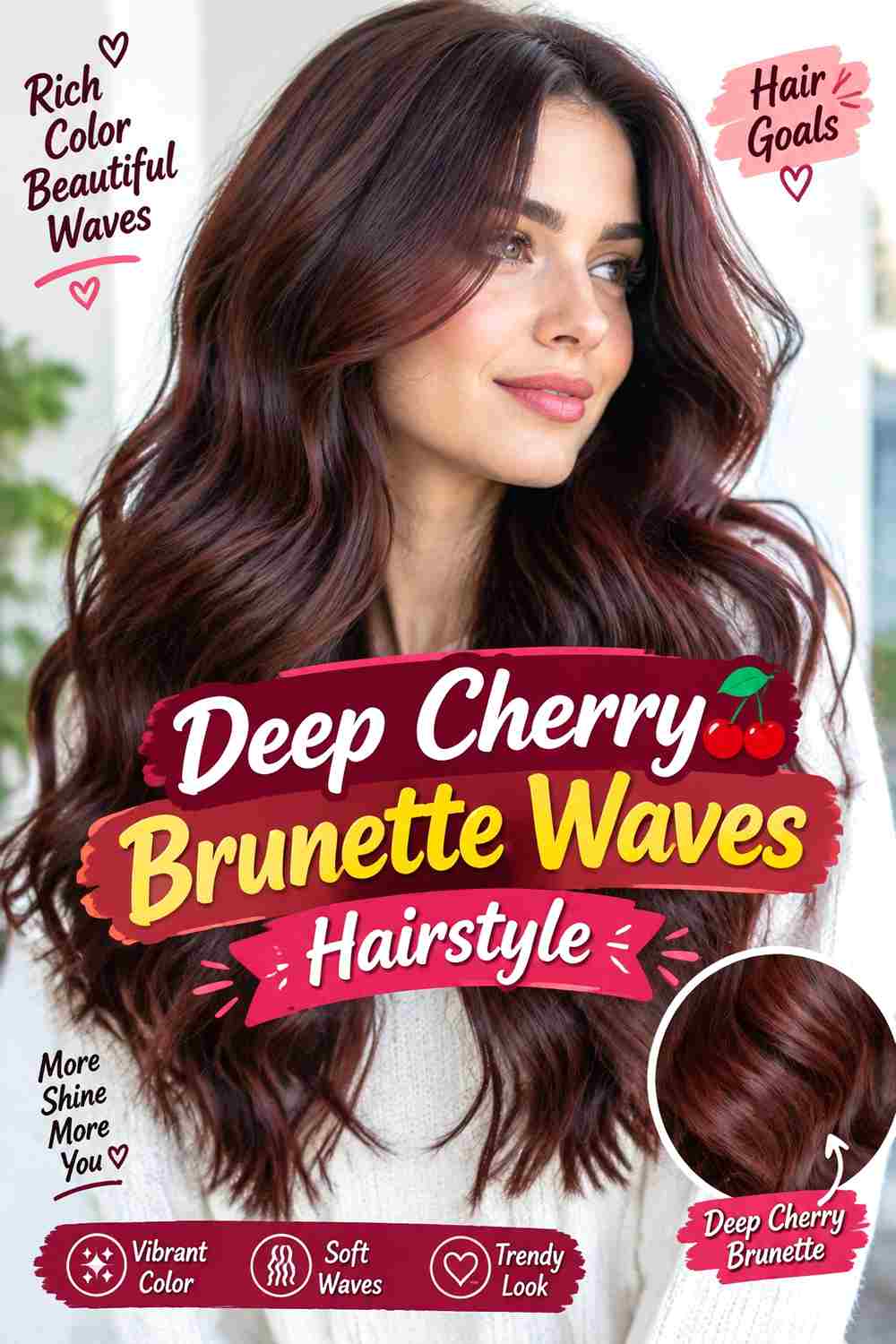
Broad waves make a deep cherry-brown color easier to see because each bend catches light on a different surface. Keep the roots distinctly brunette, with richer cherry character becoming visible through the middle lengths and ends. Long or medium hair gives broad bends enough room to develop, while a center or slightly off-center part keeps the color distribution balanced. Straighter tips can prevent the finish from becoming overly curled.
This direction suits readers who want red-brown depth rather than a bright red result. The exact cherry visibility will depend on the starting color and coloring process, so show your colorist references in both natural and indoor lighting when possible. For styling, a heat protectant, large-barrel curling iron, and flexible hairspray protect before heat, create broad bends, and maintain movement without making the finish rigid.
A few flattened waves can be refreshed relatively quickly between washes; setting the whole head after washing takes longer, particularly with dense or long hair. Ask your colorist how dark you want the brunette base to remain and where the cherry tone should become most noticeable. Color refresh timing varies, so use visible fading and your preferred depth as practical signals rather than assuming one fixed schedule.
Pro tip:
When styling, place the strongest bends through areas where you want the cherry dimension to show. Changing the hair’s surface direction can reveal tonal variation more clearly than keeping every section completely straight.
Make It Work for You:
If you prefer understated color, retain more brunette at the roots and upper lengths while concentrating cherry dimension lower down. The red-brown character remains visible without dominating the entire silhouette.
Watch Out For:
Do not judge your target color from one heavily filtered reference. Cherry brunette can appear very different under varied lighting, so compare several references and identify the brown-to-red balance you actually want.
Dark Cherry Brunette Bob Hairstyle

A bob places dark cherry brunette color within a compact silhouette, making the overall tone feel concentrated rather than dispersed through long lengths. A jaw-to-chin-length perimeter with minimal layering creates a strong lower edge, while a center or side part changes which sections catch the most light. Subtle cherry variation can appear across the surface without requiring obvious contrasting streaks.
Straight and softly wavy textures both work with this combination. A sleek finish emphasizes the solid brunette-red tone, whereas a slight bend reveals more dimension. Lower-density hair can retain fullness with an appropriately weighted perimeter rather than excessive layering. A heat protectant, paddle brush, and lightweight smoothing cream help protect during blow-drying, direct the bob into shape, and reduce surface fuzz.
A morning refresh may only involve resetting bent ends, while a complete smooth blow-dry takes longer depending on texture. Cut maintenance is separate from color maintenance: reshape the bob when its perimeter loses the intended position, and discuss color refreshing when the cherry tone no longer has the depth you prefer. At the salon, specify both the exact finished bob length and whether you want an almost-brown cherry result or more visible burgundy-red dimension.
Pro tip:
Check your chosen color direction against the bob’s ends as well as its roots. A compact cut puts the perimeter in clear view, so even color distribution through that area strongly affects the finish.
Make It Work for You:
For naturally wavy hair, keep enough length for your bend pattern to form and let the surface movement reveal the cherry dimension. You do not need a perfectly straight finish to show the color.
Watch Out For:
Avoid treating the cut and color as one maintenance schedule. The bob may need reshaping before or after the color needs refreshing, so respond to the perimeter and fading independently.
Cherry Cola Brunette Layers Hairstyle
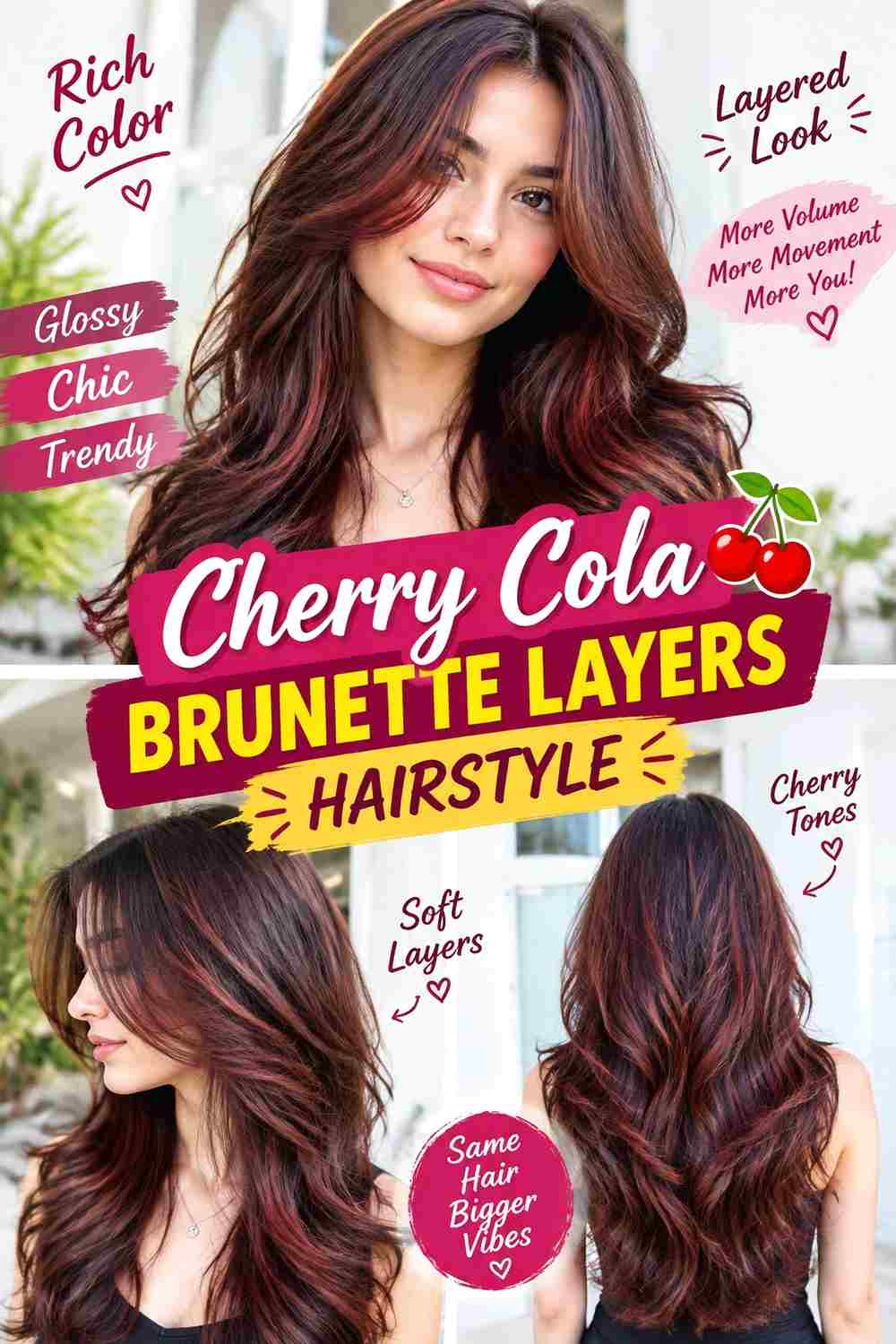
Cherry cola-inspired brunette uses a dark brown base with noticeable red-wine character rather than a bright primary red. Long layers make that variation visible as sections overlap, especially when the shortest face-framing pieces begin around the cheekbones or jaw. Broad movement through the middle lengths exposes different surfaces, while retaining density at the bottom keeps the color from appearing scattered across overly thin ends.
Medium-to-long hair gives the layered placement enough room to develop. Dense hair may benefit from thoughtfully positioned layers, while finer strands can keep more perimeter weight and concentrate movement around the front. Use a heat protectant, round brush, and lightweight smoothing serum to protect during a blow-dry, encourage layered movement, and control flyaways without hiding the finish.
Refreshing only the front sections between washes can be quick; rebuilding a full layered blowout takes longer. Ask your stylist where the shortest layer should begin, and separately explain the brown-to-red balance you want from the colorist. Starting color and previous processing affect what is realistically achievable. As the shade fades, evaluate whether you miss the red dimension or overall depth before deciding what kind of color refresh to discuss.
Pro tip:
When saving references, include one with the hair moving or viewed from the side. Layered surfaces can reveal color placement that is difficult to understand from a single straight-on, motionless image.
Make It Work for You:
If your ends are lower in density, preserve a stronger bottom edge and put the most obvious layering near the face. You retain movement without sacrificing the fuller appearance of the perimeter.
Watch Out For:
Do not use “cherry cola” as the only color instruction. Informal shade names are interpreted differently, so point out the specific depth, redness, and placement you want in your saved references.
Black Cherry Brunette Lob Hairstyle
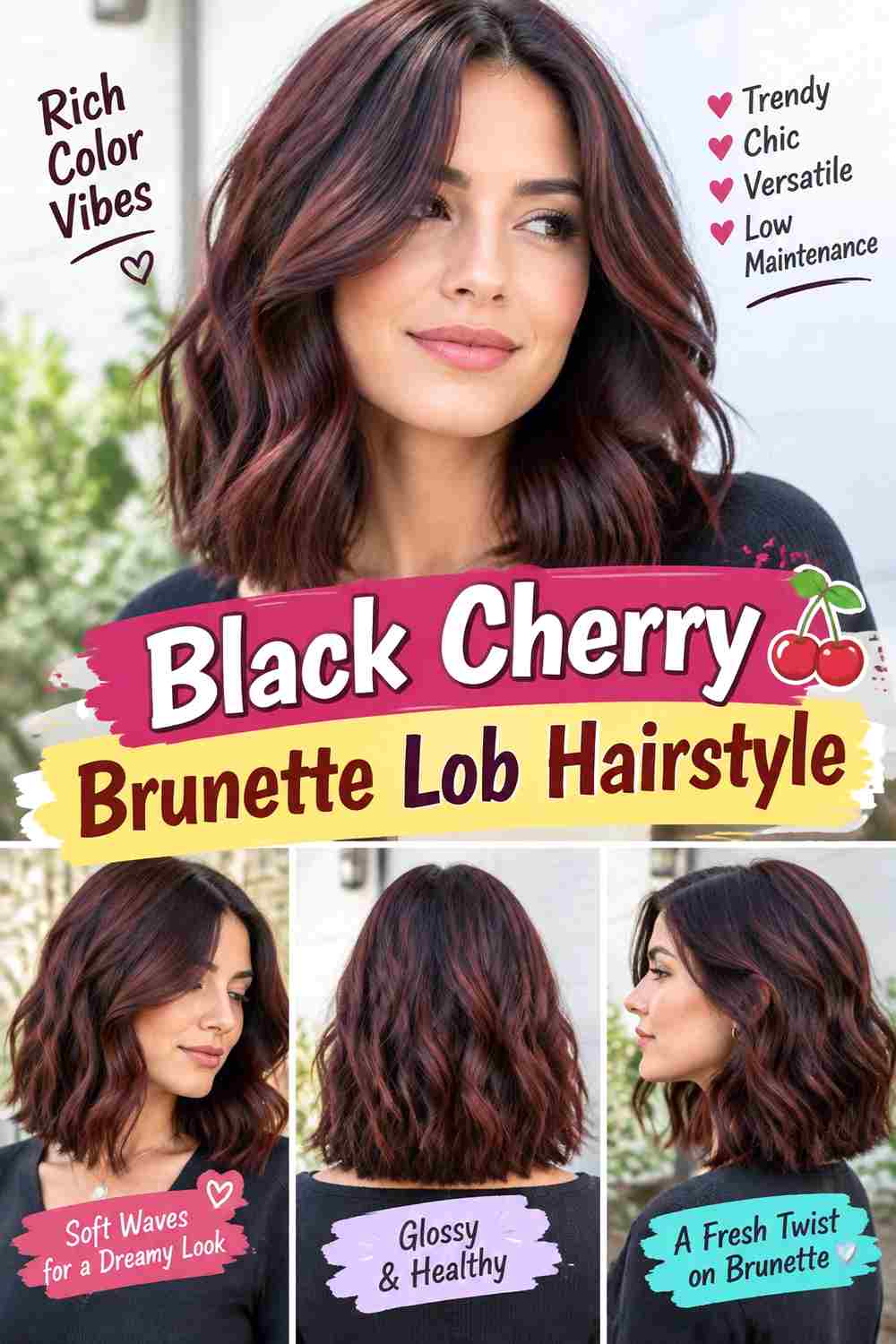
A collarbone-skimming lob provides enough length for movement while keeping black-cherry brunette concentrated in a strong outline. The color direction stays very deep, with brown appearing close to near-black in some lighting and restrained cherry-red character showing through more clearly when light hits the surface. A softly off-center part and gentle bends can reveal that tonal shift without requiring obvious highlights.
The combination works well when you prefer depth over brightness. Straight, wavy, and curly textures can all carry the color, although each displays dimension differently. For a smooth, softly bent finish, use a heat protectant, flat iron, and lightweight serum. The protectant belongs underneath heat styling, the iron can create selected bends rather than flattening every section, and the serum controls surface fuzz.
A few front bends make a quick refresh; styling the entire lob after washing is a longer process. Ask your stylist to identify the collarbone or upper-shoulder point where you want the perimeter to finish. For color, explain how close to deep brunette you want the overall impression to remain. Since extremely dark references can conceal the cherry component indoors, consider how visible you want the red tone under ordinary everyday lighting.
Pro tip:
Look at dark cherry references on several screen brightness levels and in different lighting. Then describe the visible red you want rather than expecting one digital image to communicate the shade perfectly.
Make It Work for You:
If near-black depth feels too strong, keep the same lob shape but choose a slightly lighter brunette foundation. The cherry direction can remain deep while becoming easier to see in ordinary light.
Watch Out For:
Avoid assuming a very dark finished shade will reveal strong cherry tones in every setting. If red visibility matters to you, communicate that priority clearly before settling on the target depth.
Dark Cherry Brunette Balayage Hairstyle

Balayage placement can keep the root area predominantly brunette while bringing cherry-red dimension through selected middle lengths and ends. Instead of an all-over shift, ribbons of color appear across the surface and around movement points. Long waves make the placement especially visible because curved sections expose both the darker foundation and brighter cherry-brown pieces. Keeping some depth between ribbons prevents the color from reading as one uniform red.
This option suits readers who prefer dimensional placement and a less solid color impression. The achievable contrast depends on the starting shade, previous color, and process your colorist considers appropriate. For styling, a heat protectant, large-barrel curling iron, and flexible hairspray protect from heat, create broad bends, and keep the dimensional sections moving.
A quick refresh means reshaping a few surface waves; a complete set takes longer with long or dense hair. Balayage placement can grow out differently from an all-over shade, but the cherry tone itself may still change with washing and time. Ask your colorist where the brightest visible pieces should sit, particularly around the face and ends, and how much natural or deeper brunette should remain between them. That placement matters more than simply requesting “more highlights.”
Pro tip:
Save references showing both the front and back. Balayage can appear bright around the face while remaining much deeper behind, so multiple angles communicate the amount and distribution of cherry dimension more accurately.
Make It Work for You:
For a quieter result, request greater spacing between dimensional sections and preserve more brunette through the upper lengths. The cherry balayage remains visible without making the overall color appear uniformly red.
Watch Out For:
Do not assume balayage automatically means minimal color maintenance. Root grow-out may appear softer, but the cherry tone itself can still fade and may need refreshing according to your preferred intensity.
Cherry Brunette Face Frame Hairstyle
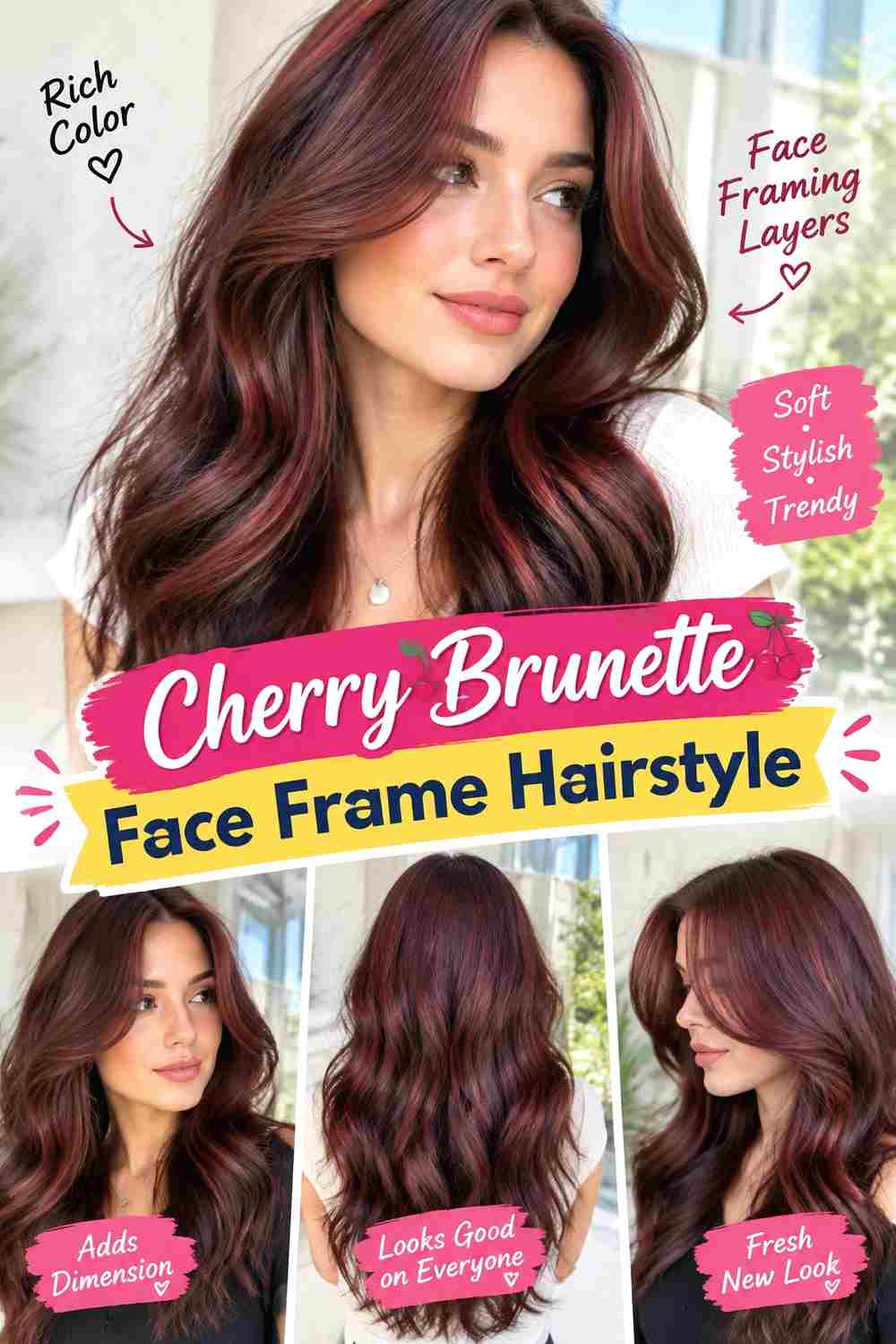
Concentrating cherry-brunette dimension around the face creates a visible color change without spreading equal brightness through every section. The front ribbons can begin near the roots or slightly lower, then blend into a deeper brunette background. Long face-framing pieces starting around the cheekbone or jaw add movement and give those brighter sections several surfaces to fall across.
This placement can be useful if you want the cherry tone immediately visible from the front while retaining substantial brunette depth elsewhere. Contrast can be subtle or more defined depending on your starting color and target. A heat protectant, round brush, and lightweight styling cream can protect during blow-drying, sweep the front sections away from the face, and control flyaways without weighing down their movement.
Refreshing the face frame can be much quicker than rebuilding a full blowout; after washing, however, the whole style takes longer. Ask your stylist where the shortest face-framing piece should finish, then discuss with your colorist exactly where the brighter cherry placement should begin. The haircut and color do not need identical starting points. Maintenance should respond to both visible regrowth and fading rather than treating every front section the same.
Pro tip:
Style the face-framing sections slightly away from the face when you want their color most visible. That direction exposes a broader surface and separates the cherry ribbons from the darker background behind them.
Make It Work for You:
If strong front contrast is outside your comfort zone, keep the face frame only slightly lighter or redder than the base. Placement still creates emphasis without producing a sharply separated color block.
Watch Out For:
Do not request brighter front pieces without specifying their width. Broad sections create a much stronger effect than narrow ribbons, so use your reference to show the amount of visible cherry you prefer.
Dark Cherry Brunette Curls Hairstyle
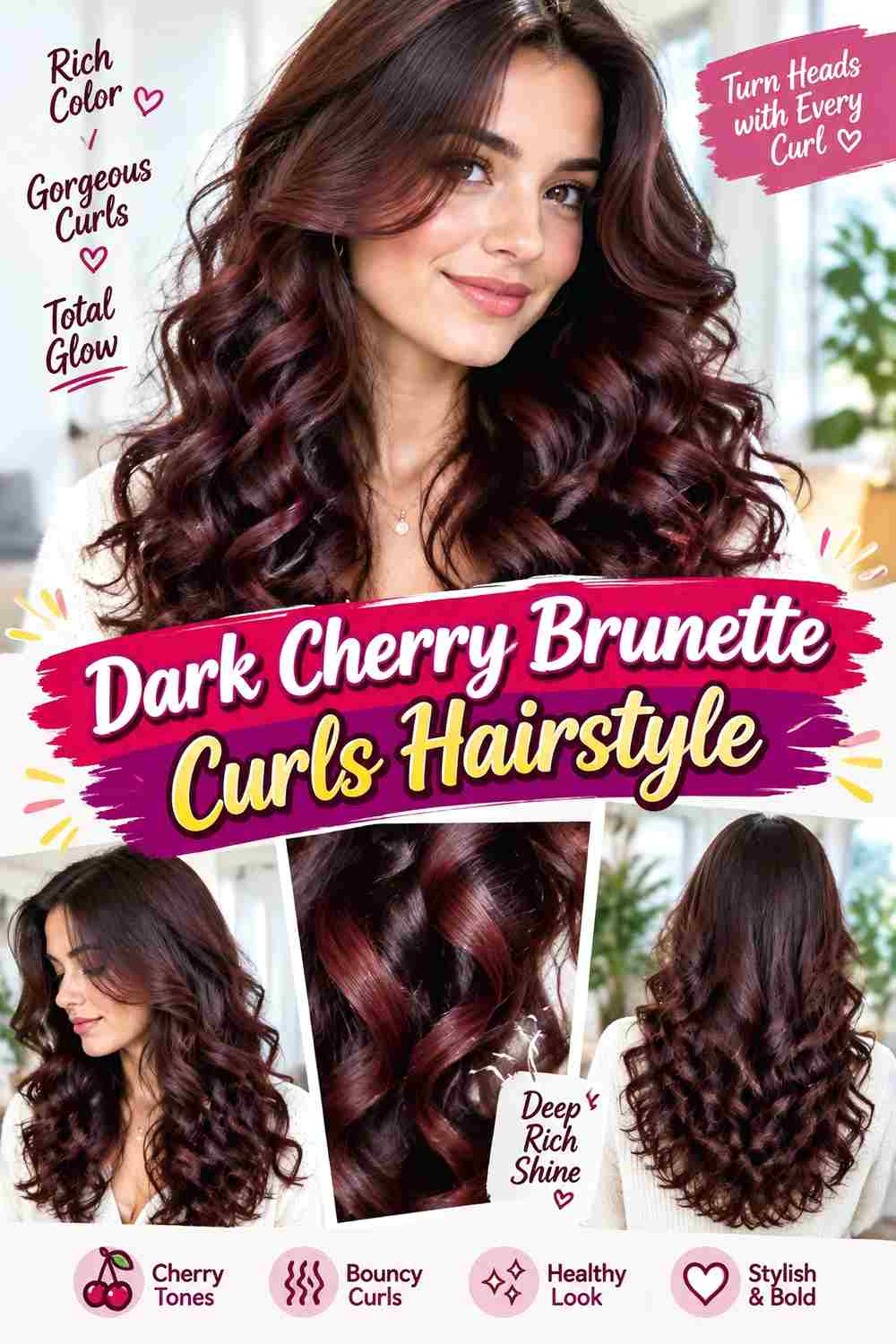
Curls naturally display several angles of a dark cherry brunette shade, allowing deeper brown areas and red-brown highlights to appear across individual spirals. Rather than relying on a perfectly uniform surface, the color gains dimension as curls overlap and separate. Keeping the roots somewhat deeper can create visual depth, while richer cherry character through the middle lengths and ends makes the curl pattern easier to notice.
Curly and coily textures can carry this color without being straightened for display. The coloring plan should account for starting color, previous processing, curl condition, and the desired level of contrast. For everyday styling, a lightweight leave-in conditioner, curl gel, and diffuser can add slip, support curl grouping, and dry the pattern with less disturbance.
A short refresh may target only flattened curls, while full wash-day styling naturally takes longer. Color upkeep is a separate concern and depends on fading and the chosen depth. At your appointment, show how you normally wear your curls and explain where you want the cherry dimension to appear when the hair is dry. If a haircut is also planned, discuss finished dry length and shrinkage rather than choosing layer placement solely from stretched hair.
Pro tip:
Bring color references that show curly hair when possible. A straight swatch can communicate tone, but seeing dimensional placement across bends gives your colorist clearer information about the distribution you prefer.
Make It Work for You:
If you prefer a lower-contrast finish, keep the root and interior sections deeper while placing restrained cherry dimension across selected outer curls. Movement reveals the color without requiring equal brightness everywhere.
Watch Out For:
Avoid assuming curls must be straightened to show a glossy cherry finish. Healthy-looking definition and well-placed color can reflect light across the natural pattern without changing its fundamental texture.
Dark Cherry Brunette Shag Hairstyle

A shag gives dark cherry brunette a broken, highly mobile surface. Shorter crown layers build movement above longer lengths, while face-framing pieces and an optional airy fringe bring the color closer to the front. Cherry tones can appear across the exposed layer edges against a deeper brunette interior, making the shade feel dimensional even without highly contrasting streaks.
Wavy and curly textures can emphasize the layered shape naturally, while straighter hair may need more styling to show the same separation. Density should guide how much hair is removed; a shag does not require thinning every area. A lightweight mousse, heat protectant, and diffuser can provide flexible support, protect if heat is used, and encourage texture without forcing the layers into a smooth blowout.
Refreshing the crown and fringe can be relatively quick, whereas full wash-day styling requires more time. Ask your stylist where the shortest crown layer and face frame should begin, since those decisions strongly affect the silhouette. Separately, show your colorist whether you want cherry dimension concentrated on exposed layers or distributed more evenly. As both elements grow and fade, assess shape and color independently rather than assuming they require service at identical intervals.
Pro tip:
When refreshing the shag, focus first on the crown and front layers because they establish most of the visible movement. Let the longer sections remain softer instead of forcing equal texture everywhere.
Make It Work for You:
For lower-density hair, choose longer, restrained layers and maintain a stronger perimeter. You can still use cherry dimension on the surface without combining heavy color contrast with excessively wispy ends.
Watch Out For:
Too many short layers can remove the weight needed for your preferred outline. Discuss the exact crown starting point and density before cutting rather than using “shaggy” as permission for uncontrolled thinning.
Dark Cherry Brunette Curtain Fringe Hairstyle
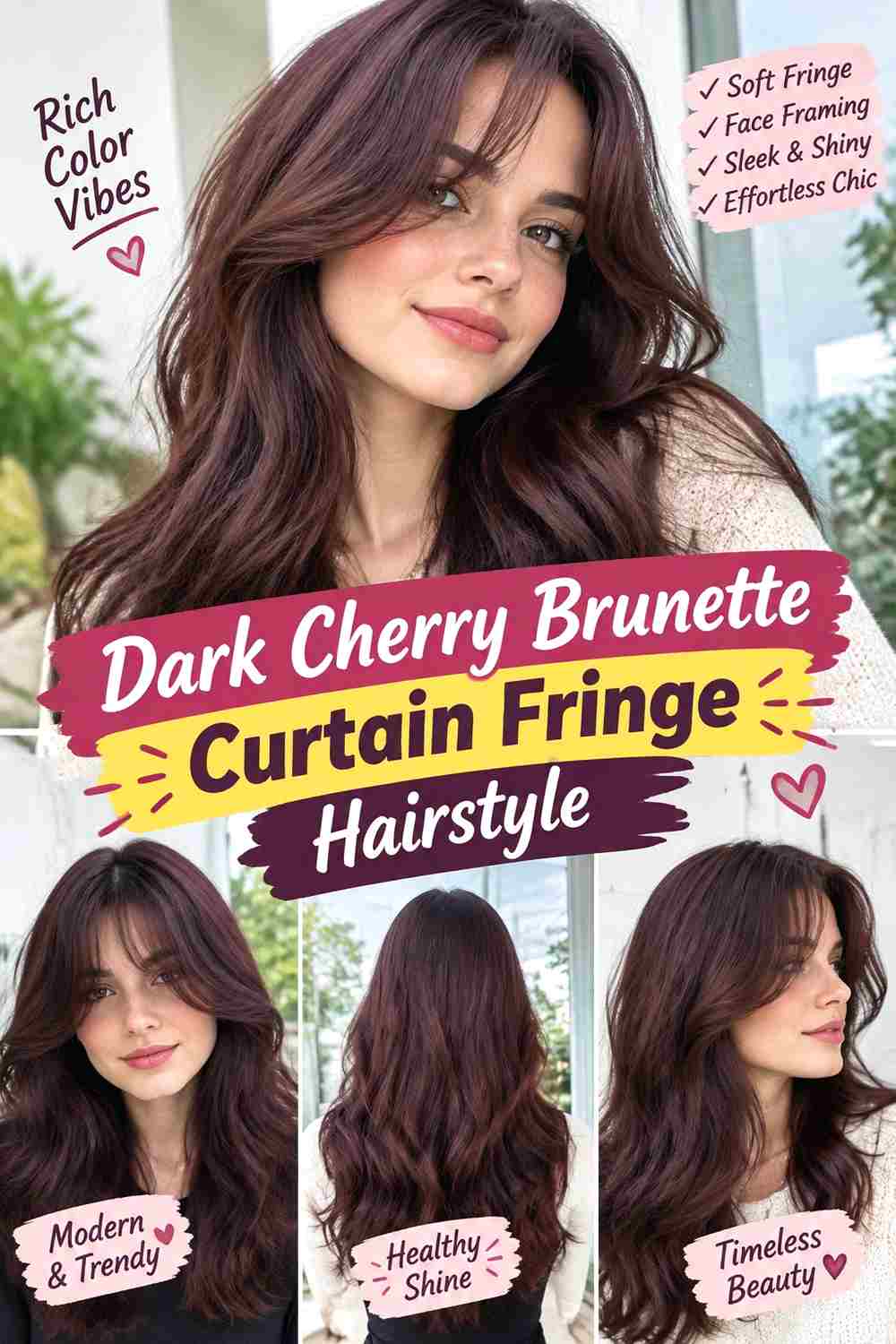
A curtain fringe places the dark cherry brunette shade directly around the eyes and cheek area. The center can sit around the brows or slightly longer, with outer sections gradually extending toward the cheekbones. Longer layers then continue through the sides, while a middle or near-middle part opens the fringe. Rich cherry-brown dimension around those front pieces becomes especially noticeable as they curve away from the face.
This design suits someone willing to maintain a shaped front in addition to color. Straight and wavy hair may require a simple directional dry, while stronger curls need a fringe plan that accounts for shrinkage and natural movement. Use a heat protectant, round brush, and lightweight mousse to protect during blow-drying, guide the curtain shape, and give the roots flexible support.
A fringe refresh can be brief even when the complete wash-day blowout takes much longer. Fringe trimming and color refreshing are separate maintenance needs. Ask your stylist for the exact finished center length and longer outer corners, then explain whether the cherry tone should be more visible in those sections. Growth direction also matters: a fringe that naturally separates away from the center may need a different width or styling approach.
Pro tip:
Dry the fringe before the rest of your hair so its roots do not set in an unwanted direction. Guide each half outward only after establishing the center placement you want.
Make It Work for You:
For curls or strong waves, keep the curtain fringe longer and choose its finished position while dry. You retain the open-front shape while allowing for shrinkage and natural movement.
Watch Out For:
Do not choose fringe length from a pulled-straight section alone if your hair contracts significantly. The center can finish much shorter once released, changing both the framing and visible color placement.
Dark Cherry Brunette Blunt Cut Hairstyle
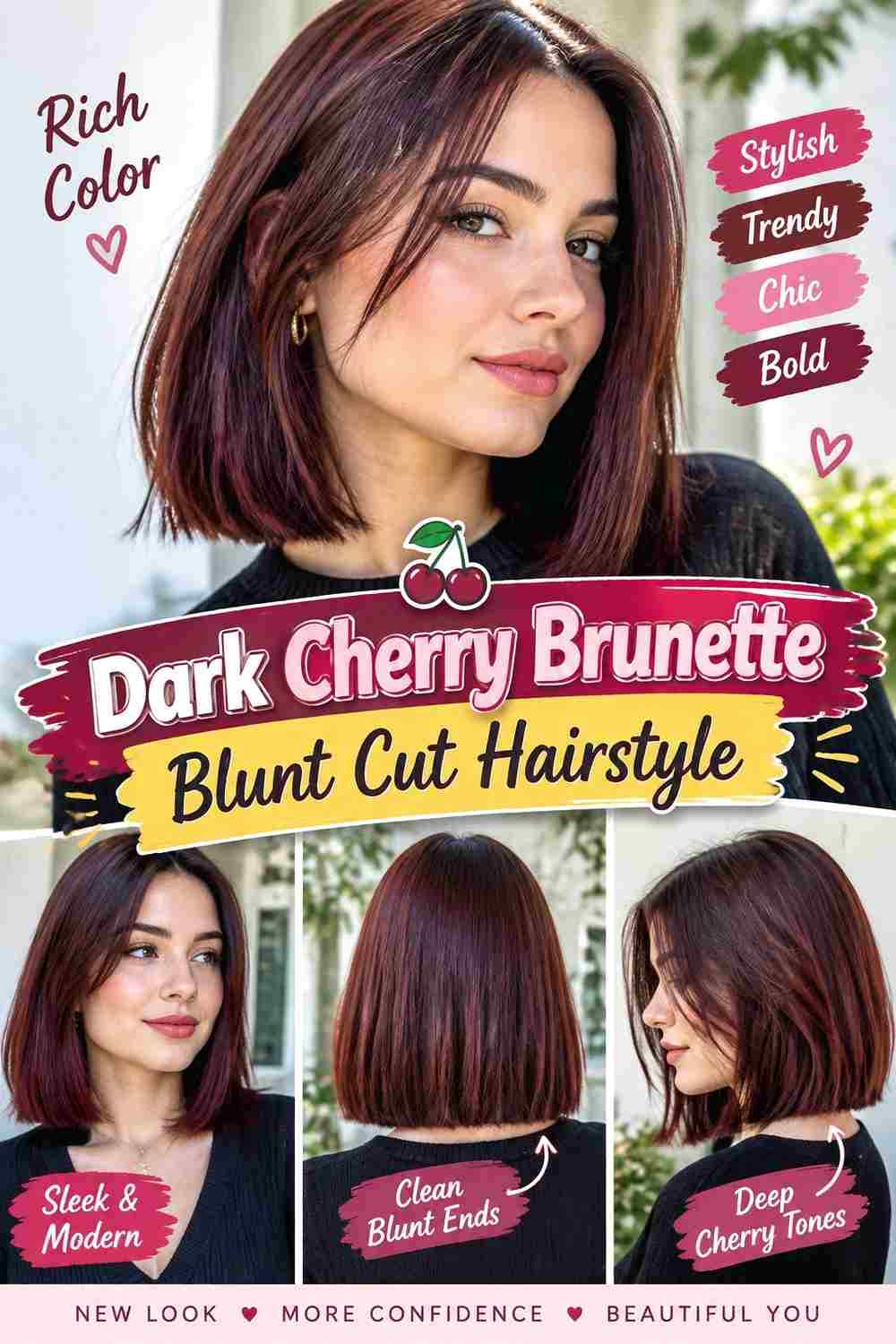
A blunt perimeter creates a strong uninterrupted edge that makes dark cherry brunette appear especially saturated. The length can sit near the shoulders or collarbones, with minimal layering and a clean center part emphasizing the solid silhouette. Because fewer short sections interrupt the surface, subtle differences between deep brown and cherry-red become visible mainly through light, movement, and the natural fall of the hair.
Straight and gently wavy textures show the strong perimeter readily. Fine strands or lower-density ends may benefit from retaining this fuller bottom line, while very dense hair can require internal weight assessment without destroying the outer edge. A heat protectant, paddle brush, and lightweight serum protect during drying, guide a smooth finish, and control flyaways.
A short refresh may involve smoothing only the perimeter, while a complete wash-day blow-dry takes longer according to density and texture. Ask your stylist exactly where you want the finished edge to fall and how solid you want it to appear. For color, specify whether the cherry should remain subtle until it catches light or be immediately noticeable. Refresh the cut when its edge loses definition and address color when fading changes the brown-red balance you prefer.
Pro tip:
Check the color with the hair both still and moving. A blunt cut can look uniformly brunette from one angle, while movement may expose substantially more cherry character across its smooth surface.
Make It Work for You:
If your natural waves make a perfectly straight edge feel too rigid, retain the blunt perimeter but wear it with gentle bends. The full bottom line remains visible while the color gains extra dimension.
Watch Out For:
Avoid heavy texturizing at the ends if the solid perimeter is what attracted you to this idea. Excessive removal can weaken the line and change how concentrated the color appears near the bottom.
Dark Cherry Brunette Pixie Hairstyle
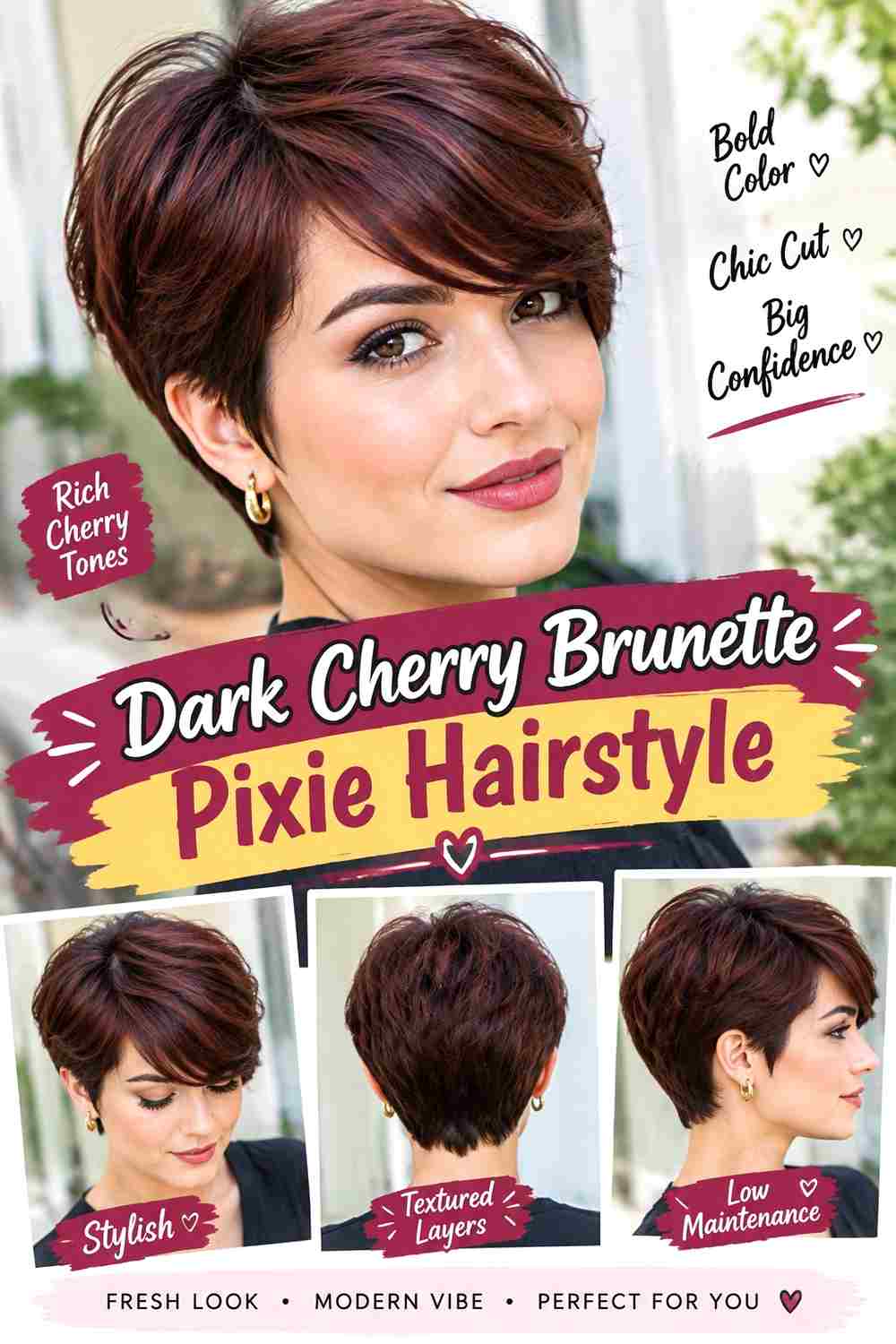
Short length makes every part of a dark cherry brunette pixie visible, from the deeper root area to the brighter surface pieces. A longer top with shorter sides and nape offers enough hair to show tonal variation, while a side-swept front creates movement across the forehead. Cherry dimension can be concentrated through the upper sections instead of making every short piece equally red.
This option suits readers who enjoy a clearly shaped short cut and are comfortable with its reshaping needs. Straight, wavy, and curly textures can all support a pixie, though the finished silhouette should reflect natural growth direction and texture. A lightweight styling cream and small vent brush can provide flexible separation and guide the longer top without requiring a large styling kit.
Daily styling can be quite short, but cut upkeep may be more noticeable because small amounts of growth alter a pixie’s outline. Ask your stylist how long the top should remain and where the side-swept front should finish. Discuss color placement separately, especially whether you want the cherry strongest on the top, fringe, or throughout. As the color changes, short length can make new growth more obvious depending on the contrast with your natural base.
Pro tip:
Apply styling cream in a very small amount and concentrate it through the longer top rather than coating the roots everywhere. This preserves separation and keeps short sections from becoming heavy.
Make It Work for You:
If you prefer less frequent reshaping, keep a little extra length through the sides and nape rather than choosing an extremely close outline. The pixie remains short while allowing a softer grow-out.
Watch Out For:
Do not select the darkest cherry shade solely because the hair is short. The color will still respond to your starting base and lighting, so communicate the desired visible redness clearly.
Dark Cherry Brunette Long Layers Hairstyle
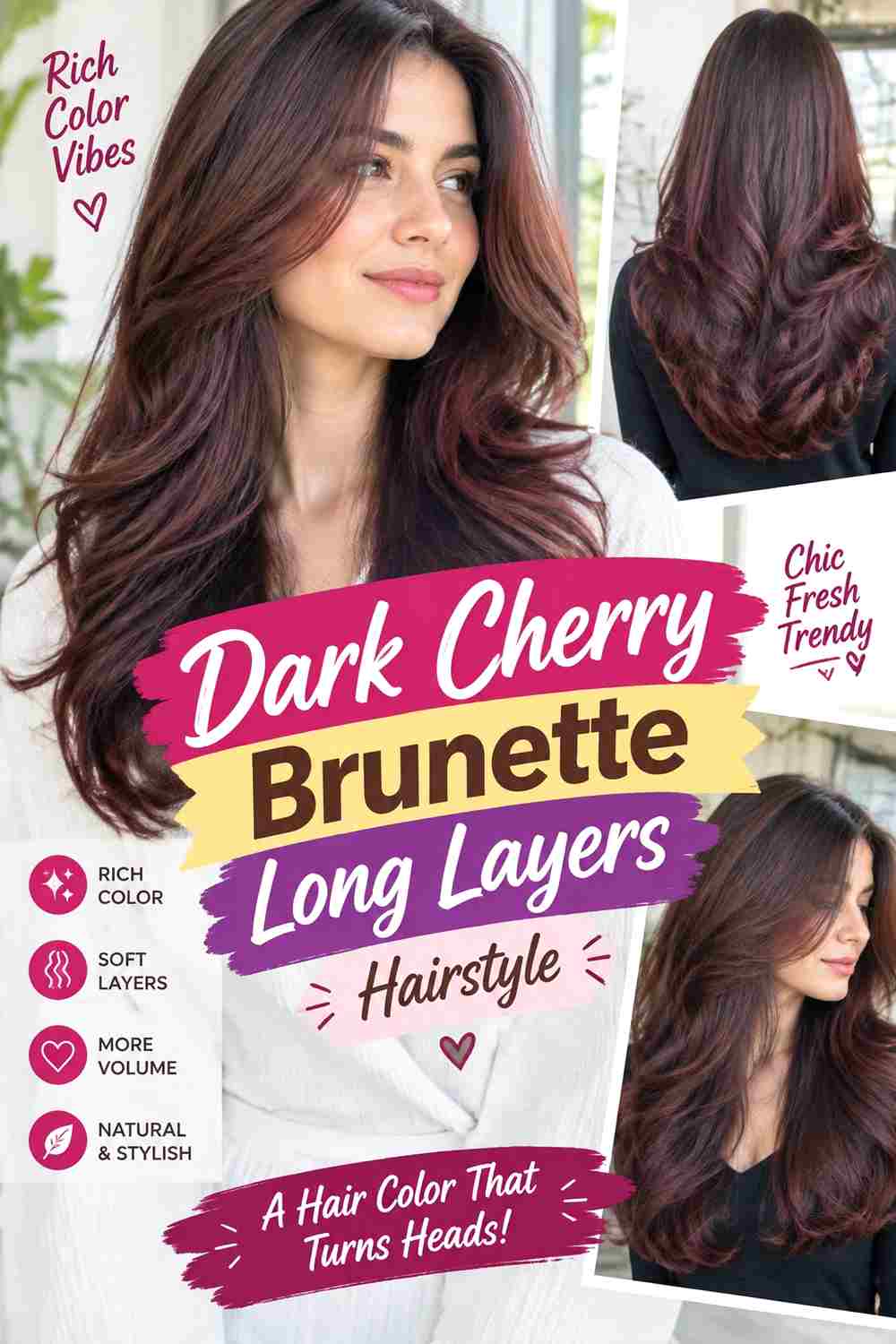
Long layers give dark cherry brunette plenty of surface area while preserving substantial overall length. The shortest front pieces can begin around the chin, with longer layers flowing through the chest and below. Broad bends make each level visible and allow cherry-brown dimension to emerge against darker interior sections. Keeping the bottom reasonably full prevents the longest pieces from becoming overly sparse.
This combination can suit medium and dense hair particularly well, while finer or lower-density hair may need fewer layers to maintain end weight. The color can remain nearly uniform or use subtle dimensional placement depending on your starting shade. A heat protectant, round brush, and lightweight smoothing cream protect during blow-drying, encourage layered movement, and reduce surface fuzz.
Refreshing only the front and upper layers may be relatively quick. A full blowout on long hair takes considerably more time, especially with high density. Ask your stylist where the shortest layer should begin and how much perimeter density you want to retain. For color, identify whether cherry should be evenly distributed or strongest on selected surfaces. Layer reshaping and color refreshing can happen on different schedules, so judge each by visible change rather than automatically pairing them.
Pro tip:
When blow-drying, direct the face-framing layers away from the face and let the lower lengths fall more naturally. This exposes dimensional color near the front without making every layer equally voluminous.
Make It Work for You:
For finer strands, keep the shortest layers below the chin and reduce the number through the back. You retain long movement and cherry dimension while preserving more visual weight through the ends.
Watch Out For:
Avoid adding many short layers simply to make the color look dimensional. Color placement can provide variation on its own; unnecessary cutting may leave the long perimeter thinner than you intended.
Glossy Dark Cherry Brunette Hairstyle
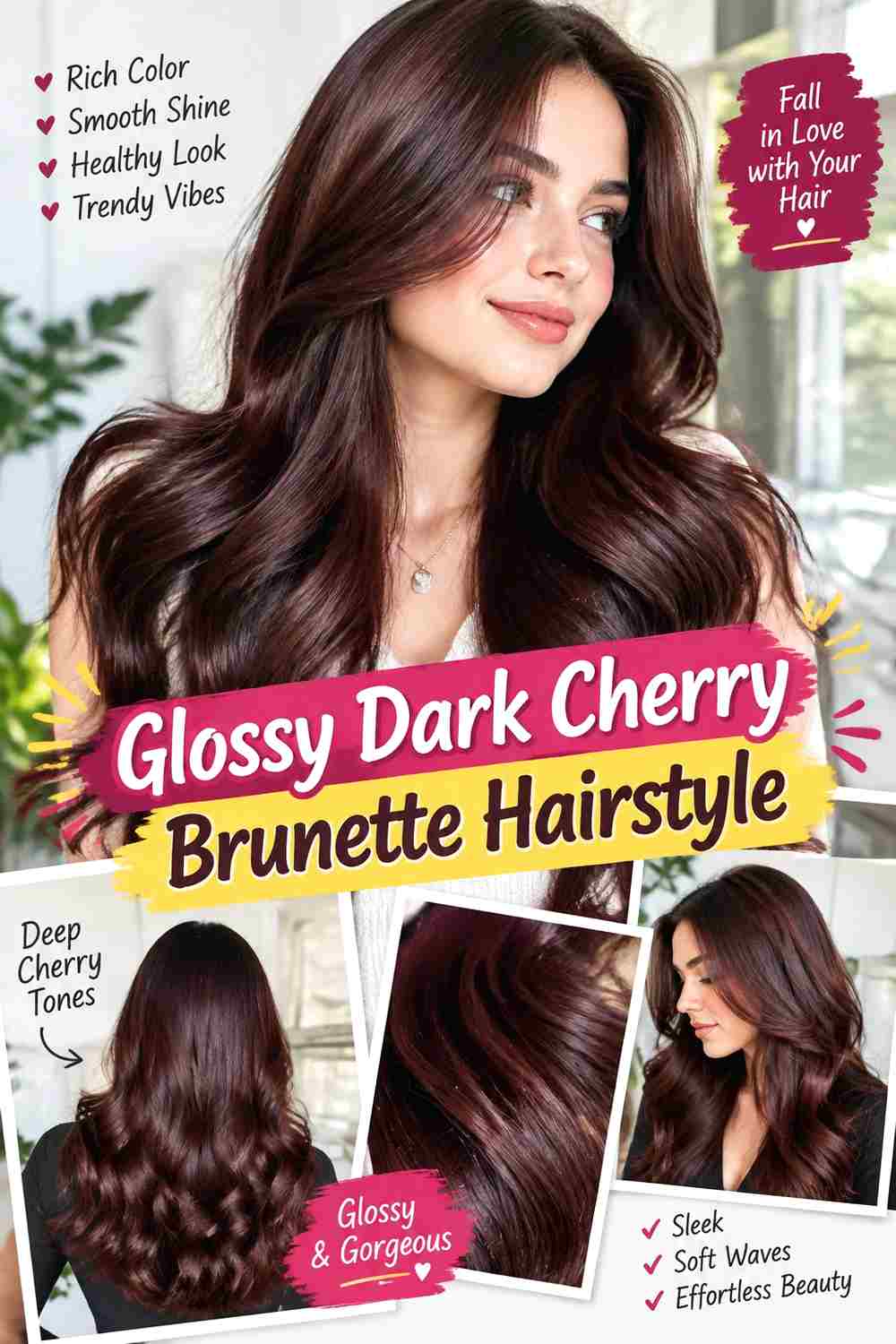
A smooth, reflective finish puts the brown-red balance of dark cherry brunette at the center of the design. Medium-to-long lengths can fall with minimal layering, allowing broad surfaces to catch light and reveal subtle cherry character over the deeper brunette foundation. A center part creates a clean arrangement, while softly curved ends keep the finish from appearing completely flat.
Naturally straight and softly wavy textures may reach this polished effect with less manipulation. Other textures can wear the same color beautifully without straightening, so consider whether the glossy straight finish itself fits your routine. For heat styling, use a heat protectant, paddle brush, and lightweight serum to protect before heat, create directional smoothness, and control flyaways without coating the lengths heavily.
A morning refresh can target only sections bent during sleep; creating the complete polished finish after washing takes longer. Ask your colorist how much cherry should remain visible when the hair is not under strong lighting, since that determines whether the result reads primarily brunette or distinctly red-brown. Color gloss and similar salon services vary by formula and starting hair, so discuss appropriate refresh options rather than assuming one treatment or schedule suits everyone.
Pro tip:
Use serum sparingly through the middle lengths and ends after styling rather than saturating the roots. A small amount can improve surface smoothness without making the polished finish look heavy.
Make It Work for You:
If you rarely wear your hair straight, keep the glossy cherry color but style your natural texture instead. Shine can appear across waves and curls without requiring a smooth heat-styled surface every day.
Watch Out For:
Do not confuse shine with a specific cherry shade. Lighting and surface smoothness affect how color photographs, so choose the brown-red balance first and treat the polished finish as a separate styling decision.
Conclusion
Dark cherry brunette hair can stay close to deep brown or show noticeably stronger burgundy and cherry-red dimension. A blunt bob or sleek lob makes the shade appear concentrated, while curls, waves, shags, and long layers expose more tonal variation through movement. Balayage and face-framing placement preserve more brunette between brighter sections, while an all-over direction creates a more continuous color impression. Your starting color, previous processing, natural texture, density, and preferred upkeep all affect which approach is practical. Also consider styling effort separately: color does not require a straight finish, and curls do not need smoothing to display dimension. Choose the depth and placement first, then pair them with a cut and finish that suit your normal routine.
Before Your Salon Visit
Save one or two references that show the dark cherry brunette color in useful lighting, then discuss your starting shade, previous color, texture, density, preferred length, and maintenance routine. Point out exactly how much brunette versus cherry you want and whether the red-brown dimension should appear at the roots, around the face, through selected ribbons, or across the whole head. If you also want layers, fringe, curls, or a blunt finish, identify those features separately so cut, color placement, and styling expectations remain clear.
FAQs
Is dark cherry brunette more brown or red?
It can lean either way because the name describes a general deep brown-and-cherry color direction rather than one universal formula. Some versions appear predominantly brunette until they catch brighter light, while others show obvious burgundy-red character. References are useful for communicating exactly how visible you want the cherry component to be.
Does dark cherry brunette work on naturally dark hair?
It can, but the achievable result depends on the starting shade, previous color history, condition, and desired visibility of the cherry tone. A subtle red-brown shift and a brighter dimensional result may require different processes. A colorist can assess the starting hair before recommending an appropriate approach.
How can I make dark cherry brunette color last longer?
Follow the care guidance appropriate for the specific color service, reduce unnecessary harsh washing or repeated high-heat styling, and monitor how the shade changes rather than following a universal refresh date. Red-family tones can visibly shift with fading, so discuss suitable home care and refresh options with your colorist.
Do I need to straighten dark cherry brunette hair to show the color?
No. Straight hair creates a broad reflective surface, but waves, curls, and coils can reveal dimension across their bends and individual sections. If your natural texture is important to your routine, plan the color placement for how you normally wear your hair rather than depending on frequent straightening.