11 Fluffy Curtain Layer Hairstyle Ideas
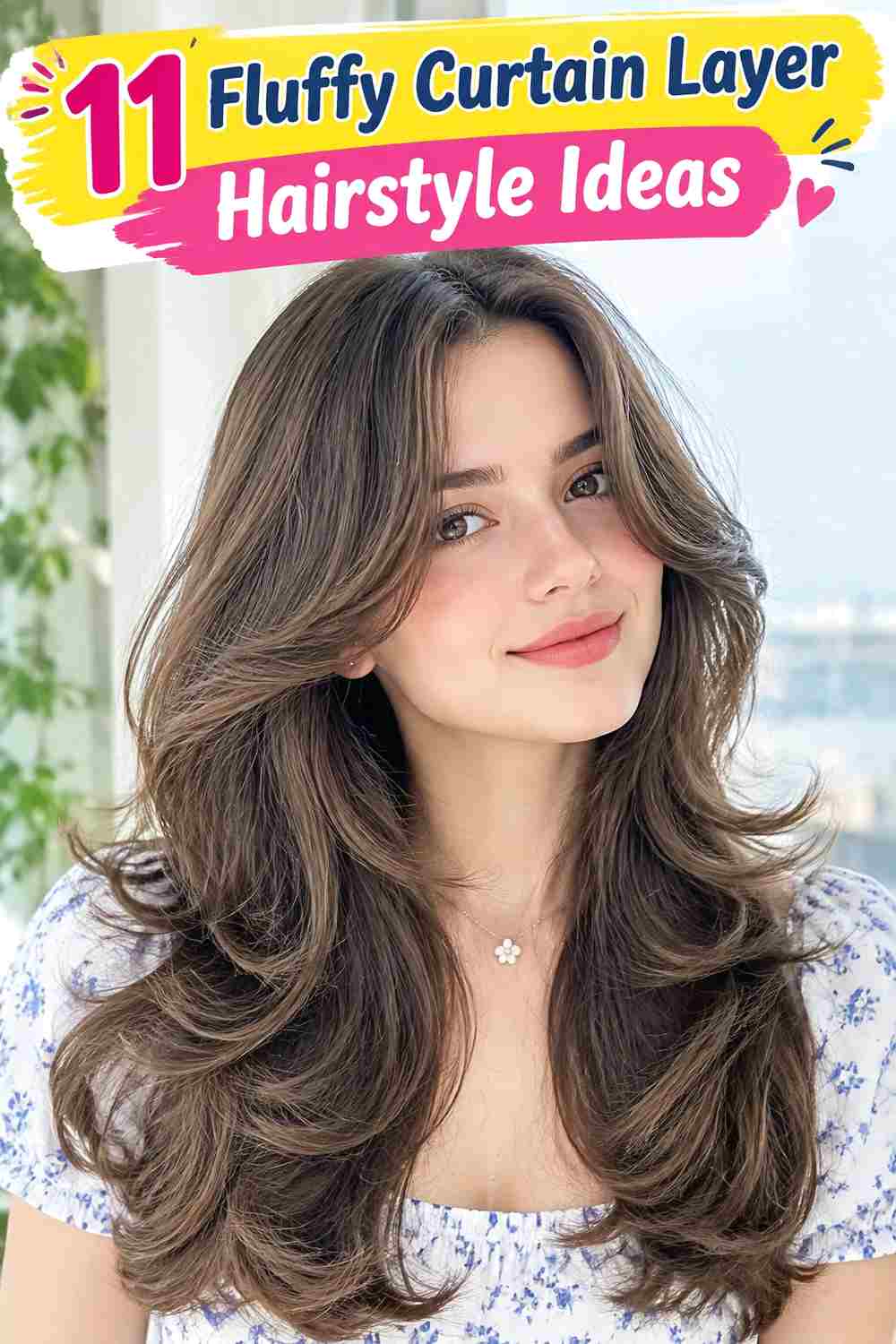
Fluffy curtain layers combine an open front with rounded, lifted movement around the face. The curtain section usually parts near the center, with shorter pieces starting around the cheekbone, cheek, jaw, or chin before flowing into longer layers. The defining feature is not simply having many layers; it is the soft expansion away from the part and the fuller shape that develops around the sides. Ends can remain feathered, softly bent, or naturally textured depending on the haircut.
Straight, wavy, curly, fine, and dense hair can all approach the shape differently. Fine strands may need carefully placed layers so the ends do not become sparse, while dense hair can support a fuller outline with some controlled internal weight. Curly hair needs dry-shape planning because shrinkage changes the finished length. The curtain opening can also be made narrower or wider to suit the wearer’s preferred coverage and natural part.
Styling effort varies considerably. A natural wave may need only product and finger placement, while a fluffy blowout requires more drying and shaping. Between washes, refreshing the curtain pieces and crown is usually quicker than restyling the whole head. Cut maintenance matters separately: the front layers need reshaping when they lose their connection or stop opening comfortably around the face.
Quick List
- Soft Cheekbone Fluffy Curtain Layer Hairstyle
- Long Feathered Fluffy Curtain Layer Hairstyle
- Shoulder-Length Fluffy Curtain Layer Hairstyle
- Wavy Fluffy Curtain Layer Hairstyle
- Curly Fluffy Curtain Layer Hairstyle
- Fine-Hair Fluffy Curtain Layer Hairstyle
- Dense-Hair Fluffy Curtain Layer Hairstyle
- Side-Parted Fluffy Curtain Layer Hairstyle
- Soft Bob Fluffy Curtain Layer Hairstyle
- Airy Blowout Fluffy Curtain Layer Hairstyle
Soft Cheekbone Fluffy Curtain Layer Hairstyle
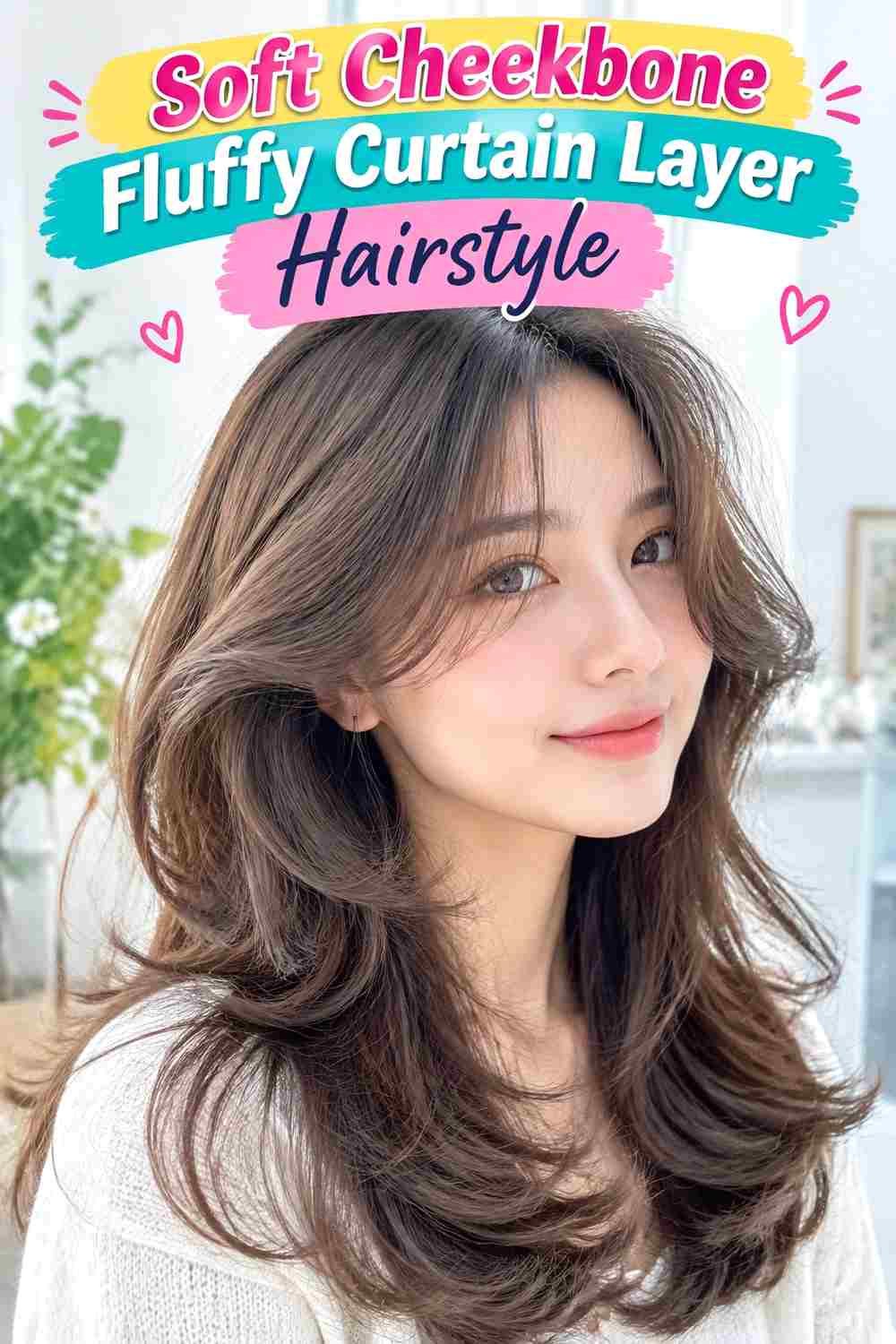
Cheekbone curtain layers create the most noticeable opening around the upper face, with the shortest pieces beginning near the cheekbone and sweeping outward into longer layers. The center part keeps the two sides visually balanced, while the crown can stay moderately lifted rather than heavily teased. The lower layers continue toward the shoulders or chest, keeping enough length for the fluffy shape to taper naturally.
Straight and softly wavy textures can show the rounded movement clearly. Fine strands benefit from preserving weight below the cheekbones, while dense hair may need some internal bulk controlled so the sides do not become too wide. Use lightweight mousse near the roots for lift, a medium round brush for the curtain pieces, and flexible hairspray for movable hold. A front refresh between washes can take a few minutes; a full wash-day blowout requires more time and drying.
At the salon, identify the exact dry cheekbone point where the shortest curtain layer should finish. Ask for a gradual connection from that point into the longer layers rather than several abrupt steps. The front should be reshaped when growth pulls the shortest pieces into the eyes or makes the curtain opening difficult to maintain.
Pro tip:
Dry each curtain side slightly forward first, then redirect the ends outward. This creates a controlled root direction while keeping the final bend soft instead of forcing the entire section into a large curl.
Make It Work for You:
If cheekbone framing feels too exposed, start the shortest layer closer to the jaw. The curtain opening remains recognizable, but more hair stays beside the upper face.
Watch Out For:
Avoid placing too much product directly at the roots. Heavy buildup can flatten the exact area that needs lift, so use a small amount near the base and keep richer products farther down.
Long Feathered Fluffy Curtain Layer Hairstyle
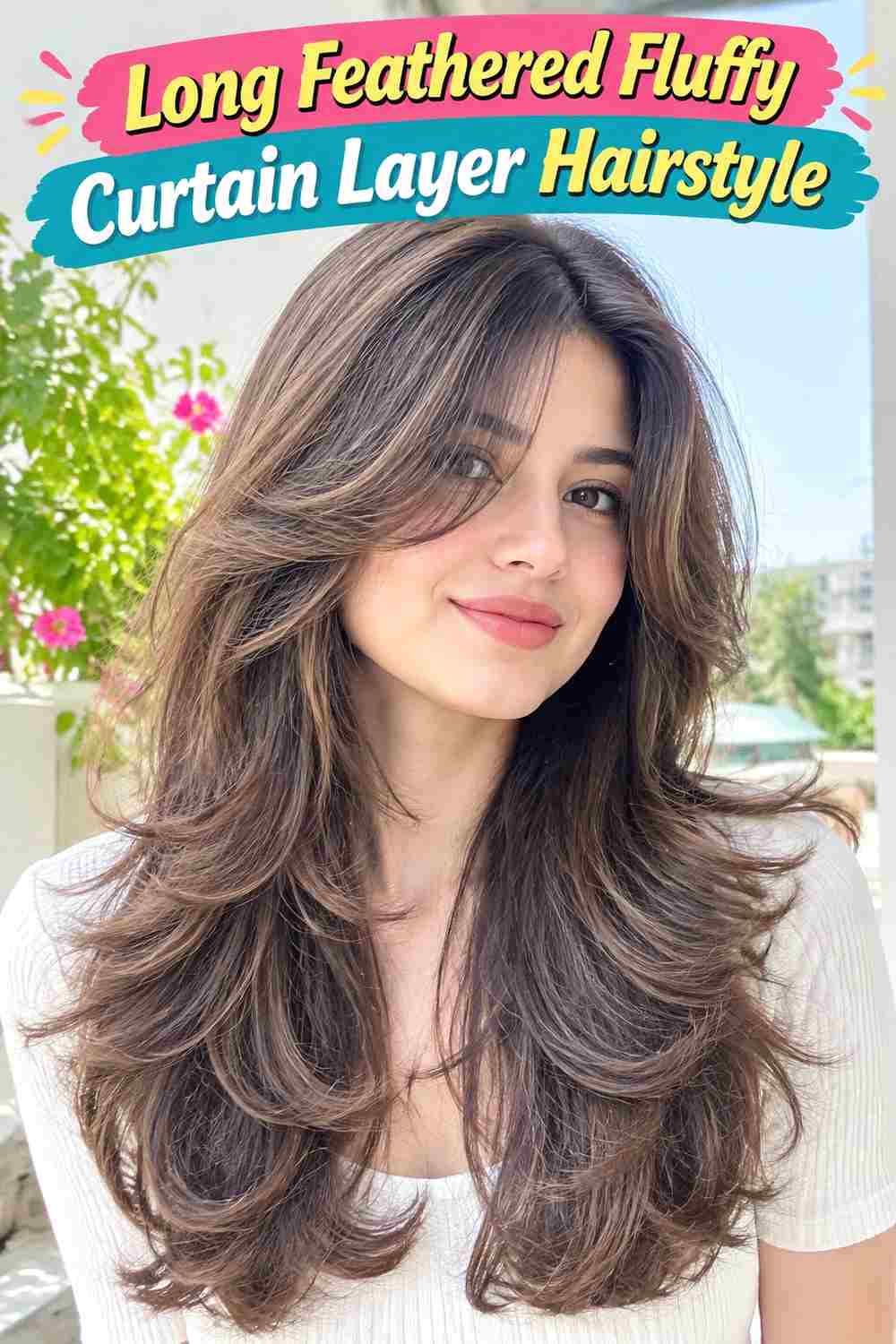
Long feathered curtain layers keep the opening around the face soft while allowing the shortest pieces to blend into substantial length. The curtain section may begin around the cheekbone or jaw, then extend through several longer layers toward the chest or below. Feathered ends give the lower sections movement without making the entire haircut look heavily layered. A center part keeps the shape evenly distributed.
Straight and wavy hair can show the gradual progression especially well. Fine hair may benefit from keeping the longest perimeter strong, while dense hair can support more feathering if the stylist controls bulk where the layers widen. Use heat protectant before heated styling, a large round brush for broad bends, and flexible hairspray for light hold. Refreshing just the front is considerably quicker than drying and shaping all the long hair from wet.
For the salon, specify both the shortest dry curtain point and the length you want to retain at the bottom. Ask for the intermediate layers to connect those landmarks smoothly. Reshape when the front grows long enough to lose its airy opening or the feathered pieces begin merging into one heavy section.
Pro tip:
Shape the shortest curtain section first, then follow its outward direction with each longer layer. This keeps the movement connected instead of making every length curve independently.
Make It Work for You:
For a lower-maintenance long cut, keep the shortest pieces around the jaw rather than the cheekbone. The longer front generally blends more quietly as it grows.
Watch Out For:
Do not remove large amounts of length throughout the back just to increase front movement. The curtain layers can provide visible shape while the lower perimeter remains full.
Shoulder-Length Fluffy Curtain Layer Hairstyle

Shoulder-length hair gives fluffy curtain layers a compact silhouette with enough length for the front to flow into the sides. The shortest curtain pieces can sit around the cheekbones, while the following layers travel toward the shoulders and create a gentle outward curve. A center part opens the forehead, and moderate crown volume keeps the shape from looking flat at the top.
Straight and wavy textures can work well with this length, although the ends may react differently around the shoulders. Fine hair can benefit from a stronger bottom edge, while dense hair may need selective weight control above the shoulders. Use lightweight styling cream for separation, a medium round brush for shaping, and heat protectant whenever the brush is used with heat. A front-only refresh is brief; full wash-day styling takes longer.
At the salon, explain exactly where you want the overall perimeter to sit when dry. Also point to the cheekbone or jaw where the shortest curtain piece should finish. Reshaping becomes useful when the shoulder contact causes the ends to flip differently or the front layers lose their connection.
Pro tip:
When the hair is close to the shoulders, slightly vary the direction of the bottom bends instead of forcing every end outward. This helps prevent a rigid shelf-like shape.
Make It Work for You:
If your hair flips strongly at shoulder level, choose a collarbone-length perimeter instead. The curtain layers remain visible while the ends have less direct contact with the shoulder line.
Watch Out For:
Avoid making the shortest curtain layer too short compared with the shoulder perimeter. A large gap between the front and bottom can make the shape look disconnected rather than fluffy.
Wavy Fluffy Curtain Layer Hairstyle
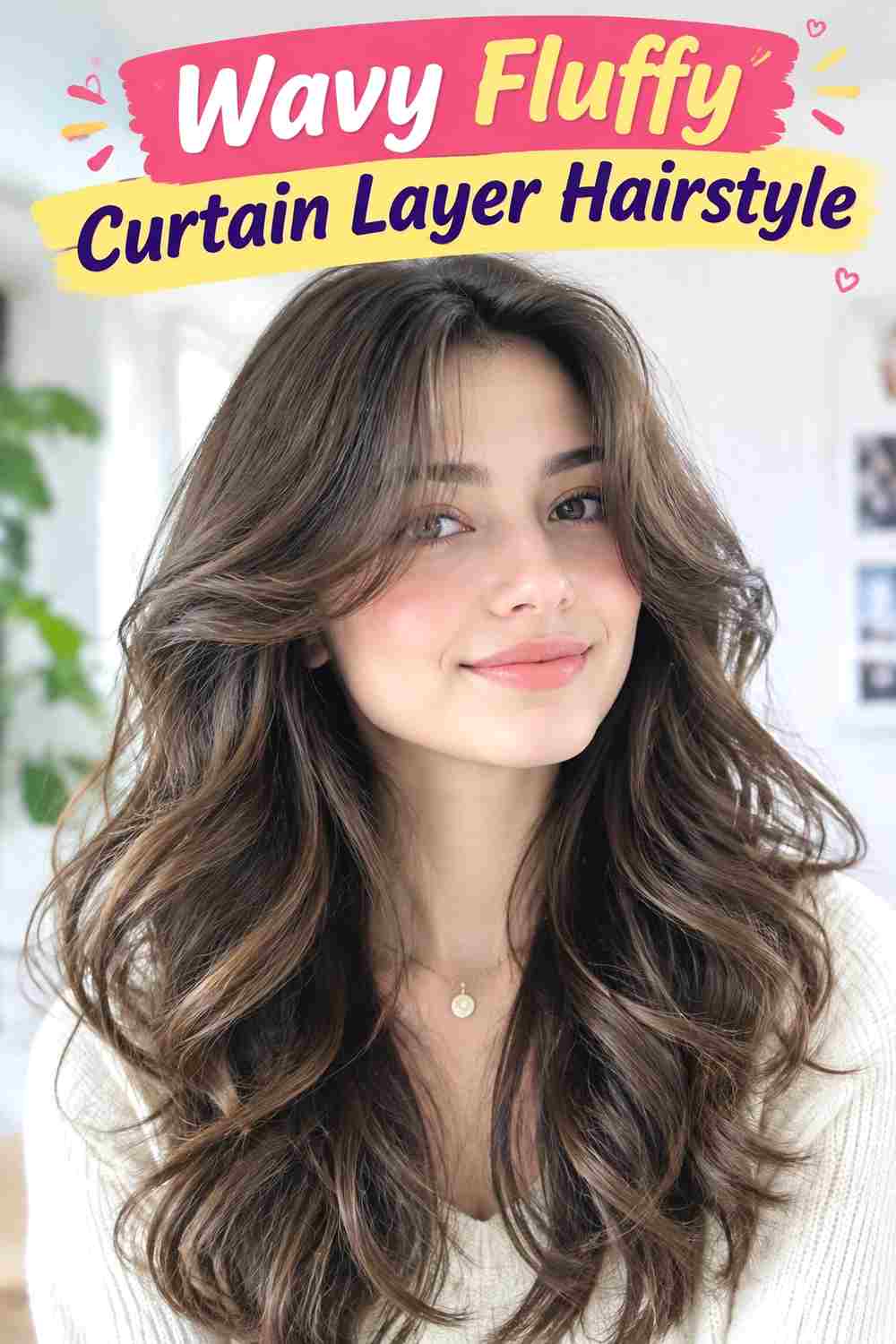
Wavy hair can create much of the fluffy movement naturally, especially when the curtain layers are cut to follow the existing bend pattern. The shortest pieces may begin around the cheekbone or jaw, with broad waves continuing into longer shoulder or chest-length layers. A center part allows both sides to open evenly, while slightly flatter roots keep the volume focused around the curtain and mid-lengths.
Loose and medium waves can support the shape with relatively little heat. Fine wavy hair may need lightweight support rather than heavy creams, while dense waves may need more controlled sectioning so the sides do not expand too far. Use lightweight mousse for flexible volume and styling cream for frizz control and definition. A damp refresh can take only a few minutes, while washing and fully air-drying or diffusing the whole head takes longer.
At the salon, explain where your waves naturally become fuller and where they flatten. Ask for the shortest curtain layer to be judged according to its dry position rather than only its wet length. Reshape when the layers stop separating into distinct wave groups or the front loses its open movement.
Pro tip:
Apply styling product with the head mostly upright when shaping the curtain area. This helps the roots stay lifted without encouraging all the wave volume to collect at the crown.
Make It Work for You:
If your waves expand strongly around the cheeks, start the shortest curtain layer slightly lower. Extra length can reduce unwanted width while preserving the open, fluffy direction.
Watch Out For:
Avoid brushing the waves repeatedly while they dry. Excess handling can separate the texture unevenly and leave the curtain layers looking frizzier than the rest of the hair.
Curly Fluffy Curtain Layer Hairstyle
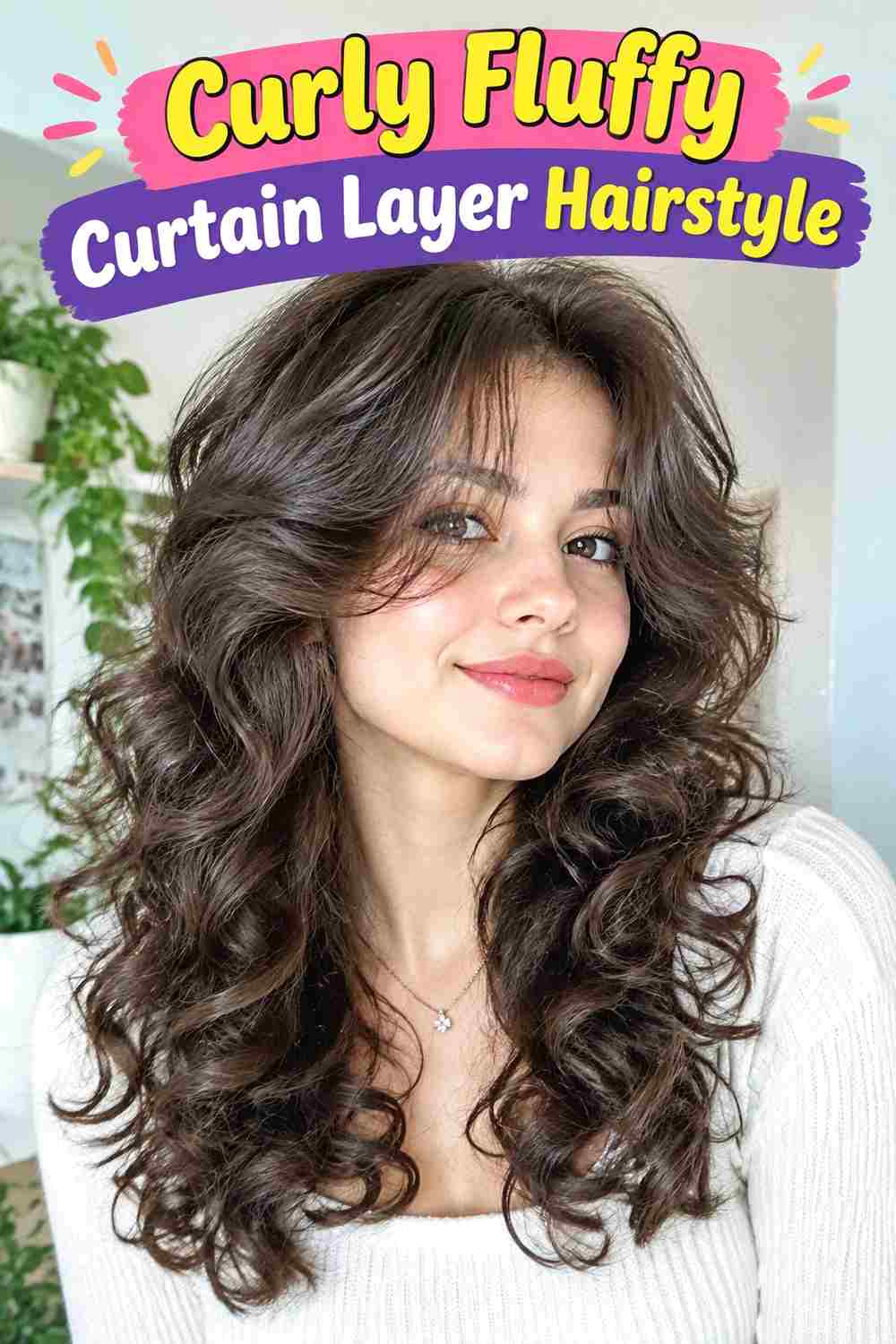
Curly hair turns curtain layers into a series of rounded curl groups that open from the part and expand around the face. The shortest section can sit near the cheekbone, jaw, or chin, followed by progressively longer layers through the shoulders or chest. Because curls shrink as they dry, the finished position matters more than a fixed wet measurement. A center or slightly off-center part can change the opening.
Curly and coily textures can create strong natural volume, but the amount of expansion varies by curl pattern and density. Use lightweight leave-in conditioner for softness, curl gel for definition, and a diffuser on cool or low airflow for controlled drying. Refreshing a few curtain curls is usually much quicker than completing a full wash, definition, and drying routine.
At the salon, show the desired dry position of the shortest curtain pieces and explain how much the hair contracts after drying. Ask for the layer progression to be assessed with the natural curl pattern visible. Reshape when growth causes the curl groups to merge or the shortest pieces fall into an unwanted area.
Pro tip:
Separate the center opening while the curls are damp, then let the front sections dry without repeatedly moving them. This helps the curtain shape form around the natural curl groups.
Make It Work for You:
If your curls shrink significantly, keep the shortest layer longer at the cutting stage. The extra length allows contraction while preserving the intended cheekbone or jaw relationship.
Watch Out For:
Do not judge the finished curtain shape only from stretched hair. Different curl groups can contract unevenly, so the dry pattern should guide the final proportion.
Fine-Hair Fluffy Curtain Layer Hairstyle
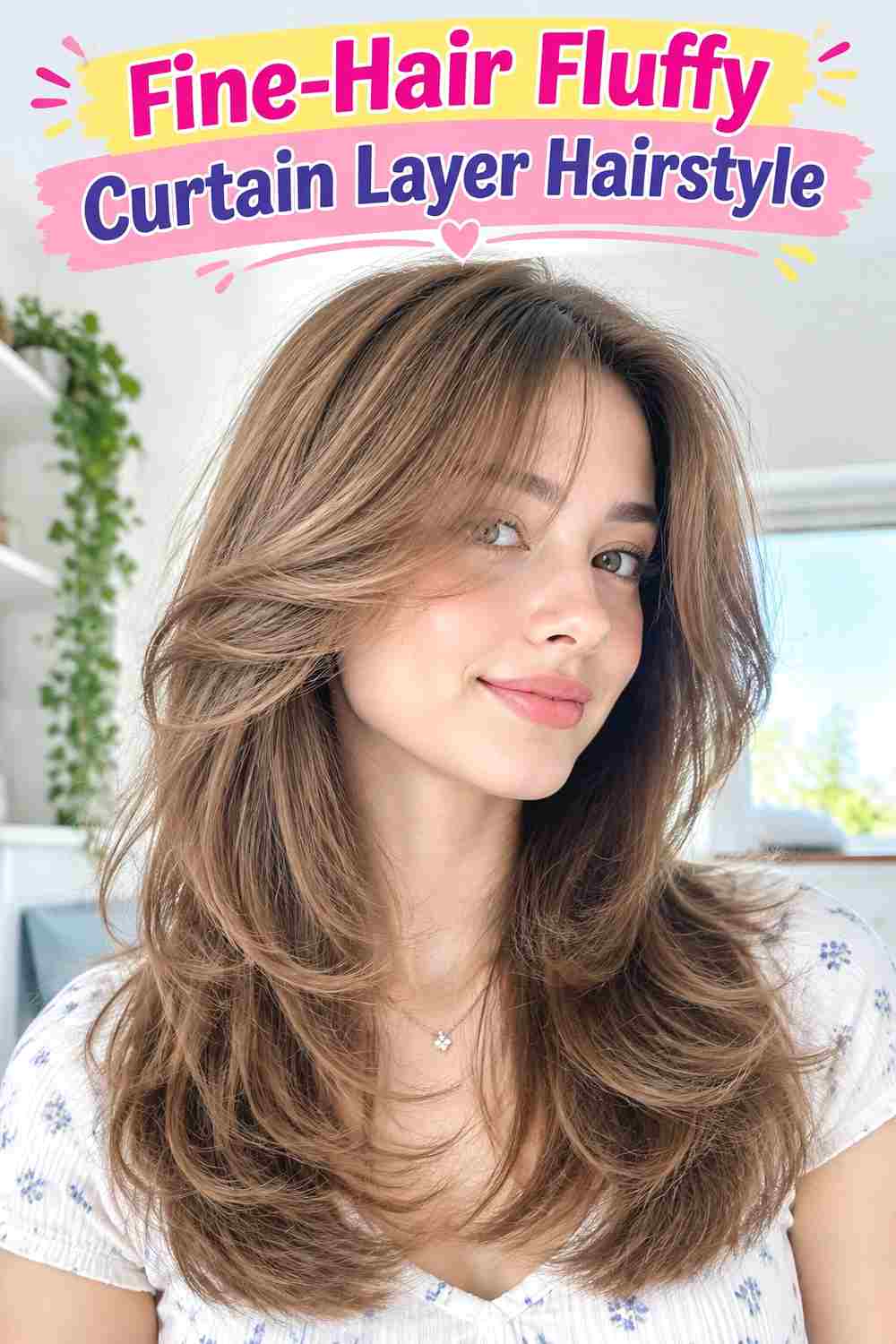
Fine strands can achieve a fluffy curtain shape when volume is concentrated around the roots and front layers rather than removed excessively from the ends. A cheekbone or jaw-length curtain section can open from the center part and blend into a longer, fuller perimeter. The lower layers should retain enough weight to prevent the hairstyle from looking stringy, while the front supplies visible movement.
Fine hair describes strand diameter, not necessarily low density. If the hair is fine but dense, more layering may be possible than with sparse hair. Use lightweight mousse for root lift, heat protectant before heated styling, and a round brush for controlled shaping. A short refresh of the front and crown is fairly quick, but a full wash-day blowout takes longer depending on length and density.
At the salon, explain whether you have fine strands, low density, or both. Ask the stylist to preserve the bottom edge while deciding how much layering the front can support. Reshape when the curtain pieces become too long to lift or begin blending into a flat sheet of hair.
Pro tip:
Use only a small amount of mousse near the roots and distribute it carefully. Too much product can coat fine strands and reduce the airy separation you are trying to create.
Make It Work for You:
For low-density hair, begin the curtain layers closer to the jaw rather than the cheekbone. The longer starting point preserves more hair while still giving the front an open shape.
Watch Out For:
Avoid requesting heavy thinning simply because the hair feels flat. Removing too much can make the ends appear sparse, while better-directed root lift may address the lack of volume more effectively.
Dense-Hair Fluffy Curtain Layer Hairstyle

Dense hair can create a naturally full curtain silhouette, but the placement of that fullness determines whether the layers look rounded or overly wide. The shortest pieces can begin around the cheekbone or jaw, with longer layers flowing toward the shoulders or chest. The center opening stays defined while internal volume is controlled where the sides expand most.
Straight and wavy dense hair can carry a strong fluffy outline. Curly dense hair needs extra consideration for shrinkage and curl expansion. Use heat protectant before heated styling, a large round brush for broad front curves, and lightweight smoothing cream to control surface bulk. Refreshing the curtain pieces may take several minutes, while drying dense hair completely can take substantially longer.
At the salon, point to the areas where the hair becomes widest rather than simply asking for less thickness everywhere. Discuss controlled internal weight removal while preserving the outer layer shape. Reshape when new growth causes the sides to spread too broadly or the curtain pieces no longer separate from the surrounding layers.
Pro tip:
Dry the roots in their intended direction before shaping the ends. Once the base is controlled, the outer curtain layers need less manipulation to form a rounded, fluffy outline.
Make It Work for You:
If your dense hair is naturally wavy, allow some of that expansion to create the volume. Fewer short layers may provide a more controlled result than adding many overlapping sections.
Watch Out For:
Avoid aggressive thinning throughout the curtain area. Too many short internal hairs can increase surface expansion and make the sides look puffier instead of softer.
Side-Parted Fluffy Curtain Layer Hairstyle
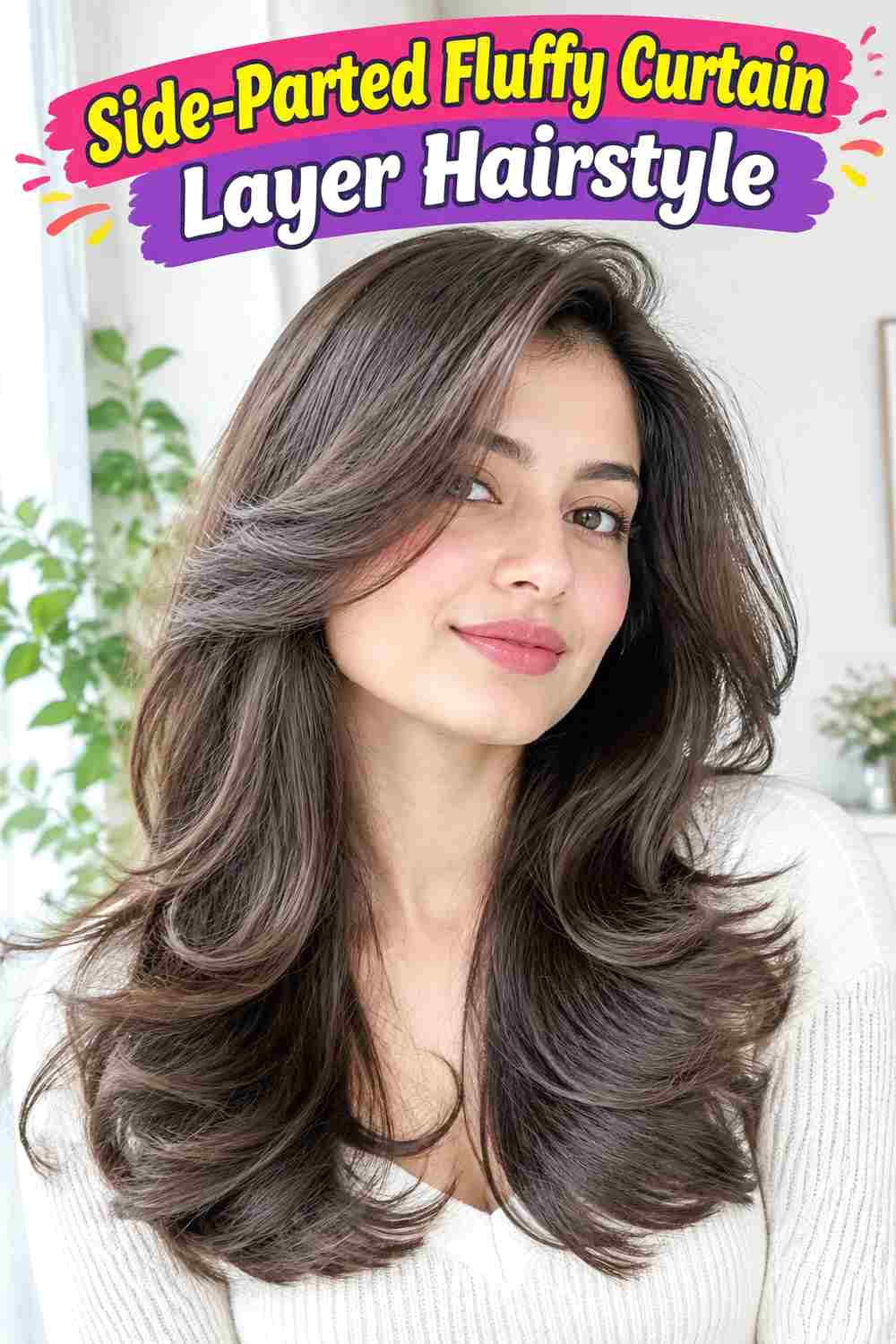
A side part changes the classic curtain arrangement by giving one side more volume and directional movement. The heavier side can carry a longer sweep from the cheekbone toward the jaw, while the lighter side sits closer to the face and may tuck behind the ear. Longer layers continue toward the shoulders or below, keeping the overall shape connected.
Straight and wavy textures can adapt easily, while fine hair may benefit from the lift created naturally by the side part. Dense hair can use selective internal weight control on the fuller side. Use lightweight mousse for root support, a vent brush for directional drying, and flexible hairspray for light hold. Restyling only the front is fairly quick; a complete wash-day style requires more time.
At the salon, arrive with the part you actually wear and explain whether you sometimes switch sides. Point out the shortest dry curtain landmark and how much sweep you want above it. Reshape when the heavier side grows long enough to collapse or the lighter side loses its intended connection.
Pro tip:
Dry the roots against the final part direction first, then redirect them into place. This creates more controlled lift than simply brushing everything toward the part from the beginning.
Make It Work for You:
For a softer change from a center part, shift only slightly off center. You gain directional volume while keeping the curtain layers relatively balanced.
Watch Out For:
Do not cut the front based on a temporary deep side part if you normally wear the hair centered. Changing the part afterward can make the layers appear uneven.
Soft Bob Fluffy Curtain Layer Hairstyle
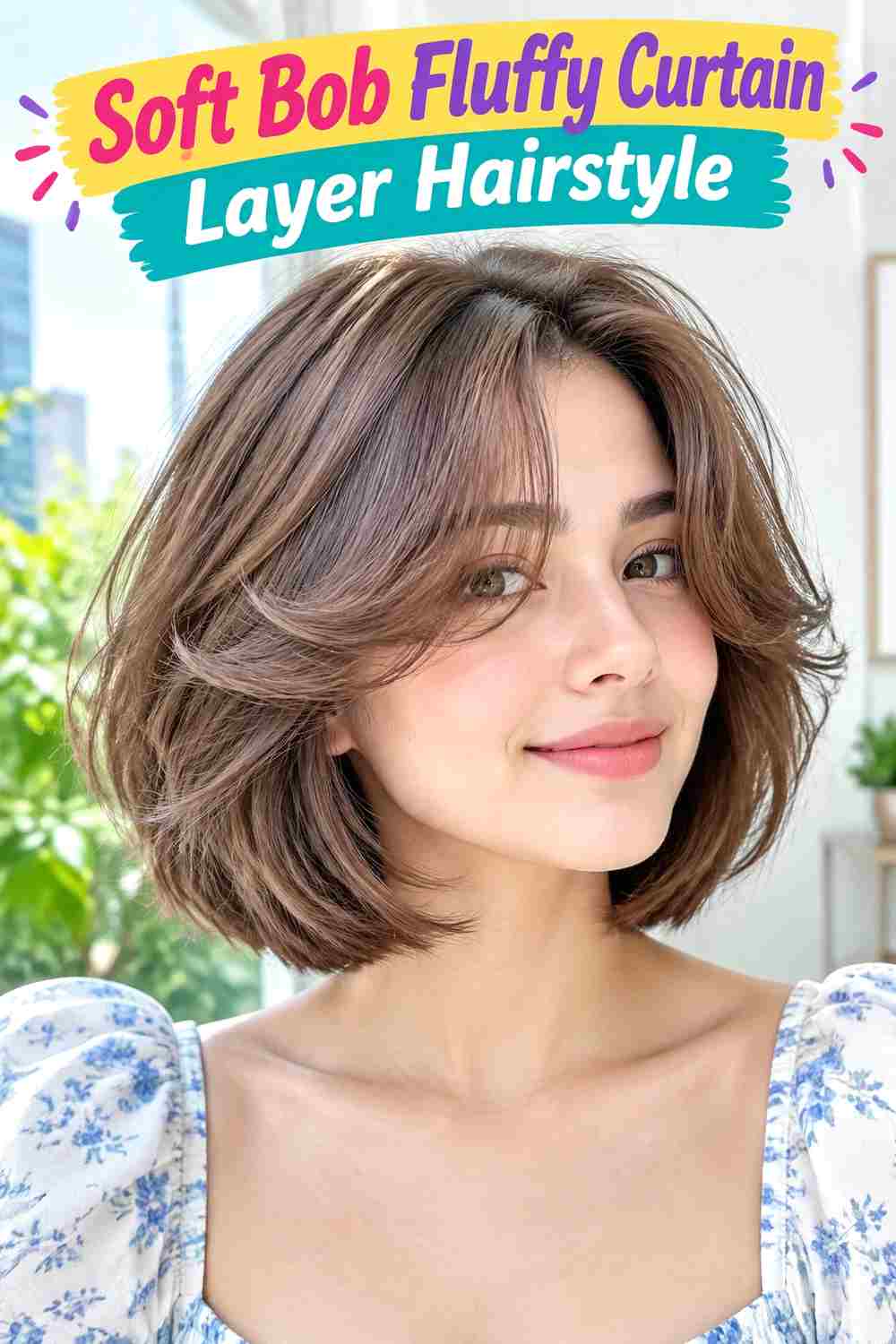
A soft bob gives fluffy curtain layers a shorter foundation, so the front movement must blend carefully into the compact perimeter. The bob can sit around the jaw or slightly below, with curtain pieces beginning near the cheekbone or jaw and opening outward. The bottom edge stays comparatively full, while the front layers provide the softer movement. A center part keeps the shape symmetrical.
Straight and softly wavy textures can show the contrast between the defined perimeter and airy front. Fine hair benefits from preserving the bob’s lower weight, while dense hair may need some internal control around the sides. Use heat protectant before heated styling, a small round brush for the curtain pieces, and flexible hairspray for light hold. A front refresh can be quick, while shaping the whole bob from wet takes longer.
At the salon, separate the bob’s desired bottom length from the shortest curtain landmark. Ask for the front layers to connect gradually into the sides rather than creating a sudden drop. Reshape when the bob perimeter loses its intended line or the curtain pieces grow long enough to flatten.
Pro tip:
Keep the lower bob relatively smooth while giving the curtain pieces more lift. Concentrating the fluff near the face creates contrast without making the entire short shape overly rounded.
Make It Work for You:
If your bob is low density, choose jaw-length curtain pieces rather than very short cheekbone layers. More preserved hair through the front can help maintain a fuller outline.
Watch Out For:
Avoid layering the entire bob heavily to match the fluffy front. The stronger lower perimeter is what keeps the shorter haircut recognizable and prevents the ends from looking thin.
Airy Blowout Fluffy Curtain Layer Hairstyle
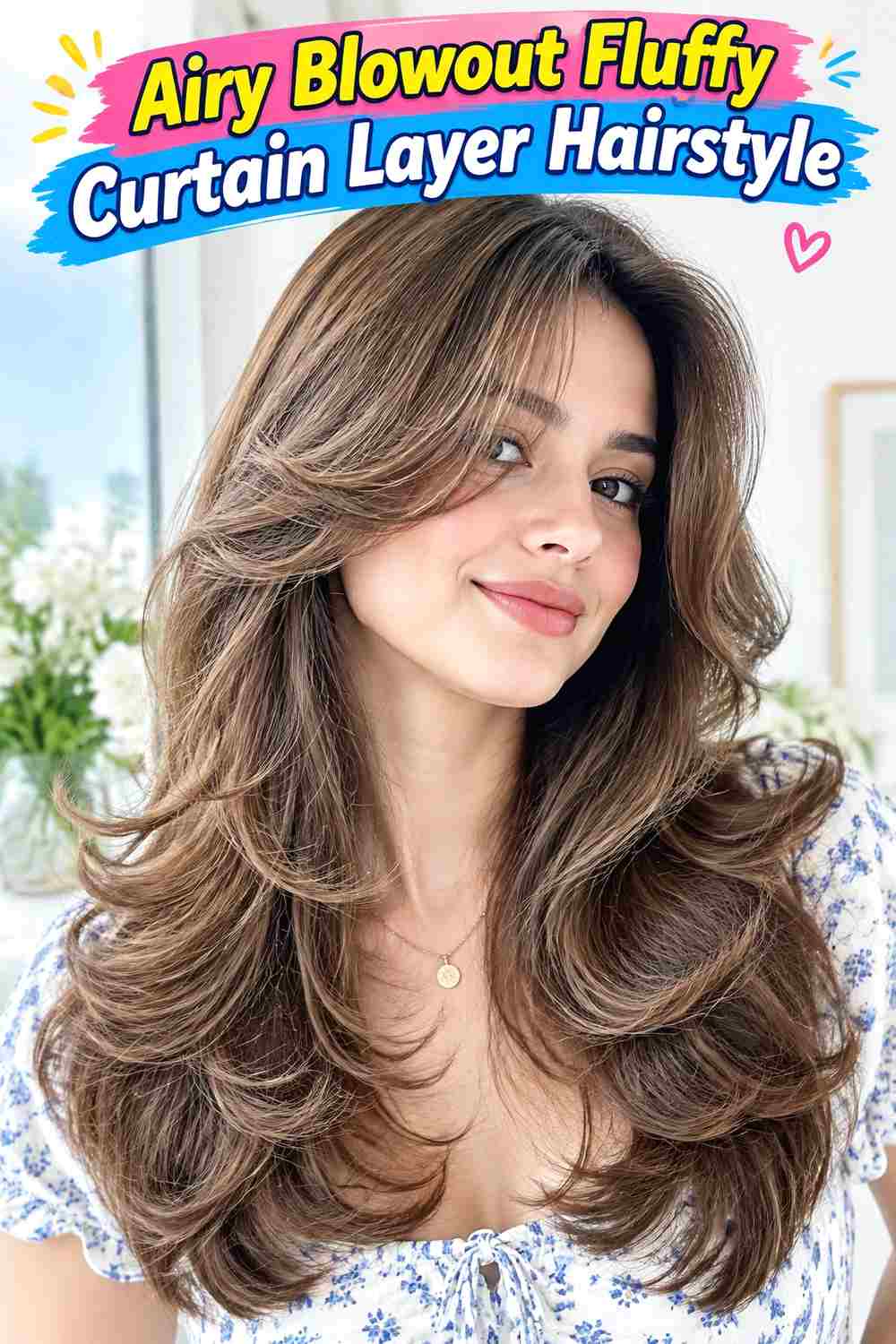
An airy blowout emphasizes lift at the roots and broad movement through the curtain layers. The center opening stays visible, while shorter pieces around the cheekbones or jaw curve away from the face and blend into longer shoulder or chest-length layers. The crown receives moderate volume, but the shape should remain mobile rather than stiff. Ends can finish with a soft outward bend.
Straight and softly wavy hair may need the least reshaping to achieve this finish. Fine hair benefits from lightweight root support, while dense hair requires more drying time and controlled sections. Use heat protectant before heated styling, a round brush for the curtain curve, and flexible hairspray for movable hold. A front-and-crown refresh can be done much faster than a complete wash-day blowout.
At the salon, describe the amount of root lift you want rather than simply requesting maximum volume. Point out the dry starting point of the shortest curtain layer and the desired overall length. Reshape when growth makes the front too heavy to lift or the layers stop blending into the lower shape.
Pro tip:
Allow each shaped curtain section to cool briefly before releasing it. The pause helps the bend settle and can reduce the need for repeated passes with heated tools.
Make It Work for You:
If you do not want a full blowout every day, style only the curtain pieces and crown. The remaining length can follow its natural texture while the front establishes the fluffy silhouette.
Watch Out For:
Avoid creating tight curls at the front when you want airy volume. Broad bends keep the curtain layers mobile, while tight curls can make the opening look too round and compact.
Conclusion
Fluffy curtain layer hairstyle ideas can range from cheekbone-focused shapes with noticeable lift to long, feathered versions that blend quietly into the perimeter. Shorter curtain layers create more visible face framing, while jaw-length pieces usually offer a softer grow-out. Fine or low-density hair may benefit from preserved weight through the ends, whereas dense hair can often support more fullness with careful bulk placement. Straight hair can use a blowout to build the shape, while waves and curls bring natural movement with less uniformity. Center parts create the familiar open curtain effect, while side parts shift the volume and direction. Consider your natural texture, density, preferred length, daily styling time, and how much crown volume you actually want before choosing your version.
Before Your Salon Visit
Choose one or two favorites and save clear references showing the front, sides, and overall length. Discuss your texture, density, face shape, preferred length, normal styling routine, and how much maintenance you can manage. Point out the exact curtain opening, shortest layer, volume placement, perimeter length, and finish you prefer. If you normally air-dry, say so before requesting a blowout-style shape. Clear details help separate the haircut you want from the styling finish shown in a reference.
FAQs
Can fluffy curtain layers work on fine hair?
Yes. Fine strands can support the shape when the layering is controlled and enough weight remains through the lower lengths. If the hair is also low density, a longer cheekbone-to-jaw transition may preserve fullness better than several short layers.
How do fluffy curtain layers work with curly hair?
Curly hair can create a naturally rounded version, but shrinkage must be considered. The stylist should assess how the curls sit when dry before deciding the finished length of the shortest curtain section. Curl grouping and natural expansion also affect how wide the frame becomes.
Do fluffy curtain layers require a blowout every day?
No. Wavy or curly textures may create the movement naturally, and straight hair can use simpler air-dried shaping if the haircut is designed for it. A polished blowout requires more effort, but the cut itself does not have to depend on daily heat styling.
How often should fluffy curtain layers be reshaped?
The useful trigger is how the front sits rather than a fixed schedule. Consider reshaping when the shortest pieces drop into the eyes, lose their curtain opening, or merge with the surrounding layers. Fringe-like sections may need attention sooner than the longer haircut.