16 Persimmon Copper Hair Color Ideas

Persimmon copper hair color sits in the orange-red copper family, with a juicy, warm tone that can range from deep burnt orange to brighter apricot-copper depending on the base. Solid color looks especially clear on blunt bobs and smooth long hair, while layers, waves, curls, and face-framing pieces break the shade into moving ribbons. Fringe can stay deeper, take on the full copper tone, or connect to brighter front sections.
Starting color, density, texture, and previous chemical services affect how much brightness is realistic. Naturally warm brown, auburn, or copper hair may transition more softly, while very dark or previously colored hair can require professional preparation for a vivid persimmon result. Fine or lower-density hair often benefits from selective ribbons that preserve visual fullness. Curly and coily hair can show strong dimension when placement follows complete curl groups and accounts for shrinkage.
Maintenance depends on contrast and placement. Rooted melts generally soften regrowth better than strong money pieces or halos, while brighter ends can show fading sooner. Color-safe cleansing, sensible wash frequency, and limited unnecessary heat may help preserve copper pigment, although fading still happens. A quick styling refresh is different from a full wash-day reset, and both are separate from salon color maintenance, so compare each idea with your real routine in mind.
Quick List
- All-Over Persimmon Copper Hairstyle
- Espresso-Root Persimmon Copper Melt Hairstyle
- Persimmon Copper Money Piece Hairstyle
- Persimmon Copper Peekaboo Underlayer Hairstyle
- Persimmon Copper Balayage Ribbon Hairstyle
- Golden Persimmon Copper Blend Hairstyle
- Persimmon Copper Ombre Hairstyle
- Persimmon Copper Dip-Dyed Ends Hairstyle
- Persimmon Copper Halo Highlight Hairstyle
- Persimmon Copper Curly Dimension Hairstyle
- Persimmon Copper Panel Bob Hairstyle
- Smoky Persimmon Copper Hairstyle
- Ginger Persimmon Copper Melt Hairstyle
- Persimmon Copper Micro-Highlight Hairstyle
- Persimmon Copper Face-Frame Gradient Hairstyle
- Reverse Persimmon Copper Ombre Hairstyle
All-Over Persimmon Copper Hairstyle

An all-over persimmon copper application creates one continuous orange-red tone from roots through the ends. Straight hair shows the color as a smooth, saturated surface, while waves and curls expose brighter flashes as individual bends catch the light. A blunt bob makes the shade look especially dense, whereas long layers add movement without breaking the color into separate sections. A center or side part works because the design does not depend on one highlighted zone.
This option suits someone who wants a complete color shift rather than scattered accents. Naturally warm brown or auburn hair may support a softer transition, while darker or previously colored hair can need more preparation for a vivid result. Use color-safe shampoo to reduce unnecessary pigment loss, moisturizing conditioner to keep the lengths flexible, and heat protectant spray whenever hot tools are part of your routine. A quick between-wash refresh may involve only reshaping the front, while a full wash-day finish takes longer according to length, density, and texture. At the salon, explain how bright you want the copper to look indoors and how orange-red it should appear in daylight. Refresh pigment when the tone loses the persimmon warmth you originally chose.
Pro tip:
Compare the fresh color in indirect daylight before leaving the salon. Persimmon copper can reveal more orange outdoors than it does under bright indoor lighting.
Make It Work for You:
If you prefer a deeper result, ask for the overall finish to stay closer to auburn-copper while retaining enough orange-red reflection to preserve the persimmon character.
Watch Out For:
Avoid treating every faded section identically. More porous ends may lose warmth faster, so assess roots, mid-lengths, and ends separately before refreshing pigment.
Espresso-Root Persimmon Copper Melt Hairstyle

An espresso root gives persimmon copper a deeper starting point, then lets the orange-red tone become stronger through the mid-lengths and ends. The dark root zone can stay short for a subtle melt or extend several inches for more contrast. Broad waves soften the transition, while straight hair reveals exactly where the espresso shifts into copper. Face-framing layers can carry slightly brighter persimmon so the darker crown does not dominate the front.
This placement can suit naturally dark brunettes who prefer softer-looking regrowth. The copper lengths may still need professional preparation depending on the starting color and previous services. Use color-safe shampoo to help preserve the tonal shift, a rich conditioner to support more processed lengths, and a wide-tooth comb for gentler detangling. A quick refresh between washes can focus on the face frame, while a complete wash-day style takes longer according to length and density. At the salon, specify where the espresso root should begin melting into persimmon copper and how gradual that boundary should be. That detail separates a soft root melt from a stronger ombré. Refresh the copper when it becomes too muted or when natural regrowth extends the darker zone farther than you prefer.
Pro tip:
Photograph the transition immediately after the service, especially around the part. That reference helps prevent the espresso zone from gradually expanding during future root appointments.
Make It Work for You:
If you wear full bangs, let persimmon begin slightly closer to the scalp through the fringe while maintaining a deeper espresso shadow across the crown.
Watch Out For:
Do not repeatedly drag the dark root shade farther into the lengths. The melt can eventually become mostly espresso with only a small copper section remaining.
Persimmon Copper Money Piece Hairstyle

A persimmon copper money piece places the brightest orange-red color around the face while leaving the rest of the hair deeper copper, brunette, or auburn. Two wide panels create a graphic frame, while narrower pieces blend more softly into cheekbone or jaw-length layers. A center part gives similar visibility on both sides; a side part makes one panel more dominant. Soft bends through the front help the copper flash differently as the pieces move.
This option suits someone who wants a visible color change without processing the entire head. Fine or lower-density hair often benefits from narrower panels so the temples keep more visual fullness. Depending on the starting shade, those sections may need preparation before a bright persimmon tone appears clearly. Use color-safe shampoo to help preserve the pigment, lightweight conditioner to keep the front flexible, and heat protectant spray if you regularly curl or smooth the money pieces. A quick morning refresh may focus only on those sections, while a full wash day takes longer according to natural texture. At the salon, choose the panel width while wearing your usual part and explain whether you want the result more orange, more red, or balanced. Root growth will show most clearly at the hairline.
Pro tip:
Choose the money-piece width while looking straight ahead. A section that appears narrow from above can look much broader once it falls beside the face.
Make It Work for You:
For fine or lower-density front sections, use narrower persimmon panels and keep more of the natural base between them to preserve visible fullness around the temples.
Watch Out For:
Avoid planning the panels around a temporary part. Changing back to your everyday part can alter their apparent width and make one side unexpectedly dominant.
Persimmon Copper Peekaboo Underlayer Hairstyle

A peekaboo underlayer hides persimmon copper beneath a deeper brunette, auburn, or copper surface and reveals it when the hair moves, is tucked back, or is worn up. The color can sit through the nape, behind both ears, or across a wider lower section. A blunt lob creates a clean hidden band, while layered hair exposes smaller orange-red flashes through the ends. Keeping the crown deeper makes the placement easy to conceal when the hair hangs naturally.
This design suits someone who wants noticeable copper without keeping it visible in every setting. It can also leave more surface hair untouched if only the underneath needs preparation. Use color-safe shampoo to reduce unnecessary fading, moisturizing conditioner to keep the colored underlayer flexible, and a wide-tooth comb for gentle detangling. A quick refresh may simply involve changing a tuck or half-up placement, while a complete wash-day style depends on texture and density. At the salon, specify how high the underlayer should rise behind the ears and whether you want any persimmon visible from the front. A very low section may disappear under dense hair, while a high one can stop feeling hidden. Refresh the color when it becomes too muted to create the contrast you intended.
Pro tip:
Test the planned underlayer by lifting your hair into your usual ponytail. This shows whether the chosen height creates the amount of persimmon exposure you want.
Make It Work for You:
For dense hair, extend the underlayer slightly higher behind the ears while keeping the crown deeper, allowing copper flashes to appear during normal movement.
Watch Out For:
Do not place the color entirely at the lowest nape if you rarely wear your hair up. The surface layer may conceal it almost completely.
Persimmon Copper Balayage Ribbon Hairstyle
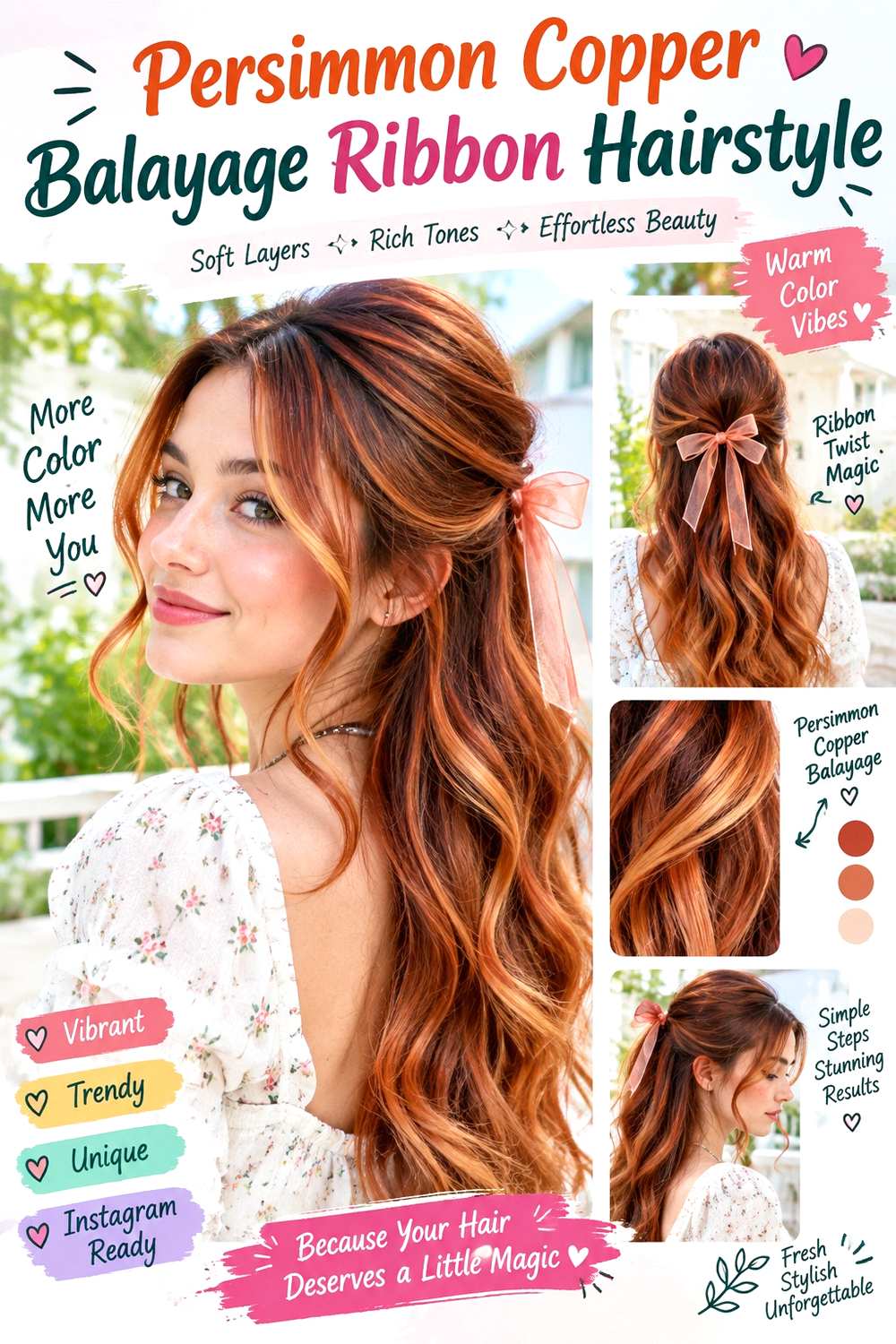
Balayage-style persimmon copper ribbons place selected orange-red sections through a deeper auburn or brunette base, leaving darker spaces between them. The brightest ribbons can begin around the cheekbones, jaw, or lower mid-lengths depending on how much copper you want near the face. Waves separate the sections clearly, while straight hair makes the same placement look softer. Long layers help several ribbons appear at different heights without creating obvious horizontal bands.
This placement suits someone who wants dimension with softer regrowth than root-to-end copper. Fine hair often benefits from fewer carefully positioned ribbons, while dense hair can support broader sections without losing base depth. Use color-safe shampoo to help protect the warm pigment, a nourishing mask for processed lengths, and heat protectant spray if hot tools are used to show the ribbons. A short refresh may focus only on the face frame, while rebuilding a full wave pattern after washing takes longer. At the salon, identify where the brightest persimmon sections should begin and how much darker hair should remain between them. Those deeper spaces create the dimensional effect. Refresh existing ribbons when they fade before automatically adding new ones, because too many sections can gradually erase the contrast.
Pro tip:
Place the brightest ribbons where your layers naturally move forward. Those sections catch light frequently, making a smaller amount of persimmon appear more dimensional.
Make It Work for You:
If your hair is fine but dense enough for movement, use fewer narrow ribbons and concentrate them near the face instead of spreading brightness everywhere.
Watch Out For:
Avoid adding new highlighted sections every time the copper fades. Refreshing existing ribbons can preserve the deeper spaces that give the placement its dimension.
Golden Persimmon Copper Blend Hairstyle
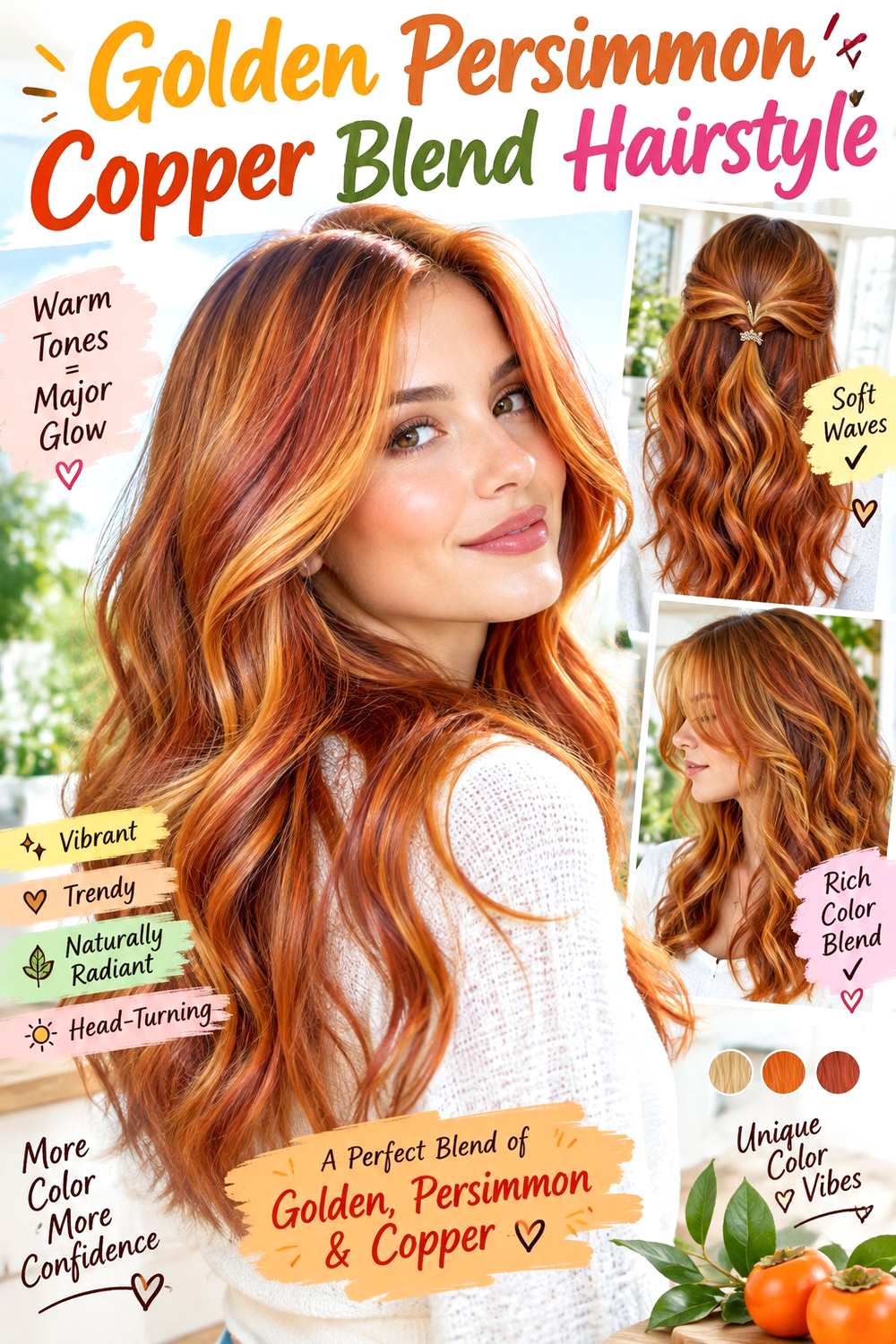
Golden copper softens persimmon by adding a lighter yellow-orange note through selected sections instead of making the entire head equally intense. The deeper persimmon tone can stay near the roots and interior, while golden copper appears around the face, through upper layers, or toward the ends. Waves make the two tones separate into visible ribbons, whereas straight styling creates a smoother transition. A soft side part can expose extra brightness around one temple without creating a hard panel.
This blend suits someone who wants a brighter interpretation of persimmon copper while keeping enough depth to avoid a flat orange result. Naturally warm brown or copper hair may support the golden side readily, though lighter pieces can still require professional preparation. Use color-safe shampoo to help preserve both tones, moisturizing conditioner to keep the lengths supple, and heat protectant spray if you style with hot tools. A quick refresh might involve only the face frame, while full wash-day styling varies by density and texture. At the salon, decide which shade should dominate and where the lighter gold should be most visible. That hierarchy keeps the blend intentional. Refresh when the two tones blur into one general orange-copper and no longer show the dimensional balance you wanted.
Pro tip:
Decide whether persimmon or golden copper should dominate before coloring. A clear hierarchy prevents the final blend from becoming an undefined light orange tone.
Make It Work for You:
If you prefer deeper color around your face, keep persimmon through the fringe and temples while reserving the lighter golden copper for lower layers and ends.
Watch Out For:
Do not repeatedly refresh only the golden sections. Over time, they can overpower the deeper persimmon and remove the tonal contrast that defines the blend.
Persimmon Copper Ombre Hairstyle

Persimmon copper ombré keeps the roots and upper lengths deeper, then gradually increases orange-red brightness toward the ends. The transition can begin near the jaw, shoulders, or lower depending on total length. Long layers reveal several steps of the gradient, while a lob creates a shorter, more concentrated shift. Broad waves soften the midpoint, whereas straight hair makes any abrupt boundary easier to see and is useful for checking whether the blend looks gradual.
This placement suits someone who wants the strongest copper away from the scalp and prefers softer root maintenance. The lower lengths may need preparation if the base is very dark and a vivid persimmon finish is the goal. Because the ends are older hair, their condition should guide how bright the salon aims to make them. Use color-safe shampoo, a hydrating mask, and a wide-tooth comb to support the lower section. A quick refresh may focus on reshaping the ends, while a full wash-day set takes longer if you prefer polished waves. At the salon, point to the exact height where the deeper base should start shifting into persimmon copper and how smooth the transition should feel. Maintenance usually focuses more on fading through the ends than immediate root growth.
Pro tip:
Inspect the gradient while the hair is straight before judging the transition. Waves can disguise a sharper line that becomes much more obvious on a smooth surface.
Make It Work for You:
If your ends are delicate, choose a deeper persimmon rather than maximum brightness. You can preserve the orange-red gradient without demanding as much change from older hair.
Watch Out For:
Do not assume faded ends need more lightening. Ask whether restoring copper pigment alone can bring back the intended color before processing them again.
Persimmon Copper Dip-Dyed Ends Hairstyle

Dip-dyed ends create a clearer boundary than ombré, keeping most of the hair brunette, auburn, or muted copper and concentrating vivid persimmon at the perimeter. A blunt bob or lob makes the orange-red edge look graphic, while layered hair creates staggered copper points at several lengths. Straight styling emphasizes the boundary, and waves break the colored edge into smaller flashes. The persimmon section can cover only the final inch or extend farther upward for stronger contrast.
This option suits someone who wants minimal root maintenance and a defined color feature away from the scalp. The ends may need preparation for the copper to show clearly, so their existing condition matters before any service. Use color-safe shampoo to protect saturation, a hydrating mask to support the oldest lengths, and a wide-tooth comb to reduce rough detangling. A quick refresh is mostly styling, while restoring faded pigment is a separate color task. At the salon, show exactly how high the persimmon section should rise and whether the upper edge should be crisp or softened. As the hair grows and is trimmed, the colored proportion changes. Reassess the placement after substantial trims rather than automatically repeating the original height.
Pro tip:
Save a reference showing the colored section in proportion to the whole length. “Copper ends” can mean a narrow edge or a much larger block.
Make It Work for You:
If you trim your perimeter often, begin the persimmon section slightly higher so routine maintenance does not remove most of the visible color immediately.
Watch Out For:
Avoid repeatedly processing dry ends because the copper has faded. Reassess their condition and determine whether pigment replacement or trimming is the better correction.
Persimmon Copper Halo Highlight Hairstyle

A persimmon copper halo traces warm orange-red color around the visible outer edge of the hair while leaving deeper auburn, brunette, or muted copper through the interior. The color can frame the temples, continue through selected face-framing sections, and reappear around the perimeter. On a bob, it creates a clean colored border; on layered hair, the halo breaks into smaller copper flashes. Fringe can stay deeper with only its outer corners connected to the brighter outline.
This placement suits someone who wants color visible from the front without changing every strand. A darker interior produces stronger contrast, while an auburn base makes the transition softer. Use color-safe shampoo to help protect the exposed pigment, moisturizing conditioner to keep the perimeter flexible, and heat protectant spray if you regularly smooth or curl the outer sections. A quick refresh can focus on the face and ends, while full wash-day styling varies with texture and length. At the salon, define how wide the halo should be around the temples and whether it should continue fully around the nape. The border does not need to be identical everywhere. Hairline regrowth may become noticeable sooner than hidden color, so refresh according to how much contrast you prefer.
Pro tip:
Check the planned halo with your hair tucked and loose. The two positions expose different edges and help you choose a border that remains balanced.
Make It Work for You:
For lower-density hair, keep the halo narrow and concentrated on the most visible outer sections so deeper interior color continues to support visual fullness.
Watch Out For:
Avoid making the border equally wide around the entire head automatically. The fringe, temples, and nape may each benefit from a different amount of copper.
Persimmon Copper Curly Dimension Hairstyle
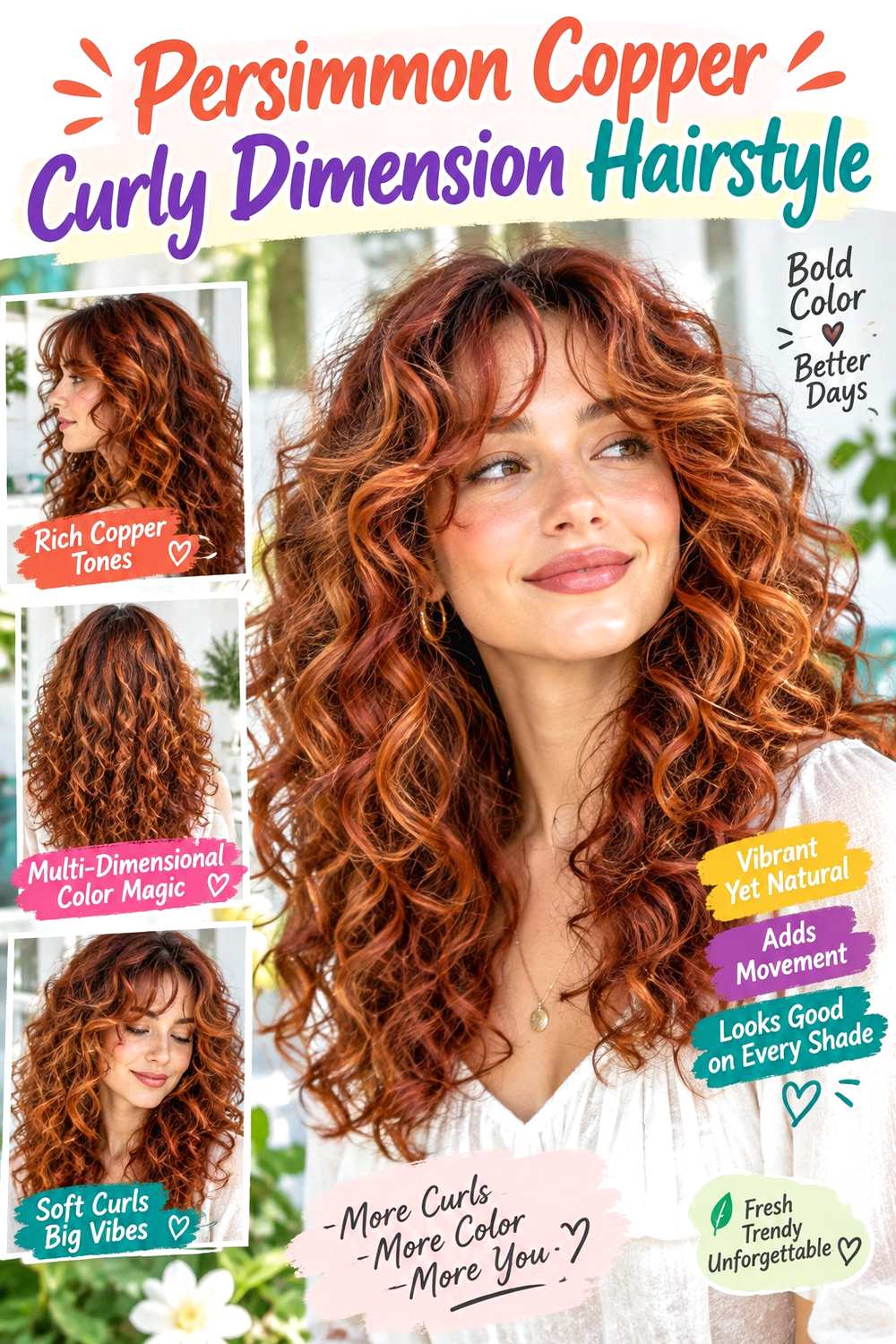
Persimmon copper becomes especially dimensional on curls when the color follows complete curl groups rather than being scattered without regard to the finished shape. Deeper auburn or brunette can remain through the interior, while selected outer curls and face-framing sections carry brighter orange-red copper. Loose curls show broad ribbons, whereas tighter curls and coils reveal smaller flashes as the shape expands and contracts. The color should still make sense when the hair is dry, not only when stretched.
This approach suits readers who want natural texture to remain central to the result. Shrinkage, density, curl grouping, and previous chemical services all influence how much persimmon remains visible and how much preparation is appropriate. Use color-safe shampoo to reduce unnecessary fading, a rich conditioner to support moisture, and curl gel to encourage definition without requiring heat. A quick refresh between washes may focus on reactivating the brightest curls, while a full wash day naturally takes longer according to density and drying routine. At the salon, ask for placement to be assessed with the curls near their usual dry position and identify which face-framing groups should carry the strongest copper. Refresh pigment when those pieces begin blending into the deeper base instead of automatically adding more lightened sections.
Pro tip:
Identify the most visible curl groups while your hair is dry. Their natural resting position provides a more useful map for placing the brightest persimmon sections.
Make It Work for You:
For tight coils with strong shrinkage, position some persimmon on the outer surface and visible ends so the color remains noticeable after the finished shape contracts.
Watch Out For:
Do not separate colored curls into many tiny strands simply to reveal more copper. Excess separation can create frizz and weaken the visible curl grouping.
Persimmon Copper Panel Bob Hairstyle

A persimmon copper panel gives a bob one clearly defined block of orange-red color against a deeper brunette, auburn, or muted copper base. The panel can sit behind one temple, beneath a side section, or through part of the back. A jaw- or shoulder-length blunt perimeter makes the placement especially graphic because the bright copper reaches a clean bottom edge. Changing the part can expose more or less of the panel, giving the same color service two different levels of visibility.
This idea suits someone who wants a deliberate feature without coloring the entire bob. Fine or lower-density hair may benefit from a narrower block so enough base color remains visible, while dense hair can support a broader panel. Use color-safe shampoo to help maintain saturation, lightweight conditioner so the bob keeps movement, and heat protectant spray if a sleek finish is part of your routine. A quick refresh may only require resetting the part, while a full smooth wash-day finish takes longer. At the salon, define the panel width, starting point, and how much should remain visible when the bob falls naturally. If the cut grows significantly, the relationship between the panel and perimeter changes. Reassess placement after major trims instead of repeating it automatically.
Pro tip:
Choose the panel while your bob is sitting in its everyday part. A section planned on differently directed hair may become hidden once you style normally.
Make It Work for You:
If your bob has a full fringe, place the bright panel behind one temple so persimmon appears through movement without taking over the entire front.
Watch Out For:
Avoid burying the panel too deeply beneath dense surface hair. If normal movement never exposes it, a more exterior placement will communicate the idea better.
Smoky Persimmon Copper Hairstyle

Smoky persimmon copper tones down the brightest orange while keeping a warm red-copper foundation. The roots can stay deeper and slightly muted, with softened persimmon becoming clearer through the mid-lengths. Straight hair gives the shade a smooth, subdued surface, while waves reveal more warm movement along each bend. Long layers prevent the color from reading as one flat tone, and a soft side part can expose slightly brighter pieces near the face.
This option suits someone who likes copper but wants less neon brightness. Naturally medium brown, auburn, or muted copper hair may support the effect softly, while lighter starting colors can show more orange-red reflection. Previous color history can influence whether the finish appears warmer or duller. Use color-safe shampoo for gentler cleansing, moisturizing conditioner to keep the lengths flexible, and heat protectant spray if hot tools are part of your routine. A quick refresh may involve only the face frame, while full wash-day styling depends on density and texture. At the salon, explain how muted you want the persimmon and how much orange should remain visible in daylight. Bring references in neutral light, because editing can distort subtle copper undertones. Refresh when the shade becomes too neutral or uneven.
Pro tip:
Use references photographed in natural or neutral light. Smoky copper depends on subtle undertones, and heavy image filters can make muted orange look cooler than it is.
Make It Work for You:
If you prefer deeper color around the face, keep the fringe more auburn while allowing smoky persimmon to become clearer through the middle and ends.
Watch Out For:
Do not interpret “smoky” as removing all warmth. Excessive muting can erase the orange-red quality and leave the result looking flat or simply brown.
Ginger Persimmon Copper Melt Hairstyle

A ginger-to-persimmon melt keeps the root and upper lengths softly red-gold, then increases the orange-red intensity through the mid-lengths and ends. The two tones are related, so the transition can feel seamless rather than sharply contrasting. Waves show the shift as warm ribbons, while straight hair makes the gradual deepening easier to see. Face-framing layers can carry stronger persimmon toward the ends while retaining lighter ginger closer to the roots.
This placement suits someone who wants warmth throughout but prefers more depth than a uniform ginger shade. Naturally warm blond, strawberry, auburn, or light brown hair may support the upper tone readily, while deeper bases can require more preparation. Use color-safe shampoo to protect both warm tones, a nourishing mask to support the lengths, and heat protectant spray if you regularly style with hot tools. A quick refresh may focus on the face frame, while full wash-day styling varies with texture and density. At the salon, decide where ginger should stop dominating and persimmon should become clearly visible. That midpoint defines the melt. Refresh when the two shades fade into one flat copper or when root growth disrupts the intended lighter-to-deeper progression.
Pro tip:
Keep at least one front section where ginger and deeper persimmon are both visible. Seeing the transition near the face makes the melt easier to read.
Make It Work for You:
If you prefer softer root maintenance, keep the ginger zone close to your natural warmth and reserve stronger persimmon for the lower mid-lengths and ends.
Watch Out For:
Avoid refreshing only the lighter ginger area when the deeper copper has also faded. Uneven maintenance can flatten the progression and disconnect the ends.
Persimmon Copper Micro-Highlight Hairstyle

Micro-highlights introduce persimmon copper in very fine sections through an auburn, brunette, or deeper copper base, creating a subtle orange-red shimmer instead of obvious streaks. Small pieces can sit near the part, temples, and upper layers while most of the interior remains deeper. Straight hair shows the delicate spacing clearly, whereas waves blend the tiny sections into a softer reflective surface. On layered hair, the color can appear at several lengths without forming large blocks.
This placement suits someone who wants a restrained introduction to brighter copper. Fine hair benefits from careful spacing so the top does not look striped, while very dense dark hair may need slightly broader micro-sections for the color to register. Use color-safe shampoo to help preserve the subtle pigment, lightweight conditioner so the surface keeps movement, and heat protectant spray if heated styling is part of your routine. A brief refresh may focus only on the part and face frame, while a full wash day varies with texture. At the salon, decide whether the micro-highlights should be evenly scattered or concentrated where light naturally catches the hair. Refresh when the persimmon shimmer becomes too subtle rather than automatically making each section wider.
Pro tip:
Keep several micro-highlights near the visible part and upper face frame. These surface areas catch light frequently, helping subtle persimmon pieces remain noticeable.
Make It Work for You:
On a very dark base, concentrate the fine copper sections around the face and top layers instead of scattering them deeply where they may disappear.
Watch Out For:
Do not make every faded micro-highlight wider at the next service. Repeatedly increasing section size can turn a delicate shimmer into obvious stripes.
Persimmon Copper Face-Frame Gradient Hairstyle

A face-frame gradient starts with deeper auburn or brunette near the roots and gradually introduces brighter persimmon copper through the front mid-lengths and ends. Unlike a solid money piece, the orange-red color does not begin as one bold block at the hairline. Instead, it becomes clearer around the cheekbones, jaw, or collarbone. Layered cuts show the transition especially well because several front lengths can carry different stages of the copper shift.
This design suits someone who wants noticeable persimmon around the face with softer root upkeep. Fine hair can use narrower gradient sections to preserve fullness, while dense hair can support broader pieces without losing deeper interior color. Use color-safe shampoo to help protect the transition, moisturizing conditioner to keep the face frame flexible, and heat protectant spray if you regularly smooth or curl those pieces. A quick morning refresh may focus only on the front, while full wash-day styling takes longer according to natural texture. At the salon, identify exactly where you want the brighter persimmon to become obvious and how deep the roots should remain. That midpoint defines the design. If you regularly trim face-framing layers, reassess color placement because shortening them changes where the brightest copper falls.
Pro tip:
Style your face-framing pieces normally before choosing the color midpoint. The brightest persimmon should land where those sections naturally sit around your face.
Make It Work for You:
If your front layers are short, begin the copper transition slightly higher so enough length remains for the gradient to become clear before the ends.
Watch Out For:
Avoid jumping directly from dark roots to bright orange ends without a middle tone. The missing transition can resemble grown-out color rather than a planned gradient.
Reverse Persimmon Copper Ombre Hairstyle
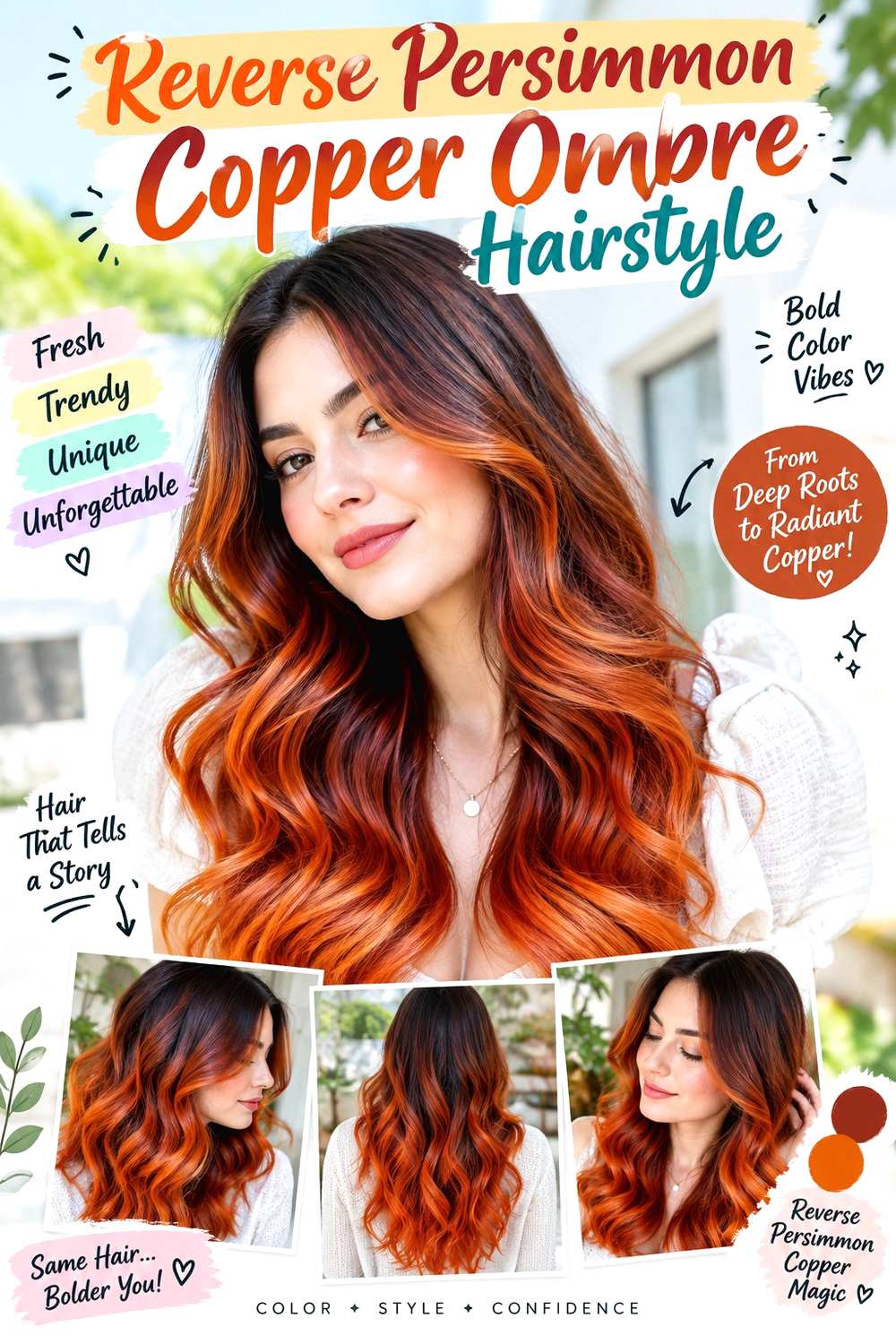
Reverse ombré places the brightest persimmon copper near the roots and upper lengths, then gradually deepens into auburn, brunette, or darker copper toward the ends. This reverses the usual direction and makes the crown the strongest color focus. A center part gives the bright root area maximum visibility, while long layers show the color darkening as they descend. Waves soften the shift, whereas straight hair makes the top-to-bottom gradient especially clear.
This design suits someone comfortable maintaining color close to the scalp and who prefers not to brighten older ends. Depending on the natural base, the upper section may require a different salon plan from the deeper lower lengths. Use color-safe shampoo to help preserve the root pigment, moisturizing conditioner through the full length, and heat protectant spray whenever hot tools are used. A quick refresh may focus on the crown and front, while a complete wash-day finish depends on texture and density. At the salon, define how far the bright persimmon should extend before the deeper tone begins to dominate. Root growth will interrupt this upper color zone more visibly than standard ombré. Refresh when that contrast becomes distracting or when fading makes the reverse gradient difficult to recognize.
Pro tip:
Bring a reference that clearly shows the darker ends. The reversed direction is the key feature, so the desired top-to-bottom progression should be unmistakable.
Make It Work for You:
If frequent root upkeep does not suit your routine, keep the upper persimmon closer to your natural depth so new growth creates a softer contrast.
Watch Out For:
Do not keep darkening the ends while allowing the upper copper to fade. The gradient can flatten until the reverse placement is difficult to see.
Conclusion
Persimmon copper hair color can range from saturated orange-red all-over color to softer rooted melts, fine ribbons, hidden panels, and graduated ends. Blunt cuts make graphic placement easier to see, while layers, waves, curls, and coils reveal more tonal movement. Fine or lower-density hair may benefit from narrower accents, whereas dense hair can support broader ribbons or panels. Rooted and ombré designs usually soften regrowth more than money pieces or halos. Natural texture also changes where copper sections appear, especially with curl shrinkage. Compare your starting shade, existing condition, preferred brightness, wash routine, heat use, and tolerance for fading before choosing. A useful reference should show both the persimmon tone and exactly where that tone is placed.
Before Your Salon Visit
Choose one or two favorites and save references that clearly show both the persimmon copper tone and its placement. Discuss your natural color, previous chemical services, texture, density, face shape, preferred length, upkeep tolerance, and normal styling routine. Point specifically to the root depth, ribbon width, panel position, underlayer height, face-frame placement, gradient midpoint, or amount of orange-red brightness you like. Ask how those details should be adapted to your starting hair instead of assuming every reference requires the same process.
What does persimmon copper hair color look like?
Persimmon copper is a warm copper shade with noticeable orange-red depth, sometimes balanced by auburn or golden tones. It can look deeper indoors and brighter in daylight. The final result depends on your starting color, placement, lighting, and how strongly you want the orange component to show.
Can persimmon copper work on naturally dark hair?
Yes, but a subtle copper reflection is generally easier to achieve than a very bright orange-red result on a dark base. More vivid panels, ribbons, or ends may require professional preparation. Existing permanent color and hair condition also influence what level of brightness is realistic.
How can I help persimmon copper fade more slowly?
Use color-safe cleansing, wash according to your actual scalp and hair needs, and limit unnecessary high-heat styling. Heat protectant is useful when hot tools are needed but cannot prevent all fading or damage. Ask your colorist what pigment-refresh approach is appropriate for the specific service you receive.
Can curly or coily hair wear persimmon copper color?
Yes. Persimmon copper can follow complete curl groups, face-framing curls, surface ribbons, hidden sections, or selected ends without requiring straightening. Placement should account for shrinkage and where curls naturally rest when dry. Keeping deeper sections between brighter curls can also make the copper dimension easier to see.