12 Polished Low Chignon Hairstyles for Fall 2026
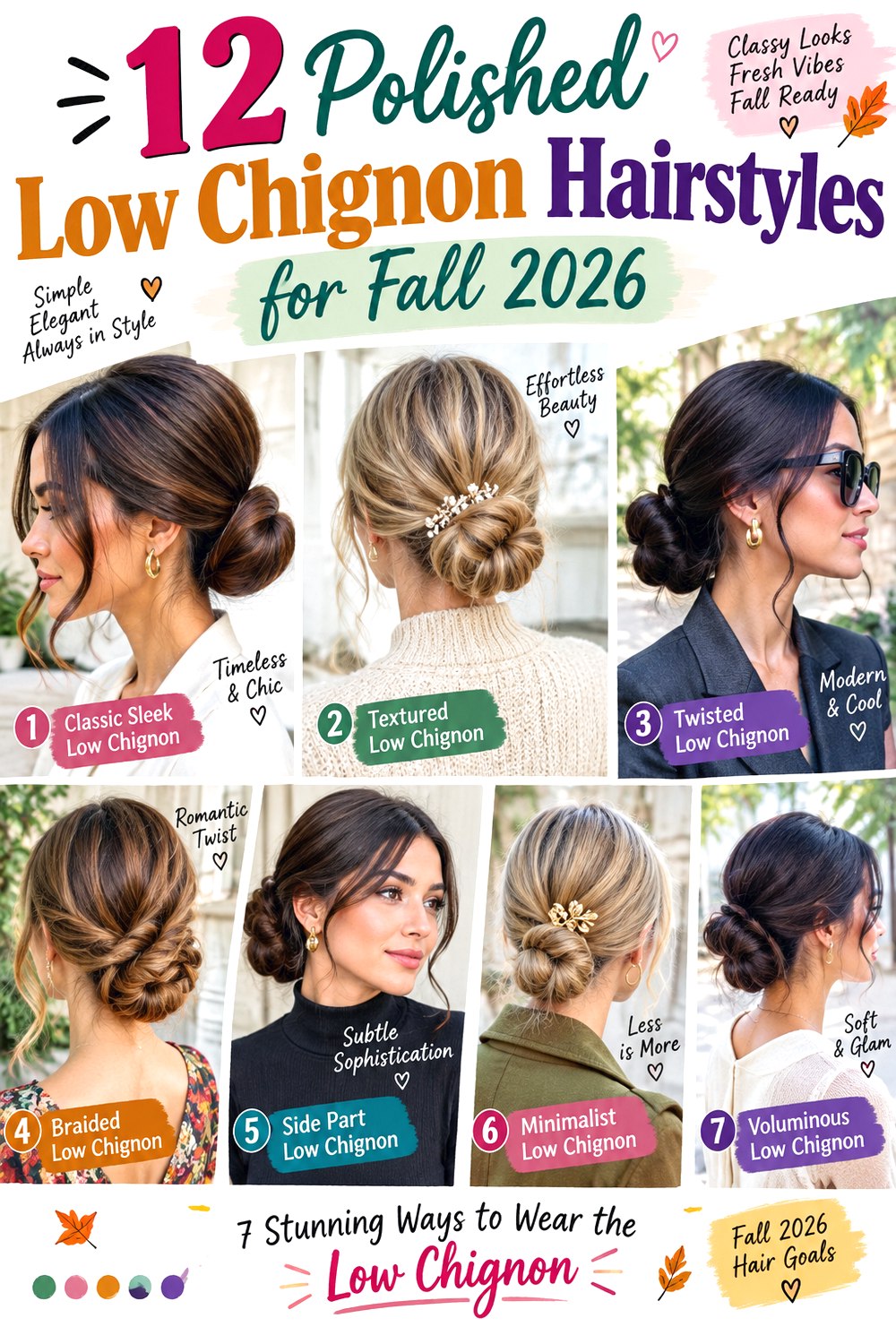
Polished low chignons sit close to the nape and rely on clean shaping, controlled tension, and a smooth surface rather than loose, oversized volume. The bun can be twisted, knotted, braided, or tucked, while the front may stay sleek or include curtain bangs and restrained face-framing pieces. A strong parting and neatly finished ends help distinguish a polished chignon from a casual low bun.
These polished low chignon hairstyles for Fall 2026 can be adapted for fine, medium, thick, straight, wavy, and curly hair. Fine hair often needs a slightly wider bun shape or light texture for fullness, while thick hair benefits from dividing the length into manageable sections. Face shape can be considered through center or side parting, crown volume, and where any loose front pieces finish.
Daily styling effort is usually moderate, though a simple sleek chignon can be fairly quick once the technique is familiar. Longer layers make the bun easier to secure, while short face-framing pieces may need extra pins. Before choosing one, consider your hair density, length, natural texture, humidity, desired hold, and how smooth you want the final finish.
Quick List
- Sleek Center-Parted Low Chignon hairstyle
- Deep Side-Parted Polished Low Chignon hairstyle
- Twisted Polished Low Chignon hairstyle
- Polished Low Chignon with Face-Framing Pieces hairstyle
- Polished Low Chignon with Curtain Bangs hairstyle
- Glossy Knotted Low Chignon hairstyle
- Polished Low Chignon for Fine Hair hairstyle
- Polished Low Chignon for Thick Hair hairstyle
- Polished Low Chignon for Natural Curls hairstyle
- Braided Polished Low Chignon hairstyle
- Polished Low Chignon with Soft Crown Volume hairstyle
- Minimal Polished Low Chignon with Blunt Front Pieces hairstyle
Sleek Center-Parted Low Chignon hairstyle
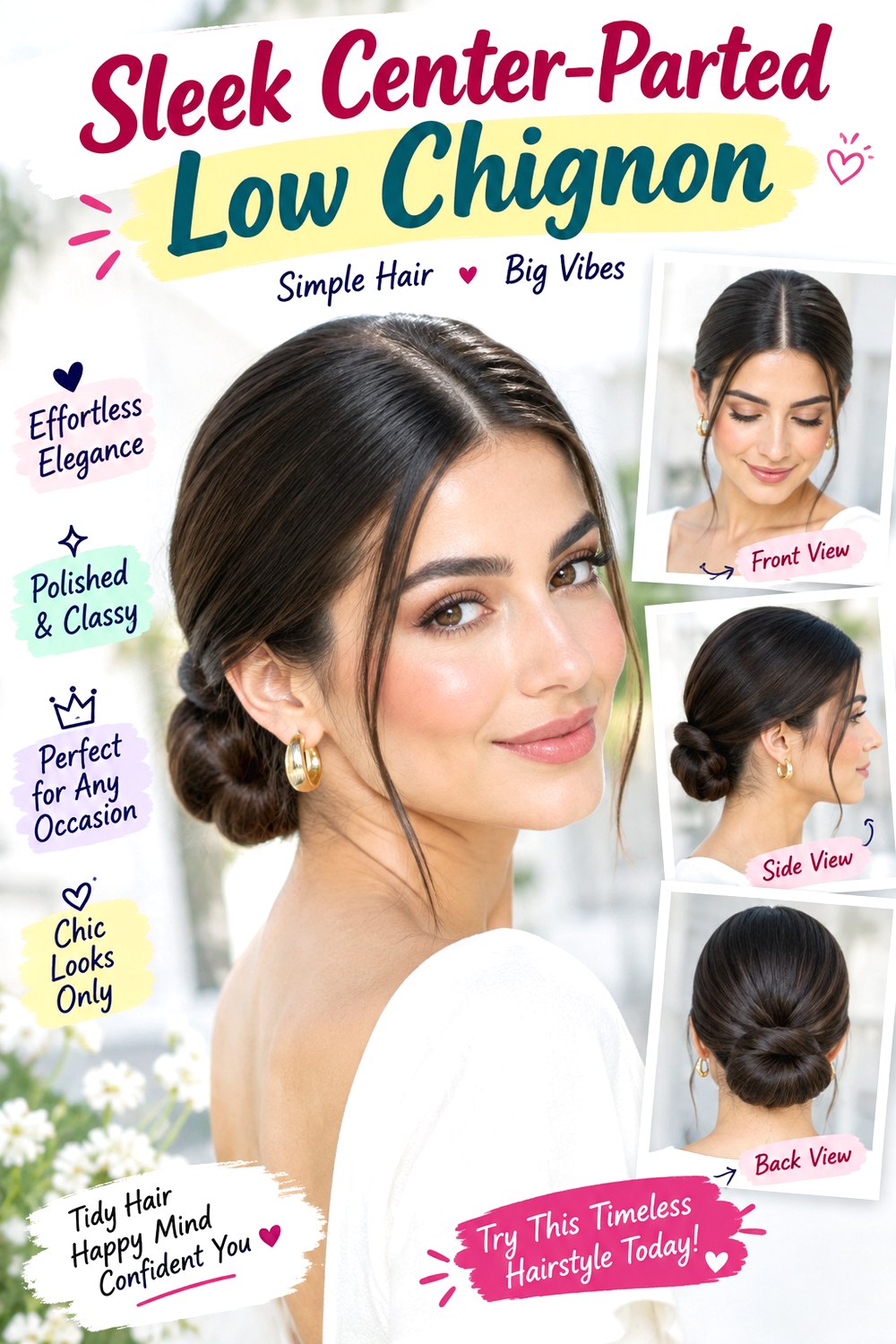
A sharp center part gives a low chignon a balanced, controlled shape from the front, while the bun stays compact at the nape. Straight and softly wavy hair are easiest to smooth, although textured hair can also wear the finish with careful preparation. Fine hair should avoid excessive gel that separates the strands, while thick hair may need to be divided into two sections before twisting the bun. Use smoothing cream, a boar-bristle or paddle brush, and firm bobby pins to keep the surface neat. Styling takes moderate time because the part and hairline need to look intentional from both sides. A small amount of flexible hairspray can control flyaways without creating a hard shell. At the salon, ask for front and side layers long enough to reach a low ponytail if you prefer a fully tucked finish, and have the stylist check how your natural center part falls.
Pro tip:
Create the part before applying smoothing product; changing it after the roots are coated can leave visible separation lines that are difficult to blend.
Deep Side-Parted Polished Low Chignon hairstyle
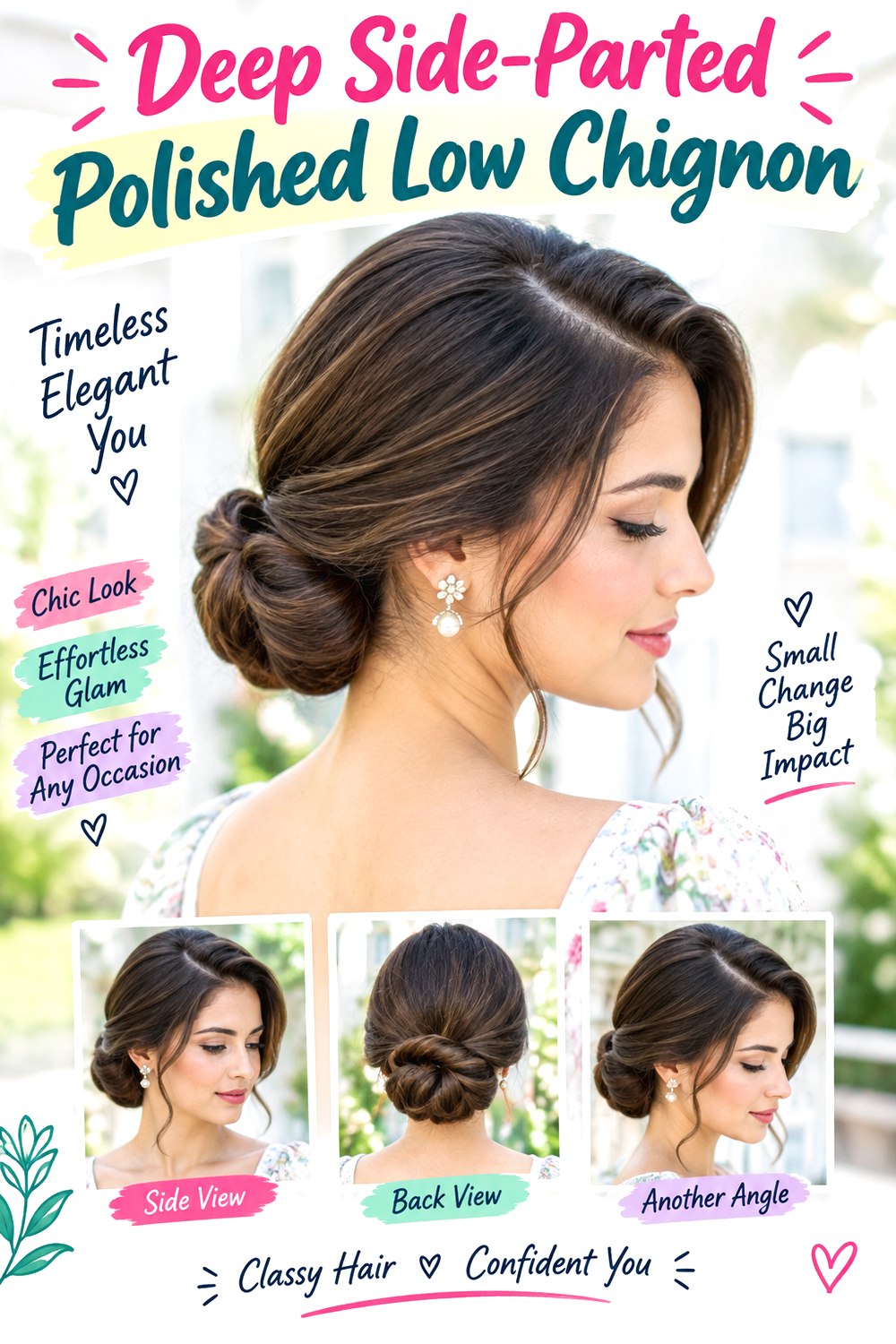
A deep side part adds direction to a polished low chignon without requiring extra volume throughout the style. The heavier front section sweeps smoothly across the temple before joining the hair at the nape, while the lighter side can sit close to the head or tuck behind the ear. Fine hair often gains useful visual fullness from the shifted part, and medium to thick hair can create a broader front sweep. Use heat protectant if you need to smooth the front, a fine-tooth comb for the part, and flexible hairspray for controlled hold. Styling takes moderate time because the sweeping section should lie cleanly without ridges. Humidity may disturb the hairline, so a tiny amount of anti-frizz cream can help. At the salon, show your usual side part and ask for front layers long enough to reach the chignon cleanly rather than falling loose at the temple.
Pro tip:
Comb the heavy side diagonally toward the nape instead of straight back; this preserves the graceful sweep that makes the side part visible.
Twisted Polished Low Chignon hairstyle
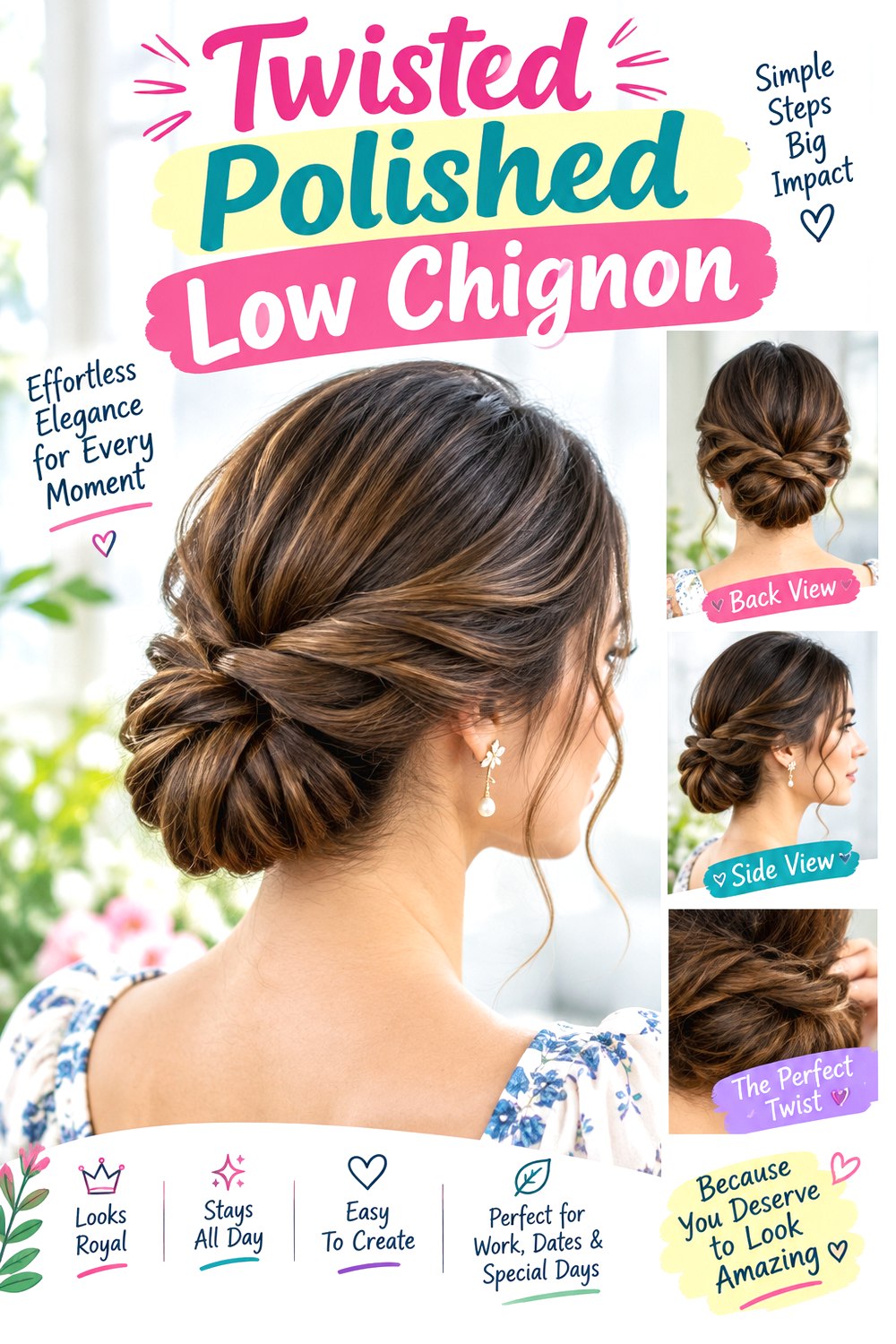
A twisted low chignon creates visible structure through the bun while keeping the crown and sides smooth. Instead of wrapping the ponytail into a simple coil, divide the length into two or more sections, twist them individually, and pin them into a compact shape at the nape. Medium to long hair gives enough length for the folds to show clearly. Fine hair can loosen each twist slightly before pinning, while thick hair benefits from smaller sections that are easier to control. Use styling cream, small clear elastics, and strong hairpins to secure the shape. Styling takes moderate to longer time because the twists need to sit evenly without exposing the base. A light mist of hairspray helps the finished surface remain neat. At the salon, ask for connected long layers so the ends stay inside the twists instead of creating many short flyaways around the bun.
Pro tip:
Pin the twists at several small anchor points rather than relying on one large pin through the center; the bun will hold its shape more evenly.
Polished Low Chignon with Face-Framing Pieces hairstyle

Leaving two controlled face-framing pieces outside a polished chignon softens the front without turning the updo into a deliberately messy style. The loose sections can finish near the cheekbones, jaw, or collarbone depending on the haircut and how much movement you want. Straight and wavy hair are easy to shape with a gentle bend, while curly hair can keep its natural pattern. Medium and thick density provide a full bun, but fine hair also works when the front pieces are narrow. Use heat protectant, a small curling iron or round brush, and smoothing serum on the chignon. Styling takes moderate time because the face frame should be shaped after the bun is secured. Humidity can cause those exposed pieces to frizz first. At the salon, show the exact face-framing length you want left out and ask for a smooth connection into the longer layers.
Pro tip:
Separate the face-framing sections before making the ponytail; pulling them free afterward can loosen the clean tension around the temples.
Polished Low Chignon with Curtain Bangs hairstyle
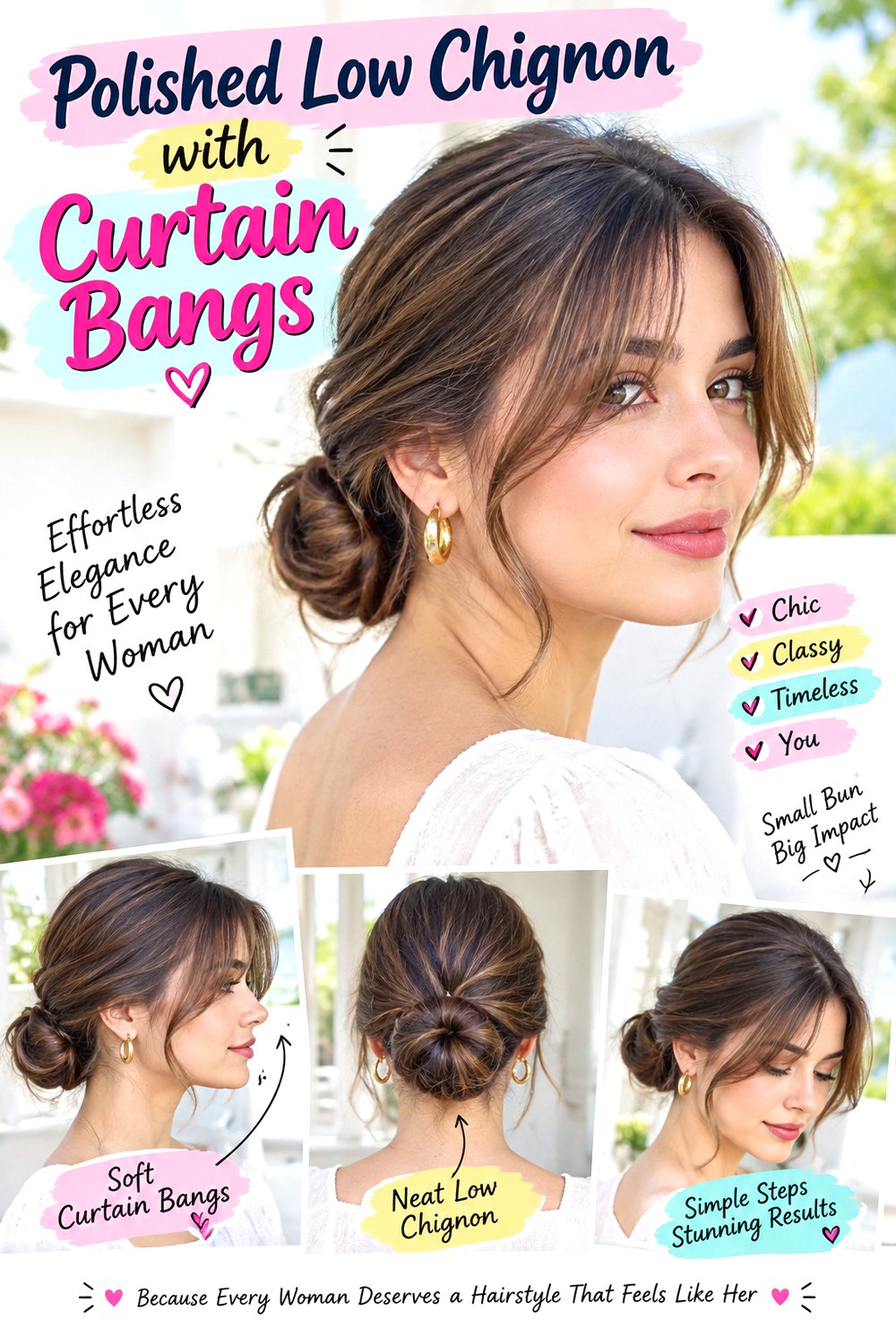
Curtain bangs bring movement to the front of a low chignon while the back stays controlled and compact. The fringe should open around the center and sweep toward the cheekbones, with longer outer pieces blending toward the temples. Straight and wavy hair respond well to a round brush, while curly fringe needs enough length to allow for shrinkage. Fine hair usually suits a lighter curtain section so plenty of density remains for the bun. Use heat protectant, a medium round brush, and flexible hairspray for the bangs, then secure the chignon with strong pins. Styling takes moderate time because the fringe needs its own direction and hold. Bang trims may also be required between full haircuts. At the salon, specify the shortest point of the curtain bangs and make sure the outer sections are long enough to transition smoothly into hair that will be pulled toward the nape.
Pro tip:
Finish the curtain bangs before building the chignon so their root direction stays soft instead of being pulled backward with the rest of the hair.
Glossy Knotted Low Chignon hairstyle

A knotted chignon creates a compact bun that looks especially clean when the hair has a glossy, smooth surface. The length is folded or tied into a knot-like shape and pinned close to the nape, leaving the crown sleek and the ends fully hidden. Medium to long straight or wavy hair is easiest to manipulate, while very thick hair may need to be divided before knotting. Fine hair can create a wider knot by gently loosening the outer edges after it is secured. Use heat protectant, lightweight serum, and sturdy U-shaped pins. Styling takes moderate time because the bun needs to look dimensional without becoming loose. Avoid using too much oil, which can make the knot slippery. At the salon, ask for long connected layers and enough perimeter density to create a substantial folded shape, especially if your hair is fine or heavily layered.
Pro tip:
Apply shine serum before forming the knot rather than coating the finished bun heavily; too much surface product can encourage pins to slide.
Polished Low Chignon for Fine Hair hairstyle
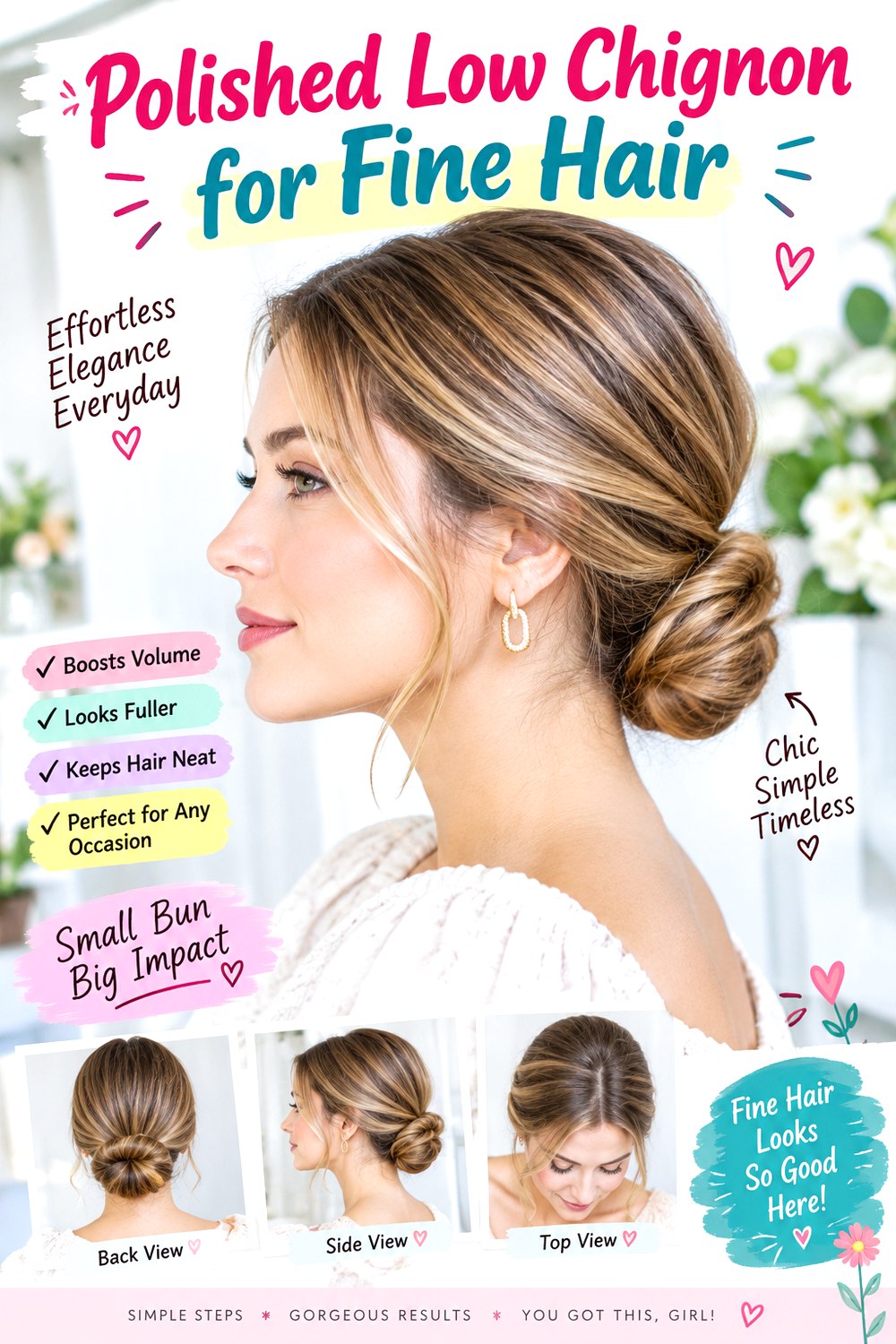
Fine hair can create a polished low chignon without looking small if the bun is shaped slightly wider rather than twisted into a tight coil. Keep the roots smooth but not completely flattened, and use light texture through the ponytail before pinning it into a soft folded bun. Straight and lightly wavy fine hair are particularly easy to control. Use volumizing spray at the roots, dry texture spray through the ponytail, and lightweight hairpins that will not drag the style downward. Styling is quick to moderate because fine sections are easy to handle, but heavy creams or oils can collapse the shape. Avoid excessive backcombing, which can make the surface difficult to smooth. At the salon, request minimal thinning and keep the perimeter reasonably full so the bun has enough density. Long layers should remain connected rather than ending in very wispy tips.
Pro tip:
Spread the ponytail into a wide loop before pinning instead of twisting it tightly; the larger footprint makes fine hair look fuller without added padding.
Polished Low Chignon for Thick Hair hairstyle

Thick hair creates a substantial chignon naturally, so the main goal is distributing weight and keeping the bun secure. Rather than twisting all the hair at once, divide the low ponytail into sections and build the bun gradually. This prevents one heavy coil from pulling at the scalp and makes the final shape easier to control. Straight, wavy, and coarse textures can all work. Use smoothing cream, a strong elastic, and heavy-duty hairpins or U-pins for support. Styling takes moderate to longer time because dense hair needs several secure anchor points. In humid weather, a light anti-frizz product across the outer surface helps prevent expansion. At the salon, ask for strategic internal weight removal if your hair feels bulky, but keep the perimeter and longer layers substantial enough for updos. Avoid aggressive thinning that creates short pieces around the bun.
Pro tip:
Build the chignon in two overlapping sections and pin each one separately; this spreads the weight and reduces tension at the ponytail base.
Polished Low Chignon for Natural Curls hairstyle

Natural curls can form a polished chignon without being brushed completely straight. Keep the curl pattern visible through the bun while smoothing only the areas where you want a cleaner hairline or crown. Medium and thick curls create generous nape volume, while finer curls can use a looser folded shape to avoid compressing the texture. Use leave-in conditioner, curl cream, and strong pins to arrange the curls around a low ponytail or tucked base. Styling takes moderate time, especially when preserving individual curl definition rather than twisting everything into one coil. A little edge control can be useful if you prefer a neater hairline, but it is optional. At the salon, discuss shrinkage and request enough length through the sides and nape to reach a low updo comfortably. Keep shorter layers intentional if you like curls framing the face.
Pro tip:
Arrange and pin curl clusters individually around the base instead of twisting the entire ponytail tightly; the bun stays polished while retaining natural dimension.
Braided Polished Low Chignon hairstyle

A braided chignon adds visible texture to the bun while keeping the rest of the style sleek. Start with a low ponytail, create a three-strand braid, then wrap it into a compact coil and tuck the end underneath. Long hair shows the braid pattern clearly, and medium-length hair can create a smaller version with careful pinning. Fine hair benefits from gently widening the braid before wrapping it, while thick hair can use two braids arranged together for better weight distribution. Use dry texture spray for grip, a small elastic, and U-pins to secure the coil. Styling takes moderate time and usually needs less heat than a glossy twisted version. At the salon, ask for connected layers that stay inside a braid and preserve end density if braided updos are part of your regular routine. Too many short layers can make the surface look fuzzy.
Pro tip:
Loosen the braid slightly before wrapping it into the bun; trying to widen it after pinning can distort the round chignon shape.
Polished Low Chignon with Soft Crown Volume hairstyle

Soft crown volume prevents a polished chignon from sitting completely flat while still keeping the overall finish refined. The front and sides remain controlled, but the hair over the crown is lifted slightly before the low bun is secured. Fine and medium hair benefit most from the added height, while thick hair needs only subtle lift to maintain balance. Straight and wavy textures are easy to direct with a blow-dryer. Use root-lifting spray, a vent brush, and flexible hairspray before creating the chignon. Styling takes moderate time because the crown should look smooth rather than teased or uneven. Once the bun is secure, avoid pulling randomly at the top; adjust volume in small sections with the end of a comb. At the salon, ask for long crown layers that support movement without becoming so short that they escape when the hair is gathered low.
Pro tip:
Create the crown lift before securing the ponytail and hold it with your fingers while tightening the elastic; pulling the elastic afterward can flatten the volume.
Minimal Polished Low Chignon with Blunt Front Pieces hairstyle
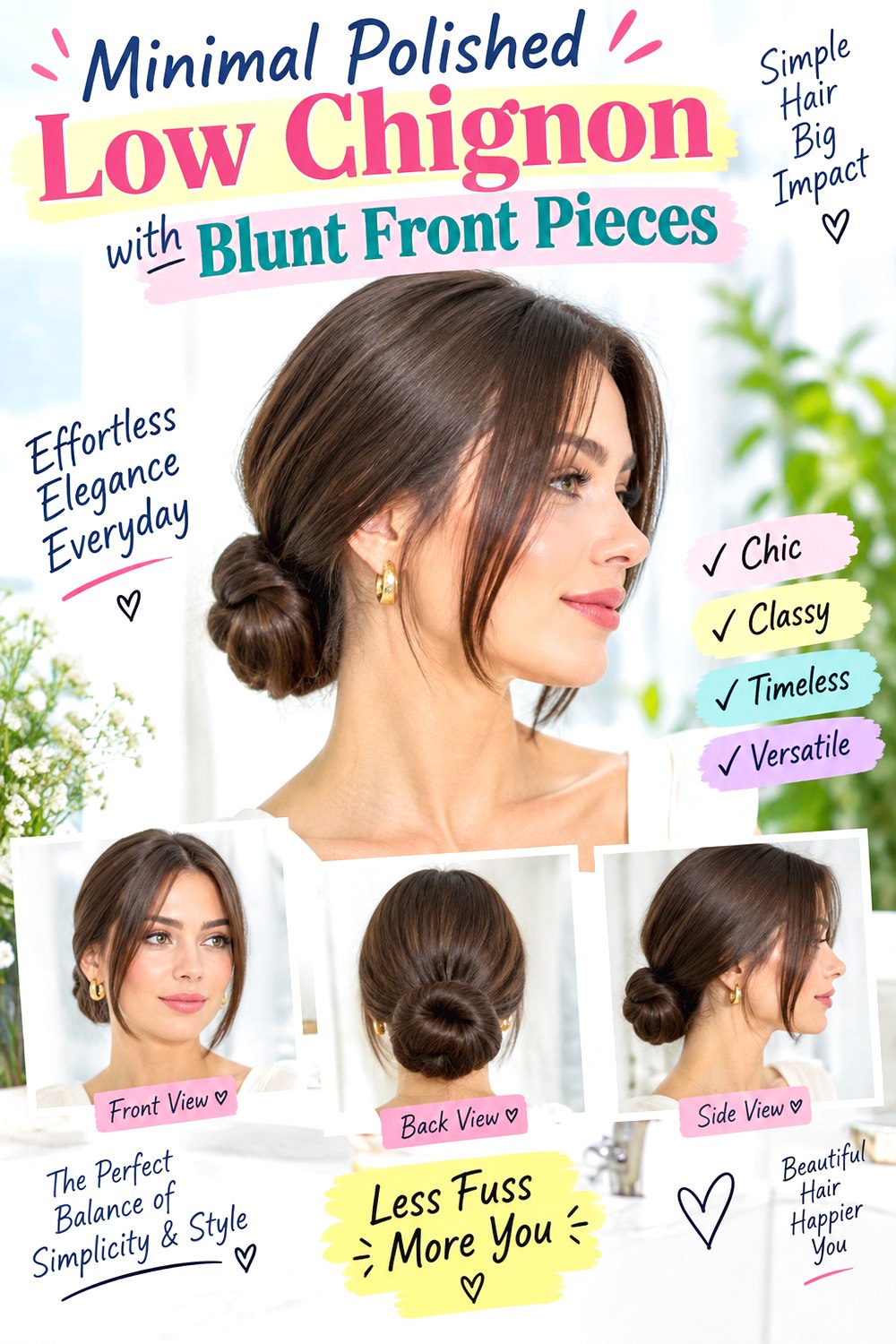
Blunt front pieces give a minimal low chignon a sharper outline by contrasting straight, defined sections around the face with a compact bun at the nape. The loose pieces can finish near the jaw or collarbone and should look intentionally cut rather than wispy. Straight and softly wavy hair show the graphic shape most clearly. Fine to medium density works particularly well because the front pieces stay light while enough hair remains for the chignon. Use heat protectant, a flat iron for a controlled front finish, and smoothing cream through the gathered sections. Styling takes moderate time, but the bun itself can remain simple. Regular trims keep the blunt front pieces looking precise as they grow. At the salon, specify the exact front length and ask for a clean, weighty edge rather than heavily point-cut ends. Keep the remaining side layers long enough to reach the bun.
Pro tip:
Ask to see the front pieces hanging naturally before they are cut; their resting position matters more than how they look when pulled forward under tension.
Choosing Polished Low Chignon Hairstyles for Fall 2026
The best polished low chignon hairstyles for Fall 2026 can be adjusted through parting, bun size, density, texture, fringe, face-framing length, crown volume, and finish. Fine hair often benefits from wider folds and lightweight texture, while thick hair usually needs sectioning and stronger anchoring. Straight hair creates a very sleek surface, waves add subtle movement, and curls can remain visible inside a controlled bun. A center part feels balanced, a deep side part creates more directional movement, and soft crown lift changes the overall profile without making the style loose. The right version depends on your face shape, natural texture, hair density, preferred maintenance, available styling time, and how much polish you want in everyday wear.
Choose one or two favorite ideas and save clear photo references showing the front, sides, and back. Discuss your face shape, natural texture, density, preferred length, maintenance level, and styling routine with your stylist. Point out the exact parting, fringe or face-framing length, crown volume, bun placement, surface texture, and finish you like. Those details help your stylist shape the haircut so a low chignon is easier to recreate without excessive pins, heat, or tension.
FAQs
How long does hair need to be for a polished low chignon?
Hair that reaches around the shoulders or longer is generally easier to gather and pin, although shorter lengths can work with extra sectioning and discreet pins.
Can fine hair wear a polished low chignon?
Yes. A wider folded bun, lightweight texture spray, and a strong perimeter can create more visible fullness without heavy teasing.
How do I keep a low chignon smooth in humid weather?
Use a small amount of anti-frizz or smoothing product before styling, secure the bun firmly, and finish the outer surface with flexible hairspray rather than heavy oil.
Are polished low chignons suitable for curly hair?
Yes. Natural curls can remain visible in the bun while the crown is smoothed as much or as little as preferred. Pinning curl clusters individually can preserve texture and shape.