13 Soft Androgynous Crop Hairstyles For Women

Soft androgynous crop hairstyles balance short, practical proportions with enough length and movement to avoid a severe or sharply barbered finish. The basic shape can range from a neat taper with a longer fringe to a rounded curly crop, ear-length sides, or a textured top over closely cut edges. What connects these variations is their flexible silhouette: the crown, fringe, sideburns, and nape can be adjusted without forcing the cut into a strongly masculine or traditionally feminine outline.
Straight, wavy, curly, and coily textures can all work with this haircut family, but the layer placement should reflect natural movement and density. Fine strands do not automatically mean low density, and dense hair does not always need aggressive thinning. A softer perimeter may preserve fullness, while controlled weight removal can help a very dense crop sit closer around the sides. Face-framing can also shift through fringe length, sideburn placement, and parting rather than following rigid face-shape rules.
Styling effort varies considerably. A natural-texture crop may need only a short morning reshaping, whereas a sleek side part or deliberately lifted top can require more controlled drying. Fringe length, taper definition, crown balance, and nape growth are the main areas to monitor between salon visits.
Quick List
- Soft Tapered Fringe Androgynous Crop Hairstyle
- Side-Swept Ear-Length Androgynous Crop Hairstyle
- Curly Rounded Androgynous Crop Hairstyle
- Piecey Micro-Fringe Androgynous Crop Hairstyle
- Long-Top Low-Taper Androgynous Crop Hairstyle
- Soft Buzzed-Side Androgynous Crop Hairstyle
- Wavy Temple-Tuck Androgynous Crop Hairstyle
- Feathered Nape Androgynous Crop Hairstyle
- Center-Parted Androgynous Crop Hairstyle
- Dense Fringe Androgynous Crop Hairstyle
- Coily Crown Androgynous Crop Hairstyle
- Sleek Side-Part Androgynous Crop Hairstyle
- Grown-Out Androgynous Crop Hairstyle
Soft Tapered Fringe Androgynous Crop Hairstyle

A softly tapered outline keeps the sides and nape compact while leaving enough length across the front for a brow-skimming, slightly broken fringe. The crown sits close rather than highly lifted, and subtle layers connect the longer top to the shorter perimeter. Keeping the outer fringe corners a little longer creates an easy transition into the temples, which prevents the front from looking like a separate blunt section. The finish can stay softly tousled or be smoothed for a cleaner day-to-day shape.
Straight and lightly wavy textures make the tapered contrast easy to see, while denser hair may need carefully placed internal weight reduction rather than heavy thinning at the edge. Lightweight mousse can add pliability through the top, and a vent brush helps direct the fringe without creating a rounded blowout. If heat is needed during drying, heat protectant should be the third styling product. A quick dry-hair fringe reset can be brief, while full wash-day styling takes longer depending on density.
Maintenance centers on the fringe and taper. When the front drops into the eyes or the sides lose their close shape, the balance changes. At the salon, specify the finished fringe length and how softly you want the sides to taper around the ears.
Pro tip:
Dry the fringe first while the roots are still responsive, moving it gently from side to side before placing it forward. This helps prevent one strong split from controlling the entire front.
Make It Work for You:
For lower-density hair, preserve more weight through the temples and keep the taper subtle. You can still achieve a compact outline without exposing too much scalp or weakening the perimeter.
Watch Out For:
Taking the sides extremely short can change the soft balance of the crop. If you want gentle contrast, ask for a gradual taper rather than a sudden jump from long top to bare sides.
Side-Swept Ear-Length Androgynous Crop Hairstyle

Leaving the sides long enough to skim the upper ear gives this crop a relaxed outline that feels less tightly clipped. The front sweeps diagonally from a soft side part, with the longest section reaching toward the outer brow or temple. Light layers through the top keep the side sweep mobile, while the back remains shorter and gently tapered so the ear-length pieces do not turn into a rounded bob shape.
This design works well for straight or wavy hair that can hold a directional front. Medium and dense hair may need some bulk controlled above the ears, but preserving the outer edge helps the cut retain its soft shape. A light texturizing spray adds grip, while heat protectant prepares the hair if you use a flat iron to place one or two front bends. On most days, re-establishing the side sweep can be a short refresh; starting from wet hair requires more drying and shaping time.
The front may begin falling flatter as it grows, while the sections over the ears can become bulky sooner than the nape. During a salon visit, show where you want the side length to finish relative to your ear and identify the exact point where the longest fringe should land.
Pro tip:
Set the root direction before shaping the ends. Comb the front across while slightly damp, then let it settle before adding separation so you do not have to force the sweep later.
Make It Work for You:
If your hair naturally bends around the ears, keep a touch more length there. The extra room allows the bend to settle softly instead of springing outward into a triangular side shape.
Watch Out For:
Removing too much weight directly above the ears can make the longer sides look thin and disconnected. Keep the visible perimeter intact and reduce only the bulk that disrupts the silhouette.
Curly Rounded Androgynous Crop Hairstyle
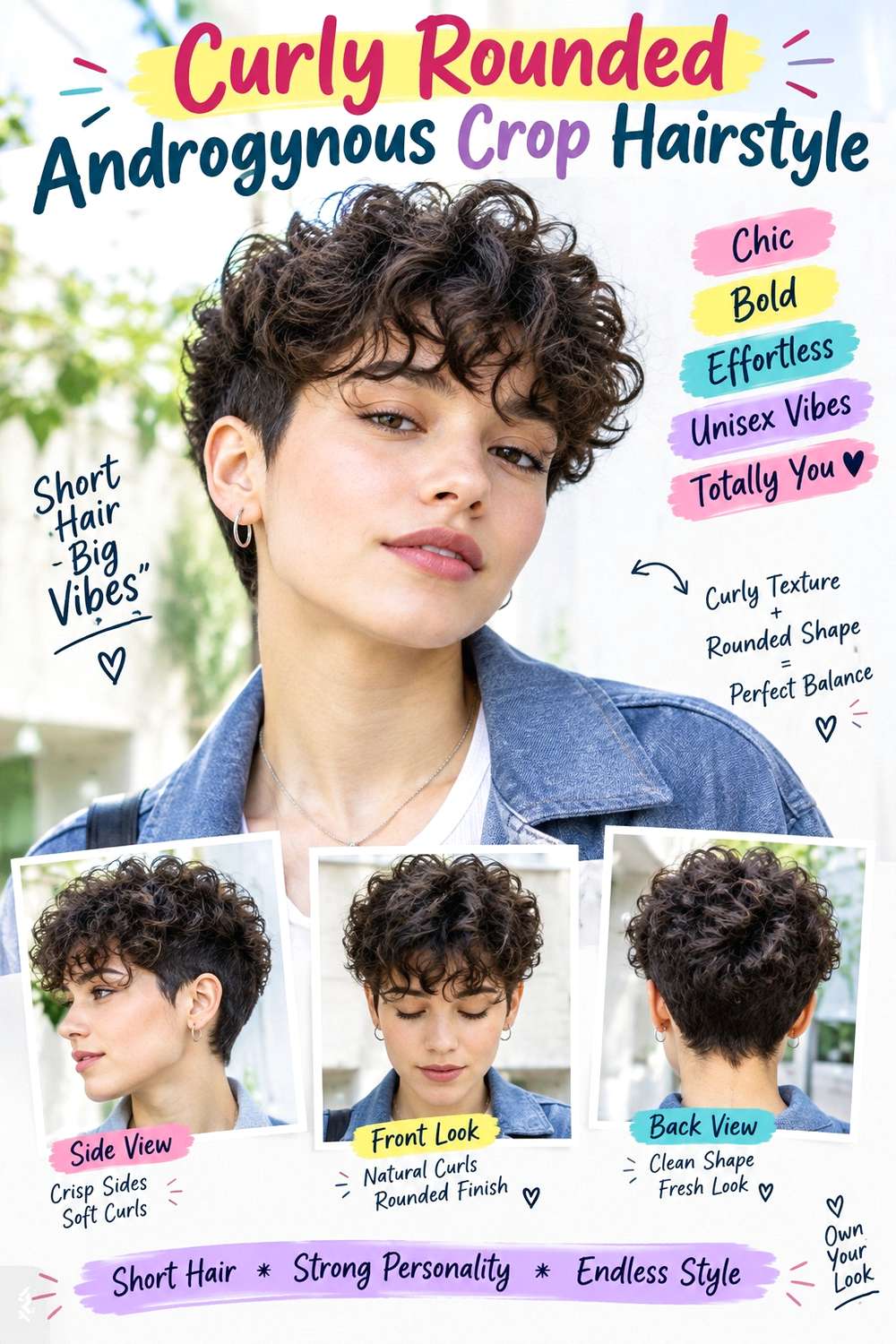
A rounded curly crop uses natural volume as part of the shape rather than trying to flatten it. The crown and upper sides stay full, while the nape and area around the ears become slightly shorter for definition. A loose curly fringe can fall toward the forehead without forming a straight line, and the face-framing pieces merge into the temples at varied lengths. The overall effect is compact but soft, with movement coming from curl groups rather than sharp separation.
Curly and coily textures can support this silhouette especially well, although shrinkage and density affect where the finished volume sits. A lightweight leave-in conditioner helps maintain softness, curl gel supports grouping, and a microfiber towel can remove excess water without rough handling. A quick refresh may involve reshaping only compressed sections. Full wash-day styling takes longer because curls need time to settle and dry in their intended position.
Cut maintenance should respond to the outline. If one side starts widening, the crown becomes heavy, or the fringe blocks more of the forehead than intended, the crop may need selective reshaping. At the salon, discuss the desired dry silhouette and ask where the shortest crown and side sections should sit after shrinkage rather than relying on wet measurements alone.
Pro tip:
Arrange the front curl groups while the hair is still damp, then leave them largely undisturbed until dry. Separating afterward gives you more control over fringe width and placement.
Make It Work for You:
If your curls shrink strongly, retain more length through the fringe and upper sides at first. The shape can always be refined once the stylist sees where those sections settle when dry.
Watch Out For:
Uniformly thinning the entire crop may weaken the ends without correcting the area that feels bulky. Identify where excess width actually appears and adjust weight specifically in that zone.
Piecey Micro-Fringe Androgynous Crop Hairstyle

A short, irregular fringe brings more forehead into view and gives this crop a crisp front without requiring a severe overall outline. The bangs sit clearly above the brows, with small gaps between the ends rather than a solid horizontal edge. Slightly longer top layers move forward into the fringe, while the sides taper neatly around the ears and the nape stays compact. The result looks deliberate even when the top is styled with a little uneven texture.
Straight and lightly wavy hair can make the piecey fringe especially visible, although growth direction matters because very short hair has less weight to control cowlicks. A small amount of matte paste defines selected tips, while lightweight styling cream can calm fuzzy areas without stiffening the whole top. A fine-tooth comb helps place the fringe before you separate it with your fingers. Daily refreshing is usually quick, but a stubborn front growth pattern may need more attention after washing.
Micro fringes reveal growth sooner than longer bangs. Once the center moves close to the brows, the proportions become noticeably different. At the salon, discuss the finished dry length, fringe width, and whether the outer corners should remain slightly longer to connect smoothly with the temple area.
Pro tip:
Use defining product on only a few fringe tips, not across the full edge. Leaving untouched spaces between pieces keeps the micro fringe light and avoids a stiff, serrated appearance.
Make It Work for You:
For wavy hair, allow a little extra length through the shortest front section. That room lets the natural bend appear without causing the fringe to sit much higher than expected.
Watch Out For:
Cutting the fringe too wide can remove useful density from the temples. Keep its width controlled and let longer side pieces create the connection between the front and the tapered sides.
Long-Top Low-Taper Androgynous Crop Hairstyle
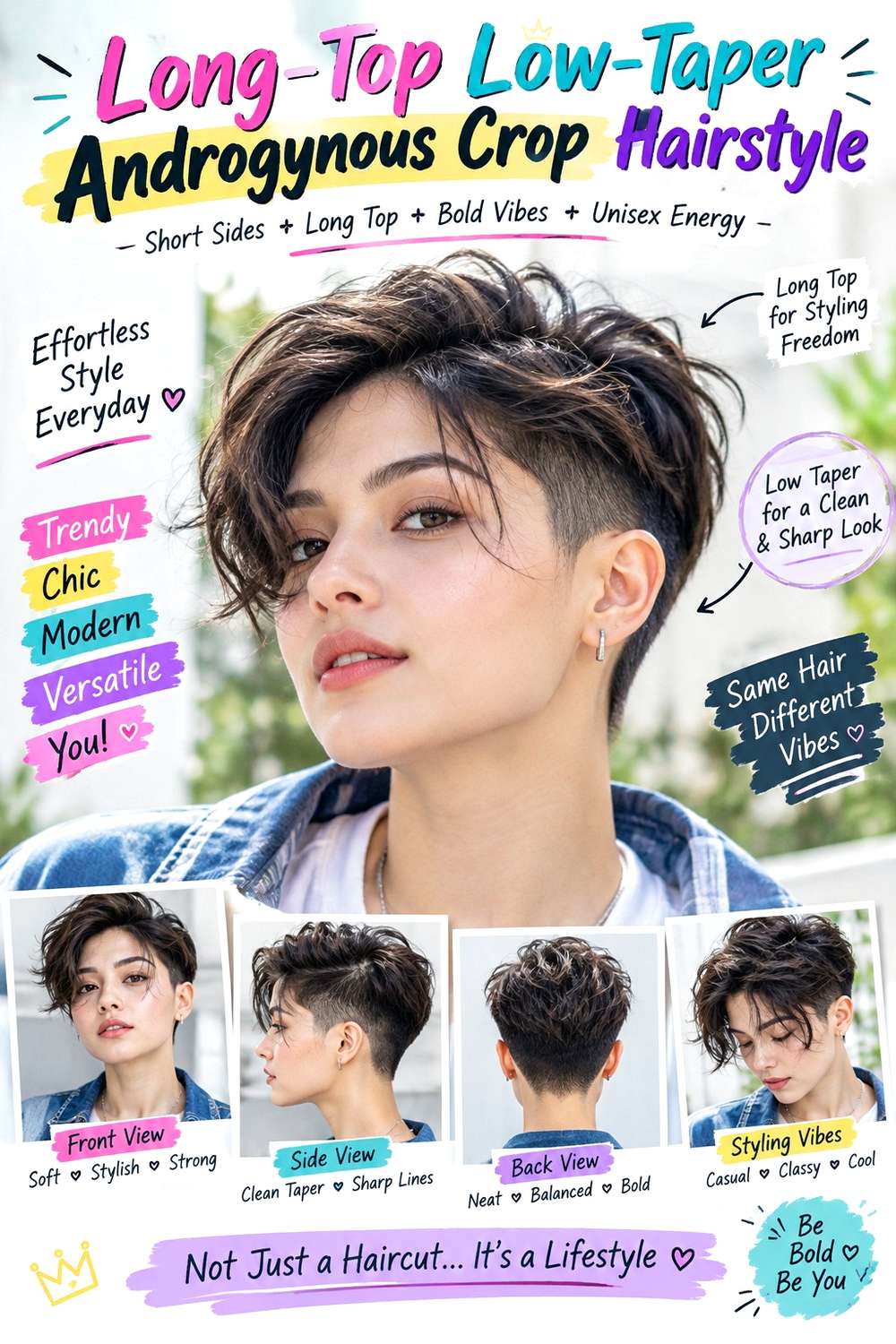
Extra length through the top creates versatility while a low taper keeps the perimeter neat without exposing too much of the sides. The longest pieces can sweep forward, sideways, or slightly back, with layers beginning around the upper crown rather than being cut uniformly short. Around the ears and nape, the taper sits low and gradual, preserving a soft transition between the compact edge and the fuller top.
Straight, wavy, and loose-curly textures can all work with this shape because the top provides room for natural movement. Denser hair may need controlled weight removal below the longest sections so the silhouette does not become boxy. Root-lift spray can support the crown, heat protectant prepares the hair for directional blow-drying, and a vent brush helps move the top without creating an overly polished finish. A small morning adjustment can be quick, while fully resetting a long top after washing takes more time.
As the cut grows, bulk usually develops around the upper sides before the length on top becomes a problem. At your appointment, explain how low you want the taper to begin and how much top length you want to retain. That distinction prevents the stylist from turning the shape into a much shorter uniform crop.
Pro tip:
Change the drying direction across the top rather than pushing every section backward. Alternating angles creates softer movement and keeps the longer area from settling into one heavy block.
Make It Work for You:
If your hair is lower density, keep the top layers longer and less numerous. You can still achieve separation while preserving enough overlap to make the crown and sides appear comfortably full.
Watch Out For:
A very high taper can remove the gradual transition that defines this softer version. If you want subtle contrast, keep the shortest area close to the ears and lower nape.
Soft Buzzed-Side Androgynous Crop Hairstyle
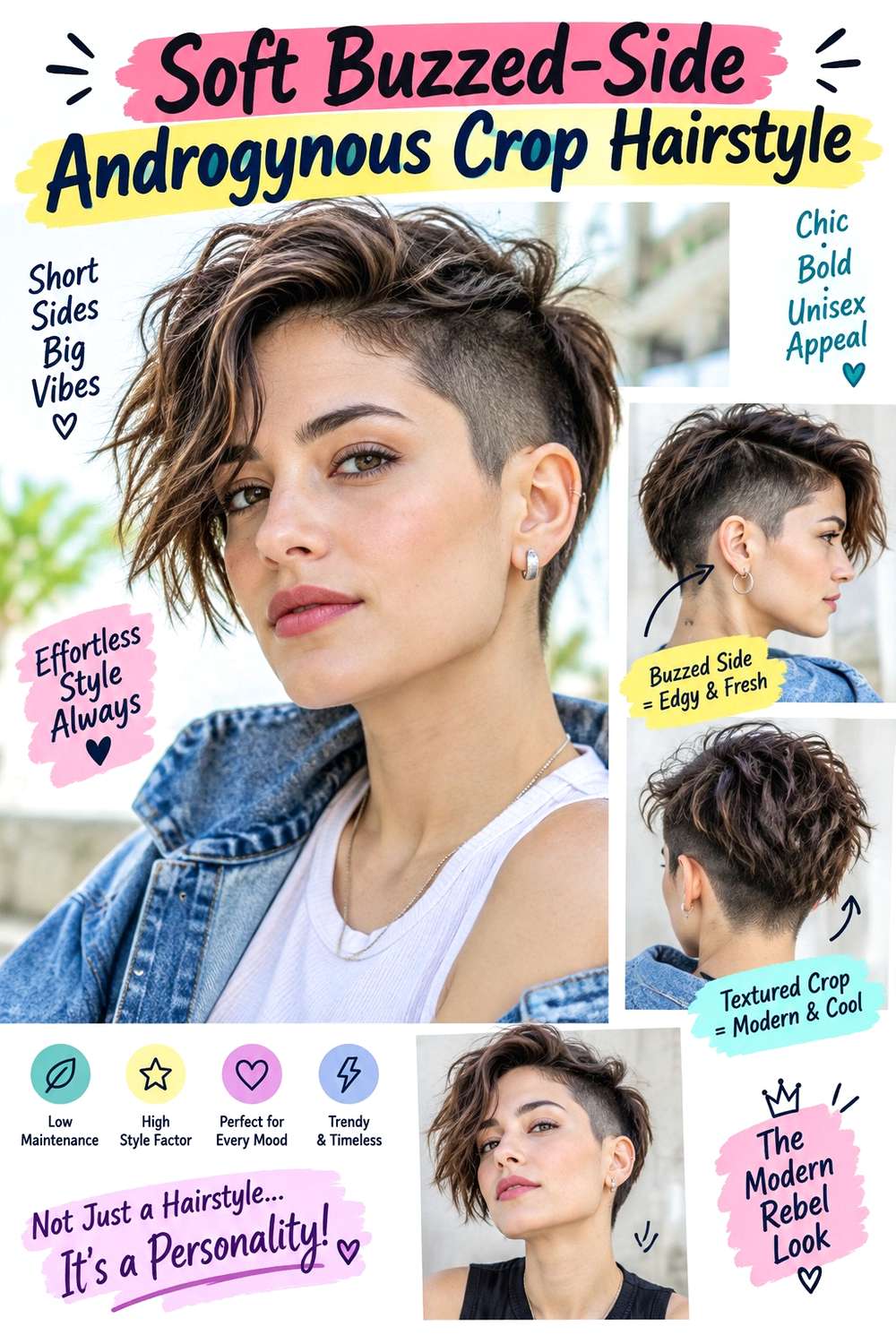
Closely cut sides create clear contrast here, but the longer top keeps the overall shape from feeling harsh. Instead of taking the sides extremely high, the short section stays concentrated around the ears and lower temples. The crown retains enough length for soft forward movement, and a slightly longer fringe can fall toward the brow or sweep diagonally. The transition should look intentional but not sharply disconnected unless that is specifically the finish you want.
Straight, wavy, and curly textures can all use this contrast, though the top length should account for shrinkage and natural volume. Lightweight styling cream helps control the longer section, while texture powder can add grip at the crown without coating the short sides. A wide-tooth comb is useful for placing the top while preserving visible separation. A daily refresh can be very short, but a full wash-day set takes more time if the top has curls or strong bends.
The closely cut perimeter will show growth sooner than the longer top, so the shape can lose contrast even while the crown still feels manageable. At the salon, specify how much scalp exposure you are comfortable with and how high the shorter side area should extend before the longer top begins.
Pro tip:
Style the longer top before adding much product near the short sides. Keeping the compact perimeter clean makes the contrast clearer and prevents buildup from emphasizing every small regrowth difference.
Make It Work for You:
If you prefer less scalp visibility, ask for a slightly longer clippered or scissor-cut side while maintaining the same low placement. The contrast remains without making the perimeter feel severe.
Watch Out For:
Taking the short section too high can dominate the entire haircut and reduce the soft effect. Keep the contrast concentrated low unless you specifically want a more dramatic disconnected shape.
Wavy Temple-Tuck Androgynous Crop Hairstyle
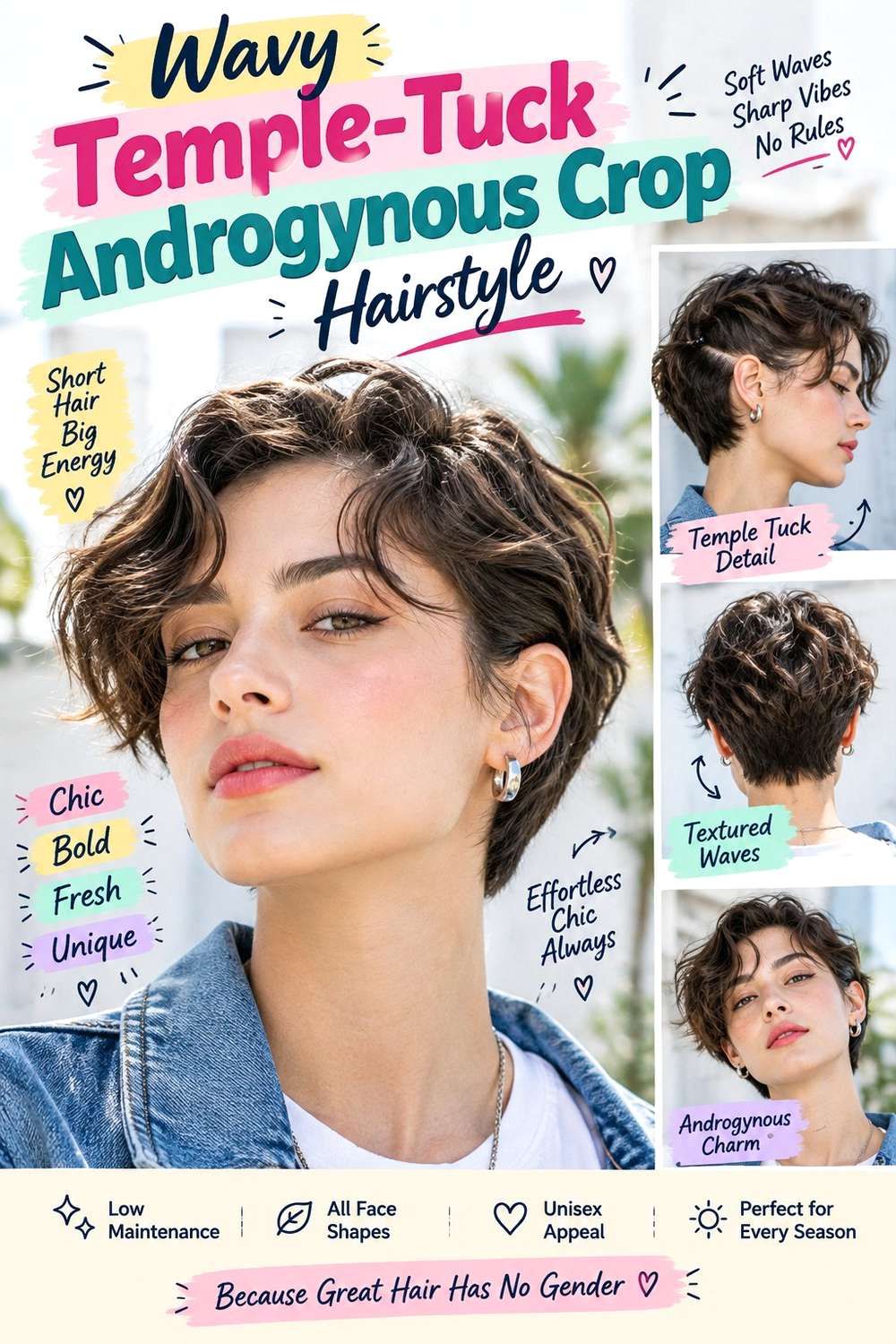
This crop leaves enough length around the temples to tuck behind the ears, creating two different ways to wear the same short shape. Untucked, the sides soften the face and connect with a loose fringe; tucked back, they expose a cleaner outline while leaving the top relaxed. Broad bends through the crown and upper sides create movement, while the nape remains short enough to stop the haircut from drifting into bob territory.
Naturally wavy hair can make this version easy to refresh, while straight hair may need a few deliberate bends for the same finish. Heat protectant should be used before a curling iron creates loose waves through selected sections. Flexible hairspray can give those bends light hold without making the top rigid. On non-wash days, refreshing only the visible front sections may be brief; forming the full wave pattern from freshly washed or straight hair takes longer.
Repeated tucking can flatten the temple sections, so change their placement when you want more side volume. As the hair grows, the tucked pieces become easier to secure but may lose their cropped relationship with the nape. At the salon, identify the minimum length you need in front of the ears for a comfortable tuck and ask to keep the back noticeably shorter.
Pro tip:
Create only a few broad bends instead of curling every section. Leaving some pieces straighter keeps the crop relaxed and prevents the waves from building too much width around the sides.
Make It Work for You:
For finer strands, keep the lower side perimeter fuller and concentrate movement through the top. You can preserve enough density for a neat ear tuck without sacrificing the softly waved finish.
Watch Out For:
Curling from the roots on every section can make the crop too round. Start many bends through the mid-lengths and leave some ends straighter for a more balanced, casual outline.
Feathered Nape Androgynous Crop Hairstyle
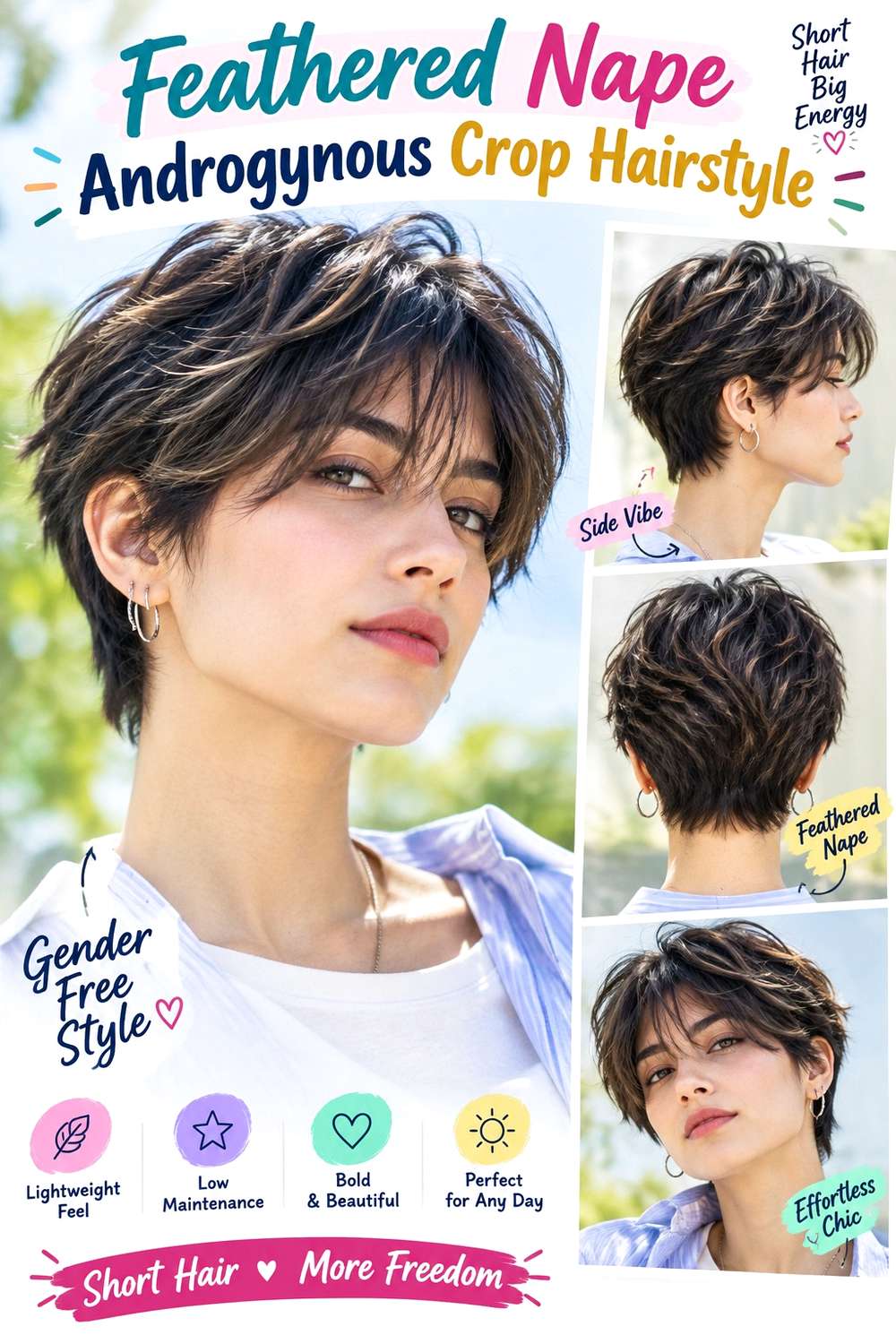
A slightly longer, feathered nape gives this crop softness at the back while the sides remain neat around the ears. The crown is layered enough to create movement, but the lower back extends into fine, separated pieces rather than ending in a tight taper. A light fringe or side sweep keeps the front equally relaxed. The longer nape is subtle, creating an elongated profile without developing the stronger contrast of a full mullet.
Straight and wavy hair show the feathered back clearly, and medium density gives the nape enough substance to remain visible without looking heavy. Texturizing spray can add grip through the longer lower pieces, while matte paste defines a few ends. A wide-tooth comb keeps those sections separated without forcing them into a perfectly smooth line. A quick dry refresh usually requires little effort; resetting a nape that flips strongly after washing may take additional shaping.
The lower back is the first area to monitor during grow-out. When it begins looking solid rather than wispy, reshaping the perimeter can restore the intended movement without shortening the whole cut. At the salon, specify how far the nape should extend and ask for a gradual connection between the crown and those longer back pieces.
Pro tip:
Pinch definition into only a few nape ends and vary their direction slightly. Uniformly shaping every tip can make the back look overly deliberate instead of softly feathered.
Make It Work for You:
If you dislike hair touching the collar, keep the nape shorter while preserving its separated edge. The crop can retain a feathered back without requiring enough length to brush clothing.
Watch Out For:
Over-thinning the lower edge can leave the nape looking sparse. Preserve enough hair to show a visible outline, then create separation selectively rather than removing weight throughout the entire section.
Center-Parted Androgynous Crop Hairstyle
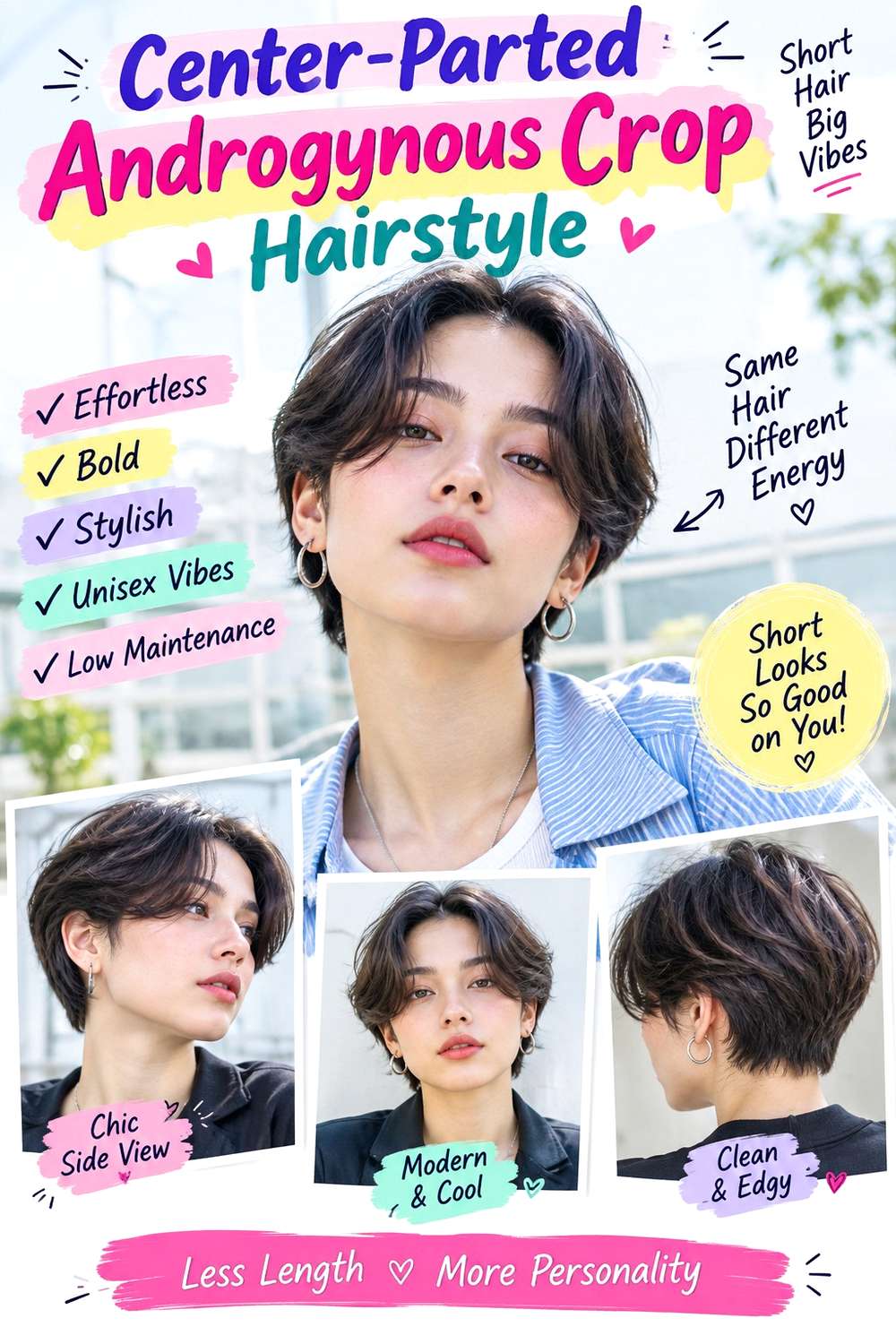
A center part gives a short crop a balanced, open front while retaining enough length on both sides to frame the temples. The front pieces can finish around the brows or upper cheekbones, with shorter crown layers sitting behind them. The sides taper gently around the ears rather than being closely clipped, and the nape remains compact. The defining feature is the two-sided movement at the front, not a perfectly symmetrical or flat overall shape.
Straight and softly wavy textures make the center split easy to read, although natural growth patterns may cause one side to bend differently. Lightweight mousse can support the roots, heat protectant prepares the front for blow-drying, and a small round brush helps direct each half away from the center. Refreshing the part and front sections can be quick between washes. Starting from wet hair may require more time if the roots naturally prefer a side part.
As the front grows, the center opening becomes heavier and the pieces may begin falling into the eyes. At the salon, explain where the shortest center pieces should finish and how much longer you want the outer edges. Maintaining that progression helps the fringe blend smoothly into the sides instead of forming two isolated curtains.
Pro tip:
Set the center part while the roots are damp, then dry each side away from the division. Establishing the split early reduces the need for repeated heat or strong product later.
Make It Work for You:
If your natural part sits off center, use a slightly shifted split rather than forcing perfect symmetry. You can preserve the open-front effect while working with the direction your roots prefer.
Watch Out For:
Rounding both front sections too strongly can create a bubble-like shape beside the cheeks. Keep the bend gentle and allow the lower ends to fall with some natural irregularity.
Dense Fringe Androgynous Crop Hairstyle

A substantial fringe places most of the visual weight at the front while the sides and nape stay neatly controlled. The bangs can skim the brows with a slightly broken edge, and their outer corners blend into short temple pieces rather than stopping abruptly. Behind them, the crown remains layered but not excessively short, giving the top enough movement to balance the stronger fringe. The sides can taper softly so the haircut still feels compact.
Medium-to-high density supports a fuller fringe naturally, although fine individual strands can also create good coverage when enough hair is present. A lightweight smoothing serum can control fuzzy ends, while heat protectant prepares the front for blow-drying. A small round brush helps direct the fringe downward with a shallow bend rather than a pronounced curled-under finish. A fringe-only refresh is usually short; washing and resetting a dense front section takes longer because it holds more moisture and weight.
Upkeep becomes noticeable when the center drops into the eyes or the outer corners stop blending with the temples. During a salon visit, discuss both the fringe width and finished length. Keeping the section narrower may be important if you need to preserve density around the sides.
Pro tip:
Dry the fringe in smaller sections instead of rolling the entire width together. That gives better control over root direction and helps the finished edge remain mobile rather than forming one solid curve.
Make It Work for You:
For lower-density hair, use a narrower fringe section and leave more hair at the temples. The front can still look substantial without borrowing so much hair that the side perimeter weakens.
Watch Out For:
Cutting a dense fringe too deep into the crown may leave the surrounding crop unexpectedly thin. Decide how much front coverage matters while protecting enough weight for the rest of the silhouette.
Coily Crown Androgynous Crop Hairstyle
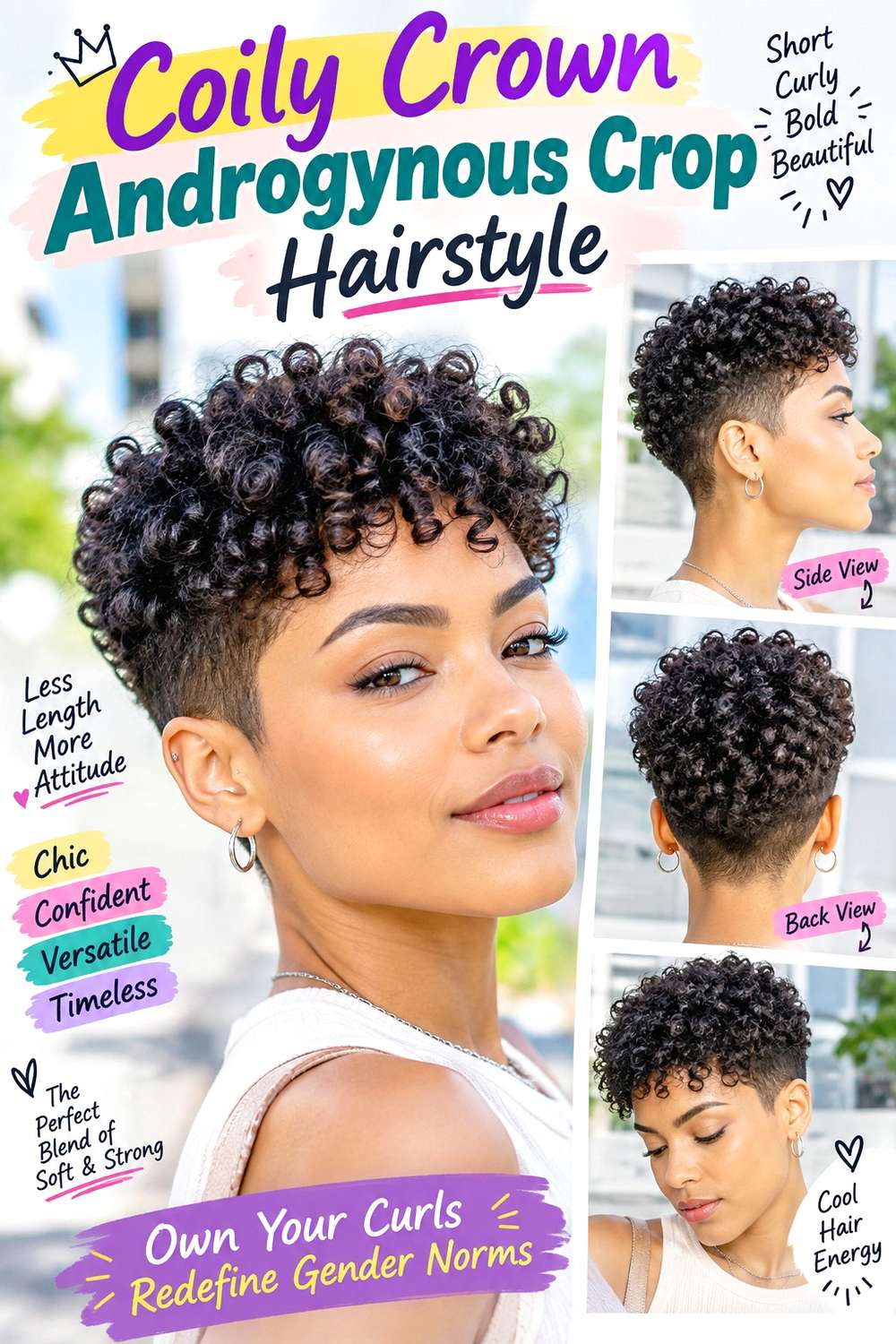
A coily crown crop concentrates height through the upper section while keeping the sides and back shorter and more controlled. The top can retain enough length for visible coil groups, while the temple area gradually narrows toward the ears. A short front section may fall forward as a soft coil fringe, or it can remain lifted to leave more forehead visible. The contrast comes from volume placement rather than a sharply disconnected perimeter.
Coily textures need the finished dry shape considered carefully because shrinkage can alter both height and apparent fringe length. A moisturizing leave-in conditioner supports softness, curl gel helps maintain coil grouping, and a microfiber towel reduces rough friction after washing. A small refresh may involve reshaping only flattened or stretched sections, while full wash-day styling takes longer depending on density, drying method, and how much definition you prefer.
Maintenance becomes useful when the crown grows heavy enough to lose its lift or the sides expand beyond the intended outline. Rather than automatically removing length everywhere, reshape the areas disturbing the silhouette. At the salon, discuss how much dry crown height you want and where the shorter sides should begin. The stylist can then account for your individual shrinkage pattern instead of copying wet measurements from a reference.
Pro tip:
Shape the crown while the coils are still damp, paying attention to the outermost groups. Those perimeter coils strongly influence the apparent height and width once the hair is fully dry.
Make It Work for You:
If you prefer less height, retain the same tapered perimeter but leave the crown slightly longer and encourage it to settle outward. The crop stays coily without relying on a tall silhouette.
Watch Out For:
Cutting the top based only on stretched length can produce an unexpectedly short result. Judge important front and crown sections in their normal dry state before deciding how much length to remove.
Sleek Side-Part Androgynous Crop Hairstyle
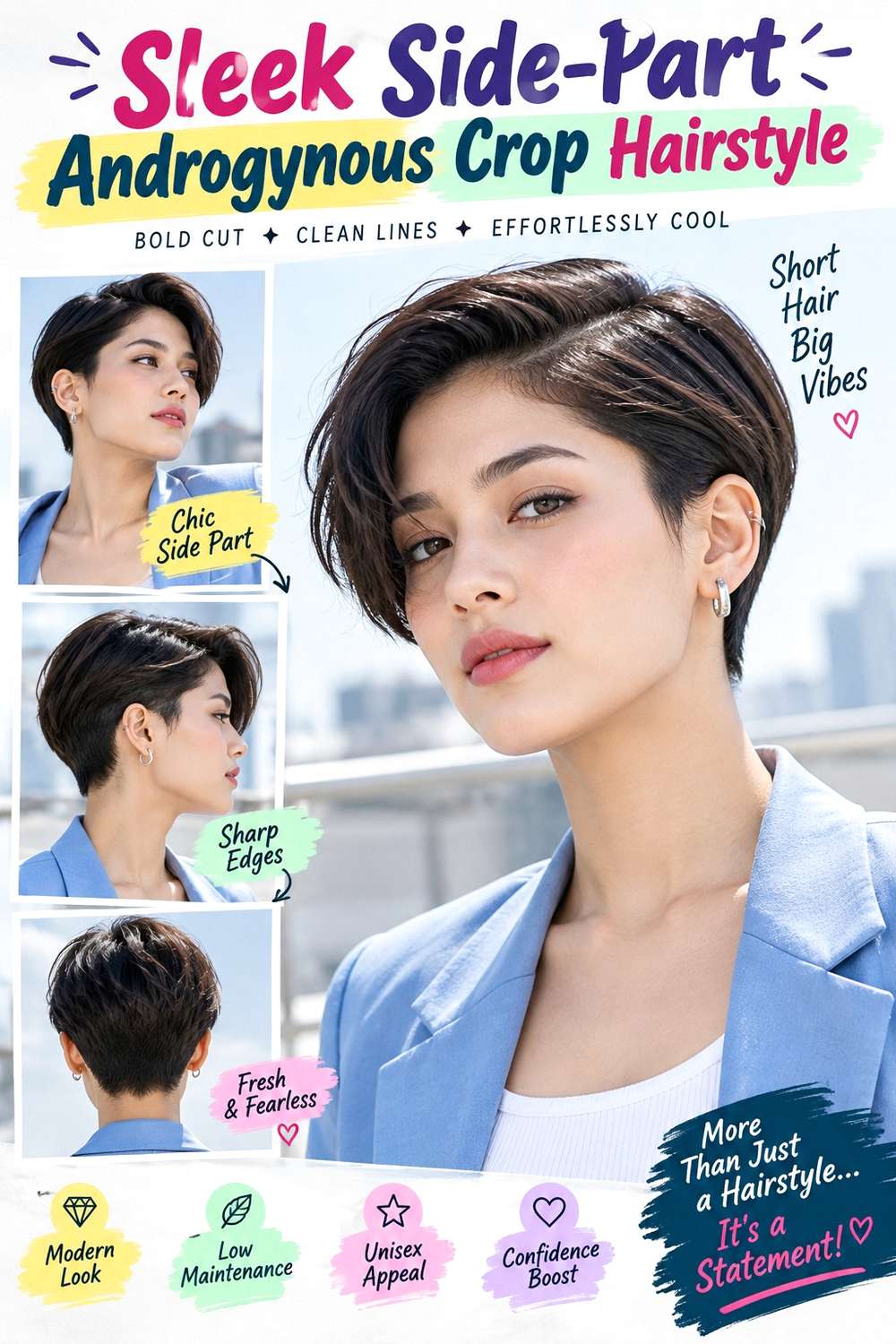
A clean side part and controlled surface make this crop more polished without removing its soft proportions. The top remains longer than the sides, allowing the front to sweep neatly across the forehead or angle back toward the temple. The sides stay close but not necessarily clipper-short, while the nape follows a simple tapered line. Minimal visible separation keeps the finish sleek, yet a little movement at the front prevents the haircut from looking rigid.
Naturally straight or gently wavy hair can reach this finish with relatively little reshaping, while curls or stronger waves require more time if you want them temporarily smoothed. Heat protectant should come before blow-drying or any hot-tool work. Lightweight smoothing cream controls flyaways, and a flat iron can refine selected top sections rather than repeatedly passing over the entire crop. A morning part reset may take only a few minutes; creating the full sleek finish after washing can be a longer styling session.
As the top grows, it may become heavier and separate less cleanly from the shorter sides. At the salon, show exactly where you want the part and how closely the side should follow the head. Keeping adequate length in front preserves the sweep and avoids turning the cut into a uniformly short crop.
Pro tip:
Establish the side part before smoothing the lengths. Once the roots are directed correctly, the top needs less manipulation, which helps the finish stay controlled without being pressed completely flat.
Make It Work for You:
If your natural texture is wavy, keep a slight bend through the front rather than chasing perfect straightness. The clean part can provide structure while your natural movement softens the finish.
Watch Out For:
Applying too much smoothing cream near the roots can collapse the top and emphasize oiliness. Use the smallest useful amount and concentrate most of it through the surface and ends.
Grown-Out Androgynous Crop Hairstyle
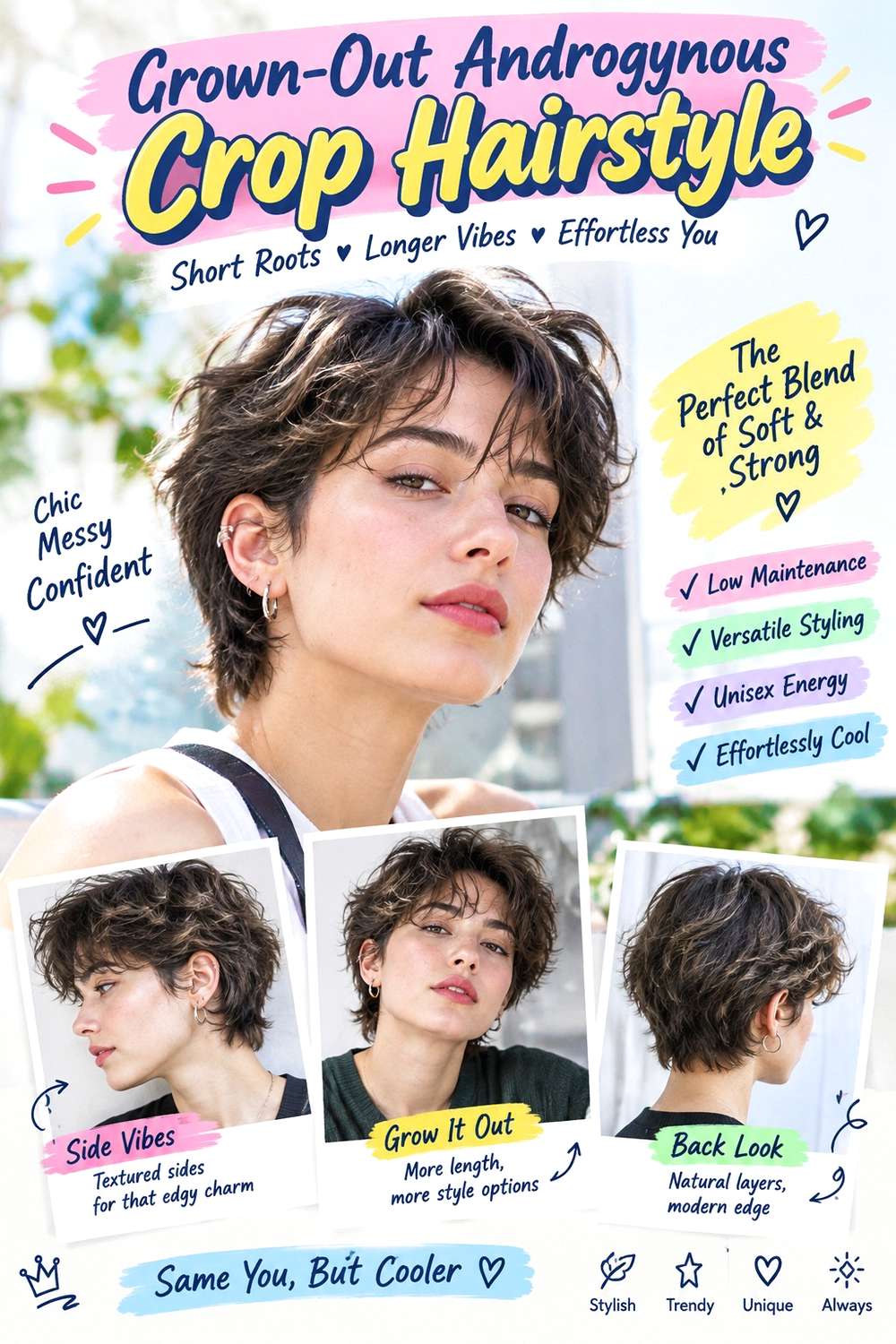
A grown-out crop keeps the relaxed proportions of short hair while allowing the fringe, temples, and nape to gain visible length. The front may reach the brows or upper cheekbones, the sides begin covering part of the ears, and the back extends beyond a freshly tapered outline. Shorter layers through the crown preserve movement so the extra length does not settle into one heavy cap. It is especially useful when moving toward a short bob or simply spacing out major reshaping appointments.
Straight, wavy, curly, and coily textures can all move through this stage, but excess weight appears in different places. Texture spray gives longer roots some grip, styling cream controls expanding ends, and a wide-tooth comb helps separate layers without over-smoothing them. Between washes, reshaping the fringe and crown can be quick. A full wash-day routine gradually becomes longer as more length needs to dry and settle.
Maintenance should protect the areas you want to grow. If the sides become bulky before the fringe reaches its target, selective weight adjustment can improve the shape without resetting everything shorter. Tell your stylist which sections you are deliberately growing and identify where the perimeter feels too heavy. That makes it easier to preserve progress while keeping the crop intentional.
Pro tip:
Choose one priority area for growth, such as the front or sides, and protect that length during cleanups. Small adjustments elsewhere can keep the silhouette balanced while your target section catches up.
Make It Work for You:
If you are heading toward a bob, retain temple and nape length while gently reshaping excess crown bulk. This supports the transition without repeatedly returning the haircut to its original cropped proportions.
Watch Out For:
Trimming every uneven section to match the shortest piece can stall your grow-out. Some temporary variation is normal, so correct distracting bulk selectively instead of chasing perfect uniformity.
Conclusion
Soft androgynous crop hairstyles can be close and tapered, curly and rounded, sleekly parted, or left longer around the ears and nape. The most useful choice depends less on a fixed label and more on where you want length, weight, and movement. A dense fringe needs different upkeep from a micro fringe, while coils and curls require shrinkage to be considered before shortening key areas. Fine or lower-density hair may benefit from preserving perimeter weight, whereas dense hair can sometimes use selective internal adjustment. Think about your natural texture, preferred parting, crown volume, face-framing length, and willingness to style. A crop that works with your routine is usually easier to maintain than one that demands a completely different finish every morning.
Before Your Salon Visit
Choose one or two favorite crops and save clear references showing the front, sides, and back when possible. Explain your natural texture, density, preferred length, face-framing preferences, styling routine, and realistic upkeep. Point specifically to the fringe length, taper height, sideburn shape, crown volume, nape finish, or parting you want. If you like the top from one reference and the perimeter from another, mention those differences rather than expecting one image to communicate everything.
FAQs
Can soft androgynous crops work on fine or lower-density hair?
Yes, but preserving visible fullness becomes important. A stylist can keep more weight around the perimeter, use a narrower fringe, or limit very short crown layers. Fine describes individual strand thickness, while low density refers to the amount of hair, so the most useful adjustment depends on which concern actually applies.
Do curly or coily androgynous crops need to be straightened?
No. Curly and coily crops can use natural volume, curl grouping, and shrinkage as part of the finished design. The important step is discussing where the haircut should sit when dry. Straightening is only a styling choice if you want a temporarily smoother finish, not a requirement for the crop.
How often should the fringe and taper be maintained?
Use the shape as your guide rather than relying on one fixed schedule. The fringe may need attention when it starts entering the eyes or losing its intended direction, while the taper may need reshaping once the sides become noticeably fuller and change the balance with the top.
What should I tell my stylist if I want the crop to stay soft?
Describe specific proportions instead of only asking for an androgynous cut. Explain how much scalp exposure you want, where the taper should start, how long the fringe should finish, and whether you prefer rounded, piecey, sleek, or natural texture. Those details communicate softness more clearly than the label alone.