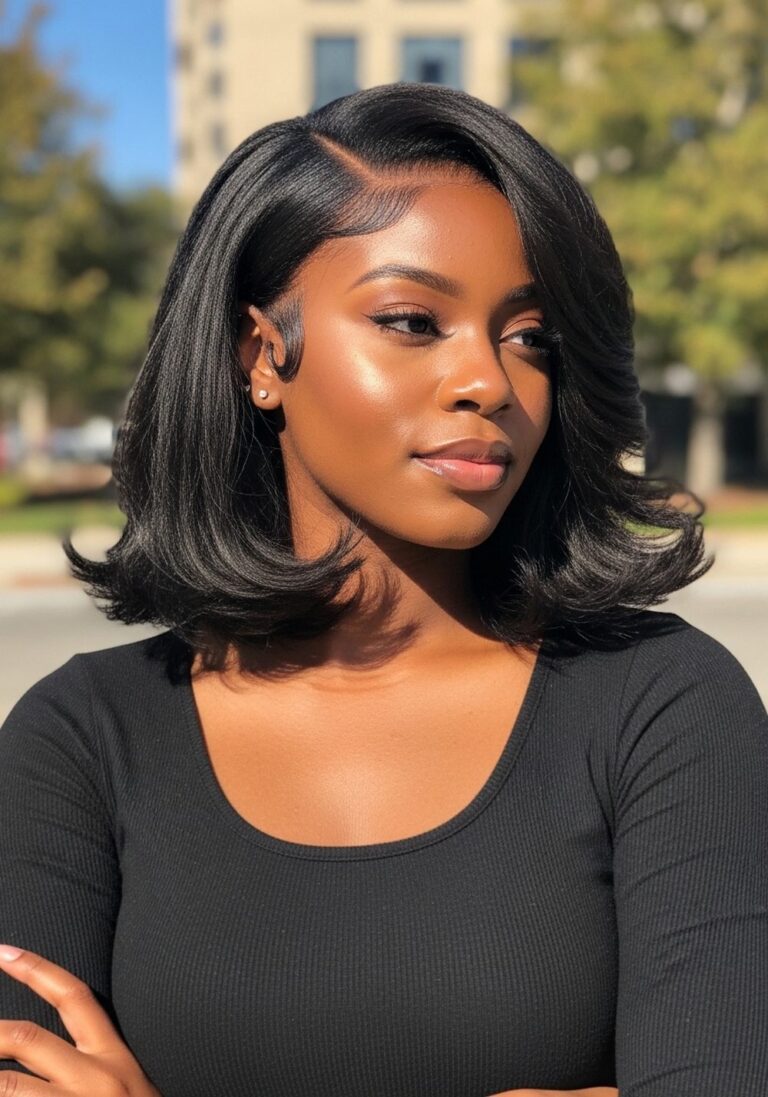
16 Soft Shag Haircut Ideas for Fall 2026

A soft shag keeps the movement and layered character of a traditional shag but removes some of the harsher contrast between short and long sections. The crown usually has light lift rather than extreme height, face-framing pieces blend gradually into the length, and the ends stay airy without becoming overly thin. Bangs may be curtain-shaped, wispy, full, or grown out, while the overall length can range from a short crop to below the shoulders.
These Soft Shag Haircut Ideas for Fall 2026 work especially well when the cut is adjusted to natural texture and density. Fine hair generally needs fewer layers and a stronger perimeter, while thick hair can benefit from internal bulk removal. Waves and curls often need less heat because their natural movement already supports the shag shape.
Maintenance varies with fringe length and layering. Short bangs need more frequent attention, while longer face-framing pieces are easier to grow out. Before choosing a version, think about your usual styling time, humidity, natural volume, preferred length, and how much daily texture you want to encourage.
Quick List
- Airy Curtain-Bang Soft Shag
- Shoulder-Length Wavy Soft Shag
- Collarbone Soft Shag With Face-Framing Layers
- Soft Shag With Wispy Brow Bangs
- Curly Soft Shag With Rounded Layers
- Fine-Hair Soft Shag With Crown Lift
- Thick-Hair Soft Shag With Internal Layers
- Long Soft Shag With Feathered Ends
- Short Soft Shag With Tapered Nape
- Center-Part Soft Shag With Cheekbone Layers
- Side-Part Soft Shag With Sweeping Fringe
- Soft Shag Bob With Loose Waves
- Low-Maintenance Air-Dried Soft Shag
- Soft Shag With Flipped-Out Ends
- Voluminous Soft Shag With Full Fringe
- Grown-Out Soft Shag With Long Bangs
Airy Curtain-Bang Soft Shag
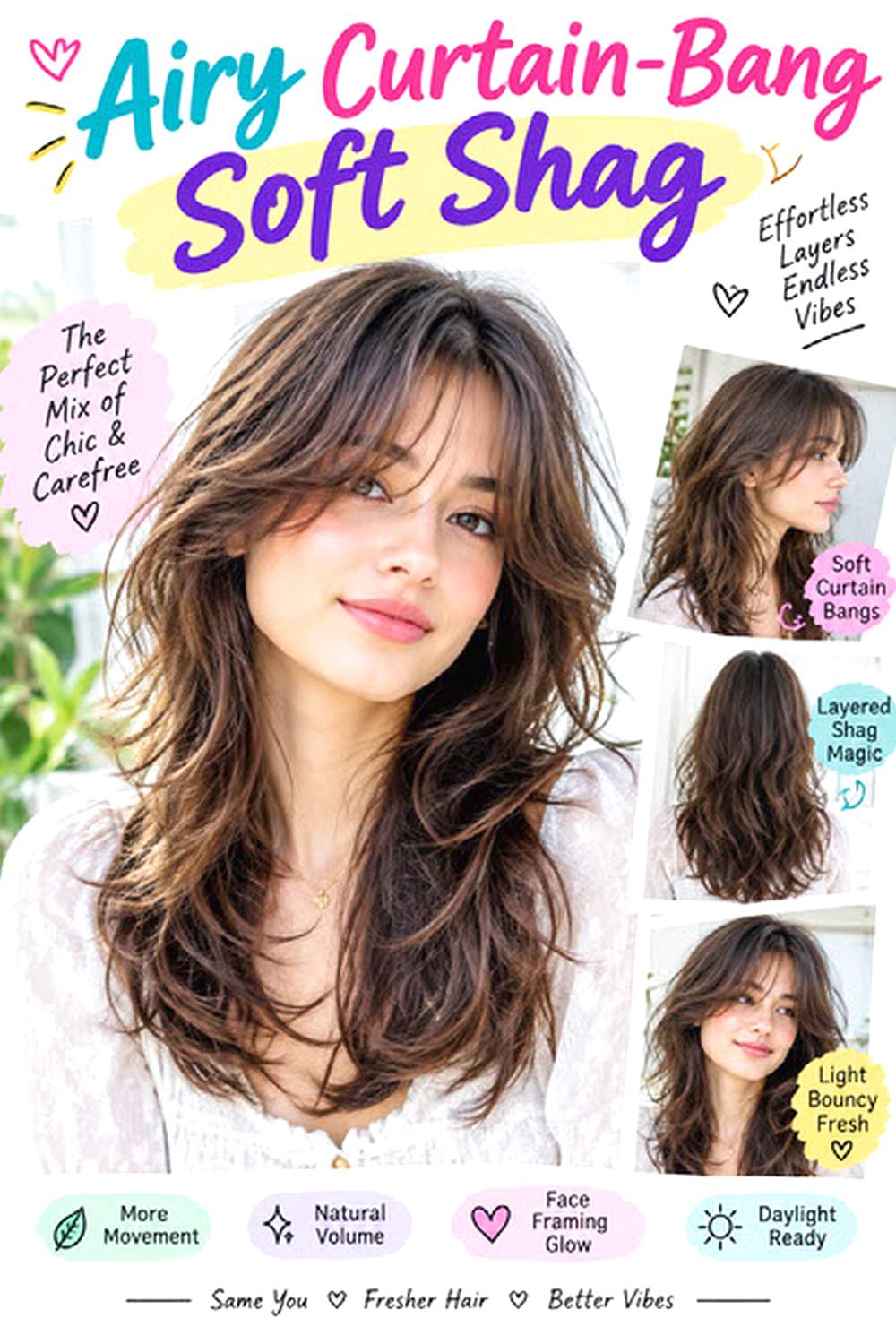
A light curtain fringe gives a soft shag definition around the face without creating a heavy bang line. The shortest center pieces can skim the brows, then lengthen toward the cheekbones before blending into shoulder-level layers. Crown shaping should stay gentle so the haircut has lift without the dramatic height of a classic shag. Straight, wavy, and medium-density hair usually carries this balance easily, while fine hair benefits from keeping the bottom fuller. Morning styling is fairly quick because the fringe and front layers need more attention than the rest of the cut. Use lightweight mousse, a small round brush, and flexible hairspray to open the bangs and encourage movement through the crown. The fringe may need reshaping sooner than the long layers. At the salon, ask for a narrow-to-medium curtain section with its shortest point near the brows and cheekbone-length outer corners.
Pro tip:
Blow-dry the fringe forward first, then separate it. This prevents the center from opening too widely and exposing a strong gap.
Shoulder-Length Wavy Soft Shag

Shoulder length gives natural waves enough room to bend while still showing the layered structure of a shag. Soft layers can begin around the chin and continue through the mid-lengths, creating movement without making the ends look overly feathered. This shape works especially well for naturally wavy medium-density hair, though straight hair can recreate it with heat and thicker hair may need some hidden weight removed. Styling is usually moderate on wash day and much faster afterward. Apply leave-in conditioner and wave cream, then diffuse or air-dry depending on how much definition you want. A wide-tooth comb is useful before drying but should be avoided once the waves have set. Humid fall weather may increase surface frizz, so a light smoothing product can help. At the salon, ask for long, blended layers that preserve noticeable weight through the shoulder-length perimeter.
Pro tip:
Keep the shortest side layers below the cheekbones if your waves spring strongly; cutting them too high can create more width around the temples than intended.
Collarbone Soft Shag With Face-Framing Layers

A collarbone shag is a useful middle ground when you want obvious movement without committing to very short layers. Face-framing can begin near the cheekbones, then blend through chin-level pieces into a fuller collarbone perimeter. Because the crown layers stay relatively long, the haircut has a softer outline and an easier grow-out than a heavily chopped shag. Fine and medium hair can keep more density at this length, while thick hair may need internal removal underneath the sides. Styling can be quick with natural waves or moderate when straight hair needs added bends. Reach for heat protectant, a large-barrel curling iron, and a lightweight texturizing spray, concentrating the curl mainly through the middle rather than the tips. Salon maintenance becomes noticeable when the face frame loses separation. Ask your stylist to keep the perimeter substantial and start the shortest front layer exactly where you want attention around the cheekbone.
Pro tip:
Leave the final inch of each curled section straighter; it keeps the collarbone shag relaxed and prevents the ends from looking overly curled.
Soft Shag With Wispy Brow Bangs

Wispy brow bangs add detail to a soft shag without covering the forehead as heavily as a full fringe. Small, separated sections should fall around the brows, with longer corners gradually joining the side layers. The rest of the haircut can stay shoulder length or slightly shorter, with soft crown movement and lightly feathered ends. Straight and gently wavy hair show the fringe separation clearly, while medium density provides enough hair for bangs without reducing fullness elsewhere. Fine hair can also work when the fringe section stays shallow. A small round brush, lightweight styling foam, and flexible hairspray are useful for keeping the bangs airy. Expect a quick fringe refresh most mornings and more complete styling after washing. Bang trims may be needed before the rest of the haircut requires reshaping. Ask your stylist to avoid making the fringe too deep or dense and to leave extra length at the temples.
Pro tip:
Use very little product directly on wispy bangs. Too much spray or cream can group fine pieces together and make the fringe appear much thinner.
Curly Soft Shag With Rounded Layers

Curly hair naturally creates the movement a shag needs, but rounded layer placement keeps the silhouette soft instead of sharply disconnected. Shorter curls can lift around the crown while longer layers fill the sides and lower perimeter, creating balanced volume from top to bottom. A soft curly fringe may sit near the brows or open around the forehead, depending on shrinkage. Medium and thick curls often benefit from selective weight removal, while fine curls generally need more density preserved at the ends. Styling takes more attention on wash day but can be easy to refresh afterward. Use leave-in conditioner, curl cream, and a diffuser, then avoid separating the curls until fully dry. Salon visits should focus on restoring the overall shape rather than cutting every curl to equal length. Ask the stylist to assess the haircut in its dry, natural pattern and account for how much the front curls spring upward.
Pro tip:
Show your desired fringe length using dry curls, not stretched strands. The difference can prevent the front from ending much shorter than expected.
Fine-Hair Soft Shag With Crown Lift

Fine hair needs a shag that creates motion without sacrificing too much density. Here, the crown receives restrained layering for lift, while the sides and ends remain relatively full. The shortest layers can begin high enough to release the roots but should blend gradually into the lower length rather than creating a visibly thin bottom. Straight and softly wavy fine hair suit this approach, especially when flat roots are the main concern. A root-lifting spray, lightweight mousse, and vented brush can provide support without coating the strands heavily. Styling is fairly quick, with most effort focused on drying the crown upward and away from its normal fall. Heavy oils can collapse the shape, so keep finishing products minimal. When the top starts lying flat again, a layer refresh may matter more than cutting overall length. At the salon, request limited crown elevation and a strong perimeter with no aggressive thinning through the ends.
Pro tip:
Apply volumizer only at the crown and upper sides. Spreading it through the whole haircut can make fine ends feel sticky without adding useful lift.
Thick-Hair Soft Shag With Internal Layers

Dense hair can make a shag feel bulky unless weight is removed from inside the haircut. Internal layers create space and movement beneath the surface while allowing the outer shape and lower perimeter to stay substantial. Face-framing can begin around the cheekbones or jaw, depending on how much width you want around the sides. Thick straight, wavy, and coarse hair can all benefit from this structure, although natural waves may require less heat styling. Use anti-frizz cream, a paddle brush, and a lightweight serum to control the surface while leaving the interior movement intact. Blow-drying takes moderate time because thick sections hold more moisture, but second-day styling can be as simple as refreshing the front. The cut needs reshaping once weight begins collecting around the lower sides again. At the salon, ask specifically for internal bulk removal instead of thinning the visible ends, and keep the perimeter dense.
Pro tip:
Ask the stylist to show where weight will be taken out. Removing bulk beneath the surface gives a softer finish than aggressively thinning the outer layer.
Long Soft Shag With Feathered Ends

Long hair can keep its length while gaining shag movement through gradual layers and feathered ends. The front may start around the cheekbones or chin, with each layer becoming longer toward the back so the shape feels flowing rather than heavily chopped. This works well for medium or thick straight and wavy hair that needs movement through the lower half. Fine hair can wear a lighter version, but too much feathering may make the last few inches appear sparse. A heat protectant, large round brush, and smoothing spray help create a soft blowout with visible separation at the ends. Styling takes more time than a shorter shag simply because there is more hair to dry, although the grow-out is forgiving. Salon maintenance can focus on refreshing the face frame while preserving overall length. Ask for long layers that begin below the chin and softly tapered ends rather than razor-thinned tips.
Pro tip:
Keep the shortest layers clearly longer than the jaw if retaining length is your priority; high layers can remove more visual fullness than expected.
Short Soft Shag With Tapered Nape

A short shag can stay soft when the neckline is tapered and the upper layers are blended instead of sharply disconnected. Length around the ears and temples creates a little face-framing, while the back narrows toward the nape for a lighter silhouette. Straight, wavy, and medium-density hair work particularly well because the shorter pieces can show natural separation. Thick hair may need extra internal control, while very fine hair should keep the layering less aggressive. Styling is quick: use texture mousse, a vented brush, and a small amount of styling paste to define selected ends. The nape may need trimming before the rest of the cut because short growth changes the outline quickly. Morning refreshes usually focus on crown direction rather than complete restyling. At the salon, request a softly tapered nape with enough length around the ears to avoid a severe cropped shape.
Pro tip:
Apply paste to individual ends rather than rubbing it through the entire crown. Selective definition keeps a short shag soft instead of stiff or spiky.
Center-Part Soft Shag With Cheekbone Layers

A center part makes cheekbone-level layers especially visible because the front falls evenly to either side of the face. The shortest pieces can begin near the upper cheekbone, then blend toward the jaw and shoulder layers for a smooth transition. Medium-density straight or wavy hair holds this shape easily, while fine hair should keep the back layers longer to preserve fullness. For thicker hair, removing some weight beneath the side sections prevents the cheekbone layers from becoming too wide. Styling is moderate when you want polished movement and quicker when natural texture already bends around the face. Use heat protectant, a medium round brush, and light texturizing spray to give the front pieces a soft outward sweep. Reworking just those pieces can refresh the haircut between washes. At the salon, identify the precise cheekbone point where you want the shortest front layer to land when dry.
Pro tip:
Direct the front pieces away from the face rather than curling them under. That movement makes the cheekbone layer easier to see and keeps the center part open.
Side-Part Soft Shag With Sweeping Fringe

A side part changes the balance of a shag by creating more height and movement on one side. The fringe can sweep diagonally across the forehead and blend into temple or cheekbone layers rather than forming a separate bang section. This is especially useful when a natural cowlick makes a center part difficult. Straight, wavy, and medium-to-thick hair can carry the shape, while fine hair may benefit from the extra visual lift created by shifting the part. A volumizing spray, medium round brush, and flexible hairspray help support the front without making it rigid. Styling takes about a moderate amount of effort after washing but only a few minutes to reset the fringe on later days. Longer bangs also grow out more quietly than short fringe. Ask your stylist to cut the front according to your natural part and preserve enough density through the heavier side.
Pro tip:
Dry the fringe briefly against its final direction before sweeping it back. That creates root lift and prevents the heavier side from lying flat.
Soft Shag Bob With Loose Waves

Combining a bob length with shag layering creates a compact haircut that still has movement through the crown and sides. The perimeter can sit between the jaw and upper neck, with short-to-medium layers softening the outline rather than producing a single blunt line. Loose waves keep the layers visible and are especially flattering for naturally wavy medium-density hair. Fine hair should retain more weight around the bottom, while thick hair can handle greater internal layering. Styling is moderate on wash day but quick to refresh by reworking only the front and top pieces. Use heat protectant, a medium-barrel curling iron, and dry texture spray, leaving some ends straighter for a relaxed finish. Because the haircut is short, the overall shape changes sooner as it grows. At the salon, request a bob perimeter with softened edges and blended crown layers rather than a heavily disconnected shag.
Pro tip:
Curl alternate sections in different directions, but keep the front moving away from the face. Uniform curls can hide the layered texture and make the bob look too set.
Low-Maintenance Air-Dried Soft Shag

An air-dried shag should be cut around the way your hair naturally bends rather than around a style that only appears after heat. Long, soft layers give waves room to form, while a relaxed face frame adds shape without needing exact daily placement. Naturally wavy or loosely curly hair is the easiest match, although straight hair with some bend can also work. Fine hair needs fewer layers at the bottom, and thick hair may require internal weight removal to prevent the sides from expanding. Apply leave-in conditioner and a lightweight wave cream, then use a wide-tooth comb before scrunching and leaving the hair alone to dry. Styling effort is low after washing, and refreshes can often be done with water. The cut also grows out gently because the outline is intentionally soft. Tell your stylist that air-drying is your normal routine and ask them to evaluate the finished shape in natural texture.
Pro tip:
Bring a photo of your own untouched air-dried hair to the appointment. It shows your stylist where natural bends, frizz, and root volume actually occur.
Soft Shag With Flipped-Out Ends

Flipped ends give a soft shag more visible direction without requiring tight curls. Mid-length and shoulder-length layers can stay smooth through the top, then turn outward near the tips to emphasize the feathered structure. Straight and softly wavy medium-density hair usually holds this finish most easily. Fine hair can gain visual movement from the outward bend, while thick hair may need interior weight removed so the flip does not become too bulky. A heat protectant, round brush, and flat iron are useful: blow-dry for smoothness first, then turn selected ends outward with the iron. Styling takes moderate time after washing, though refreshing the tips on later days is quick. Keep oils light so they do not pull the ends flat. At the salon, ask for layered tips with enough density to create a visible flip rather than very thin, wispy ends.
Pro tip:
Turn only the last inch or two outward. Starting the flip too high can make the sides look overly wide instead of lightly feathered.
Voluminous Soft Shag With Full Fringe

A fuller fringe gives the soft shag a stronger focal point around the eyes while layered volume through the crown balances the heavier front. The bangs can sit at brow level with lightly softened edges, then connect into temple and cheekbone layers instead of ending abruptly. Medium-to-thick straight or wavy hair usually supports this amount of fringe best. Fine hair can still wear it, but the bang section should be narrower so the sides do not lose too much density. Use volumizing mousse, a medium round brush, and flexible-hold hairspray to lift the crown and curve the fringe without making either section stiff. Styling takes moderate time because both root direction and bang shape matter. Full fringe also requires more frequent upkeep than long curtain bangs. At the salon, agree on fringe width and density before cutting, and ask for blended crown layers that keep volume away from the lower sides.
Pro tip:
Check how far the bang section extends toward each temple. A fringe that is too wide can remove important fullness from the side panels of the shag.
Grown-Out Soft Shag With Long Bangs

Long bangs make a soft shag especially forgiving because they can fall around the cheekbones or jaw and blend naturally into the rest of the layers. The crown stays lightly shaped while the front develops a loose curtain effect that can be center-parted or shifted slightly to one side. This works well for straight, wavy, and medium-to-thick hair, and it is a practical choice for anyone who does not want frequent fringe trims. Fine hair can also wear it when the longer perimeter remains full. Styling is quick to moderate: use a leave-in spray, large round brush, and light texturizing spray to redirect the front and add movement through the lengths. On non-wash days, refreshing just the two front sections may be enough. Salon visits can focus on keeping the face frame connected as it grows. Ask for the shortest bang pieces to remain at least cheekbone length when dry.
Pro tip:
If you are growing out shorter bangs, ask the stylist to blend the corners gradually instead of immediately shortening surrounding layers to match them.
Conclusion
These Soft Shag Haircut Ideas for Fall 2026 show how flexible the haircut can be once length, density, fringe, and layer placement are adjusted. Fine hair may look fuller with restrained crown layers and stronger ends, while thick hair often moves better with hidden bulk removal. A curtain fringe feels different from full bangs, and long face-framing pieces require less frequent maintenance than brow-length fringe. Natural waves and curls can reduce heat styling, while smooth, flipped, or blown-out finishes require a little more daily effort. The best version depends on your face shape, natural texture, density, preferred length, humidity concerns, and how much time you actually want to spend styling your hair.
Before Your Salon Visit
Choose one or two favorite ideas and save clear photos that show the front, sides, crown, and overall length. Discuss your face shape, natural texture, density, preferred length, maintenance comfort, and regular styling routine with your stylist. Point out the exact fringe length, shortest face-framing layer, crown volume, perimeter weight, or end finish you want. Those specific details are much more useful than simply asking for a “soft shag,” especially because two shags can have very different layer placement and daily styling needs.
FAQs
1. Can fine hair wear a soft shag without looking thin?
Yes. Fine hair usually does better with fewer layers through the bottom, restrained crown shaping, and a fuller perimeter rather than aggressive thinning.
2. Are soft shag haircuts suitable for naturally curly hair?
Yes. Curly versions work best when layer placement accounts for shrinkage and the haircut is evaluated in its natural dry pattern.
3. How often do soft shag bangs need trimming?
Brow-length and full fringe usually need attention sooner than the rest of the haircut. Curtain bangs and longer grown-out fringe can generally tolerate more length between reshaping.
4. Can a soft shag be styled without heat every day?
Often, especially on naturally wavy or curly hair. An air-dried version with properly placed layers can use natural texture, while straight hair may need occasional heat to create more visible bends and volume.
The caption depth, image-specific detail, reader-value guidance, and variation principles used here follow the supplied hairstyle writing references.