19 Soft Textured Lob Hairstyle Ideas

A soft textured lob usually sits between the shoulders and collarbones, with enough movement to keep the outline from feeling rigid while still preserving a recognizable long-bob shape. The texture can come from shallow waves, natural curls, airy bends, or strategically placed layers rather than heavy thinning. Some versions keep a full bottom edge and create movement only through the surface; others use cheekbone, jaw, or chin-length face-framing pieces to introduce more separation around the front.
Straight, wavy, curly, and coily textures can all support a soft textured lob when the shape is adapted to shrinkage, density, and daily routine. Fine strands do not automatically require a one-length cut, but excessive removal can leave the ends looking sparse. Dense hair may benefit from controlled weight reduction inside the shape while preserving the outer perimeter. Parting, fringe width, and front-layer placement can also shift where volume appears.
Styling effort ranges from an air-dried wash day to a more polished heat-shaped set. A quick refresh may take only a few minutes on the visible front pieces, while reshaping the full head takes longer depending on density and starting texture. Cut upkeep is separate: book reshaping when the perimeter loses its intended line, the face frame no longer blends, or fringe reaches an inconvenient length.
Quick List
- Center-Part Airy Bend Soft Textured Lob Hairstyle
- Side-Part Tousled Volume Soft Textured Lob Hairstyle
- Collarbone Face-Frame Soft Textured Lob Hairstyle
- Blunt-End Ripple Soft Textured Lob Hairstyle
- Curtain Fringe Soft Textured Lob Hairstyle
- Fine-Hair Full-Perimeter Soft Textured Lob Hairstyle
- Dense-Hair Weight-Shift Soft Textured Lob Hairstyle
- Natural Wave Diffused Soft Textured Lob Hairstyle
- Curly Definition Soft Textured Lob Hairstyle
- Coily Rounded Soft Textured Lob Hairstyle
- Off-Center S-Bend Soft Textured Lob Hairstyle
- Straight-Tip Soft Textured Lob Hairstyle
- Root-Lift Soft Textured Lob Hairstyle
- Jaw-Frame Soft Textured Lob Hairstyle
- Piecey Fringe Soft Textured Lob Hairstyle
- One-Side Tucked Soft Textured Lob Hairstyle
- Air-Dried Soft Textured Lob Hairstyle
- Polished Evening Soft Textured Lob Hairstyle
- Soft Shag-Layered Textured Lob Hairstyle
Center-Part Airy Bend Soft Textured Lob Hairstyle
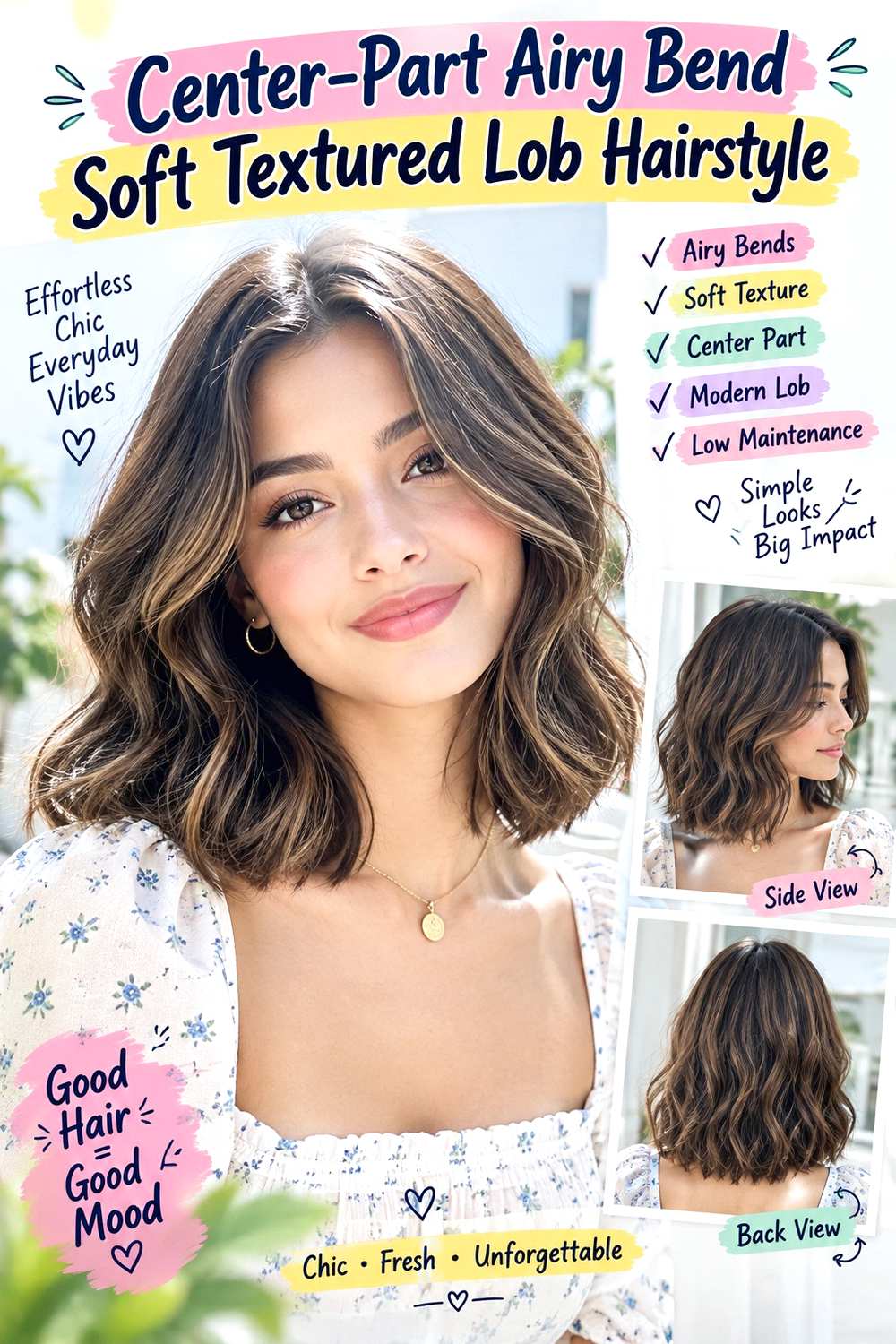
A center part gives this collarbone-length lob an even, open frame, while shallow bends keep the shape soft rather than heavily curled. The roots stay relatively calm, the first movement begins around the cheekbones or jaw, and the ends remain lightly separated with enough weight to preserve the long-bob outline. Subtle front layers can begin below the chin so they blend into the perimeter instead of creating short, disconnected pieces. Straight and softly wavy hair can recreate the shape easily, while denser hair may need larger sections to avoid excessive width.
Apply heat protectant before using a flat iron to create alternating, loose bends through selected mid-lengths, then finish with flexible hairspray only where the shape tends to fall. A full wash-day style takes moderate effort depending on density, while a quick refresh can focus on the front four sections and any end that has flipped awkwardly. For maintenance, reshape when the perimeter starts losing its clean collarbone line. At the salon, point to the exact starting point for the front layers and ask to retain enough weight through the bottom edge that the ends still look substantial.
Pro tip:
Leave the last inch of each section relatively relaxed while creating the bend. This keeps the ends airy and prevents the lob from shrinking into a curlier shape.
Make It Work for You:
If your ends are lower in density, keep the face frame longer and concentrate most movement above the perimeter. This preserves the center-part softness without thinning the bottom visually.
Watch Out For:
Avoid making every bend identical and perfectly mirrored. Slight variation keeps the texture soft; overly matched curls can make the lob look more formal than intended.
Side-Part Tousled Volume Soft Textured Lob Hairstyle
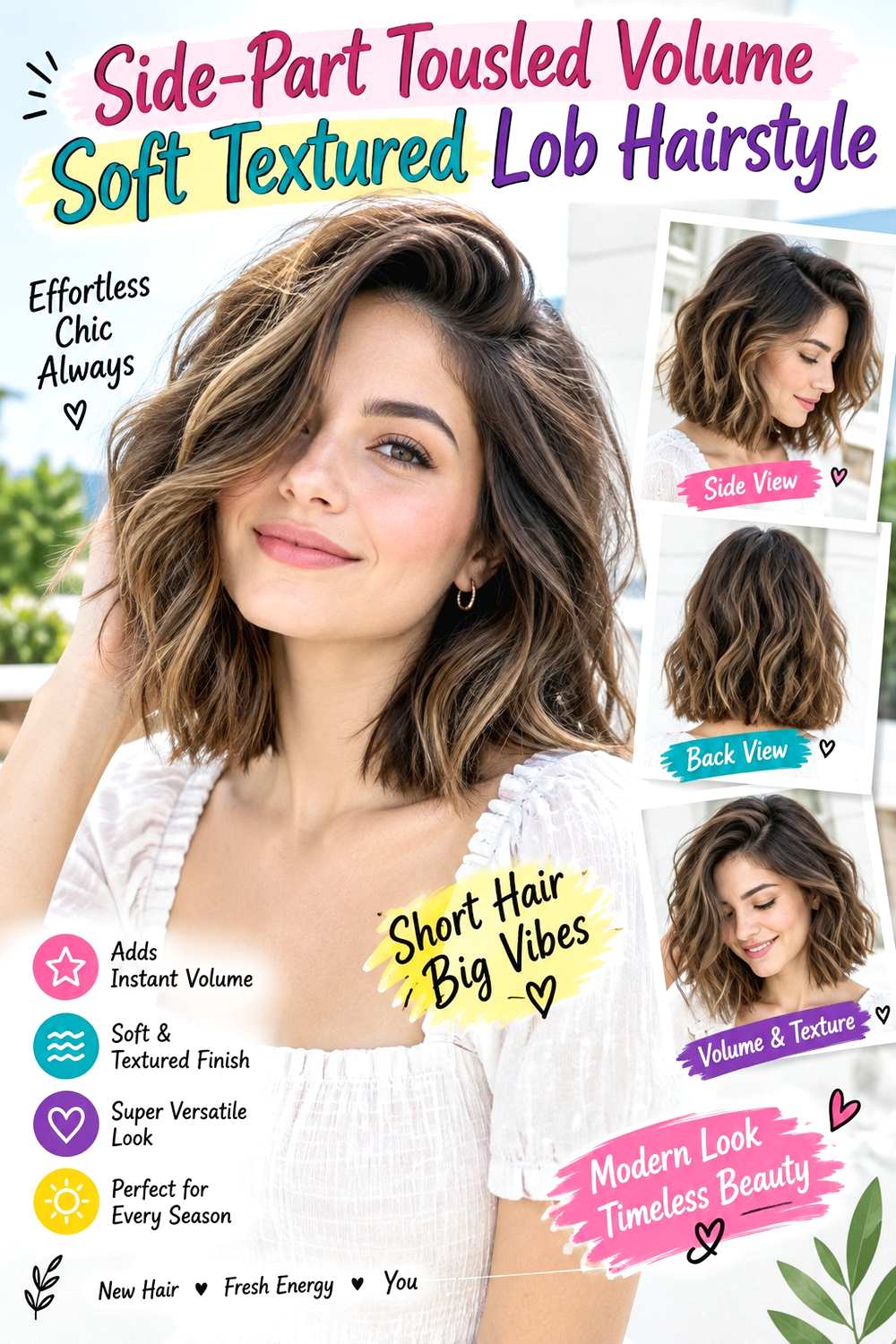
A soft side part moves more volume toward one side and gives this lob a looser, fuller profile. The length sits around the shoulders, with light layers beginning near the jaw and larger, irregular bends through the mid-lengths. The heavier side can sweep slightly across the forehead before opening around the cheekbone, while the lighter side stays closer to the head. The ends remain soft but not overly thinned. Wavy hair can support the tousled finish naturally, and straight hair can create it with selective shaping instead of curling every section.
Use heat protectant before a large-barrel curling iron, then work a small amount of lightweight mousse through the roots before drying to support gentle lift. Full wash-day styling takes longer because the root direction and lower movement are built separately; between washes, refreshing the heavier front section and two outer bends may be enough. If volume collapses, redirect the roots instead of layering on more product. At the salon, explain how deep you want the side part and ask for the shortest face-framing piece to begin around the jaw rather than above it. That keeps the shape full while still giving the front noticeable movement.
Pro tip:
Style the heavier side in the direction it will actually rest. Building lift against the final part can make the front separate or fall unpredictably later.
Make It Work for You:
For dense hair, keep the side volume broad rather than very high and ask for weight assessment inside the shape. Preserve the outer edge while reducing only troublesome bulk.
Watch Out For:
Do not compensate for a flat crown by making the ends curlier. Redirect the roots first; extra lower volume can widen the lob without solving the actual problem.
Collarbone Face-Frame Soft Textured Lob Hairstyle
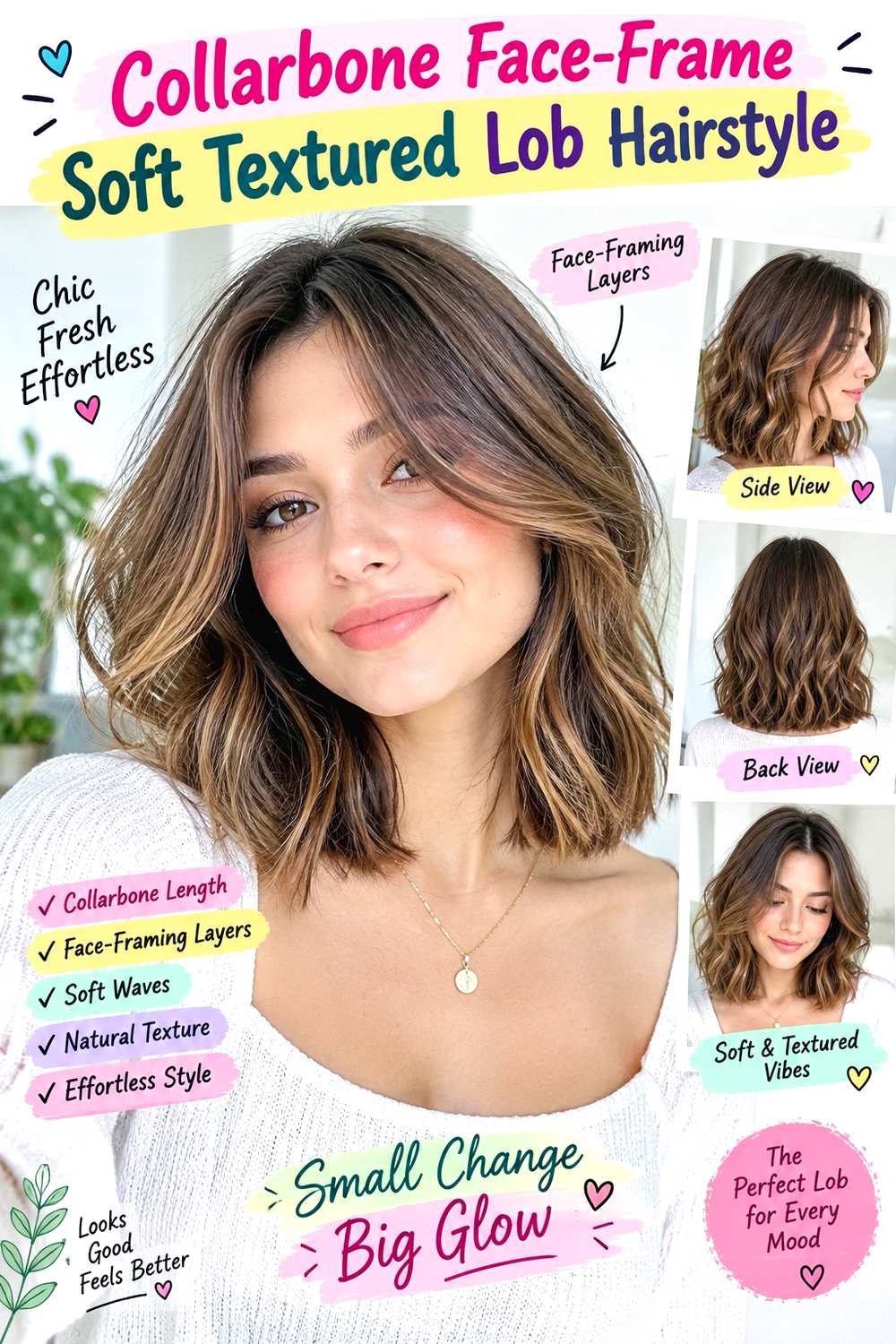
The face frame carries most of the detail here, while the back keeps a relatively simple collarbone-length outline. Shorter front pieces can begin near the cheekbone or jaw and step gradually into longer sections, creating visible movement without turning the cut into a heavily layered shape. A middle or gentle off-center part works well, and the waves stay broader around the back so the perimeter remains easy to see. This version suits readers who want noticeable framing but prefer to keep density through the ends.
Apply heat protectant before using a large-barrel curling iron to direct the front pieces away from the face, then use flexible hairspray lightly over the cooled frame. A full wash-day style takes moderate effort, but a quick refresh often means reshaping only the front layers and leaving the back alone. When the shortest pieces stop blending or become difficult to direct, the face frame may need reshaping even if the overall lob length still looks good. At the salon, show exactly where you want the shortest front piece to finish. Cheekbone placement creates a stronger opening, while jaw-level framing feels longer and usually preserves more weight around the sides.
Pro tip:
Shape the shortest front piece first, then let the longer sections follow its direction. This creates a smoother visual progression instead of several unrelated curls.
Make It Work for You:
If your hair is fine, keep the face-frame section narrow and leave the back perimeter fuller. You can still get movement around the face without reducing density everywhere.
Watch Out For:
Avoid adding short layers all around simply to match the front. The face frame should remain the feature; excessive layering can weaken the collarbone outline.
Blunt-End Ripple Soft Textured Lob Hairstyle
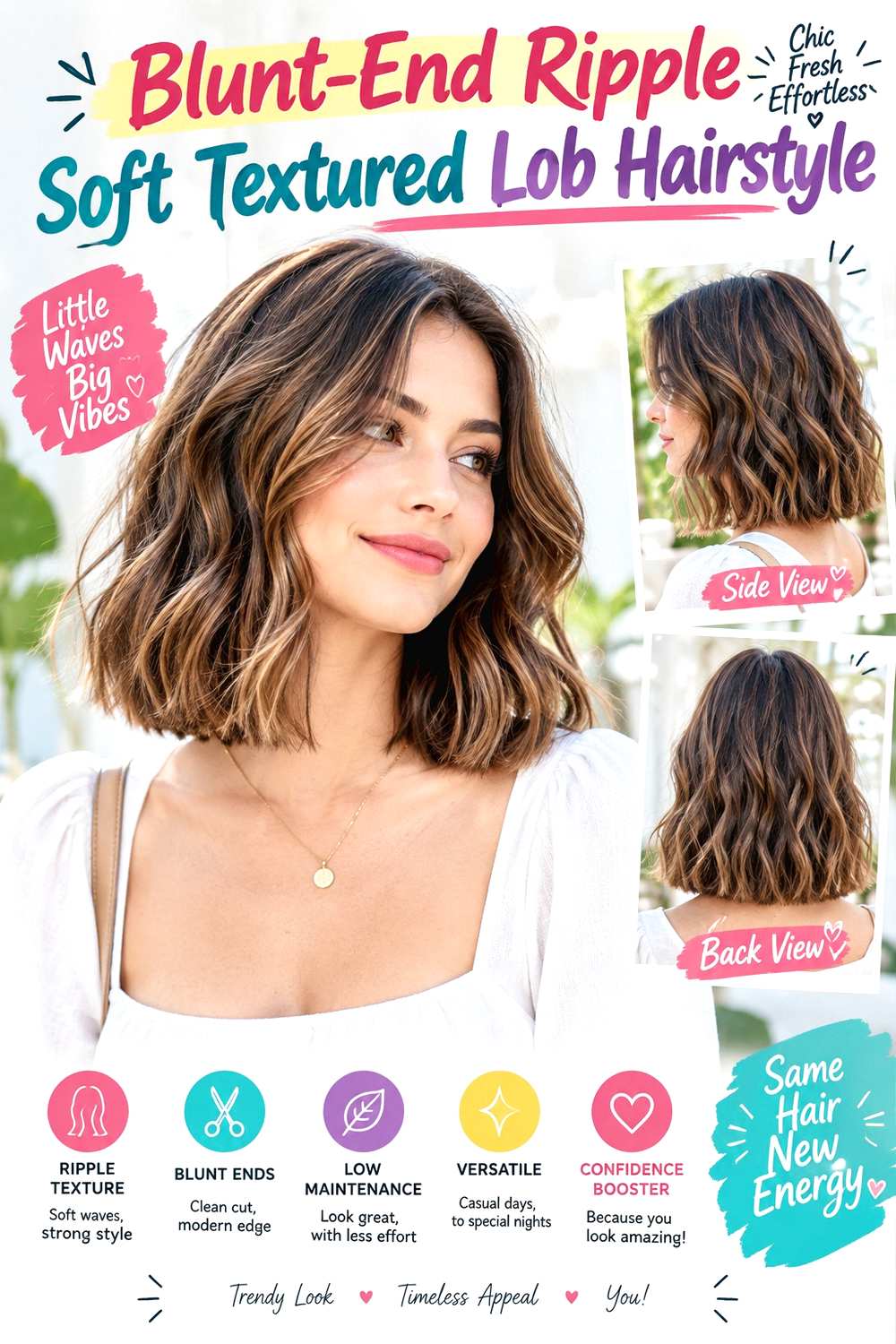
A substantial bottom edge distinguishes this version from a more feathered lob. The hair sits just above or at the collarbones, with minimal layering through the back and shallow ripples concentrated through the mid-lengths. A center or off-center part can work, while the ends stay comparatively straight so the perimeter continues to look strong. This is particularly useful for fine strands, lower-density ends, or anyone who likes movement but does not want the cut to look heavily piecey.
Apply heat protectant before using a flat iron to create gentle S-like bends several inches above the ends, then add a small amount of lightweight texturizing spray through the mid-lengths for separation. A complete wash-day style is moderate rather than intensive because the ends do not need detailed curling; a quick refresh can target only the visible surface ripples. Maintenance is mainly about preserving the bottom line as it grows. At the salon, ask for the perimeter to remain visually full and specify that most texture should come from styling or restrained layering rather than aggressive thinning. If bulk needs adjustment, the stylist can assess where internal weight affects the shape while keeping the outer edge intact.
Pro tip:
Create the strongest bend above the shoulders and leave the bottom section calmer. This keeps texture visible without sacrificing the blunt-looking perimeter that defines the idea.
Make It Work for You:
For dense hair, retain the same strong outer line but ask the stylist to assess internal bulk where the shape widens. Controlled removal can preserve the blunt effect.
Watch Out For:
Do not repeatedly twist the ends into curls. Too much movement at the perimeter can make the strong bottom line disappear and change the cut’s intended character.
Curtain Fringe Soft Textured Lob Hairstyle
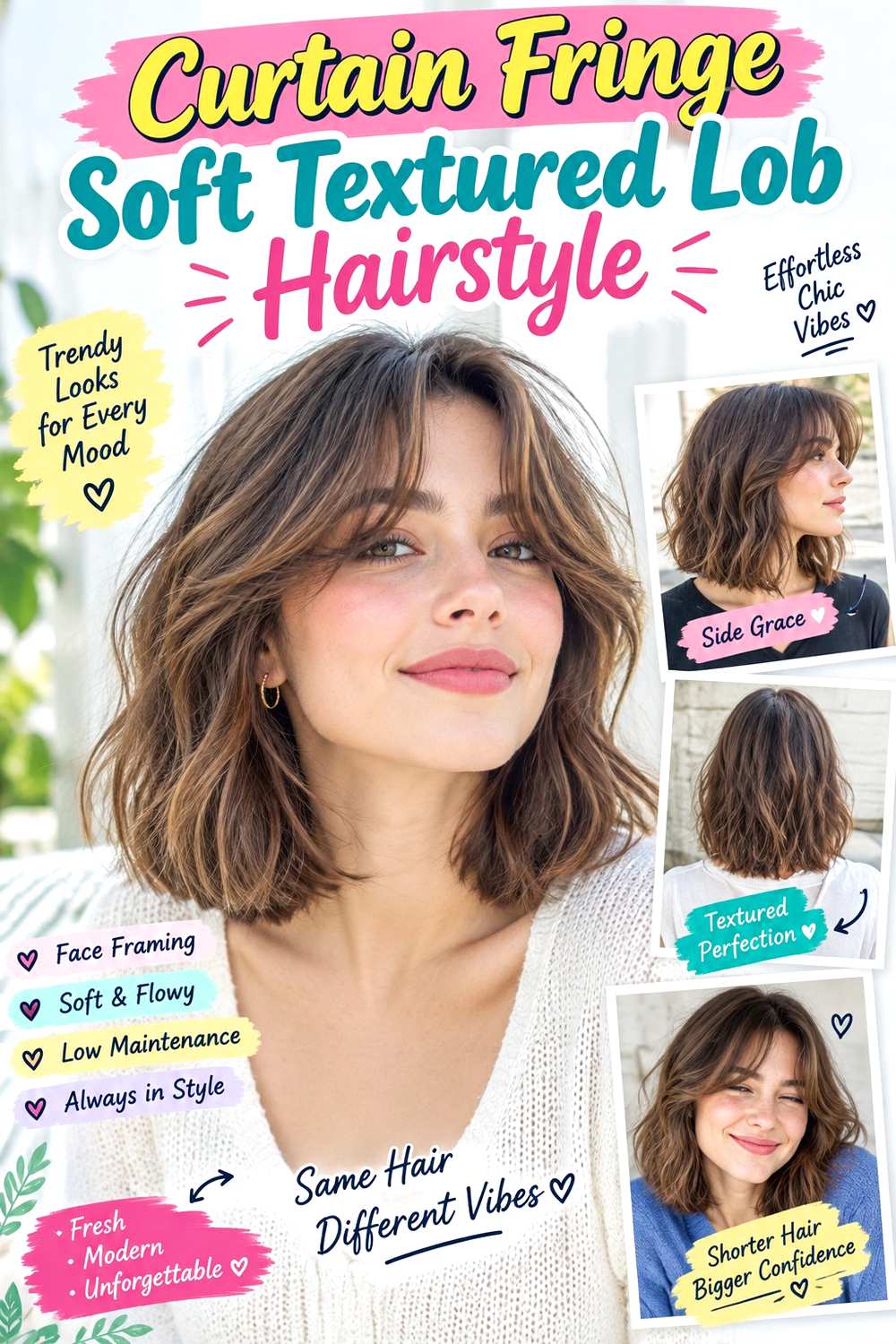
A center-opening curtain fringe brings movement closer to the eyes while the rest of the lob stays around shoulder or collarbone length. The fringe is shorter through the middle and gradually longer toward the outer corners, blending into cheekbone or jaw-level face framing. Loose bends through the longer hair echo that outward movement without becoming tightly curled. Straight, wavy, and softly curly textures can all interpret the shape, but the finished fringe length should account for natural growth direction and any shrinkage.
Use heat protectant before a round brush helps direct the fringe away from the center, then shape the longer sections with a large-barrel curling iron. Full wash-day styling requires separate attention to the fringe and lengths, while a quick morning refresh may involve only dampening or redirecting the front. Fringe upkeep is more frequent than the rest of the lob because the center can start falling into the eyes before the overall cut needs reshaping. At the salon, show the finished dry length you want through the middle and how long the outer corners should remain. Ask for the fringe to blend into the face frame rather than ending as a separate horizontal section.
Pro tip:
Dry the fringe in its intended split early in the styling process. Waiting until it is almost dry can make established growth direction harder to redirect softly.
Make It Work for You:
If your fringe naturally curls, keep more finished length through the center and outer corners. This preserves the curtain opening while allowing for individual shrinkage.
Watch Out For:
Do not judge fringe length only when it is wet. The front can rise substantially as it dries, especially on wavy, curly, or coily textures.
Fine-Hair Full-Perimeter Soft Textured Lob Hairstyle
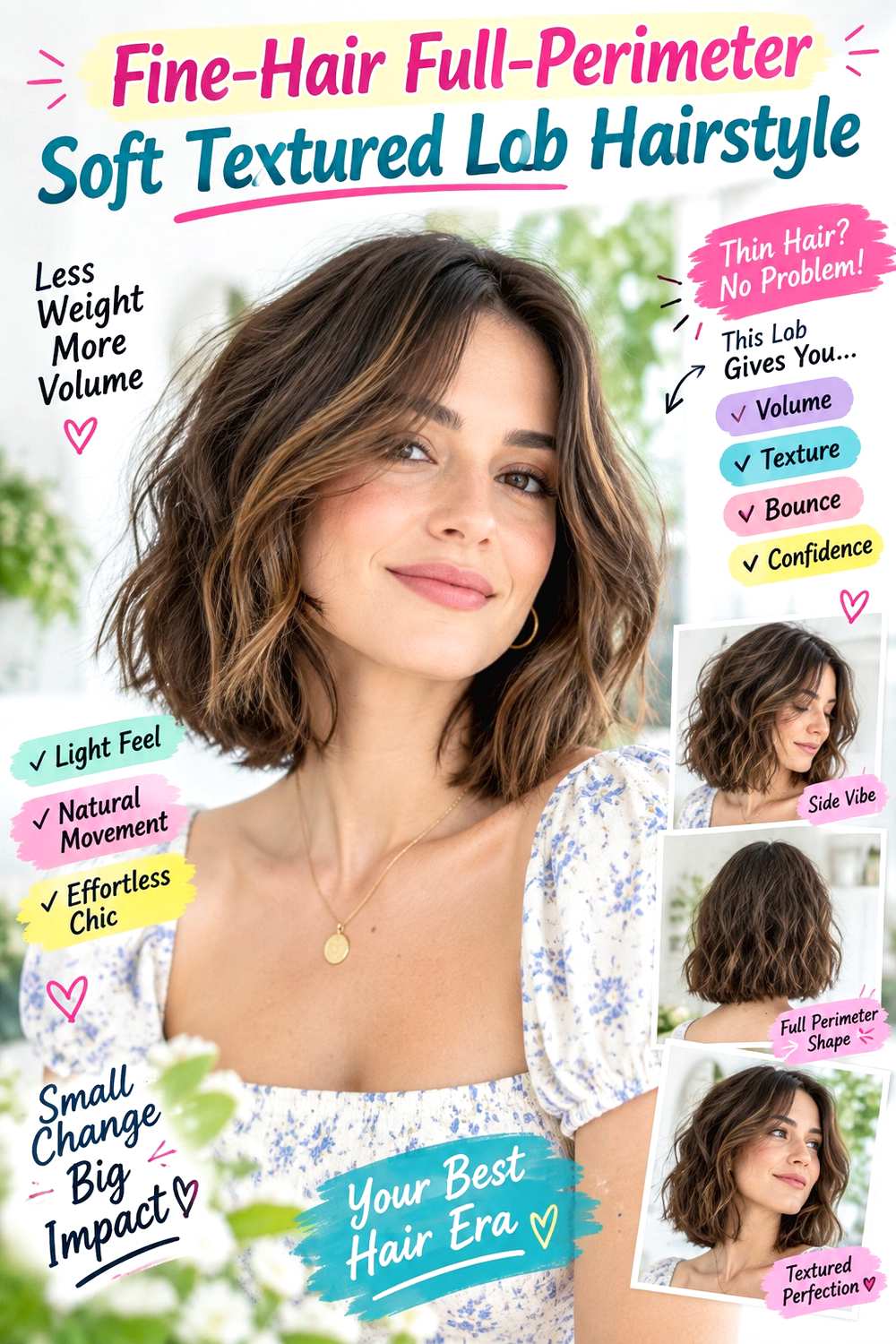
Preserving the bottom edge is the priority in this fine-strand-friendly lob. The length sits near the collarbones with restrained layering, a center or gentle side part, and soft bends placed mainly through the front and upper surface. The ends remain grouped instead of being separated into many wispy pieces, helping the perimeter read as substantial. Fine hair can still be dense, so the amount of layering should depend on the actual distribution of hair rather than strand thickness alone.
Apply heat protectant before using a flat iron to add shallow bends through selected sections, then work a small amount of lightweight mousse near the roots if extra lift is useful. A full wash-day style can be fairly quick when the cut already supports the shape; a refresh may involve only the front pieces and crown. Avoid repeatedly adding texture products to the ends, where buildup can make them separate. At the salon, ask to preserve a strong perimeter and keep any layering long enough to support rather than hollow out the lower shape. If you want more movement, point to the front and upper sections where you are comfortable seeing it rather than requesting general thinning throughout.
Pro tip:
Style fewer sections than you think you need, then assess the result. Strategic bends often create more apparent fullness than curling every small piece separately.
Make It Work for You:
If your fine strands are very dense, you can still use controlled internal shaping. Keep the perimeter strong while removing only bulk that prevents the lob from moving.
Watch Out For:
Avoid equating fine strands with low density. Heavy thinning based on strand thickness alone can remove useful weight and leave the lower outline less substantial.
Dense-Hair Weight-Shift Soft Textured Lob Hairstyle
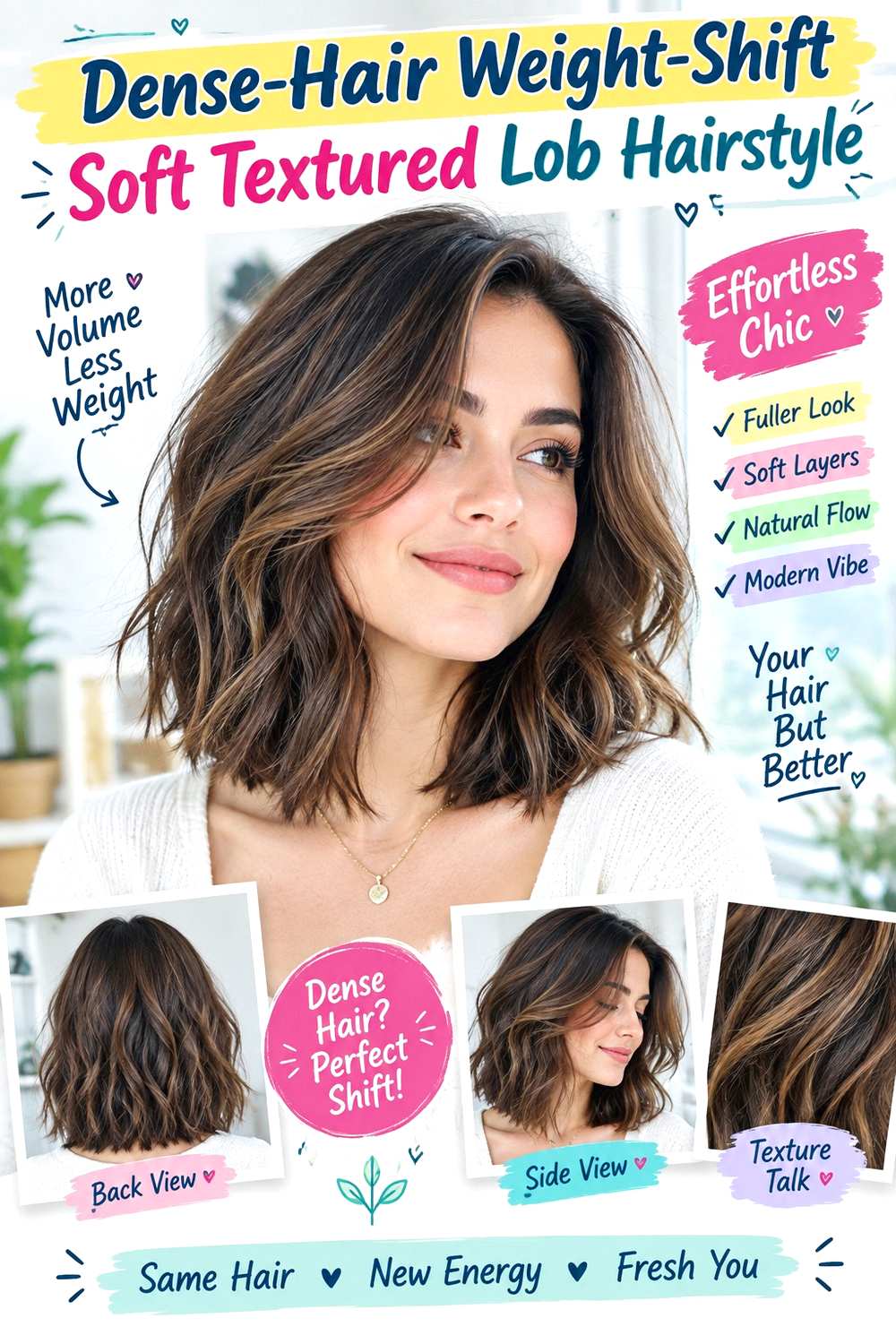
Dense hair can carry a soft lob beautifully when the volume is directed rather than simply removed. This version sits near the collarbones with long layers beginning around the jaw or below, allowing movement through the interior while keeping a recognizable outer line. An off-center part helps break up symmetry, and broad bends through the mid-lengths prevent the shape from expanding into a solid triangle. The ends stay softly grouped so the cut still looks intentional rather than heavily thinned.
Apply heat protectant before using a large-barrel curling iron to build wide movement, then use flexible hairspray sparingly on the outer sections to maintain separation. A full wash-day style can take longer because dense hair needs more sectioning, while a quick refresh should target only the surface and front. If the shape begins widening awkwardly as it grows, that is a more useful reshaping trigger than following a rigid calendar. At the salon, explain exactly where the lob feels bulky—such as behind the jaw or through the lower sides—and ask the stylist to assess controlled internal weight removal while preserving the outside perimeter. The goal is redistribution, not aggressive thinning throughout the whole cut.
Pro tip:
Use larger styling sections through the interior and save more definition for the surface. This keeps dense hair movable without building unnecessary volume in every layer.
Make It Work for You:
If you prefer a fuller silhouette, keep the internal shaping very restrained and direct volume vertically with your part and styling. The lob can stay dense without feeling static.
Watch Out For:
Do not request thinning everywhere simply because the hair is dense. Removing too much weight randomly can create short pieces that expand rather than reducing bulk cleanly.
Natural Wave Diffused Soft Textured Lob Hairstyle
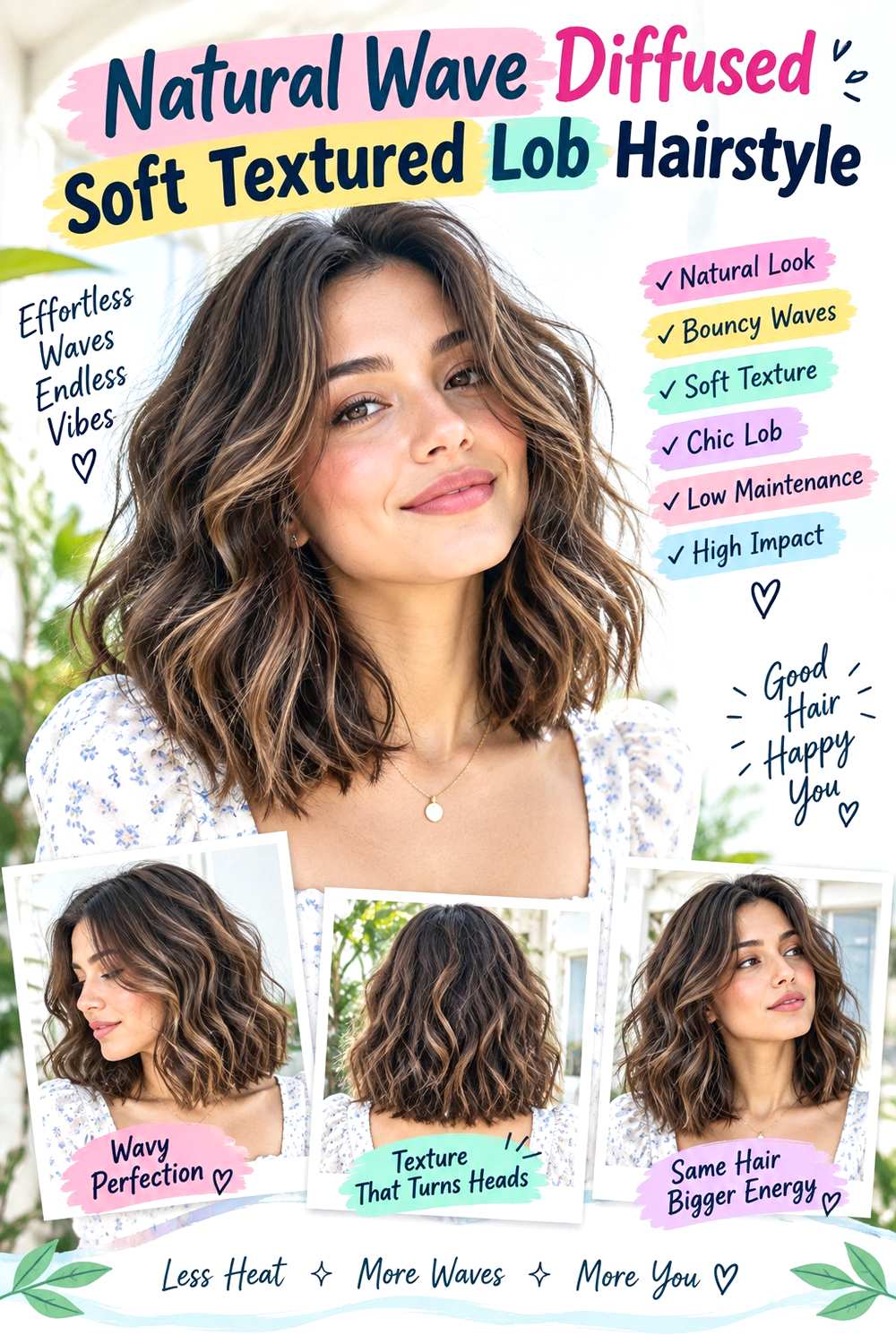
Natural wave pattern becomes the main source of movement in this lob, so the cut supports bends rather than replacing them with heat-shaped curls. The length can sit between the shoulders and collarbones, with long layers placed according to where the waves naturally spring and cluster. A center, side, or natural part all work. The ends should retain enough weight to keep the outline recognizable while the surface shows irregular, soft wave groups instead of identical S-shapes.
Apply lightweight mousse through damp hair for support, then use a diffuser to dry without stretching the wave pattern flat. A full wash-day style takes longer because drying is the main work, while a quick refresh can involve reactivating only flattened front and surface sections. Avoid separating too many dry wave groups, which can replace definition with frizz. As the cut grows, watch whether the waves start collecting heavily at the bottom or the upper layers lose movement. At the salon, discuss where your natural wave begins and show the finished length you want when dry. Ask for layers to support the pattern without automatically removing perimeter weight, since wave behavior and density should guide the amount of shaping.
Pro tip:
Diffuse the front and crown in the direction you want them to sit before concentrating on the ends. Root placement influences the entire finished wave pattern.
Make It Work for You:
If your waves are loose and easily stretched, keep the layers longer and avoid overloading them with product. The defining softness can come from movement rather than strong hold.
Watch Out For:
Do not break apart every wave group after drying. Excess separation can make the texture look fuzzy and reduce the larger bends that give the lob its shape.
Curly Definition Soft Textured Lob Hairstyle
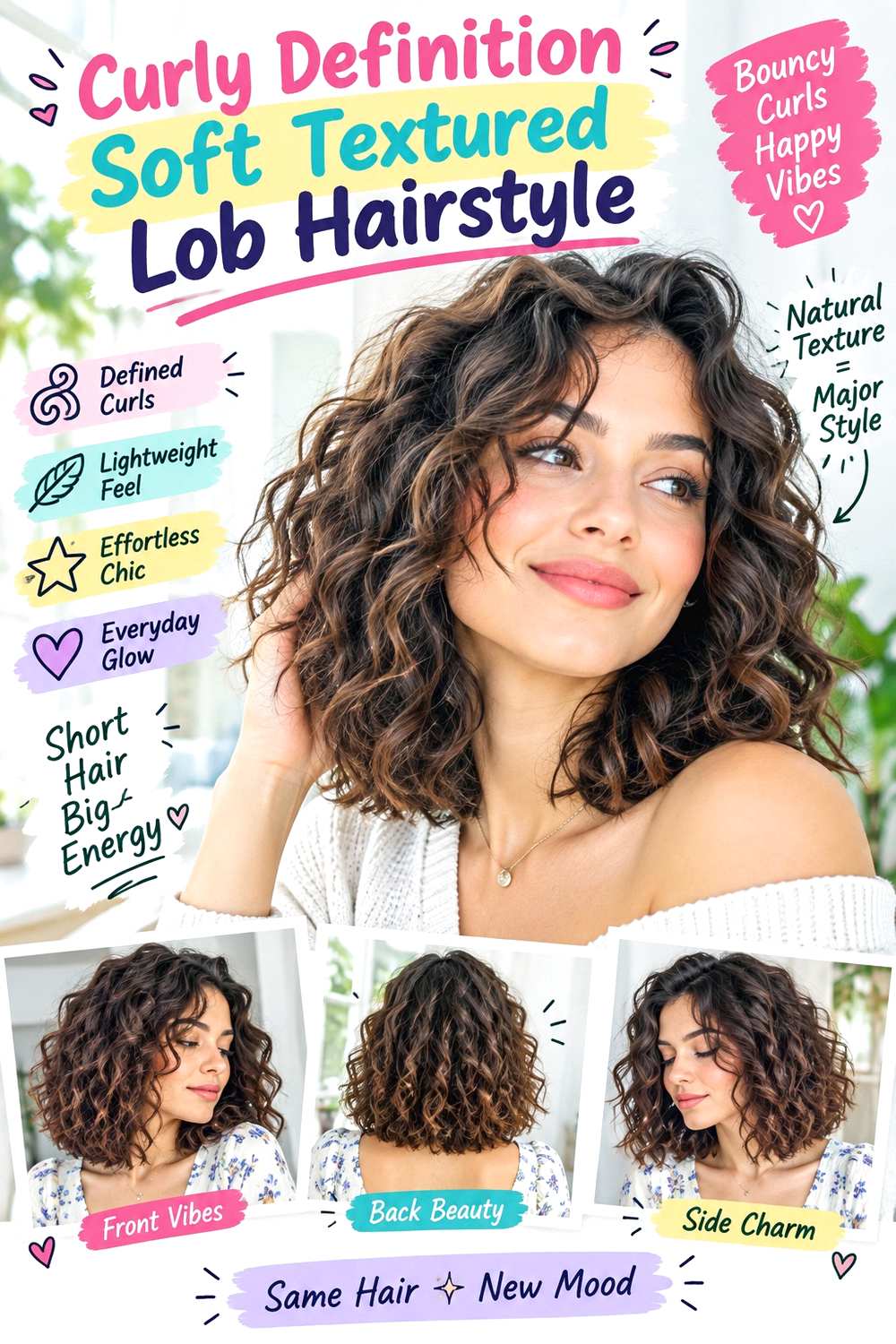
A curly lob needs enough internal movement to avoid becoming bottom-heavy while still preserving curl groups through the perimeter. The finished length can sit around the shoulders when dry, with the shortest front curls landing near the cheekbone, jaw, or chin depending on the amount of framing you prefer. Layers should respond to curl shrinkage rather than follow a fixed wet measurement. A natural or slightly off-center part keeps the silhouette flexible, while the ends stay rounded rather than heavily tapered.
Use lightweight leave-in conditioner for softness, curl gel for grouping and hold, and a diffuser to dry while keeping the curl pattern intact. A full wash day takes longer because definition and drying happen together; a quick refresh should target only flattened or frizzy outer curls. Cut maintenance becomes useful when the lower shape starts dropping or the front no longer blends, not simply because a set number of weeks has passed. At the salon, discuss the desired dry length and show where the shortest face-framing curl should sit after shrinkage. Ask the stylist to assess bulk based on how the curls actually group rather than removing weight uniformly through the whole lob.
Pro tip:
Arrange the front curl groups while they are still wet enough to respond. Repeatedly separating them after drying can weaken definition and create unnecessary frizz.
Make It Work for You:
If your curls shrink strongly, keep the starting length longer and let the stylist assess the dry result before refining. This protects the collarbone-lob proportion you want.
Watch Out For:
Do not request a wet fringe or front layer measurement as though every curl shrinks equally. Judge the framing by its finished dry position instead.
Coily Rounded Soft Textured Lob Hairstyle
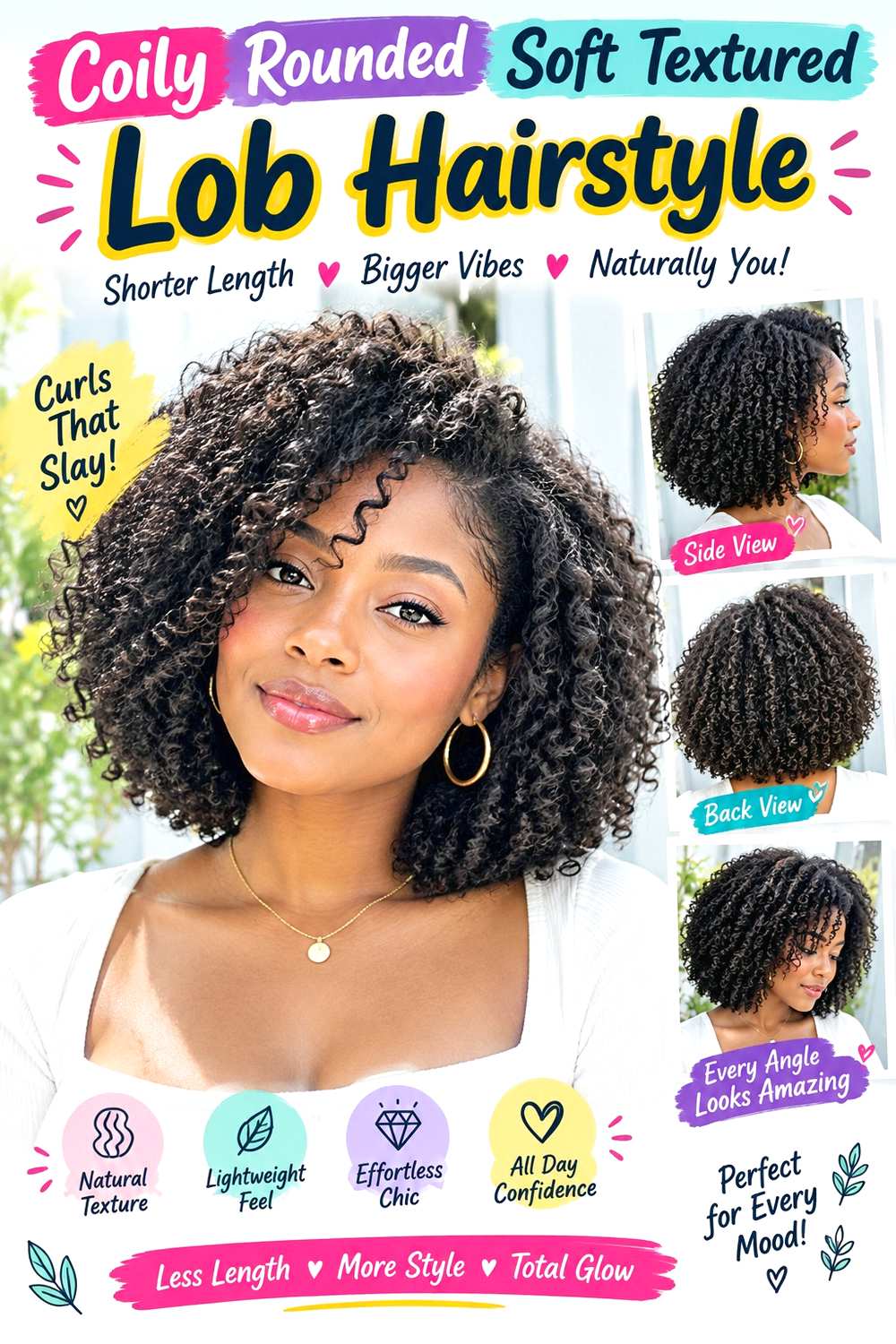
A coily lob can keep a rounded, softly expanded silhouette while still reading as a long bob. The finished shape sits around shoulder level when dry, with controlled layering that prevents all the weight from collecting at the bottom. Front coils can remain slightly shorter for framing, but they should blend with the side shape rather than form isolated pieces. A natural, center, or side part can work, and the perimeter should be assessed in its coiled state because shrinkage changes both apparent length and width.
Use lightweight leave-in conditioner to maintain softness, curl gel to encourage consistent coil grouping, and a diffuser for controlled drying. Full wash-day styling takes longer because definition and drying are the main tasks; between washes, a quick refresh can focus only on flattened outer sections. Avoid pulling apart many dry coils in search of extra volume, since the surface can become frizzier than intended. At the salon, describe the finished dry silhouette you want and show where the widest point should sit. Ask for bulk to be managed in areas where the shape expands excessively while preserving enough perimeter weight to keep the lob rounded and substantial rather than thin at the bottom.
Pro tip:
Shape the outer coil groups first when refreshing. The visible perimeter has more effect on the lob silhouette than repeatedly manipulating every interior section.
Make It Work for You:
If you prefer less width, keep the crown slightly lifted and ask for careful internal shaping where the sides expand. Preserve the coily outline rather than flattening it.
Watch Out For:
Do not stretch the hair simply to make the lob look longer. Choose the desired finished coiled length and let shrinkage remain part of the planned silhouette.
Off-Center S-Bend Soft Textured Lob Hairstyle
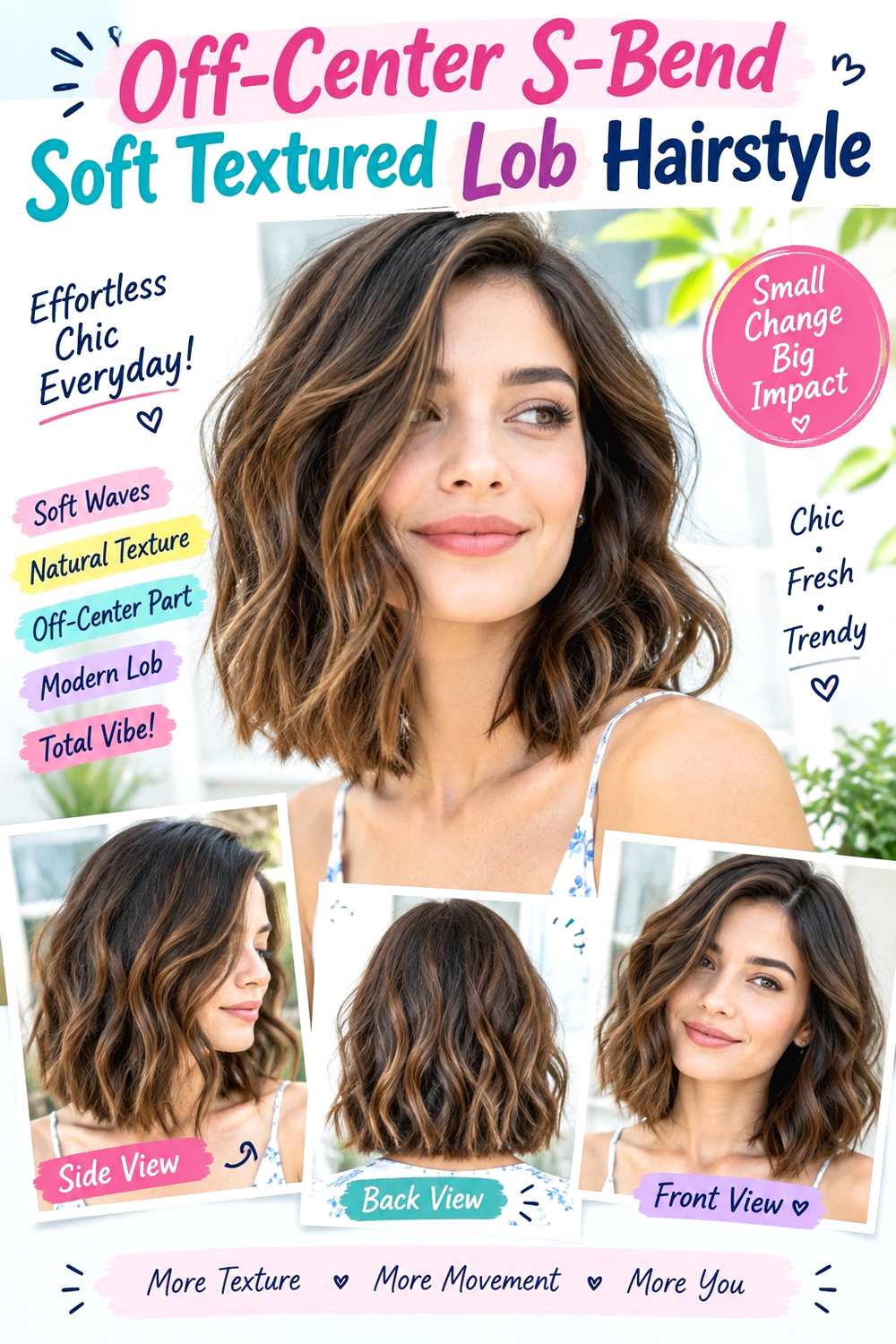
An off-center part and shallow S-bends give this lob a polished texture without turning it into formal waves. The length rests around the shoulders, with the first curve appearing below the cheekbone and reversing once through the mid-lengths. Ends remain calm and slightly straighter so the perimeter retains its modern, elongated feel. Long face-framing layers can begin around the jaw, which helps the front blend into the S-pattern. Straight and wavy textures are the easiest starting points, while denser hair can use larger sections to keep width controlled.
Apply heat protectant before using a flat iron to press in loose alternating bends, then finish with a light texturizing spray through the mid-lengths for separation. A full wash-day style takes moderate effort because the bends need deliberate placement; a quick refresh can target only the top layer and front pieces. When the shape grows out, reshape the cut if the front layers stop blending or the perimeter starts turning unevenly at the shoulders. At the salon, point to where you want the first bend and shortest front layer to sit. Keeping both below the cheekbone creates softness without making the upper sides overly full.
Pro tip:
Leave a little distance between each directional change. Wider spacing produces a soft S-bend, while tight reversals can make the texture look crimped.
Make It Work for You:
For fine hair, use fewer bends and keep the sections broader. This preserves visible density while still creating the off-center movement that defines the shape.
Watch Out For:
Do not overwork the same section repeatedly to perfect the S-shape. Small variations look natural, and extra heat can leave the finish flatter rather than softer.
Straight-Tip Soft Textured Lob Hairstyle
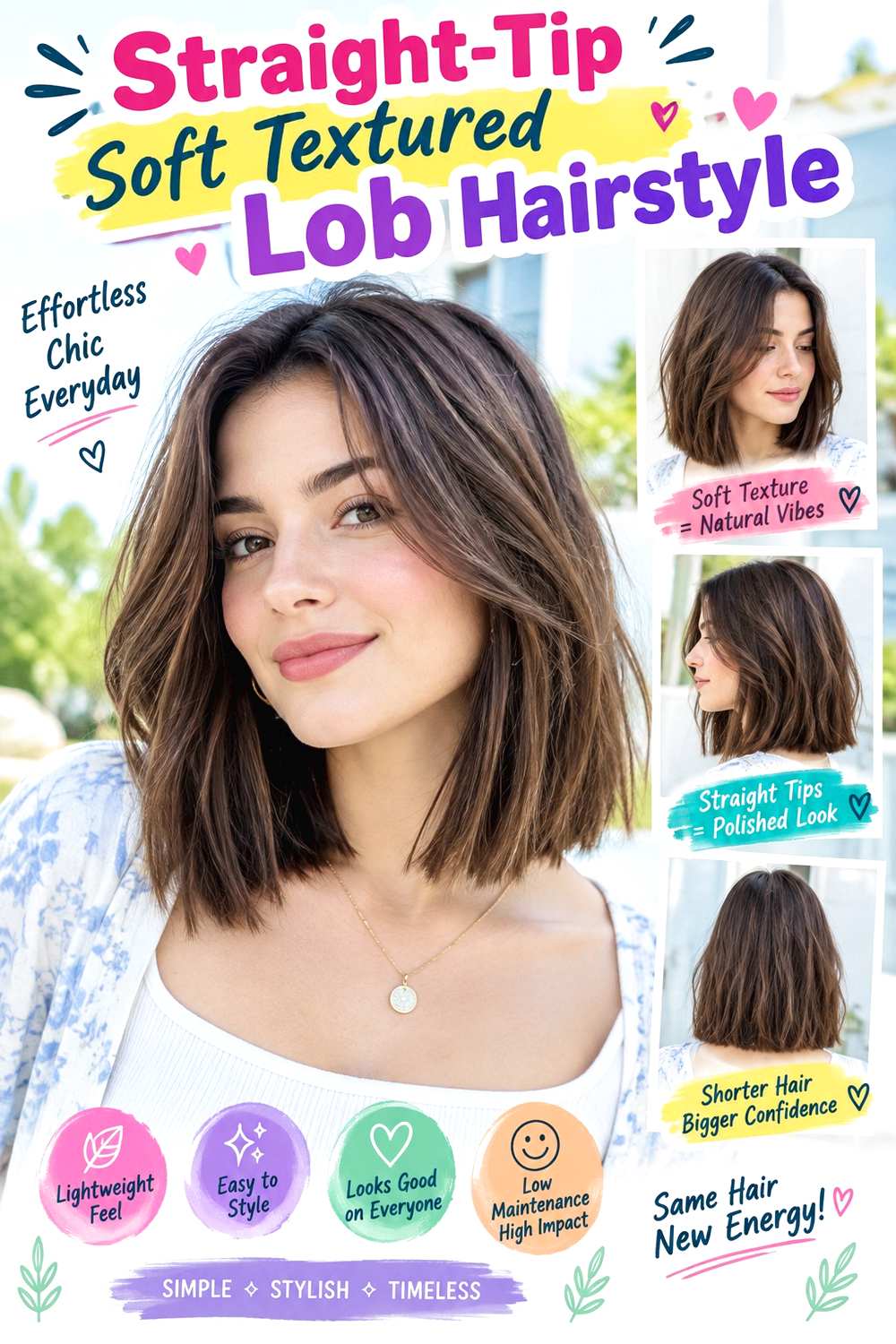
Straighter tips give this textured lob a lighter, more contemporary finish while movement remains concentrated above them. The length sits at or just above the collarbones, with broad bends beginning near the jaw and fading before the final inch or two. A center or relaxed side part works equally well, and long layers can add separation without removing too much weight from the perimeter. This version is useful for straight or wavy hair and for anyone who wants texture without a curled-under or rounded bottom.
Apply heat protectant before using a flat iron to create shallow bends through the mid-lengths while deliberately leaving the ends out, then add flexible hairspray lightly if your hair loses shape quickly. Full wash-day styling is moderate, while a short refresh can focus on the front bends and any tips that have flipped unexpectedly. As the cut grows, maintenance becomes useful when the ends start catching awkwardly on the shoulders or the lower outline loses balance. At the salon, specify that you want enough perimeter weight for the straight tips to look intentional, not wispy. Ask where the longest layers should begin so they create movement without leaving thin sections through the bottom.
Pro tip:
Stop the bend before reaching the final inch or two instead of straightening the tips afterward. This reduces extra manipulation and keeps the transition more natural.
Make It Work for You:
If your ends are fine, keep the straight-tip section slightly longer and the bends shallower. That helps the bottom edge remain visible rather than breaking into thin pieces.
Watch Out For:
Avoid making every mid-length bend very deep. Strong curls paired with straight tips can look disconnected; use soft movement so the transition remains gradual.
Root-Lift Soft Textured Lob Hairstyle
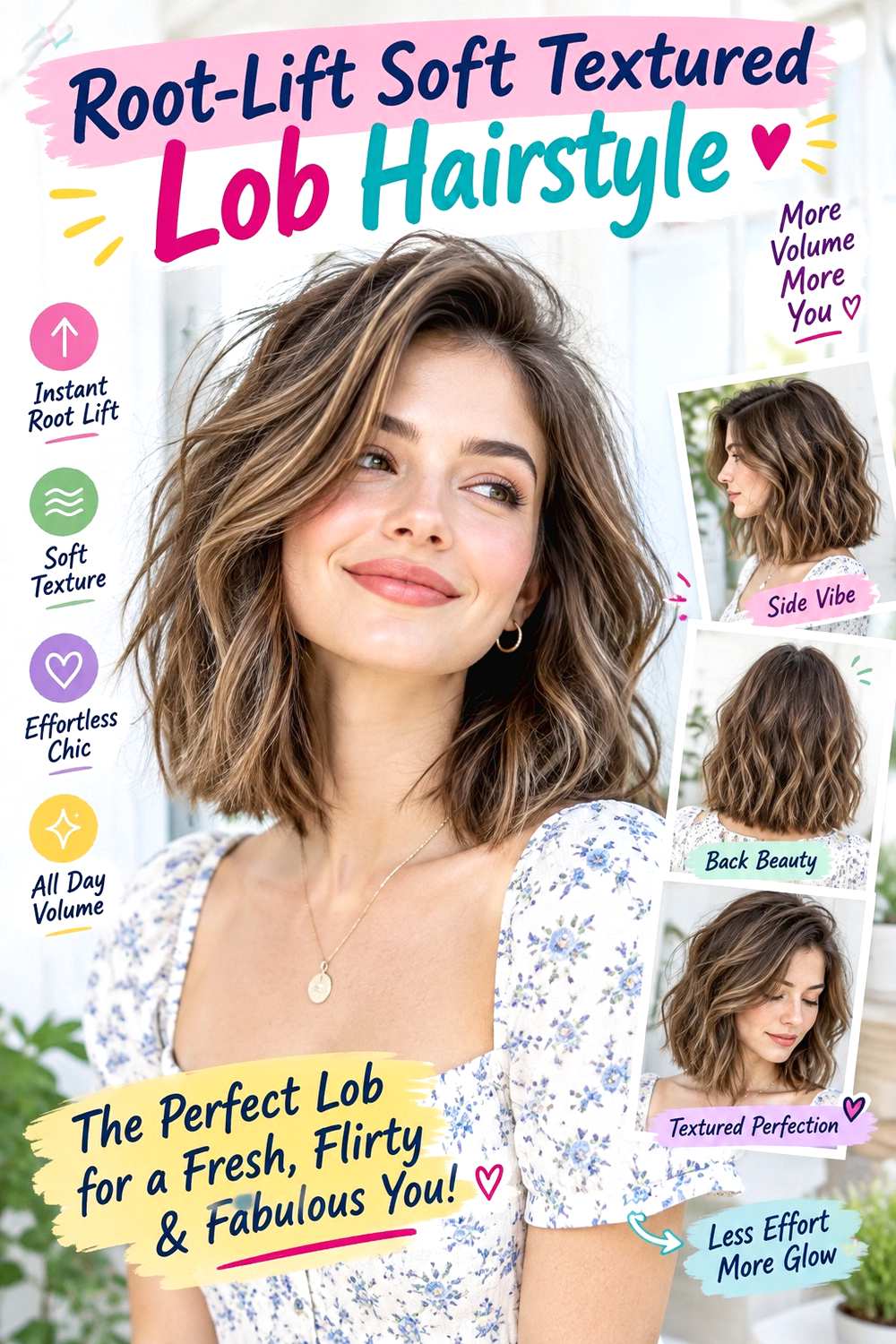
Root lift gives this lob height without requiring large curls through the ends. The cut rests around the collarbones, with an off-center or side part, gentle volume through the crown, and loose bends beginning around the jaw. Layers can remain long, allowing the lower outline to stay substantial while the top feels lighter. The style suits fine, medium, or dense hair when the amount of lift is adjusted; the goal is vertical support rather than creating extra width at the temples.
Apply root-lift spray near the crown, heat protectant through the lengths, and use a round brush to direct the roots upward during drying. A full wash-day style takes more effort because root direction needs to be built before the lob is shaped, whereas a quick refresh may mean reworking only the crown and front. If the top falls flat, avoid immediately adding more product, which can increase weight. At the salon, explain exactly where you want the highest point of volume and where the shortest layers should begin. Keeping layers around the jaw or lower can support movement without making the crown too short or disconnected from the perimeter.
Pro tip:
Check the crown from the side while drying. Small changes in root direction can create useful height without needing additional product or shorter layers.
Make It Work for You:
For dense hair, keep the crown lift moderate and let the lower shape carry more natural fullness. This preserves balance without making the top disproportionately large.
Watch Out For:
Do not solve a flat crown by asking automatically for very short layers. Root direction or product weight may be the issue, so assess those first.
Jaw-Frame Soft Textured Lob Hairstyle
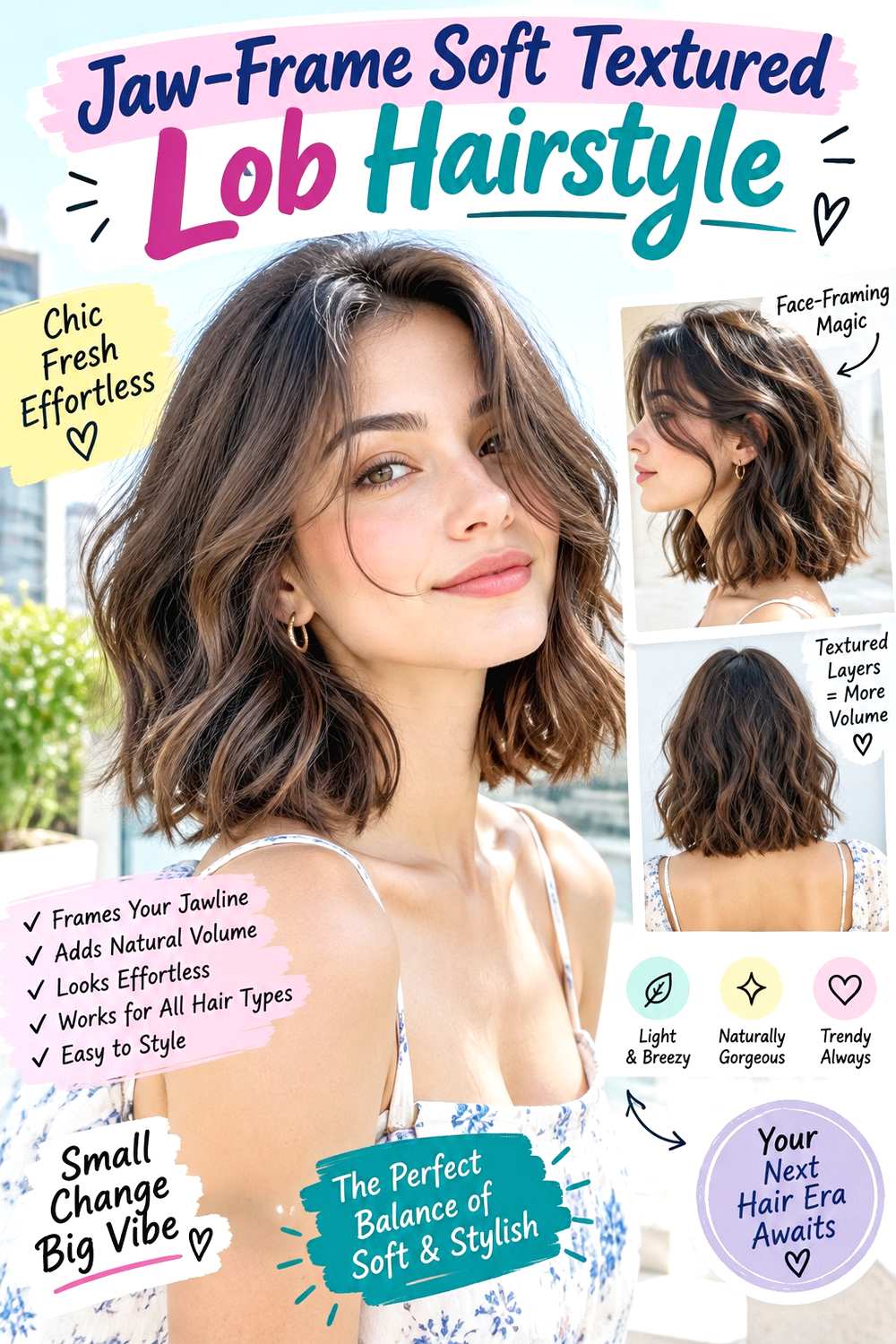
Jaw-level front pieces give this lob a clear framing point while the rest of the cut stays at the shoulders or collarbones. The part can be centered or slightly offset, with the shortest layers turning gently away from the face before blending into longer, irregular bends. The back remains softer and less layered so the perimeter still looks like a lob rather than a short layered cut. This balance suits readers who want movement around the face without committing to bangs or heavy layering throughout.
Use heat protectant before a large-barrel curling iron to direct the jaw-level pieces outward, then finish the visible front with flexible hairspray. A full wash-day style takes moderate effort, but a quick refresh can focus almost entirely on the front four sections. When the jaw pieces grow below their intended landmark and stop creating visible framing, they can be reshaped separately from the overall length. At the salon, show precisely where you want the shortest piece to finish when dry and ask for the layers to lengthen gradually toward the collarbone. The transition matters because a sudden jump from jaw-length pieces to a heavy perimeter can make the front look disconnected.
Pro tip:
Turn the jaw-level pieces away from the face only slightly. A broad curve blends into the lob more naturally than a tight curl at the shortest point.
Make It Work for You:
If your hair is curly, choose the jaw landmark based on the finished dry curl position. Keeping extra length accounts for shrinkage while preserving the intended frame.
Watch Out For:
Avoid making the jaw layer too thick across the whole side. Keep it focused near the front so the lob retains enough density through the lower perimeter.
Piecey Fringe Soft Textured Lob Hairstyle
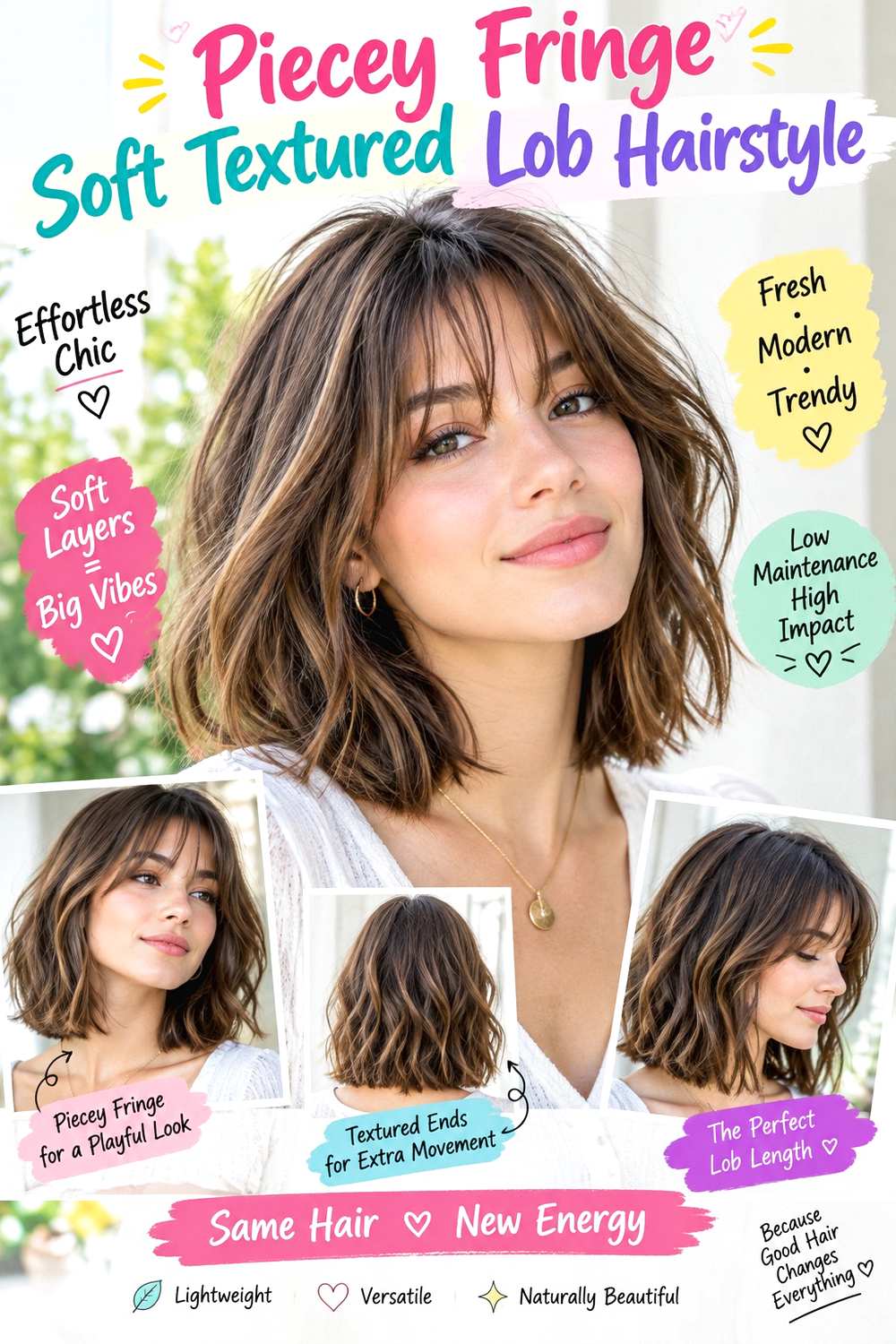
A lightly separated fringe gives this lob more detail across the forehead without creating a dense, solid bang. The center can skim the brows while the tips break into small sections and the outer corners remain longer, blending toward cheekbone or jaw-level framing. The rest of the lob sits around the shoulders with shallow, irregular waves and softly finished ends. Straight and wavy hair can maintain the separation easily, while curly textures need the fringe length adapted carefully to growth direction and shrinkage.
Use heat protectant before shaping the longer lob with a flat iron, then use a small round brush to redirect and lightly separate the fringe during drying. Full wash-day styling takes moderate effort because the fringe needs different handling from the lengths; a quick refresh may involve only the front and a few surface bends. Fringe upkeep is triggered when the center starts entering the eyes or losing its intended spacing. At the salon, show the finished dry length, fringe width, and how long you want the outer corners. Ask for a light, controlled section rather than heavy thinning through the fringe, because separation should come from the cut and styling rather than sparse ends.
Pro tip:
Dry the fringe from side to side briefly before settling it forward. This can reduce stubborn separation caused by growth direction without creating excessive volume.
Make It Work for You:
If your hair is wavy or curly, keep the fringe longer and let some natural bend remain. The piecey effect does not require forcing every section straight.
Watch Out For:
Do not keep thinning the fringe whenever it separates unevenly. Product buildup or growth direction may be responsible, so address the cause before removing more hair.
One-Side Tucked Soft Textured Lob Hairstyle
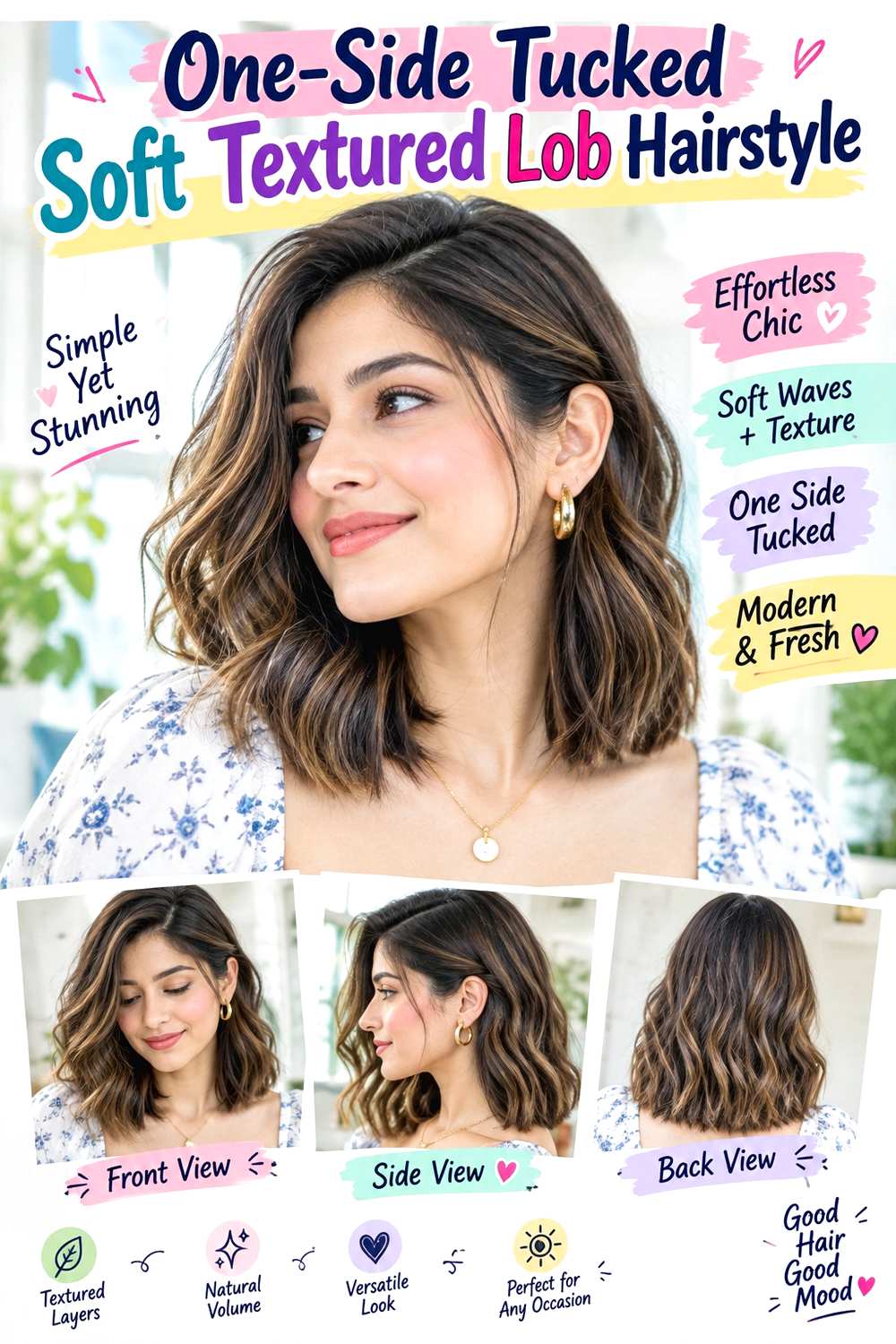
One tucked side gives a soft textured lob an immediate asymmetric shape without changing the cut. An off-center or deep side part leaves one side fuller around the cheekbone, while the opposite temple is placed behind the ear. Loose bends travel through the mid-lengths and stop before the ends become tightly curled. Shoulder and collarbone lengths are especially practical because the tucked side stays visible rather than disappearing into very long hair. Straight, wavy, curly, or lightly coily textures can adapt the idea with different amounts of definition.
Apply heat protectant before using a flat iron to create broad bends, then use flexible hairspray only where the tucked side or front wave needs support. A full wash-day style is moderate, while a quick refresh may take only a few minutes because the asymmetry does much of the visual work. If the tucked section becomes puffy, redirect it rather than repeatedly adding hold product. At the salon, discuss whether you want face-framing layers short enough to remain visible on the fuller side but long enough to tuck comfortably on the other. That balance affects how easily the temporary styling choice works day to day.
Pro tip:
Finish the fuller side before creating the tuck. Seeing its final volume helps you judge how flat the opposite side needs to be for balance.
Make It Work for You:
If your lob is curly, tuck between curl groups rather than flattening an entire side. You can keep natural volume while still creating the open, asymmetric profile.
Watch Out For:
Do not pull the tucked section tightly behind the ear. Comfortable placement is enough; excessive tension can distort nearby bends and make shorter layers spring out.
Air-Dried Soft Textured Lob Hairstyle
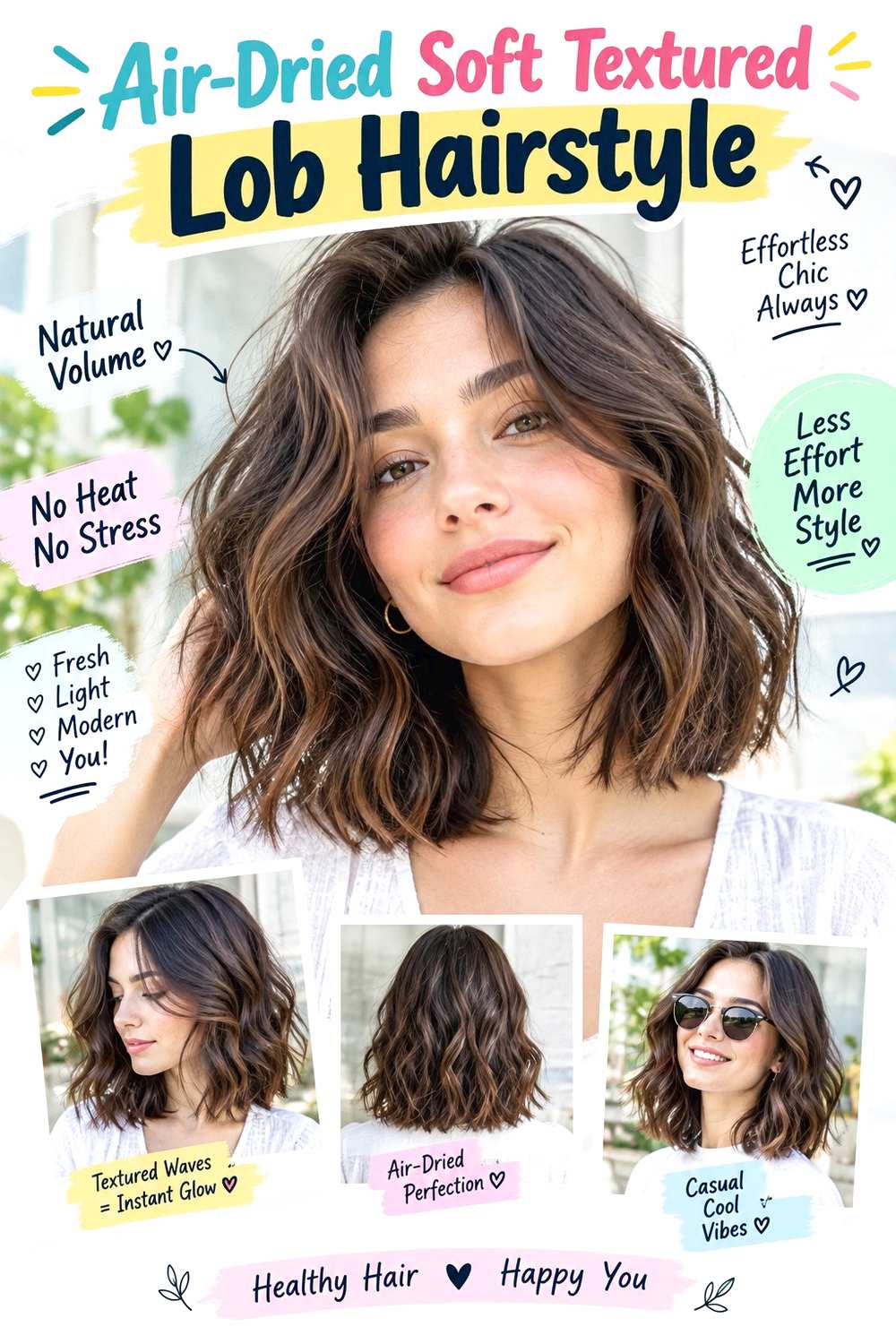
An air-dried lob depends on a cut that works with existing texture rather than requiring a heat-set finish every wash day. The length sits around the shoulders or collarbones, with restrained layers placed where natural bends, waves, curls, or subtle movement need room. The perimeter should remain coherent even when the texture is irregular. A natural part often works best because it respects growth direction, though you can shift it slightly when the hair is damp if you prefer a different balance.
Apply lightweight leave-in conditioner for softness and lightweight mousse for support, then arrange the main front sections while damp and allow the hair to dry with minimal disturbance. Full wash-day effort is mostly in product placement and drying time rather than active styling; a quick refresh can target flattened areas with damp hands and reshape them individually. If the shape consistently dries too wide or heavy in one area, the cut may need adjustment rather than more product. At the salon, explain that you want the lob to work air-dried and describe how your natural texture behaves. Ask for the layer placement to support your real drying pattern while keeping the bottom edge strong enough to look intentional.
Pro tip:
Set your part and front pieces while the hair is still damp, then touch them as little as possible. Repeated handling during drying can encourage frizz.
Make It Work for You:
If your natural pattern is inconsistent, define only the front and outer sections more deliberately. The overall lob can remain soft without every wave matching perfectly.
Watch Out For:
Do not keep adding product when the cut repeatedly dries into an awkward shape. Persistent bulk or imbalance may need reshaping rather than heavier styling.
Polished Evening Soft Textured Lob Hairstyle
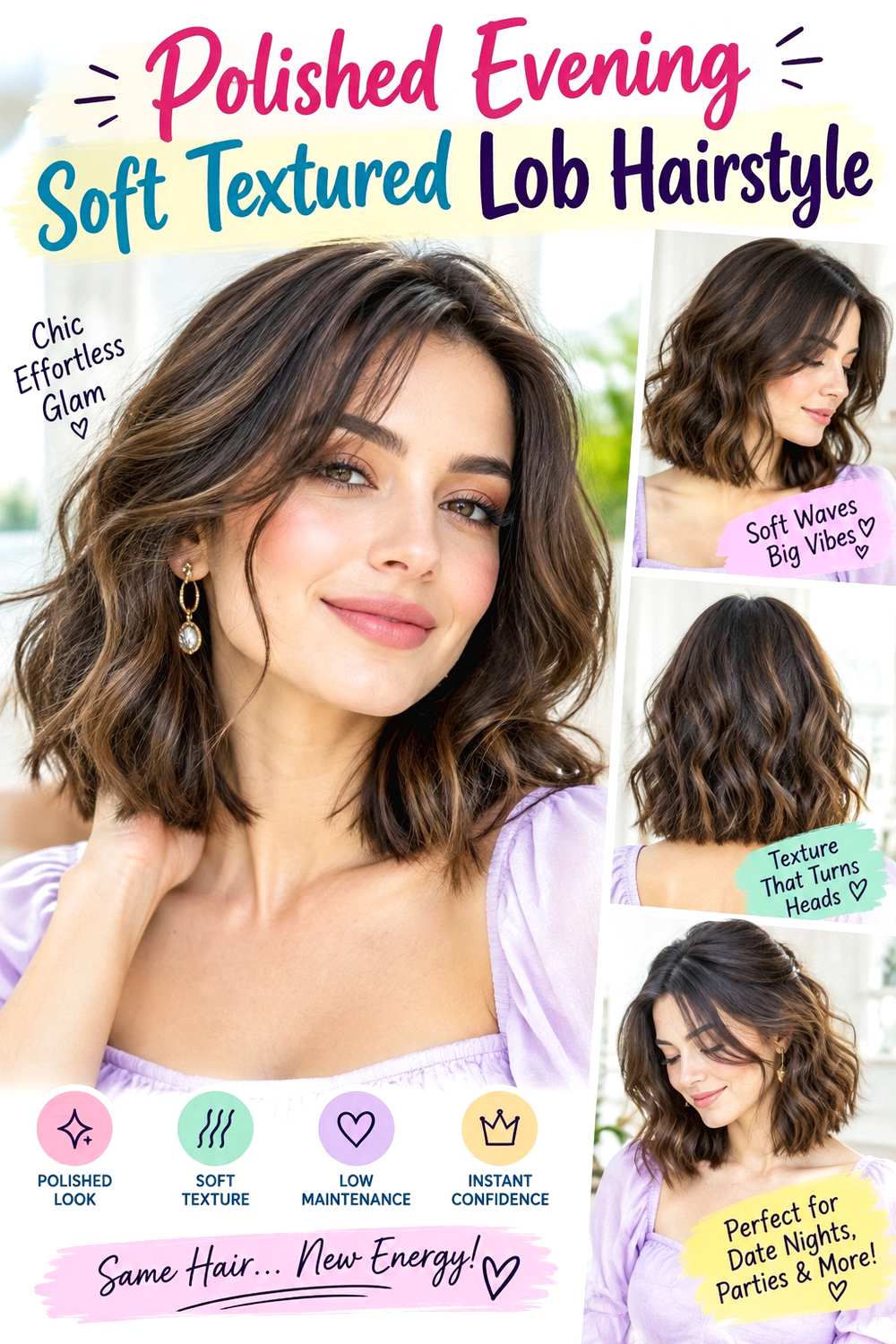
This evening version keeps the softness of a textured lob but gives the surface a more deliberate finish. The length sits near the collarbones, with a deep or off-center part, smooth roots, and broad waves beginning around the cheekbones or jaw. The ends remain softly grouped rather than tightly curled, preserving the recognizable long-bob outline. Straight and wavy hair can reach the polished finish with moderate work, while naturally curly hair can either retain more texture or be shaped selectively depending on the preferred result.
Apply heat protectant before using a large-barrel curling iron, then mist flexible hairspray over the cooled outer waves to support the pattern without making it rigid. Full styling takes moderate time because each visible section needs to cool before being softened; a quick refresh before another event can focus on the front wave and perimeter. If frizz appears, avoid reheating the entire head. At the salon, show where the first strong wave should begin and whether you want the roots sleek or lightly lifted. Ask to keep enough weight through the ends that the waves look polished without making the perimeter appear thin or overly layered.
Pro tip:
Let every visible wave cool fully before loosening it. The shape will usually hold better than if you brush or separate the section while it is still warm.
Make It Work for You:
For dense hair, keep the waves broad and concentrate the strongest definition on the surface. This creates polish without building excess volume through every interior section.
Watch Out For:
Avoid turning the lob into tight curls in pursuit of longer hold. Stronger curl does not automatically mean better longevity and can change the intended soft silhouette.
Soft Shag-Layered Textured Lob Hairstyle
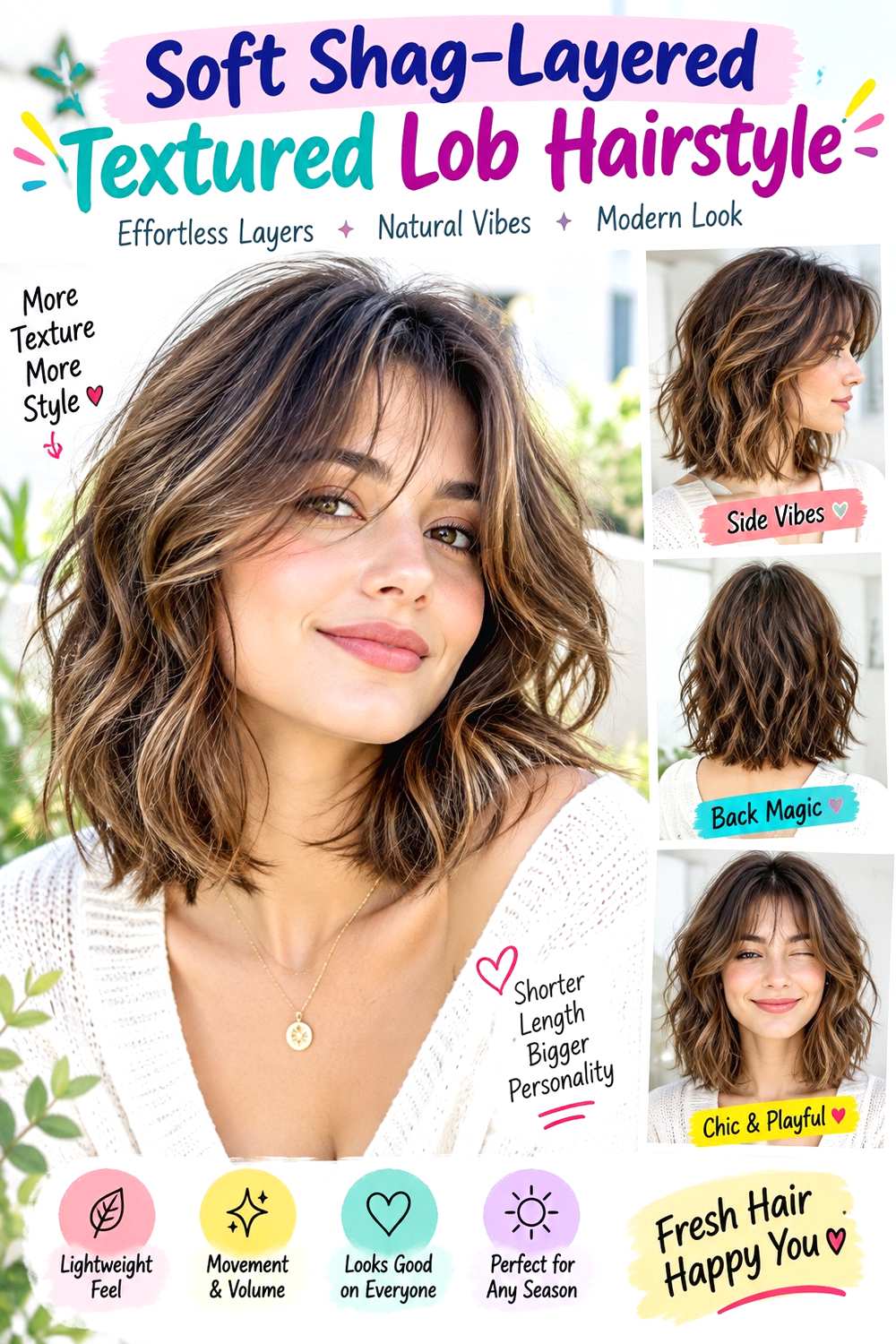
A shag-influenced lob uses more visible layering than the other ideas, but the length still lands around the shoulders and retains enough perimeter to read as a long bob. Shorter layers can begin around the cheekbones or jaw and continue through the upper sections, creating movement at the crown and sides. The ends stay piecey but should not become extremely sparse. A center or off-center part works, and wavy or curly textures can make the layered separation especially clear without requiring a highly polished finish.
Use lightweight mousse to encourage movement, heat protectant if you refine a few sections with a flat iron, and keep the styling selective rather than shaping every layer. A full wash-day style takes moderate effort, while a quick refresh can involve lifting the crown and redefining a few face-framing pieces. As the cut grows, reshape it when the upper layers collapse into the lower length or the perimeter becomes too uneven. At the salon, identify where you want the shortest layer to begin and how much weight you want preserved at the bottom. Ask for a soft shag influence rather than assuming aggressive thinning is necessary to create texture.
Pro tip:
Define a few upper and front layers instead of every section. Selective separation keeps the shag influence visible without making the lob look overly fragmented.
Make It Work for You:
If your ends are lower in density, keep the shortest layers concentrated around the front and crown. Preserve more length through the back perimeter for balance.
Watch Out For:
Do not remove weight indiscriminately to make the cut feel shaggy. Too much thinning can leave the ends sparse while adding unwanted expansion higher in the shape.
Conclusion
Soft textured lob hairstyle ideas can range from full-perimeter cuts with shallow bends to curly, coily, fringed, and more layered versions. Collarbone length gives movement room to develop, while a shorter shoulder-grazing lob can feel more compact. Fine or lower-density ends often benefit from preserved perimeter weight, whereas dense hair may need carefully placed internal shaping. Center parts emphasize balance; side parts create more directional volume. Fringe and face-framing layers increase upkeep, while air-dried or minimally layered versions can simplify the routine. The best choice depends on your natural texture, shrinkage, density, preferred volume, and how much wash-day or heat styling you realistically want to do.
Before Your Salon Visit
Choose one or two favorites and save references that clearly show the length, perimeter, part, and texture you like. Tell your stylist about your natural texture, density, face shape, preferred collarbone or shoulder length, upkeep tolerance, and normal styling routine. Point to the exact fringe length, face-frame starting point, layer placement, amount of volume, and end finish you want. If you plan to air-dry often, mention that clearly so the cut can be discussed around your real routine rather than only a styled reference.
FAQs
Can a soft textured lob work on fine hair?
Yes. Fine strands can wear layers, but placement and amount matter. Keeping a substantial perimeter and concentrating movement around the front or upper surface can prevent the ends from looking sparse. Fine hair can also be dense, so the stylist should assess the actual distribution rather than assuming every fine-haired lob needs the same cut.
How does a soft textured lob work with curly or coily hair?
It can work well when the finished dry length, shrinkage, curl grouping, and bulk placement guide the shape. The stylist should assess where the curls or coils sit naturally rather than relying only on wet measurements. Keeping enough perimeter weight helps the lob retain a recognizable outline after drying.
Does a textured lob need heat styling every day?
No. Natural waves, curls, coils, and air-dried movement can provide texture without daily heat. Heat-shaped versions may need only a short refresh between washes rather than a full reset. If you do use hot tools, apply heat protectant and avoid repeatedly reheating sections that already hold their shape.
When should I reshape a soft textured lob?
Use the shape as your guide rather than relying on one fixed schedule. A trim or reshaping becomes useful when the perimeter loses its intended line, face-framing pieces stop blending, fringe reaches an inconvenient length, or layers no longer create the movement you chose the cut for.