14 Creamy Beige Blonde Hair Color Ideas for Fall 2026

Creamy beige blonde sits between warm golden blonde and cooler ash tones, creating a balanced, softly neutral finish rather than an icy or strongly yellow blonde. The color can be worn as balayage, fine highlights, face-framing pieces, a root melt, or an all-over shade. Darker roots add depth, while pearl, vanilla, sandy, champagne, and mushroom undertones can shift the result warmer or cooler without losing the beige base.
Hair condition matters because brighter beige blonde usually requires some level of lightening. Fine hair often benefits from restrained highlight placement and a stronger perimeter, while thick hair can carry wider ribbons and deeper shadow between them. Waves and curls reveal several tones at once, and straight hair makes clean blends and color transitions more visible.
Daily styling does not need to be complicated, but lightened hair generally benefits from heat protection, conditioning, and reduced unnecessary heat. Salon maintenance depends on root placement: balayage and shadow-root options grow out more softly than solid blonde. Before choosing a version, consider your natural base, density, texture, hair condition, preferred brightness, and maintenance routine.
Quick List
- Soft Creamy Beige Balayage Hairstyle
- Dark Root Beige Blonde Melt Hairstyle
- Creamy Beige Money Piece Hairstyle
- Pearl Beige Blonde Bob Hairstyle
- Champagne Beige Ribbon Highlights Hairstyle
- Mushroom Beige Blonde Lob Hairstyle
- Vanilla Beige Face Frame Hairstyle
- Creamy Beige Babylights Hairstyle
- Sandy Beige Blonde Waves Hairstyle
- Buttery Beige Peekaboo Highlights Hairstyle
- Fine-Hair Beige Blonde Blend Hairstyle
- Thick-Hair Dimensional Beige Blonde Hairstyle
- Creamy Beige Blonde With Curtain Bangs Hairstyle
- Glossy All-Over Creamy Beige Blonde Hairstyle
Soft Creamy Beige Balayage Hairstyle

Soft balayage gives creamy beige blonde an easy transition from a deeper natural root into brighter mid-lengths and ends. Instead of lifting every strand, selected ribbons remain light while brunette or dark-blonde depth stays between them, creating movement without turning the whole head solid blonde. Medium and long wavy hair show the blend especially well, though fine hair can use fewer painted pieces to preserve density. A hydrating leave-in conditioner, heat protectant, and lightweight shine serum help the lightened areas stay smooth. Styling is easy with natural waves and moderate if you create loose bends with a curling iron. Grow-out is relatively forgiving because the lightest color begins below the scalp. When the beige starts looking flat, a toner or gloss can often restore balance without repeating the full lightening service. At the salon, ask for soft hand-painted ribbons with brighter placement around the face and plenty of natural depth left underneath.
Pro tip: Keep a few darker pieces directly beside the brightest balayage ribbons; the contrast makes creamy beige look more luminous without requiring additional lightening.
Dark Root Beige Blonde Melt Hairstyle

A darker root flowing into beige blonde gives the color visible depth while making regrowth less abrupt. The first few inches stay brunette or dark blonde, then gradually soften into neutral creamy lengths rather than changing at one obvious line. This approach works particularly well on medium and long hair because there is enough space to create a smooth transition. Straight hair shows the blend clearly, while waves disguise the meeting point even further. Use color-safe shampoo, a nourishing mask, and heat protectant to keep the lighter lengths from becoming dry or dull. Styling effort is moderate if you prefer a polished finish and quicker with natural texture. Fine hair can keep the root shadow narrow, while thick hair can support a deeper, more noticeable gradient. At the salon, ask for a root shade close to your natural color and specify that the beige should become brightest through the lower half without forming a visible band.
Pro tip: Keep the shadow root shorter around the hairline if you want more brightness near the face while still preserving an easier grow-out through the crown.
Creamy Beige Money Piece Hairstyle

A creamy beige money piece puts the lightest blonde around the front while leaving most of the hair deeper. The panels can be narrow and blended or wide enough to create obvious contrast from the part through the ends. Fine hair generally looks balanced with slimmer front sections, while thick hair can support a stronger block of blonde without losing overall density. Straight, wavy, and curly textures can all wear the idea; the main difference is how sharply the panels appear. Protect the frequently styled front pieces with leave-in conditioner, heat protectant, and a light smoothing serum. Daily styling is quick if the hair is worn naturally and moderate when the front is blown away from the face. Maintenance depends on whether the blonde reaches the scalp, since direct-root placement shows regrowth sooner. At the salon, specify the exact width of each money piece and request a creamy neutral toner rather than an icy or strongly golden blonde.
Pro tip: Leave a tiny shadow at the root if you want the money piece to grow out more softly without losing its bright beige effect.
Pearl Beige Blonde Bob Hairstyle

Pearl beige gives a short bob a clean, reflective finish without pushing the color into icy silver. The undertone stays neutral with a slight pearly softness, while the compact length keeps the blonde looking concentrated and glossy. Straight and softly wavy hair show the tone especially clearly, and fine hair benefits from a stronger blunt perimeter that prevents lightened ends from appearing thin. Use a bond-supporting leave-in conditioner, heat protectant, and small amount of shine serum when blow-drying the bob smooth. Styling is relatively quick because of the shorter length, though frequent high heat can make lightened ends feel dry. Thick hair may need hidden bulk removal rather than heavy thinning through the perimeter. At the salon, ask for pearl-beige toning that remains creamy rather than gray and keep slightly more depth close to the roots if you want softer maintenance. The bob should retain enough end weight to make the blonde surface look polished.
Pro tip: If the blonde begins looking dull, try a gloss or toner refresh before adding more highlights; pearl beige relies heavily on shine and tonal balance.
Champagne Beige Ribbon Highlights Hairstyle
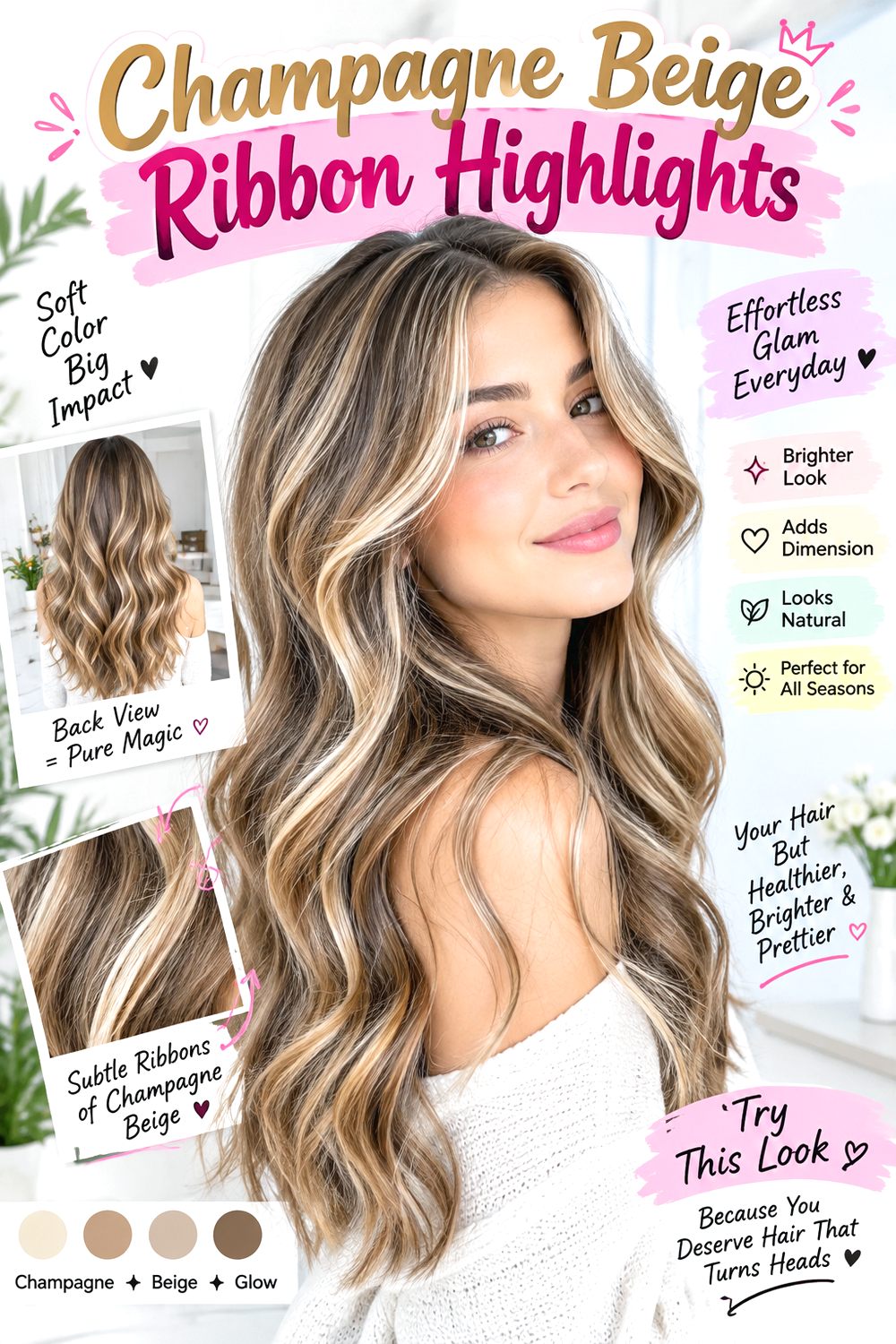
Champagne-beige ribbons add narrow streams of brightness through a darker blonde or light brunette base. They are wider than ultra-fine babylights but softer than traditional chunky highlights, making them useful when you want obvious dimension without losing depth. Medium and thick hair can carry several ribbons through the crown and lengths, while fine hair generally needs fewer pieces to protect the appearance of density. Loose waves show the color beautifully because each bend reveals a different mix of blonde and shadow. Use hydrating conditioner, heat protectant, and flexible styling spray when creating waves. Styling is moderate with hot tools and easy when natural movement already exposes the ribbons. Root maintenance depends on how high the color starts, so staggered placement can create an easier grow-out. At the salon, ask for champagne-beige pieces of slightly varied widths with deeper sections left between them, plus a brighter ribbon or two near the face.
Pro tip: Avoid placing every ribbon at the same height; staggered starting points create a more natural blend as the highlights grow.
Mushroom Beige Blonde Lob Hairstyle
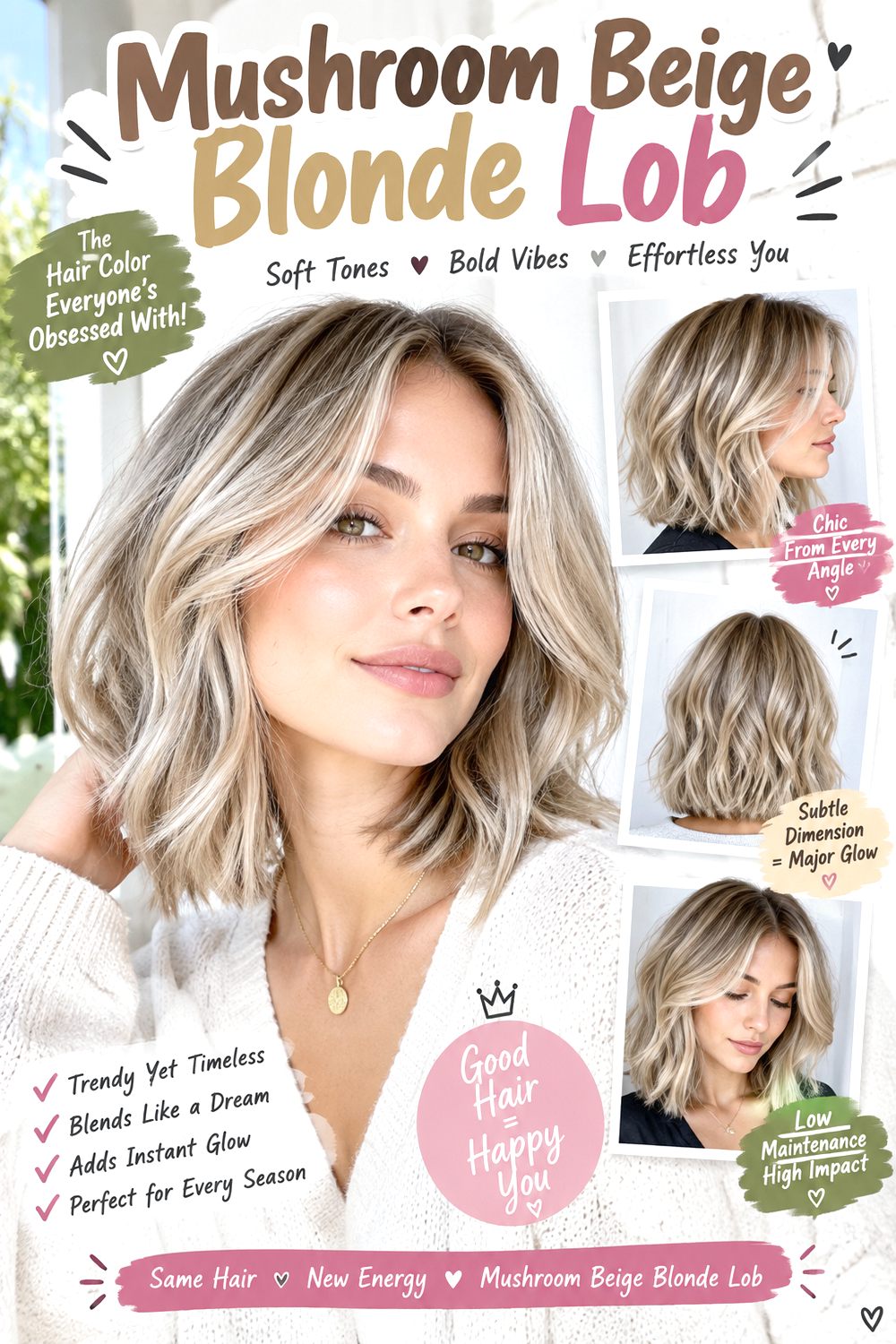
Mushroom beige leans slightly cooler than creamy vanilla blonde, combining muted taupe and soft beige tones without becoming obviously gray. A collarbone-length lob gives this shade enough surface area to show subtle shifts between the darker root and lighter ends. Straight and softly wavy hair reveal the neutral color cleanly, while medium-density hair carries the shape without needing many layers. Fine hair can benefit from a fuller perimeter, and thick hair may need internal bulk removal so the lob moves naturally. Use color-safe shampoo, anti-frizz cream, and heat protectant for a smooth finish that keeps the neutral tones reflective. Styling takes moderate time if you blow-dry the ends into a soft bend and less when natural texture already suits the cut. At the salon, ask for a muted beige toner with a touch of taupe rather than strong ash, keeping the roots slightly deeper so the color does not look flat.
Pro tip: Bring references photographed in daylight; mushroom beige can look much cooler indoors, so lighting matters when choosing your toner.
Vanilla Beige Face Frame Hairstyle
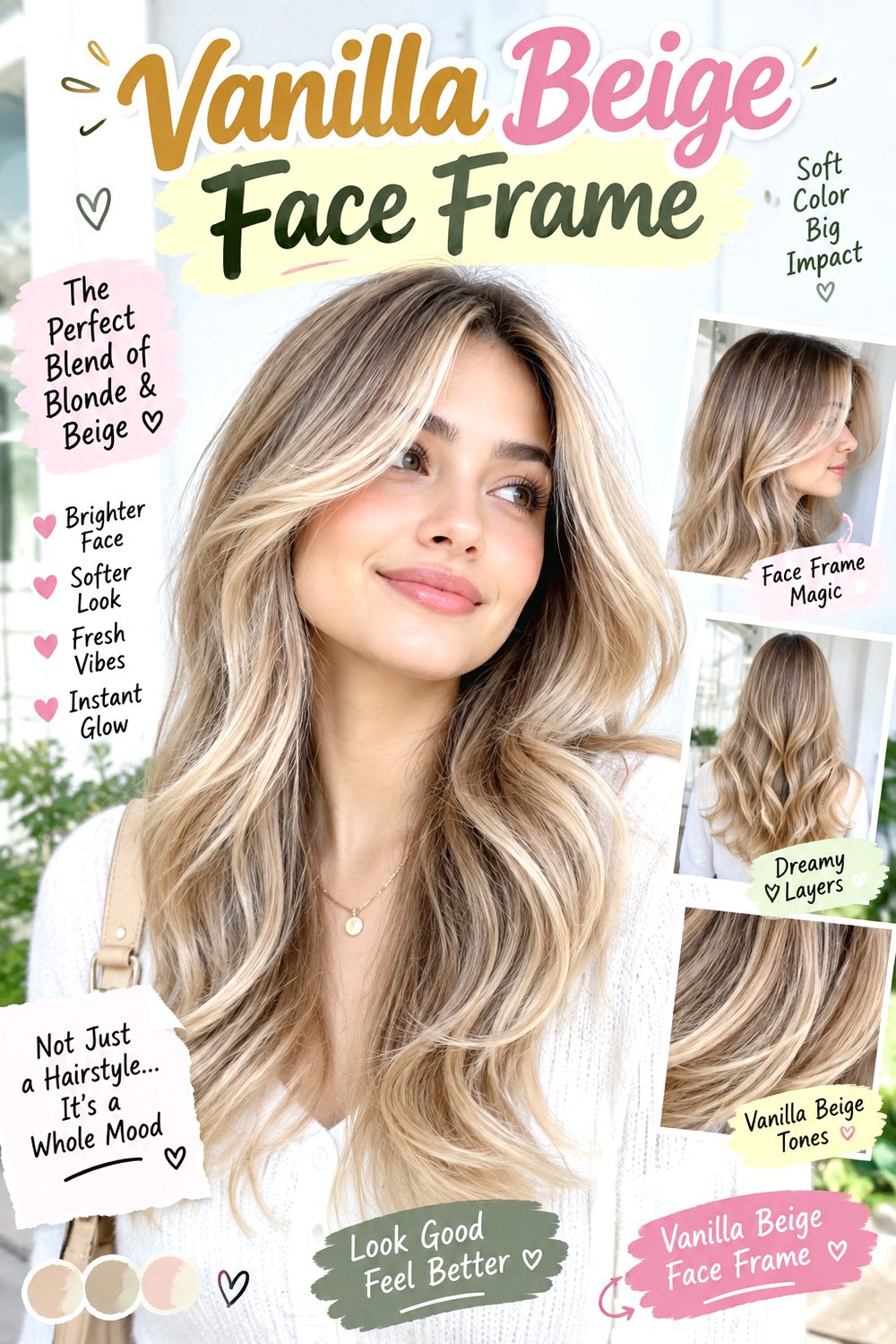
Vanilla beige creates a warmer face frame than pearl or mushroom blonde while still avoiding a strongly yellow finish. The lightest pieces can begin around the temples and follow cheekbone, jaw, or chin-length layers into deeper beige lengths. This placement works well on fine and medium-density hair because only selected front sections need substantial lightening. Thick hair can carry a broader face frame or several graduated vanilla tones around the front. Use a nourishing leave-in, medium round brush, and heat protectant when styling the shorter pieces away from the face. Daily effort is moderate if you want a polished sweep and quick if natural waves already create movement. Because the front receives frequent heat and washing, it may need toning sooner than the back. At the salon, ask for vanilla brightness that follows the haircut’s actual face-framing layers rather than a single solid stripe, with slightly deeper beige blended behind it.
Pro tip: Place the brightest vanilla around the cheekbone for more visible framing, or keep it lower near the jaw if you prefer a softer transition into brunette.
Creamy Beige Babylights Hairstyle

Babylights create the most delicate version of creamy beige blonde by weaving very fine pieces through the crown, parting, and hairline. The result looks softly illuminated rather than obviously highlighted, which makes it useful for fine hair or anyone who wants subtle brightness. Straight and lightly wavy textures show the tiny ribbons clearly, while curls blend them into a more diffused finish. Fine hair should preserve plenty of natural depth underneath so the overall color does not become too light or visually flat. Use lightweight volumizing mousse, heat protectant, and a gentle conditioning treatment that will not weigh down the roots. Styling is quick to moderate depending on whether you need a blow-dry for volume. Because many babylights can begin near the scalp, regrowth may show earlier than with balayage. At the salon, request ultra-fine beige pieces with a soft root blur and avoid over-lightening the ends that have already been processed.
Pro tip: Keep the finest brightness around the part and temples, then leave more natural depth underneath to protect the appearance of fullness.
Sandy Beige Blonde Waves Hairstyle
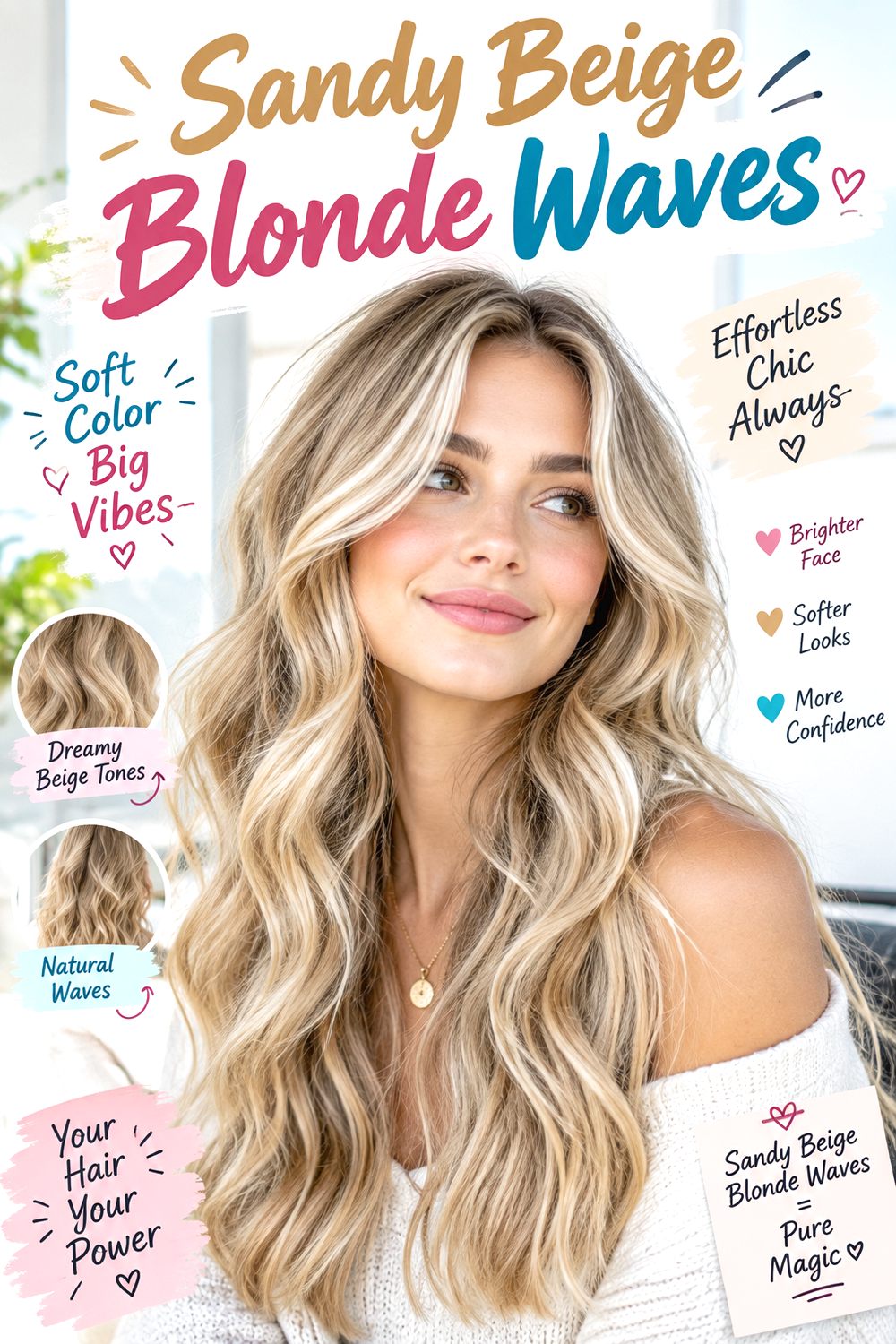
Sandy beige blonde mixes neutral blonde with a faint golden-brown softness, creating a relaxed finish that pairs naturally with loose waves. The color works especially well on medium and long hair because the bends reveal several shades without needing strong contrast. Medium-density hair can support both lighter surface pieces and deeper lowlights, while fine hair should keep the ends relatively full. Naturally wavy hair makes styling simple; straighter hair may need a large curling iron for the same soft movement. Use wave-enhancing mousse, heat protectant when necessary, and a lightweight serum through the ends. Styling ranges from quick with natural texture to moderate when waves must be created. Beige toning may need refreshing if the color starts drifting too warm or too cool. At the salon, ask for sandy beige through the mid-lengths with slightly brighter pieces around the face and enough root depth to keep the overall blonde dimensional.
Pro tip: Let some lower sections remain a shade deeper than the surface waves; the hidden shadow makes sandy beige appear richer when the hair moves.
Buttery Beige Peekaboo Highlights Hairstyle
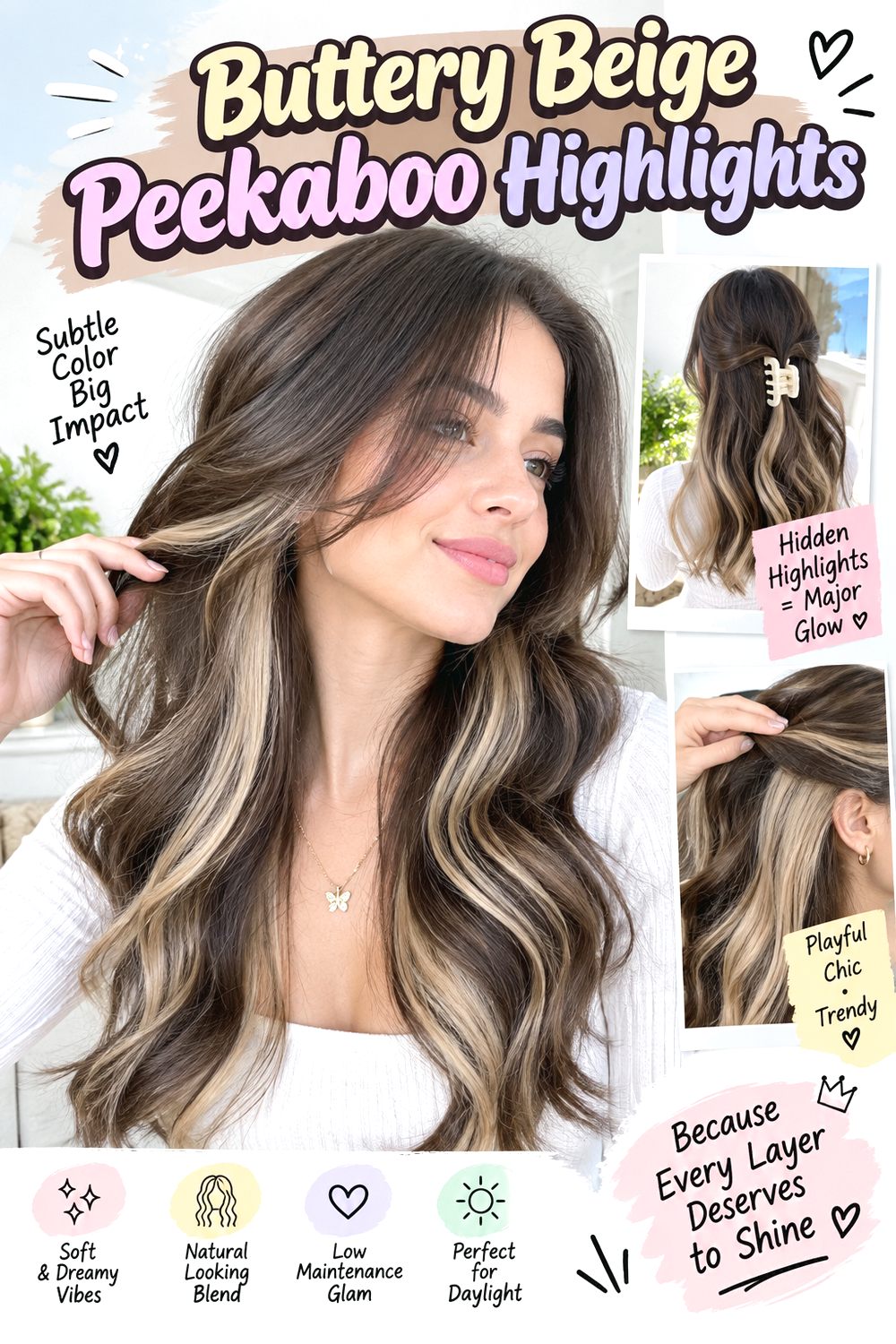
Peekaboo highlights place buttery beige blonde beneath a deeper surface layer, allowing the color to appear mainly when the hair moves, curls, or is pinned up. The hidden placement works well if you want noticeable blonde without lightening every visible section around the crown. Medium and thick hair conceal the underlights most easily, while fine hair benefits from narrower panels so enough natural depth remains on top. Straight hair creates cleaner flashes of blonde, while waves and curls break the color into smaller, softer pieces. Use a hydrating mask, color-safe cleanser, and heat protectant on the hidden lightened sections. Daily styling can be very quick, while half-up styles and loose waves reveal more of the beige. Root growth is relatively discreet when the panels sit away from the main part. At the salon, ask for buttery beige rather than strongly yellow blonde and decide exactly whether the hidden pieces should sit behind the ears, through the nape, or beneath the crown.
Pro tip: Plan the placement around your usual ponytail or clip position so the peekaboo blonde appears when you actually want it visible.
Fine-Hair Beige Blonde Blend Hairstyle
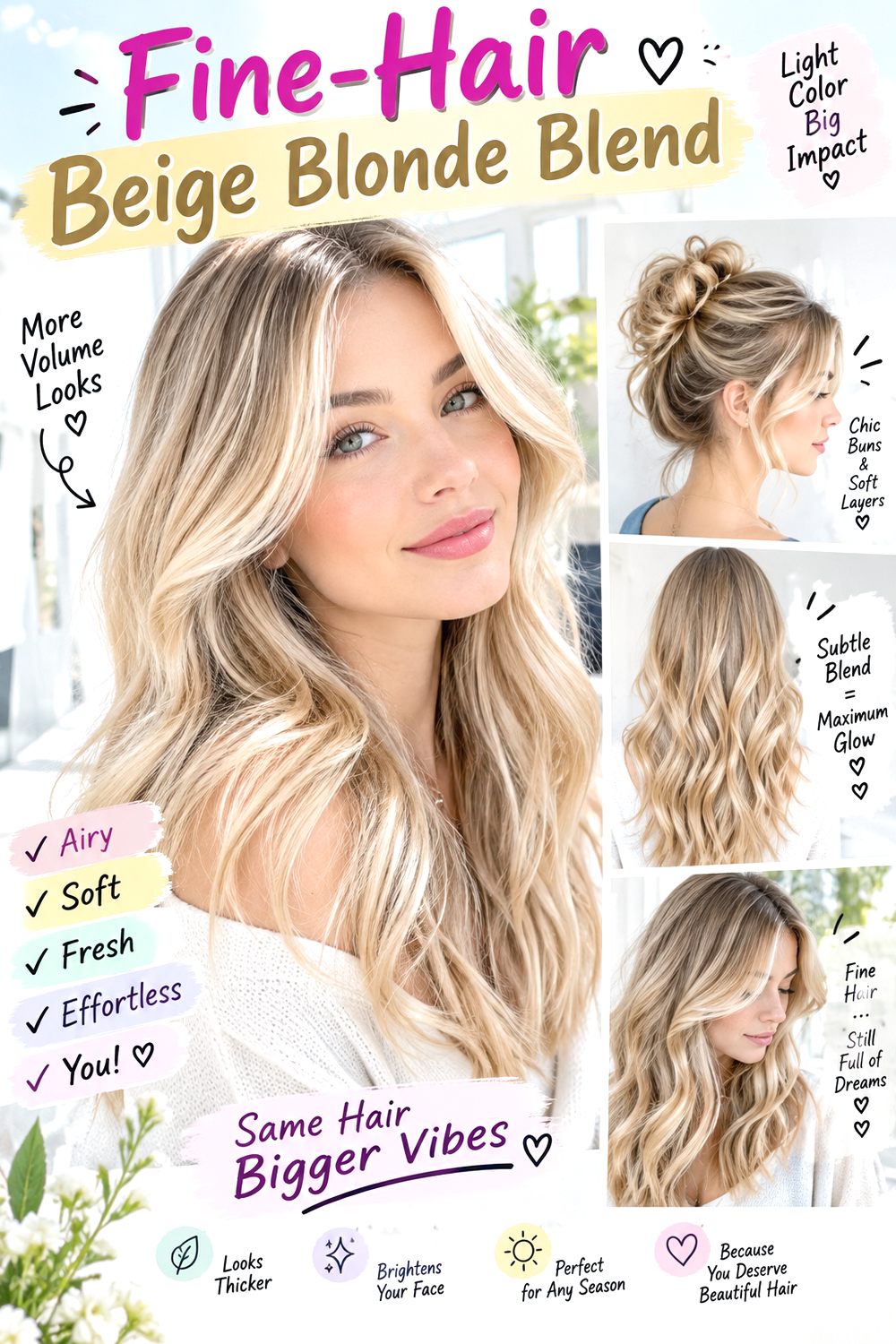
Fine hair usually benefits from a beige blonde plan that preserves contrast instead of lifting every strand to the same level. A deeper root and scattered creamy pieces through the surface create brightness while leaving enough darker hair underneath to support visual density. Straight and softly wavy fine hair show this subtle blend particularly well, and a stronger haircut perimeter helps prevent lightened ends from looking sparse. Use lightweight volumizing spray, heat protectant, and a small amount of leave-in conditioner rather than heavy oils or creams. Styling is quick when the haircut already has shape, with most effort focused on gentle root lift. Overlapping bleach on fragile ends is the main maintenance concern, so future appointments should prioritize regrowth and toning rather than repeatedly lightening the same lengths. At the salon, ask for restrained beige highlights, a soft shadow root, and minimal processing through previously lightened ends. Keep the brightest pieces around the part and face.
Pro tip: Ask the colorist to protect your natural lowlights instead of filling every dark gap; those deeper strands help fine blonde hair look more dimensional.
Thick-Hair Dimensional Beige Blonde Hairstyle
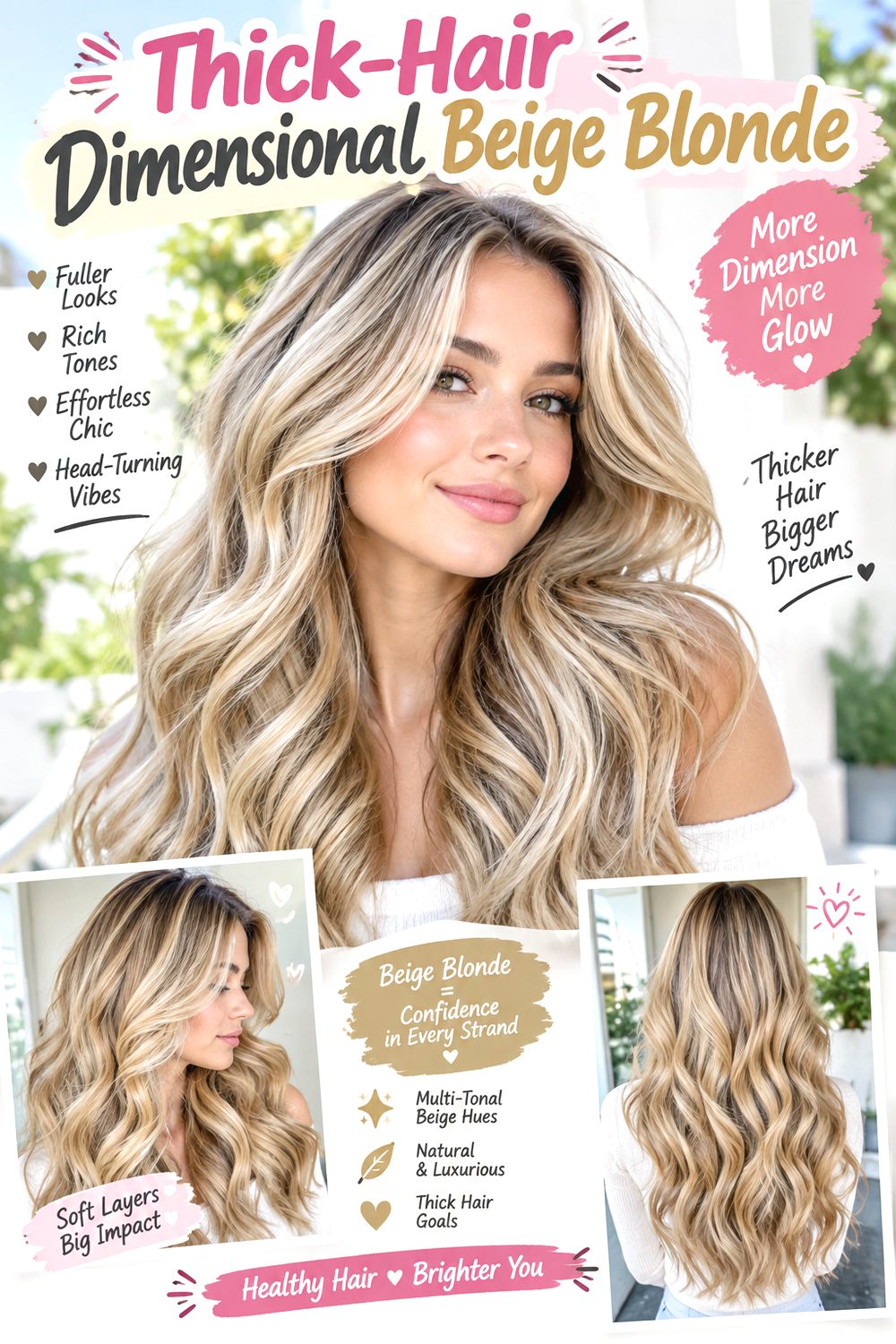
Thick hair can carry wider beige blonde ribbons because there is enough density to maintain strong shadow between them. The goal is not to lighten every strand, but to place creamy pieces through the surface and moving layers while keeping deeper blonde or brunette underneath. Straight, wavy, and coarse textures can all show the contrast, though waves make the layered color particularly noticeable. Dense hair often takes longer to dry, so use anti-frizz cream, heat protectant, and a lightweight shine serum that will not make the roots heavy. Styling requires moderate time, but a dimensional color usually looks good even without a polished blowout. Maintenance should focus on preserving the darker interior as well as refreshing the beige toner. At the salon, ask for broader ribbons through selected surface layers and face-framing sections, with untouched depth beneath them. If the haircut feels bulky, request internal weight removal rather than thinning the blonde ends aggressively.
Pro tip: Put the brightest beige on layers that naturally sit at the surface; color hidden too deep inside thick hair may disappear unless the hair is heavily styled.
Creamy Beige Blonde With Curtain Bangs Hairstyle
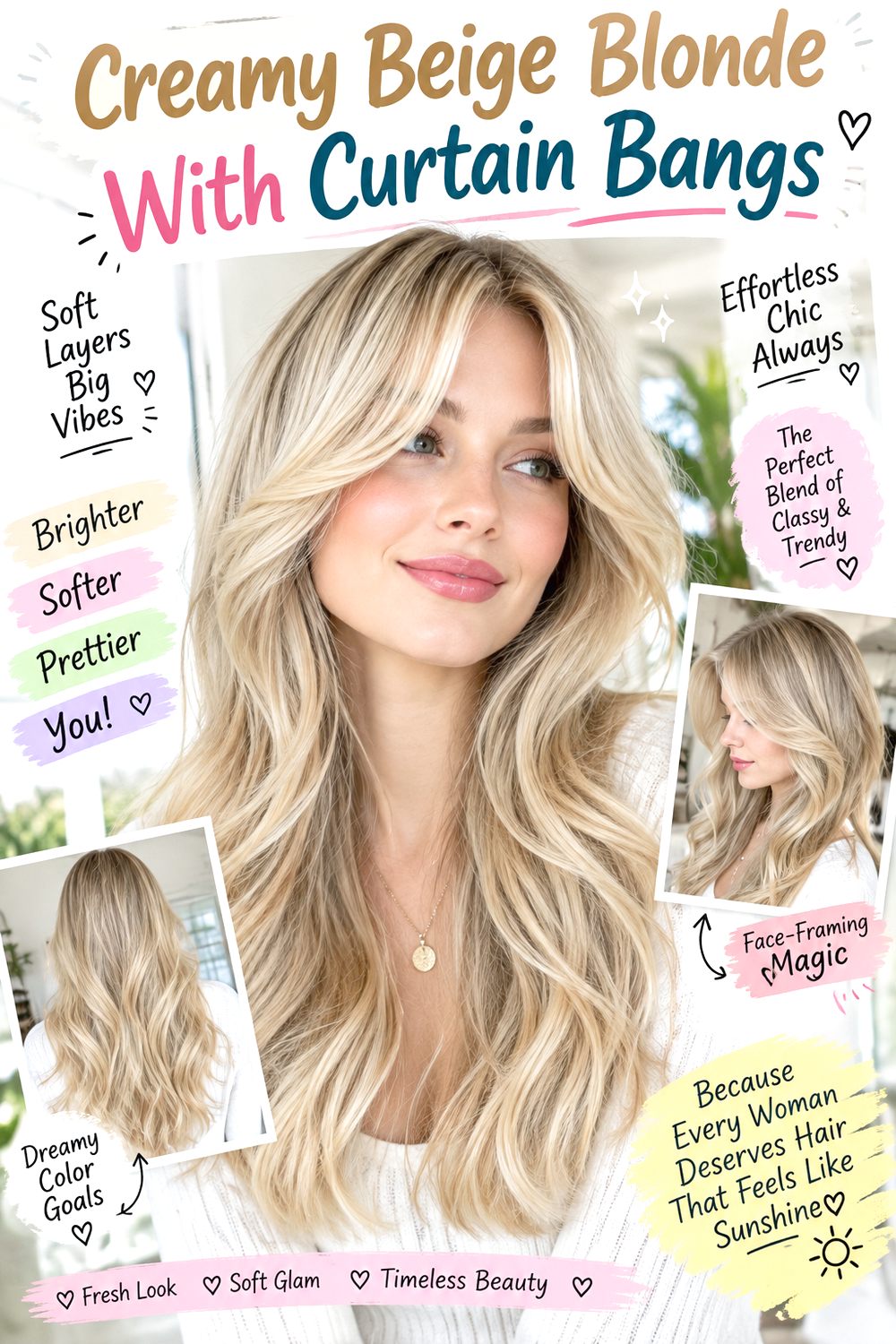
Curtain bangs give creamy beige blonde a natural focal point because the shorter pieces curve away from the center and catch light around the cheekbones. A slightly deeper root can continue through the crown, while the fringe and connected face-framing layers become noticeably brighter. Straight and softly wavy medium-density hair make the sweep easy to control. Fine hair should keep the fringe reasonably light so too much density is not removed from the longer sections, while thick hair may need hidden bulk reduction through the bangs. Use heat protectant, a medium round brush, and flexible hairspray for a soft curved finish. Styling is moderate because the fringe often needs refreshing even when the lengths still look good. At the salon, request creamy beige placement that follows the curtain-bang shape rather than a block of blonde at the hairline, and specify where the shortest center pieces should fall.
Pro tip: Keep a narrow line of deeper beige at the center part if you want softer root grow-out without losing brightness through the curtain fringe.
Glossy All-Over Creamy Beige Blonde Hairstyle
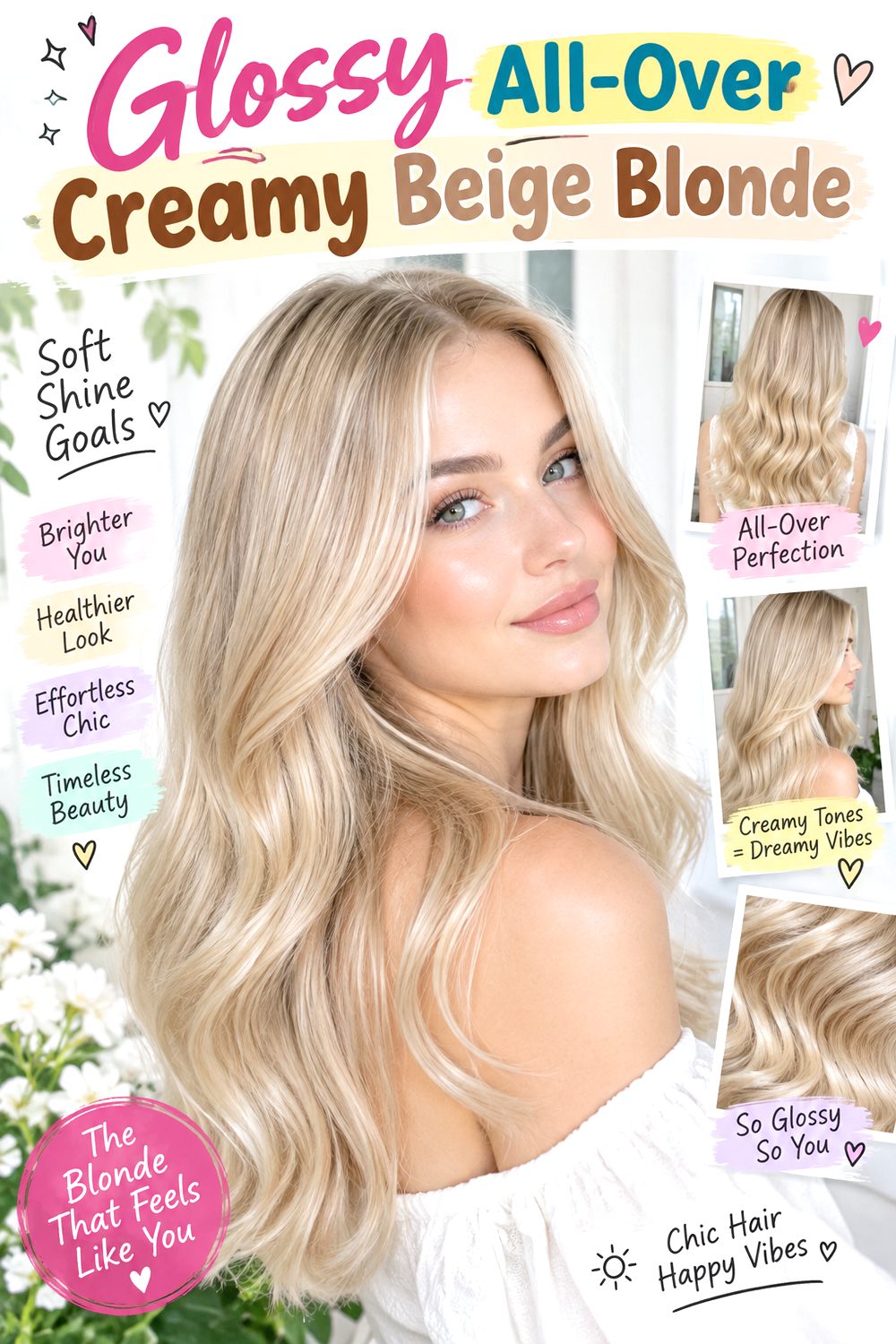
All-over creamy beige blonde creates the most uniform version of the color, with a balanced neutral tone running from the root area through the ends. The finish should sit between icy and golden, maintaining enough warmth to feel creamy without becoming yellow. Straight hair displays the tonal consistency and shine clearly, while curls and waves create natural shadow even within a single blonde shade. Fine hair can look fuller when the surface stays glossy and the perimeter remains strong, while thick hair benefits from conditioning that keeps the lighter lengths smooth. Use a bond-supporting treatment, heat protectant, and lightweight shine serum as part of regular styling. Daily effort depends on texture, but limiting unnecessary heat helps protect processed hair. This version requires more root maintenance than balayage or a dark-root melt. At the salon, ask for an even creamy beige formula matched to your current base, with enough tonal depth to avoid a flat, over-lightened appearance.
Pro tip: When the color starts looking too warm or dull, refresh the toner before automatically adding more lightener; the blonde may need tonal correction rather than extra bleaching.
Conclusion
Creamy Beige Blonde Hair Color Ideas for Fall 2026 can range from subtle babylights and shadow-root balayage to brighter face frames, dimensional ribbons, and full neutral blonde. Root depth, highlight width, undertone, and placement all affect how bright the finished color feels and how easily it grows out.
The best version depends on your natural base, hair condition, density, texture, preferred length, and maintenance routine. Fine hair often benefits from protected depth, while thick hair can support broader ribbons and stronger contrast. Beige can also lean pearl, mushroom, vanilla, sandy, or buttery, so decide which undertone suits the finish you want before the lightening begins. A balanced color plan usually matters more than simply aiming for the lightest blonde possible.
Before Your Salon Visit
Choose one or two favorite ideas and save clear photo references taken in neutral or daylight lighting. Discuss your face shape, natural texture, density, preferred length, maintenance level, and normal styling routine with your stylist or colorist. Point out the exact root depth, beige undertone, highlight width, face-framing brightness, layers, fringe, and overall finish you like. Ask how much lightening your current base may require and which parts of your hair should not be processed again. Being specific about whether you prefer pearl, mushroom, vanilla, sandy, or creamy neutral beige will make your reference much more useful.
FAQs
Is creamy beige blonde warm or cool?
It is generally a balanced neutral blonde. Depending on the toner, it can lean slightly warmer with vanilla or sandy tones or slightly cooler with pearl or mushroom beige.
Can dark brunette hair become creamy beige blonde?
Yes, but reaching a light beige shade may require significant lifting, sometimes over more than one appointment depending on the starting color and hair condition. A shadow-root or balayage version can reduce how much hair needs to be lightened.
Which creamy beige blonde option is lower maintenance?
Soft balayage, dark-root melts, ombre-style blends, and peekaboo highlights typically offer easier root grow-out than all-over beige blonde or highlights placed directly against the scalp.
How do I keep beige blonde from turning too yellow?
Use appropriate color-safe care, limit unnecessary heat, and schedule toner or gloss refreshes when needed. Purple products may help in some cases, but overuse can make a balanced beige look dull or overly cool.