17 Black Cherry Hair Color
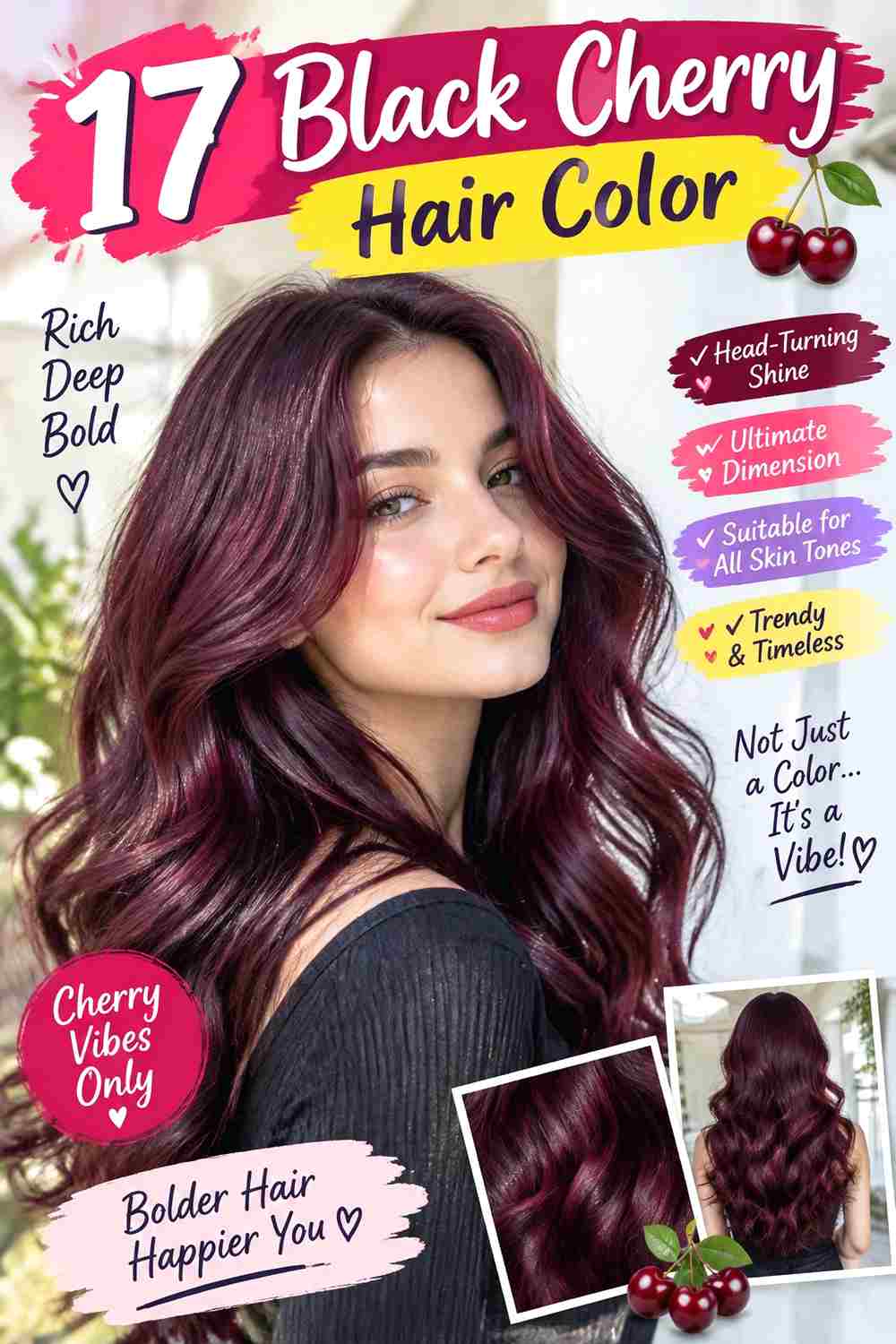
Black cherry hair color combines a very deep base with visible red, burgundy, cherry, or violet character. The result can appear nearly brunette in lower light and reveal richer color where light reaches the surface, although the exact effect depends on the starting hair and chosen color placement. It can cover the whole head as a deep dimensional shade or appear selectively through highlights, balayage, face framing, peekaboo sections, or brighter ends.
Placement changes the impression as much as tone. A dark root with cherry mid-lengths gives a softer transition, while brighter pieces around the face create stronger contrast. Waves and curls can reveal multiple surfaces of color, whereas straight hair makes ribbons and transitions easier to read. Existing color, natural starting shade, and hair condition can affect what a colorist can realistically achieve, so a reference image is more useful than relying on the name alone.
Maintenance also varies. An all-over shade brings visible root regrowth, while balayage and hidden panels can provide softer transitions. Red-violet tones can lose visible intensity between appointments, making gentle care and realistic refresh expectations important when choosing among these ideas.
Quick List
- Deep Black Cherry Gloss Hairstyle
- Plum Black Cherry Waves Hairstyle
- Burgundy Black Cherry Bob Hairstyle
- Black Cherry Balayage Hairstyle
- Black Cherry Money Piece Hairstyle
- Dark Cherry Cola Layers Hairstyle
- Black Cherry Ribbon Highlights Hairstyle
- Muted Black Cherry Lob Hairstyle
- Violet Black Cherry Curls Hairstyle
- Black Cherry Face Frame Hairstyle
- Black Cherry Peekaboo Hairstyle
- Black Cherry Ombré Hairstyle
- Espresso Black Cherry Hairstyle
- Black Cherry Shag Hairstyle
- Black Cherry Curly Bob Hairstyle
- Black Cherry Dip-Dyed Ends Hairstyle
- Soft Black Cherry Melt Hairstyle
Deep Black Cherry Gloss Hairstyle

Deep black cherry works beautifully as an all-over visual concept because the color can remain dark and saturated while showing red-cherry dimension across the surface. On long straight or softly waved hair, the uninterrupted placement gives the shade plenty of space to read. A center part creates a balanced finish, while long layers below the chin can introduce enough movement for light to reach different sections without distracting from the color.
This idea suits someone who wants black cherry to dominate rather than appear as an accent. The final tone will depend on the starting color, existing artificial pigment, and what can safely be achieved, so discuss the target depth rather than expecting one universal formula. Color-safe shampoo and conditioner support routine care, while heat protectant is useful when you style with heat. A quick refresh can simply involve restyling the surface; wash-day styling depends on length and density.
At the salon, show how dark you want the base to appear and how obvious the cherry reflection should be in brighter light. Ask how your starting color may affect that result. All-over placement also means root regrowth is more visible than with a balayage. Plan future color refreshes according to fading, root contrast, and the depth you want to maintain rather than assuming one schedule suits everyone.
Pro tip:
Bring references photographed in more than one lighting condition if possible. Black cherry can appear substantially different as illumination changes, so showing both the dark base and desired visible reflection gives clearer direction.
Make It Work for You:
If you prefer understated color, ask for a deeper overall target with subtler cherry visibility. You can preserve the black cherry character without requiring the red component to look equally strong in every setting.
Watch Out For:
Do not choose the shade from a highly edited reference alone. Lighting and image processing can change apparent depth and saturation, so discuss the visible qualities you like rather than expecting an exact photographic match.
Plum Black Cherry Waves Hairstyle
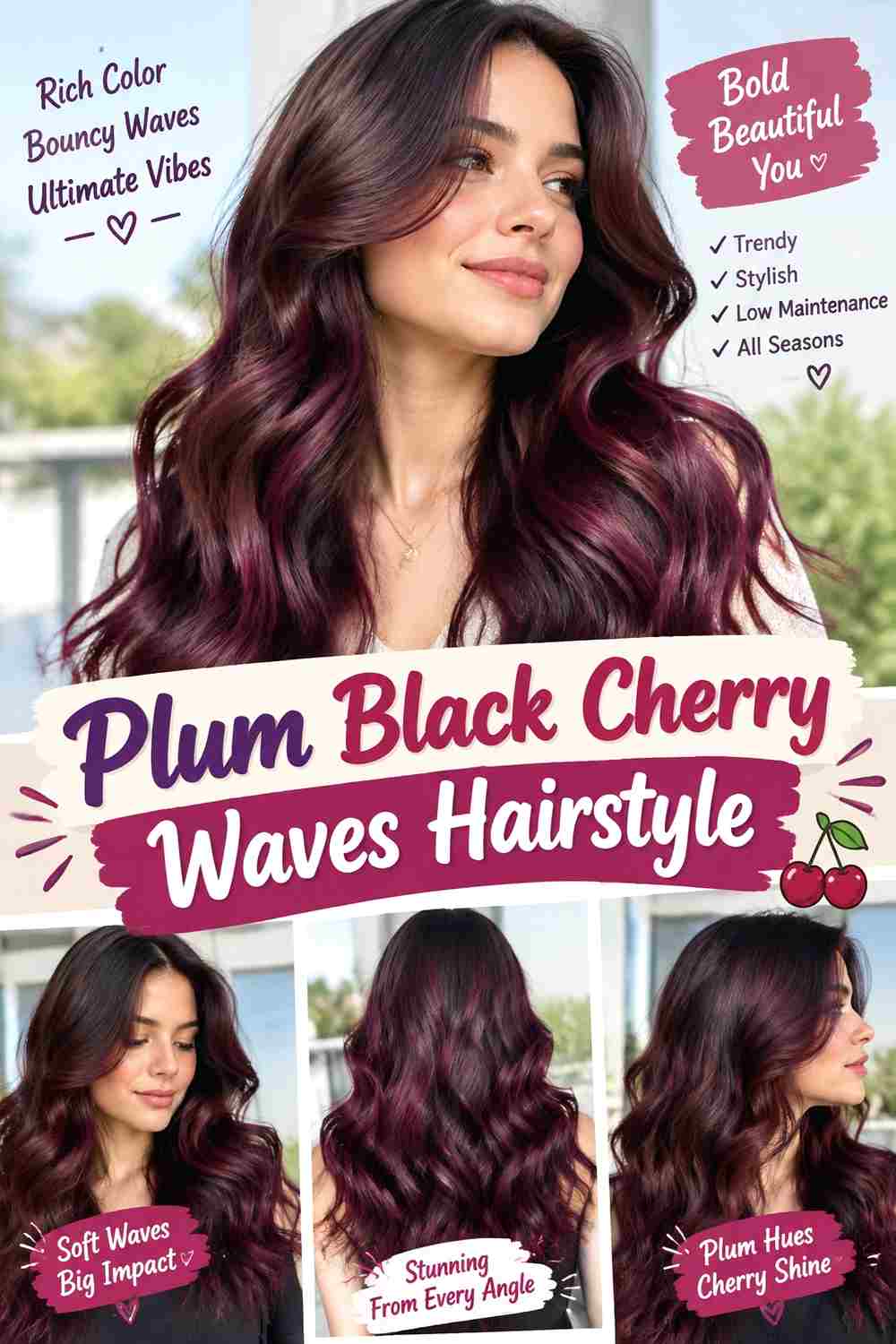
Adding a plum direction shifts black cherry toward a deeper red-violet appearance. Loose waves are particularly useful for this idea because their ridges and valleys expose the color differently as the hair moves. A dark root area can flow into richer plum-cherry mid-lengths, while long layers beginning below the chin give the waves enough separation to reveal multiple surfaces.
This version can work on medium or long hair when you want the violet side of black cherry to be noticeable without moving into a bright purple look. Starting color strongly influences what is achievable, so a professional color consultation is important before any chemical process. For styling, use heat protectant before a curling iron, then flexible hairspray to keep broad bends from collapsing. A quick between-wash wave refresh is different from a complete wash-day styling session.
At the salon, identify whether you want the plum character throughout the hair or mainly through the mid-lengths and ends. Also show the amount of root depth you prefer. Color-safe shampoo can support your home routine, while the need for professional color refreshing depends on fading and regrowth. If the waves are only a styling preference, keep the color placement attractive when the hair is straight as well so the result is not dependent on one finish.
Pro tip:
When styling waves, alternate a few bend directions so more color surfaces become visible. Uniform curls can stack together, while varied movement can make subtle plum and cherry differences easier to notice.
Make It Work for You:
If you wear your hair straight most days, ask for enough plum-cherry distribution to remain visible without waves. The dimensional effect can come from placement rather than requiring frequent heat styling.
Watch Out For:
Do not assume “plum black cherry” communicates one exact shade. Bring references and point out the red-to-violet balance you prefer, because different interpretations can appear noticeably warmer or cooler.
Burgundy Black Cherry Bob Hairstyle
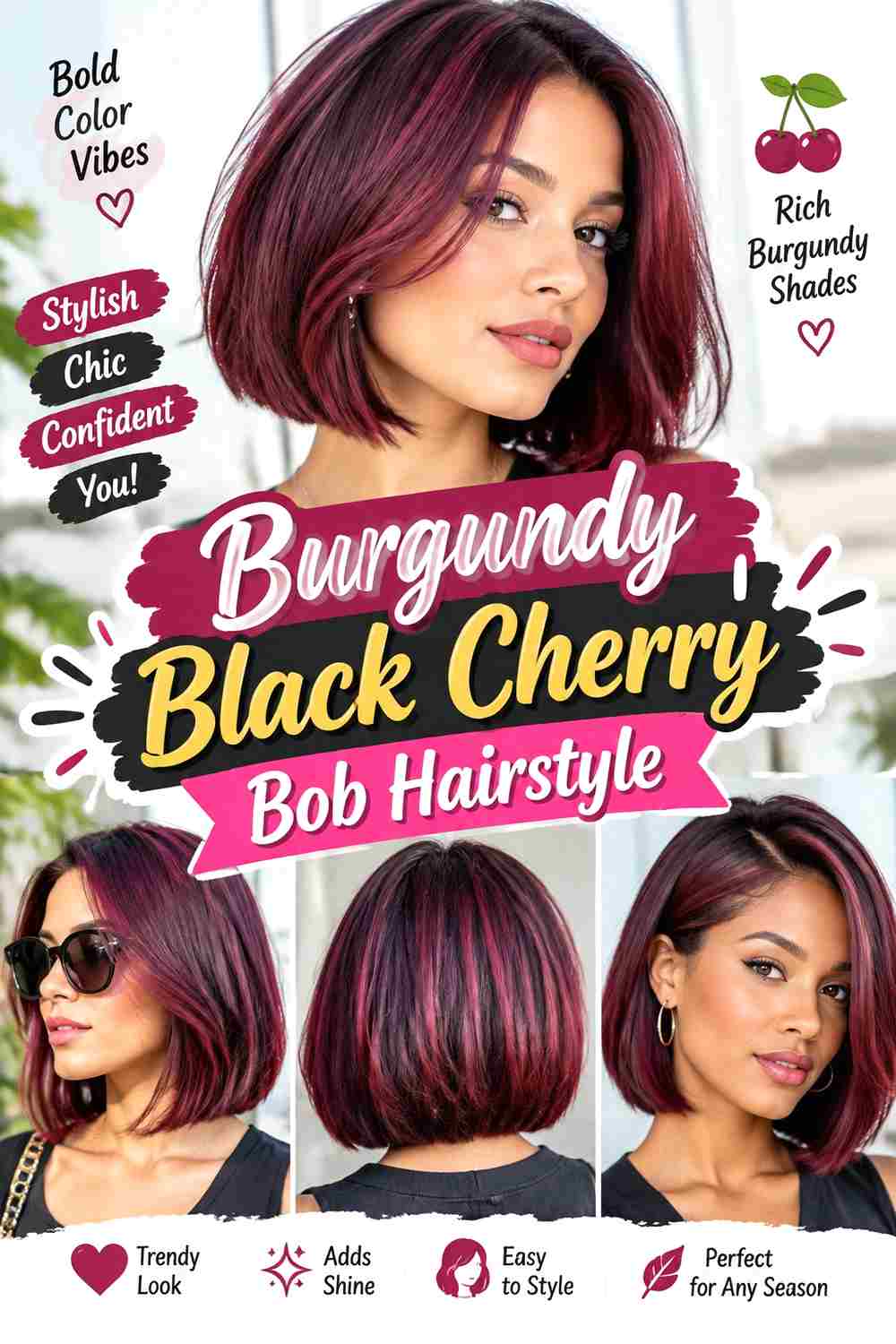
A compact bob gives burgundy black cherry a strong, concentrated surface. The perimeter can sit around the jaw or just below it, with subtle internal layers creating movement while retaining a clean bottom edge. Burgundy-red visibility through the top and sides contrasts with the very dark foundation, and a center or side part changes which surfaces catch the light. A softly bent finish can make the dimension easier to see.
Short to medium hair is practical for someone who wants the color to feel prominent without relying on long highlighted lengths. Ask a colorist how your starting shade and previous color history could affect the visible burgundy result. Color-safe shampoo and conditioner are useful for routine care. If you heat-style the bob, make heat protectant one of your core products. A morning shape refresh can be quick, while full wash-day styling takes longer.
At the salon, clarify whether you want burgundy visibility close to the roots or a darker root with richer color below. The placement affects both contrast and how regrowth appears. If you are also cutting the bob, specify the finished perimeter length and how much layering you want. Color fading and haircut grow-out are separate maintenance needs, so assess each independently instead of assuming every visit requires both services.
Pro tip:
If you wear the bob tucked behind one ear, mention that during your consultation. The exposed underside becomes visible frequently, so intentional color distribution there can make the placement feel more complete.
Make It Work for You:
For a quieter result, preserve a deeper root and concentrate burgundy-cherry visibility through the moving surface and ends. The bob still reads as black cherry while regrowth can appear less abrupt.
Watch Out For:
A polished salon wave can make dimensional color appear stronger than it does on straight hair. Check references with simpler styling too, especially if you normally air-dry or wear the bob sleek.
Black Cherry Balayage Hairstyle
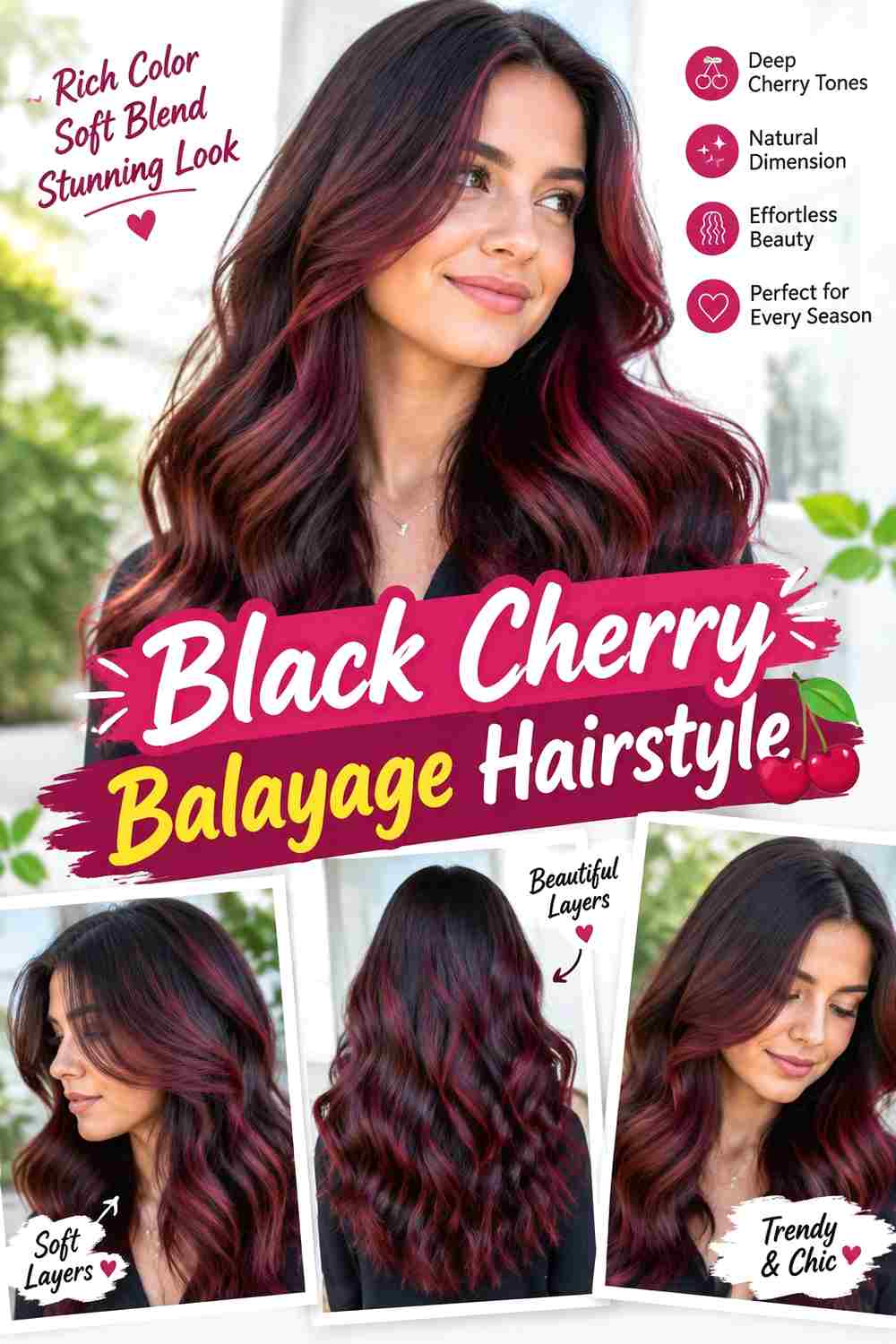
Balayage placement lets black cherry appear through selected mid-lengths and ends while preserving a deeper root area. The transition can begin softly below the cheekbones, with richer cherry sections becoming more visible toward the lower lengths. Long layers and loose waves can reveal the placement clearly, but the color should still have a coherent transition when worn straight.
This approach suits readers who prefer visible dimension without taking the same tone directly to every root. How much contrast is possible depends on the starting hair, previous color, and the professional process selected. Use color-safe shampoo for routine cleansing, conditioner to support the lengths, and heat protectant if you style with heat. A quick wave refresh can showcase the placement, while full wash-day styling is naturally more involved.
At the salon, discuss where you want the first noticeable cherry sections to begin and how bright you want them against the dark base. “Balayage” describes an effect and placement approach more usefully than one fixed finished shade, so bring references showing your preferred contrast. Root grow-out can be softer than an all-over color because the placement does not begin as one uniform root shade. However, the visible cherry areas can still lose intensity and may need refreshing according to their condition and your preferred saturation.
Pro tip:
Save one reference with the hair straight as well as one with waves. Comparing both makes it easier to judge whether you like the actual color transition rather than only the dimension created by styling.
Make It Work for You:
If you prefer minimal contrast, request a deeper cherry transition that stays close to the base depth. The balayage can still add movement without creating highly noticeable bright sections through the ends.
Watch Out For:
Do not assume every dark starting color can reach the same visible cherry brightness in one appointment. Ask what is realistic for your existing color history and condition before choosing the target contrast.
Black Cherry Money Piece Hairstyle
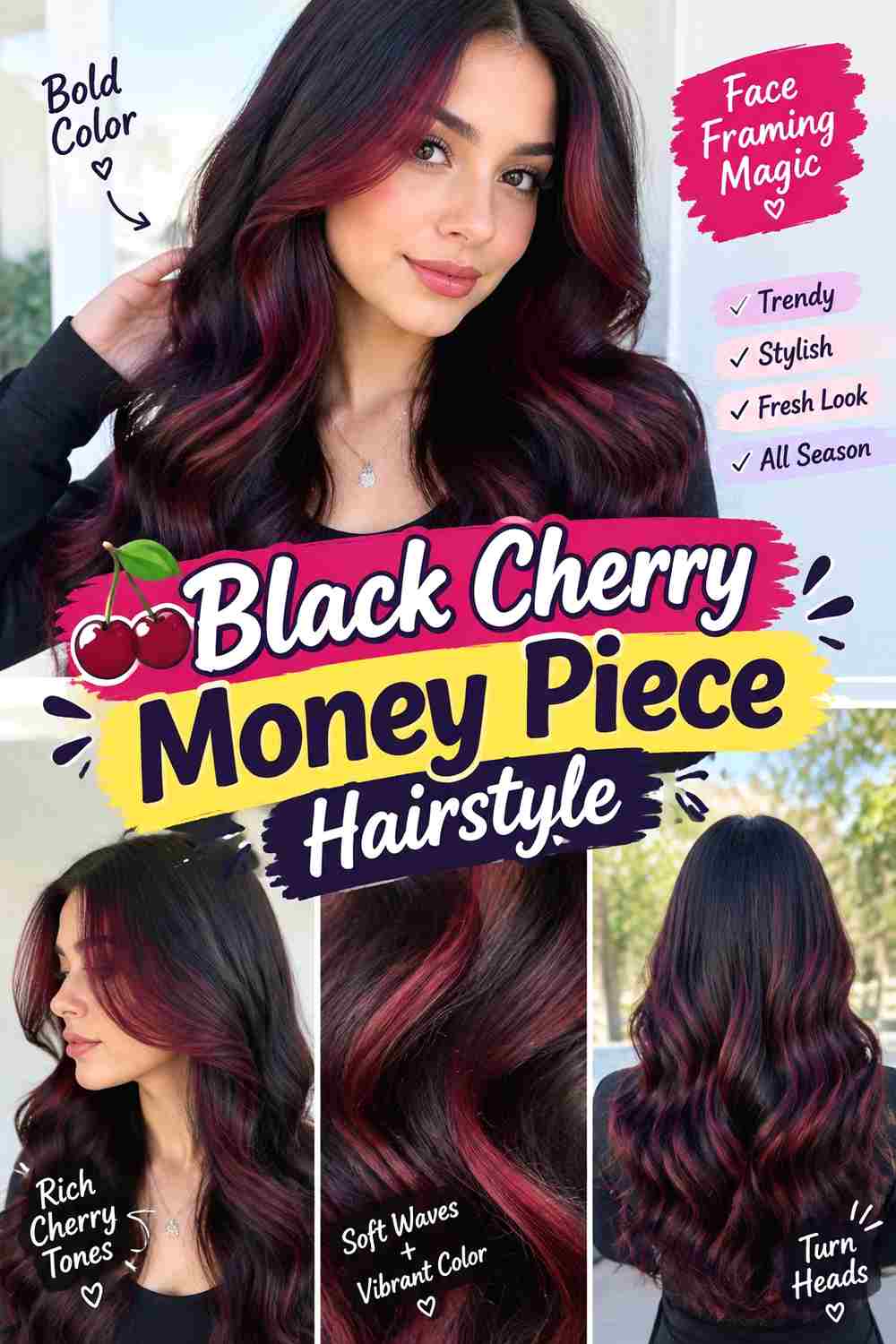
A money-piece placement concentrates black cherry around the front hairline, making the color visible even when the rest of the hair remains very dark. The face-framing sections can begin close to the roots and continue through the ends, or transition gradually from a deeper root. Long layers around the cheekbones and jaw help separate these colored sections from the darker background.
This idea works for someone who wants black cherry to be obvious without distributing it everywhere. The front placement means regrowth and fading are also easy to notice. Ask your colorist how much contrast can be achieved from your starting shade. Color-safe shampoo supports the visible tone, conditioner helps maintain the front lengths, and heat protectant is useful if you regularly shape the face frame with hot tools. Styling only the front can be quick; full wash-day effort depends on the rest of the haircut.
At the salon, specify the width of the money piece and whether you want one bold section or several softer ribbons around the hairline. Also discuss whether the cherry should lean red, burgundy, or violet. A narrow placement creates a smaller accent, while a broad one changes much more of the front. Refresh timing should follow visible fading and root contrast rather than an arbitrary calendar.
Pro tip:
Show your usual part during the color consultation. A money piece placed for a center part can display differently with a deep side part, so everyday positioning matters when choosing its width.
Make It Work for You:
If bold front contrast feels too strong, use narrower cherry sections mixed with your deeper base. You retain the face-framing effect while making the transition softer when the hair moves.
Watch Out For:
Avoid choosing the front brightness without considering how it will look near your natural root. A large difference in depth can make regrowth more obvious than with subtler face-framing placement.
Dark Cherry Cola Layers Hairstyle
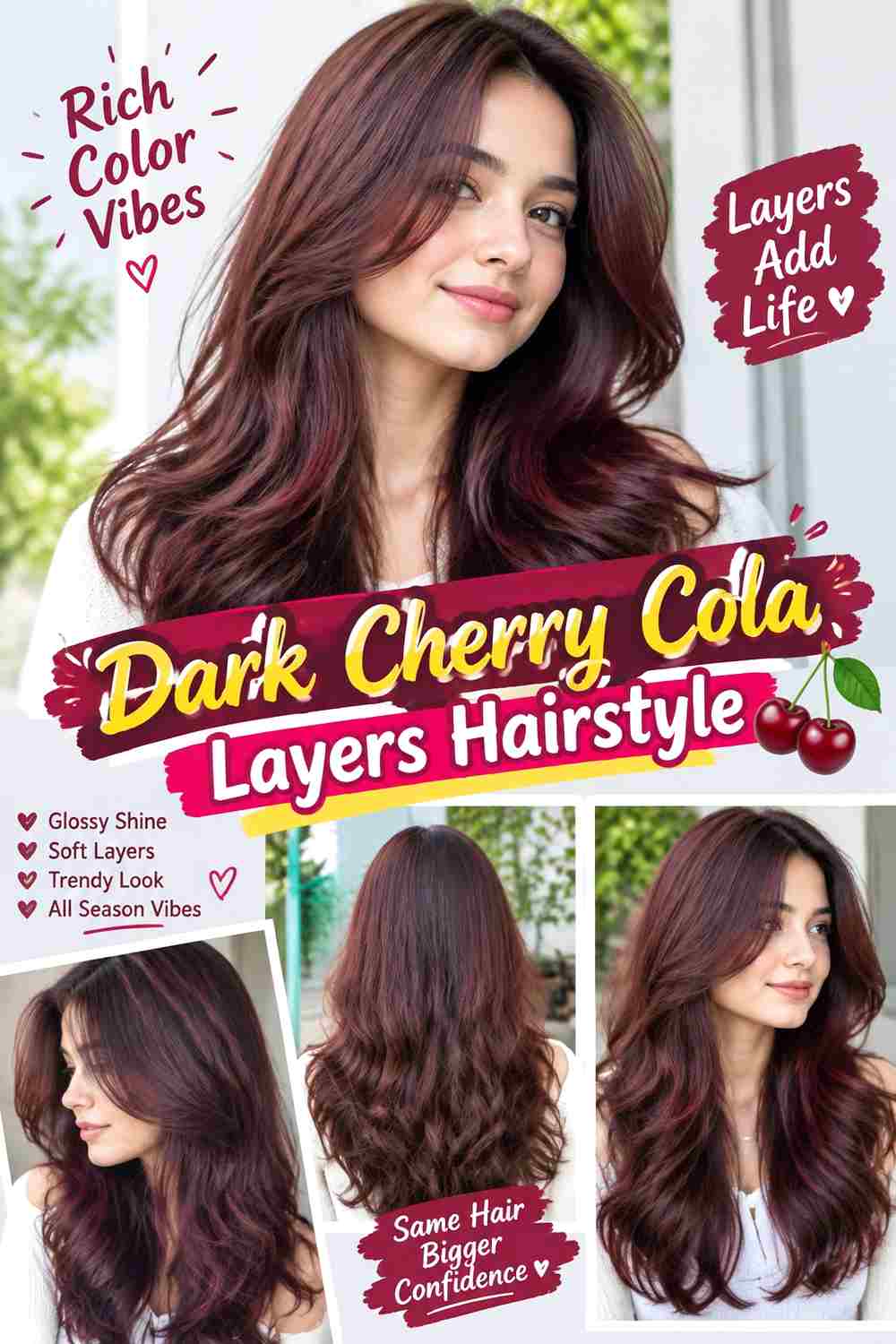
Dark cherry cola sits in the deep red-brown side of the black cherry family, giving layered hair a rich but relatively restrained color direction. Long layers beginning around the chin allow reddish-brown reflections to appear through moving sections, while a deeper root maintains depth. Broad bends through the mid-lengths can reveal the tonal variation without requiring highly defined curls.
This is useful when you prefer red character that remains connected to a dark brunette appearance. The precise result depends on your starting color and previous chemical history, so treat “cherry cola” as a visual description rather than a fixed formula. Color-safe shampoo and conditioner support routine care, while heat protectant belongs in the routine if you use hot tools. Restyling a few front layers is quicker than recreating a full blowout after washing.
At the salon, explain how much brown you want to retain compared with the visible cherry-red component. Bring references showing your preferred depth in ordinary lighting. If you also want layers, point to the shortest face-framing piece rather than requesting vague movement throughout. Color can lose visible richness while the haircut still holds its shape, so color refreshing and layer reshaping may happen at different times. Monitor both based on the result you want to maintain.
Pro tip:
Look at your chosen reference near the roots, mid-lengths, and ends separately. Identifying where the cherry is strongest gives your colorist more useful placement information than describing the entire shade with one name.
Make It Work for You:
For an even darker interpretation, retain more brunette depth near the roots and through some interior sections. Cherry can appear primarily on moving surfaces while the overall impression remains deep and subdued.
Watch Out For:
Do not judge the tone only under very warm indoor lighting, which can change how red-brown color appears. Compare references in neutral daylight when deciding how much visible cherry you actually want.
Black Cherry Ribbon Highlights Hairstyle
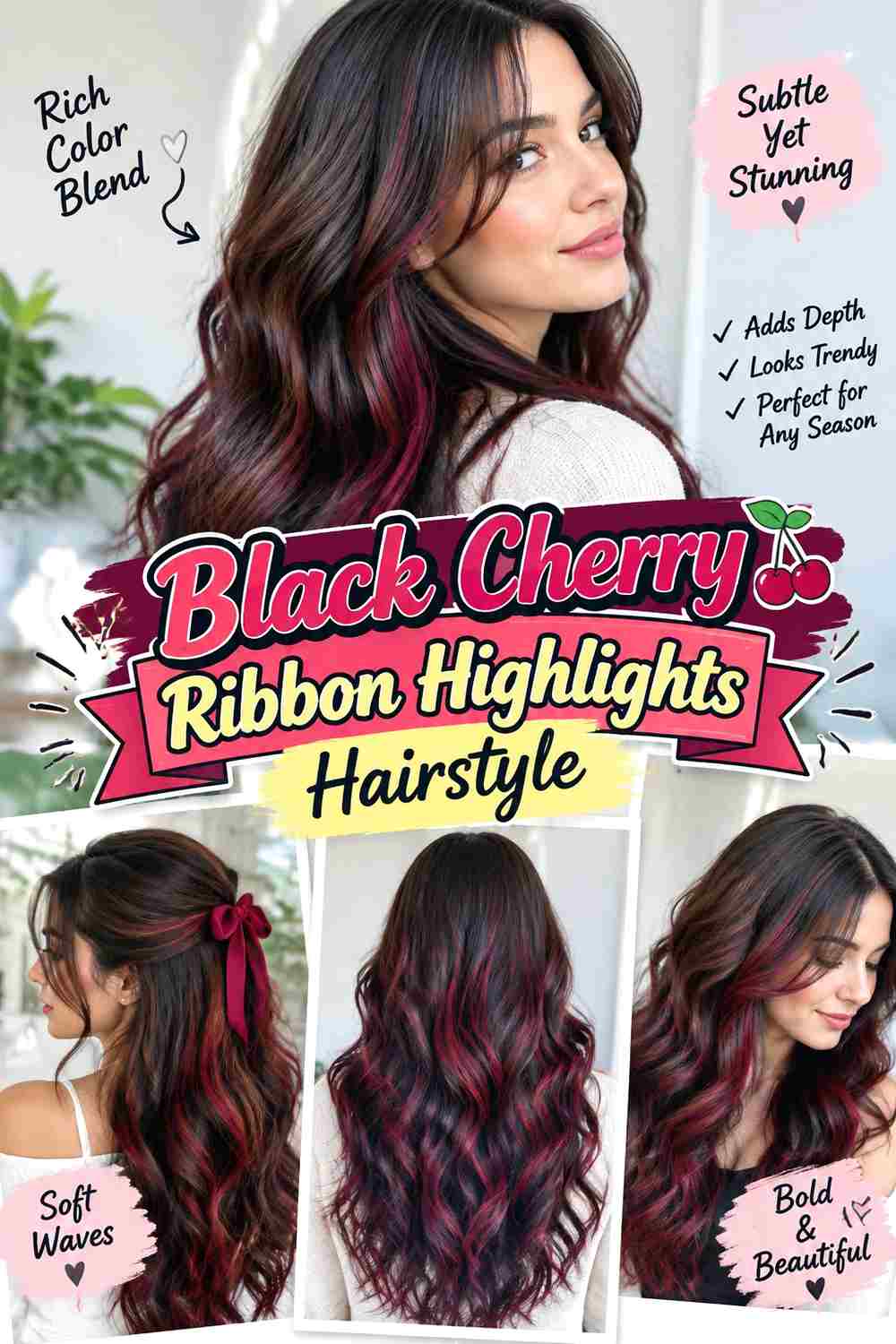
Ribbon highlights create distinct black cherry sections that travel through a darker base rather than blending into one all-over shade. The ribbons can begin below the roots for softer growth or sit higher when stronger contrast is wanted. On medium or long hair, broad waves separate the sections and make their placement easy to follow. Long layers provide additional surfaces without requiring every layer to carry a highlight.
This option works when you want clear dimension but still want plenty of dark hair visible between colored pieces. Existing color and starting depth determine how distinct the ribbons can become. Use color-safe shampoo and conditioner for regular care, plus heat protectant if you use heat to shape waves. Refreshing a few bends can make the ribbons more visible, but the placement should remain attractive without constant styling.
At the salon, show the width and spacing you prefer. Fine, numerous highlights create a different result from a smaller number of broader cherry ribbons. Also explain how close to the root you want the visible color to begin. Regrowth is generally less uniform than with an all-over shade, but higher placement can still show changes around the part. Refresh the color according to fading and contrast rather than assuming every ribbon needs frequent adjustment.
Pro tip:
Before your appointment, note where you usually place your part and whether you wear your hair up. Both habits expose different sections, so they can influence where the most visible ribbons should sit.
Make It Work for You:
If your hair is shorter, use fewer, strategically placed ribbons rather than trying to fit many sections into limited length. The contrast can remain clear without making the color pattern feel crowded.
Watch Out For:
Too many similarly spaced ribbons can reduce the dark background that gives this idea dimension. Preserve enough base between colored sections so the black cherry placement remains easy to distinguish.
Muted Black Cherry Lob Hairstyle

A muted black cherry direction reduces the brightness of the red component while retaining a deep burgundy-cherry impression. A collarbone-length lob gives the tone a broad surface, and subtle layers below the jaw can add movement without interrupting the color. A center or soft side part works well, while gentle bends help reveal the difference between the deeper base and quieter red-violet reflections.
This idea can appeal to readers who want black cherry without a highly vivid finish. However, the achievable tone still depends on the starting shade and existing color. Bring references that clearly show what “muted” means to you. Color-safe shampoo and conditioner can support routine care, while heat protectant is useful before hot styling. A simple dry refresh may involve only the front bends; complete wash-day styling takes longer.
At the salon, identify whether you want the muted effect throughout or a deeper root with slightly more visible cherry through the lengths. If you are also cutting a lob, clarify where the perimeter should sit around the collarbone and how much layering you want. The color can gradually lose saturation, while the haircut grows longer on a separate timeline. Evaluate the tone when it no longer shows the red-violet character you want, rather than confusing natural fading with the need for a haircut.
Pro tip:
Bring a reference that shows the color in bright natural light. Deep muted shades can look almost brunette in dim settings, so daylight helps communicate the amount of cherry visibility you actually expect.
Make It Work for You:
If you want slightly more dimension, keep the muted base but add a few subtly stronger cherry sections around the face. This preserves the restrained overall effect while making the color easier to notice.
Watch Out For:
“Muted” does not mean the same thing to every colorist or reference creator. Point to the exact level of red and violet visibility you prefer rather than relying on the descriptive word alone.
Violet Black Cherry Curls Hairstyle
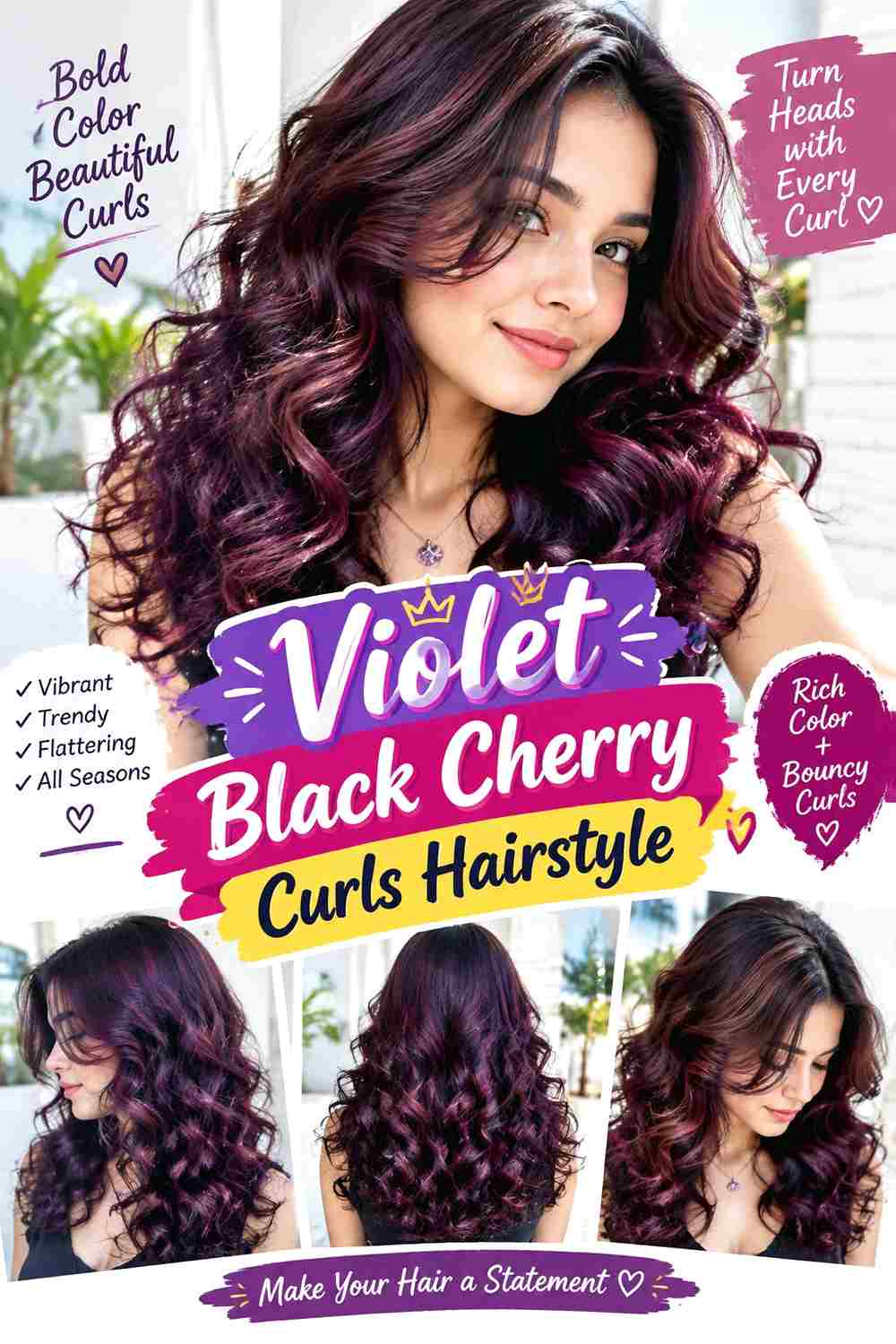
A violet-leaning black cherry shade can become especially dimensional on curls because each curl group exposes different surfaces as it bends. The darkest areas may remain nearly brunette, while more visible sections show a deep red-violet character. Layering can begin around the cheekbones or jaw to release curl movement, with the overall length chosen according to the desired silhouette and shrinkage.
Curly and coily textures do not need to be straightened to display dimensional color. Lightweight leave-in conditioner can support moisture, curl gel can encourage grouping, and a diffuser can help define the finished shape. A quick refresh may target only flattened front curls, while a complete wash-day routine takes longer depending on density and drying time. Color processing decisions should be made professionally according to the hair’s starting condition.
At the salon, show how violet you want the visible cherry sections to appear and where you want the strongest color. If you are also changing the haircut, discuss layer placement in its dry state rather than using stretched curl length alone. Color fading and curl reshaping are separate maintenance issues. Refresh the tone when it loses the red-violet balance you prefer, while reshaping the cut when layers stop supporting the desired curl distribution.
Pro tip:
Photograph your preferred references in daylight if possible and point out the violet sections specifically. Deep colors can shift visually under indoor lighting, making a clearly identified target more useful than the shade name.
Make It Work for You:
If you prefer less violet, retain more deep cherry-red through the main lengths and use violet character only in selected surface sections. Curl movement can reveal those accents without making them dominate.
Watch Out For:
Do not assume visible curl color requires heavy separation of every curl group. Excessive manipulation can alter the shape; let the natural movement reveal the color and separate only where useful.
Black Cherry Face Frame Hairstyle

Face-framing color places black cherry through sections surrounding the cheeks and jaw while leaving the interior and back noticeably darker. Unlike one bold money piece, this idea can use several graduated cherry sections that become wider or more visible through the lengths. Cheekbone and jaw-level layers help expose the placement, particularly when the hair moves away from the face.
This design works for readers who want the color concentrated where it is easily visible without committing to an all-over change. Ask a colorist how your starting shade affects the achievable contrast. Color-safe shampoo and conditioner support the colored sections, while heat protectant is useful when you shape the face frame with heat. Refreshing only the front styling can be quick; full wash-day effort depends on your overall length and texture.
At the salon, identify exactly how far back you want the colored frame to extend. A narrow frame creates a subtle accent, while broader placement changes much more of the visible front. Also clarify whether the cherry should start close to the root or transition from a deeper base. Regrowth near the hairline can become noticeable sooner than lower balayage placement, so consider that commitment when deciding how high the color should begin.
Pro tip:
Wear your normal part to the appointment so the colorist can see which front sections are actually exposed. Placement designed around your everyday part is more useful than placement based on temporary styling.
Make It Work for You:
For softer maintenance, keep the roots deeper and let the cherry become stronger toward the cheek and jaw sections. The frame remains visible while the transition near new growth can appear gentler.
Watch Out For:
A face frame that extends too far back can stop reading as a distinct front accent. Decide how much dark background you want to preserve before choosing the width and number of cherry sections.
Black Cherry Peekaboo Hairstyle
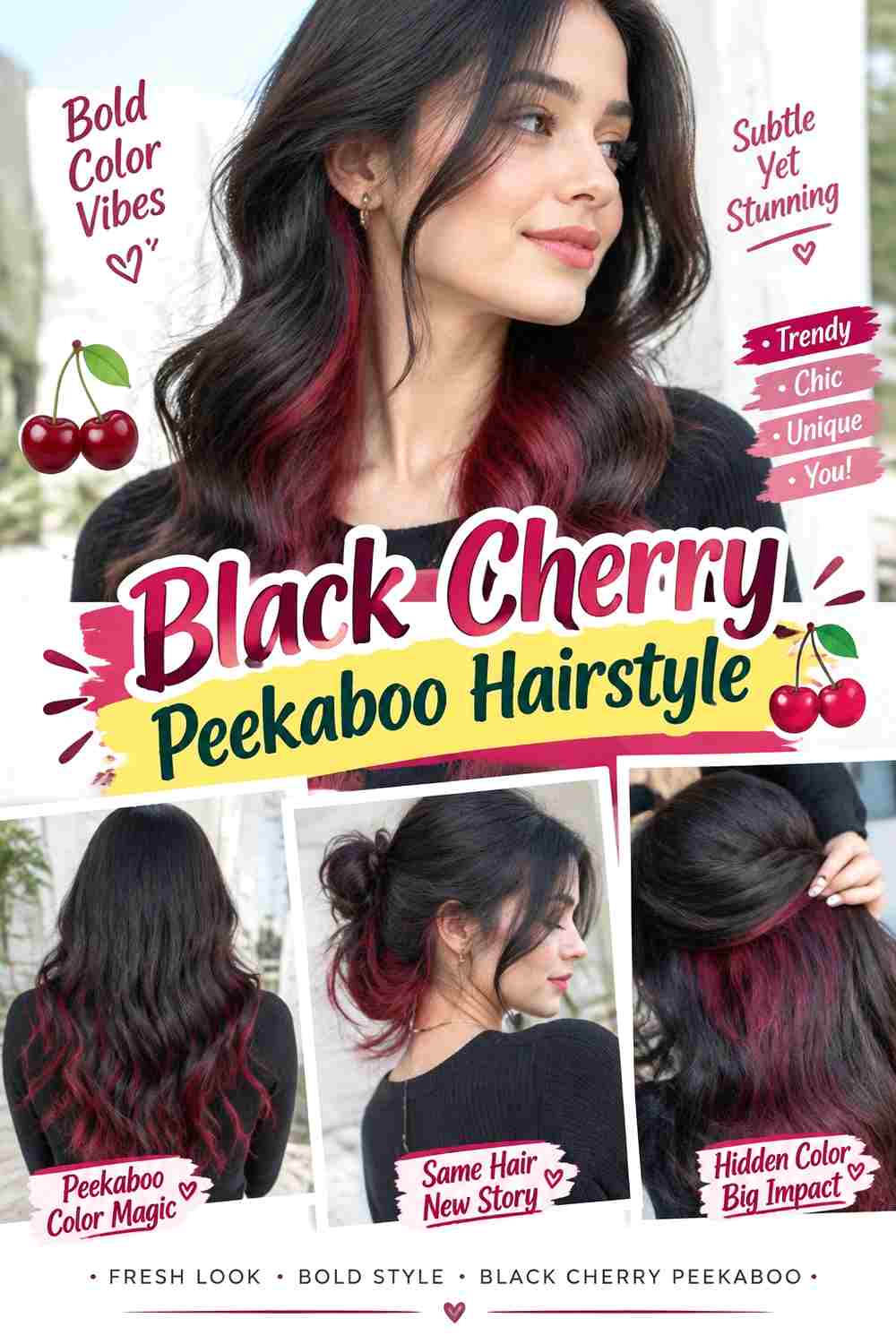
Peekaboo color hides black cherry beneath a darker top layer, allowing it to appear when the hair moves, is tucked behind the ears, or is styled up. The placement can sit around the lower sides and nape rather than dominating the crown. Medium and long hair provide plenty of coverage, while layered sections can reveal flashes of cherry without exposing the entire panel continuously.
This is useful when you want a less constantly visible color placement. The contrast between the top layer and hidden sections depends on the starting shade and achievable cherry depth. Color-safe shampoo and conditioner can support routine care, while heat protectant is useful if you regularly style the layers to reveal the hidden color. A simple tuck or half-up arrangement can expose the placement without requiring a full styling session.
At the salon, explain when you want the cherry to be visible: only during movement, behind the ears, or clearly whenever the hair is half-up. That decision determines panel height and width. Also discuss how the placement will appear with your normal part. Root regrowth may be less immediately obvious because the colored area is partly concealed, but the cherry itself can still lose saturation. Refresh based on how visible and rich you want those hidden sections to remain.
Pro tip:
Show your colorist the updos or half-up styles you wear most often. Hidden panels that align with those sections can reveal the cherry intentionally rather than appearing in unexpected isolated patches.
Make It Work for You:
For shorter hair, place the hidden color strategically behind the ears or beneath the upper back section. A smaller panel can still create a clear peekaboo effect when the bob moves.
Watch Out For:
Do not place the hidden color without considering how often you tuck your hair. A panel intended to stay subtle may become highly visible if your everyday styling exposes that exact area.
Black Cherry Ombré Hairstyle
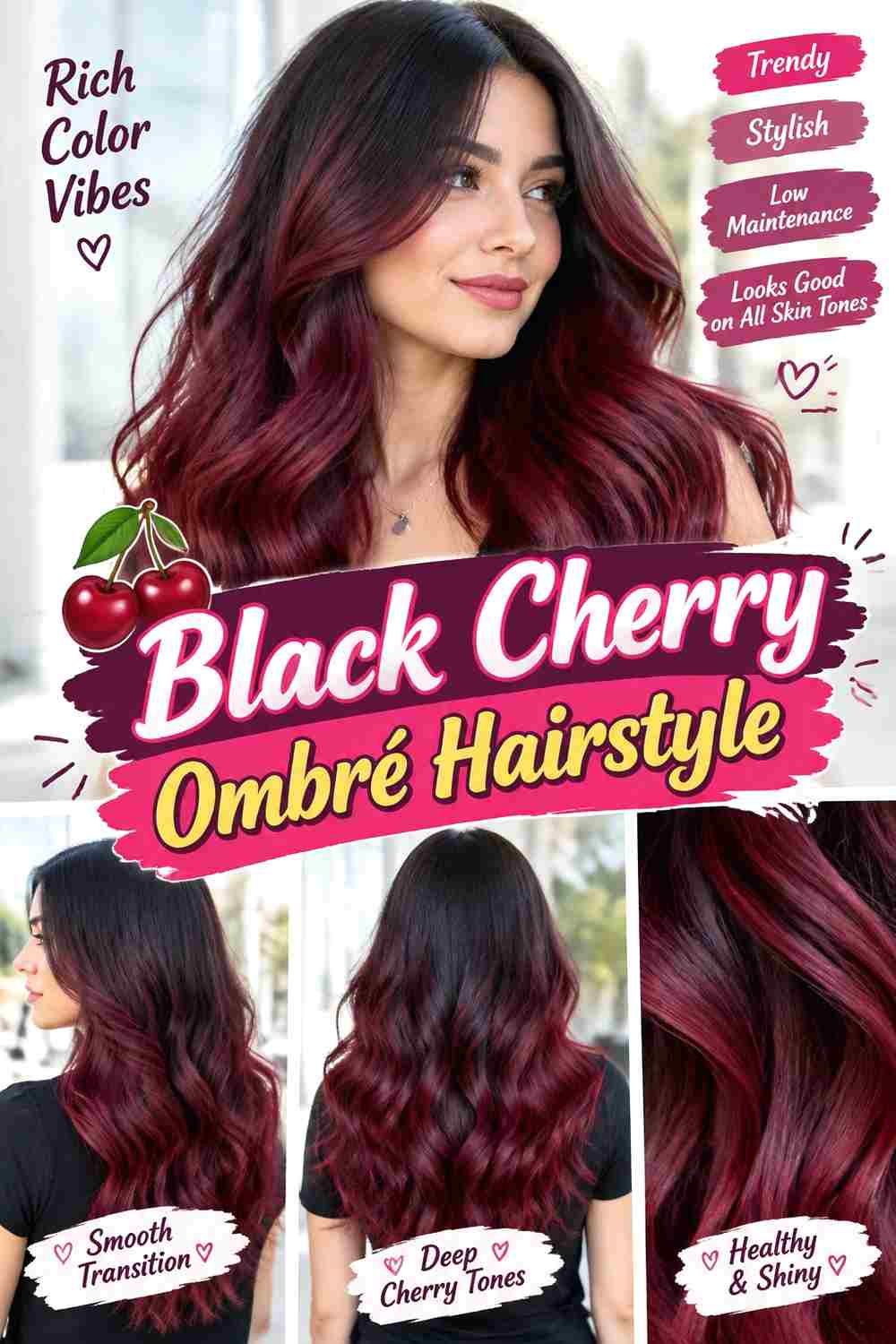
A black cherry ombré keeps the roots and upper lengths deep before increasing the visible cherry tone toward the ends. The transition can begin around the mid-lengths, gradually moving from near-black or deep brunette into burgundy-red or red-violet ends. Long hair shows the progression clearly, while waves can reveal several points along the transition without requiring sharp bands.
This option suits readers who prefer dark roots and stronger color away from the scalp. What can be achieved depends on the starting color, previous processing, and hair condition. Color-safe shampoo and conditioner support routine care, and heat protectant is appropriate when using hot tools to create waves. A quick styling refresh can emphasize the ends, but the ombré should remain readable when the hair is straight.
At the salon, point to where you want the visible transition to begin and how strong the ends should appear compared with the roots. A high transition creates more cherry coverage; a low one preserves more dark length. Root grow-out can be less central to the design than with all-over color, although the colored ends still need tonal maintenance as they fade. If you trim significant length, remember that some of the brightest placement may also be removed.
Pro tip:
When choosing references, inspect the transition zone carefully rather than focusing only on the bright ends. A gradual middle section is what prevents the two colors from looking like unrelated blocks.
Make It Work for You:
For medium-length hair, begin the transition slightly higher so there is enough room to show a gradual change. Keep the root deep to preserve the defining dark-to-cherry progression.
Watch Out For:
A transition compressed into too little length can resemble dip-dyed ends rather than ombré. Discuss how much vertical space your hair provides and where the blending should become visibly stronger.
Espresso Black Cherry Hairstyle
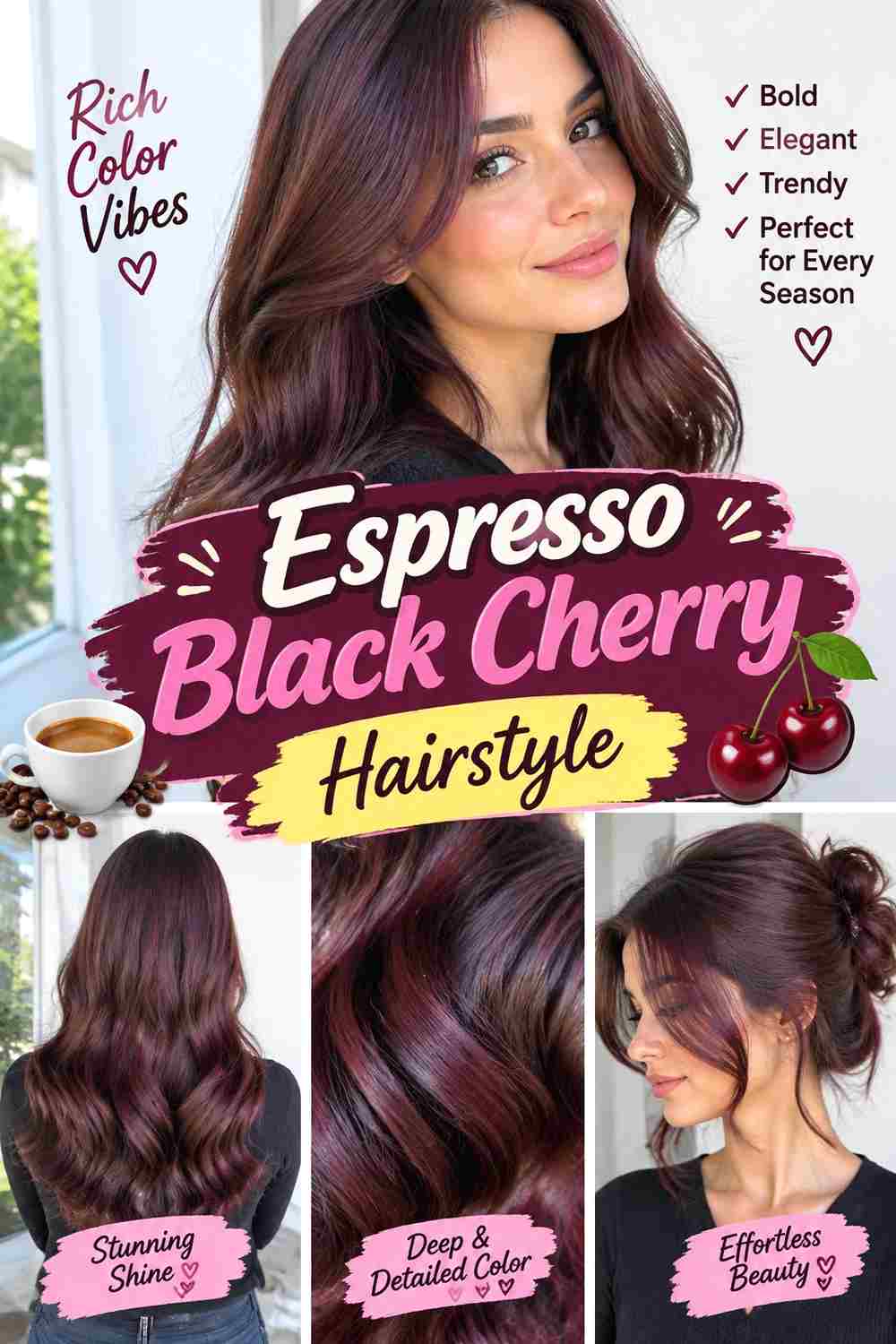
Espresso black cherry keeps a strong dark-brown impression with cherry-red dimension appearing more subtly through selected surfaces. Instead of making every section visibly burgundy, the color can remain deep around the roots and interior while showing richer cherry reflections around the face, upper layers, and ends. Straight hair emphasizes the dark foundation, while soft bends expose more of the red character.
This version suits someone who wants a restrained connection between brunette and black cherry. Your natural or existing color determines how easily that relationship can be created, so discuss the target visually rather than expecting a standard formula. Color-safe shampoo and conditioner support routine maintenance, while heat protectant is useful before heated styling. A small front refresh can reveal the dimension without requiring a full wave set.
At the salon, explain that you want the espresso depth to remain clearly present rather than disappearing beneath an all-over red appearance. Point out where the cherry should be most visible and whether you prefer red or red-violet reflections. Root contrast may be softer if your starting color is similarly deep, but that varies by individual hair. Refresh the color when the cherry dimension becomes too muted for your preference, while keeping haircut maintenance on its own schedule.
Pro tip:
Use references where both the brunette base and cherry reflection are clearly visible. If every saved image is photographed under red-toned lighting, it becomes harder to communicate the true balance you want.
Make It Work for You:
For more visible color, increase the cherry presence around the face and surface layers while keeping the interior espresso-deep. Movement will reveal brighter sections without changing the overall dark character.
Watch Out For:
Do not assume a shade that looks nearly black indoors will reveal strong cherry outdoors automatically. The result depends on actual pigment and placement, so identify your desired daylight visibility during consultation.
Black Cherry Shag Hairstyle
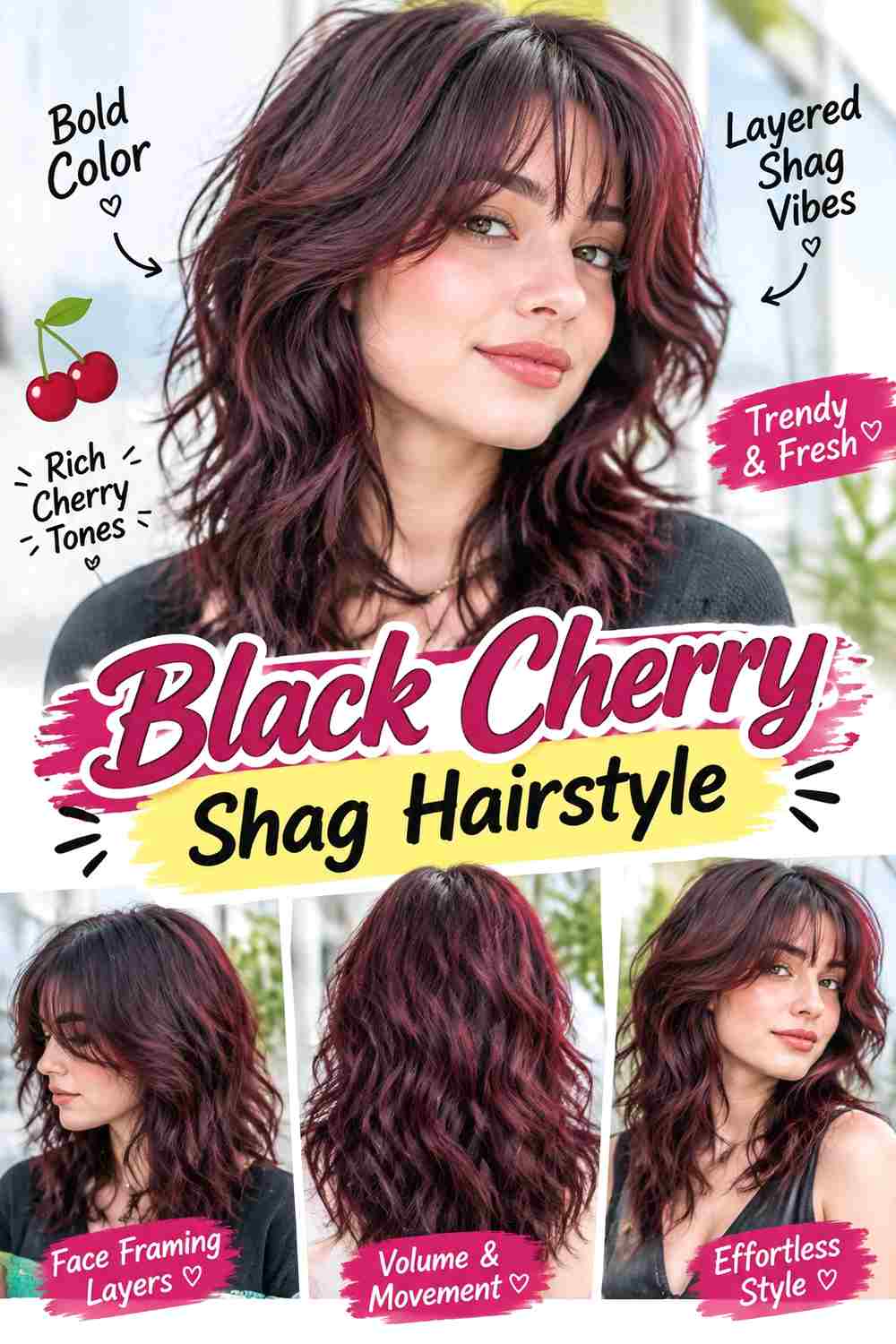
A shag gives black cherry color many moving surfaces through shorter crown layers, face framing, and lighter ends. The deepest tone can remain near the roots, while richer cherry sections appear through the cheekbone layers, sides, and lower lengths. A wispy fringe can carry a smaller amount of visible color across the forehead, linking the front to the layered shape.
Wavy and curly textures can reveal dimensional placement naturally, while straight hair may need styling to make every layer equally visible. Lightweight mousse supports movement, heat protectant belongs in the routine when hot tools are used, and flexible hairspray can hold selected sections. Refreshing the fringe and crown can be relatively quick; restyling all the shag layers after washing takes longer.
At the salon, discuss color placement and layer placement separately. Point to where the shortest face-framing layer should sit, then identify which sections you want to carry the strongest cherry tone. If every layer is colored identically, the effect becomes more uniform; selective placement preserves deeper contrast. Color fading may require attention before the shag itself needs reshaping, while fringe can need trimming earlier than both. Keeping these maintenance needs separate makes the overall commitment easier to understand.
Pro tip:
Place stronger cherry visibility on a few moving surface layers rather than expecting every short piece to contrast equally. Selective brightness helps the layered shape reveal color as it shifts.
Make It Work for You:
If you air-dry your shag, choose placement that remains visible with your natural texture. You should not need a full curled finish every day simply to make the black cherry dimension readable.
Watch Out For:
Do not let dramatic color distract from the haircut’s density needs. If your ends are already sparse, preserve enough perimeter and use color placement—not extra cutting—to create additional visual separation.
Black Cherry Curly Bob Hairstyle

A curly bob concentrates black cherry color into a compact silhouette where individual curl groups can display different depths. The perimeter may settle around the jaw or slightly below, while shorter front and upper layers release movement. Deep roots can provide a dark foundation, with cherry or burgundy visibility distributed through the surface curls and ends rather than appearing as one flat tone.
Curly and coily hair can show the color without heat styling. Lightweight leave-in conditioner supports moisture, curl gel helps maintain grouping, and a diffuser can provide controlled drying when desired. A few front curls can be refreshed separately between washes, while full wash-day styling takes longer. Any chemical color process should be planned according to the hair’s starting color, existing processing, and condition.
At the salon, discuss both the dry bob length and the desired color distribution. Ask where the cherry should be most noticeable when the curls sit naturally. Shrinkage matters for the cut, while starting pigment matters for the color, so neither should be judged from a stretched section alone. Root growth and color fading can become visible on a different timeline from haircut grow-out. Maintain each according to the shape and saturation you actually want.
Pro tip:
Before separating dry curls, look at where the color is already visible. Opening only a few larger curl groups can expose additional cherry surfaces without unnecessarily disturbing the definition across the entire bob.
Make It Work for You:
If you want lower color contrast, keep the root and interior curls deeper while concentrating cherry visibility on selected surface groups. The bob gains dimension without requiring every curl to appear equally red.
Watch Out For:
Do not assess the final color only while curls are wet. Wet hair can appear darker, so judge the visible black cherry balance after the texture has dried and settled into its normal shape.
Black Cherry Dip-Dyed Ends Hairstyle

Dip-dyed placement keeps most of the hair dark and concentrates black cherry at the lower ends. Unlike a gradual ombré, the transition is intentionally more noticeable, although it can still be softened enough to avoid a harsh horizontal stripe. On medium or long hair, the cherry section might occupy the last several inches, with waves or layered ends breaking up the boundary visually.
This option works when you want the strongest color away from the roots. It also keeps new root growth largely outside the main color story, though the ends still require tonal care. Color-safe shampoo and conditioner can support the colored lengths, while heat protectant is useful before styling those ends with hot tools. A quick wave refresh can reveal the contrast, but straight hair should still show the intended placement clearly.
At the salon, specify how much of the lower length you want colored and whether the transition should be crisp or softly diffused. Existing color and hair condition influence what contrast is realistically possible. Remember that future trims remove part of the colored area, particularly if the placement is very low. Refresh the cherry when it loses the desired saturation, and coordinate significant haircuts with your color plan so the placement does not disappear unexpectedly.
Pro tip:
Before choosing the transition height, gather your hair into your usual ponytail or updo. Seeing where the ends sit can help you decide how much cherry you want visible in everyday styling.
Make It Work for You:
For shorter hair, reduce the height of the colored section so enough dark base remains visible. Maintaining that contrast is what keeps the design reading as intentionally colored ends rather than all-over cherry.
Watch Out For:
Do not plan a major length trim immediately after choosing very low dip-dyed placement without discussing it. Removing several inches can significantly reduce or completely change the visible colored section.
Soft Black Cherry Melt Hairstyle
A soft color melt creates one of the most blended black cherry effects by moving from a deep root into richer cherry mid-lengths and slightly more visible ends without obvious dividing lines. Long or medium hair provides room for the gradual transition, while face-framing layers can reveal the changing tone near the front. Soft waves enhance dimension, but the placement should remain smooth when worn straight.
This design suits someone who prefers transition over distinct ribbons or panels. Starting color, previous processing, and condition determine what can be achieved, so a colorist should assess the hair before planning the result. Color-safe shampoo and conditioner support routine care, while heat protectant is useful if you style with hot tools. Refreshing a few front bends can be quick; a full styled finish takes longer.
At the salon, identify how dark you want the root and where you want the cherry to become clearly noticeable. Also explain whether the ends should remain deep or show the strongest red-violet character. Because the root transition is intentionally soft, grow-out may appear less abrupt than a uniform all-over placement, though individual results vary. Tonal fading still affects the lengths, so maintenance should respond to lost saturation rather than root growth alone.
Pro tip:
Choose references where the root, middle, and ends are all visible. A color melt is defined by the relationship among those zones, so a close-up showing only the brightest section gives incomplete guidance.
Make It Work for You:
If you want a darker result, keep the cherry shift subtle until the lower mid-lengths. You can preserve a long stretch of deep color while still achieving a blended, dimensional transition.
Watch Out For:
A color melt should not depend on waves to hide abrupt bands. Check how your desired reference looks with straighter styling so you can evaluate the transition itself rather than the camouflage created by curls.
Conclusion
Black cherry hair color can range from an almost espresso-deep shade with subtle red reflection to more visible burgundy, plum, or violet-cherry placement. All-over color creates the most continuous effect but can make root growth more noticeable. Balayage, melts, ombré, peekaboo panels, and ribbons preserve more dark contrast and change how the color grows out. Waves and curls expose multiple color surfaces, while straight hair makes transitions particularly easy to judge. Your starting color, previous processing, hair condition, texture, and usual styling routine all affect what is practical. Compare not only how bright you want the cherry component, but also where you want it placed and how much ongoing tonal maintenance fits your routine.
Before Your Salon Visit
Choose one or two favorite references and save images that clearly show the color in useful lighting. Discuss your starting color, previous color history, texture, density, haircut, usual part, styling routine, and maintenance preference. Point out the exact root depth, cherry visibility, red-to-violet balance, contrast, face-framing placement, ribbons, or transition you like. If you prefer one reference’s root and another one’s ends, explain that distinction and let your colorist assess what is realistically achievable for your hair.
FAQs
Does black cherry hair look red, purple, or brown?
It can show elements of all three, depending on the chosen tone, starting color, placement, and lighting. Some interpretations stay close to deep brunette with cherry-red reflection, while others lean toward burgundy or violet. References are therefore more useful than assuming the name represents one standardized shade.
Does black cherry hair color fade quickly?
Red and red-violet color can lose visible intensity over time, but the rate varies with the hair, color process, washing routine, products, heat exposure, and other factors. Follow your colorist’s care guidance and consider a tonal refresh when the shade no longer has the saturation you prefer.
Can black cherry color work on naturally dark hair?
Black cherry can be planned around dark starting hair, but the amount of visible red, burgundy, or violet contrast achievable depends on the starting level, previous artificial color, condition, and process. A professional consultation can establish what is realistic without assuming every reference can be duplicated exactly.
Which black cherry placement has softer-looking regrowth?
Balayage, lower ombré, peekaboo placement, and softly melted roots can create less uniform root contrast than taking one shade directly from roots to ends. However, maintenance still varies with your natural color and chosen placement, and the cherry lengths may need tonal refreshing even when roots remain intentionally deep.