18 Golden Walnut Hair Color Ideas
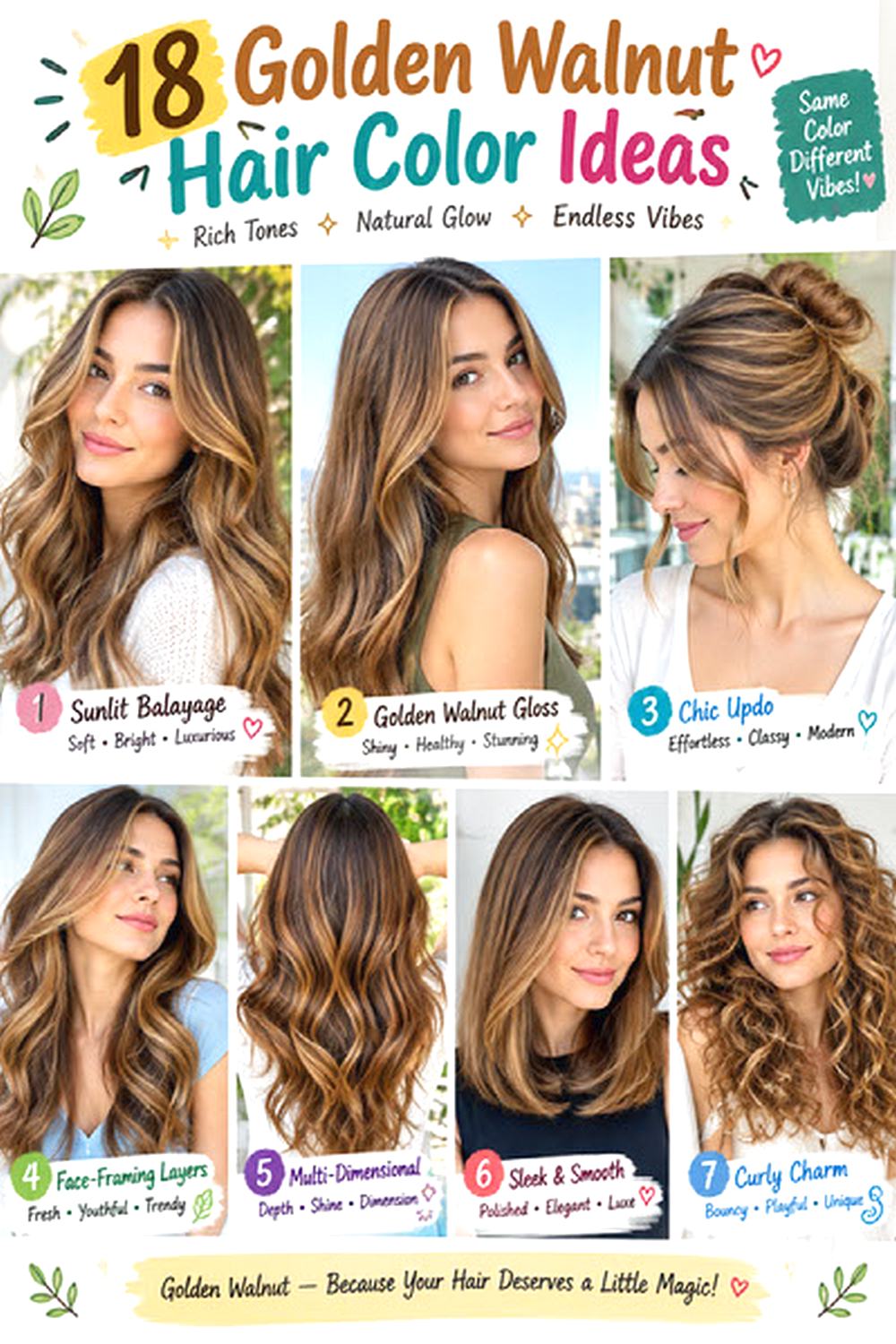
Golden walnut hair color blends medium-to-deep brown with warm gold, caramel, honey, or soft amber tones. Unlike a flat warm brunette, it relies on dimension: darker walnut sections create depth while golden ribbons catch the light around the face, layers, and ends. The finish can range from subtle balayage to brighter face-framing pieces, soft bronde, dimensional curls, or an all-over glossy brown-gold shade.
Placement matters as much as the exact color. Fine hair often looks fuller when slim highlights sit over a deeper base, while thick hair can carry wider ribbons and interior color without losing depth. Straight hair shows clean transitions, waves reveal alternating tones, and curls can benefit from highlights placed around individual bends. Length and layers also change where the lighter sections become visible.
Maintenance depends on how far the color is from your natural base. Shadow roots, lowlights, balayage, and ombre tend to grow out more softly, while brighter money pieces need earlier refreshing. Before choosing golden walnut, consider your starting shade, hair condition, density, natural texture, preferred parting, heat routine, and willingness to maintain gloss and tone.
Golden Walnut Hair Color Ideas: Quick List
- Soft Golden Walnut Balayage Hairstyle
- Golden Walnut on Brunette Base Hairstyle
- Dark Golden Walnut Melt Hairstyle
- Golden Walnut Face Frame Hairstyle
- Caramel Golden Walnut Ribbons Hairstyle
- Honey Golden Walnut Waves Hairstyle
- Golden Walnut With Shadow Root Hairstyle
- Golden Walnut Babylights Hairstyle
- Golden Walnut Money Piece Hairstyle
- Copper Golden Walnut Blend Hairstyle
- Mocha Golden Walnut Dimension Hairstyle
- Golden Walnut Bob Hairstyle
- Golden Walnut Long Layers Hairstyle
- Curly Golden Walnut Highlights Hairstyle
- Golden Walnut Bronde Blend Hairstyle
- Golden Walnut With Rich Lowlights Hairstyle
- Golden Walnut Ombre Hairstyle
- Glossy All-Over Golden Walnut Hairstyle
Soft Golden Walnut Balayage
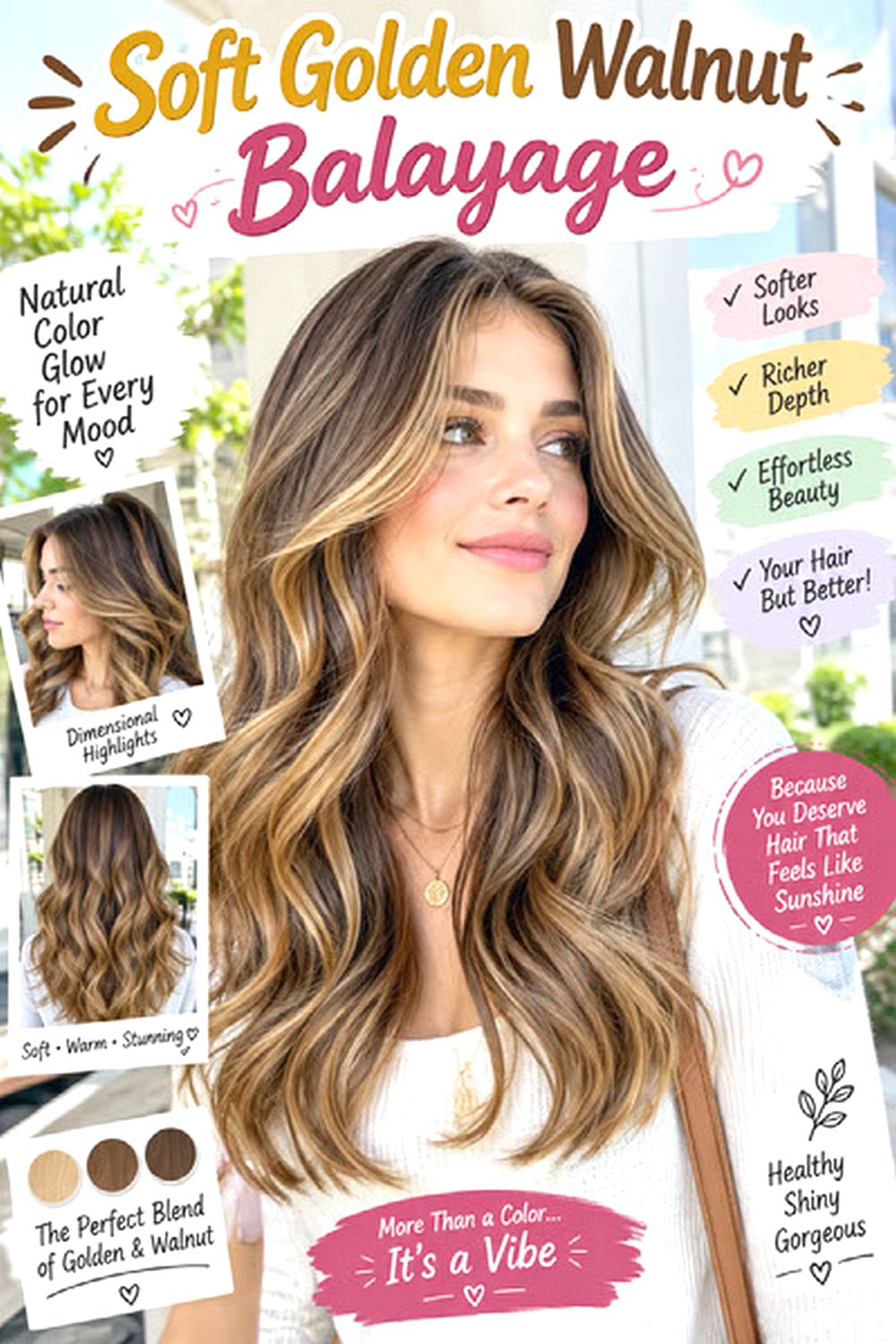
Soft balayage is one of the easiest ways to introduce golden walnut without losing a natural brunette base. Fine golden-brown ribbons begin away from the root and become more visible through the mid-lengths and ends, while brighter pieces near the cheekbones create a gentle face frame. Long and shoulder-length hair show the gradient especially well, and straight to wavy textures make the hand-painted sections easy to see. Fine hair benefits from narrow ribbons that preserve visual density, while thicker hair can handle broader placement. Use a sulfate-free shampoo, heat protectant, and lightweight shine serum to keep the golden finish reflective. Styling is easy to moderate; loose waves reveal more dimension, but a smooth blow-dry works too. The balayage itself grows out softly, though a gloss can refresh faded warmth. At the salon, ask for a brunette root to remain visible and for most brightness to begin around the cheekbones and lower lengths rather than directly at the scalp.
Pro tip:
Leave small sections of untouched brunette between the balayage ribbons. Those darker spaces make the golden walnut pieces look brighter without requiring extra lightening.
Golden Walnut on Brunette Base
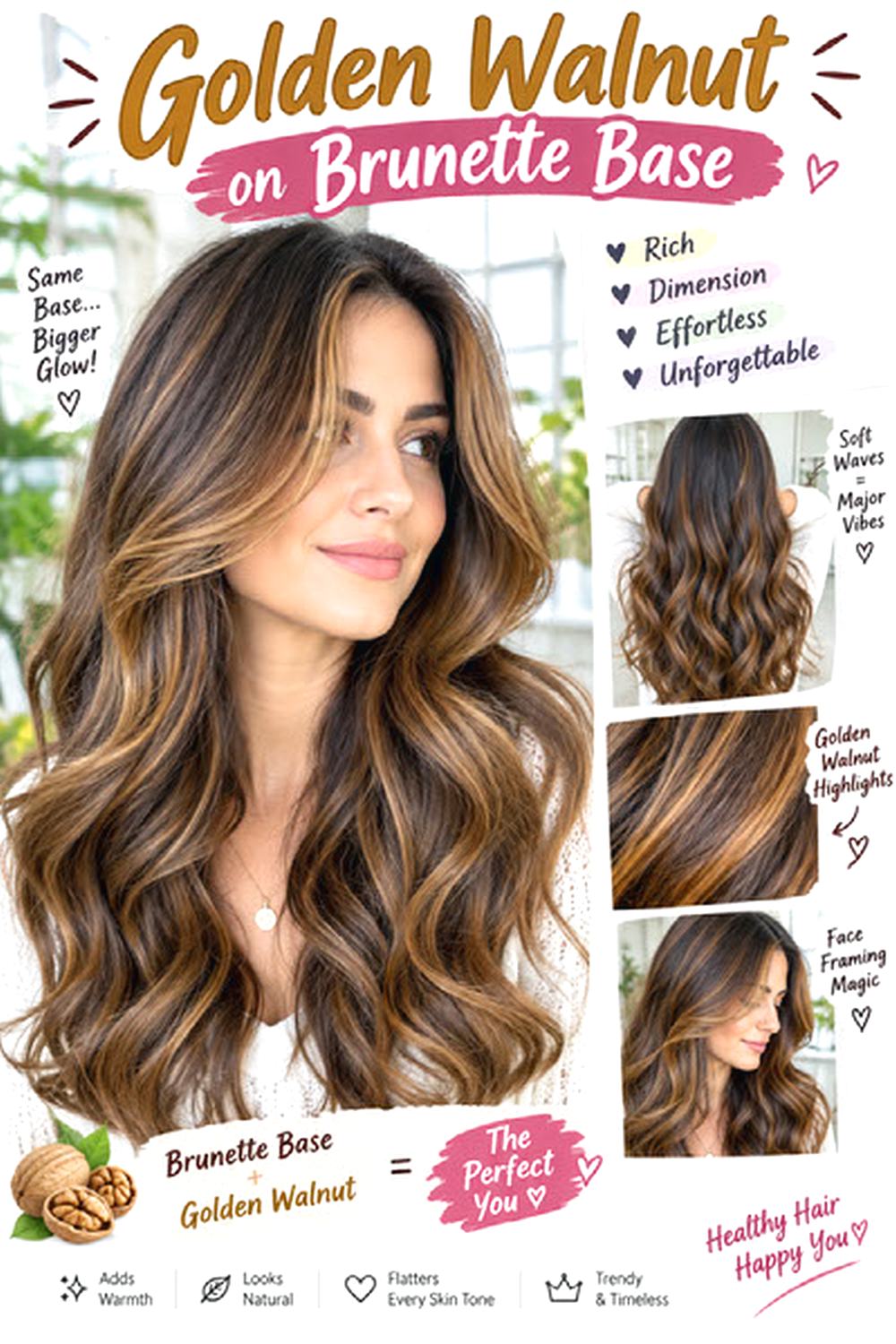
Keeping a brunette base underneath golden walnut highlights gives this color more depth and makes the lighter sections stand out without turning the overall result blonde. The richest brown stays around the roots and interior, while warm walnut ribbons appear along the surface, front layers, and selected ends. Medium-to-thick hair carries this contrast especially well because there is enough density for dark and light sections to alternate. Fine hair can wear the same idea with fewer, slimmer highlights. Straight hair creates clear ribbons, while waves make the contrast softer. Maintain the finish with color-safe shampoo, a moisturizing mask, and heat-protective cream. Daily styling can be quick because the depth is visible even on naturally dried hair. A warm gloss helps when golden tones begin to fade. At the salon, ask to preserve meaningful brunette depth through the back and underneath rather than highlighting every section, with extra brightness reserved for the hairline and face-framing layers.
Pro tip:
If you often wear your hair tied up, ask for a few golden pieces near the nape and side hairline so the color remains visible in ponytails and buns.
Dark Golden Walnut Melt
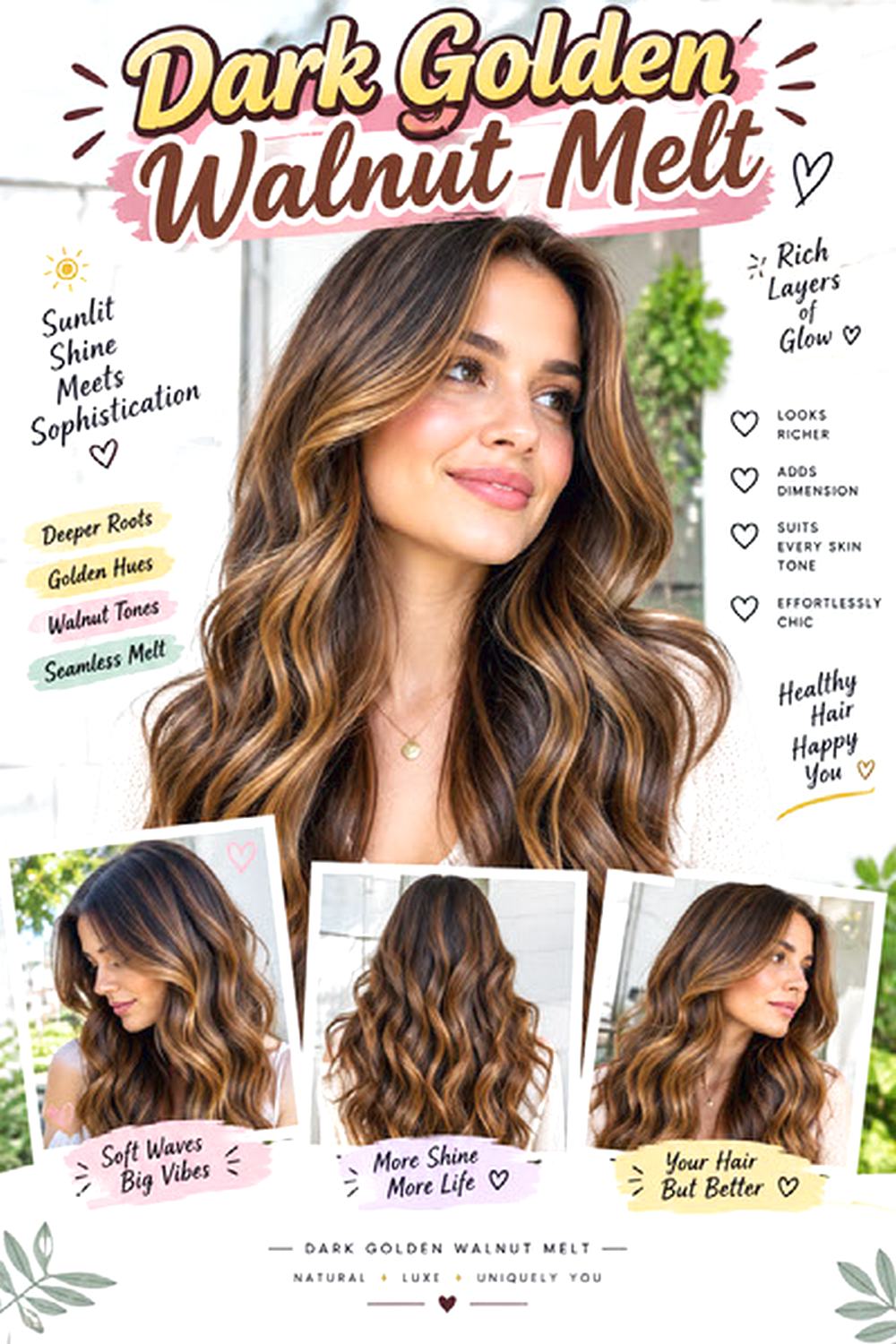
Dark golden walnut stays close to brunette, using warm brown-gold tones rather than obvious blonde highlights. A deep root gradually melts into medium walnut through the mid-lengths, with only subtle golden brightness at the ends and around the face. This is useful for naturally dark hair because it creates movement without requiring every section to be heavily lifted. Thick and medium-density hair show the tonal depth beautifully, while fine hair can use a slightly brighter face frame to prevent the color from feeling too uniform. A hydrating color-safe cleanser, anti-frizz cream, and paddle brush help maintain the smooth glossy finish. Styling is quick if you prefer straight hair and moderate when adding waves. Grow-out is forgiving because the root stays deep, though an occasional gloss keeps the gold from becoming dull. At the salon, ask for the lightest sections to remain within the brunette family and for the transition from root to ends to look gradual rather than highlighted.
Pro tip:
If your natural hair lifts very warm, staying at a deeper golden walnut level may produce a richer result with less unnecessary lightening and easier maintenance.
Golden Walnut Face Frame
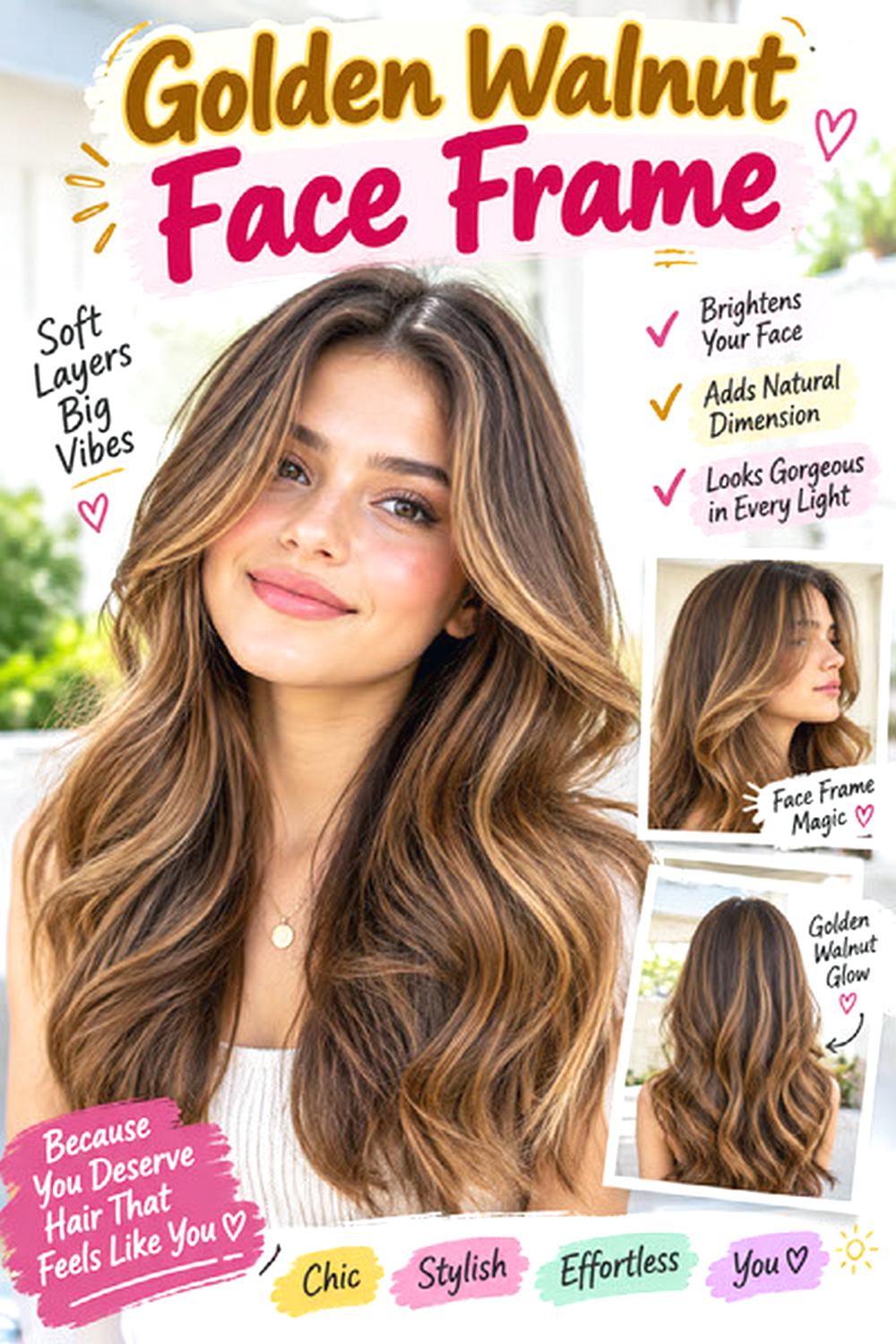
A concentrated face frame gives golden walnut hair a brighter front while keeping the back and interior noticeably deeper. The lightest brown-gold sections sit around the hairline, temples, and cheekbones, then blend into softer walnut ribbons through the ends. This placement works on bobs, medium cuts, and long layers, but the width should match the hair density. Fine hair often looks balanced with narrow pieces, while thick hair can support a wider frame without appearing sparse. Use a bond-supporting treatment, heat protectant, and medium round brush to keep the front smooth and reflective. Styling takes about moderate effort if you blow the front away from the face, though the color remains noticeable without curls. The front may need toning before the darker lengths do. At the salon, show your usual part and ask for the strongest golden walnut brightness to follow the actual hairline rather than being placed for a part you rarely wear.
Pro tip:
Bring a reference photo showing the face frame from the front. Width at the temples changes the result more than it appears to in side-view photos.
Caramel Golden Walnut Ribbons
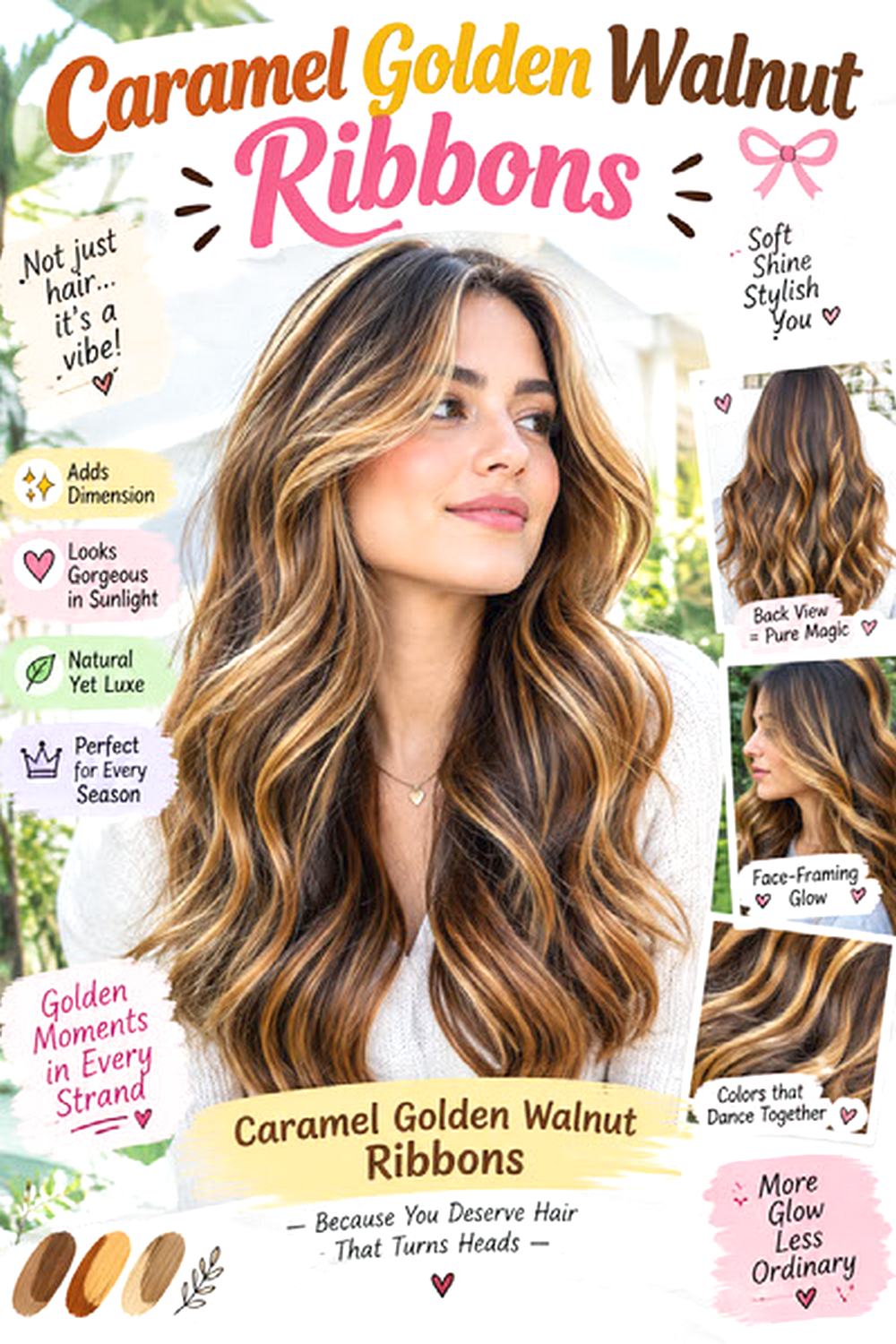
Caramel ribbons make golden walnut hair a little brighter without pushing it toward pale blonde. Medium brown and walnut shades form the base, while caramel sections weave through the front, crown, and longer layers. The contrast is especially visible on wavy hair because each bend exposes a different shade, though straight hair gives the ribbons a cleaner pattern. Medium and thick hair can handle several alternating tones, while fine hair benefits from keeping the lightest sections slim and spaced apart. Use moisturizing shampoo, a wide-barrel curling iron, and lightweight finishing spray for soft movement without a stiff finish. Styling is moderate on wash day and easy to refresh by bending only a few surface pieces. Caramel usually grows out more gently than very bright highlights, but glossing helps preserve richness. At the salon, ask for caramel to sit within a golden-brown range and leave enough walnut base between ribbons so the color retains depth instead of becoming uniformly light.
Pro tip:
Avoid making every highlight the same width. A mix of fine and slightly wider caramel ribbons gives the color a more natural sense of depth.
Honey Golden Walnut Waves
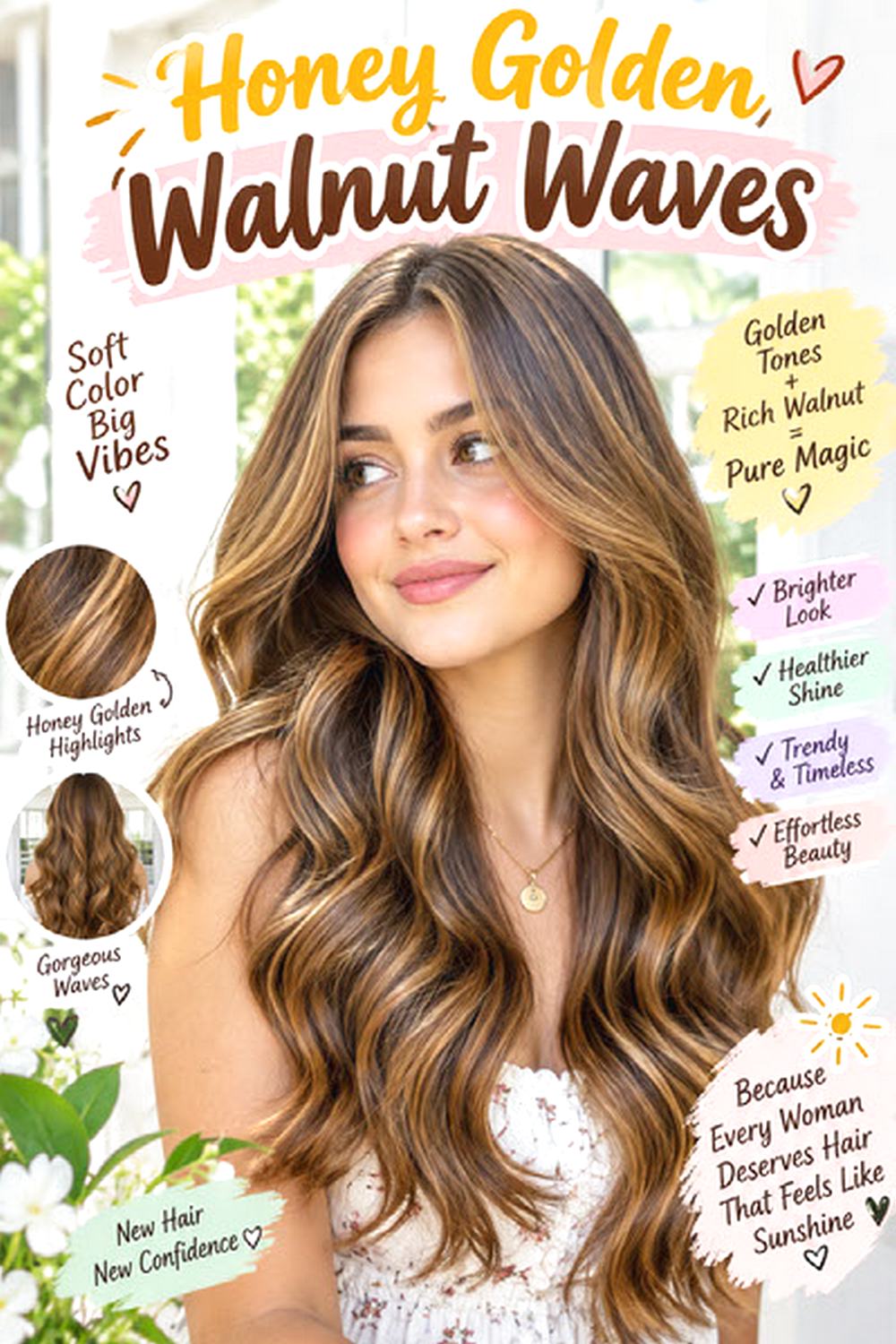
Honey tones bring a brighter golden edge to walnut brown, and loose waves help the two shades blend without losing contrast. The roots remain medium or deep walnut, while honey-gold sections appear through the mid-lengths, front layers, and selected ends. This combination works particularly well on medium-to-long wavy hair, although straight hair can create the movement with heat. Medium density is an easy match; fine hair should keep more dark depth near the ends, while thick hair can support additional interior highlights. Use heat protectant, a large-barrel curling iron, and nourishing hair oil applied sparingly to the ends. Styling takes moderate time after washing but is quick to refresh once the wave pattern is established. Honey tones may become overly yellow if the formula is too light. At the salon, request golden honey-brown rather than blonde and keep a visible walnut root so the final result stays rich.
Pro tip:
Leave the final inch of each wave slightly straighter. The softer bend keeps the honey ribbons relaxed and stops the color from looking overly styled.
Golden Walnut With Shadow Root
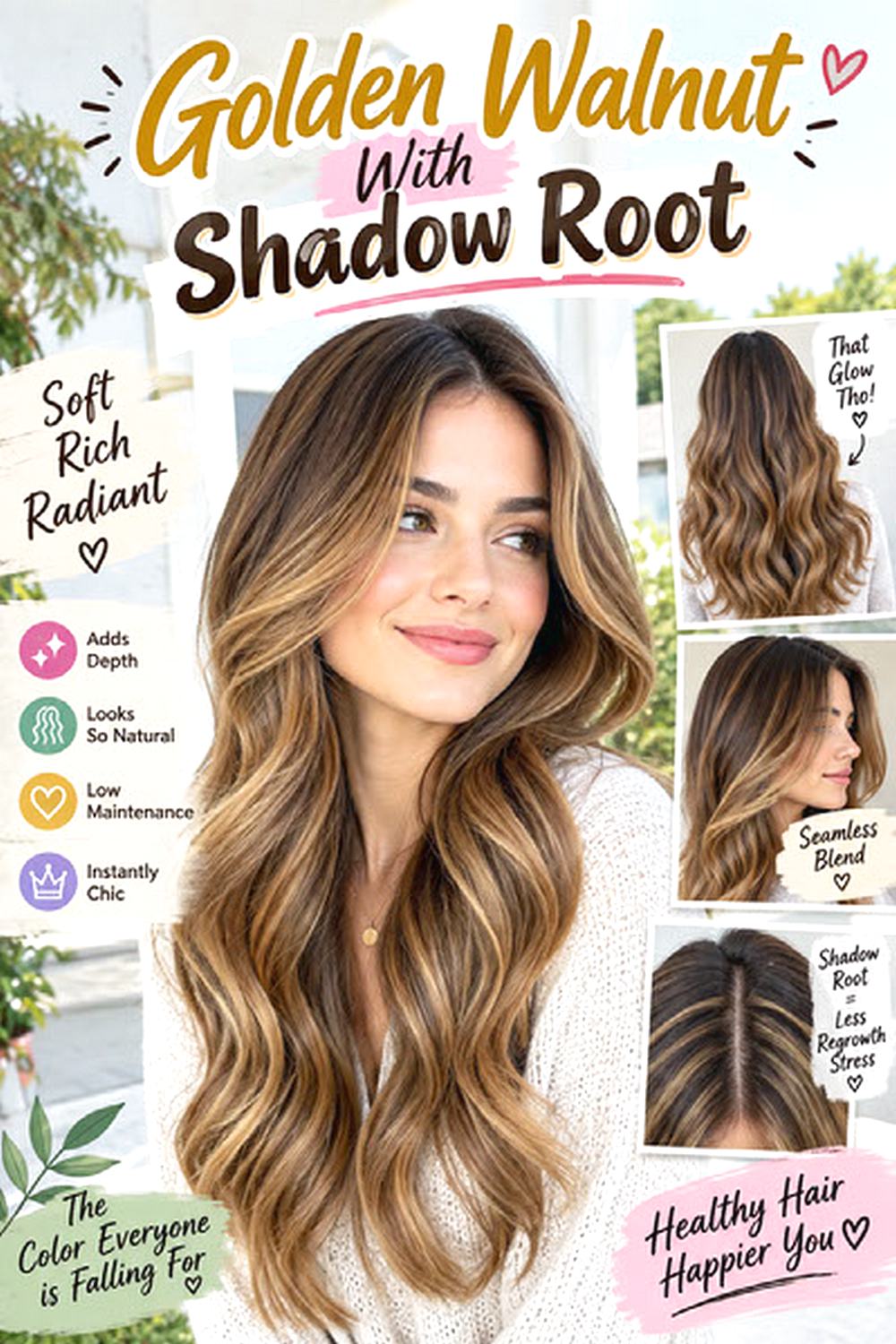
A shadow root makes golden walnut easier to grow out by keeping the first inch or two deeper than the highlighted lengths. The root can stay close to natural brunette, then blur into warm walnut and golden-brown sections around the cheekbones and ends. Long layers show the transition clearly, but the approach also works on lobs and medium cuts. Fine to medium-density hair benefits from the extra root depth because it adds visual contrast, while thick hair can carry stronger brightness farther down. Use color-safe shampoo, a gloss-enhancing conditioner, and blow-dry brush to maintain shine. Styling is relatively quick because the shadow at the roots already gives the color shape and depth. Toner or gloss may need refreshing before the root itself requires work. At the salon, ask for the root shade to stay reasonably close to your natural color and for the blend to dissolve gradually into golden walnut rather than creating a visible horizontal band.
Pro tip:
Do not request a shadow root much darker than your natural regrowth if lower maintenance is your goal. Too much contrast can create another line that needs correcting.
Golden Walnut Babylights
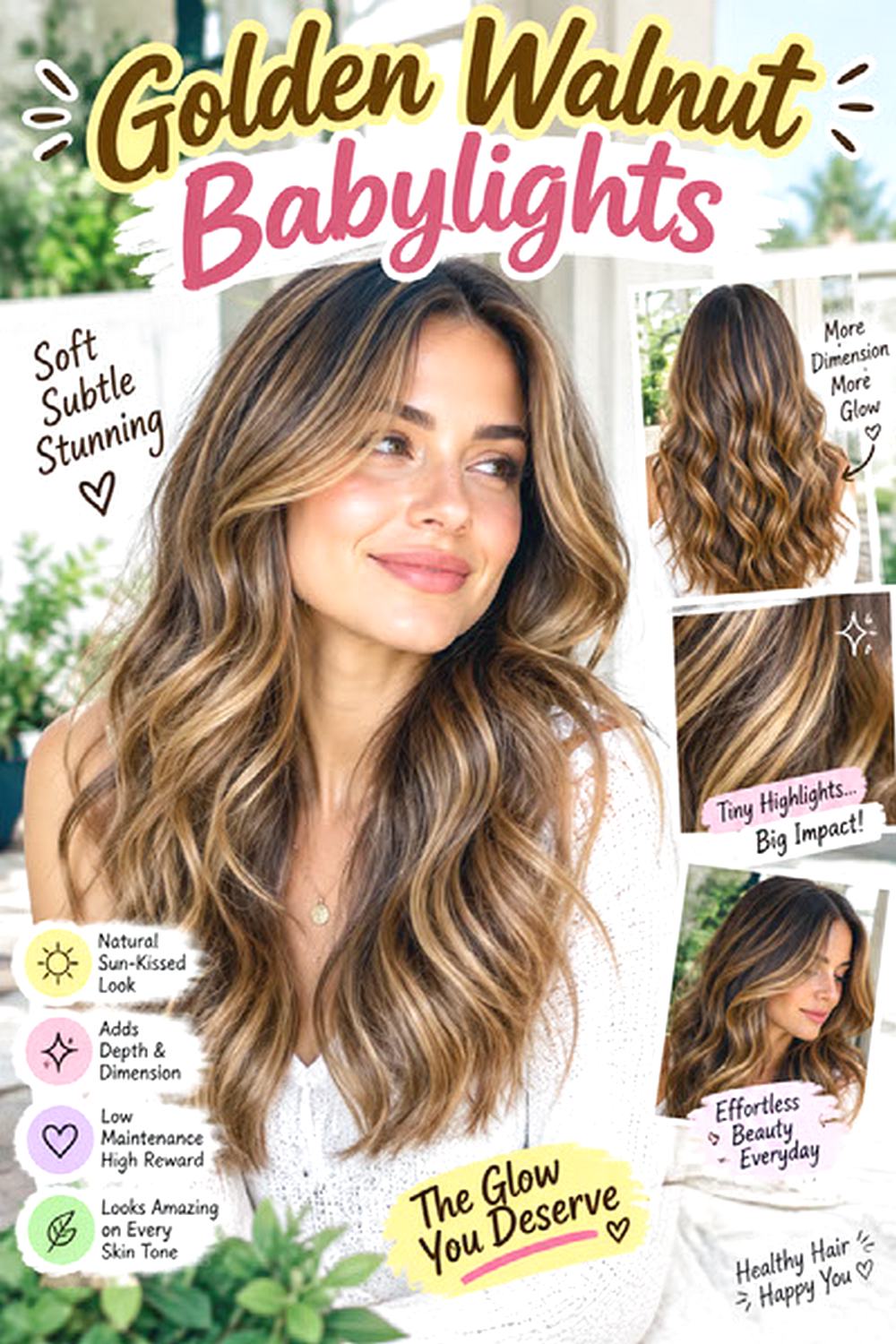
Babylights create a quieter golden walnut effect by using very fine highlights rather than broad ribbons. Tiny golden-brown strands are distributed through a walnut base, adding brightness at the surface while leaving plenty of deeper color underneath. This technique is especially useful for fine hair because the narrow sections create dimension without making the perimeter look transparent. Medium hair can use a denser pattern for additional brightness. Straight and softly wavy textures show the delicate contrast clearly, and long or short cuts can both carry the placement. Use lightweight conditioner, thermal protectant, and a vent brush for a smooth finish that does not flatten fine hair. Styling is quick because a simple blow-dry is enough to reveal the subtle highlights. Babylights grow out softly, although a warm gloss helps maintain the golden balance. At the salon, ask for micro-fine highlights with slightly more concentration around the face while preserving natural walnut depth underneath.
Pro tip:
If your hair is fine, keep some untouched base color at the ends. Highlighting nearly every strand can erase the contrast that makes babylights look dimensional.
Golden Walnut Money Piece
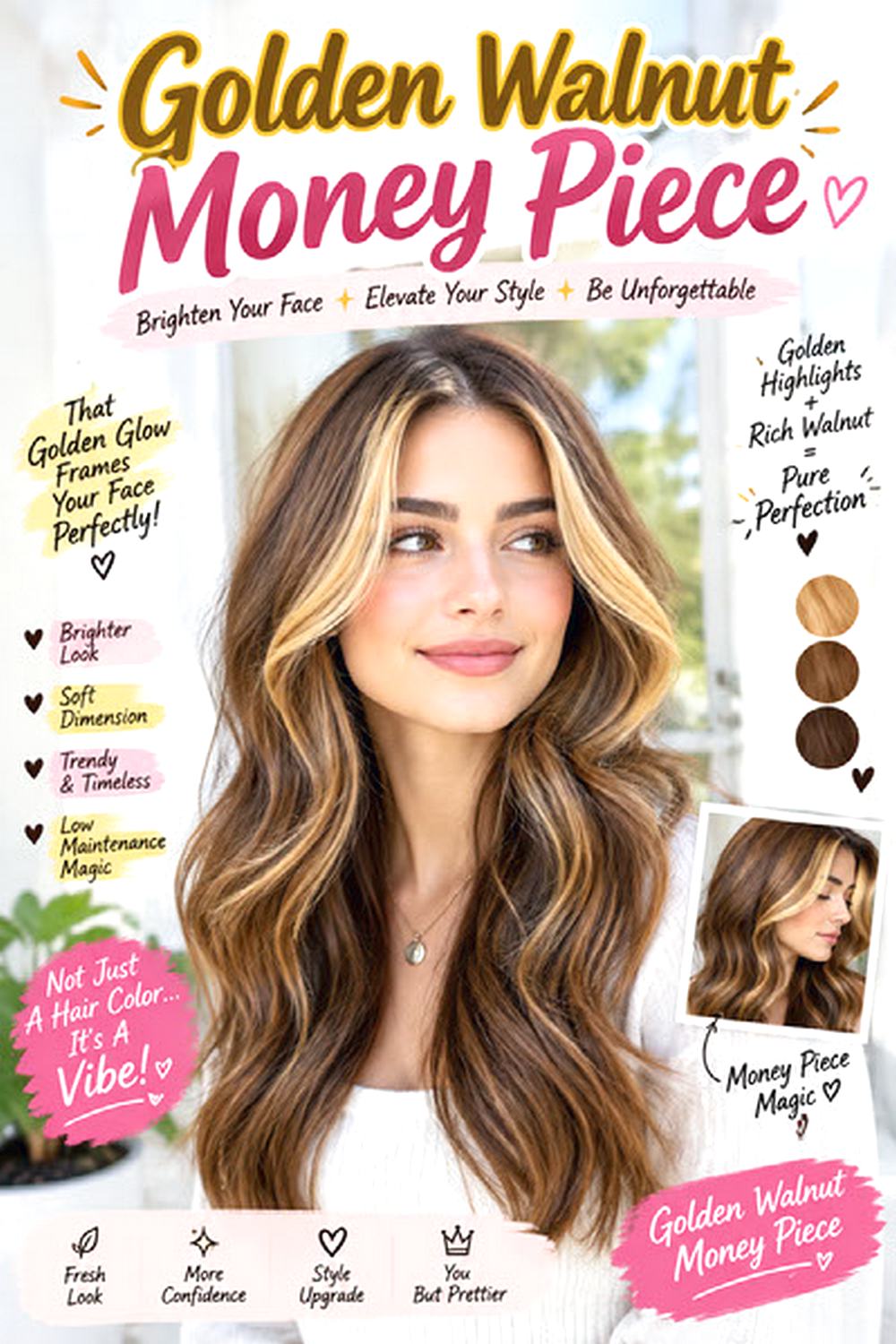
A money piece turns golden walnut into a stronger statement by placing wider brown-gold sections immediately around the face. The rest of the hair stays deeper walnut or brunette, so the front panels remain clearly visible whether the hair is straight, curled, or tied back. Medium and thick hair can carry a broader money piece, while fine hair usually looks more balanced with narrower sections that preserve density at the temples. Use bond repair, heat protectant, and a small amount of smoothing serum because the front pieces often receive the most lightening and heat styling. Daily styling can be quick: smooth the hairline and bend the front sections away from the face. The money piece may need root blending or glossing sooner than the rest. At the salon, specify exactly how wide you want the highlighted panels and whether the golden walnut should start directly at the root or melt from a softer shadow.
Pro tip:
Choose a money-piece width based on how you actually wear your hair. Very wide front panels can look much stronger when the hair is pulled back than when it is loose.
Copper Golden Walnut Blend
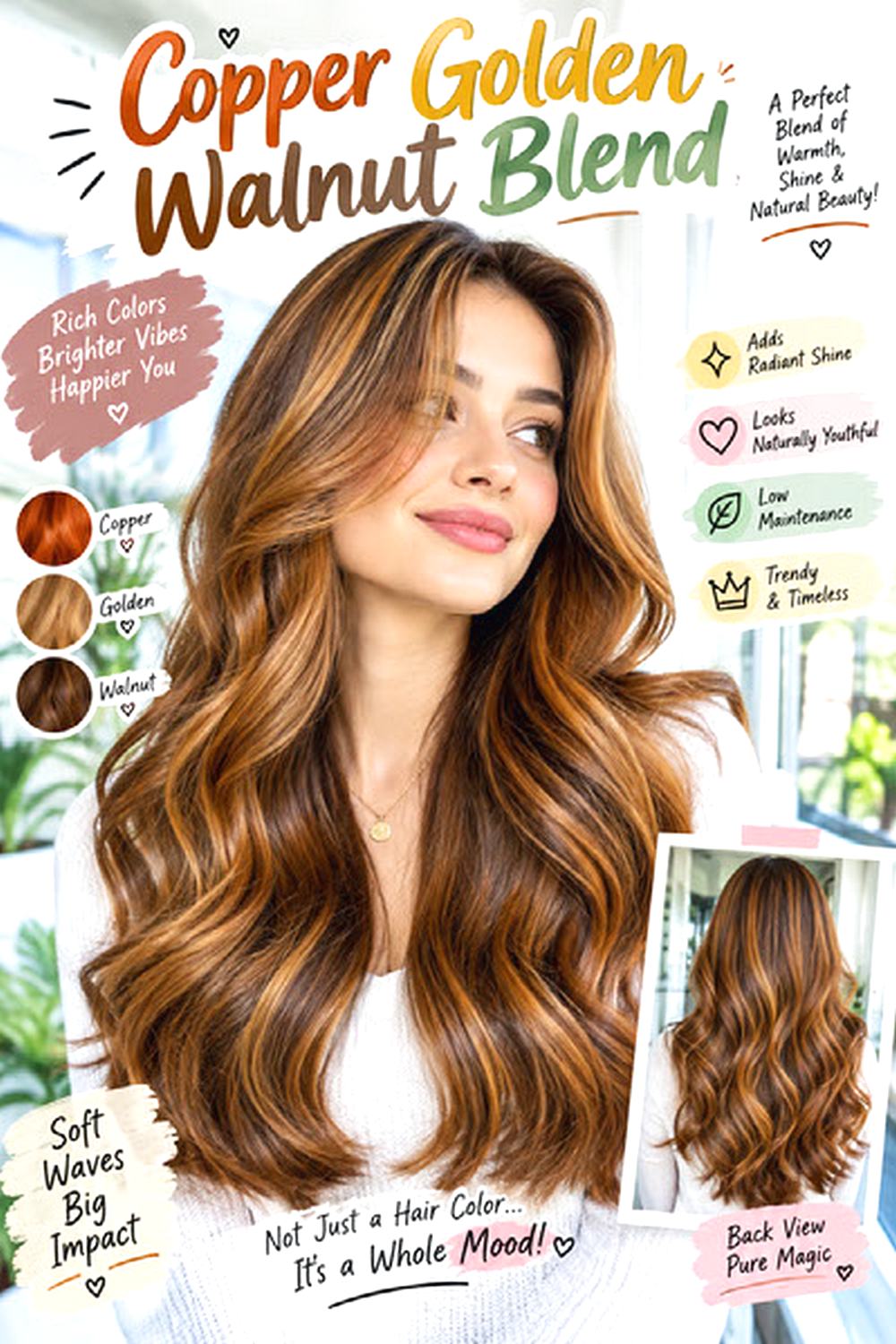
Copper gives golden walnut a richer autumn direction by adding soft amber and red-gold notes to the brown base. The result should still read primarily walnut, with copper appearing as a secondary tone through face-framing layers and selected surface sections. Wavy and curly hair reveal the color especially well because the warm shades shift with every bend, while straight hair creates a more uniform burnished finish. Medium-to-thick density supports several warm tones; fine hair usually benefits from fewer copper pieces so the color does not overwhelm the base. Use a sulfate-free cleanser, copper-depositing mask, and heat-protective cream. Natural texture can make styling quick, while polished waves need moderate time. Copper pigments can fade faster than brown, so glossing or depositing products may be needed. At the salon, ask for brown-based copper rather than bright orange and preserve deeper walnut through the interior for contrast.
Pro tip:
Check copper reference photos in daylight. Indoor lighting can make the same formula appear much redder or more orange than it looks outdoors.
Mocha Golden Walnut Dimension
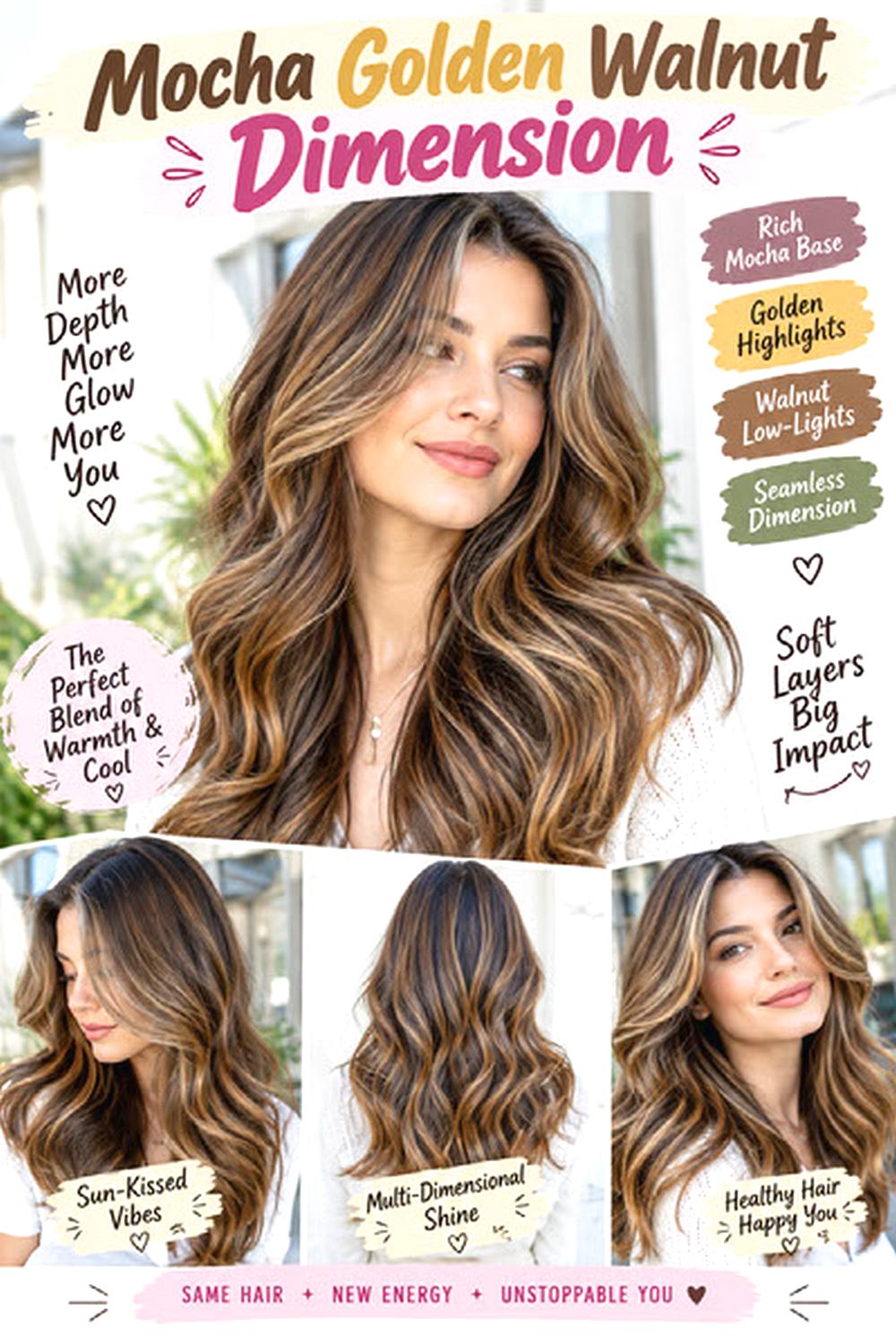
Mocha tones deepen golden walnut and make the color feel richer without removing the warm glow. A cocoa-brown root and interior provide shadow, while golden walnut and soft toffee ribbons move through the surface and face frame. This combination suits medium and thick brunette hair especially well because the alternating depths prevent dense hair from looking like one solid block of brown. Fine hair can adapt the idea by using fewer lowlights and concentrating lightness near the front. A moisturizing shampoo, large round brush, and shine spray help create a smooth reflective finish. Styling is moderate for a full blowout but easy to refresh by reworking only the front layers. Because the overall level remains brunette, regrowth can be fairly forgiving. At the salon, ask for mocha lowlights to stay visible between golden walnut pieces and avoid lifting every section to the same level. The deepest color should remain around the roots and interior.
Pro tip:
Keep the mocha sections slightly softer around the hairline. Too much dark color directly at the face can hide the golden walnut ribbons you are trying to emphasize.
Golden Walnut Bob
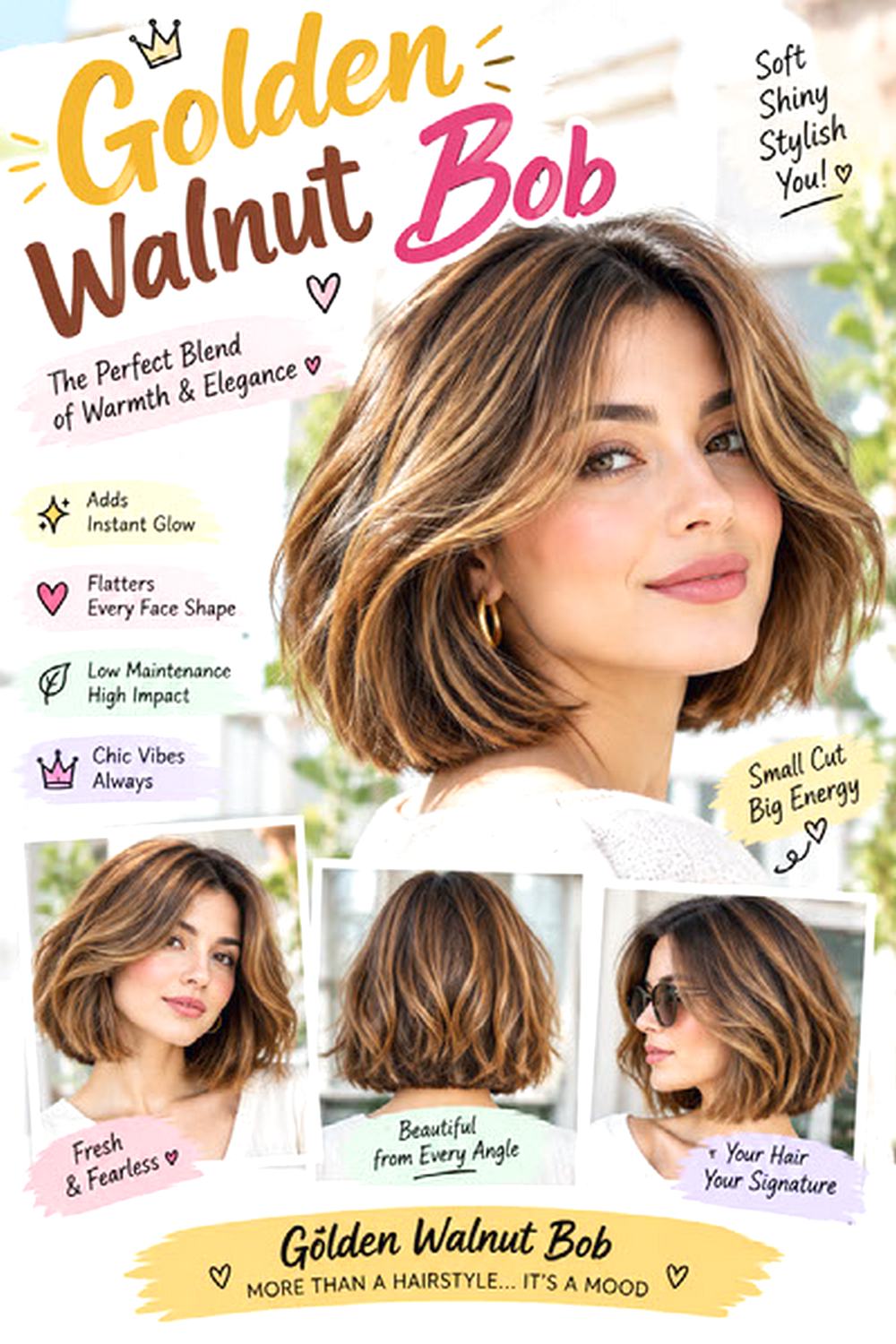
A bob makes golden walnut color look polished because the compact perimeter reflects light across a smaller, stronger shape. A chin- or jaw-length cut can use a medium walnut base with fine golden ribbons over the surface and a little extra brightness near the temples. Straight and lightly wavy textures show the tonal difference clearly. Fine hair benefits from keeping the bottom edge full rather than heavily layered, while thick hair may need subtle internal weight removal so the color does not disappear inside the shape. Use a smoothing cream, heat protectant, and small round brush or blow-dry brush to keep the ends neat. Styling takes moderate effort after washing but refreshes quickly. The short perimeter may need reshaping independently of the color schedule. At the salon, request fine golden walnut highlights that follow the bob’s surface while preserving darker color underneath, and avoid over-lightening the ends if they are already porous.
Pro tip:
Ask for some brightness near the temple rather than only through the ends. On a short bob, low placement alone may leave the top looking much darker than the perimeter.
Golden Walnut Long Layers
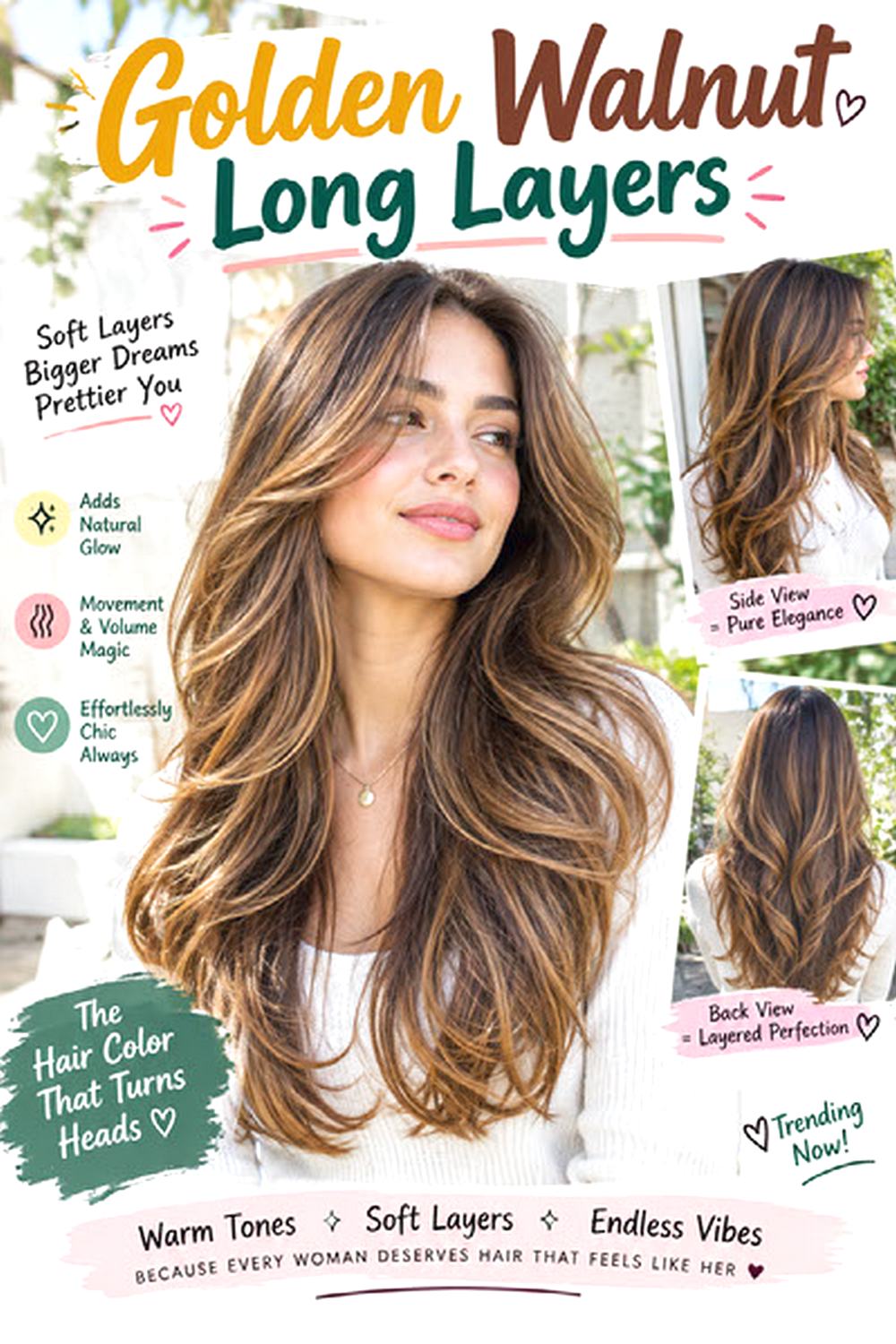
Long layers give golden walnut color plenty of room to transition from deeper roots into brighter mid-lengths and ends. Fine ribbons can begin around the cheekbones, while broader golden sections appear lower through the haircut, creating movement without making the root area too light. Medium and thick hair show the layered color especially well because overlapping sections expose several shades as the hair moves. Fine hair can wear the same placement if the lowest layers remain long enough to preserve fullness. Use volumizing spray, heat protectant, and a large round brush for a soft blowout that lifts the face-framing layers. Styling takes moderate time on wash day but can be refreshed quickly at the front. Long lightened ends need moisture because they often carry more previous color. At the salon, ask for brighter golden walnut placement to follow the visible face-frame and long layer pattern instead of spreading highlights evenly from roots to ends.
Pro tip:
Bring a photo showing where the layers fall as well as the color. Highlight placement looks most intentional when it follows the haircut rather than ignoring it.
Curly Golden Walnut Highlights
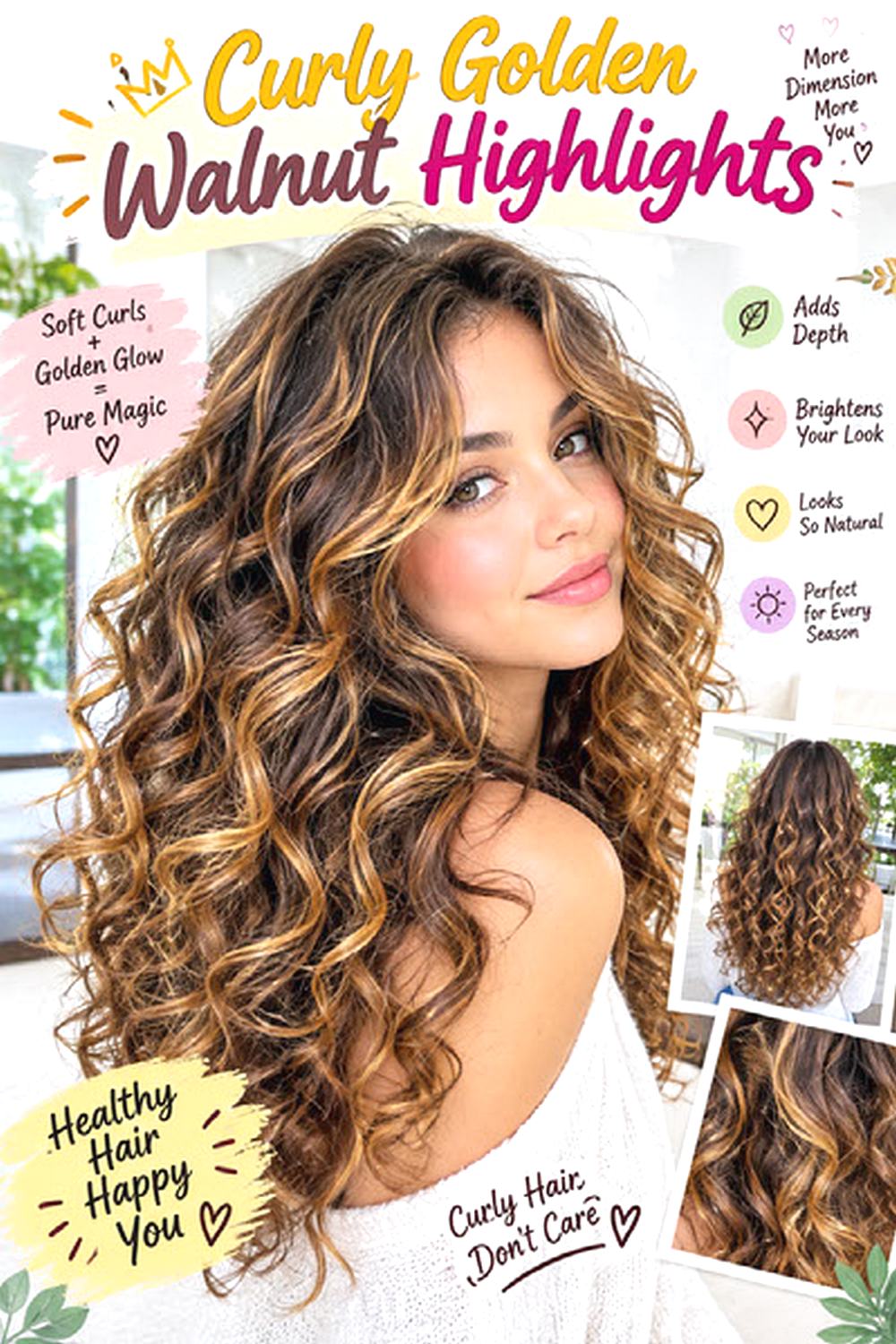
Curly golden walnut hair works best when highlights are placed to follow the natural curl pattern rather than being distributed mechanically. Medium walnut and brunette stay underneath, while warm golden sections sit on selected outer curls and around the face, creating light and shadow throughout the shape. Medium-to-thick wavy, curly, and coily hair can carry this dimension beautifully, but the lightening plan should respect porosity and existing dryness. Use leave-in conditioner, curl cream, and a diffuser on low heat to define the pattern while protecting colored sections. Wash-day styling takes more time, but later refreshes can be quick with water and a small amount of product. Lightened curls may need extra moisture and occasional glossing as the golden tone fades. At the salon, wear or show your natural texture and ask for brightness to be placed where individual curls are visible when dry, while keeping deeper walnut sections between them.
Pro tip:
Avoid choosing highlight placement based only on stretched or straightened hair if you normally wear curls. The sections may fall in completely different places once the curl pattern returns.
Golden Walnut Bronde Blend
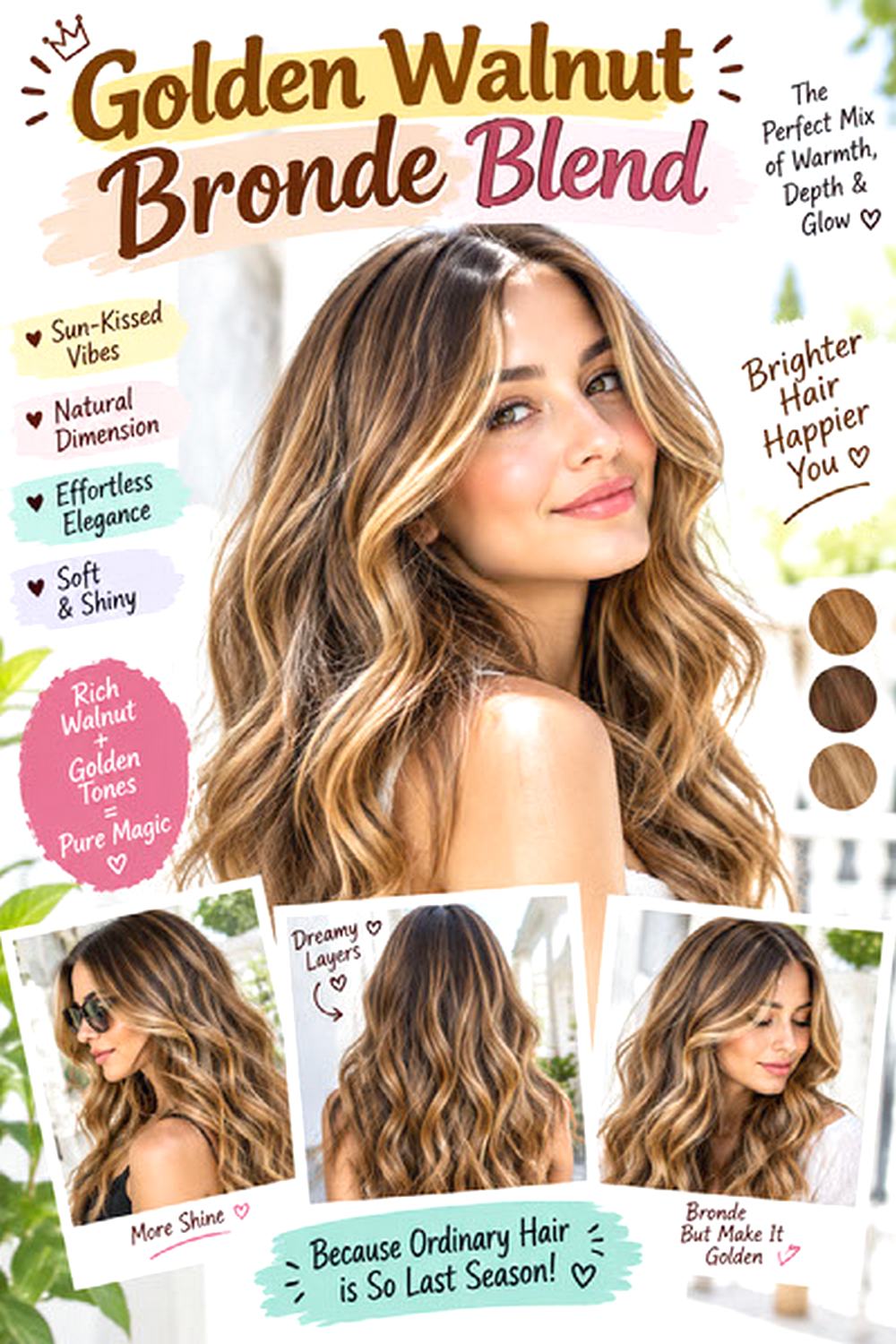
Golden walnut bronde sits between brunette and dark blonde, using brown, beige-gold, and walnut shades that stay relatively close in depth. The low contrast makes it useful for someone who wants lighter hair without obvious blonde stripes. Medium-length and long cuts show the gradient easily, while waves help the subtle tones separate. Fine hair often benefits from slightly brighter pieces at the hairline, and thick hair can support additional internal highlights so the bronde does not disappear underneath the surface. Use a color-safe shampoo, shine serum, and wide-barrel curling iron for loose dimensional bends. Styling is easy to moderate because the color remains soft even without a polished finish. Maintenance is generally manageable when the root stays near the natural base, though glossing keeps the gold from becoming dull. At the salon, request golden walnut highlights and light brown lowlights within a narrow tonal range so the result stays bronde rather than turning fully blonde.
Pro tip:
Compare the darkest and lightest areas in your reference photo. Keeping those shades relatively close is the key to a softly blended bronde result.
Golden Walnut With Rich Lowlights
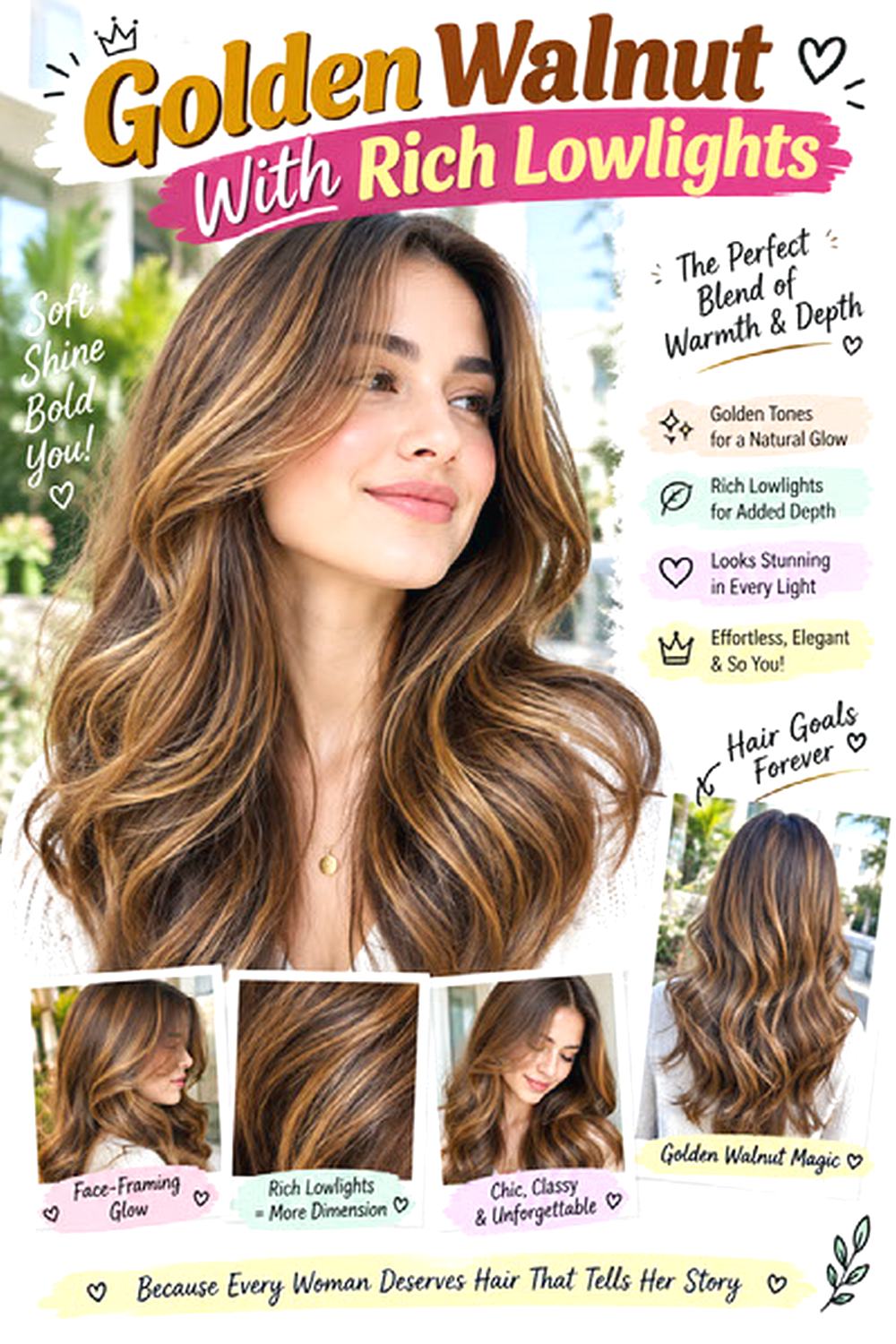
Lowlights can restore depth to golden walnut hair that has become too light or flat from repeated highlighting. Rich walnut and medium brunette sections are woven between existing golden pieces, creating shadow through the interior while leaving selected surface ribbons brighter. This approach is useful for medium and thick hair because additional depth makes the overall shape more dimensional. Fine hair can also benefit, but lowlights should remain delicate so they do not create heavy stripes. Use a nourishing color-safe mask, paddle brush, and lightweight gloss spray to keep both the darker and lighter sections reflective. Styling is quick when worn straight and moderate with waves, which show the lowlights more clearly. Regrowth often becomes less obvious once deeper tones are restored. At the salon, ask for walnut lowlights through the interior and lower layers while keeping brightness at the hairline and top surface, rather than darkening the entire head.
Pro tip:
If your ends are very pale, avoid choosing lowlights that are dramatically darker. A softer walnut shade usually blends more naturally and is less likely to look striped.
Golden Walnut Ombre
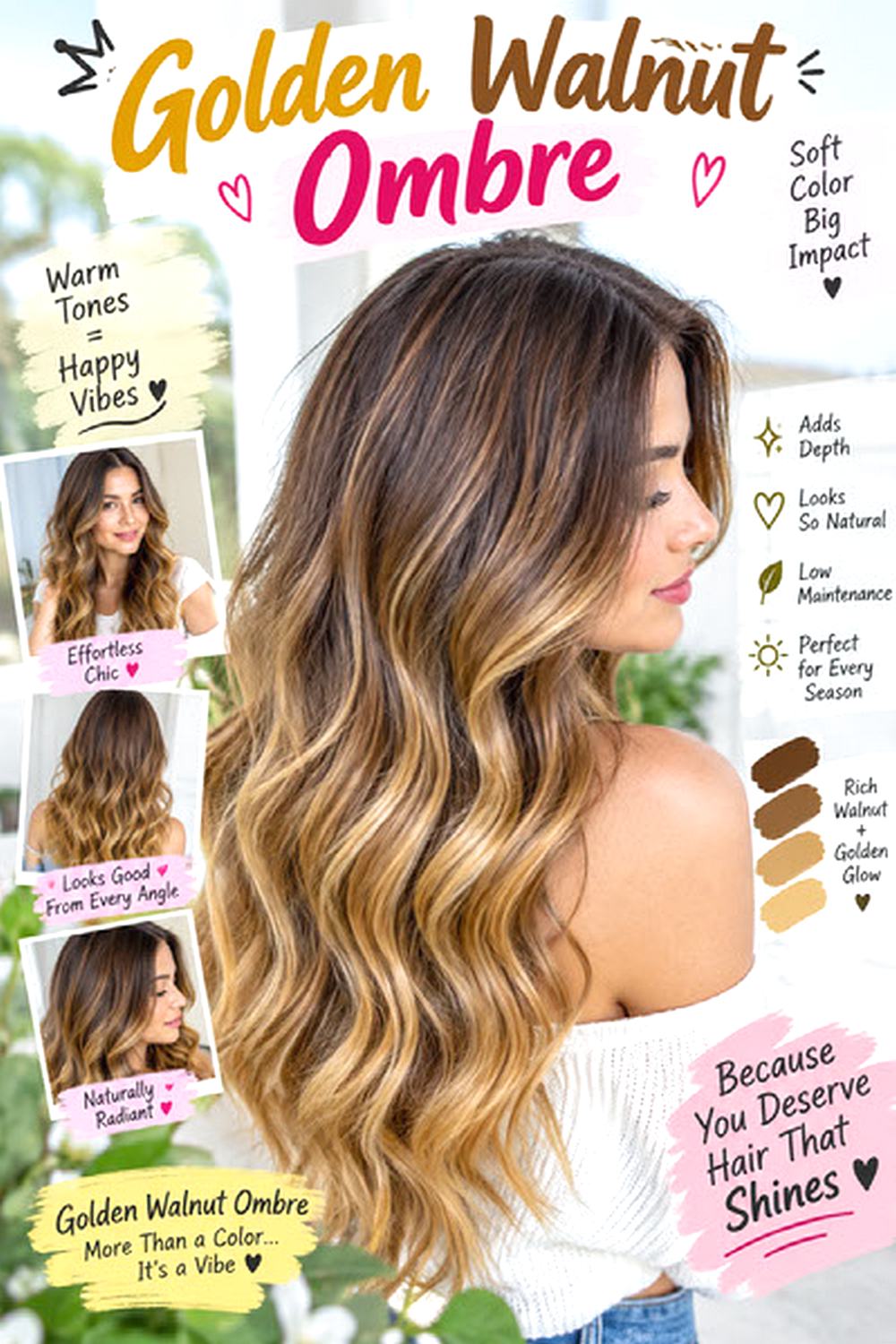
Golden walnut ombre keeps the root and upper lengths deep, then gradually introduces warmer brown-gold through the mid-lengths before reaching the brightest shade near the ends. Medium-to-long hair works best because there is enough space to create a smooth gradient rather than an abrupt color break. Thick hair can carry a wider transition zone, while fine hair should keep some darker strands through the ends so the perimeter does not look thin. Straight hair makes the gradient easy to see, and waves soften the transition further. Use a hydrating mask, heat protectant, and lightweight oil focused on the ends because the lightest sections often need the most moisture. Styling is easy to moderate; loose waves emphasize the fade but are not essential. Root maintenance is low, while the ends may need toning. At the salon, ask for the color change to begin gradually around the mid-lengths with no obvious horizontal line.
Pro tip:
At refresh appointments, ask whether the ends need actual lightening or only a new gloss. Repeatedly bleaching already-bright ends can create unnecessary dryness.
Glossy All-Over Golden Walnut
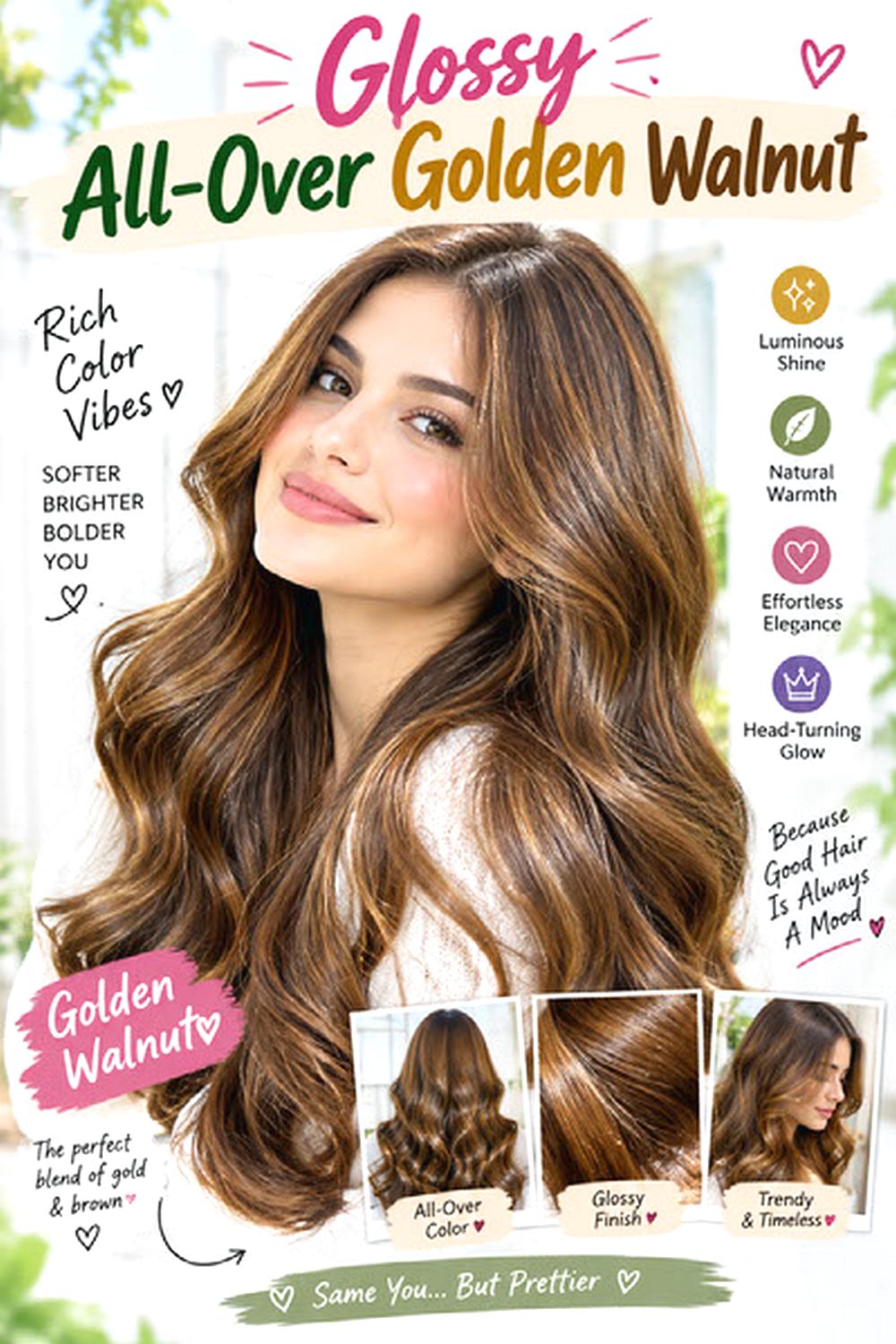
An all-over golden walnut shade gives brown hair a more uniform result than balayage while still using enough golden undertone to keep the color reflective. Rather than obvious highlights, the interest comes from shine and a balanced brown-gold formula that changes slightly under different lighting. This works well on straight, wavy, and curly hair, especially if you prefer a polished color without visible ribbons. Medium and thick hair can carry the richness easily, while fine hair benefits from the reflective finish because it avoids breaking the hair into contrasting sections. Use color-safe shampoo, a shine-enhancing conditioner, and anti-frizz serum to maintain the smooth surface. Styling can be quick with natural texture or moderate for a sleek blowout. Root maintenance is more noticeable than with balayage if the formula differs from your natural shade. At the salon, request a golden brown that remains clearly walnut rather than copper, orange, or very dark chocolate, with a gloss for added reflection.
Pro tip:
Ask your colorist to show the formula against your natural root depth before committing to permanent coverage. A shade close to your base usually creates a softer regrowth line.
Conclusion
Golden walnut hair color ideas can be adjusted from deep brunette melts to brighter honey ribbons, caramel balayage, warm money pieces, and softly blended bronde. The biggest choices are how much natural depth you keep, where the golden sections begin, and whether you prefer subtle dimension or visible contrast. Fine hair often suits narrower highlights and fuller ends, while thick hair can carry stronger ribbons, lowlights, and interior dimension. Waves and curls reveal multiple shades naturally; straighter hair makes the transitions more defined. Your best version depends on your starting color, density, texture, length, face-framing preference, hair condition, and maintenance routine. Choose the placement as carefully as the shade itself for a result that grows out in a way you can realistically maintain.
Choose one or two favorite ideas and save clear photo references that show the root, face frame, mid-lengths, and ends in natural-looking light. Discuss your face shape, natural texture, density, preferred length, maintenance level, and normal styling routine with your stylist. Point out the exact golden tone, highlight width, root depth, layer placement, face-framing brightness, volume, or glossy finish you like so your stylist can adapt the color to your actual hair rather than copying a reference photo exactly.
FAQs
Is golden walnut hair color more brown or blonde?
Golden walnut is primarily a warm brown shade with gold, caramel, honey, or amber dimension. It can be made lighter, but the walnut base usually keeps it grounded in the brunette family.
Can dark brunettes get golden walnut hair without going blonde?
Yes. Dark walnut melts, subtle balayage, face-framing ribbons, and warm glosses can introduce golden dimension while preserving a substantial amount of natural brunette depth.
Is golden walnut hair high maintenance?
It depends on the technique. Balayage, shadow roots, lowlights, and ombre generally offer softer grow-out, while money pieces and all-over color may show regrowth sooner.
How can I keep golden walnut hair shiny?
Use color-safe cleansing, regular conditioning, heat protection, and occasional gloss treatments. Keeping the hair hydrated is especially important on highlighted mid-lengths and ends.